

Tag: tourism Page 9 of 10

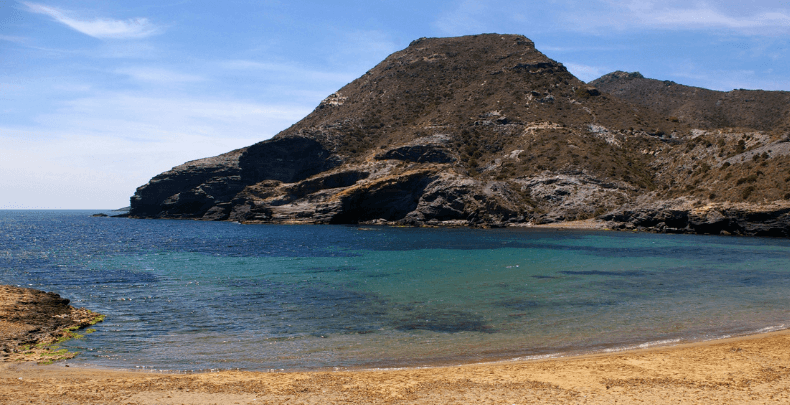
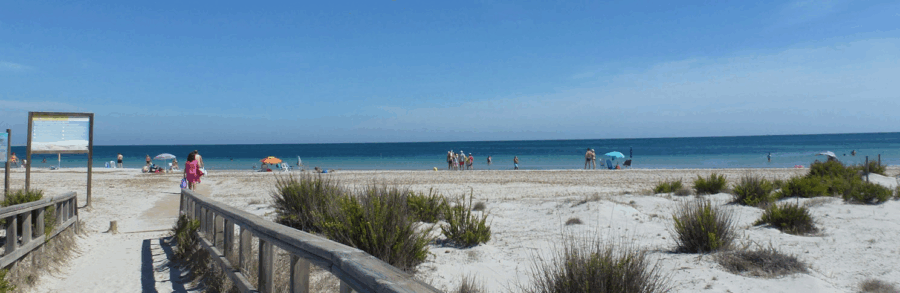
image showing playa de la torre derribada with multiple visitors

Playa de La Torre Derribada: Everything You Need to Know

If you’re planning your next vacation but still can’t choose the destination, we have the perfect place for you – Playa de La Torre.

Spain is known for its gorgeous views and variety of things to do, from visiting monuments to trying the local food of each region. If you’re looking for a beach with soft sand and one of the most beautiful landscapes you’ve ever seen, Playa de La Torre Derribada needs to be on your list of places to visit when touring around the country.

Here’s everything you need to know before packing your things and taking the road or airplane to this piece of heaven. Make sure to take a look at all aspects below to ensure the best experience when visiting the beach and the unforgettable experience it has to offer.

Table of Contents

What Is Playa de La Torre Derribada and Where It’s Located
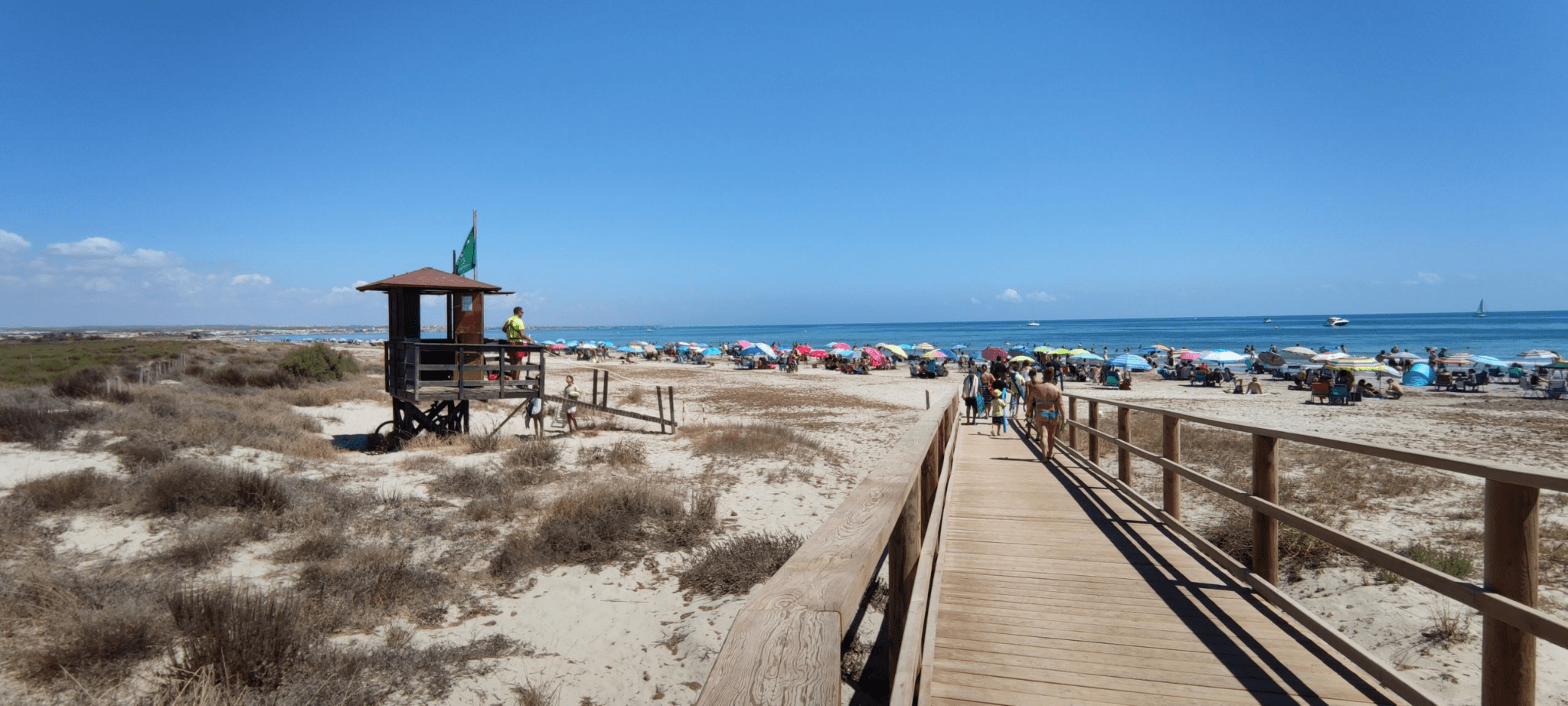
picture from playa de la torre derribada with numerous visitors and a lifeguard

This gorgeous place is a beach located in San Pedro del Pinatar, Spain. One of the main reasons why it is such a popular attraction is thanks to its location close to many popular attractions and parking lots, so it’s easily accessible and is close to other attractions.

It is close to many natural reserves and protected areas, making it an excellent location for a peaceful vacation with no loud noises or large crowds. The beach also has easy access and is relatively close to the main town of the region, as well as other attractions like El Mojón beach.

If you’re looking for a place with various options and close to everything, this is the perfect place to spend your next vacation. Its soft sand and beautiful landscapes will conquer your heart and eyes forever.

Things You Should Know When Going to Playa de La Torre Derribada
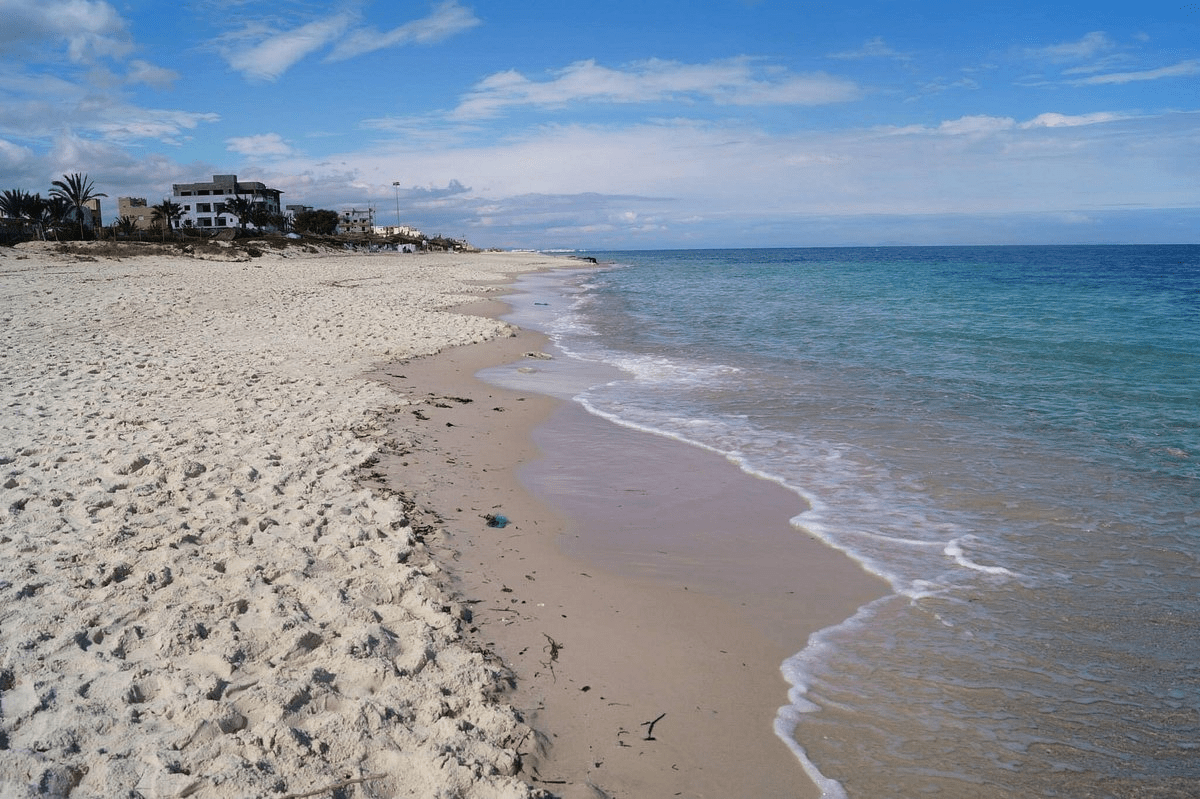
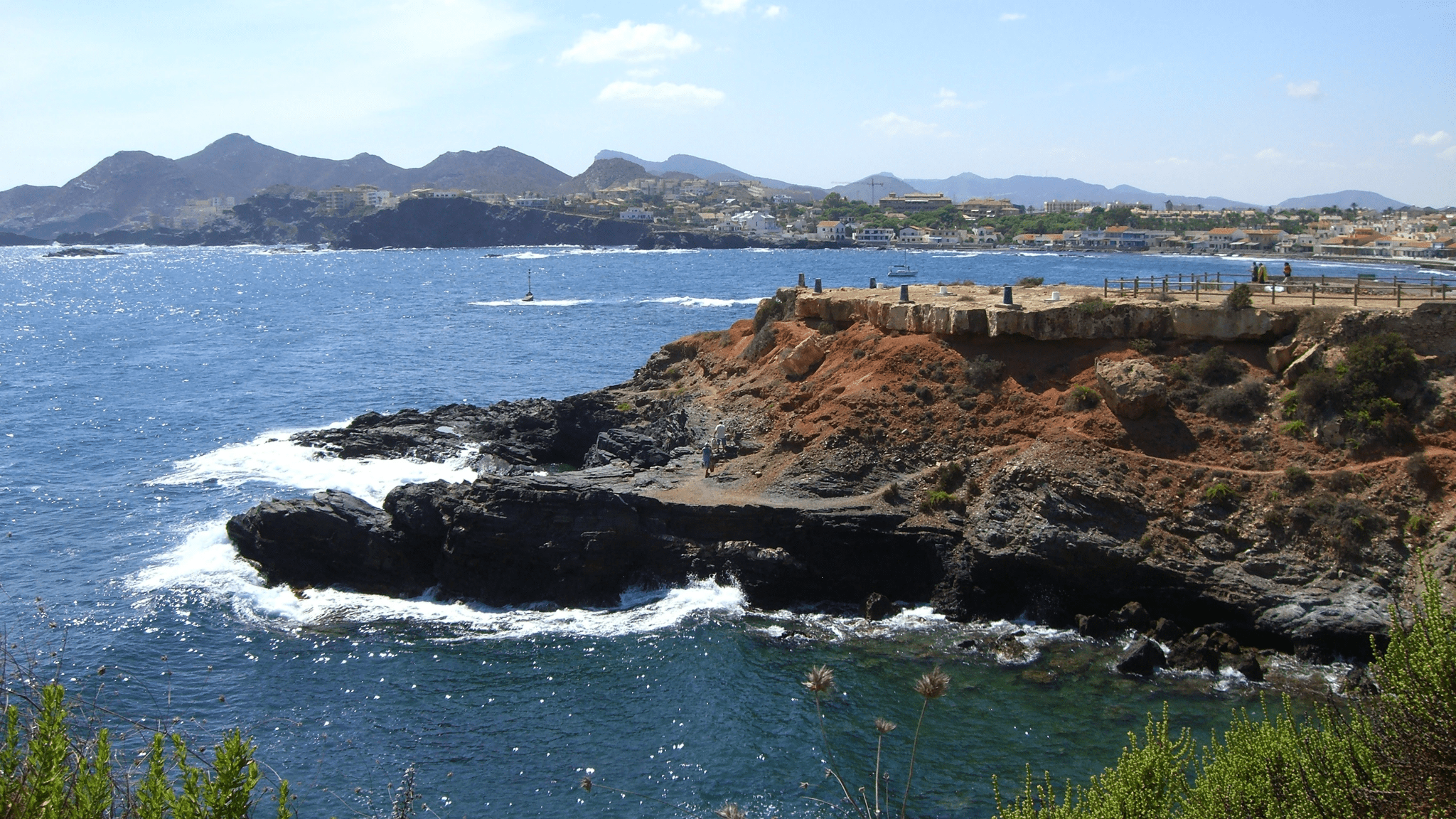
picture from playa de la torre derribada with the sea on the right and multiple buildings on the left

Now it’s time to see the main things you should know before traveling to Playa de La Torre Derribada.

Whether when it comes to the beach itself or the tourism points near it, we will cover everything you need to know. Here are the main things:

Crystal Water and Soft Sand
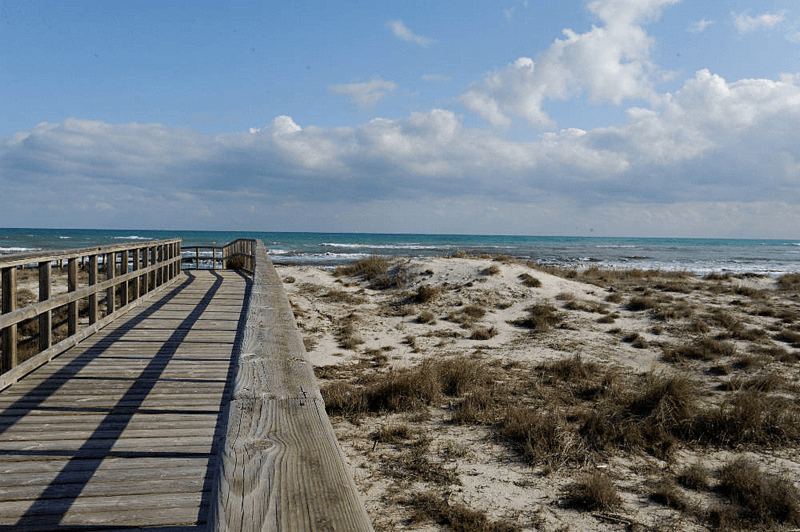
image sowing the wood walking path from playa de la torre derribada

Playa de La Torre Derribada stands out for its crystal-clear water and soft sand, making it perfect for leisurely walks along the beach without feeling tired or uncomfortable due to rough terrain. This combination creates some of the most beautiful landscapes you can find in the region. It’s the perfect place to spend your day, whether alone enjoying the sea or with other people.

It is directly connected to El Mojón beach, another famous tourist destination in the area, being one of the most common accesses to the beach. Both places are distinct, and you will surely notice when going from one part to the other.

Another aspect that contributes to this clean view is that the beach has no rocks or other natural formations obstructing the path. This makes it the perfect destination for all beach lovers.

Beautiful Wooden Walkway
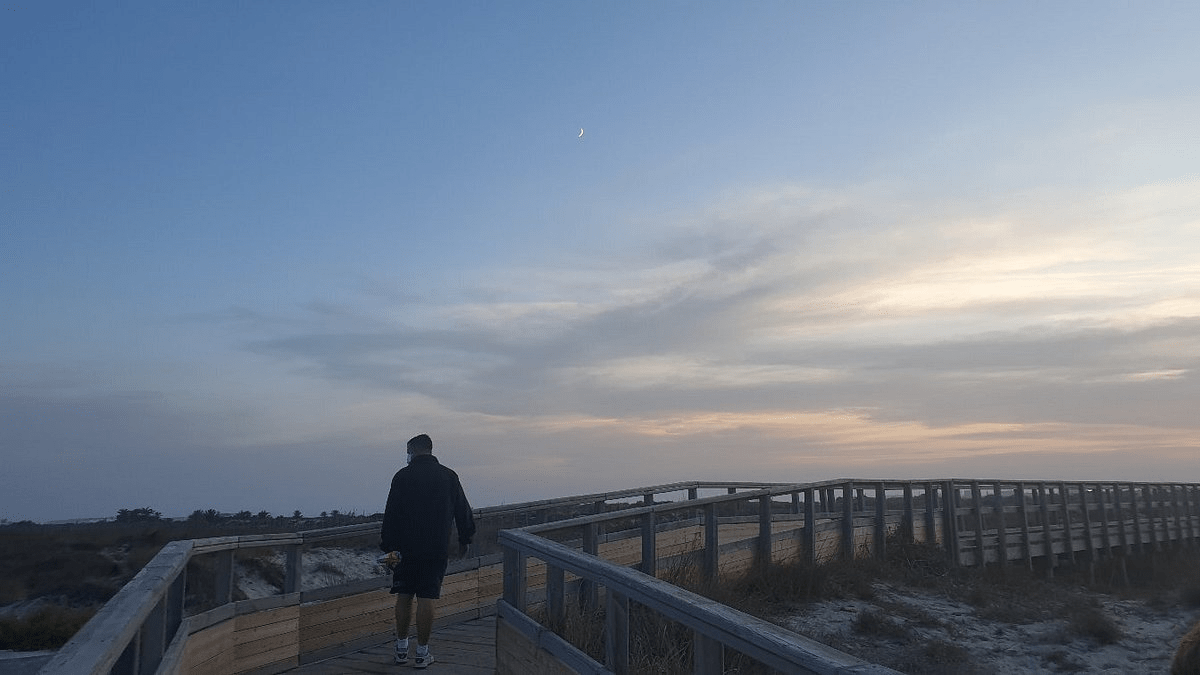
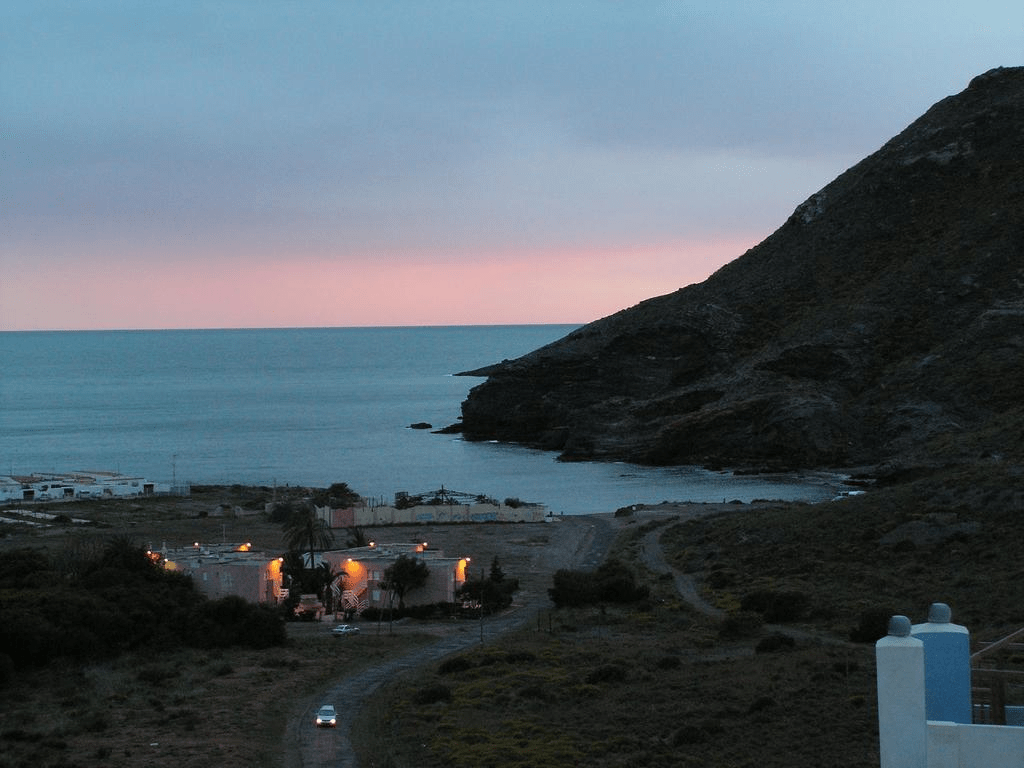
image from the wood path from playa de la torre derribada during sunset

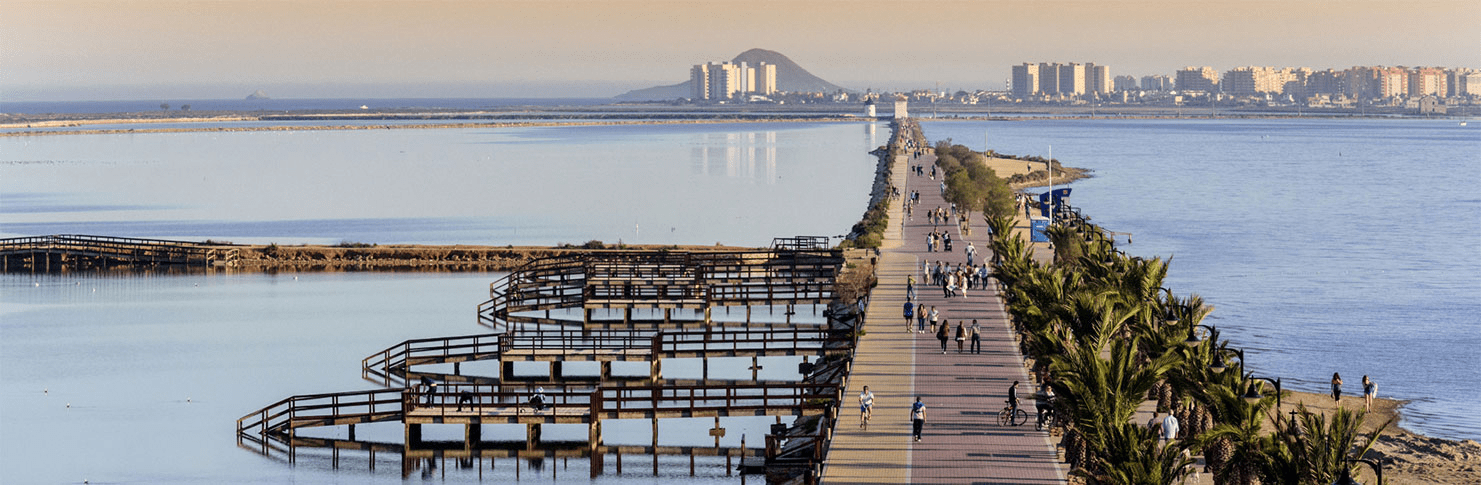
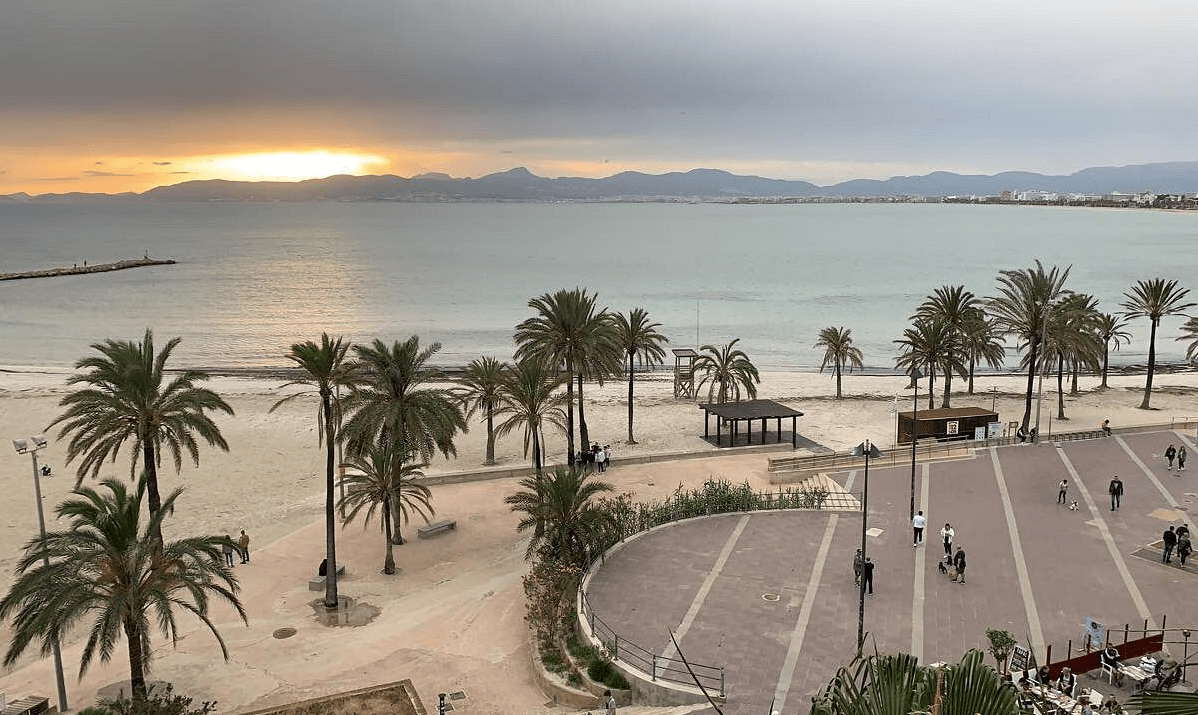
One of the most iconic characteristics of this beach is its wooden walkway that connects the road to the beach. These wooden constructions are uncommon, but this one has a distinct characteristic: It extends for almost half a kilometer!

It’s one of the most remarkable characteristics of Playa de la Torre Derribada and a must-go if you’re in San Pedro del Pinatar. Follow this wooden path, and you’ll be blessed with unique views of the beach, city, town, and the numerous natural formations that surround this place.

Also, pay attention to the wooden signs along the path, as they indicate information about the beach, rules, and recommendations you should follow to ensure a great experience while visiting the place. The signs are in both Spanish and English, so you don’t have to worry about not understanding them or having to translate everything.

Length
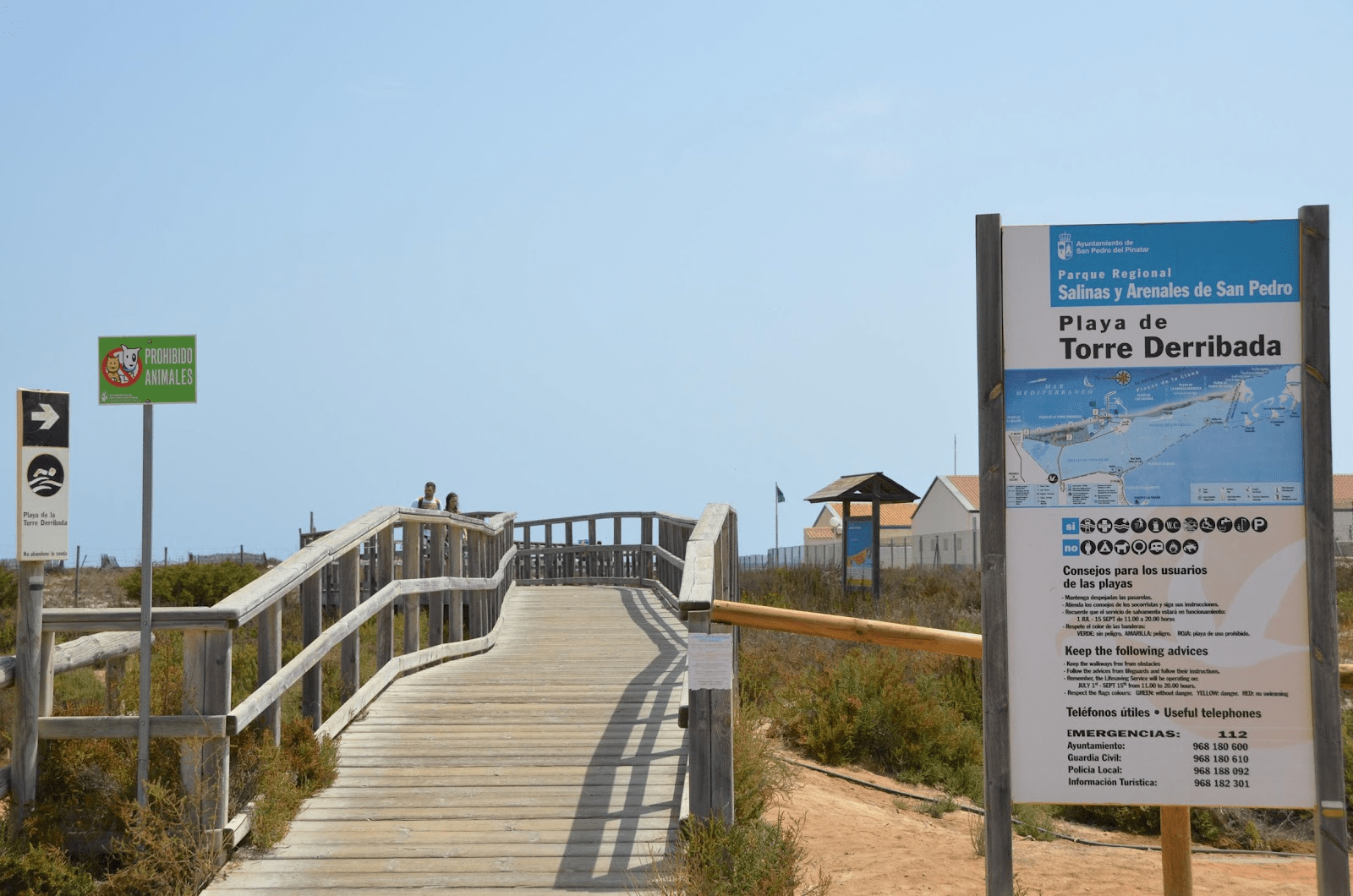
image showing the entrance for playa de la torre derribada along with multiple signs and rules

Playa de La Torre Derribada doesn’t have the average width and length of other beaches and is one of the longest in the entire region. The total length of sand can extend for over 2 kilometers and at least 30 meters in width before getting to the sea.

If you plan on exploring the entire beach, prepare for a long walk and many beautiful natural landscapes along the way. This brings some advantages, like not having to worry about overcrowded spaces. With so much space, it is improbable that you’ll face problems finding a spot in the sand to stay.

During my visits to the beach, one of my favorite activities was always to enjoy walking along the shore and seeing the different natural formations along the way. You can walk for almost an hour and still have things to see, thanks to its enormous size.

The crowd is also very split throughout its length, and there’s no specific place where most people like to stay. Regardless of which part of the beach you visit, you’ll have tons of things to do and experience.

It’s a great beach if you like to walk in the sand, enjoying the breeze and the crystal-clear water touching your feet. But don’t worry. If you also want to just stay on a chair enjoying the views, it is also the perfect place.

Limited Infrastructure
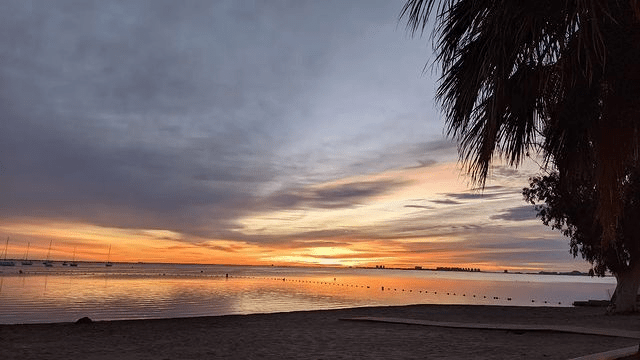
image showing the sea from playa de la torre derribada at sunset

When visiting Playa de La Torre Derribada, the infrastructure might be limited if you have mobility problems or are looking for a place with lots of options to explore.

As we mentioned, the beach has no constructions or rocks in the middle of the path, so don’t expect many restaurants and other facilities when exploring the place. You’ll find the typical elements of this kind of space, like toilets, litter bins, and a foot shower.

The good news is that there are various options nearby, so even though you’ll have to leave the beach to find some specific amenities, you don’t have to take the road or go too far.

One of my favorite restaurants in the region is CIELO. They have numerous options featuring local culinary items, and their menu has options from all price ranges.

It is not the closest restaurant to the beach, but it’s just a couple minutes away, and the entire way is full of beautiful landscapes that make the walk very enjoyable. There are numerous options nearby that will fit all kinds of people and tastes, like MardeSal and Juan Mari.

Make sure to keep this in mind when traveling to San Pedro del Pinatar. It is an important aspect that can directly affect your experience. It has the essential features, but don’t expect anything too fancy.

The same goes for restaurants. Even though you have some options nearby, you will most likely have to walk to a restaurant or go somewhere else to grab food. There are almost no options for serving the dishes directly at the beach.

Easy Access and Parking Spaces
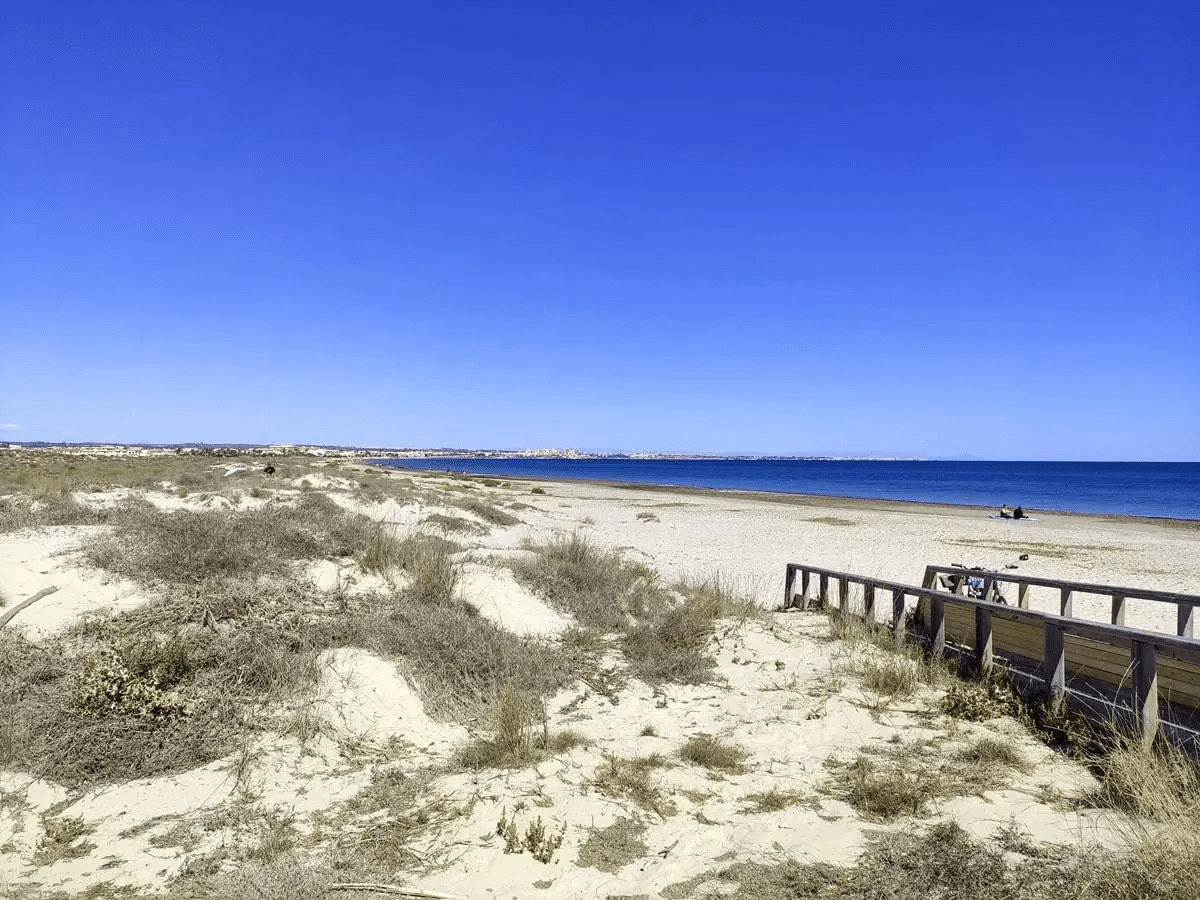
image showing playa de la torre derribada

The beach has an off-road parking lot that can fit approximately 15 vehicles. Along with that, you can access Playa de La Torre Derribada in three different ways:

The first one is through that gorgeous wooden walkway, which leads you directly from the road to the beach, being also the most used way. Along with that, you can also access the place through the parking areas. They are mainly located behind the marina, and you can walk from there to the beach, which won’t take more than three minutes.

The last access is through El Mojón, a beach next to it with direct access. It is also a great option if you plan on visiting multiple beaches and tourist attractions since you can walk through both places with no problem or need to take the road.

It Is a Protected Natural Area
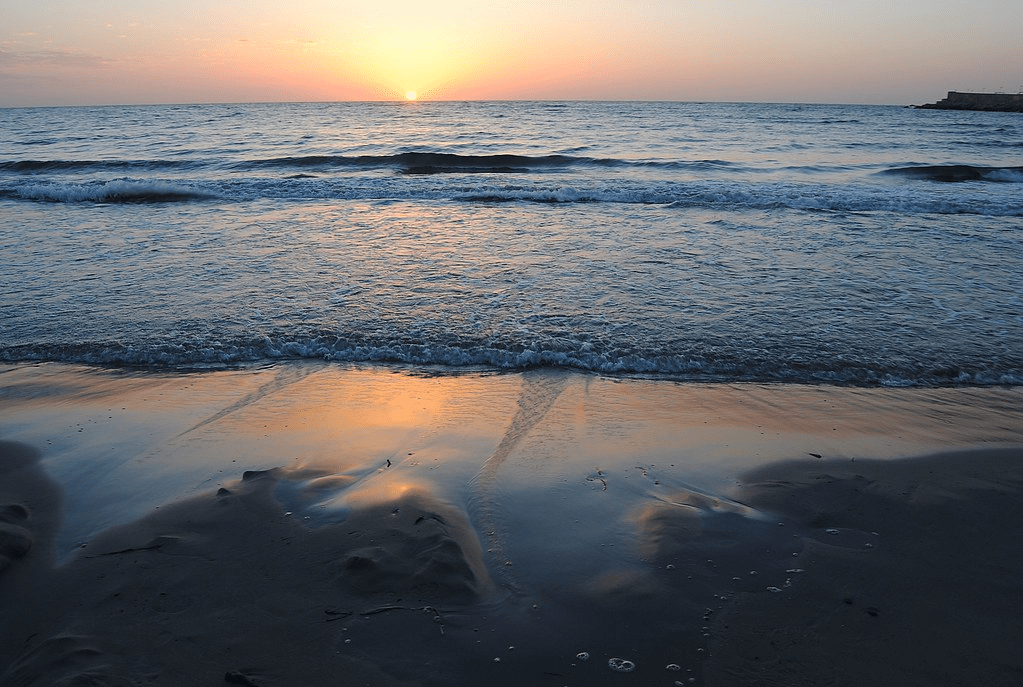
image of the sea from playa de la torre derribada

One of the reasons why Playa de La Torre Derribada manages to stay so pretty and clean is that it’s situated in the middle of a protected area. Several rules and recommendations need to be followed to preserve the natural beauty of the beach and the landscape around it.

San Pedro Del Pinatar is home to many incredible natural areas and reserves, like Marina de las Salinas, that make it one of Spain’s most beautiful places to visit. The surrounding area offers a plethora of attractions, ranging from the urban atmosphere of Plaza de la Constitucion to the serene beauty of Mirador de Aves nestled in nature. If you’re seeking a diverse vacation experience, there’s no doubt that this destination is perfect for you. Whether you’re strolling along the sandy beach or exploring the numerous scenic spots nearby, it’s essential to adhere to preservation rules to ensure the best experience for yourself and others in the area.

It’s Rarely Overcrowded
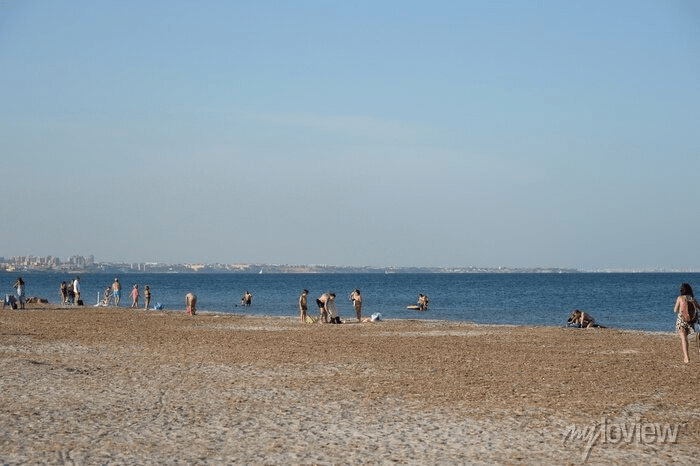
image showing a picture of the beach with numerous people

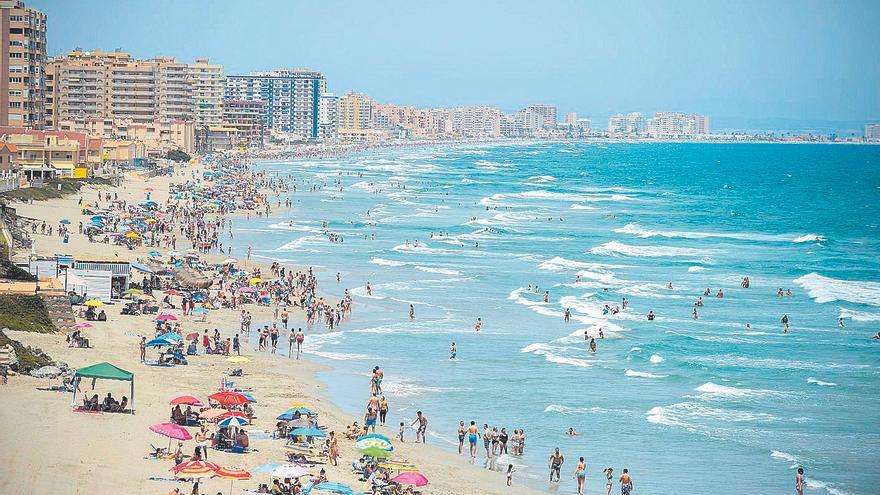
Another reason this spot is so famous not only among Spanish citizens but also from around the world is that it is rarely overcrowded. It is common to see beaches around the country with loads of people throughout the place, but this doesn’t happen here.

Even though the number of people visiting Playa de La Torre Derribada is constant over the year, it usually has few people, and you can always enjoy a peaceful time without worrying about finding a spot in the sand to stay. This is also a very good aspect if you like more privacy since you won’t always have hundreds of people surrounding you.

When I visited the place, I never experienced a lack of space on the beach. It’s usually a very peaceful place with less than a hundred people during the low season of the year. Another aspect that contributes to this is the enormous length of the beach.

Enjoy Your Private Paradise in Villa Murcia!
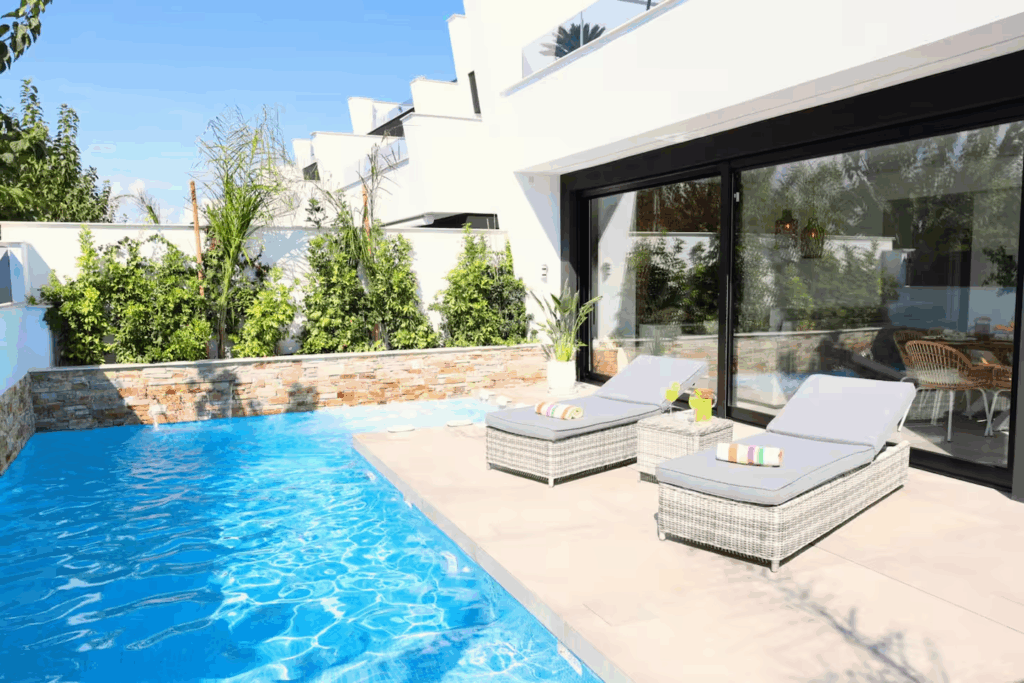
Looking for the perfect place to stay in Murcia? We’ve got just the spot for you!

Villa Murcia – Your Private Paradise

Wake up to coffee on a sun-drenched terrace, unwind in a warm jacuzzi after a day of exploring, and end your evenings with dinners in the summer kitchen. Nestled in charming Santiago de la Ribera, Villa Murcia offers more than just a holiday—it’s your personal oasis of comfort, style, and unforgettable moments.

Highlights:
✔ Spacious living room with a large sofa and open kitchen – perfect for shared memories
✔ Three elegant, air-conditioned bedrooms with private terraces – your peaceful retreat
✔ Extra fold-out sofa in the living room – ideal for additional guests

Whether it’s a romantic escape, a family getaway, or a relaxing break with friends – Villa Murcia is your dream stay.

Book now and experience the magic of the Spanish sun!

Time to Book the Next Flight to Spain
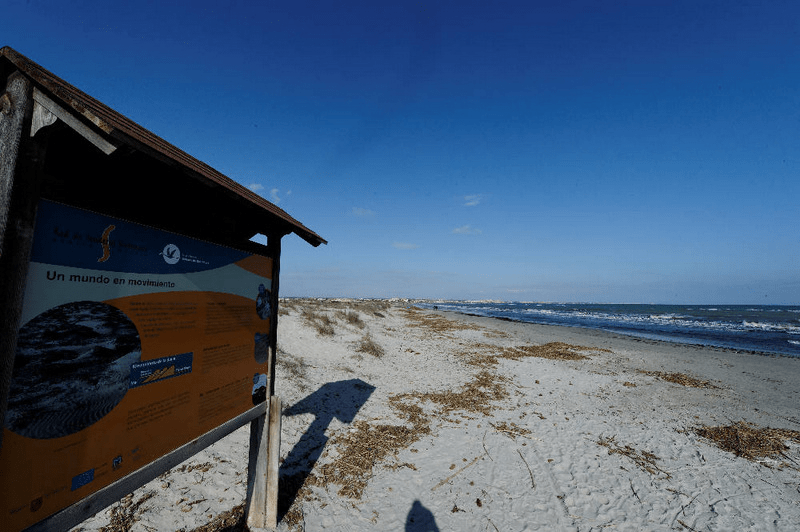
image from the beach with an identification sign on the left telling curiosities and recommendations

Spain is full of incredible places to visit and beautiful landscapes to discover. If you’re looking for a peaceful paradise with soft sand and lots of natural beauties, Playa de La Torre Derribada is exactly the place for your next vacation.

The place has everything a beach needs to provide visitors with a comfortable experience. But if you’re looking for extra experience with restaurants and different activities, you might need to take a short walk to the nearby locations.

Make sure to respect the rules to preserve this fantastic environment that will surely catch your eye and give you unforgettable memories. Whether you’re traveling alone or with anyone else, this is the perfect place to go and enjoy some peaceful time.

Now that you know everything, it is time to start packing your luggage to visit this piece of heaven in Spain. Grab your sunscreen and glasses, and prepare to enjoy the best vacation of your life.
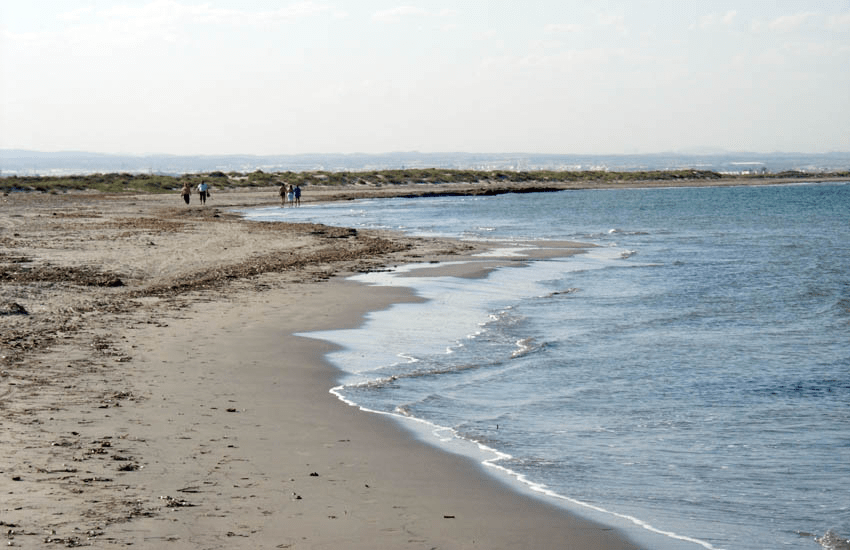
Read More

Playa de la Llana: A Tranquil Gem in San Pedro del Pinatar

Discover the serene Playa de la Llana in San Pedro del Pinatar, featuring natural beauty, beach bars, and pristine amenities for a perfect beach day.

Playa de la Llana landscape

Nestled in the picturesque region of Murcia, Playa de la Llana offers a serene escape for those looking to soak up the sun in tranquility and natural beauty. Located near the vibrant town of San Pedro del Pinatar, this beautiful beach is a favorite among visitors seeking a quiet retreat away from the bustling tourist spots. With its proximity to Las Salinas and San Pedro Harbour, Playa de la Llana is not just a beach; it’s a slice of paradise where the sea whispers stories of old, the sand holds secrets of the deep, and each wave brings a refreshing sense of calm.

From the unspoiled stretches of sandy shoreline to the charming beach bars dotting the area, Playa de la Llana is the perfect place to lay your towel, enjoy local food, and embrace the tranquility of a natural beach. Whether you’re looking to explore the rich landscapes of Cartagena or simply stay and relax, Playa de la Llana provides all the necessary amenities and the right atmosphere for making your beach day memorable. Join us as we dive deeper into what makes this beach a must-visit location for both seasoned and first-time visitors alike.

Geographical Characteristics of Playa de la Llana

Playa de la Llana landscape

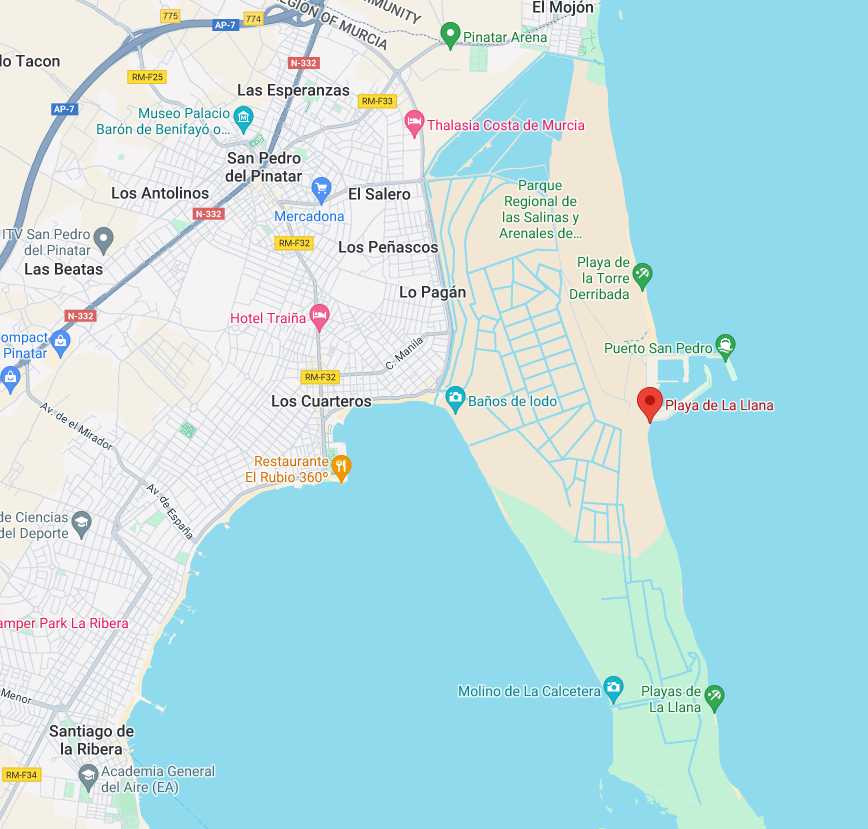
Playa de la Llana is an idyllic stretch of coastline located in the warm, southeastern region of Spain, specifically within the municipality of San Pedro del Pinatar, Murcia. This natural beach is notably set apart from the more commercialized beaches due to its long and quiet expanse, which provides a perfect backdrop for those seeking solitude and a more intimate connection with nature.

One of the defining features of Playa de la Llana is its proximity to the unique environmental reserve, Las Salinas. This area is renowned for its therapeutic mud baths and salt flats, which attract a diverse array of wildlife, particularly flamingos. The beach stretches for several kilometers, offering plenty of space for visitors to find their spot away from crowds.

The Playa de la Llana entrance is somewhat discreet, adding to its untouched and secluded feel. The beach is primarily accessed by a well-maintained wooden boardwalk that crosses the picturesque dunes, sheltered by native flora, which helps preserve the area’s natural integrity and supports local biodiversity.

The sands at Playa de la Llana are golden and fine, inviting beachgoers to lay out their towels and bask in the Mediterranean sun. The sea here is typically calm and clear, reflecting the sky above and creating an inviting environment for swimming and water activities. Seaweed is occasionally present, washed ashore by natural tides, but this contributes to the unspoiled, rugged charm of the beach.

In terms of amenities, while Playa de la Llana maintains its natural beach status, it still needs comfort. There are parking facilities at a reasonable distance, ensuring easy access while preserving the tranquility of the beach environment. This thoughtful balance between accessibility and preservation makes Playa de la Llana a standout location for those who appreciate the beauty of nature without sacrificing convenience.

As Playa de la Llana continues to be a destination that promises peace and cleanliness, it remains a beloved spot for locals and visitors from afar, making it a true gem along the Murcian coast. Whether planning a day trip from nearby Cartagena or staying longer in San Pedro del Pinatar, this beach offers a refreshing escape from the hustle and bustle of daily life, where one can truly unwind and enjoy the serene landscape.

Location and Relevance of Playa de la Llana

Playa de la Llana map in San Pedro del Pinattar

Playa de la Llana is strategically located near the small yet vibrant town of San Pedro del Pinattar, making it a popular destination for both residents and international tourists. The beach’s location not only offers direct access to the serene waters of the Mediterranean but also places it conveniently close to other notable attractions in the region, such as the historic city of Cartagena and the lively San Pedro Harbour.

This proximity to significant landmarks and other tourist hotspots enhances Playa de la Llana’s appeal, drawing visitors who wish to explore the broader Murcia region. Despite this, the beach maintains a sense of tranquility as a natural shelter from the often crowded and commercialized main beaches. This unique combination makes it an excellent choice for those seeking a balance between a relaxing beach day and a culturally enriching experience.

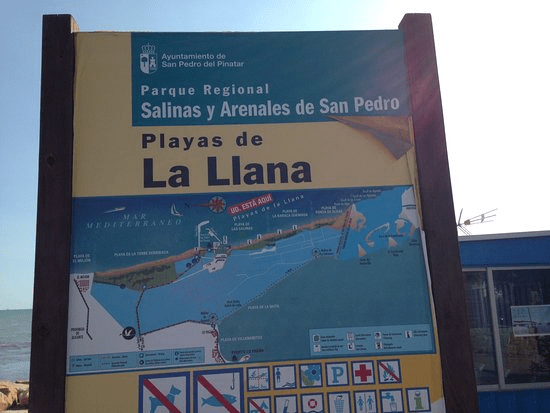
Playa de la Llana sign with a map and rules

The relevance of Playa de la Llana extends beyond just its beauty and location. It is home to a diverse ecosystem, particularly noted for its role in the migratory patterns of various bird species. The nearby Las Salinas is a crucial habitat for birds such as flamingos, making the area an essential spot for bird watchers and nature enthusiasts. Playa de la Llana’s environmental significance and its surroundings contribute to its popularity and importance as a natural heritage site.

The beach becomes a hub of activity throughout the year, particularly in warmer months. Visitors come to enjoy the excellent weather, the expansive stretches of sand, and the high cleanliness maintained here. This cleanliness, combined with the natural beauty and comprehensive amenities, ensures that every Playa de la Llana trip is enjoyable and comfortable.

Given its exceptional location near San Pedro del Pinatar, Playa de la Llana is a prime example of the natural beauty and cultural richness of the Murcia region. Its blend of accessibility, ecological significance, and peaceful atmosphere keeps it at the forefront of places to visit while exploring the Spanish coast, particularly for those staying in or visiting San Pedro del Pinatar. Whether for a long weekend getaway or a brief respite from bustling city life, Playa de la Llana promises a delightful and memorable experience for all who make it their destination.

Discovering San Pedro del Pinatar: Activities, Cuisine, and More

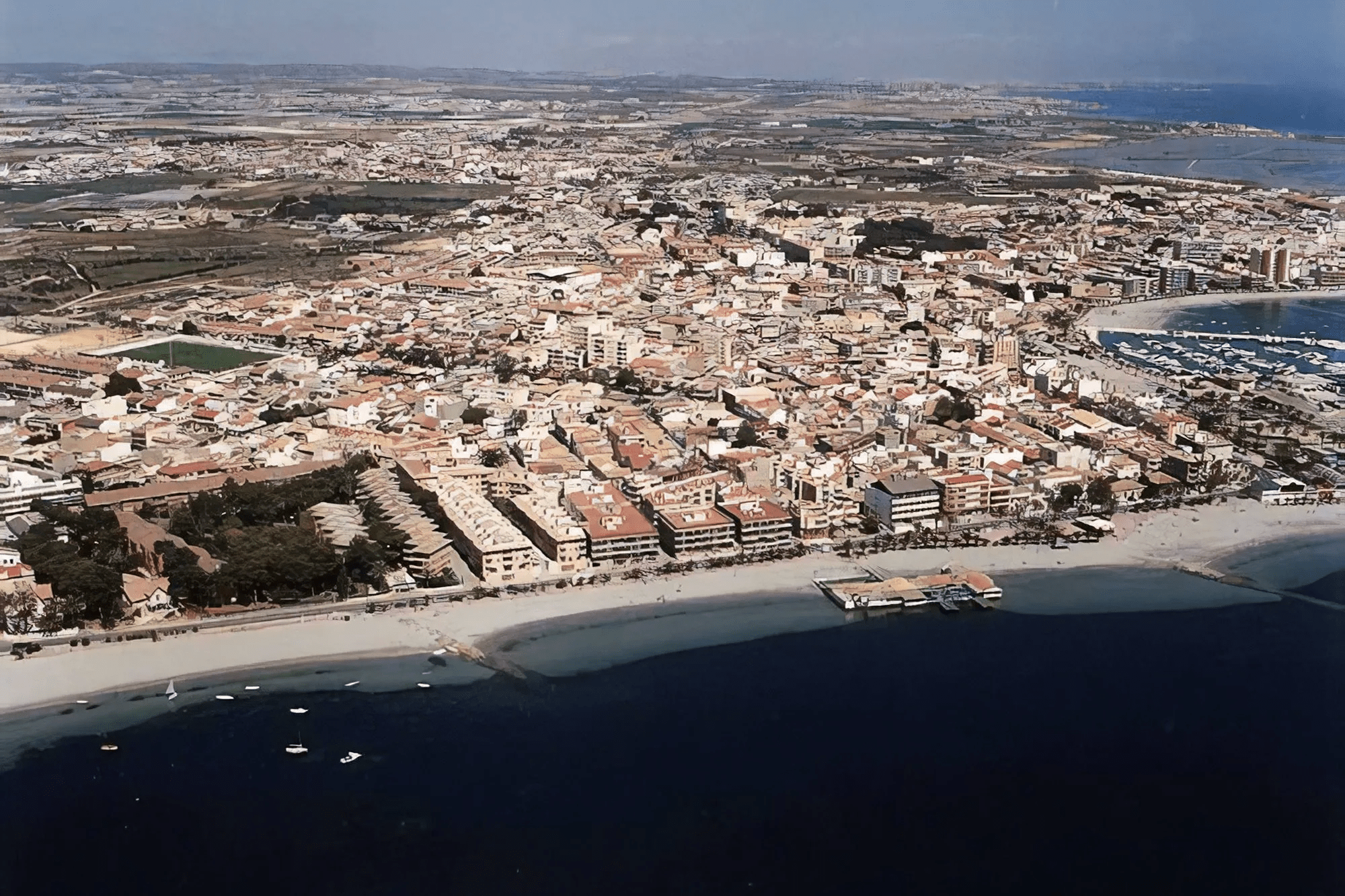
San Pedro del Pinatar landscape

San Pedro del Pinatar, located near Playa de la Llana, is a vibrant city teeming with activities and rich local cuisine, making it a perfect complement to beach day. This lively city acts as the gateway to one of Murcia’s most beautiful natural beaches and offers visitors a diverse array of experiences to enhance their stay.

Activities and Attractions

San Pedro del Pinatar landscape

San Pedro del Pinatar is renowned for its beautiful natural attractions, particularly the Salinas y Arenales Park. This regional park is an excellent spot for nature lovers, offering opportunities for hiking, bird watching, and even therapeutic mud baths known for their health benefits. The city is also home to San Pedro harbor. In this bustling area, visitors can indulge in water sports like sailing, windsurfing, and kite surfing or simply enjoy a leisurely walk along the marina to watch the boats come and go.

For those interested in cultural experiences, the city holds several festivals throughout the year, with festivities often centered around the harbor and city streets, filled with music, dancing, and traditional Spanish fare. The month of July sees the celebration of the Virgen del Carmen, the patron saint of fishermen, featuring a procession and a maritime parade that is a spectacle to be noticed.

Local Cuisine

San Redro del Pinatar restaurants

San Pedro del Pinatar offers a tantalizing culinary scene, a feast for the senses. The city’s proximity to both the sea and the fertile lands of Murcia allows for a rich variety of fresh seafood and vegetables. A must-try dish is the “caldero,” a traditional Murcian fish stew that combines local fish with rice and a rich, saffron-infused broth. Tapas bars and seafood restaurants line the streets, offering dishes like octopus, marinated dogfish, and fresh salads.

The city is also known for its salted fish, mainly mullet, which can be sampled in many local eateries. For a more immersive experience, visitors can head to the market to sample local cheeses, cured meats, and freshly baked breads, perfect for a picnic back in Playa de la Llana.

Shopping and Leisure

San Pedro del Pinatar shopping

San Pedro del Pinatar isn’t just about natural beauty and food; it also offers a variety of shopping options, from traditional craft stores to modern boutiques. The weekly market is a great place to find local crafts, clothing, and souvenirs. Additionally, the Dos Mares shopping mall near the city provides a good day out for those looking to escape the sun for a few hours, featuring a range of international and local brands, a cinema, and eateries.

Whether you are visiting for its tranquil beach, Playa de la Llana, or exploring its streets and cuisine, San Pedro del Pinatar provides a lively and welcoming atmosphere, making it a popular tourist destination and a cherished home for locals. Its blend of cultural activities, culinary delights, and natural beauty makes it an essential part of any visit to the Murcia region.

Enjoy Your Private Paradise in Villa Murcia!

Looking for the perfect place to stay in Murcia? We’ve got just the spot for you!

Villa Murcia – Your Private Paradise

Wake up to coffee on a sun-drenched terrace, unwind in a warm jacuzzi after a day of exploring, and end your evenings with dinners in the summer kitchen. Nestled in charming Santiago de la Ribera, Villa Murcia offers more than just a holiday—it’s your personal oasis of comfort, style, and unforgettable moments.

Highlights:
✔ Spacious living room with a large sofa and open kitchen – perfect for shared memories
✔ Three elegant, air-conditioned bedrooms with private terraces – your peaceful retreat
✔ Extra fold-out sofa in the living room – ideal for additional guests

Whether it’s a romantic escape, a family getaway, or a relaxing break with friends – Villa Murcia is your dream stay.

Book now and experience the magic of the Spanish sun!

Conclusion

As the season change, so does the landscape and experience at Playa de la Llana. Whether you’re planning to visit in the vibrant summer months or during the quieter seasons, this beach remains perfect for those seeking tranquility and natural beauty. Before you visit, always check the local weather and seasonal activities to fully tailor your experience to what the area offers at that time.

San Pedro del Pinatar enhances any Playa de la Llana trip with its rich cultural heritage and delicious cuisine. The town provides an array of activities that promise to enrich your stay, from exploring the natural wonders of Las Salinas to indulging in the local gastronomy at a beachfront bar. For a complete holiday experience, check out the local events calendar to catch any festivals or markets that coincide with your visit.

Combining the serene allure of Playa de la Llana with the vibrant life of San Pedro del Pinatar offers the best of both worlds: the peace of a pristine beach and the excitement of a Spanish town. This destination truly captures the essence of a holiday that can be both relaxing and richly rewarding.

Read More
Playa de Las Salinas La Manga by Murcia

Playa de Las Salinas La Manga – Almost Pristine Beach

Playa de Las Salinas is a picturesque beach with a stunning view of Mar Minor and La Manga city. I was looking to spend my vacation on an almost pristine beach far away from the crowds, and I may have found the perfect spot.

Table of Contents

About Playa de Salinas

Las Salinas is covered with fine light sand and sometimes small pebbles. The area is wild, with no beach infrastructure. Nevertheless, I primarily wanted to relax in nature, so I perceived it as an advantage. The entrance to the water is flat, and the bottom is sand and pebbles. The sea is often rough, so I wouldn’t bother going deeper into the sea if you can’t swim at all. Along the coast, you can see many picturesque rock formations and rock fragments. However, the constant wind was unpleasant at times. Swimming is dangerous because a current of fences forms near the shore.

Location

The Playa de Las Salinas is situated along the Mediterranean Sea and holds the 36th position among 141 beaches within the Murcia region. Positioned 37.3 kilometers away from the heart of Murcia, it lies within the vicinity of the Los Alcazares settlement, a mere 3.2 kilometers from its center. The beach is located in the urban area.

Transport

There’s a highway with plenty of parking spaces running along the beach line. The reserve is very popular with locals and tourists, so I advise going there on weekdays. On the weekend, the highway is overloaded with cars and trailers of citizens going on vacation to the park. Las Salinas begins behind the church of the village of San Miguel and extends for 5 km to the Cabo de Gata lighthouse. There are ramps with stairs leading from the road to the beach.

Highlights

Promenade in Las Salinas

It has an impressive 2,000-meter-long promenade that runs along the entire length of the beach and directs users to the Philippe Cousteau Anchor Museum, which houses an important collection of anchors of all kinds, as well as a 360-degree vantage point located above the cliffs. I’ve also visited the nearby Pinar de Salinas, a natural area where visitors can find a recreational area with barbecues, trash cans, fountains, and various places to relax.

There are no sports clubs, restaurants, cafés or stores near the La Manga beach, so I’ve had to bring everything with me. Other inconveniences are the lack of cabins for changing clothes and only small leg showers.

  • There is no natural shade along the entire beach.
  • Las Salinas is never crowded, and you can always find deserted spots for a relaxing vacation.
  • The main attraction of the sandy beach is the church of the same name.
  • One and a half kilometers from Las Salinas is an active recreation zone where you can rent boats, kayaks, diving, and snorkeling equipment.

Festivals

VANS Salinas Longboard Festival

The sandy area hosts various surfing-related events every year, such as the VANS Salinas Longboard Festival, whose sixteenth edition brings together thousands of lovers of the sport to enjoy exhibitions punctuated by various performances and concerts.

In addition, every year, the Túnel Festival takes place near the beach, more specifically in the Arnao Tunnel, during which traffic on the Salinas boardwalk is shut down for two days so that everyone can enjoy the live performances and images projected on the hillside and in the tunnel itself. Another festival that takes place every year and deserves attention is the Túnel Festival, which takes place in the beach area. This festival is also held in the Arnao Tunnel area.

Another annual festival worth noting is Song’s for an Ewan Day, a festival held in the pine forest next to the beach, with live music in a paradisiacal setting.

Other Beaches in the Area

There are plenty of small and medium beaches near Las Salinas. Here are some other options to consider in the area.

Playa de El Cuerno (Castrillón)

Playa de El Cuerno (Castrillón) beach
Source: Playa de El Cuerno (Castrillón)

It is a small shell-shaped beach, 100 meters long, whose width varies greatly due to tides, with an average width of about 25 meters, with gravel and dark sand, separating it from the nearby Salinas beach.

Not that far from Playa de El Cuerno, you’ll find a rocky promontory and cliff called La Peñona, where the collections from Philippe Cousteau’s famous anchor museum are displayed.

The beach is quite attractive, located in a residential area with attractive landscapes and recreational areas, although there are no services. At low tide, it is connected by the islet from which it takes its name. The beach is also known as “the islet.”

Playa de Santa Maria del Mar (Castrillón)

The beach averages 350 meters in length and 155 meters in width. With its fine, pebbled sand, visitors can relax while observing the surrounding protected natural area. Visitors can also enjoy local gastronomy at the numerous restaurants, have a drink, or simply have a barbecue in the picnic area. During high tides, the beach is very crowded. During high tides, the beach is divided into two parts. The western part is the most visited, as the La Ferrería River flows into the eastern part.

Playa el Dalar

El Dalar beach is a sandy area located in the Spanish town of Arnao, in the Asturian council of Castrillón. It is characterized by a high degree of urbanization and settlement, and its environment is industrial in nature. The deposit has small areas of medium-grained dark-colored sand. Pedestrian exits are very easy. The degree of urbanization and settlement is very low.

To get to the beach, take the villages of Arnao and Salinas as a reference point. You can get there from Salinas beach by driving west or from Piedras Blancas east toward Arnao without entering the town, going around the old factory and leaving the car in a small parking lot before going through the tunnel. There are no services there, and the recommended activity is spearfishing or fishing.

Playa de El Pedrero

To get to the beach, you have to go to the most important population centers in the area, which, in this case, are Arnao and Piedras Blancas. It is very easy to get there due to its proximity. It is a cove often used by fishing enthusiasts, and is accessed by steps carved into the rock, which have deteriorated over time.

The beach was once a private beach when the Arnao factory was booming. The location of this bay is favorable from a wind perspective, as the surrounding cliffs protect it in such a way that it is often more sheltered from the wind than neighboring Arnao or Salinas. However, the tide is much higher, and the sea is usually more rough than at other nearby beaches.

Playa de Arnao

Playa de Arnao – Castropol

It stretches for about 300-350 meters and is sparsely urbanized, except for a few scattered houses. It also has a 500-meter-long boardwalk that connects to a several-kilometer-long greenway. The town is shell-shaped and characterized by a small number of houses.

It is shell-shaped and characterized by being surrounded by vegetation and fine, whitish sand accompanied by a small amount of gravel. The waves are moderate to strong, making it one of the most popular beaches on the island. Therefore, it is one of the beaches chosen by surfers to practice their sport. You can also fish here or swim in the natural pool called “La Hollina.”

Enjoy Your Private Paradise in Villa Murcia!

Looking for the perfect place to stay in Murcia? We’ve got just the spot for you!

Villa Murcia – Your Private Paradise

Wake up to coffee on a sun-drenched terrace, unwind in a warm jacuzzi after a day of exploring, and end your evenings with dinners in the summer kitchen. Nestled in charming Santiago de la Ribera, Villa Murcia offers more than just a holiday—it’s your personal oasis of comfort, style, and unforgettable moments.

Highlights:
✔ Spacious living room with a large sofa and open kitchen – perfect for shared memories
✔ Three elegant, air-conditioned bedrooms with private terraces – your peaceful retreat
✔ Extra fold-out sofa in the living room – ideal for additional guests

Whether it’s a romantic escape, a family getaway, or a relaxing break with friends – Villa Murcia is your dream stay.

Book now and experience the magic of the Spanish sun!

Read More
Meet Playa Chica La Manga, a Paradisiac Beach in Mar Menor!

Meet Playa Chica La Manga, a Paradisiac Beach in Mar Menor!

España, Spain, has a wonderful coastline and beaches, especially those of La Costa Blanca and La Costa Cálida, in the region of Murcia. La Manga, located on the east side of the Mar Menor, is a touristy place and home to an amazing little beach called Playa Chica. This beach stands out for its magnificent climate, sand, crystal clear waters, and incredible services. Below, we will discover the conditions that make this beach one of the most special in the region and a place that we should visit in the summer season.

Table of Contents:

What Is the Playa Chica La Manga?

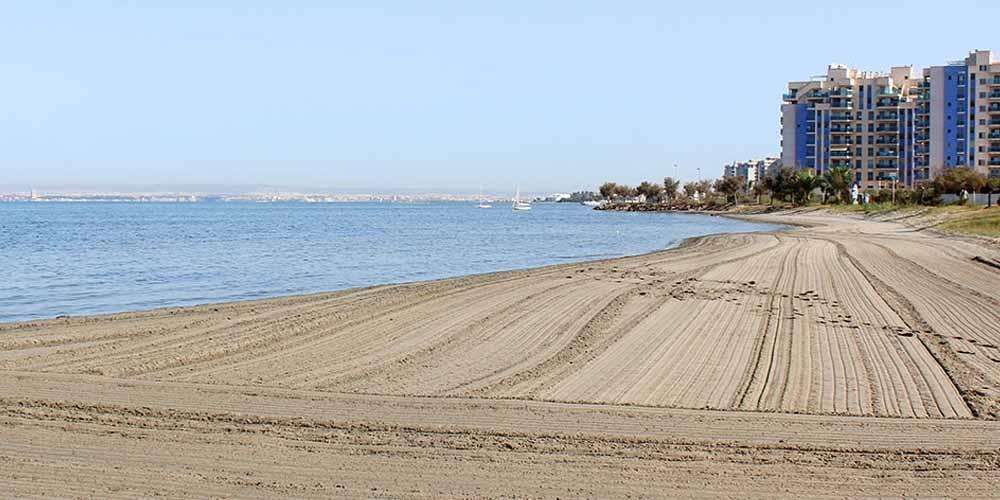
Playa Chica La Manga in Murcia, Spain

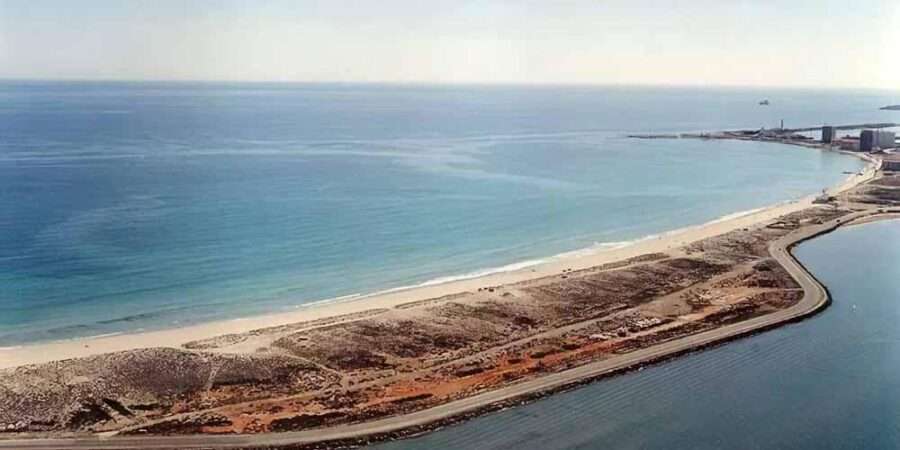
Playa Chica is a long, narrow beach located in La Manga, the outer face of the Mar Menor, a semi-salty lagoon on the Murcian coast. Due to the special conditions of the area, its occupancy is low in areas where there are few structures and high in areas close to services, such as showers, toilets, and restaurants.

The best time of year to visit La Manga del Mar Menor for warm-weather activities is from late June to early September. During these months, nearby establishments and the municipality provide important services, such as freshwater, bins, showers, and the rental of sun loungers, footbaths, and bicycles.

Some Crucial Aspects of the Mar Menor

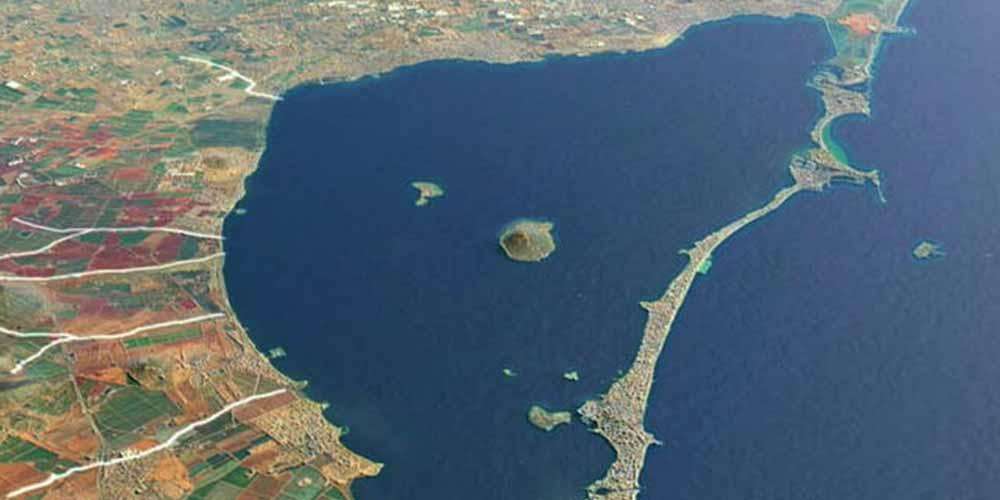
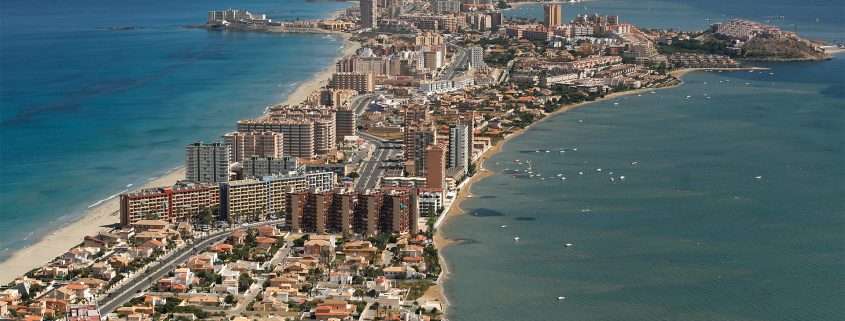
An overview of the Mar Menor and La Manga, Murcia, Spain

All the beaches enclosed by the Mar Menor have similar characteristics, meaning calm, shallow, and salty waters fed by the Mediterranean Sea. These waters turn this internal lagoon into one of the best places in Europe to learn aquatic sports, such as sailing and windsurfing. All the beaches located on the coast of the Mar Menor are longer, wider, and susceptible to small wave conditions.

There are two administrations in La Manga. The far end, to the north, belongs to the municipality of San Javier, while the low section belongs to the municipality of Cartagena. Most of La Manga’s length is full of hotels and holiday apartments, although it also has an important residential population. Still, as the northern end is narrow, the population density is low, so beaches, such as the Playa Chica, are emptier.

Playa Chica La Manga Location

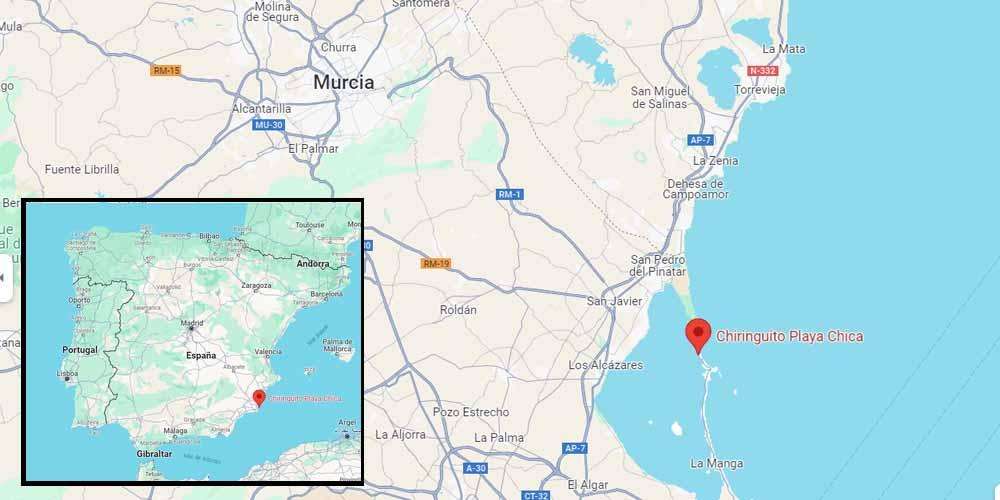
The location of Playa Chica La Manga in Murcia, Spain

The Playa Chica is located in La Manga, a narrow piece of land that separates the Mar Menor from the Mediterranean Sea. It is at the northern end of La Manga and is administered by San Javier.

In general, all the locations in La Manga are defined by the distance between that point and the tourist information point at Cabo de Palos, which corresponds to point 0. The far end of La Manga is km 18, at the Torre de la Encañizada. La Playa Chica is at km 16,5.

As such, the Playa Chica has some of the most special locations among all the beaches of the region of Murcia, giving you the opportunity to witness both sides of the sea and enjoy a magnificent drink or seafood dish in the restaurants of the zone.

Main Features Playa Chica La Manga

Now, let’s check the main characteristics of this magnificent beach in the northern part of La Manga, Murcia.

  • Beach: Playa Chica
  • Type of sand: thick sand
  • Water temperature: +22°C
  • Wave height: 0.8 m.
  • Average wind: 11.2 miles per hour
  • Average air temperature: +18°C
  • Swimming conditions: moderate waves
  • Length: 1.800 m
  • Average width: 10 m
  • Sea: Mar Menor
  • Occupancy rate: medium
  • Degree of urban development: semi-urban
  • Means of access: On foot, by car, bus, and boat
  • Anchoring area: yes
  • Protected area: yes

Chiringuito Playa Chica

Chiringuito Playa Chica in Playa Chica beach in La Manga, Murcia, Spain

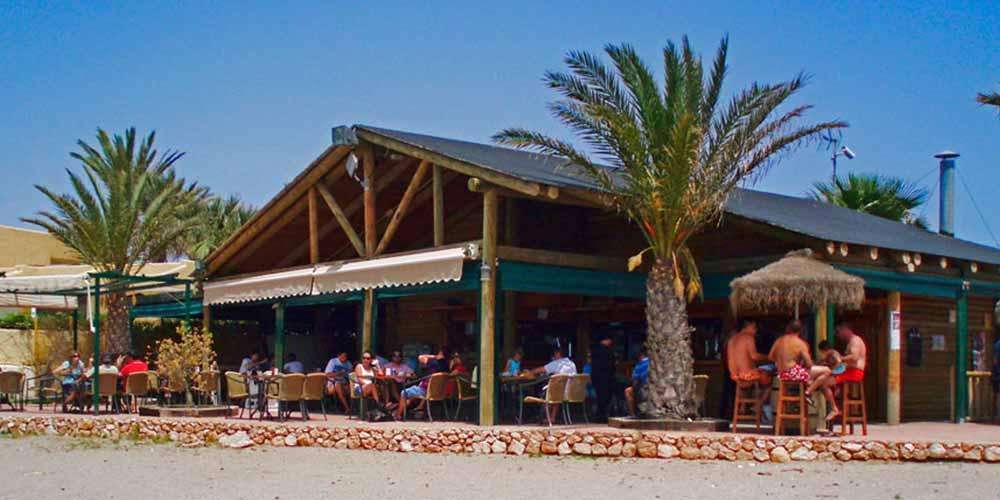
The famous Chiringuito Playa Chica — chiringuito is a beach bar — is at the end of the beach, to the north. It is the zone of the beach where we can hire sunshades and sun loungers to rest all day while working on our tan. As such, this zone of the Playa Chica is high in occupation.

Schedule. The restaurant is open from 10 a.m. to 1 a.m. Monday through Thursday and from 10 a.m. to 2 a.m. Friday through Sunday.

Address: Chiringuito Playa Chica, Gran Vía de la Manga, Km 16, 5, 30380 La Manga, Murcia.

Telephone: (+34) 968 437 903

Email: info@playachicalamanga.com

Services:

  • Parking.
  • Bar.
  • Internet WiFi.
  • Restaurant.
  • Disabled wheelchair.

Flora and Fauna of the Region

The zone of Murcia and the area of the Mar Menor is a rich environment with plenty of endemic vegetable and animal species. Among the vegetation that abounds in the zone are the Salicornia (Salicornia Europaea) and the Orobal. The first is a creeping plant that grows on the coastline of La Manga.

Salicornia Europaea, a common plant in La Manga
Salicornia Europaea

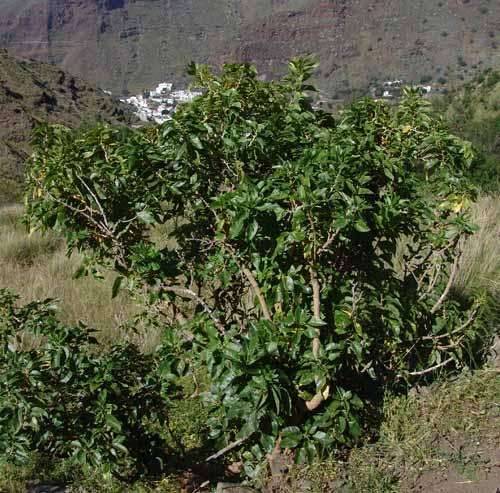
Orobal is a bush that grows in dry and wet conditions. Pharmaceutics use this bush for medicinal purposes. It has strong narcotic and hypnotic effects.

An orobal in La Manga
Orobal

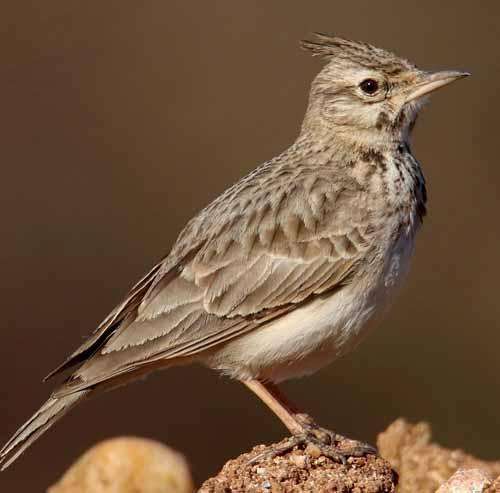
Regarding fauna, the common lark (Galerida cristata) is a small bird that stays in the same location all year on the coastline and other parts of the region of Murcia.

Galerida Cristata, a common type of bird in La Manga
Galerida Cristata.

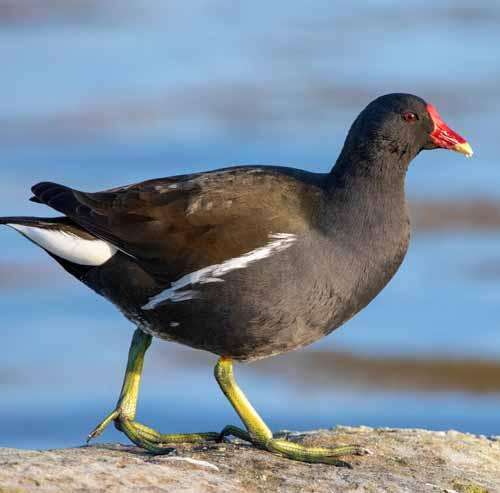
The moorhen (Gallinula chloropus) is another common bird that inhabits the Mar Menor and the surroundings of Playa Chica. This bird grows in the zones of the Mar Menor with abundant vegetation.

Gallinula chloropus, a beatiful bird in Playa Chica La Manga
Gallinula chloropus.

We can also find noisy parrots (Cotorrita verdigris) near the beach. Parrots are highly adaptive to most biomes, so they multiply easily and inhabit all the zones of the Mar Menor and the region of Murcia.

Cotorrita verdigris, a common parrot in Playa Chica La Manga
Cotorrita verdigris.

Accessing La Playa Chica La Manga

There is a bus service that runs throughout La Manga, from south to north and vice versa, throughout the day. This service has several stops throughout La Manga, which will allow you easy access to the beach. The area also has several parking services, especially in urban areas. This way, you can get to the beach without problems and simply walk a few meters.

  • Bus service: Gran Vía de La Manga del Mar Menor Línea 15 de Alsa City Cartagena
  • Parking conditions: In the vicinity
  • How to get there: Mileage point 14.6 to 16.4 Gran Vía de La Manga

The Bottom Line

A view of the Playa Chica La Manga and the Chiringuito

Playa Chica is a small but interesting beach located in La Manga, Murcia, one of the most beautiful places on the Mediterranean coast. From this very particular area of ​​La Manga and Spain, you can enjoy a wonderful view of the Mar Menor and the Mediterranean Sea and its magnificent waters, which stand out for their transparency, purity, warm temperatures, and intense blue color.

Suppose you are thinking of visiting the Murcia region. In that case, you should not forget to visit La Manga and the incredible but relaxing Playa Chica and, of course, have a refreshing drink at the beach bar or on a sun lounger. It is the perfect panorama for this coming summer, which promises high temperatures and fun times.

Enjoy Your Private Paradise in Villa Murcia!

Looking for the perfect place to stay in Murcia? We’ve got just the spot for you!

Villa Murcia – Your Private Paradise

Wake up to coffee on a sun-drenched terrace, unwind in a warm jacuzzi after a day of exploring, and end your evenings with dinners in the summer kitchen. Nestled in charming Santiago de la Ribera, Villa Murcia offers more than just a holiday—it’s your personal oasis of comfort, style, and unforgettable moments.

Highlights:
✔ Spacious living room with a large sofa and open kitchen – perfect for shared memories
✔ Three elegant, air-conditioned bedrooms with private terraces – your peaceful retreat
✔ Extra fold-out sofa in the living room – ideal for additional guests

Whether it’s a romantic escape, a family getaway, or a relaxing break with friends – Villa Murcia is your dream stay.

Book now and experience the magic of the Spanish sun!

Read More
The National Museum of Underwater Archaeology in Cartagena

The National Museum of Underwater Archaeology in Cartagena

Spain has some of the most incredible museums in the world, with magnificent modern architecture, such as the City of Arts and Sciences in Valencia, the Museum of Contemporary Art of Barcelona (MACBA) in the Catalan capital, and the Reina Sofía in Madrid. Still, an unrivaled museum dedicated to underwater exploration and archeology is the National Museum of Underwater Archeology in Cartagena, Murcia.

This museum receives hundreds of visitors every day. It has all the essential services and elements that make it one of the most important museums in terms of underwater research and the preservation of cultural heritage.

Let’s explore this magnificent museum from various perspectives, from its architectural design to the relevance of its exhibitions.

Table of Contents:

What Is the National Museum of Underwater Archaeology?

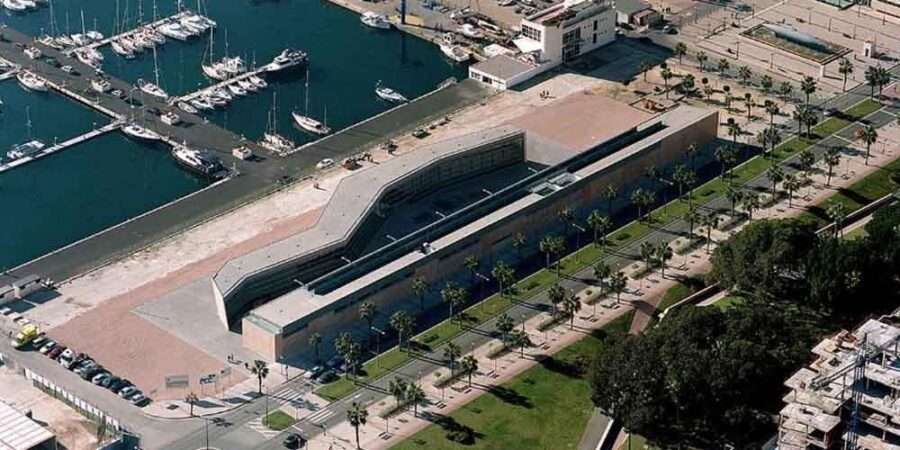
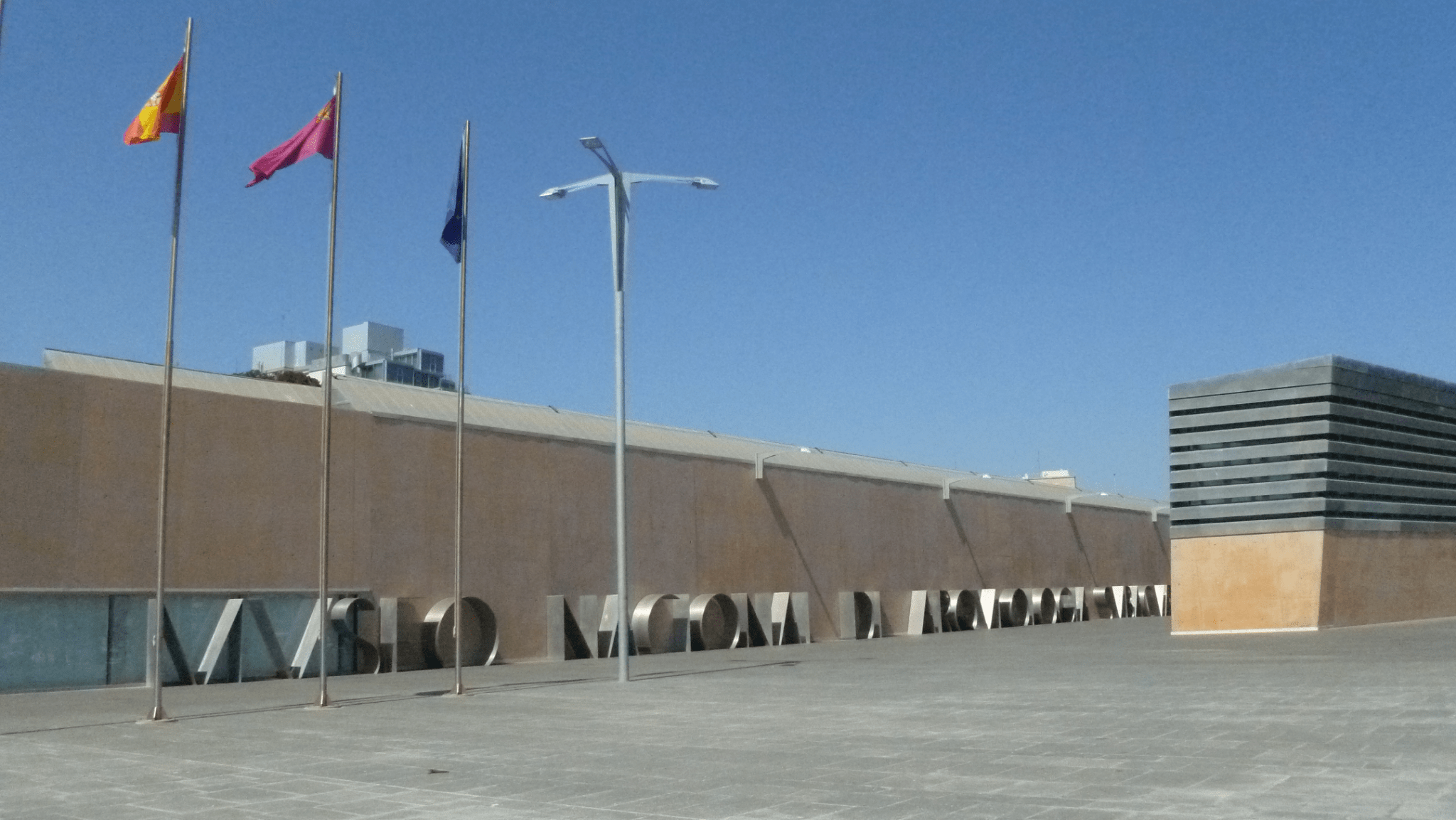
The National Museum of Underwater Archaeology facade and exterior

The National Museum of Underwater Archaeology, or ARQUA—a mix of the Latin words Archaeolgia and Aqua—is an international institution whose mission is to discover, collect, and preserve the rich underwater archaeological heritage of the Mediterranean and surrounding bodies of water. This museum is also known as Museo Nacional de Arqueología Subacuática, or “ARQVA,” in Spanish.

The National Museum of Maritime Archaeology and the National Centre for Submarine Archaeological Research were created in 1980 and officially opened in 1982. The museum’s opening marked the first step in deep research into the coast and a professional program of diving and subaquatic archaeology courses. With the opening of this marine archaeology museum, the Laboratory for Water-Saturated Archaeological Wood was created.

Currently, The National Museum of Underwater Archaeology has several projects whose main goal is to promote the subwater cultural heritage of the Region of Murcia. These include the Maritime Archaeological Heritage Route in Spain and Portugal and Archeomed, which studies and restores the maritime cultural heritage of the Mediterranean.

The ARQUA also boasts some important archaeological interventions, especially in collaboration with other institutions. Three of the most important are the archaeogeophysical prospecting in the bay of Cartagena, which was carried out with the Aurora Trust Foundation; project Bajo de La Campana, in collaboration with INA; and conservation and protection in situ on the site of the Phoenician boat Mazarron 2.

Location of the National Museum of Underwater Archaeology

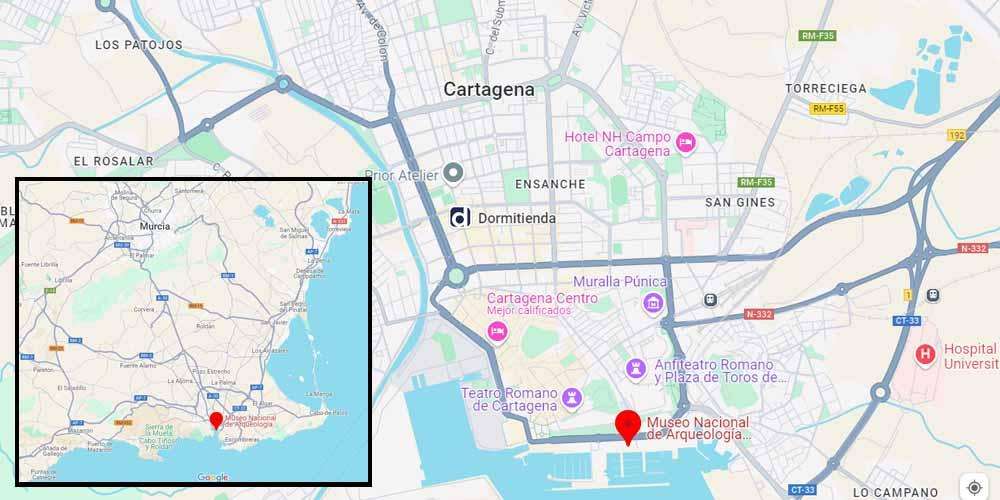
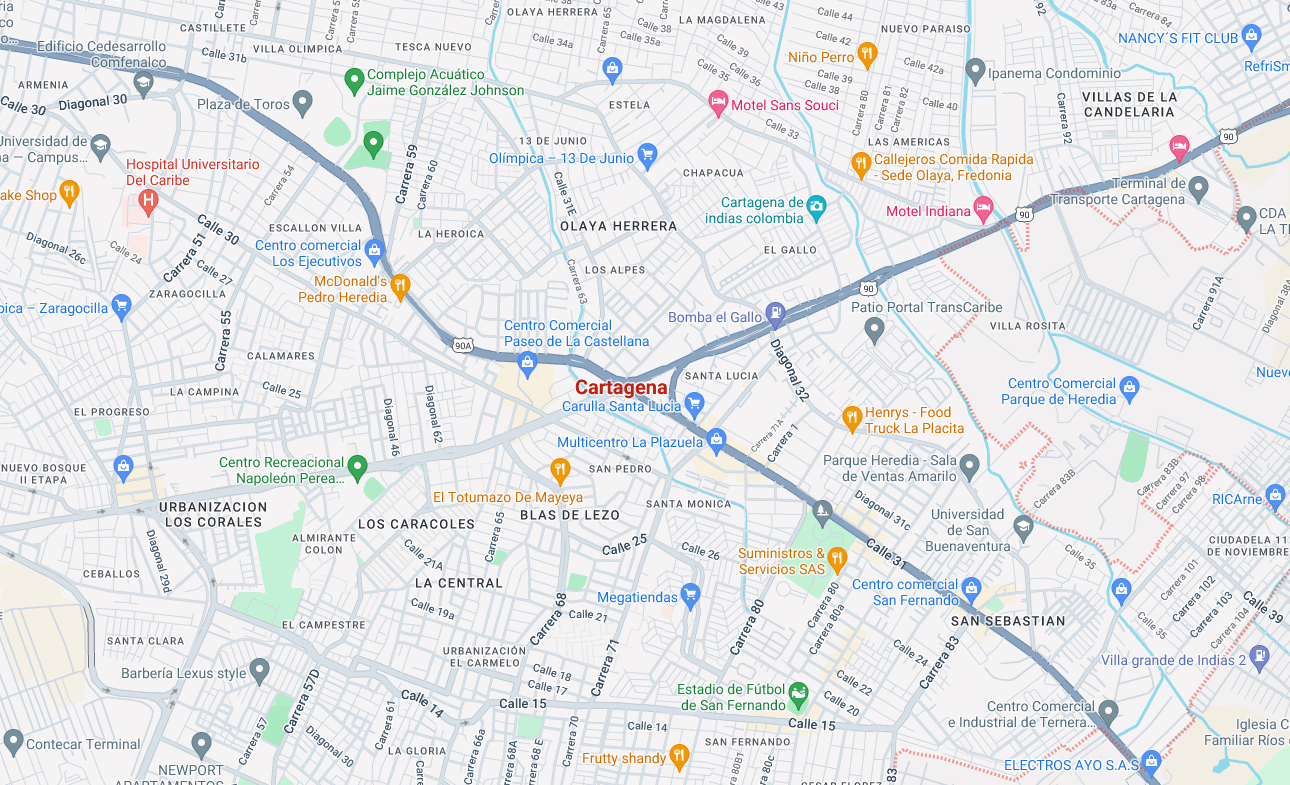
The National Museum of Underwater Archaeology location in Cartagena

The National Museum of Underwater Archaeology is located in the Paseo del Muelle Alfonso XII, Cartagena, a Spanish town on the Mediterranean Sea’s border in the region of Murcia, in the southeast part of Spain. The city was founded by The Carthaginian Hasdrubal in 227 B.C.

This two-building museum and all its facilities are easily accessible since they are located in a highly crowded area near the center of the city.

The ARQUA is housed right on the harbor in Cartagena, in front of where the cruise ships dock. This way, the building is directly related to the ocean—the Mediterranean Sea and the neighboring sites—and integrates a crucial part of the city’s history.

Address: P.° Alfonso XII, 30202 Cartagena, Murcia, Spain.

Schedule: Tuesday through Saturday, 9:30 a.m. to 8 p.m.; Sunday, 10 a.m. to 3 p.m.; Monday close.

Telephone: +34 968 12 11 66

Google Plus Code: H2X9+3V Cartagena, Spain

Sunday: Free Entrance

Story and Architecture

The National Museum of Underwater Archaeology section
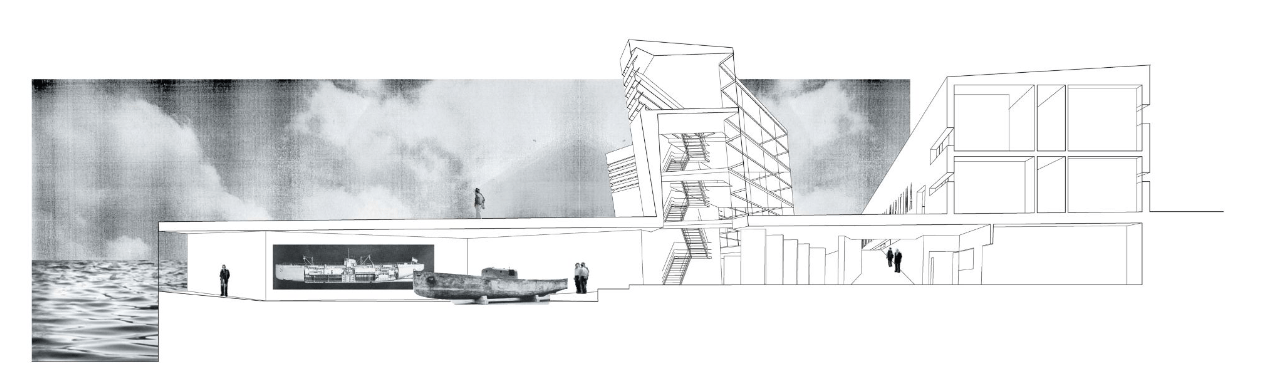
Draft for the new National Museum of Underwater Archaeology

In 1992, the Cartagena Port Works Board—the city’s Port Authority—decided to donate a piece of land to the city. This site would be the new museum space, so a new architectural project with a total area of ​​2,800 m2 came to light. The architect who developed this project was Guillermo Vázquez Consuegra, who designed a preliminary project contemplating 6,000 m2 of construction.

Construction began in January 2001 following a bidding period. Finally, on January 23, 2003, the cornerstone was placed. The new headquarters of this Museum of Underwater Archeology was inaugurated in 2008.

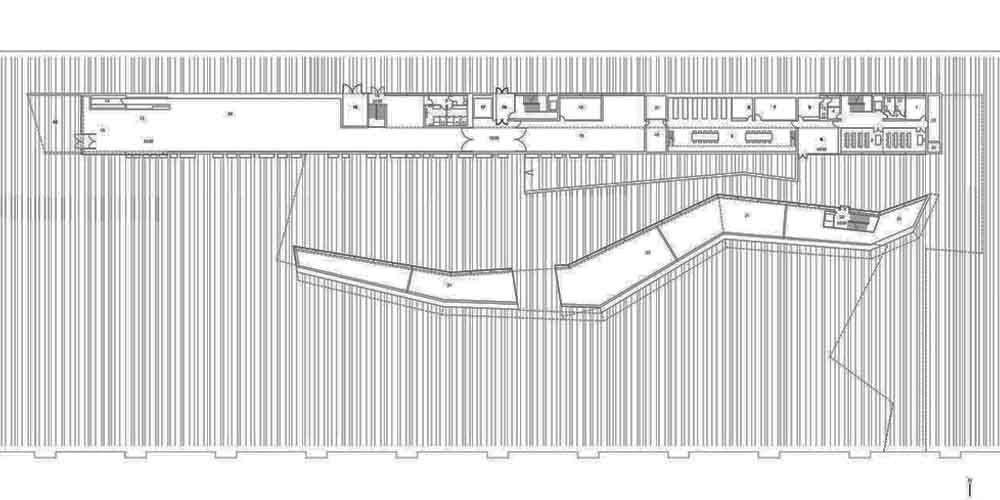
ARQUA surface plant
The low level of the museum

The museum’s architecture includes two volumes that emerge at the low level but are linked to the underground level, as you can see in the draft at the beginning of this section. This lower level is occupied by several connected galleries that form a route. This section also has a viewpoint at the edge of the sea from which you can see the promenade and the port.

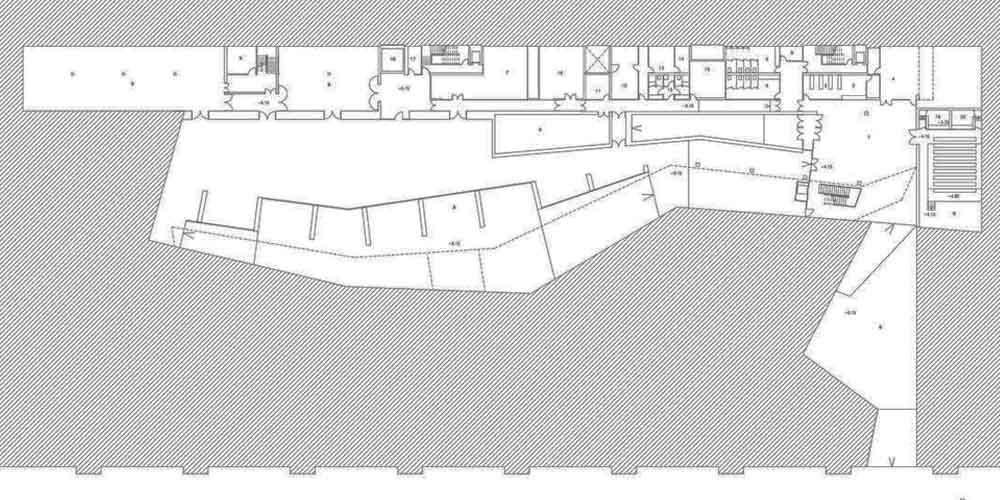
ARQUA first level
The underground floor of the museum.

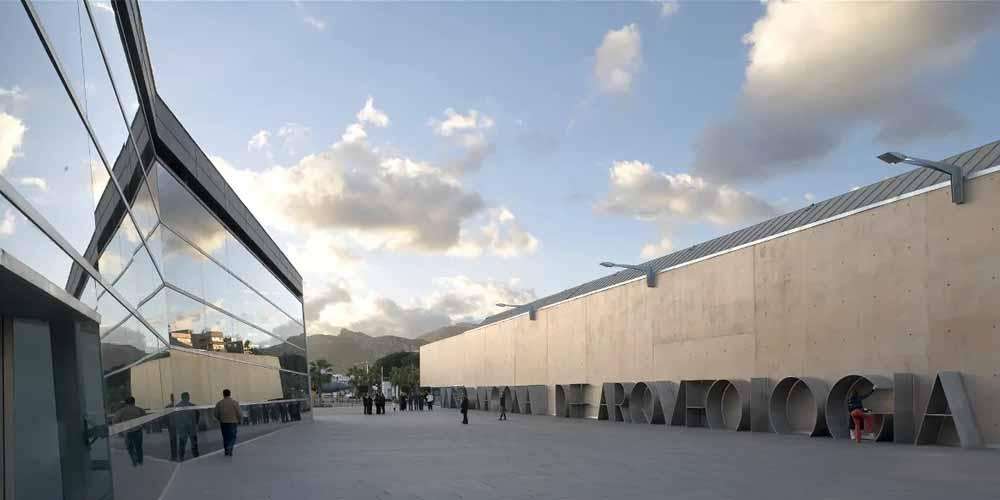
The museum’s architecture has an open space without significant walls—rather panels—and transparent glass that builds the rooms and sections. In this way, we can move freely through the two levels that make up the museum using the connections, stairs, and elevators. The two buildings form an impressive modern structure, joined below ground level and designed to create an underwater effect.

The museum is mainly made of reinforced concrete, which creates large exhibition spaces. Wood is also used inside, giving it a marine feeling and adding color to the building.

Cartagena Curiosities

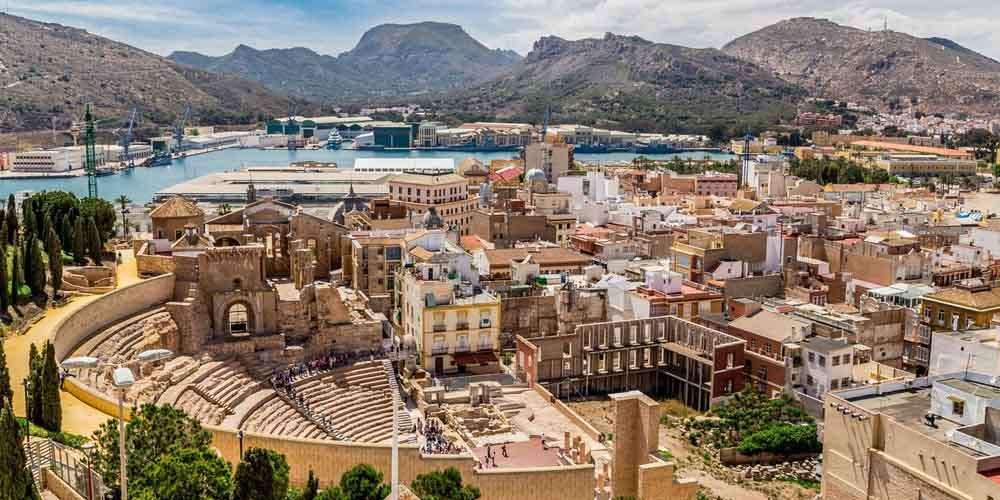
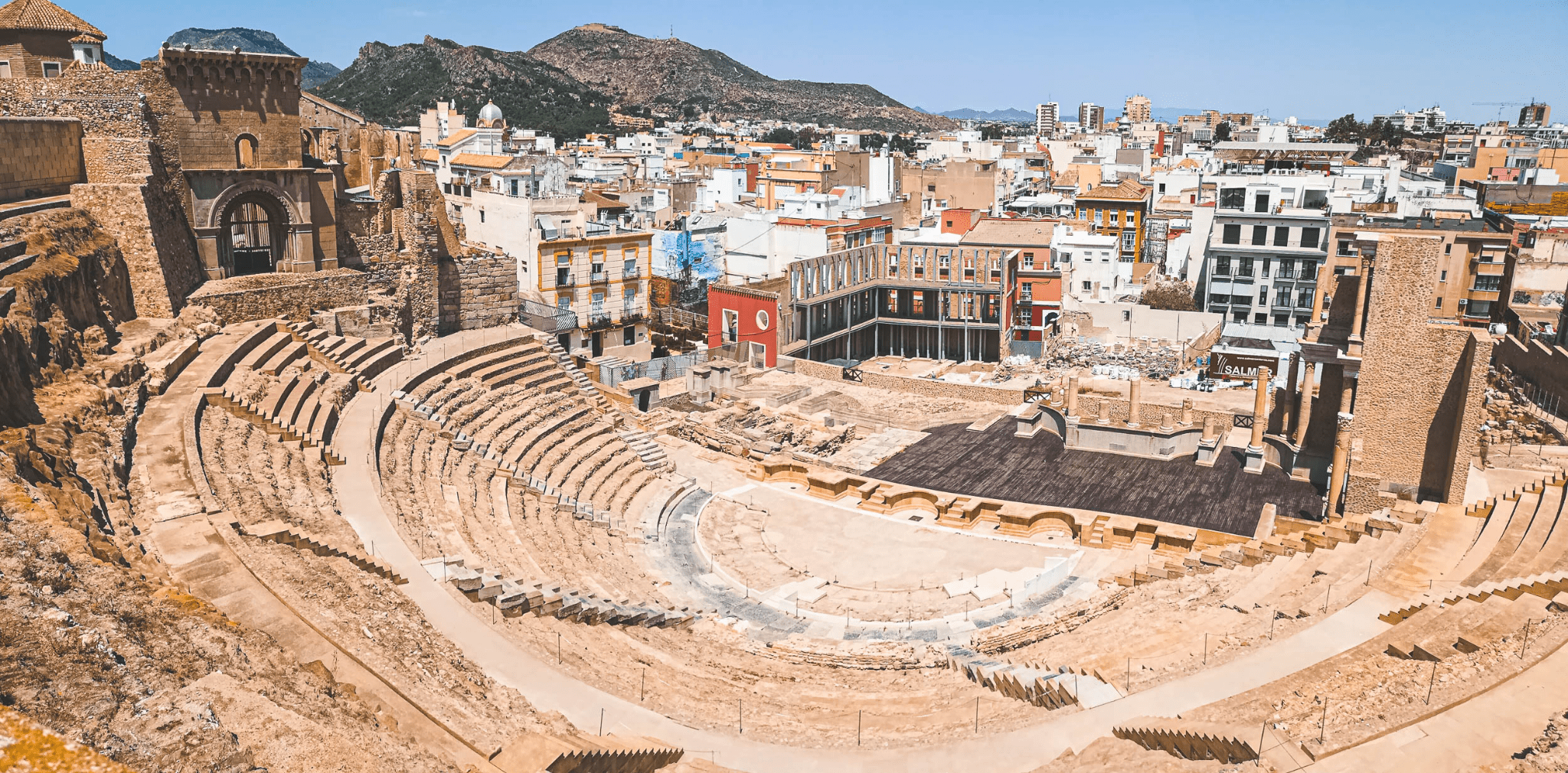
The Old Roman Theatre in Cartagena, Spain

For most of its history, Cartagena’s economy was based on the extraction of silver, lead, and zinc from the Sierra Minera, located 15 kilometers away, and on the chemical industry (sulfur, explosives, and phosphate fertilizers).

Today, Cartagena’s economy is based mainly on the export of olive oil, citrus fruits, vegetables, wine, and alfalfa, as well as shipbuilding. However, Cartagena is world famous for its tourist attractions. It is due to its enormous cultural and artistic heritage that spans more than two thousand years of history.

Among other exhibitions and areas that we can see during our visit to the city are the Peral submarine exposed in the port, the numerous archaeological remains from the Carthaginian era, fortresses, military buildings, and numerous modern and neoclassical buildings. The Carthaginian and Roman festivities also stand out among the panoramas of the citadel, including their Holy Week processions.

What Can We Find in this Spain National Museum?

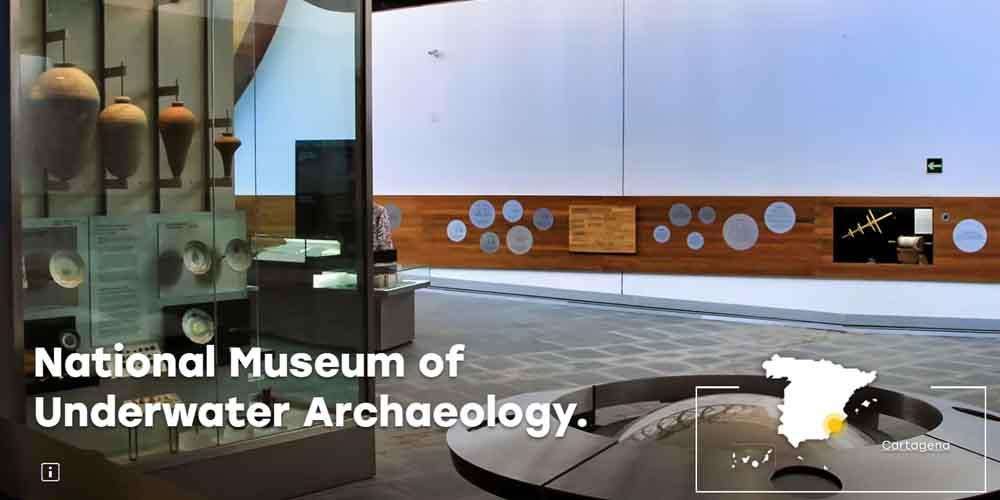
The permanent exhibition in the National Museum of Underwater Archaeology

The permanent exhibition “La Navegación Oceánica.” is an exposition that hosts a significant part of the cargo of the frigate Nuestra Señora de las Mercedes.

The second floor of the museum is dedicated to explaining subaquatic archeology, with particular emphasis on the reality of the Murcia coastline and recent findings. The second floor also explains the scientific methodology and technology that the museum’s experts use when investigating. Consequently, we can find several models, dioramas, reproductions, interactives, and texts that show the wealth of the Mediterranean Sea and archeology.

The permanent exhibition also highlights the importance of the Convención sobre la Protección del Patrimonio Cultural Subacuático de la Unesco, or the National Plan for the Protection of Underwater Cultural Heritage, which has a single goal: the adoption of measures for the protection, conservation, restoration, and diffusion of the rich heritage that exists in the waters of Cartagena and surrounding. This permanent exhibition also emphasizes the disastrous consequences of looting on cultural patrimony.

Mare-Hibericum

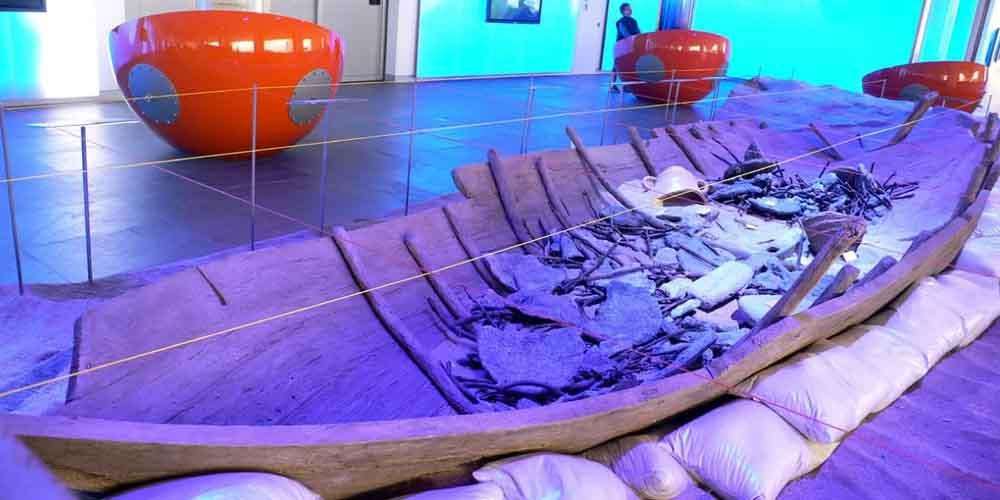
A roman boat in the ARQUA

The museum’s lower level—at the ocean’s level—exposes cultural goods in chronological order. It allows us to review the history of underwater archaeology from prehistory to the 20th century.

Particular highlights in this exhibition include Phoenician inscriptions, a unique collection of elephant tusks, lead ingots, anchors, gold and silver coins of the Epoque, and a real-size model of a Roman merchant ship. All these objects correspond to a small part of the collection in this museum dedicated to the exhibition of valuable pieces of cultural heritage found in underwater archaeological excavations.

An exhibition in the National Museum of Underwater Archaeology

The museum also features intricate miniature dioramas depicting port activity and models of ships from different periods in the Mediterranean Sea. One notable exhibition is that of the Spanish frigate Nuestra Señora de las Mercedes, which sank off the coast of Portugal in 1804.

This exhibition gained significant attention due to the conflict between the Spanish government and Odyssey Marine Exploration, a treasure-hunting company. Ultimately, artifacts valued at around $500 million, including a considerable collection of traditional Spanish coins, were returned to Spain from Portugal and are now on display at the museum.

Extra Facilities

The museum has a stylish cafeteria located on the waterfront, from which we can see the sea and the surroundings of the port. It is the right place to enjoy a café and eat a sweet piece of pie. This space works as a basic restaurant where we can have food and drinks. There is also a parking space below the Paseo del Muelle Alfonso XII.

Children Activities

Several objects in the National Museum of Underwater Archaeology

The lower level offers numerous hands-on interactive games and visual-tactile activities designed for children to learn from. These activities blend scientific and archaeological knowledge to provide children with easily digestible facts. ARQUA is undoubtedly a great place to spend an hour or two with children, especially during hot summer days.

What Other Museums Can We Visit in the Zone?

As you can see at this point in the article, the region of Murcia, especially Cartagena, is full of ancient culture and areas of interest. Consequently, we can visit other museums and cultural destinations, such as those mentioned below.

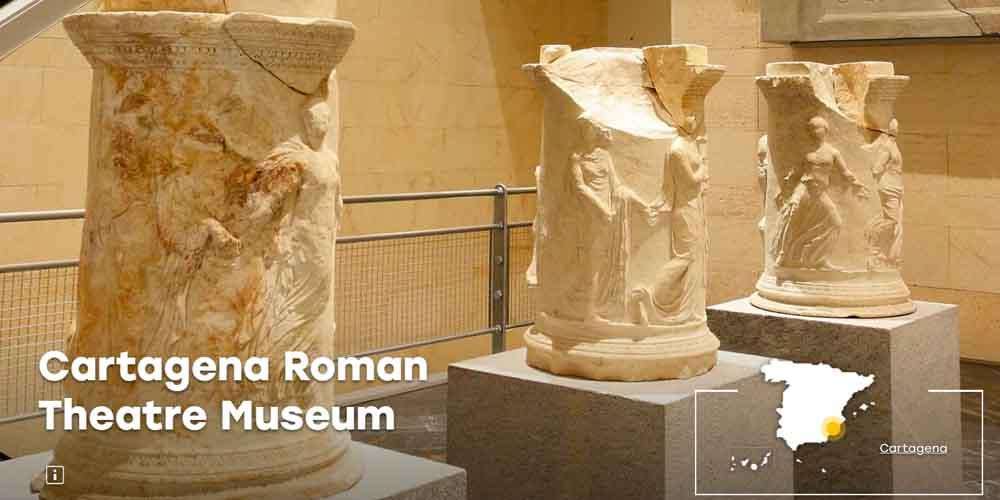
Cartagena Roman Theatre Museum

A sculpture in the Cartagena Roman Theatre Museum

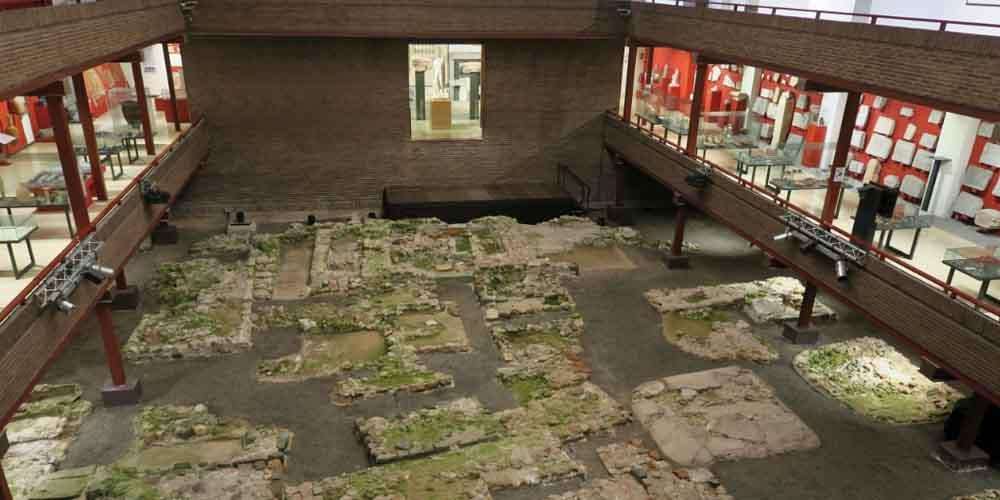
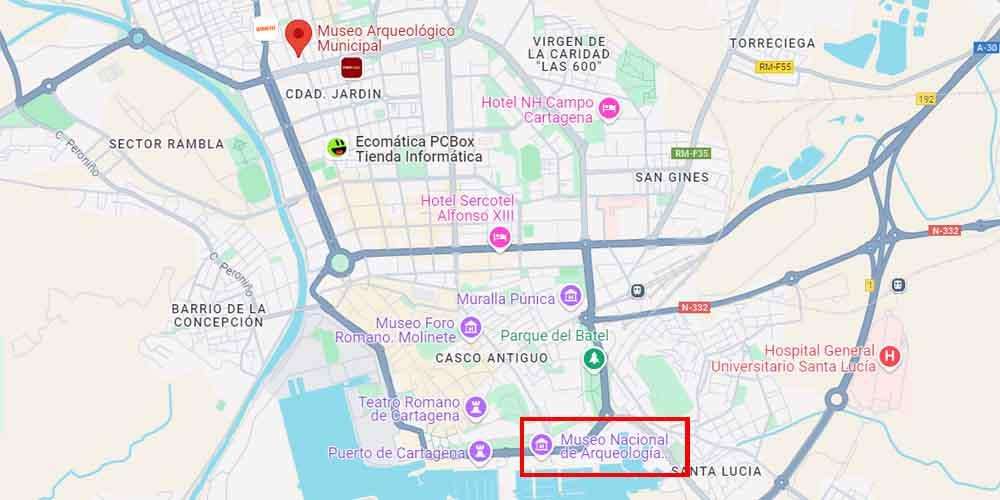
The Roman Theater Museum of Cartagena is 0.4 km away from the National Museum of Underwater Archaeology. This museum has a huge volume of pieces discovered in an excavation in the area of ​​the Roman Theater of Cartagena, built between the 5th and 1st centuries BC. This museum seeks the restoration of a large part of the ancient city of Cartagena and its ancient theater. It contains multiple archaeological objects, some broken and others restored, and shows them through a clear exhibition of panels and dioramas.

fundacion@teatroromanocartagena.org

Tel.:+34 968504802

Website: http://www.teatroromanocartagena.org/index.asp?idioma=2

Municipal Archaeological Museum

This museum is located 3 km from ARQUA, in the center of the city. It’s a good option for complementing knowledge about the story of antique Cartagena through archaeological science. It was built in 1982 over the Roman necropolis of San Antón. This museum stands out for containing the largest collection of Roman inscriptions in Spanish history. If you are a recurrent visitor to museums, the Municipal Archaeological Museum can’t be missed on your journey.

Muncipial Archaeological Museum market on a map

informacionmuseo@ayto-cartagena.es

Tel.:+34 968 12 89 68

Website: https://museoarqueologico.cartagena.es/

Visit the ARQUA in Cartagena, Murcia, Spain

The National Museum of Underwater Archeology is a good reason to take a trip to Cartagena and enjoy all its cultural heritage, restaurants, beaches, and sunny days. If you feel attracted by this type of panorama, we invite you to get to know the city and ARQUA and explore everything it exhibits. However, don’t forget to visit the beaches and coves in the area, such as Playa Chica La Manga and La Cala del Barco.

Enjoy Your Private Paradise in Villa Murcia!

Looking for the perfect place to stay in Murcia? We’ve got just the spot for you!

Villa Murcia – Your Private Paradise

Wake up to coffee on a sun-drenched terrace, unwind in a warm jacuzzi after a day of exploring, and end your evenings with dinners in the summer kitchen. Nestled in charming Santiago de la Ribera, Villa Murcia offers more than just a holiday—it’s your personal oasis of comfort, style, and unforgettable moments.

Highlights:
✔ Spacious living room with a large sofa and open kitchen – perfect for shared memories
✔ Three elegant, air-conditioned bedrooms with private terraces – your peaceful retreat
✔ Extra fold-out sofa in the living room – ideal for additional guests

Whether it’s a romantic escape, a family getaway, or a relaxing break with friends – Villa Murcia is your dream stay.

Book now and experience the magic of the Spanish sun!

Read More
Playa el Arena la Manga by Murcia

Playa el Arenal – La Manga: A Costal Beach Near Mediterranean Sea

La Manga is a renowned summer resort situated on the Murcia coastline in Spain. Locals often describe it as a “tongue of land” connecting Cabo de Palos to the Salinas de San Pedro del Pinatar, spanning over 20 kilometers and separating the Mar Menor from the Mediterranean Sea.

This expansive area has garnered acclaim in Murcia for its easily accessible, high-quality beaches and coves. Its popularity among tourists is attributable to the allure of its beaches and the region’s exceptional climate and vibrant day and nightlife scene, making it a favored destination in Spain.

About Playa el Arenal

Sunset near Playa el Arenal

Playa El Arenal, situated along the Mediterranean Sea, ranks sixth among 141 beaches in the Murcia region, approximately 46.6 kilometers away from the city center of Murcia. Nestled within the Playa Honda settlement, merely 8.8 kilometers from its heart, this beach resides in an urban area.

Characterized by a spacious bay boasting turquoise waters and golden sand, Playa El Arenal is a sandy beach, so you don’t need any specialized footwear when entering the water. Its expansive shoreline caters to various demographics, accommodating solitary travelers and enthusiasts seeking relaxation. However, the occupancy is high during peak seasons.

Access to Playa El Arenal is unrestricted, offering a range of amenities, including beachside dining options, changing facilities, showers, and restroom facilities. Lifeguard supervision ensures safety during operational hours.

Beyond swimming and sunbathing, visitors can engage in diverse recreational activities. Accessibility is facilitated by proximity to the main road, with on-site parking directly available on the premises. Furthermore, eight additional beaches are accessible within a five-kilometer radius, with Playa del el Pedrucho acclaimed as the best choice, boasting a commendable rating of 7.7.

History of El Arenal

El Arenal coast

What made El Arenal such a popular destination for tourists today? To find out, let’s go back in time a bit. S’Arenal, like the vast majority of Namorian towns, was a typical fishing village. The first mention of the village appeared in a document from 1887, when the village was inhabited by two dozen people.

The first settlers in the area belonging to Llucmajor arrived here in the late 19th century. They were engaged in the extraction of sea stone, which was transported by sea to Palma and then used in construction. During the same period, on the side belonging to Palma, the first houses for vacationers started to rise. They formed a no longer existing cluster known as “les Casetes dels Republicans” (the Republicans’ houses).

In 1914, the first hotel, Hotel Términus, opened in Arenal, and two years later the railroad from Palma to Llucmajor (which no longer exists today). However, it didn’t affect the demographic development of the village, as by the late 1930s, El Arenal officially had a population of 380.

The population has risen throughout the years, however, and the latest demographic report shows such statistics:

Beaches

You have the option to select from a diverse array of magnificent sandy beaches, ideal for experiencing serene beach vibes, enjoying refreshing beverages, and witnessing breathtaking sunsets.

On the Mar Menor shoreline, you’ll find pristine white sandy beaches featuring gently sloping shorelines and the crystal-clear waters of Europe’s largest saltwater lagoon, providing optimal bathing conditions for families with children.

At times, it is feasible to wade out as far as 50 meters while the water remains waist-deep. Additionally, the water temperature seldom falls below 15 degrees Celsius. During peak seasons, these beaches flood with tourists, so you must plan an early arrival to secure your preferred spot.

For those inclined towards a more dramatic beach setting with rolling waves, a quick journey across the road to the Mediterranean side presents an opportunity to immerse oneself in the vast expanses of coastal beaches, which are typically less occupied due to their expansive nature.

The amenities provided on these beaches vary based on size and potential occupancy. These include lifeguard supervision, restroom facilities, showers, disabled access, wooden walkways, rental options for parasols, sunbeds, hammocks, Wi-Fi availability, and designated children’s play areas.

La Manga del Mar Menor, Costa Calida

La Manga Strip

Also known as La Manga Strip, it has a length of 22 km and a width between 100 and 1200m. The Mar Menor Lagoon started as a bay with convenient access to the Mediterranean Sea. Mar Menor also benefits from its location, giving easy access to famous tourist areas like Los Alcazares and San Javier. The water temperature there is pleasant, usually much warmer than in the Sea, rarely dropping below 15 Celsius.

Playa S’Arenal

The resort of s’Arenal is situated approximately 10 kilometers east of Palma de Mallorca. Adjacent to the beach lies the town bearing a near-identical name, S’Arenal.

Regarding the beach itself, Playa s’Arenal spans 210 meters, forming a seamless extension of the nearly five-kilometer-long Playa de Palma, which stretches from Ca’n Pastilla to s’Arenal.

Palm trees in Playa s'Arenal

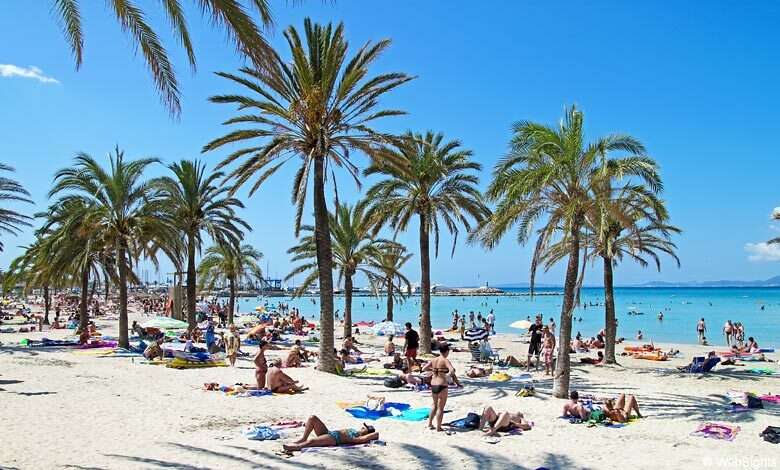
What sets Playa s’Arenal apart from the rest of Playa de Palma is the presence of beautiful palm trees adorning the entire beach, lending it a tropical ambiance. Characterized by its considerable width, the beach features fine white sand that gently slopes into the sea.

S’Arenal Holiday Resort

S’Arenal Holiday Resort

S’Arenal stands as one of the longstanding resorts in Mallorca, historically favored by German tourists. Over the years, it has catered to this demographic, creating numerous restaurants, cafés, and renowned bars like Megapark and Bierkoenig, which often host live entertainment events attracting several thousand guests.

In recent times, S’Arenal has gradually shifted towards international appeal, particularly noticeable in areas around the marina and the beachfront. The seaside promenade, extending kilometers towards Palma de Mallorca, also reflects this trend. Notably, along this promenade lie the famed Balneario 1 to Balneario 15 beach bars, renowned landmarks of the area. Also, there are plenty of food and beverage services if you want to try something else each day.

Furthermore, S’Arenal is home to the expansive Aqualand El Arenal water park, one of Mallorca’s largest, featuring an array of water slides, a wave pool, and various other attractions suitable for children of all ages.

Transport

The urban bus service facilitates access to the beach, specifically the Alsa line L-15, which conveniently stops at El Pedruchillo stop, a mere two-minute stroll from the shoreline.

Weather

The average annual temperature throughout the year sits at 18.2ºC. In the summer months of June, July, and August, it sits around 26.1°C. In the winter, it’s an average of 11ºC.

Enjoy Your Private Paradise in Villa Murcia!

Looking for the perfect place to stay in Murcia? We’ve got just the spot for you!

Villa Murcia – Your Private Paradise

Wake up to coffee on a sun-drenched terrace, unwind in a warm jacuzzi after a day of exploring, and end your evenings with dinners in the summer kitchen. Nestled in charming Santiago de la Ribera, Villa Murcia offers more than just a holiday—it’s your personal oasis of comfort, style, and unforgettable moments.

Highlights:
✔ Spacious living room with a large sofa and open kitchen – perfect for shared memories
✔ Three elegant, air-conditioned bedrooms with private terraces – your peaceful retreat
✔ Extra fold-out sofa in the living room – ideal for additional guests

Whether it’s a romantic escape, a family getaway, or a relaxing break with friends – Villa Murcia is your dream stay.

Book now and experience the magic of the Spanish sun!

Read More
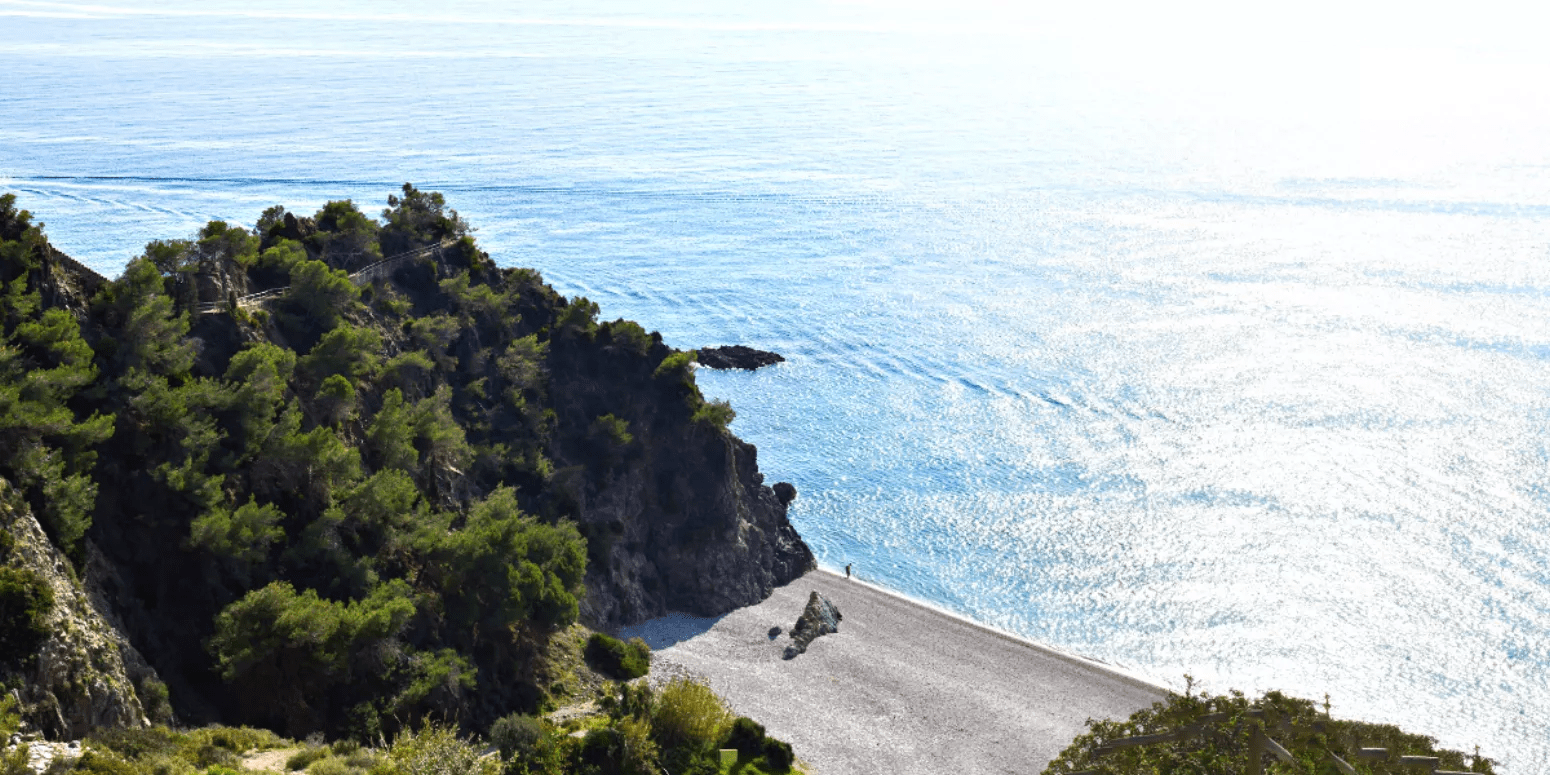
Cala del Pino landscape.

Exploring Cala del Pino Beach: A Hidden Gem Amidst Pine Trees

Nestled along the picturesque coastline, Cala del Pino Beach emerges as a serene escape, captivating visitors with its unique natural beauty and tranquil ambiance. Surrounded by lush pine trees and offering crystal-clear waters, this secluded beach is a treasure trove for those seeking a peaceful day by the sea.

Whether you’re interested in exploring underwater wonders through scuba diving and snorkelling or simply looking to unwind under the shade of pines, Cala del Pino provides an idyllic setting. With its easy access and family-friendly environment, it’s no wonder this beach continues to draw visitors back year after year. Join us as we delve into what makes Cala del Pino Beach the perfect summer destination.

Table of Contents

Geographical Characteristics of Cala del Pino Beach

Cala del Pino landscape.

Cala del Pino Beach is uniquely positioned on the east coast, offering a stunning view that captures the essence of tranquility. The beach is defined by its steep, craggy cliffs and the dense pine trees that line the shore, creating a naturally protected area that shelters visitors from the hustle and bustle of nearby towns.

The length of Cala del Pino is modest, yet it offers ample space for relaxation and play. The beach is divided into sections by natural rock formations, enhancing its scenic beauty and providing secluded spots for those looking for privacy. At the far end of the beach, the landscape opens up to reveal a smoother, sandy area, ideal for children to play safely under the watchful eyes of their guardians.

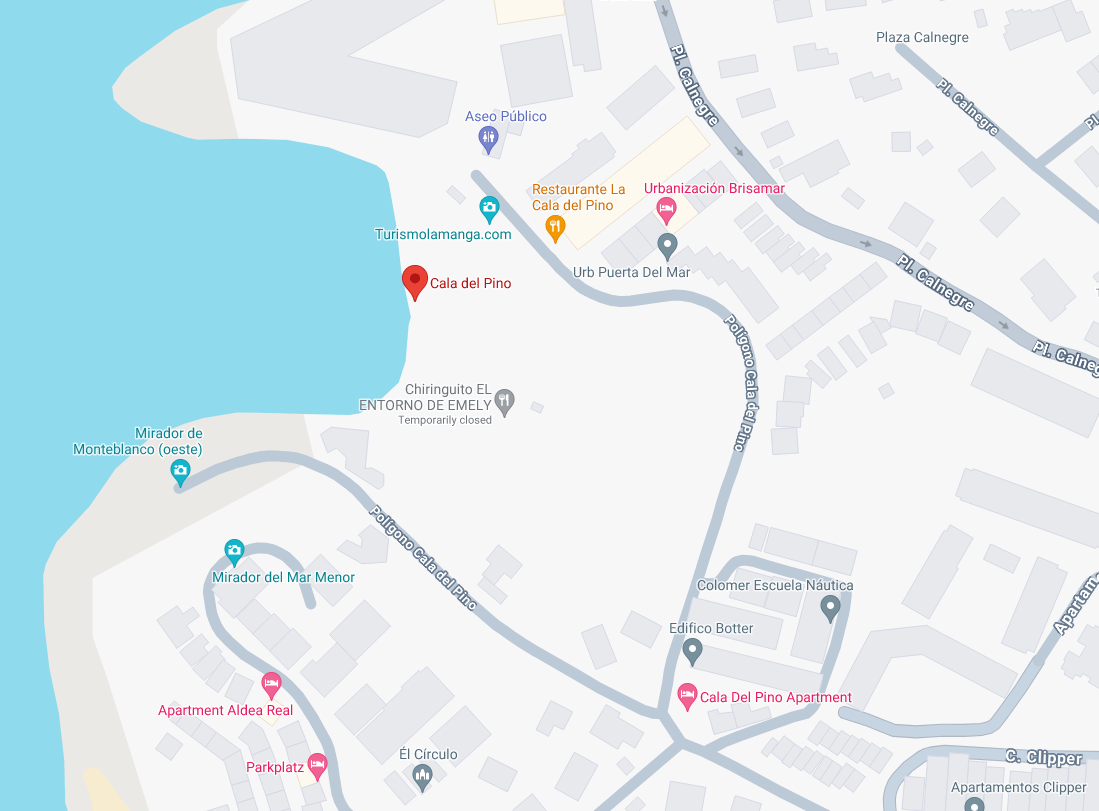
Access to Cala del Pino is easy, thanks to a well-maintained path descending from the main road. This path is connected to the N 340, making it straightforward for visitors arriving from various parts of the region to find this hidden gem. The road is an invitation to explore, winding through scenic vistas before revealing the stunning beachfront hidden below the canopy of pines.

Despite its hidden location, Cala del Pino is always near local amenities. The nearby town offers a variety of restaurants and shops, allowing visitors to easily spend the entire day at the beach without worrying about necessities. Whether continuing a journey along the coast or seeking a serene spot to anchor for the day, Cala del Pino Beach is a perfect choice, providing both isolation and easy access to comforts.

Location and Relevance of Cala del Pino Beach

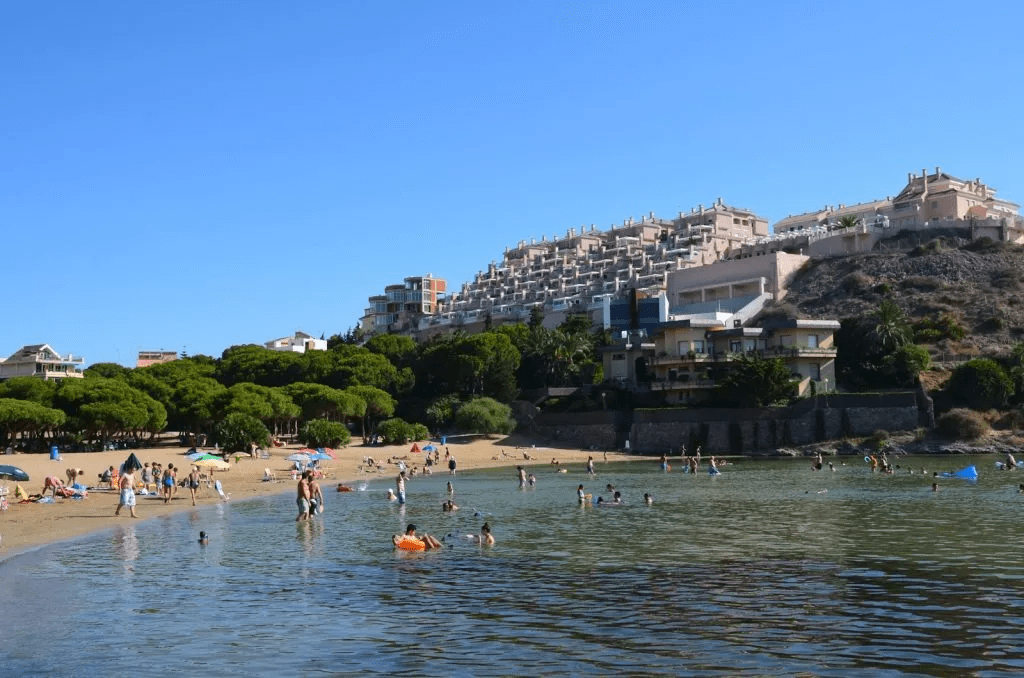
Cala del Pino landscape with tourists.

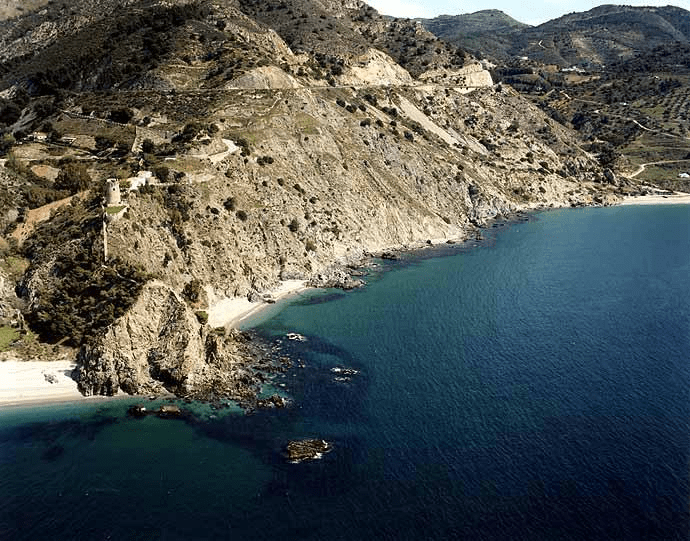
Cala del Pino Beach is not just another spot on the map; it holds a special place in the hearts of those who visit. Located near the historic site of Torre del Pino, an ancient watchtower, the beach draws beachgoers and history enthusiasts keen on combining a relaxing day with a touch of cultural exploration. The watchtower adds a historical narrative to the beach, showing the area’s past and role in coastal defense.

This beach is part of the series of calas del Pino, a collection of small coves separated by natural rock formations that provide each section with a unique character and privacy. They form a continuum of beauty along the shoreline, connected yet distinct, each offering a different experience to its visitors. The proximity of these beaches allows for an exciting day of beach-hopping, perfect for those who enjoy discovering new spots on foot.

Tranquility and Exclusivity

Cala del Pino’s occupancy level tends to be low, especially compared to more popular tourist beaches. This makes it an ideal choice for visitors looking for a quieter experience away from the crowded sands and noisy beachfronts. The beach’s location, tucked away from the main tourist paths, contributes to its tranquility and exclusivity.

The Reward of Discovery

Finding Cala del Pino is like reading a good book; it takes time and effort, but the reward is immensely satisfying. Those who take the time to seek out this hidden gem are rewarded with a pristine natural environment, historical context, and the peaceful ambiance of an uncrowded beach. Whether you are continuing your journey along the coast or looking for the perfect place to relax, Cala del Pino offers an exceptional retreat where you can truly disconnect and immerse yourself in nature and history.

Exploring Cartagena

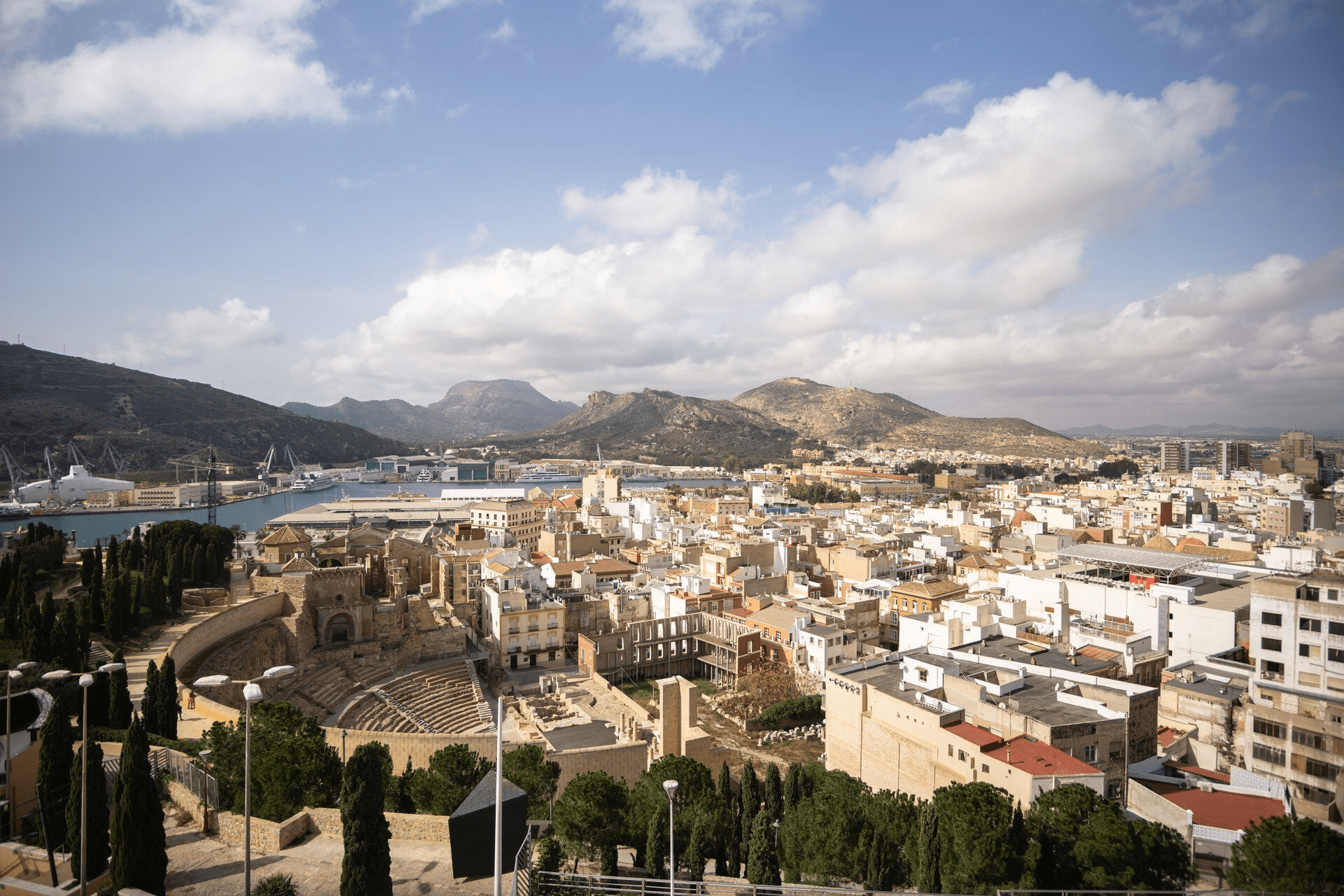
Cartagena landscape.

Cartagena, located in the Murcia region of Spain, is the closest city to Cala del Pino Beach. This historical port city boasts a rich tapestry of history, culture, and modern amenities, offering visitors diverse experiences.

Historical Significance

Cartagena’s history dates back over two millennia, with traces of its Phoenician, Roman, and Moorish past evident throughout the city. Visitors can explore ancient ruins, such as the Roman Theatre and the remains of the Punic Wall, which bear witness to Cartagena’s strategic importance in antiquity.

Cultural Offerings

Modern Cartagena is a vibrant cultural hub, hosting festivals, concerts, and art exhibitions year-round. The city’s museums, including the ARQUA National Museum of Underwater Archeology, showcase its maritime heritage and archaeological treasures. Visitors can immerse themselves in local traditions by attending Semana Santa processions or sampling regional cuisine at bustling markets and tapas bars.

Modern Amenities

Cartagena offers all the amenities of a modern city, from boutique shops to five-star hotels, catering to every budget and taste. Its picturesque waterfront promenade, lined with palm trees and outdoor cafes, is a popular spot for strolls and al fresco dining. Meanwhile, the city’s bustling commercial center boasts an array of shopping districts, theaters, and entertainment venues.

Accessibility and Connectivity

Situated along Spain’s southeastern coast, Cartagena is easily accessible by road, rail, and sea. Several major highways, including the AP-7 and A-30, serve the city, making it a convenient stopover for travelers en route to Cala del Pino Beach. Cartagena’s train station also offers regular connections to other Spanish cities, while its port welcomes cruise ships and ferries from across the Mediterranean.

Cartagena’s proximity to Cala del Pino Beach makes it an ideal base for exploring the region’s natural beauty and cultural heritage. Whether visitors are drawn to the city’s historic landmarks, cultural events, or culinary delights, Cartagena offers many experiences that complement a day of sun and sea at Cala del Pino.

Enjoy Your Private Paradise in Villa Murcia!

Looking for the perfect place to stay in Murcia? We’ve got just the spot for you!

Villa Murcia – Your Private Paradise

Wake up to coffee on a sun-drenched terrace, unwind in a warm jacuzzi after a day of exploring, and end your evenings with dinners in the summer kitchen. Nestled in charming Santiago de la Ribera, Villa Murcia offers more than just a holiday—it’s your personal oasis of comfort, style, and unforgettable moments.

Highlights:
✔ Spacious living room with a large sofa and open kitchen – perfect for shared memories
✔ Three elegant, air-conditioned bedrooms with private terraces – your peaceful retreat
✔ Extra fold-out sofa in the living room – ideal for additional guests

Whether it’s a romantic escape, a family getaway, or a relaxing break with friends – Villa Murcia is your dream stay.

Book now and experience the magic of the Spanish sun!

Conclusion

In conclusion, Cala del Pino Beach remains a cherished destination, offering an escape into its serene landscapes and azure waters framed by the lush green of pine trees. As you exit the beach, the memories of soft sands and gentle waves continue to resonate, inviting you to return.

For those looking to expand their adventure, the nearby city of Cartagena provides a rich tapestry of history, culture, and cuisine, just a short drive away. Whether you are interested in exploring ancient ruins or sampling local delicacies, Cartagena enhances the coastal experience with its vibrant offerings.

Each visit promises discoveries and delightful experiences, whether spending a day at the beach or exploring the streets of Cartagena. For an unforgettable journey in this beautiful part of Spain, Cala del Pino and its neighboring areas stand ready to welcome you with open arms. Remember, every trip to Cala del Pino is more than just a day by the sea; it’s a step into a world where nature and culture harmoniously intertwine.

Read More

Discover Playa Mistral: Paradise in San Javier

San Javier, situated in the Murcia region, is blessed with a seaside gem known as La Manga del Mar Menor. The Spanish municipality in the Autonomous Community of the Region of Murcia is located in the northern part of the Mar Menor region. The region is a popular destination for tourists, especially during the warmer months of the year.

On this narrow strip of land between the Mar Menor and the Mediterranea, you will find the enchanting Playa Mistral. In this article, we will cover the charms of this beach and everything it has to offer.

Table of Contents

La Manga del Mar Menor

Ample vision of La Manga Del Mar Menor, where San Javier and Playa Mistral is located.
Image Credit: Mediter Real Estate

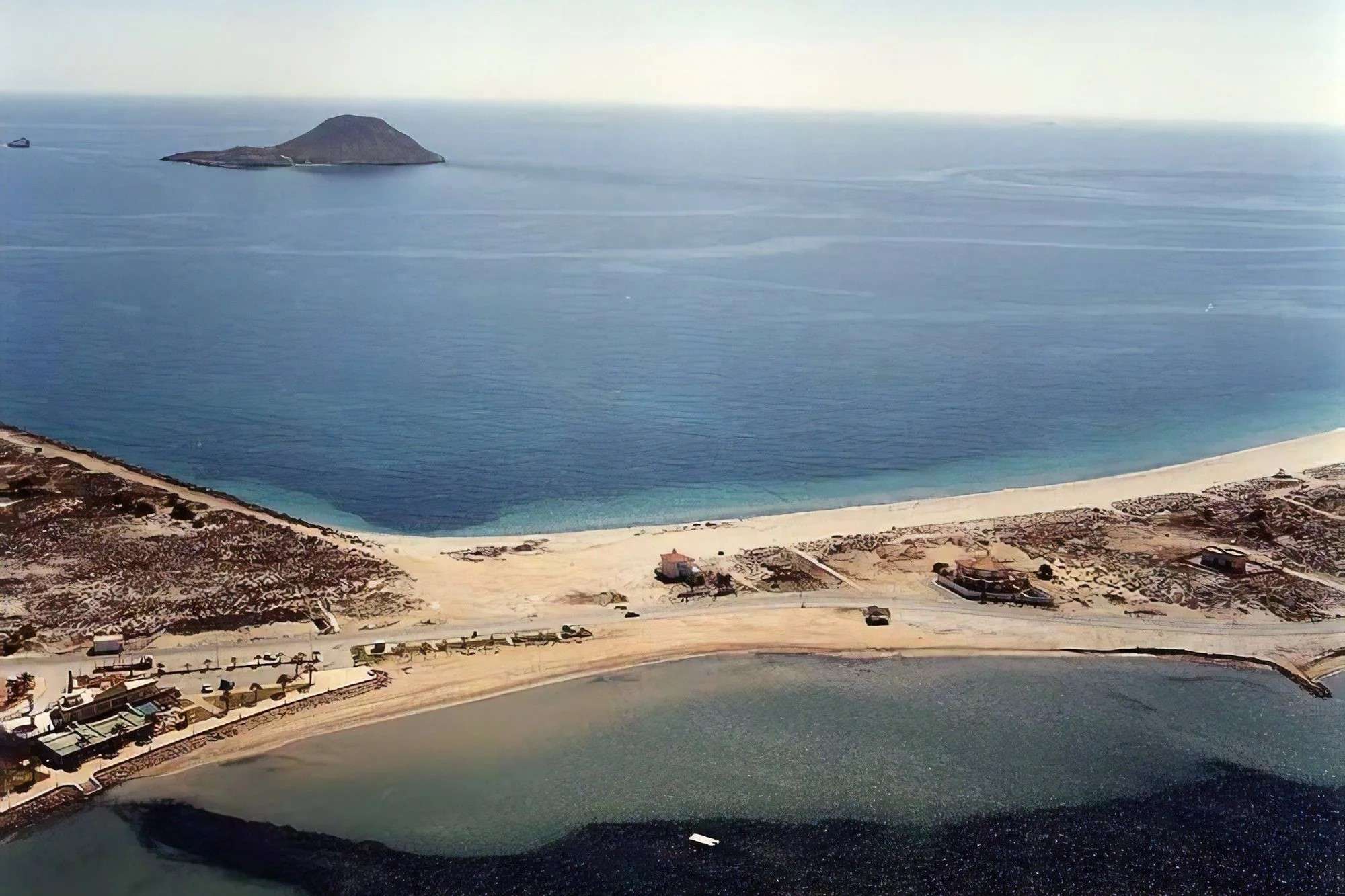
Explaining a little about the Manga del Mar Menor, or simply The Manga is a coastal cordon in the Region of Murcia, Spain. The strip of land is 22 km long and between 100 and 1200 meters wide, separating the Mediterranean Sea from the Mar Menor lagoon, which stretches from Cabo de Palos to the Salinas Natural Park, in San Pedro del Pinatar.

La Manga has a great number of services and leisure, distinguished by excellent service and its international character. In recent years, there has been a growth in the residential and commercial sector, with emphasis on holiday homes with enviable proximity to the sea and easy access to services and infrastructure. The calm waters of the Mar Menor and its unusual landscape constitute a unique place for nature and water sports lovers.

I loved La Manga for its unique beauty, with stunning beaches bathed by calm, crystal-clear waters. The sophisticated atmosphere and variety of time-out options, such as water sports and lively nightlife, made my visit an unforgettable experience.

Playa Mistral: A Paradise of La Manga del Mar Menor

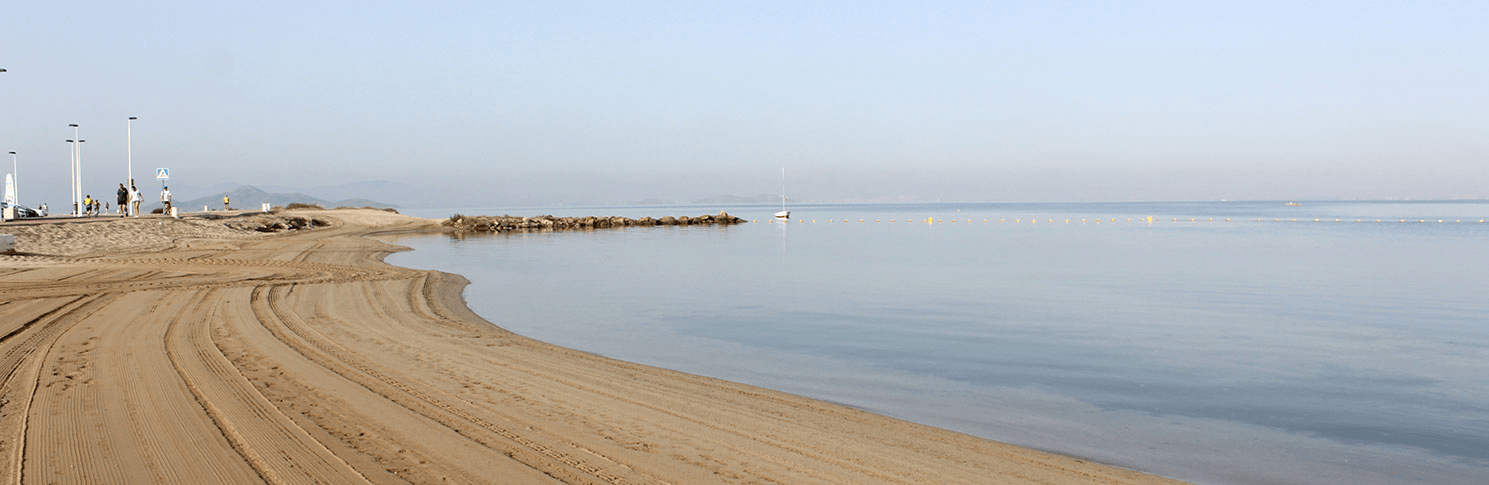
Panoramic vision of Playa Mistral, in San Javier
Image credit: Costa Cálida Región de Murcia Website

The stunning Playa Mistral is located within the coastal paradise of La Manga.

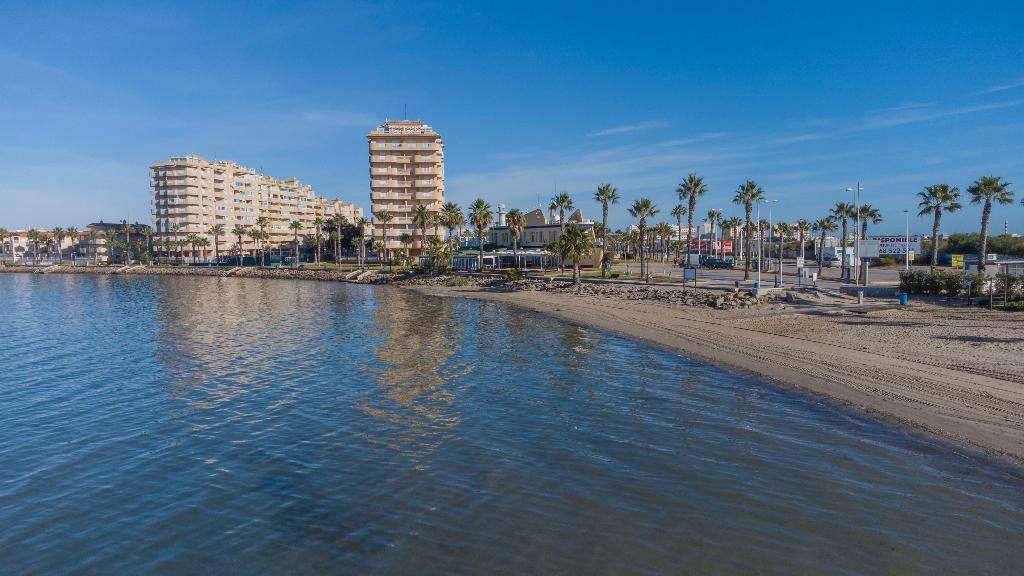
Playa Mistral is one of the beaches in La Manga del Mar Menor, occupying a privileged position in a densely populated area. Just 300 meters long and 10 meters wide, Playa Mistral enchants with its welcoming atmosphere. The fine sand and warm water teeming with small fish made my walk along the seaside extremely comfortable. And more than that, the beach offers a full range of services to ensure the comfort of visitors.

Beach Details

Length

300 meters

Width

10 meters

Environment

Wetland

Composition

Sand

Sand Type

Fine

Swimming conditions

Calm water

Nudist area

No

Level of occupancy:

Medium/low

Degree of urbanization

Semi-Urban

How To Get to Playa Mistral

Mistral Beach has simple and easy access. Here’s how you can get there:

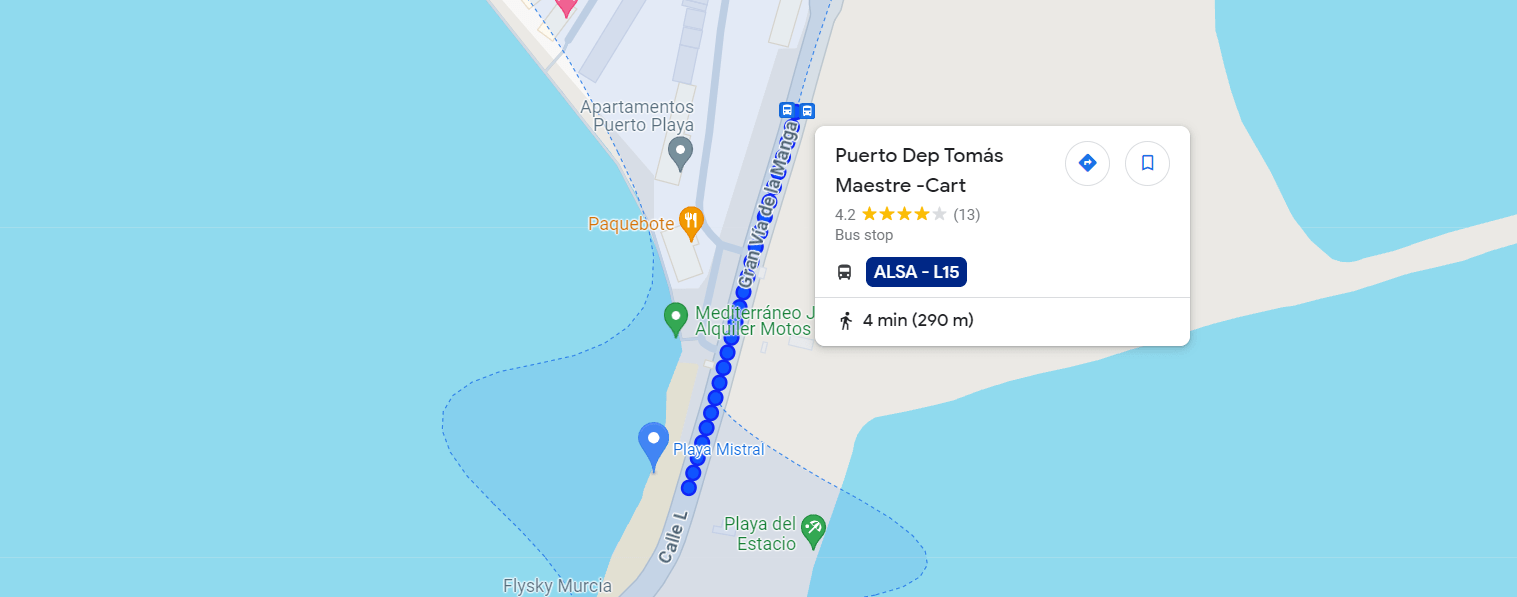
Google Maps image showing the Playa Mistal and the nearest bust stop Image Credit: Google Maps

  • Easy walk: The beach has well-signposted access, allowing for a peaceful walk there.
  • Car: For those who prefer to drive, simply take the Autovía de La Manga – MU-312 and take exit 117 towards Gran Vía. Parking, although limited to just under 50 spaces, is available in the location within 100 of the road parking and the beach.
  • City bus: It is also possible to reach the beach using public transport, the nearest bus stop is a 4-minute walk from the beach.

The Best Time To Visit The Place Playa Mistral

Ample vision of La Manga Del Mar Menor, where the Playa Mistral is located.
Image credit: InSpain

You can appreciate Mistral Beach all year round, but the summer months, from June to August, are the most popular, when temperatures are warmer and the waters of the Mar Menor invite you for a refreshing swim. Despite being equipped with various amenities, Playa Mistral is not usually overrun with visitors, offering a peaceful and delightful beach experience. However, the spring and autumn months are also a good choice if you want an even calmer beach. At this time, the beach offers amicable weather and considerably fewer people on the sand.

I visited the place during late July, summer’s peak, and I can confidently say I had a delightful time, fully embracing all the amenities the beach had to offer!

La Manga Del Mar Menor
Summer
Winter

Daily maximum temperatures (average)
above 77°F (25°C)
below 64°F (17,7°C)

Hottest month:

August
January

Maximums (average)
82°F (27,7°C)

60°F (15,5°C)

Minimums (average)

72°F (22°C)
45°F (7°C)

The data was obtained from the Weather Spark website. For more or other information click here.

What Playa Mistral Offers

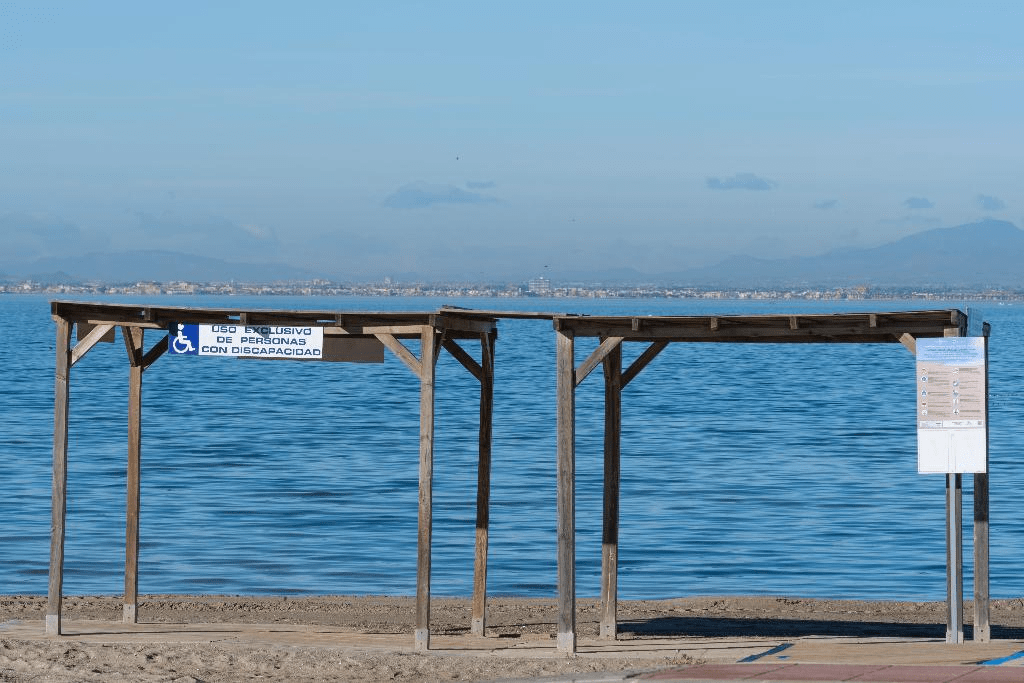
wooden ramps in Playa Mistral Image credit: Murcia Today

During the summer, services include drinking fountains, showers, recycling points with litter bins, toilets, a play area for children, and a tourist information point. People’s safety is also guaranteed since lifeguard, first aid, and auxiliary medical services are offered during the season.

Accessibility

Space for people with that use wheelchairs to stay in the sand in Playa Mistral Image credit: Murcia Today

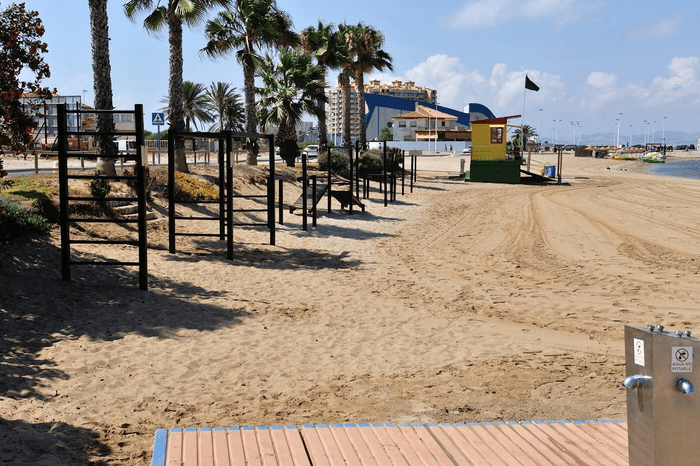
People with limited mobility will find Playa Mistral a relatively easy beach to use as ramps, wooden walkways, bathing chairs, and crutches are available to help access the beach and the shallow water.

Furthermore, Playa Mistral offers parking spaces reserved for the disabled, specially adapted toilets are supplied and volunteers are available between 11.00 and 19.00 in summer to offer assistance and information.

Restaurants Near Playa Mistral

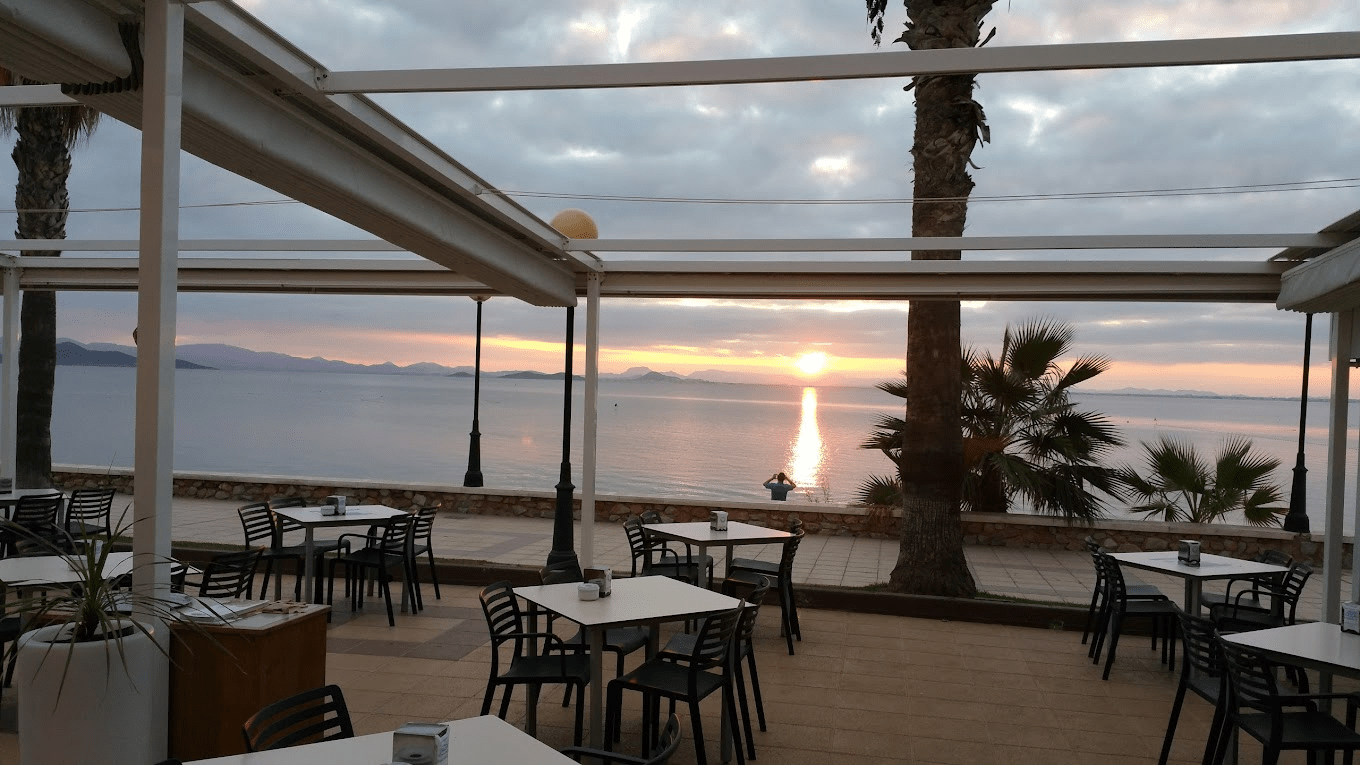
Paquebote, a restaurant near the Playa Mistral beach with ocean view.

Image credit: Paquebote Google Images

Right next to the beach, you will find the Restaurante Paquebote, a restaurant where you will discover a gastronomic experience with its typical local dishes and stunning views of the Mar Menor.

Personally, I had the most delicious chiperones I’ve ever tasted at Paquebote. The staff was lovely, and the drinks were refreshing. It’s definitely worth stopping by to savor the food and enjoy the stunning view.

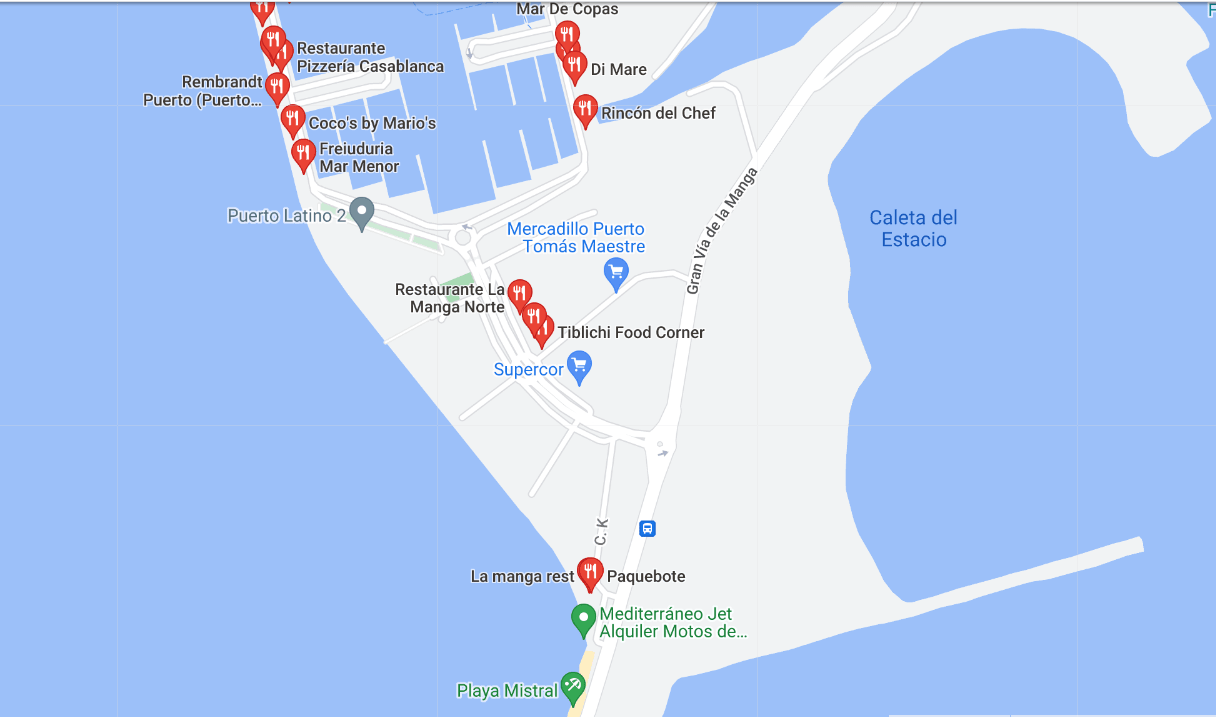
Google Maps image showing more restaurants names near the Playa Mistral beach Image credit: Google Maps

Also, within a radius of 4 km, you can find many restaurants and beach bars too, where you will be able to taste the delicious local food! You will find several options, such as La Manga Rest for seafood lovers, Tiblichi Food Corner if you want to order a hamburger and milkshake, and Restaurante Imperial, which offers Italian cuisine.

Activities And Entertainment In Playa Mistral

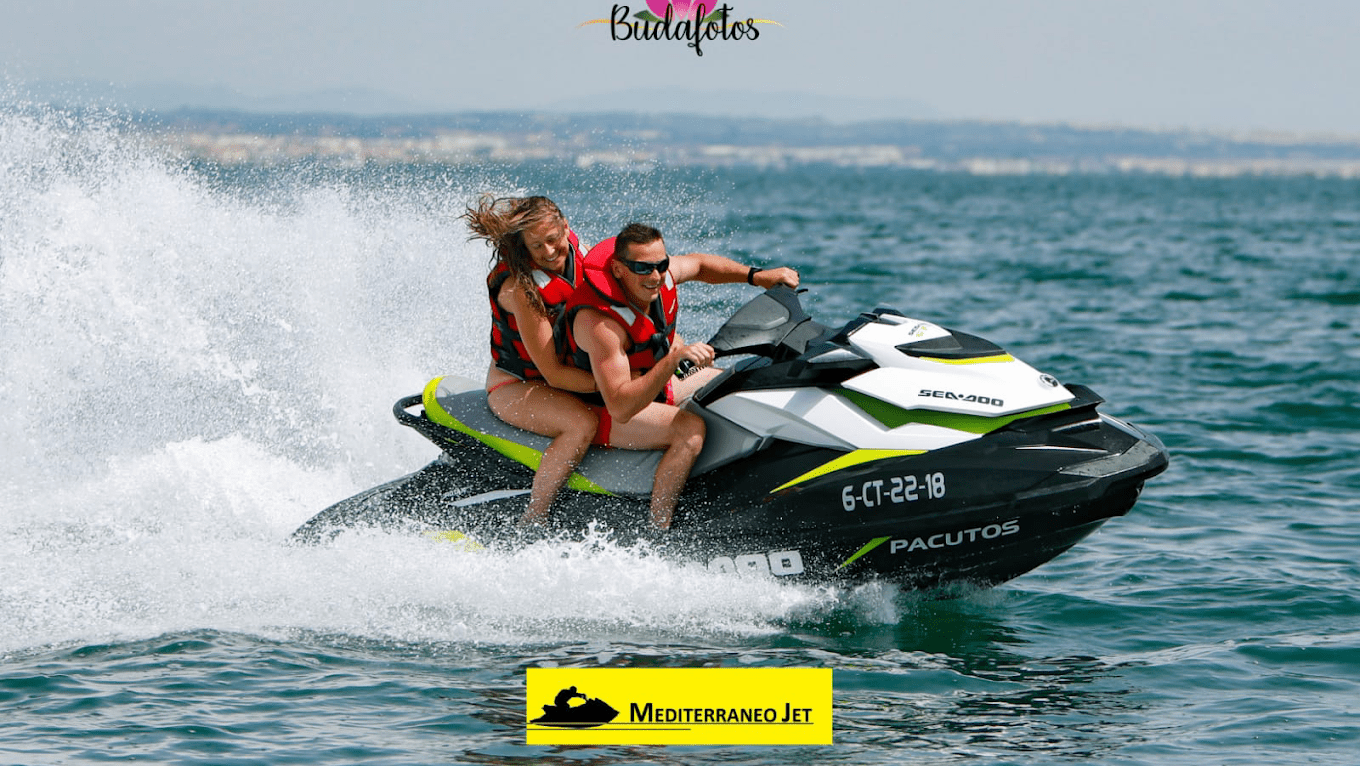
Playa Mistral is popular with families due to its range of sports and leisure equipment available for rent, including jet skis, kayaks, and water skis. Visitors can also enjoy cycling along the beach, exploring the natural beauty of the surroundings.

Jet Ski in the ocean, this is one activity you can do in Playa Mistal beach Image Credit: Mediterranean Jet Jet Ski Rental La Manga

Right next to the Playa Mistral beach, you will find the Mediterranean Jet Jet Ski Rental La Manga, where you can rent Jet Skis and explore the coast of La Manga with lots of fun.

If you don’t typically consider yourself a thrill-seeker, you should try jet skiing. It was an experience that I found exciting and very safe.

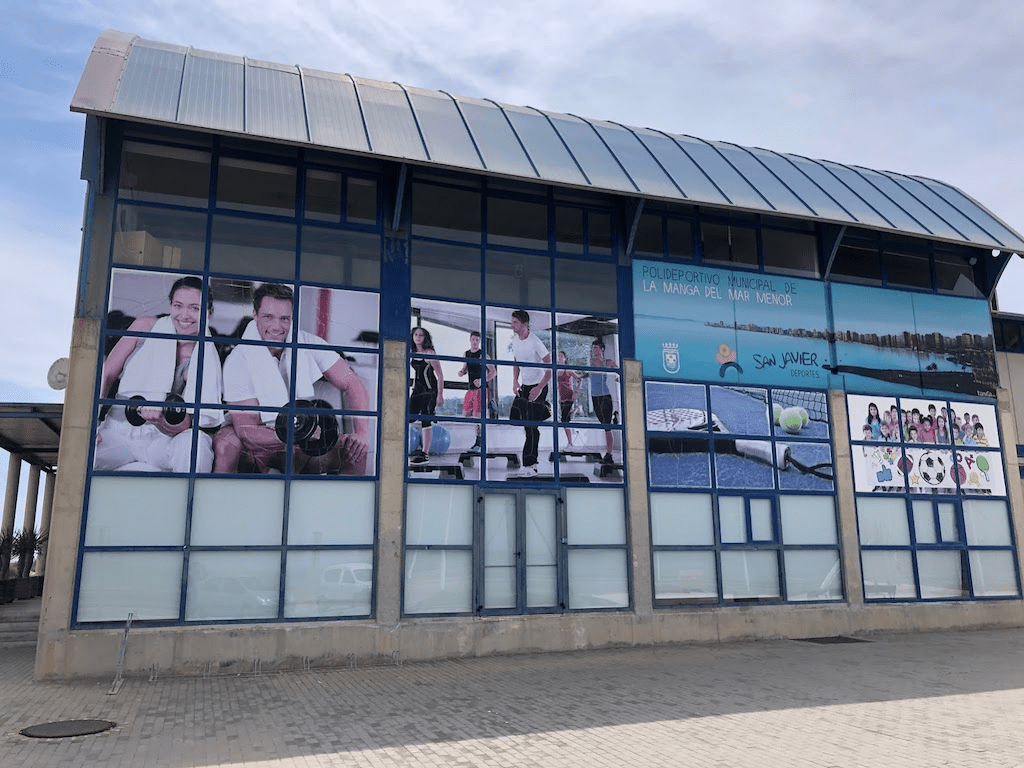
Polideportivo La Manga del Mar Menor, near Playa Mistral beach Image Credit: Deportes San Javier Official Website

On the other side of Playa Mistral beach, you will find the Polideportivo La Manga del Mar Menor, where you can practice numerous sports, such as Padel, Tennis, Running, Swimming, Handball, Volleyball and Skating.

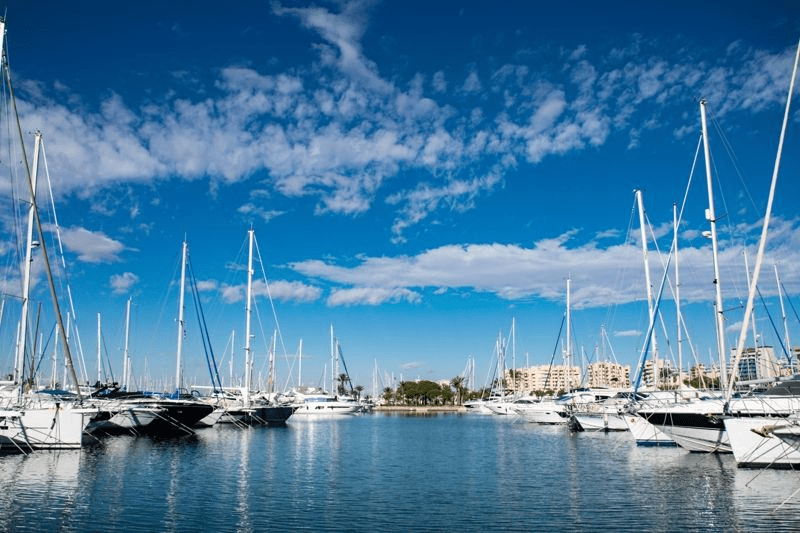
Puerto Deportivo Tomás Maestre

Puerto Deportivo Tomás Maestre that is near Playa Mistral beach Image Credit: Puerto Deportivo Tomás Maestre Official Website

In addition to the various relaxation and sports options already mentioned, close to Playa Mistral Beach, there is also a sports port that offers a wide range of activities. This port is not only used for fishing activities but is also an excellent place for moments of relaxation.

There, you will find services such as sailboat rentals and nautical schools. In addition, boat owners are offered a variety of services, including water supply, electricity at berths, service facilities, 24-hour navy, parking spaces, garbage collection, and weather information, among others.

The port has two commercial areas, where visitors can enjoy a wide range of gastronomic options, including restaurants, seafood restaurants, ice cream shops, and coffee shops. It also offers a variety of boutiques, nautical clothing stores, and renowned nautical effects companies, brokers, and charters on the Mar Menor.

No Smoking Area

Since the summer of 2019, it has been designated as a “smoke-free” beach, encouraging beachgoers not to smoke on the sand. Honestly, I’m all for it! I can’t stand the smell of smoke, and it definitely enhanced my beach experience.

Enjoy Your Private Paradise in Villa Murcia!

Looking for the perfect place to stay in Murcia? We’ve got just the spot for you!

Villa Murcia – Your Private Paradise

Wake up to coffee on a sun-drenched terrace, unwind in a warm jacuzzi after a day of exploring, and end your evenings with dinners in the summer kitchen. Nestled in charming Santiago de la Ribera, Villa Murcia offers more than just a holiday—it’s your personal oasis of comfort, style, and unforgettable moments.

Highlights:
✔ Spacious living room with a large sofa and open kitchen – perfect for shared memories
✔ Three elegant, air-conditioned bedrooms with private terraces – your peaceful retreat
✔ Extra fold-out sofa in the living room – ideal for additional guests

Whether it’s a romantic escape, a family getaway, or a relaxing break with friends – Villa Murcia is your dream stay.

Book now and experience the magic of the Spanish sun!

Playa Mistral Is A Special Place

Playa Mistral, in San Javier Image credit: Costa Cálida Región de Murcia Website

Playa Mistral is more than just a beach; it’s a charming retreat where families and friends can appreciate the sun, sea, and fine sand while engaging in a variety of exciting activities. With the added security of lifeguards and amenities provided by the beach, visitors can relax and enjoy their time with tranquility of mind.

Situated in San Javier, its privileged location, combined with quality services and a welcoming area, makes it the ideal spot to enjoy a vacation and create lasting memories. Come and discover what makes this destination so perfect!

Read More
picture of cala reona showing the beach and the cliffs around it

Playa Cala Reona (Murcia) | All You Need to Know

Spain is a paradise for beautiful landscapes and diversified tourism activities. The variety of possibilities is endless, from theaters and traditional dishes to monuments and beaches.

When it comes to must-visit destinations in the country, Murcia stands out for its abundance of attractions and diverse places to explore. But where should you start when visiting this idyllic paradise? We’ve got just the perfect spot for you.

Here, we will show you why Cala Reona is the place you need to see when visiting the country. Whether you’re going alone or with your family, the place holds numerous experiences you’ll take on your memories forever. We will also tell you everything you need to know before packing your things.

Curiosities, basic information, location, here’s your complete guide on Cala Reona and Cabo de Palos for the best vacation of your life.
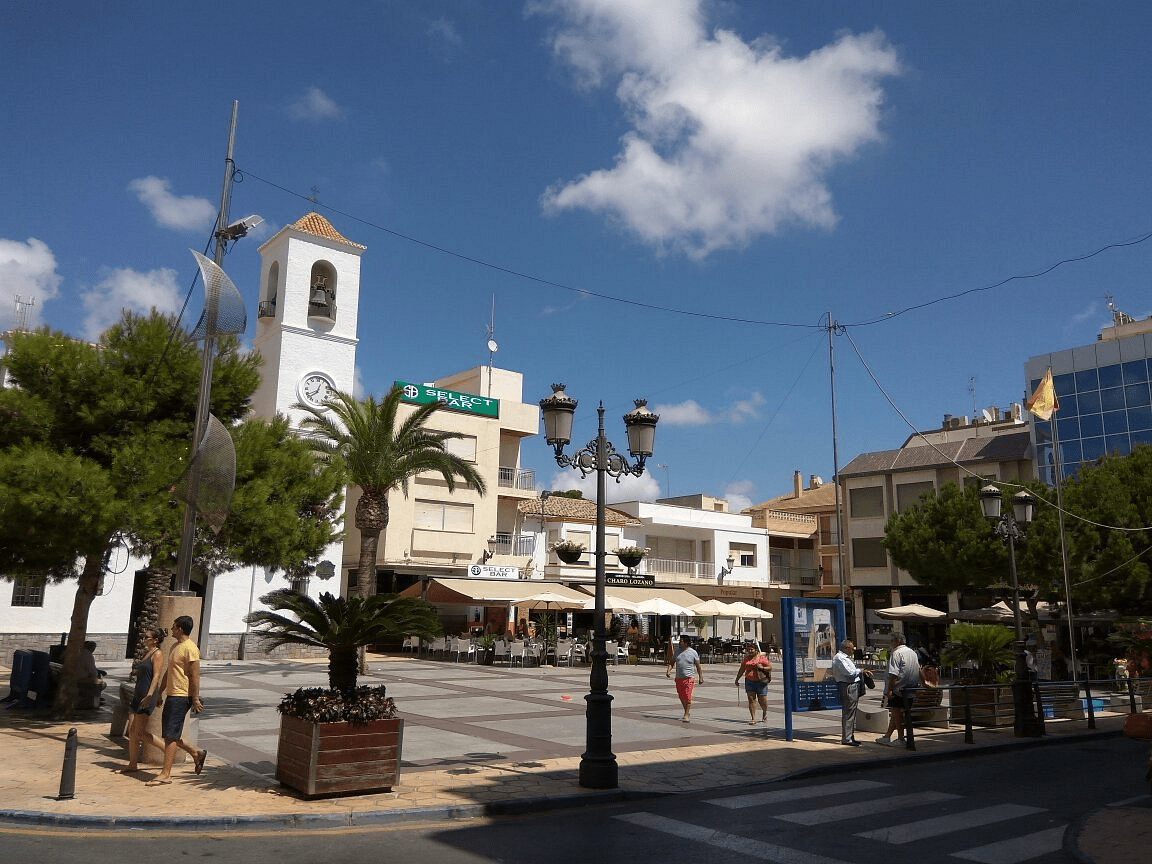
Table of Contents

What Is Cala Reona and Where It’s Located

picture of the lighthouse located in Cabo de Palos

Cala Reona is a beach located in Cabo de Palos, a peninsula situated in the province of Murcia in Cartagena. It is one of the many tourist spots in the region and one of the best if you’re looking for a largely unspoilt beach with soft sand and crystal water.

The marine life here is incredibly diverse, offering a wide array of fish species to discover as you explore the region. This richness shouldn’t be a surprise, especially considering that one of the most significant marine reserves, the Cabo de Palos Range, is located nearby.

The entire region is 400m long and composed of many different parts. Cabo de Palos lies next to Mar Menor, and is the most southerly place there. Cala Reona is a small beach located in the southwestern part of the peninsula, next to Peña del Águila Natural Reserve and the regional park.

It is a beautiful and peaceful place on the European coastline that is perfect for all ages and a must-go if you’re in the region. Whether you want to admire its picturesque scenery or feel the golden sand on your feed, Cala Reona is your next destination.

Things You Should Know Before Visiting Cala Reona

image showing the sand and sea from Cala Reona beach

Before booking the next flight to Spain and programming your vacation in this paradise, there are some things you should know to avoid surprises along the way and help you plan your schedule. Make sure to consider all the aspects below so you get ready for when going on your trip.

Here are some things you should know about Cala Reona and the region:

It’s a Protected Coastline

image showing numerous tourists visiting Cala Reona

Not only Cala Reona but almost the entire region of Cabo de Palos is considered a protected coastline thanks to the biodiversity and natural beauty, so make sure to consider that when interacting with the sea creatures and plants you find along the way. Several rules and recommendations should be followed to preserve the place’s integrity and safety for both us and the animals/plants. Cabo de Palos is home to one of the most important marine reserves in Europe and the beauties they hold will surely catch your eye.

Make sure to go to a proper fishing port to practice the activity. The main place destined for this kind of activity is the fishing port and leisure marina of Cabo de Palos. This way, you avoid legal problems and preserve this beautiful place’s biodiversity.

The natural reserves are also perfect spots for either a picnic or just to spend some time with the ones you care for. By following the rules and recommendations of the place, you ensure a fun and safe experience for yourself and everything else around you.

Everything Is Just a Few Yards From the Beach

image of the cliffs and mountains around Cabo de Palos

The tourist spots outside Cabo de Palos might be far from each other, but inside the peninsula, everything is fairly close and can be accessed on foot. You don’t need to worry too much about transportation between the multiple tourism points because they’re considerably close to each other, being the perfect way to spend an entire day just visiting the numerous beautiful beaches and places.

From Costa CáLida coastline to Islas Hormigas Marine Park, everything is nearby and close to Autovía de La Manga. This road crosses almost the entire peninsula and is the main way of going from one place to another. This brings numerous advantages to the visitors, allowing you to go from one place to another quickly and saving money that you’d need to use just to go to the next destination.

Long Cliffs and Mountains

picture of the platform above the sea in Cabo de Palos

One of the most gorgeous aspects of Cala Reona and Cabo de Palos is the numerous geographic formations surrounding the peninsula. The black cliffs extend almost all 400m, and everywhere you look, you can see either mountains or cliffs around you, forming a natural land barrier, a very traditional characteristic of this place.

Thanks to these formations, you can reach high places and have an overview of most of the region, including Playa del Descargador and other relevant spots that will catch your attention. Cala Reona is surrounded by the cliffs, giving it a unique and unforgettable look.

Be careful; some of these rock formations are preserved and shouldn’t be accessed by tourists. Ensure to get informed and look at the rules before going to these areas.

Lots of Good Food

image of a dish with shrimps from Al Lío

Source: Al Lío, Cala Reona, Beach Club

One thing you won’t have to worry about when visiting Cabo de Palos and Cala Reona is food. There are numerous great restaurants nearby that will offer you a wide variety of options. It is also paradise if you like seafood, from shrimp to lobster.

You’ll find numerous places that serve you at the beach, so you don’t even have to go directly to the place and can enjoy the gorgeous views of the sea while waiting for your food. One of the main ones in the region is Al Lío, a restaurant specializing in seafood that will make your taste buds feel like in heaven. Along with it, numerous options offer various menus and kinds of food, so you’ll find the perfect choice for your meal, no matter what you’re craving.

Some restaurants have seafront buildings, so you don’t need to leave the beach or take road runs to get food. It is a spectacular part of Cala Reona and ensures you can enjoy the best time of your life.

You Won’t Want to Go Back Home

picture from Cala Reona during evening

If one thing is sure about Cala Reona, you’ll want to stay in this beautiful place forever. There are so many stunning views and fun things to do that even though your body goes back home, your mind will stay there for a long time, remembering all the memories and good moments you lived there.

It’s a popular starting point for tourism for a reason. The most crowded and popular time of the year to visit is between mid-June – mid-September, but this piece of heaven is available for visiting throughout the whole year. It also features a first aid point ready to help anyone who needs local information or has limited mobility and needs help with any issue.

It’s a magical place with some of the finest views in the entire region. From lifeguard service to foot showers and off-road parking, it has everything you need to have a fun and comfortable stay without worrying about anything other than enjoying your time there.

Enjoy Your Private Paradise in Villa Murcia!

Looking for the perfect place to stay in Murcia? We’ve got just the spot for you!

Villa Murcia – Your Private Paradise

Wake up to coffee on a sun-drenched terrace, unwind in a warm jacuzzi after a day of exploring, and end your evenings with dinners in the summer kitchen. Nestled in charming Santiago de la Ribera, Villa Murcia offers more than just a holiday—it’s your personal oasis of comfort, style, and unforgettable moments.

Highlights:
✔ Spacious living room with a large sofa and open kitchen – perfect for shared memories
✔ Three elegant, air-conditioned bedrooms with private terraces – your peaceful retreat
✔ Extra fold-out sofa in the living room – ideal for additional guests

Whether it’s a romantic escape, a family getaway, or a relaxing break with friends – Villa Murcia is your dream stay.

Book now and experience the magic of the Spanish sun!

Time to Start Packing Your Luggage

image of Cala Reona with numerous seats on the sand for tourists

If you are looking for your next travel destination, you no longer have to worry about that. Cala Reona is an unforgettable place that will give you some of the best experiences of your life. Want options variety? Don’t worry.

There are tons of other Cartagena beaches you can quickly visit on foot without worrying about transportation and other aspects. Whether you choose to visit the Hilltop Overlooking or any other place, you’ll always have something new to do and try, thanks to the minimal walking distance between the spots. It’s a beautiful place located at the south-western end of one of the most famous seas of the world.

Now that you know everything you need, it is time to start packing your luggage to live this unique experience of visiting Cala Reona. Make sure to respect the protection rules and instructions to ensure the best vacation of your life. The beachside restaurant and numerous natural beauties are now waiting for you in this Spanish piece of paradise.
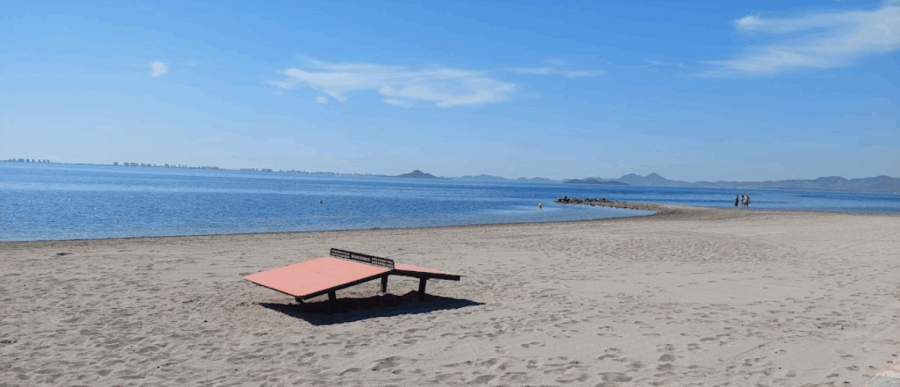
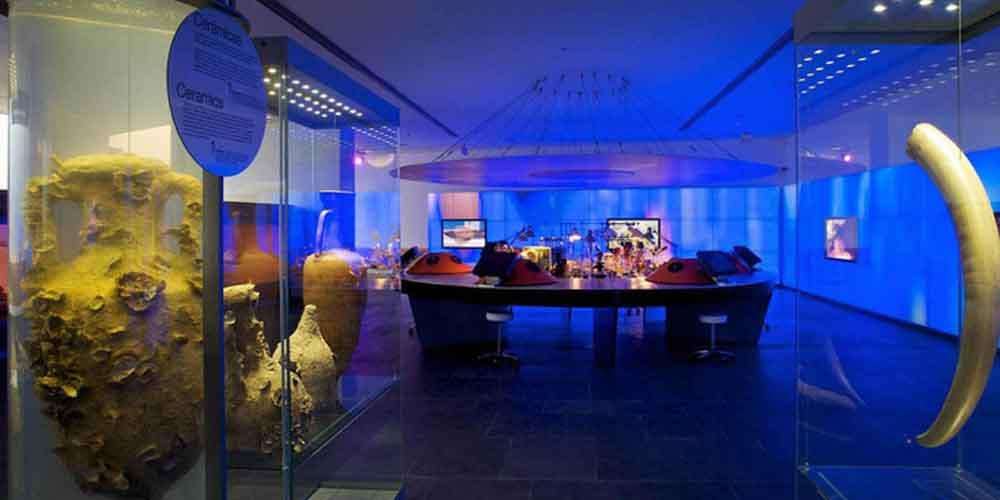
Read More

La Cala del Barco | Hidden Cove, Unforgettable Experience

The Murcian coastline has endless surprising corners where you can hide away and enjoy an unforgettable vacation, especially in the 2024 season, which provides hundreds of days of sun illuminated by the waters of the Mediterranean. A cove that you cannot miss is La Cala del Barco, a small but charming beach characterized by golden sands and clean and transparent water.

Most visitors from all over Spain and Europe see these waters as the perfect opportunity to relax and unwind after a year of hard work. Keep reading this short article to learn more about this magnificent cove, which will amaze you with its natural beauty and its outstanding services.

Table of Contents:

What Is La Cala del Barco?

A sunset in La Cala del Barco La Cala del Barco is a magnificent beach in the Murcia region, southeast of Spain. It is a tiny bay with gray shell sand, so you don’t need special shoes to walk there.
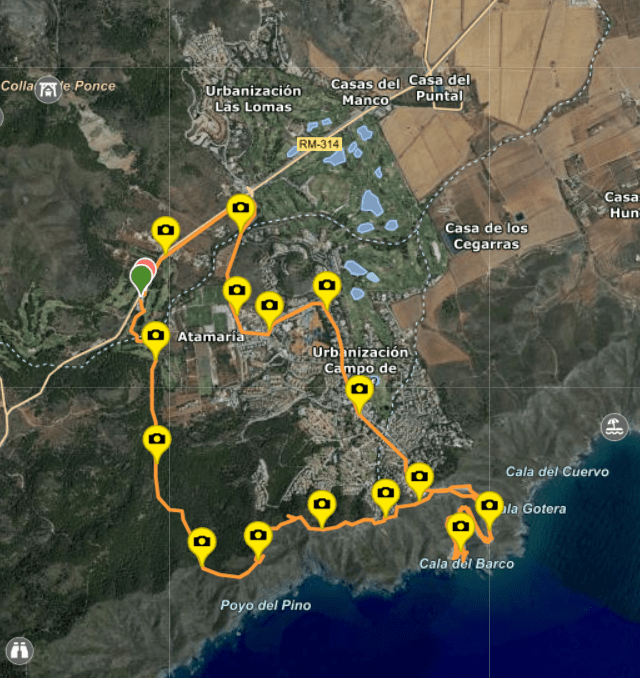
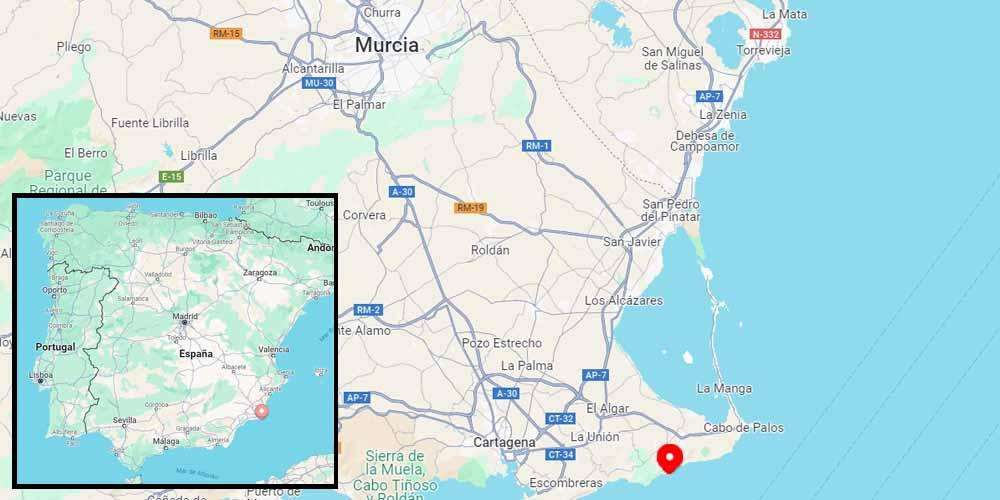
The municipality of Cartagena, a medium-sized town a few kilometers away, administers this site. In this city, we can find hostels and hotels for resting and having nice vacations.

The entrance to La Cala del Barco’s water is very smooth, and its water is relaxing. The beach itself is perfect for different people, from lonely travelers to families with children and relaxation getaway lovers. The best of all is that it is not a crowded place during the season.

La Cala del Barco is part of the Atamaría route, which includes several areas of interest, such as La Rambla de Carrasquilla, the Cima Sierra de Atamaría, the Cuervas la Zorrera, etc.

The Atamaría route

The Atamaría route.

This cove is characterized by its rocky geography. Like most coves in the area that visitors from all European countries prefer to visit from August to September, it is surrounded by small mountains and cliffs that highlight the area’s beauty. In addition, La Cala del Barco is close to many interesting places, such as La Manga Club Resort, where we can do multiple activities.

Location of La Cala del Barco

La Cala del Barco location Most coves in the Murcia region are in the same area, south of the Mar Menor and La Manga, two important tourist attractions in the southeast of Spain. Cliffs and bare mountains hide La Cala del Barco, creating a special biome that may go unnoticed by most visitors. More specifically, La Cala del Barco is located between Cabo Tiñoso and Cabo de Palos.
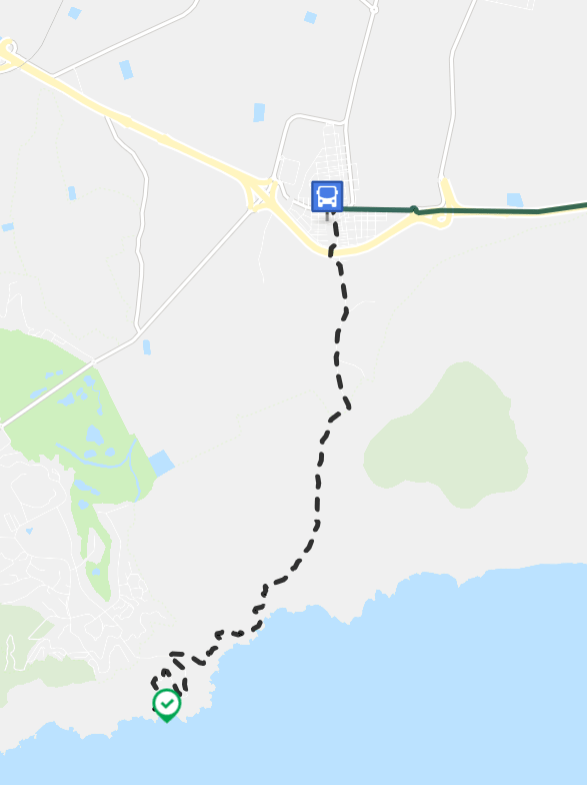

Access to La Cala del Barco Beach

You can access La Cala del Barco just by leaving the residential area through the Calle de la Zorrera. The road peters out into a track, and motor vehicles are strongly advised for access.

There is a bus taxi available in summer. We should take bus 43 in Los Belones. The short trip is truly worth the effort and time, allowing you to enjoy the clean sand of the cove in a matter of minutes.

Bus service from Los Belones

Bus service from Los Belones.

Main Features of La Cala del Barco

Water temperature and wave height in La Cala del Barco

  • Beach: Cala del Barco

  • Beach Composition: sand and rocks.

  • Type of sand: gray shell sand

  • Water temperature: +18°C

  • Wave height: 0.8 m.

  • Average wind: 7.2 m/s

  • Average air temperature: +18°C

  • Swimming conditions: moderate waves

  • Length: 40 m

  • Width: 20 m

  • Occupancy rate: high –especially in summer

  • Degree of urban development: semi-urban

  • Accesses and security Marina: Cabo de Palos

  • Distance to beach: 10 km.

  • Means of access: On foot easy, Car, Boat

  • Address: Calle la Zorrera 1, 30389 Atamaria, Municipality of Cartagena, Spain.

La Cala Restaurant

La Cala Restaurant in La Cala del Barco La Cala Restaurant is located at the top of a cliff. From here, you can witness all the extensions of this small cove and the beaches in the nearby area. It’s a strategic enclave where you can enjoy some of the best dishes of the region, especially seafood, fish, and fresh vegetables. It’s one of the most romantic restaurants in the region.

Please note that you need your vehicle to access La Cala Restaurant. Besides, on rainy days, the restaurant may remain closed.

La Cala Restaurant also offers refreshments, ice cream, and other quick appetizers that can be enjoyed at any time of the day.

La Manga Club Resort

La Manga Club Resort La Manga Club Resort is a luxury and unique place located near La Cala del Barco, an obligatory destination for most tourists from Spain and Europe. Its story started in 1972, and nowadays, it has over 560 hectares of terrain on which we can find a luxury hotel, over twenty tennis courts, apartments, football fields, and more. It’s the ideal place to practice a lot of sports, such as cycling, cricket, triathlon, rugby, and other sports, and to celebrate special occasions, such as weddings and corporate events.
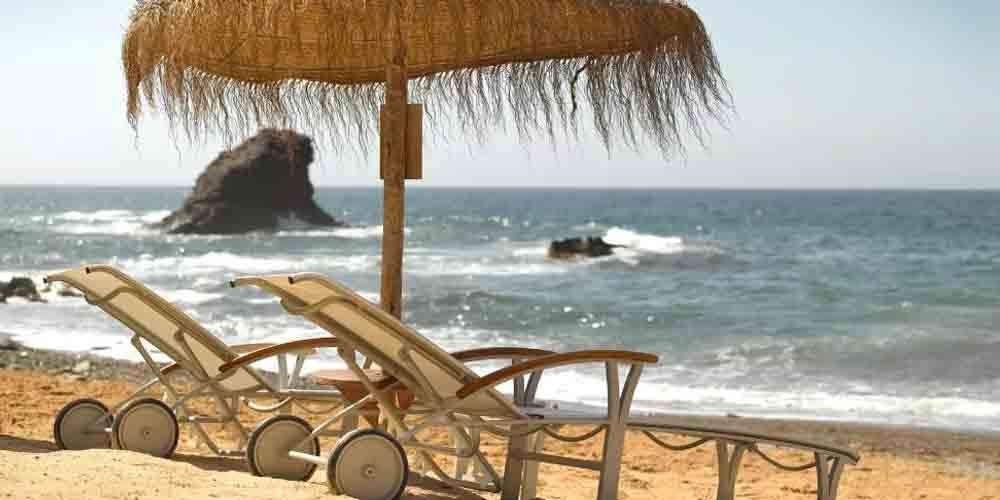
La Cala Beach Club

La Cala Beach Club The Beach Club is a particular spot within La Cala Restaurant where you can enjoy typical Spanish food, such as cold tapas and signature cocktails while witnessing the best views and calm waters of the Mediterranean. This special beach bar also has a sun lounger where we can delight in a refreshing cocktail and parasol rental service to make our stay at the beach more pleasant.
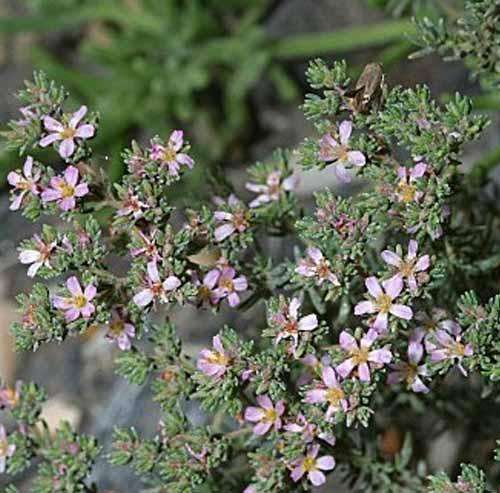
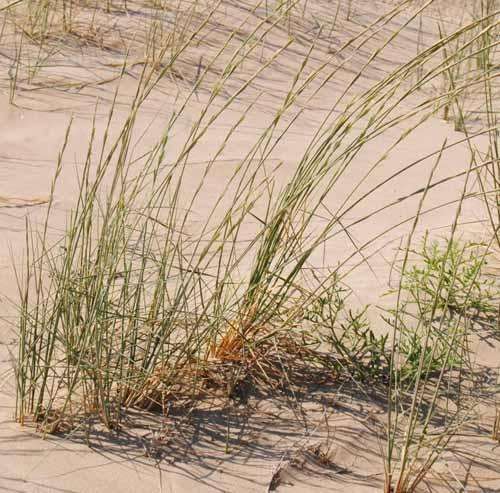
Information:

Email: info.lamangaclubresort.grand@hyatt.com

Telephone. (+34) 968 33 12 34

Access with your vehicle.

Flora and Fauna of the Area

In general, the area’s vegetation consists of scattered medium—and small-sized plants that are highly adapted to the biome’s salinity and windy conditions.

On the rocky coast, we can find plants such as maritime fennel (Chrithmum maritimum), sapero thyme (Frankenia corymbosa), and the sea daisy (Asteriscus maritimus), which lives in the lower areas of the cliffs and the stony areas of the upper edge of the beaches.

Frankenia corymbosa.

Frankenia corymbosa

Over dunes, we can find other types of flora, such as Barron (Ammophila arenaria), grass coastal (Elymus farctus), sea dogfish (Medicago marina), sea thistle (Eryngium maritimum), or fragrant sea lily (Pancratium maritimum).

Elymus farctus.

Elymus farctus

Regarding the fauna, Reptiles abound in sedimentary environments, such as the red-tailed lizard, the Iberian skink, the ocellated lizard, and the bastard snake, in addition to the typical rabbits and foxes.

The Iberian skink

The Iberian skink

In the humid zone, in addition to avocets, stilts, and other aquatic species, we can find white shelducks, which sometimes breed in the area, along with some flamingos. In the forested or cultivated area, on the other hand, there are hoopoes, blackbirds, starlings, and other small birds.

The snake ladder.

The snake ladder

In the semi-desert places, one can meet other endemic species, including the ocellated lizard, the snake ladder, the fox, the rabbit, the hare, and the common hedgehog. Also, birds of Steppe species, such as the lark, are present.

Enjoy Your Private Paradise in Villa Murcia!

Looking for the perfect place to stay in Murcia? We’ve got just the spot for you!

Villa Murcia – Your Private Paradise

Wake up to coffee on a sun-drenched terrace, unwind in a warm jacuzzi after a day of exploring, and end your evenings with dinners in the summer kitchen. Nestled in charming Santiago de la Ribera, Villa Murcia offers more than just a holiday—it’s your personal oasis of comfort, style, and unforgettable moments.

Highlights:
✔ Spacious living room with a large sofa and open kitchen – perfect for shared memories
✔ Three elegant, air-conditioned bedrooms with private terraces – your peaceful retreat
✔ Extra fold-out sofa in the living room – ideal for additional guests

Whether it’s a romantic escape, a family getaway, or a relaxing break with friends – Villa Murcia is your dream stay.

Book now and experience the magic of the Spanish sun!

The Bottom Line

In Spain, all beaches are public property. Thus, we can descend to the cove whenever we want, regardless of the season and whether the beach services are open or not. This is particularly important, especially for the coming 2024 summer season, which is just around the corner!

La Cala del Barco is probably one of the most beautiful beaches in the La Playa de Calblanque area. It is one of the few with impressive rock formations, crystal clear waters, sand of gray shells, and impeccable services with a bar, restaurant, showers, and toilets that you can use whenever you want.

Read More

Page 9 of 10

Powered by WordPress & Theme by Anders Norén