


Tag: Spain Page 6 of 8

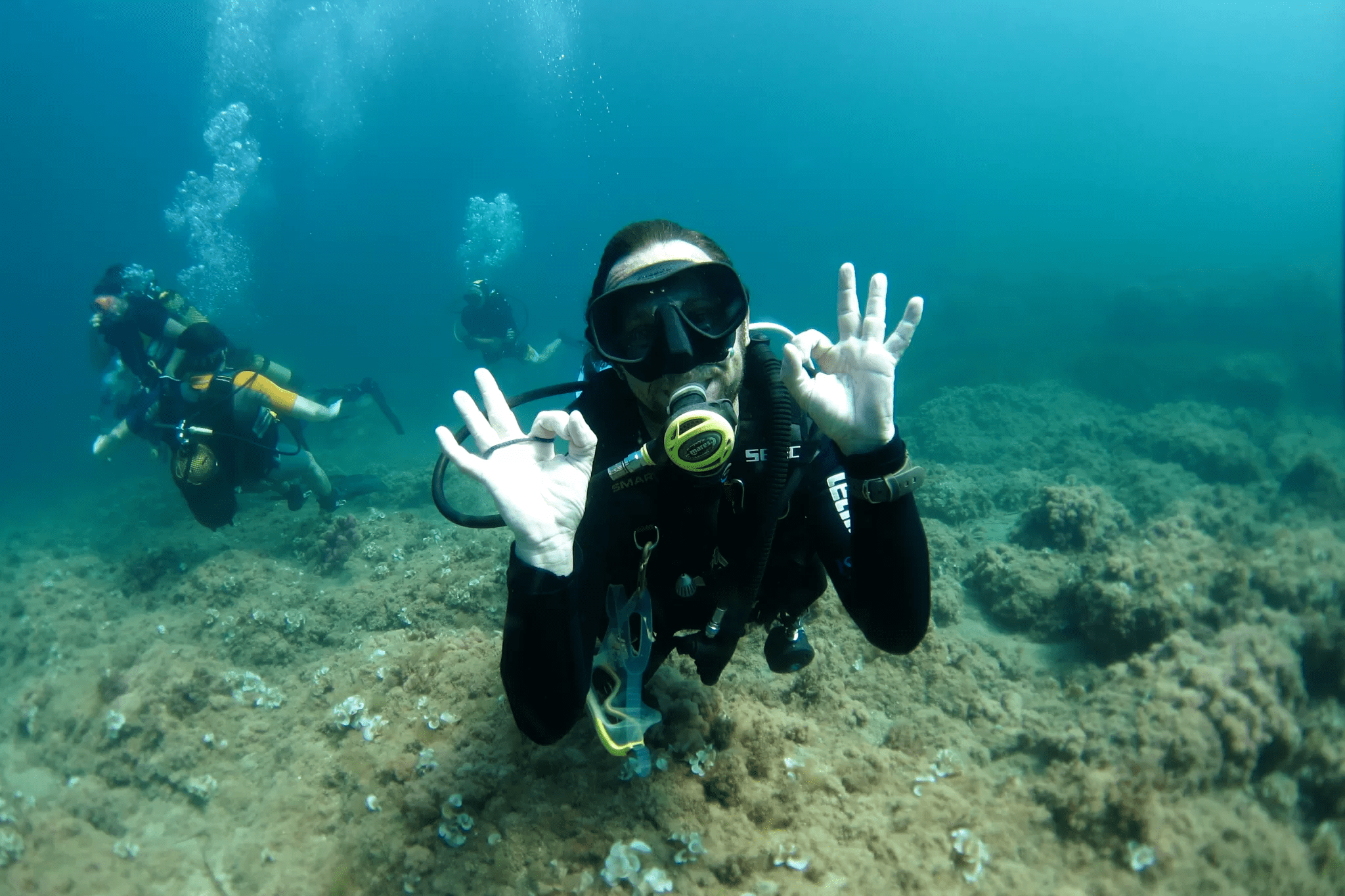
Person diving in tha water

Bajo De Fuera: An Underwater Paradise To Scuba Diving

Diving offers a truly one-of-a-kind experience. Beneath the surface lies a whole new world to discover, brimming with astonishing shapes, colors, and textures. It’s a chance to immerse yourself in the marine paradise that’s often depicted in films and photographs, but nothing compares to experiencing it firsthand.

One of the most fascinating regions for scuba diving lovers looking to dive in Europe is the coast of Cabo de Palos, located in Murcia, a city in southeastern Spain. There are countless areas and regions where the activity can be carried out in the region, for all types of professionalism levels in the sport, from amateurs to experienced divers.

In this article, we will explore “Bajo de Fuera,” one of the most attractive diving sites in the region, due to its wonderful geographical features, rich marine life, and historic shipwrecks.

Table of Contents

Understand The Region

Bajo de Fuera is located in one of the best-protected areas in Spain and around the world: the Marine Reserve of Hormigas Islands, in Cabo de Palos.

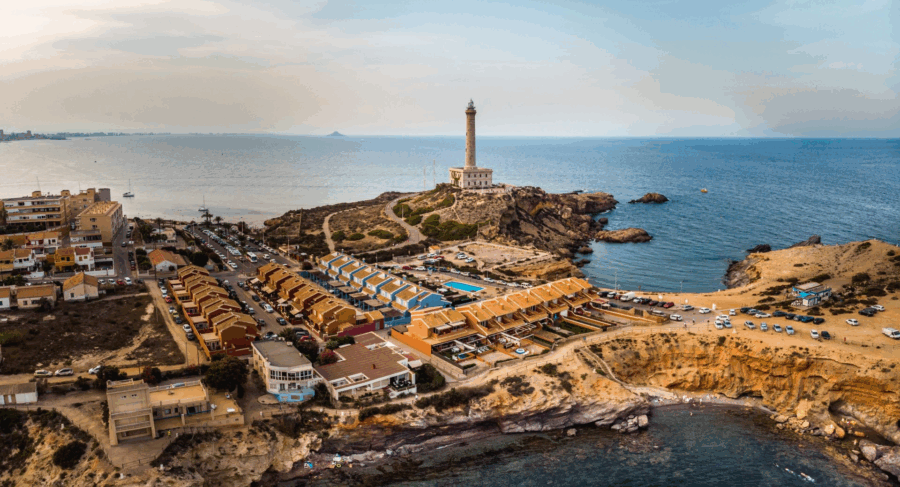
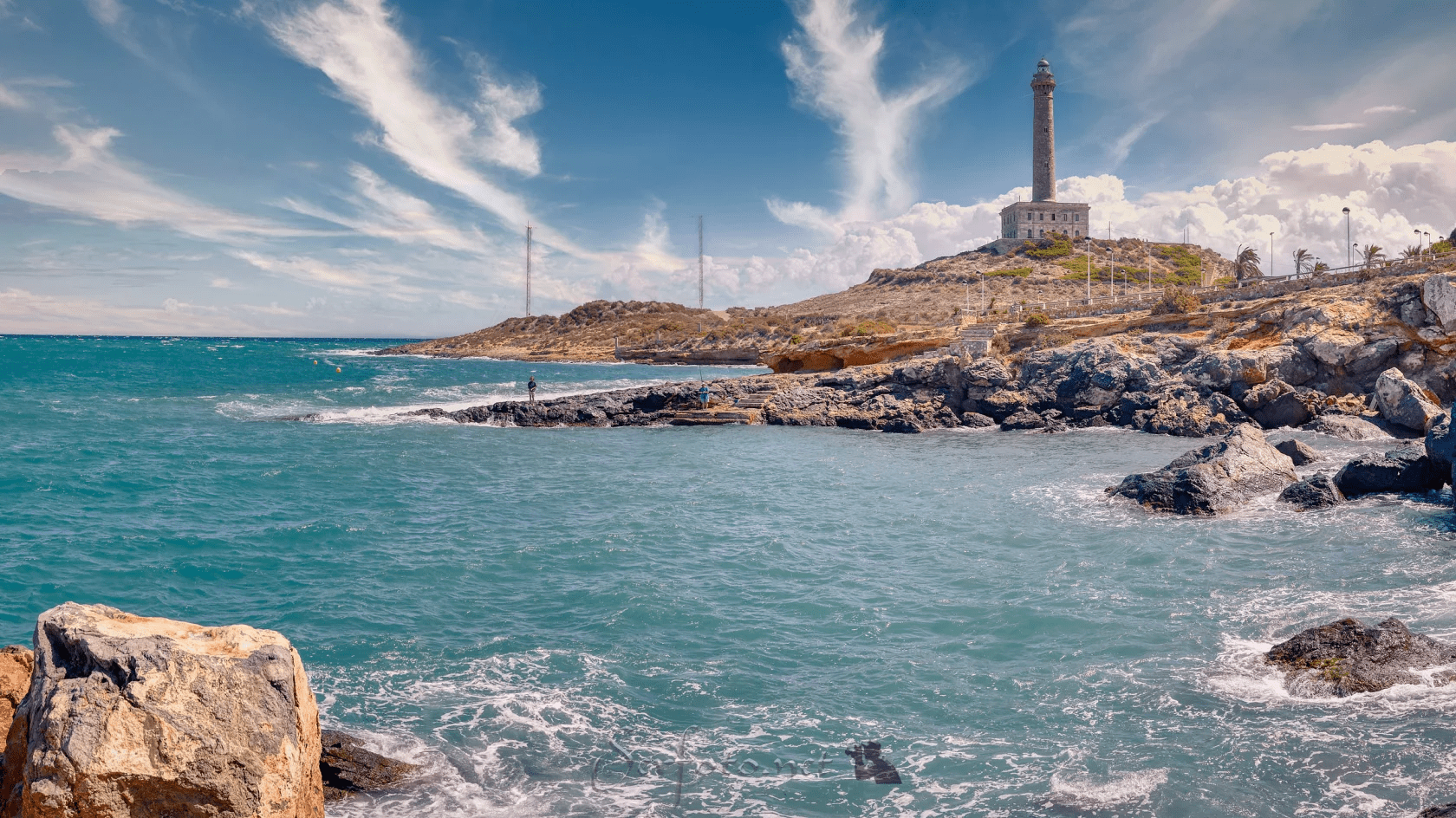
Cabo de Palos
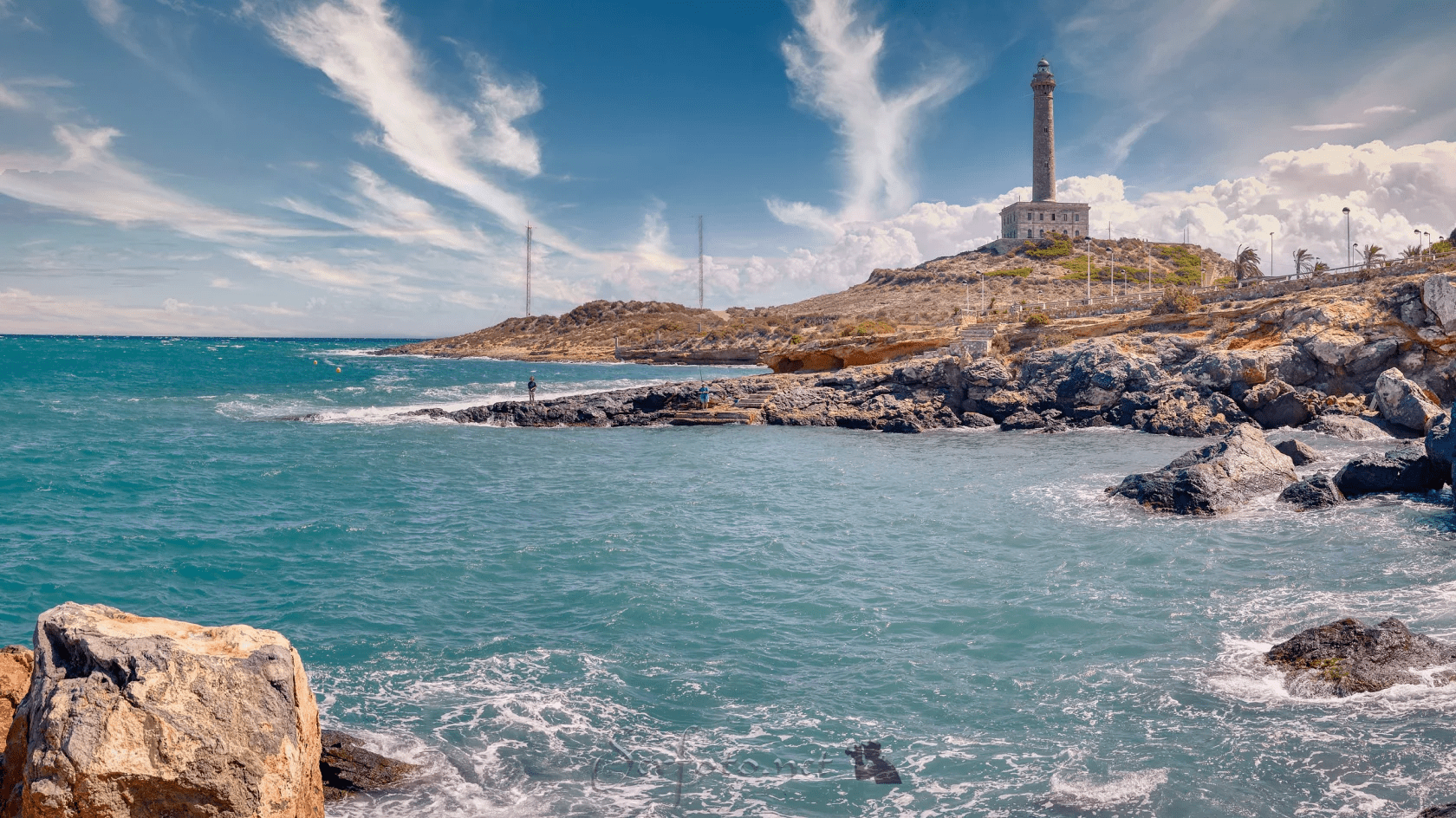
Ample Vision of Cabo de Palos

Image credit: TuPaisaje.com

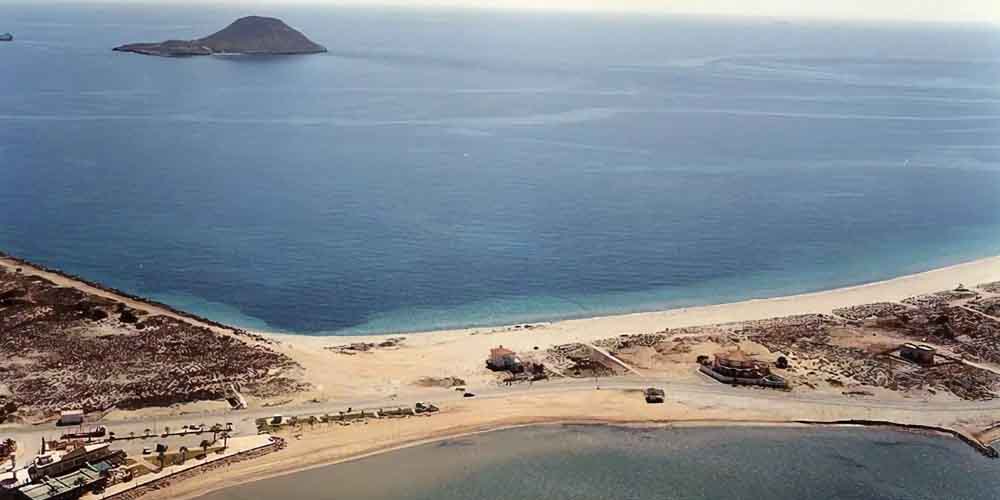
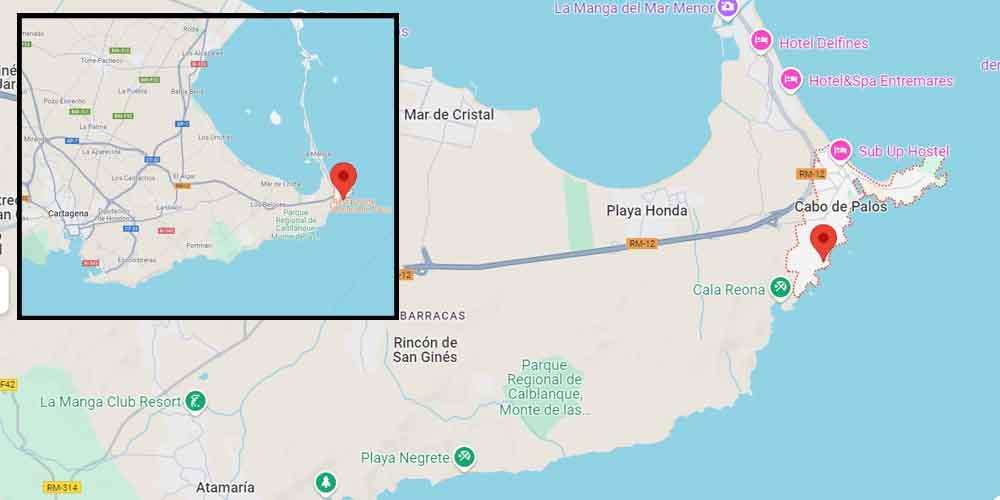
Cabo de Palos is located between La Manga del Mar Menor and the Spanish city of Cartagena. With a history of human habitation dating back thousands of years, this place continues to attract tourists, many of whom are attracted by its numerous diving centers. Its coastal location, between the Mediterranean Sea and the Mar Menor, is one of its main attractions, offering a variety of beaches ranging from small rocky coves to long stretches of golden sand, all bathed by the clear, warm waters of the central Mediterranean.

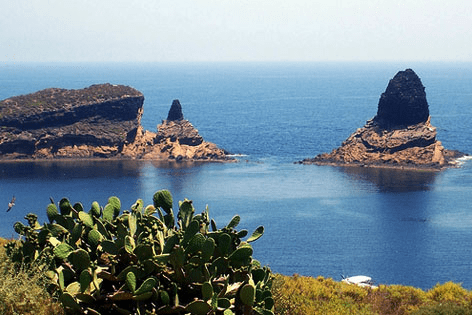
Islas Hormigas Marine Reserve
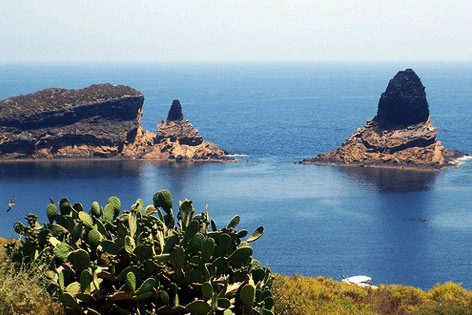
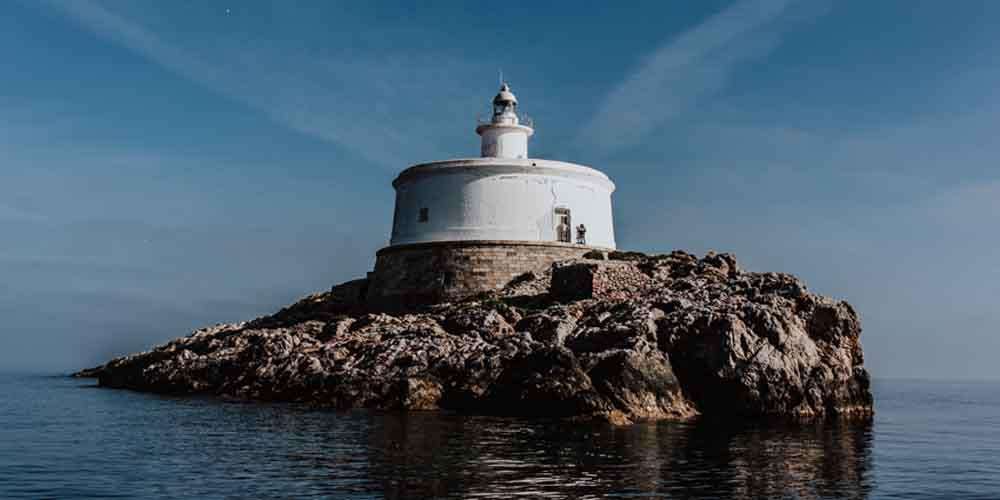
Hormigas Islands Marine Reserve, Composed of a series of underwater mountains and one of the best places to dive in Spain

Image credit: universomarino.com

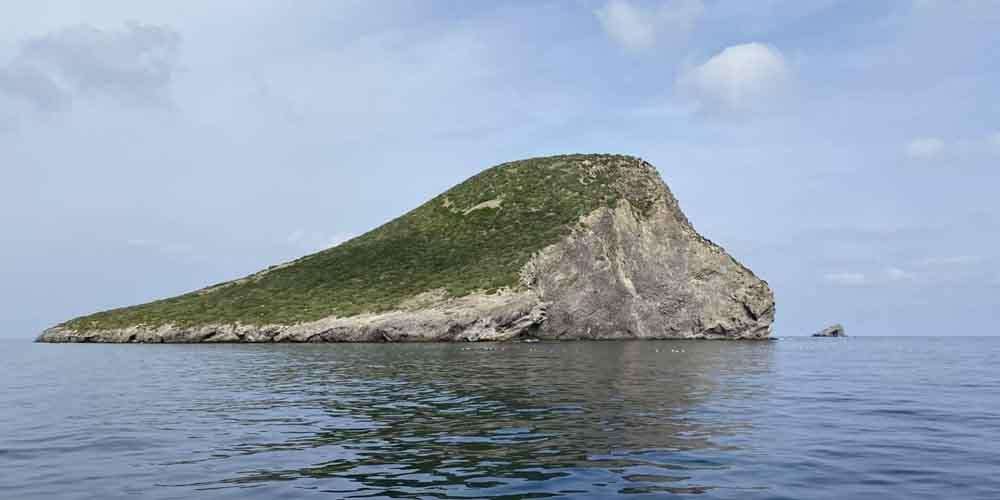
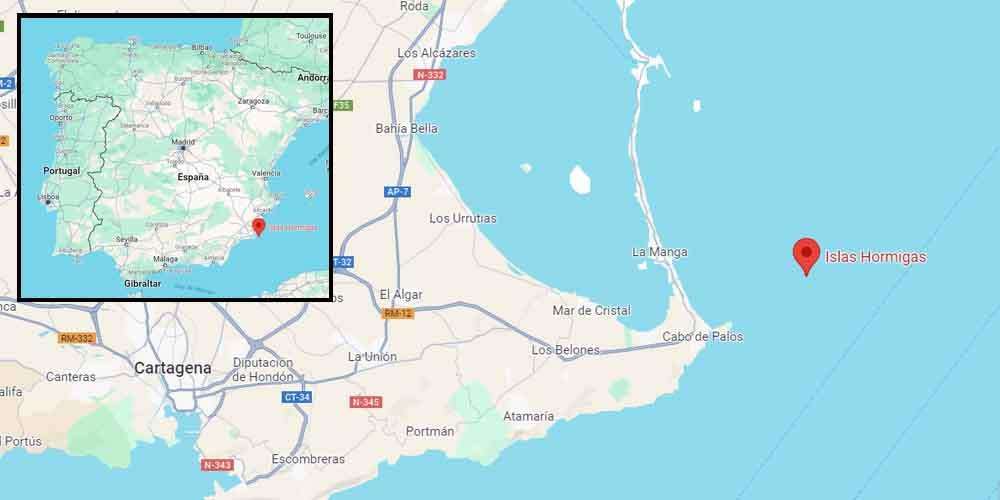
About two nautical miles off the coast of Cartagena, in front of Cabo Palos, there is a group of small islands called Hormigas, the largest of which is 200 meters long and 13 meters high.

Islas Hormigas Marine Reserve is the region between the islands and Cabo de Palos. The reserve covers a total area of 1,898 hectares and is a marine biodiversity protection zone.

The Marine Reserve is comprised of a series of underwater mountains and diverse shoals, each reaching different depths near the surface. Within this reserve lie numerous archaeological sites, formed by a combination of sandbars and extensive shallow areas surrounding the islands. Over centuries, these sites evolved due to intense maritime traffic passing near the islands.

Due to its volcanic composition, the reserve area gains recognition as the best place to dive in the Mediterranean. It contains numerous caves, cuts, and holes that create an ideal habitat for a wide range of marine life in the surrounding waters. The currents that reach the region and the Posidonia meadow that surrounds it contribute to making it one of the most biodiverse areas in the Mediterranean, offering divers a unique experience of underwater exploration.

Diving Conditions In The Islas Hormigas Marine Reserve

The area is ideal to dive in all seasons because it has excellent temperatures throughout the year, ranging from 14ºC in winter to 25ºC in summer.

Divers will enjoy a comfortable and safe experience with exceptional visibility and warm waters. I visited the region in August, during the summer, and I can say that the adventure was amazing!

Bajos: Underwater Mountains
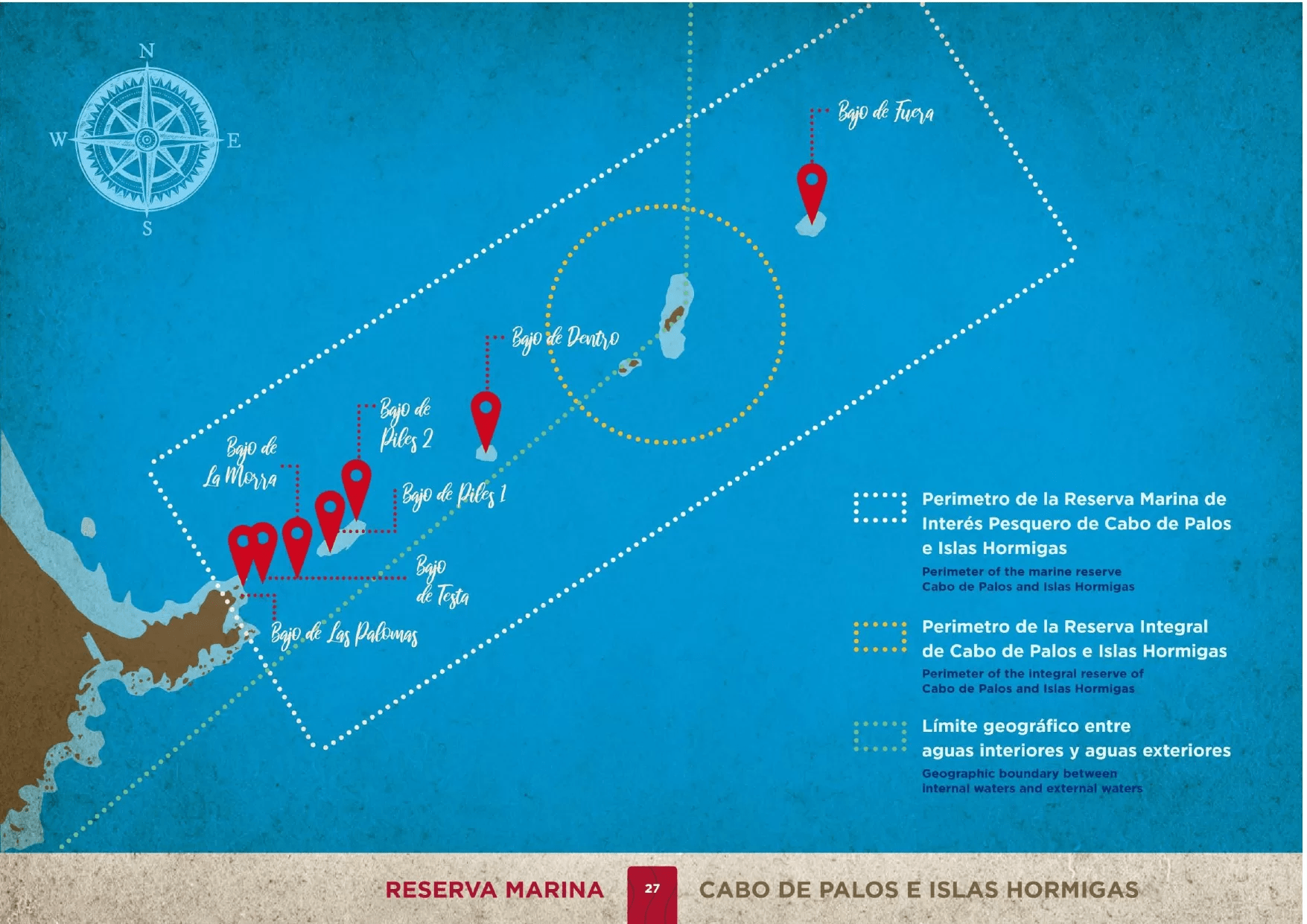
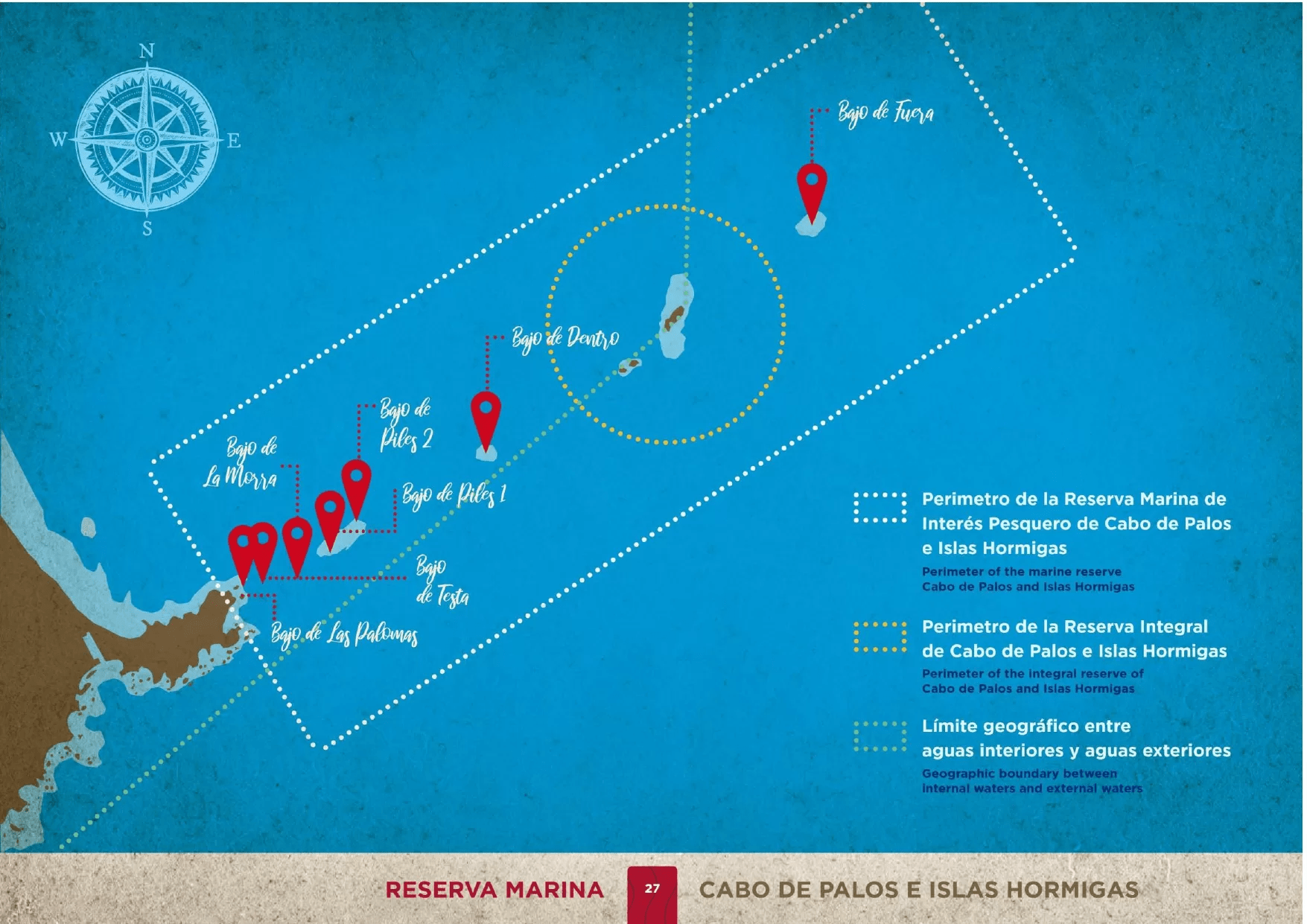
Dive Sites in the  Marine Reserve, located in Cabo de Palos

Image Credit: Adventure Divers Spain

The Islas Hormigas Marine Reserve area has “Bajos,” which are submarine mountains with different surfaces and depths. In the marine reserve there are 6 Bajos: Bajo de la Testa, Bajo de Piles 1 and 2, Bajo de Dentro, Bajo de la Morra, and finally Bajo de Fuera (or Piedra del Vapor) – considered one of the most attractive dive sites in the reserve.

Bajo De Fuera: A Beautiful Dive Site
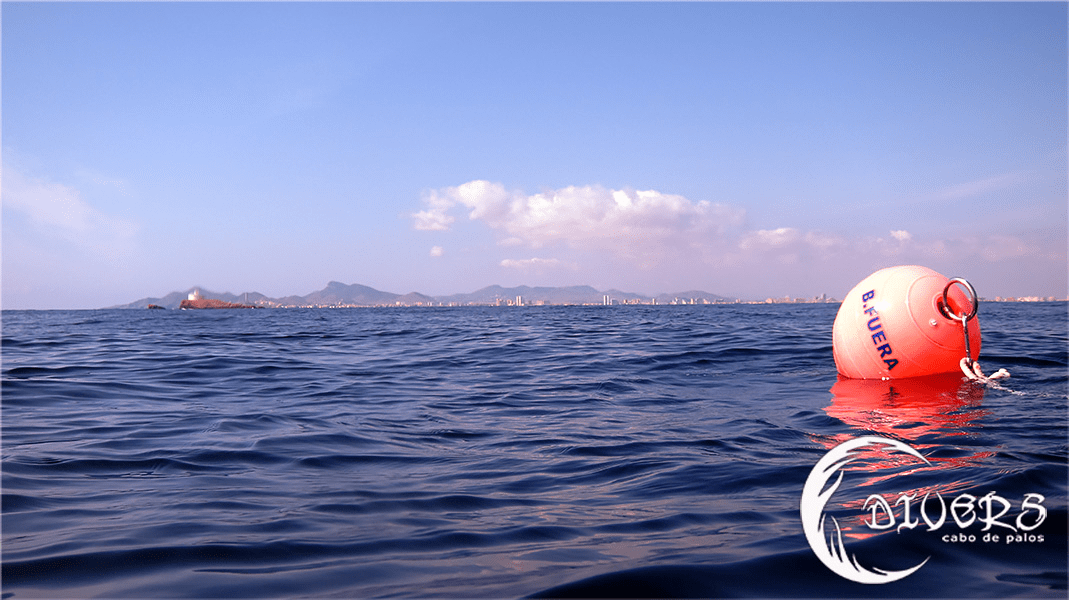
Bajo de Fuera, one of the Dive Sites in the  Marine Reserve, located in Cabo de Palos

Image Credit: Divers Cabo De Palos

The Bajo de Fuera’s reef system is famous for its wreck diving and the historical and environmental richness it offers. Considered one of the best dives in the Mediterranean, it unites the stunning protected marine life of the Islas Hormigas Reserve and the remains of contemporary wrecks from the 19th and early 20th centuries.

Characteristics
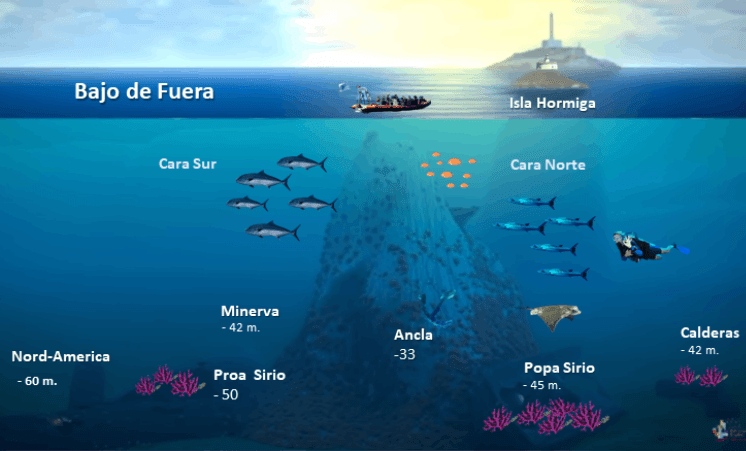
Bajo de Fuera, a underwater  mountain, dive site in Islas Hormigas Marine Reserve

Image Credit: El Rincón Del Buceo

The underwater mountain formation extends in a northwest-southwest direction for about 100 meters. With depths ranging from 3 meters to its southernmost point reaching more than 55 meters, this rocky bar has distinct characteristics on its north and south sides.
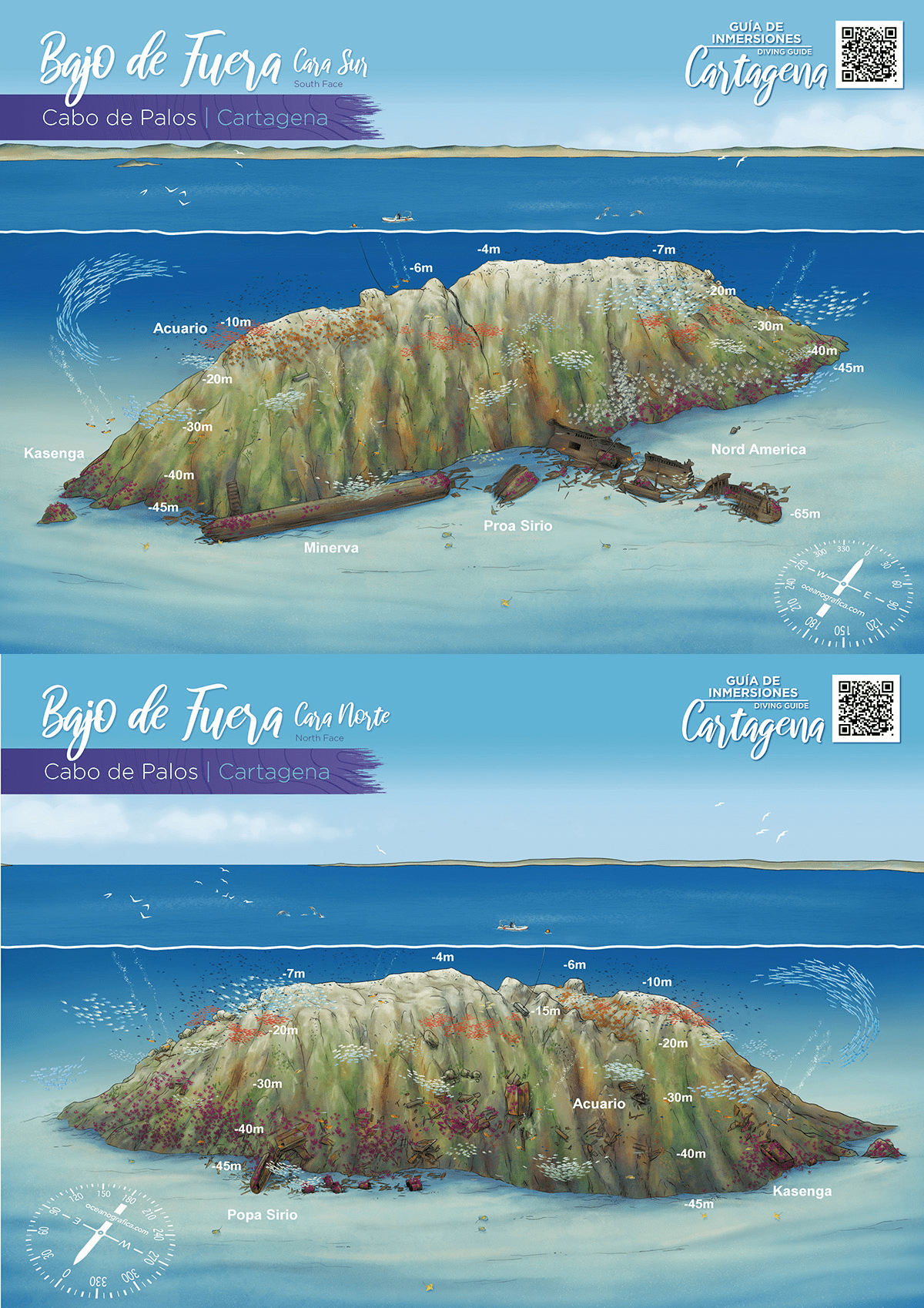
South part of Bajo de Fuera, a underwater  mountain, dive site in Islas Hormigas Marine Reserve

Image Credit: Adventure Divers Spain

The south face exhibits a cut chasm that goes down to a sandy bottom more than 50 meters deep.
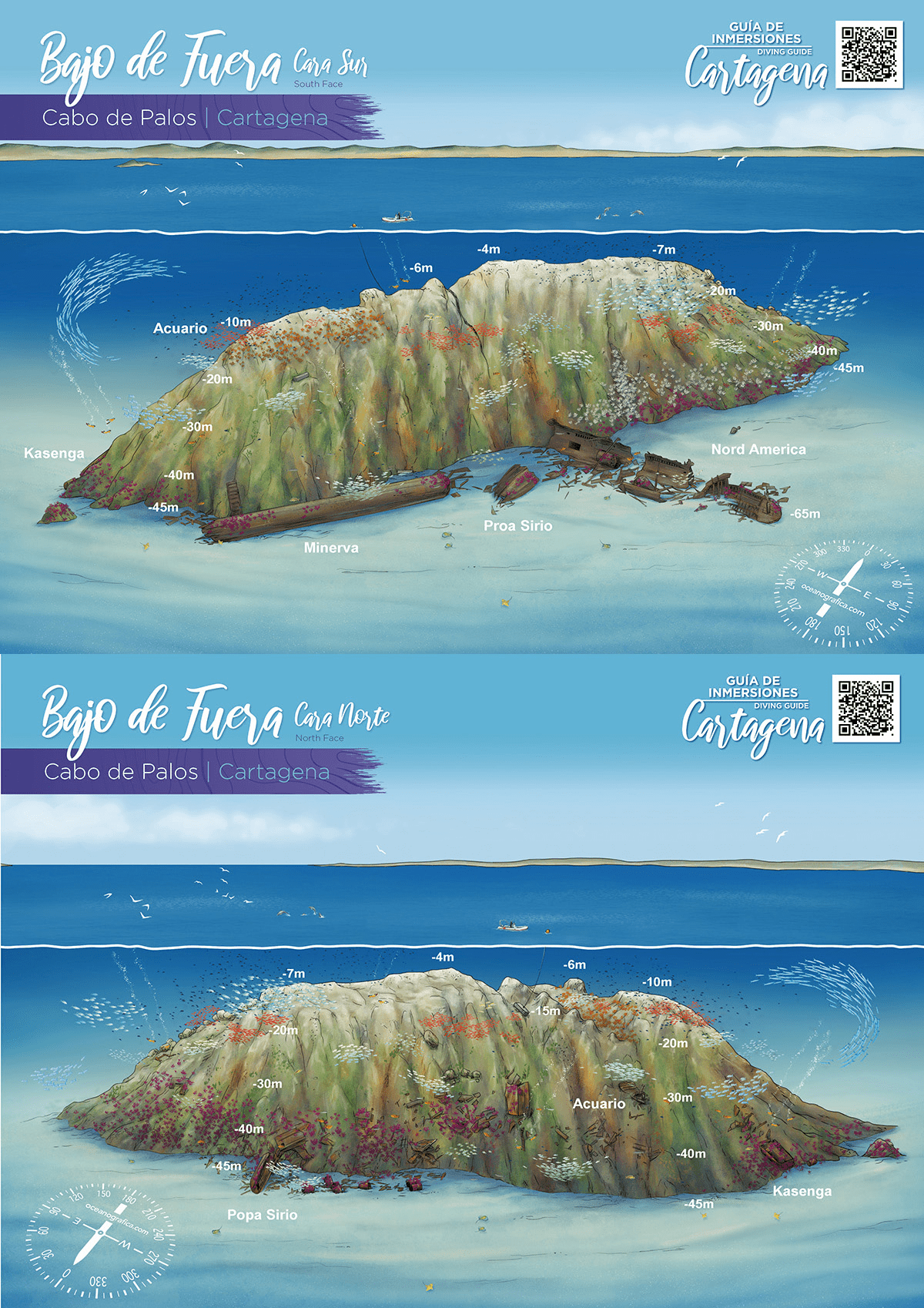
North part of Bajo de Fuera, a underwater  mountain, dive site in Islas Hormigas Marine Reserve

Image Credit: Adventure Divers Spain

The north face has a gentler slope, gradually descending to the sandy seafloor.

This unique topography creates a diverse and challenging location for divers, offering opportunities to explore caves, crevices, and a wide variety of marine life around this impressive rock formation.

Marine Life
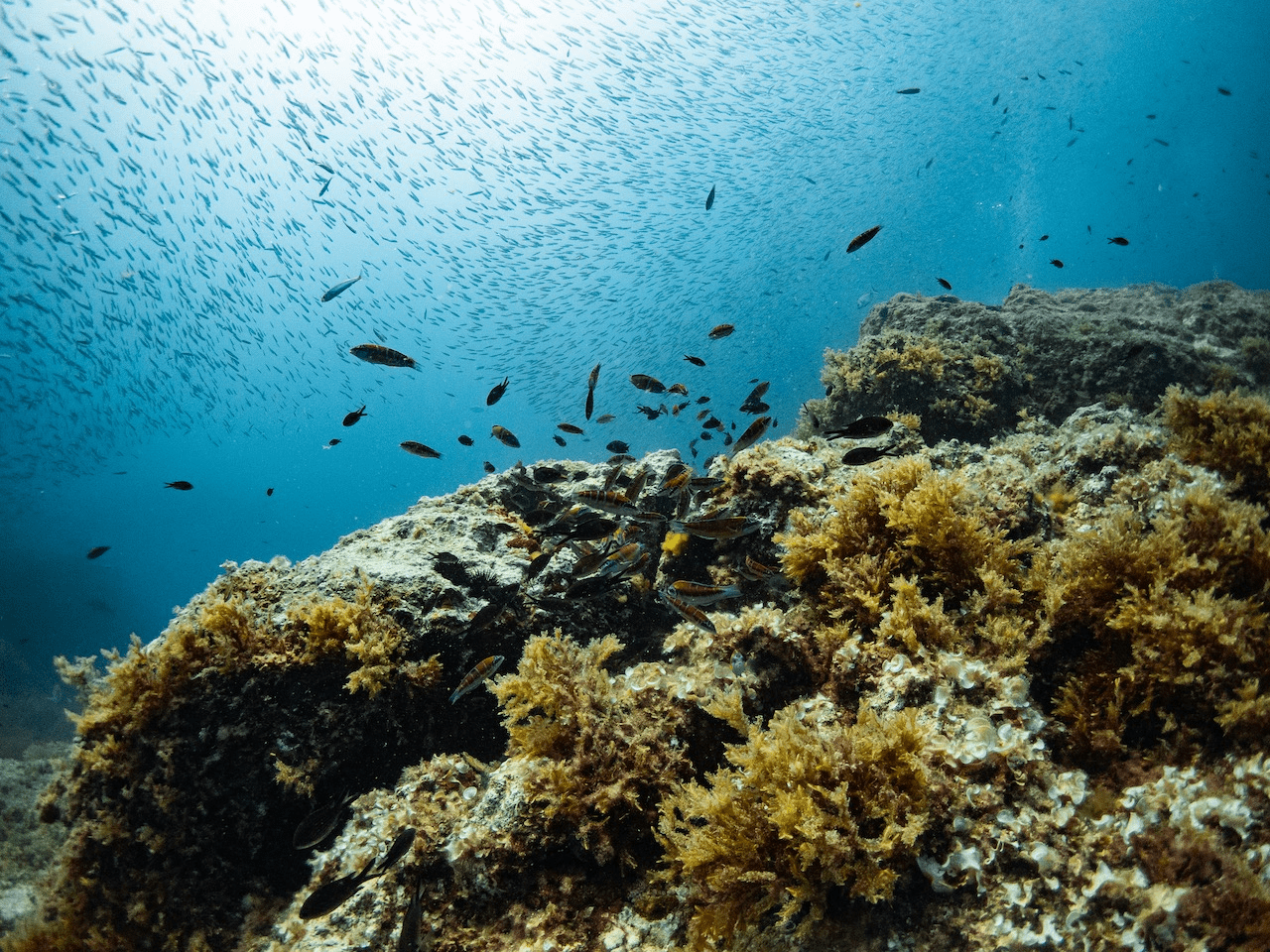
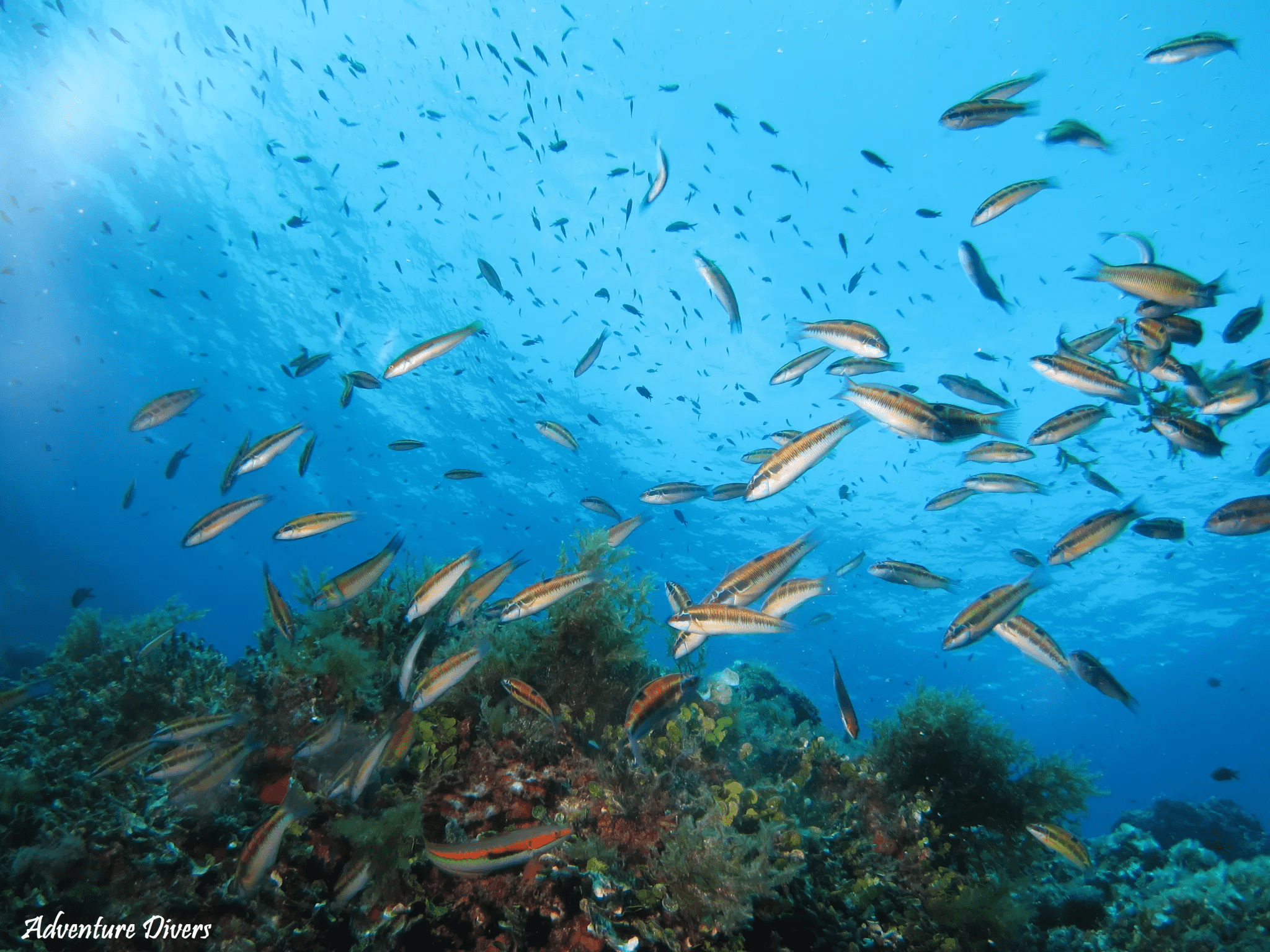
Bajo de Fuera ha a great marine life such as sea bass, barracuda, moray eels, octopus, sunfish,

Image Credit: Padi Blog

In this diving site, it is possible to witness various types of marine life such as sea bass, barracuda, moray eels, octopus, sunfish, salema porgy, conger eels, eagle rays, damselfish fish, hermit crabs, nudibranchs, groupers, snapper, eels, eagles, sea fans, gorgonians, barracudas, and many other fish species.

Maybe you will be lucky enough (unfortunately, I wasn’t) to have the thrill of finding Amberjacks. There are reports of encounters with some reaching 1 meter in length.

Wreck Diving
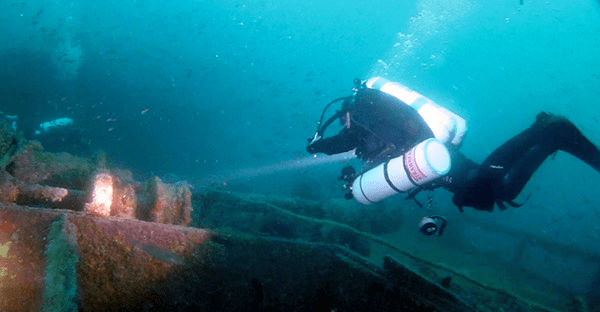
Person diving near a wreck

Image Credit: Buceo Donosti

The underwater landscape of this marine pinnacle is a silent wreck museum, where shipwrecks rest amidst the currents. In times past, this area was a busy corridor, witnessing the fate of several vessels.

Among the wreckage, the Nord America is notable, an Italian ship laden with iron ingots, which sank in 1883. The Minerva, a few years later in 1899, crashed onto the rocks during a storm. However, the most notorious shipwreck is the Sirio. This majestic Italian ocean liner, carrying nearly 1,000 immigrants bound for the United States, plunged into the depths on August 4, 1906, resulting in the loss of nearly 500 lives.

The feeling of diving up to 40 meters deep and witnessing the history preserved in the shipwrecks was truly unique.

Certification Needed
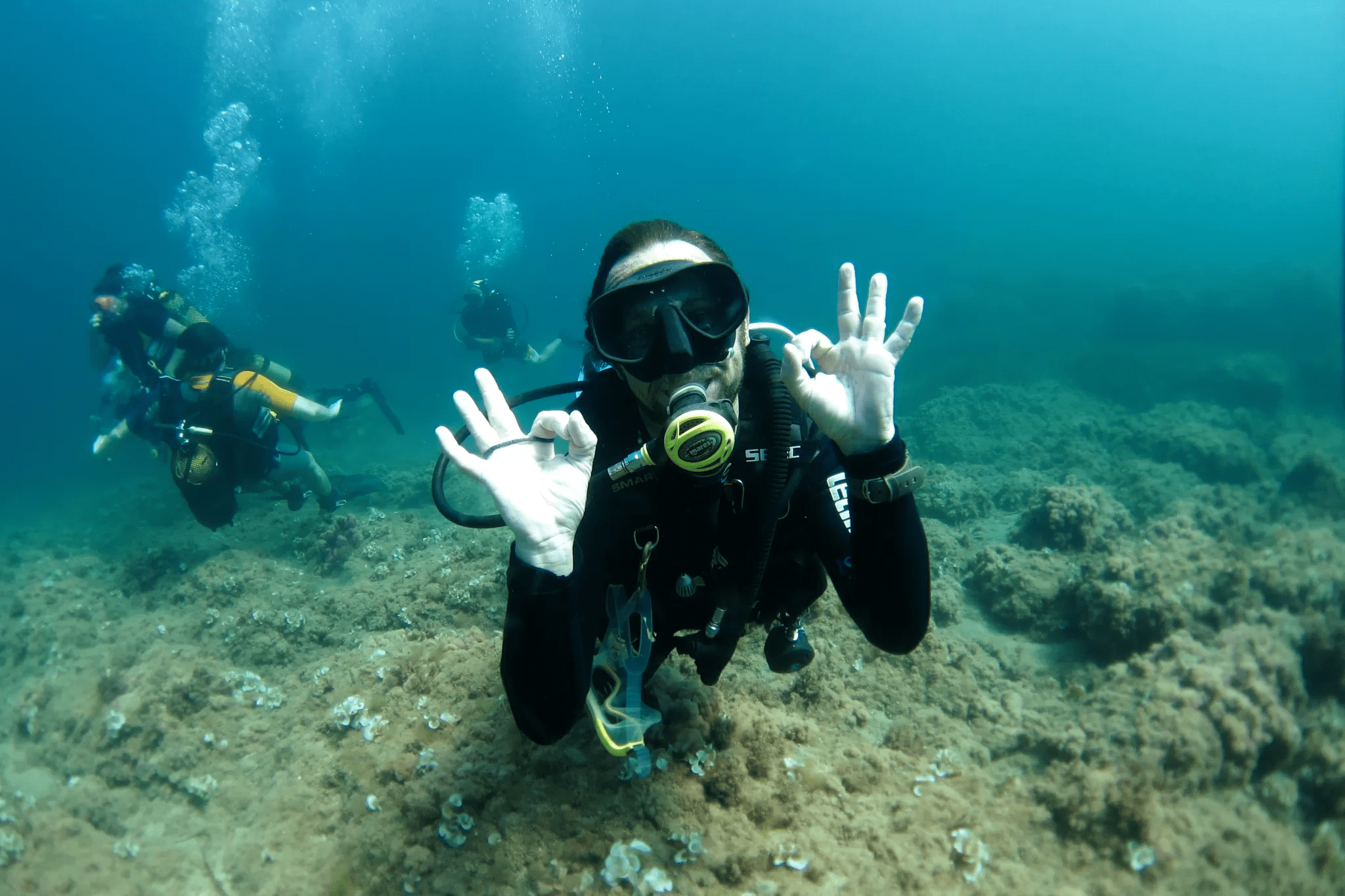
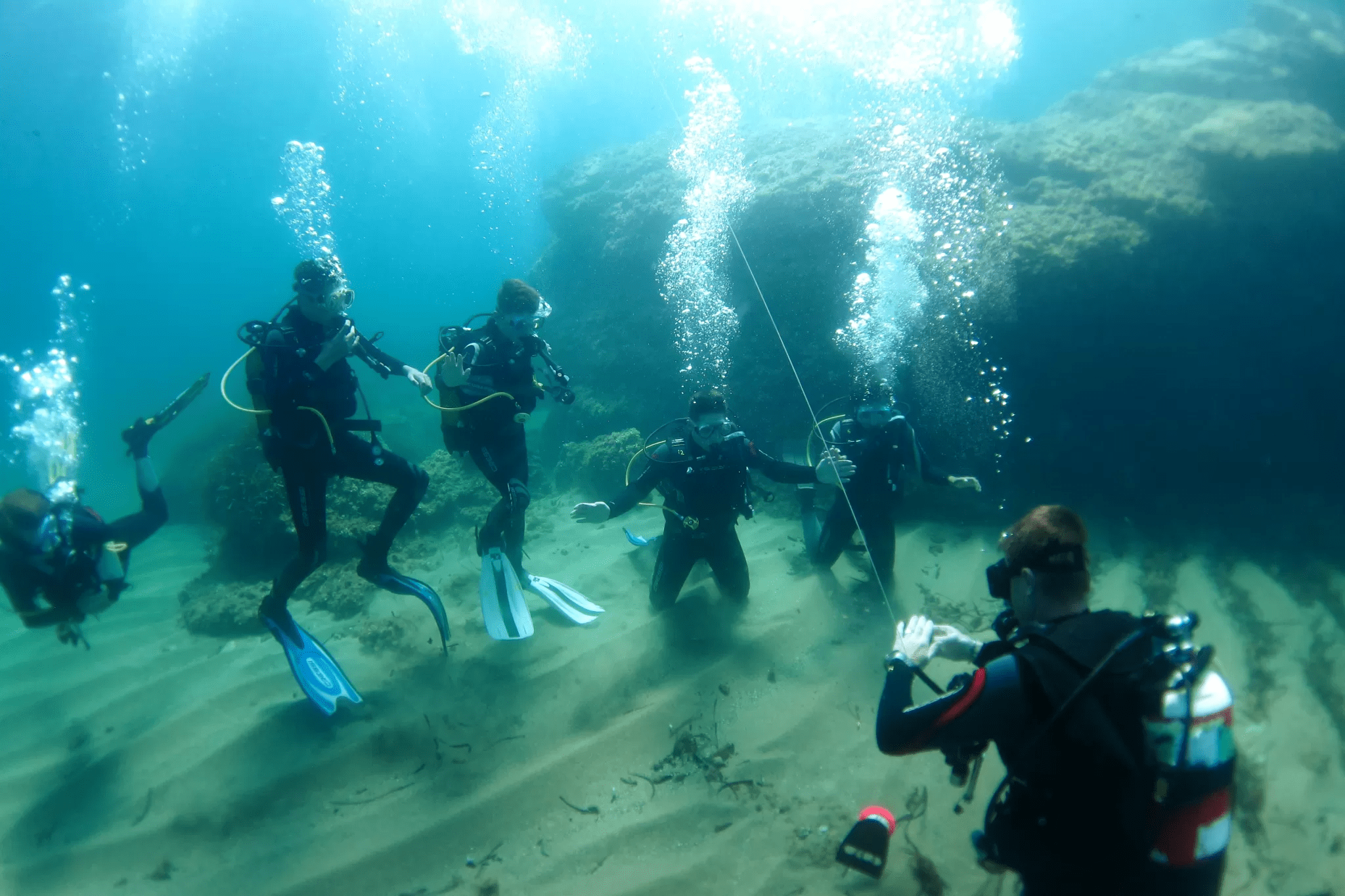
Cabo de Palos: diving in the Hormigas Islands Marine Reserve.

Image Credit: Adventure Divers Spain

The site has robust protection, and the authorities control the number of dives allowed. The access is more restricted due to the intense protection zone, allowing only a limited number of divers per day – 13 during the mid/low season and 30 in the high season.

Being a less accessible location with strong currents, it is required that the divers possess at least an advanced open water certification and demonstrate competence in certain fundamental skills in deep diving.

If you don’t have the necessary certification (like I didn’t), you can talk to diving center instructors to take the courses and steps necessary for the documents that the area needs.

In my case, in addition to the documents that are already required for any dive (medical insurance, diver certificate, etc.), I needed to do some other dives to reach the minimum number required. I recommend contacting the diving centers to obtain more detailed information, as it may change over time. Getting certified in deep dive certainly took time and effort, but the rewards are worth every minute invested.

Finding Dive Centers
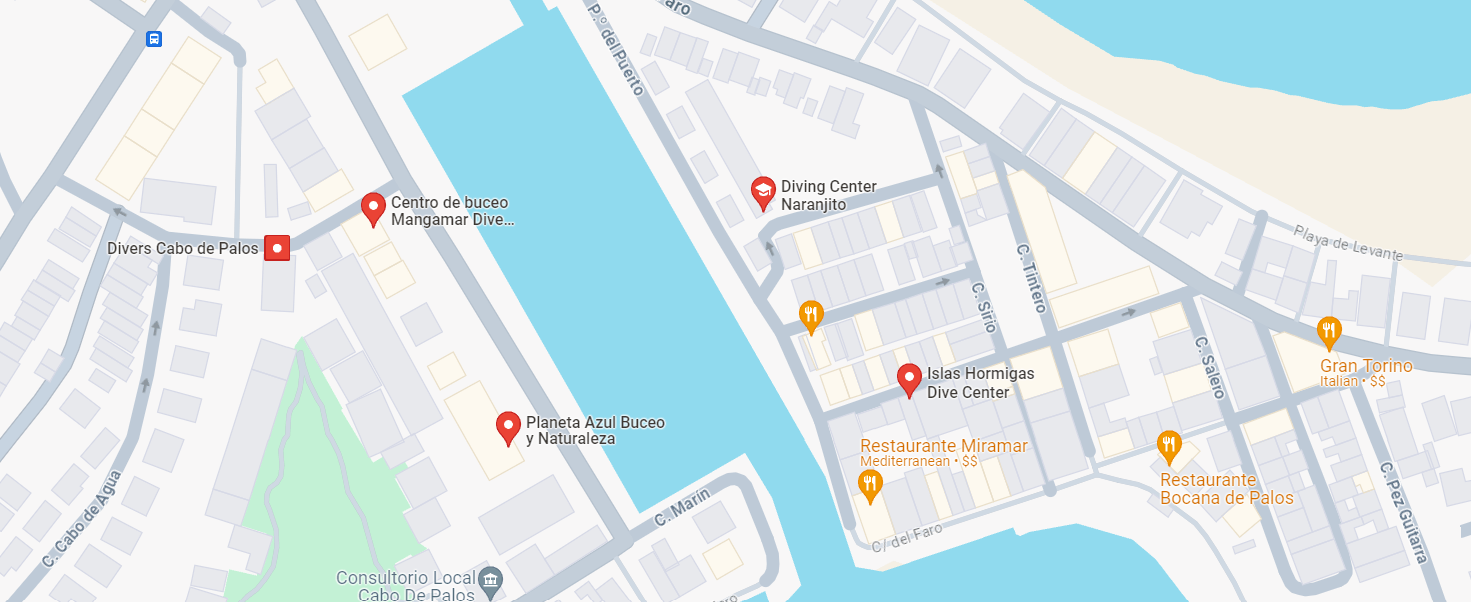
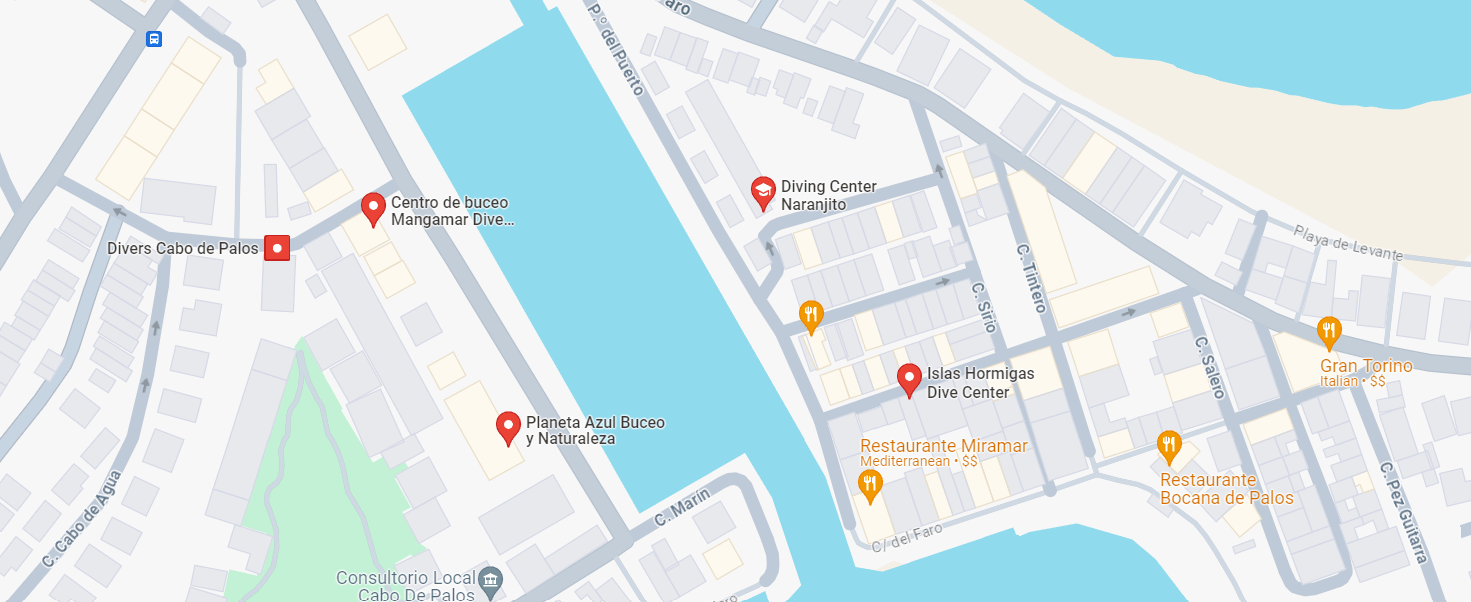
Dive centers that make divings in Hormigas Islands Marine Reserve

Image Credit: Google Maps

The area of Cabo de Palos has a lot of diving centers.

Most people who don’t know the area may have doubts about which one to choose. To make your decision easier, I’ve compiled a list of the top five dive centers, rated by Google, complete with their contact details to book your dive:

Balkysub Dive Operations | Diving School

Address: P.º del Puerto, 30370 Cabo de Palos, Murcia, Spain

Phone: +34 661 49 21 43

Appointments: bookeo.com

Diving Center Naranjito

Address: C. Magre, 26, 30370 Cabo de Palos, Murcia, Spain

Phone: +34 696 54 77 18

Appointments: https://naranjitobuceo.com/

Centro de buceo Mangamar Dive Center

Address: Paseo Puerto de Cabo de Palos, 18, P.º Dimas Ortega, 17, 30370 Cabo de Palos, Murcia, Spain

Phone: +34 968 10 08 60

Appointments: https://mangamardivecenter.com/

Islas Hormigas Diving Club

Address: C. Marín, S/N, 30370 La Manga, Murcia, Spain

Phone: +34 968 14 55 30

Appointments: https://islashormigas.com/

Divers Cabo de Palos

Address: C. Punta de la Azohía, 4, 30370 Cabo de Palos, Murcia, Spain
Phone: +34 687 80 28 91
Appointments: diverscabodepalos.com

Bajo De Fuera: A Paradise Underwater

In short, Bajo de Fuera stands out as an extraordinary dive site, promising a series of exciting underwater encounters. With its crystal clear waters, marine biodiversity of unparalleled beauty, and excellent diving conditions, it is a paradise for diving lovers.

Diving opens up a range of new possibilities and makes your trips more complete. My journey exploring the depths of Bajo de Fuera left an unforgettable mark, ranking among the most memorable experiences of my life. Every encounter with sea creatures, intricate caves, or sunken treasures created fascinating memories that I am sure will last a lifetime.

If you love this sport or are thinking about starting it, be sure to consider Bajo De Fuera (and the entire region of the Marine Reserve of Hormigas Islands) as a dive site.

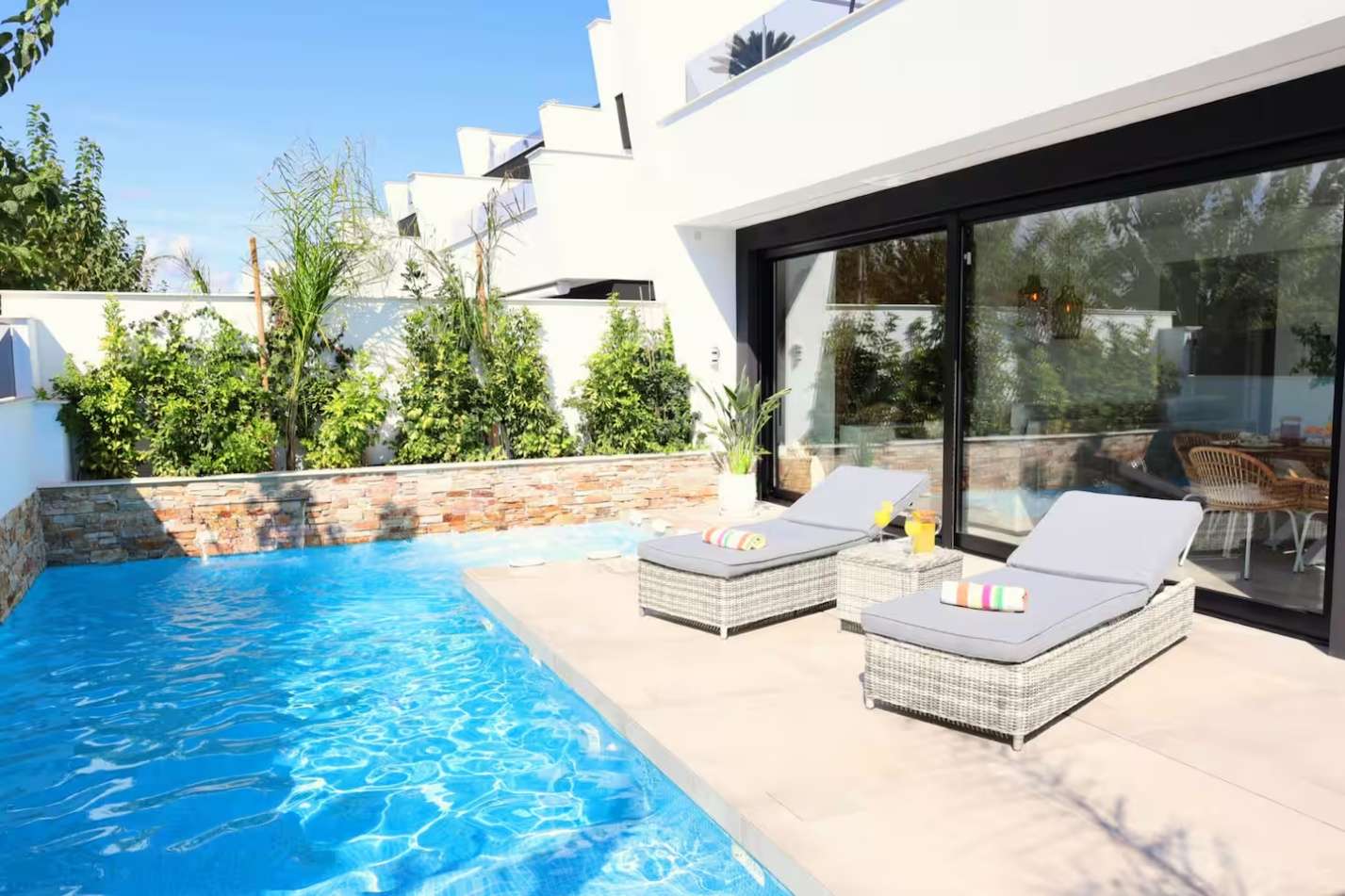
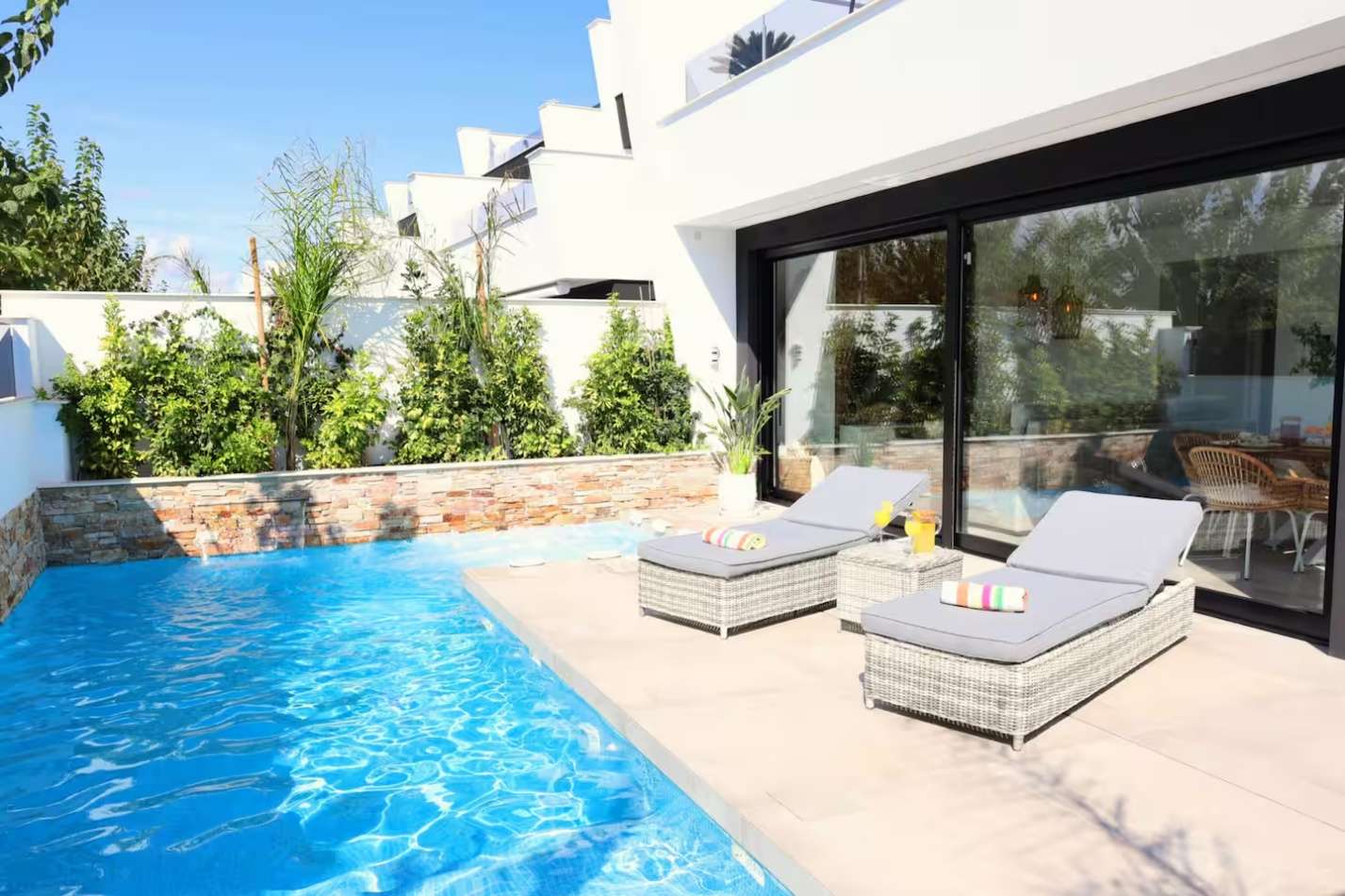
Enjoy Your Private Paradise in Villa Murcia!
Piscina com água

O conteúdo gerado por IA pode estar incorreto.

Looking for the perfect place to stay in Murcia? We’ve got just the spot for you!

Villa Murcia – Your Private Paradise

Wake up to coffee on a sun-drenched terrace, unwind in a warm jacuzzi after a day of exploring, and end your evenings with dinners in the summer kitchen. Nestled in charming Santiago de la Ribera, Villa Murcia offers more than just a holiday—it’s your personal oasis of comfort, style, and unforgettable moments.

Highlights:
✔ Spacious living room with a large sofa and open kitchen – perfect for shared memories
✔ Three elegant, air-conditioned bedrooms with private terraces – your peaceful retreat
✔ Extra fold-out sofa in the living room – ideal for additional guests

Whether it’s a romantic escape, a family getaway, or a relaxing break with friends – Villa Murcia is your dream stay.
Book now and experience the magic of the Spanish sun!

Read More

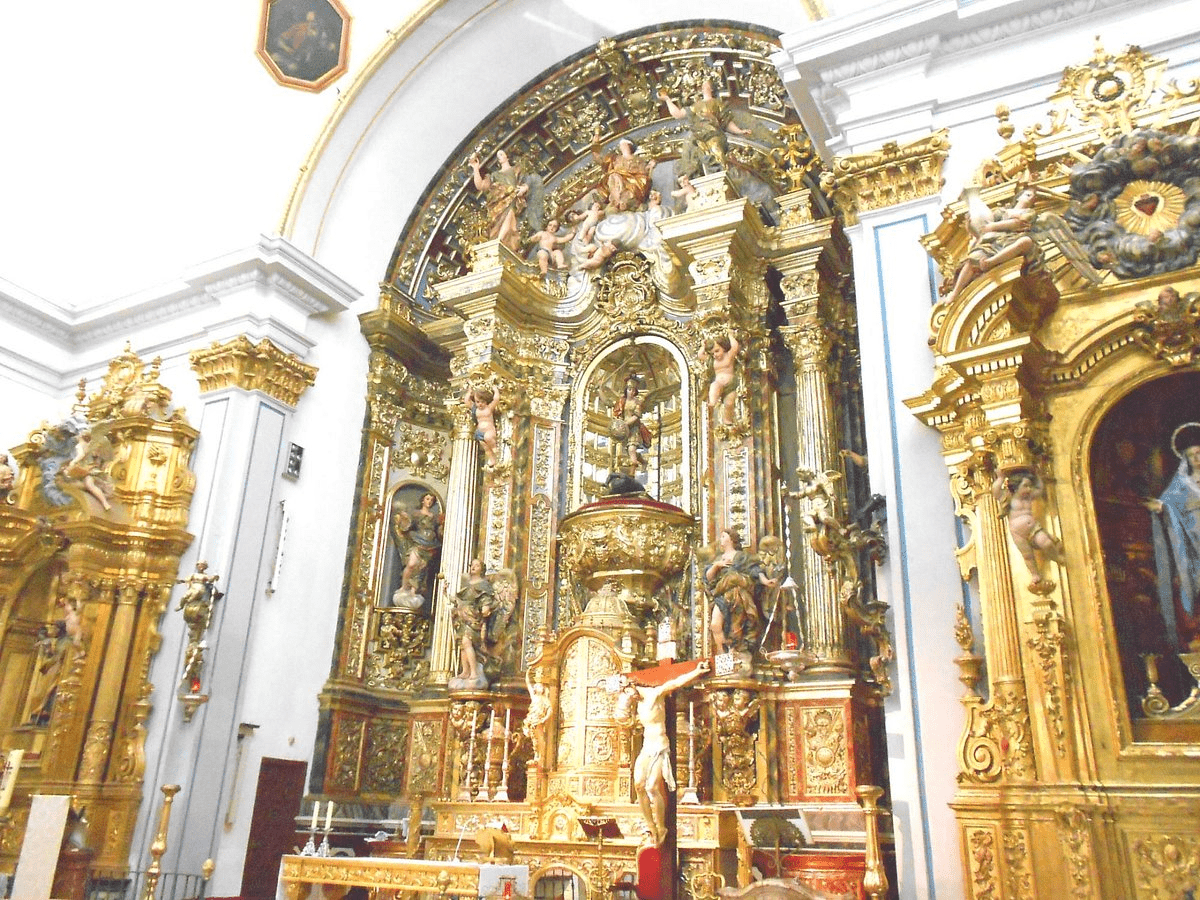
Discover the Historic Charm of Iglesia San Miguel, Murcia

Nestled in the heart of Murcia, the Church of San Miguel, or Iglesia de San Miguel, stands as a testament to Spain’s rich religious and architectural heritage. Located opposite the bustling Plaza Mayor, this historic church invites locals and tourists to explore its revered halls.

With its layout in the shape of a Latin cross and adorned with three chapels, the building’s structure is as fascinating as its history. Dedicated to San Miguel Arcángel, the church is not just a place of worship but a repository of art, culture, and history. Whether you’re visiting on a sunny Sunday morning or a quiet Saturday, Iglesia San Miguel offers a spiritual and visual feast that embodies the spirit of Murcia. Join us as we delve into what makes this church a must-visit location today.

Table of Contents

History and Construction of Iglesia San Miguel

The Church of San Miguel boasts a storied past that mirrors Murcia’s historical and cultural evolution. The church was first constructed in the 16th century and dedicated to the San Miguel Arcángel. Over the centuries, it has witnessed numerous renovations and restorations, each adding layers to its rich architectural tapestry.

Originally built to serve the growing population of Murcia’s city center, Iglesia San Miguel was strategically positioned opposite the Plaza Mayor, the city’s grand square, making it a central landmark in the citizens’ daily lives. Its construction follows the traditional Latin cross design, a popular style for churches of that era in Spain, which facilitated the accommodation of larger congregations and allowed for more elaborate ceremonies.

These chapels are adorned with intricate sculptures and artworks dating back to various periods, reflecting the changing artistic styles and religious sentiments. The church’s enduring beauty and resilience are a testament to the skills and dedication of those who built and maintained it through the ages.

Today, the Church of San Miguel stands not only as a place of worship but also as a historical monument, offering insight into the religious, architectural, and social fabric of Murcia throughout history. Its doors remain open to all who wish to find peace, delve into the past, or simply admire its enduring beauty.

Exploring the Architecture of Iglesia San Miguel

The architecture of Iglesia San Miguel is a captivating blend of history and artistry, making it a fascinating destination for visitors every Saturday, Sunday, and beyond. As you step inside, the interior of the church immediately commands attention. The structure’s layout, designed in the shape of a Latin cross, is both traditional and functional, creating a flow that guides the congregation through the spiritual and physical space of the building.

The church’s interior is divided into several sections, each serving a specific purpose and adding to the overall sanctity of the space. The central nave is flanked by aisles that lead to the three chapels, each a small masterpiece of religious art and devotion. These chapels provide a place for individual prayer and reflection and showcase various sculptures and artworks that have been collected or commissioned by the church over the centuries.

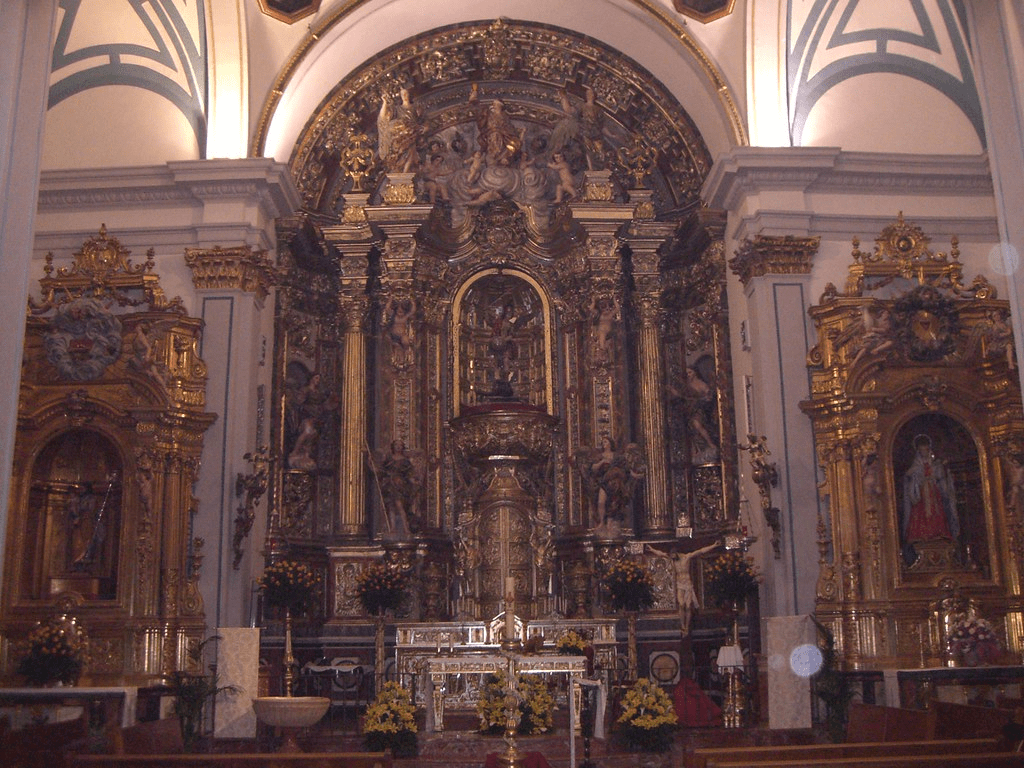
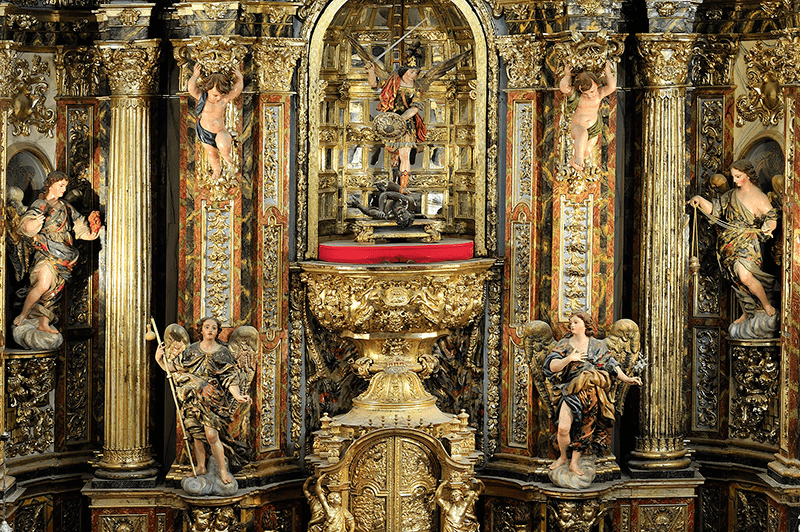
The main altar, situated at the crossing of the Latin cross, is an impressive feature, often the focal point during the services held on Saturdays and Sundays. Here, the intricate woodwork and ornamental designs speak to Spain’s craftsmanship and artistic heritage. The altar is also where the church’s relics are housed, adding a layer of historical depth to the religious ceremonies.

The ceiling of Iglesia San Miguel is another element where architecture and artistry intersect beautifully. Often adorned with frescoes or delicate stucco work, the ceiling tells stories from the Bible, San Miguel Arcángel’s life, or Murcia’s history, turning the entire building into a canvas of cultural expression.

The Religious and Cultural Significance of Iglesia San Miguel

Iglesia San Miguel is more than just an architectural marvel; it is a pivotal religious and cultural landmark in Murcia. Its significance extends beyond its role as a mere building, shaping the spiritual and communal life of the city’s inhabitants for centuries.

Religious Significance

Dedicated to San Miguel Arcángel, the church serves as a spiritual sanctuary where locals and visitors seek guidance, protection, and solace under the patronage of the Archangel Michael, who is revered as a protector and leader of the army of God in Christian theology. The church’s calendar is punctuated with liturgical celebrations, particularly vibrant on Sundays when the community gathers to celebrate Mass. The rituals and services held here, including those on special feasts dedicated to San Miguel Arcángel, are steeped in deep religious tradition, attracting devotees from across the region who come to participate in these sacred ceremonies.

Cultural Significance

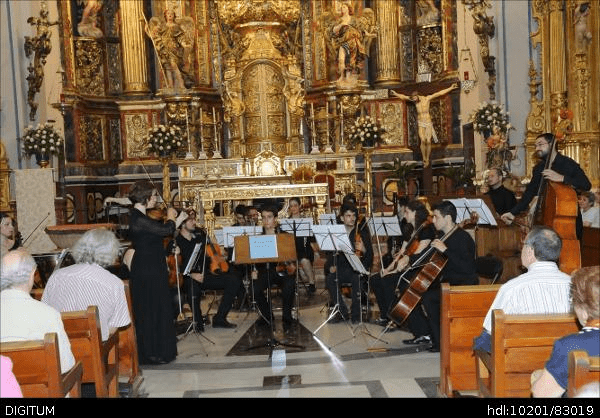
Culturally, Iglesia San Miguel is a repository of the city’s history, embodying centuries of artistic and social evolution. The church’s interior, with its sculptures, paintings, and relics, serves as a museum of ecclesiastical art, offering insights into various eras’ religious art trends and local craftsmanship. The church is also a center for many community activities that go beyond the religious, hosting concerts, lectures, and cultural gatherings that highlight its role as a communal space.

Additionally, Iglesia San Miguel is a symbol of resilience and continuity. Through various epochs, including wars, political upheavals, and social changes, it has remained steadfast in Murcia, offering a sense of stability and continuity. This enduring presence has made it a beloved landmark, deeply embedded in the personal and collective memory of the city’s residents.

In sum, the Church of San Miguel is a beacon of faith and culture in Murcia, bridging the past with the present and the divine with the everyday. It is a place where art, history, and spirituality intertwine, making it an essential visit for anyone seeking to understand the heart and soul of this Spanish city.

Tourism and Access to Iglesia San Miguel

Iglesia San Miguel is not only a cornerstone of spiritual life in Murcia but also a significant tourist attraction, drawing visitors worldwide to appreciate its historical, architectural, and cultural riches. For those planning a visit, here’s what you need to know about accessing and enjoying this historic church.

Accessibility and Location

Address: C. San Miguel, 5, 30005 Murcia, Spain.

Convenitently located opposite the vibrant Plaza Mayor in the heart of Murcia, Iglesia San Miguel is easily accessible to tourists. Whether visiting from within Spain or traveling internationally, Murcia’s robust transportation options make the church an easy addition to any travel itinerary. The city is well-connected by train and bus routes, and the church is within walking distance from several major transportation stops. For those driving, ample parking facilities are nearby, making it convenient for visitors to reach the church.

Visiting Hours and Best Times to Visit

Iglesia San Miguel is open to the public most days, but visiting hours may vary, Mondays to Fridays from 9 am to 8:15 pm and weekends from 9 am to 9:30 pm. The church is lively and open for longer hours on Saturdays and Sundays, accommodating regular worship services and the influx of tourists. For a quieter experience, visiting on a weekday may allow for a more leisurely exploration of the church’s interior and artworks. However, I found that attending a Sunday service gave me the most authentic experience of the church’s communal and spiritual life. It was a unique opportunity to witness firsthand the local culture and religious practices, truly bringing the significance of Iglesia San Miguel to life.

Guided Tours and Information

Guided tours are available for tourists interested in a deeper understanding of the church’s historical and cultural significance. During my visit, I discovered that these tours are typically guided by friendly locals who share in-depth knowledge about the building’s history, the meaning behind its artworks, and the church’s integral role in the city’s fabric. Additionally, I found that information leaflets and audio guides are readily available in various languages, ensuring that international visitors can fully appreciate the cultural richness of Iglesia San Miguel.

Nearby Attractions

After my visit to Iglesia San Miguel, I ventured out to explore more of Murcia’s charm, starting with the picturesque Plaza Mayor, right where the church stands. Here, I discovered a delightful array of traditional Spanish cafes, inviting shops, and captivating historical sites, all contributing to the city’s vibrant atmosphere. The proximity to other landmarks made it easy to extend my exploration, allowing me to immerse myself fully in Murcia’s rich tapestry of culture and history while savoring every moment of my visit.

In conclusion, Iglesia San Miguel offers a compelling reason to visit, whether you’re attracted by its rich history, stunning architecture, or vibrant cultural life. Easily accessible and located in the historical heart of Murcia, it promises a rewarding experience for every visitor, blending spiritual, cultural, and historical exploration in one of Spain’s charming cities.

Enjoy Your Private Paradise in Villa Murcia!

Piscina com água

O conteúdo gerado por IA pode estar incorreto.

Looking for the perfect place to stay in Murcia? We’ve got just the spot for you!

Villa Murcia – Your Private Paradise

Wake up to coffee on a sun-drenched terrace, unwind in a warm jacuzzi after a day of exploring, and end your evenings with dinners in the summer kitchen. Nestled in charming Santiago de la Ribera, Villa Murcia offers more than just a holiday—it’s your personal oasis of comfort, style, and unforgettable moments.

Highlights:
✔ Spacious living room with a large sofa and open kitchen – perfect for shared memories
✔ Three elegant, air-conditioned bedrooms with private terraces – your peaceful retreat
✔ Extra fold-out sofa in the living room – ideal for additional guests

Whether it’s a romantic escape, a family getaway, or a relaxing break with friends – Villa Murcia is your dream stay.
Book now and experience the magic of the Spanish sun!

Conclusion

In conclusion, Iglesia San Miguel in Murcia is more than just a historic church; it is a vibrant hub of spiritual, cultural, and community activity. Whether you’re drawn by its architectural splendor, interested in its rich religious heritage, or looking to immerse yourself in local traditions, this church offers a unique glimpse into the heart of Murcia. Conveniently located and rich in history, Iglesia San Miguel invites believers and tourists alike to explore its sacred halls, participate in its ceremonies, and discover its treasures any day of the week, making it a must-visit destination in Spain’s beautiful Murcia.

Read More
Ample vision of the Santuario de Nuestra Señora de La Fuensanta

Santuario De Nuestra Señora De La Fuensanta

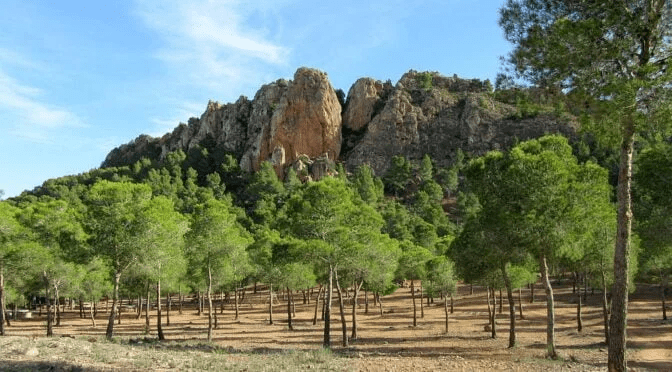
One of the most popular trips among Murcia city residents and highly recommended for visitors to the region is to head to the hills south of the city, where dense pine forests offer a refreshing change from the heat that can build up in the valley below. Just six kilometers from the city of Murcia, at the foot of the Carrascoy mountain range, is the Santuario De Nuestra Señora De La Fuensanta, located in the district of Algezares.

Situated in a welcoming place with good views and a pleasant place to visit before leaving Murcia, it was one of the destinations I most enjoyed visiting in the region. Read on to find out why!


Table of Contents

History and Origins of Santuario de Nuestra Señora de La Fuensanta

The Sanctuary of Nuestra Señora de la Fuensanta (In Spanish Santuario de Nuestra Señora de la Fuensanta), is located in the Algezares village, part of the city of Murcia region.

It had origins in the construction of an old medieval hermitage that began in 1694 on the remains of a previous religious building. The tradition dates back to the Middle Ages, with a hermitage built in an existing cave, which was cared for by monks, mentioned in documents since 1429. After centuries of religious occupation of the area, construction of the current sanctuary began in 1694, with several interventions over the centuries.

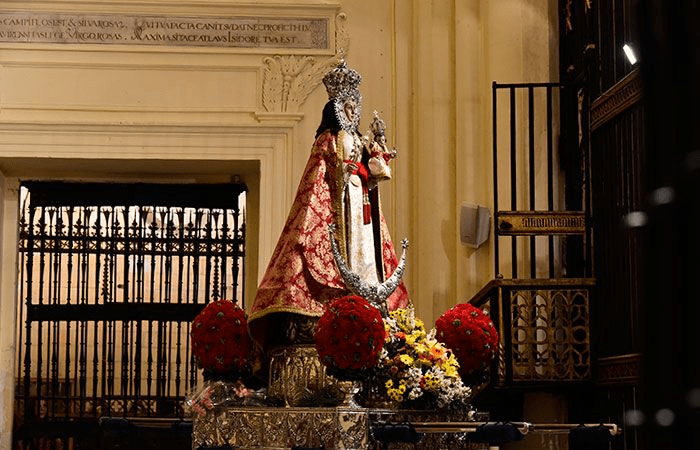
Virgen de la Fuensanta (Virgin of Fuensanta)  being carried by people
Image Credit: Catedral de Murcia Website

The image of the Virgen de la Fuensanta (Virgin of Fuensanta) has been venerated since the 15th century, with her cult celebrated during specific religious events in the region. In the late 17th century, a significant drought led many believers to pray at Fuensanta, and the subsequent cessation of the drought in response to prayers was interpreted as a miracle leading to the proclamation of the Virgen de la Fuensanta as the city’s patron saint in the 18th century, giving the sanctuary greater importance.

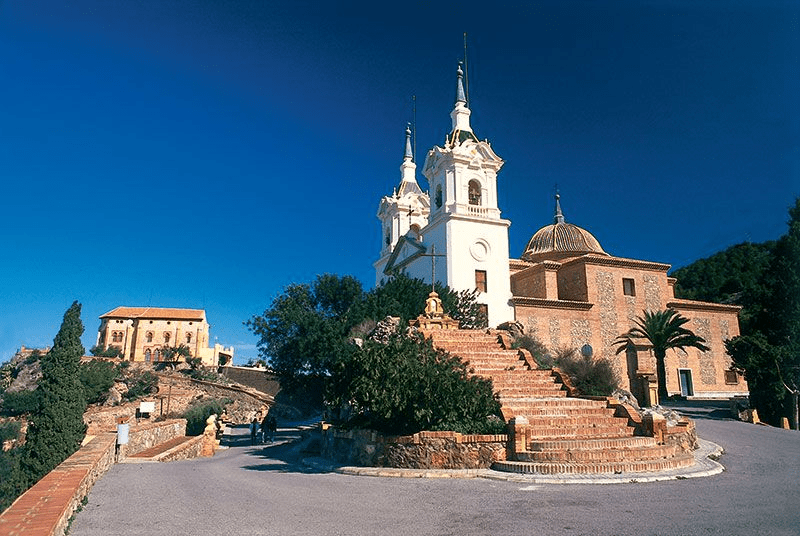
After restorations carried out over the centuries, including a restoration of the towers in 1925 by Rafael Castillo Sáiz and a complete restoration following damage caused during the Spanish Civil War, the sanctuary maintains its importance as a place of devotion and cultural heritage. Its baroque structure includes a central nave with side chapels and a dome over the crossing, as well as a central facade designed by Toribio Martínez de la Vega, highlighted by its side towers and the presence of two angels holding the cabildo’s shield over the main door. The sanctuary is administered by the Diocese of Cartagena and is classified as an Asset of Cultural Interest.

Architecture and Design

The Sanctuary of Nuestra Señora de La Fuesanta has an impressive architectural work, standing out for its imposing structure and intricate details. Combining elements of religious architecture and Baroque style, the sanctuary captured my attention with its beauty and grandeur. As a religious person, stepping inside filled me with a mix of emotions— a rush of awe and a wave of calm. It was such a unique moment, just soaking up the peaceful vibes and devotion in the Patron Saint’s home.

Interior

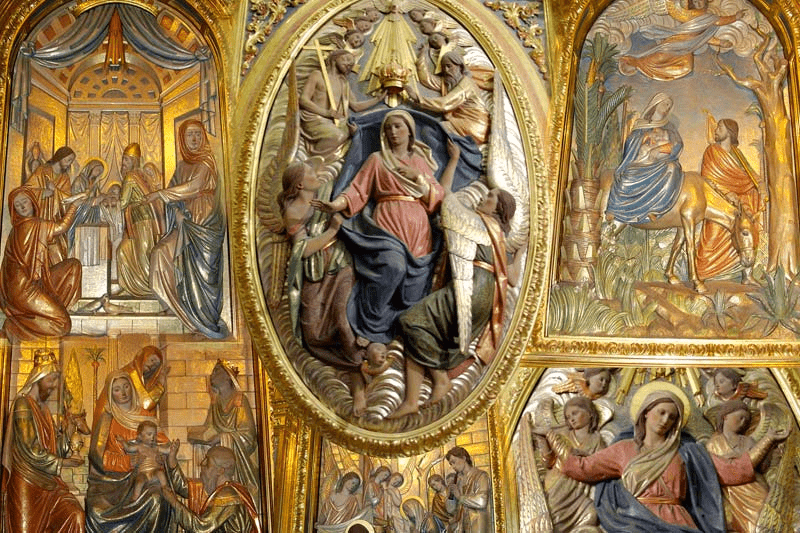
Mural paintings inside the Santuario de Nuestra Señora de La Fuensanta
Image Credit: Turismo de Murcia Website

The interior of the church underwent an almost complete transformation after being destroyed during the Spanish Civil War. One of the changes made during the reconstruction was the installation of a new altarpiece and dressing room, designed by Antonio Carrión Valverde and Nicolás Prados López, that replaced the original altarpiece and the beautiful patron saint’s dressing room from 1722, which were the work of Antonio Dupar.

In the semicircular dome and the choir, there are paintings and murals created by the artist Pedro Flores, which depict pilgrimages and the Coronation of the Virgen de la Fuensanta on the old bridge of Murcia. Furthermore, we found around ten beautiful reliefs carved by Juan González Moreno, representing scenes from the life of the Virgin Mary.

Patroness of the city, Virgen de la Fuensanta, in the Santuario de Nuestra Señora de La Fuensanta
Image Credit: Catedral de Murcia Website

The altar showcases the image of the Patron Saint, a finely dressed sculpture dating back to the 17th century. Previously, she was revered in the Trascoro chapel of Murcia Cathedral, under the title of Our Lady of Fevers. It was Bishop Trejo who transferred her to the Serra Sanctuary, renaming her with the dedication of Fuensanta. While the painter remains unidentified, it’s documented that in 1802, Roque López, a disciple of Salzillo, undertook a restoration and touch-up of the sculpture.

Another restoration occurred around 1960, overseen by architect Fernando Garrido. He also constructed the guesthouse, now known as the Monastery of the Benedictine Religious, attached to the Santuario de Nuestra Señora de La Fuensanta. Garrido’s work included enhancing the overall exterior appearance of the church.

Exterior

Ample vision of the Santuario de Nuestra Señora de La Fuensanta
Image Credit: Catedral de Murcia Website

The Santuario de Nuestra Señora de La Fuensanta has a classic baroque-style temple, made up of three naves: a larger central nave and two side naves with chapels. Its facade, a work by Toribio Martínez de la Vega, has two towers and a semicircular arched door. Above the door, two angels are holding the coat of arms of the Chapter of the Cathedral, responsible for building the temple, and a central niche with the sculpture of the Patron Saint, Virgen de la Fuensanta, sculpted by Jaime Bort, flanked by Saint Patrick and Saint Fulgencio. What pleases me most is that from the sanctuary, you can see the entire city of Murcia. It is a wonderful and peaceful view.

The Surroundings Are Also Captivating!

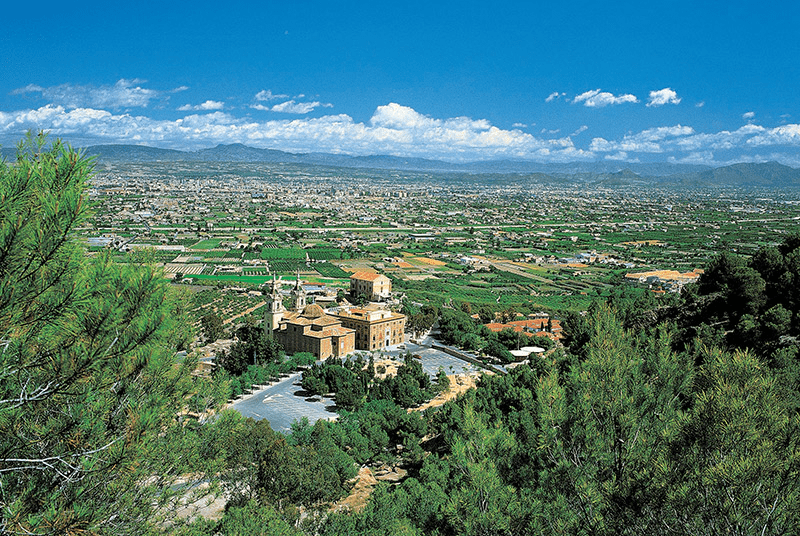
Ample vision of the Santuario de Nuestra Señora de La Fuensanta
Image Credit: Costa Cálida Region de Murcia Official Website

The sanctuary stands in the heart of the Cordillera Sul, in the town of Algezares, in a mountainous area that extends along the Segura valley on its southern slope. It enjoys a privileged landscaped environment, offering a panoramic view of the Murcia plain and bordering the protected natural space known as Carrascoy and El Valle Regional Park.

The El Valle y Carrascoy Regional Park , located closed to the Santuario de Nuestra Señora de La Fuensanta
Image Credit: Wildside Holidays Website

The El Valle y Carrascoy Regional Park is a protected natural area that dominates the landscape of the Murcian Plain. Furthermore, around the Santuario de Nuestra Señora de La Fuensanta, there are other points of interest, such as the Holy Fountain, in Renaissance style, the Casa del Cabildo or Sacristán, in neo-Arabic style, and the monastery of the Benedictine nuns, connected to the Sanctuary by an arch.

There is ample parking available near the sanctuary, and visitors can enjoy the magnificent views of the valley while enjoying a drink at the on-site café. This place also serves as a popular starting point for hiking, with trails that start from the back of the sanctuary and follow the course of the road, passing by the hermitage of La Luz, where it is still possible to buy chocolate from the monks who reside there, until reaching to the La Luz visitor center.

Also, close to the sanctuary, you will find the Hermitage and Visitor Center of San Antonio el Pobre and the Franciscan Convent of Santa Catalina del Monte, which in my opinion, both places are very stunning and are worship to be visited

Want To Visit The Sanctuary?

Want to visit the Santuario De Nuestra Señora de La Fuensanta? Below are some important information:

How to Get There

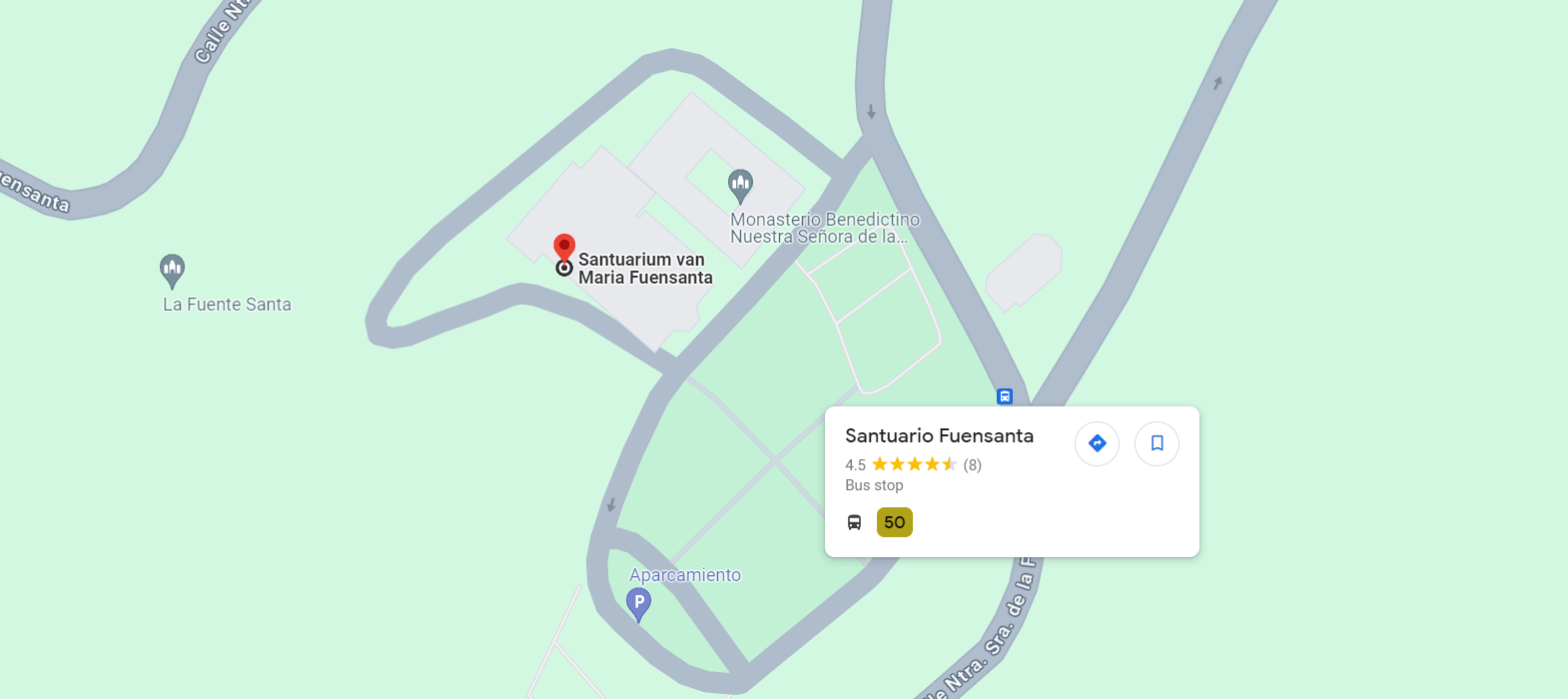
Google Maps image of the location of Santuario de Nuestra Señora de La Fuensanta and the bus stop near
Image Credit: Google Maps

By bus: there is a bus stop 100 meters from the sanctuary. If you want to get there by bus, take line 50 TMP – Monbus

By car: The Sanctuary stands at Calle Ntra. Sra. de la Fuensanta, 30157. To reach it by car, you can follow signs for La Alberca on the main highway. To reach the sanctuary, take a sharp right turn at the entrance to Algezares. Please be aware that the signage for this turn may not be well-marked.

Hours And Fees

Entry to Santuario De Nuestra Señora De La Fuensanta is free. Opening hours are Monday to Sunday, from 9 am to 1 pm and from 4 pm to 6:30 pm.

Masses take place from Monday to Friday at 6 pm and on Saturdays at 5 pm. On Sundays and holidays, masses take place at 10 am, 12:30 pm, and 5 pm.

During the summer (June to September), mass times change. From Monday to Friday, they take place at 9 am, on Saturdays at 7 pm, and on Sundays and holidays at 11 am and 7 pm.

A Final Recommendation

Remember to wear comfortable shoes because there’s quite a bit of walking involved to reach both the place and the Valley. However, I assure you, the journey is well worth it.

Do not hesitate to visit the sanctuary. The experience of being there, immersed in the natural beauty and unique spirituality, is truly unforgettable. Come and explore this special place and let yourself be enveloped by its magic and serenity

Enjoy Your Private Paradise in Villa Murcia!

Piscina com água

O conteúdo gerado por IA pode estar incorreto.

Looking for the perfect place to stay in Murcia? We’ve got just the spot for you!

Villa Murcia – Your Private Paradise

Wake up to coffee on a sun-drenched terrace, unwind in a warm jacuzzi after a day of exploring, and end your evenings with dinners in the summer kitchen. Nestled in charming Santiago de la Ribera, Villa Murcia offers more than just a holiday—it’s your personal oasis of comfort, style, and unforgettable moments.

Highlights:
✔ Spacious living room with a large sofa and open kitchen – perfect for shared memories
✔ Three elegant, air-conditioned bedrooms with private terraces – your peaceful retreat
✔ Extra fold-out sofa in the living room – ideal for additional guests

Whether it’s a romantic escape, a family getaway, or a relaxing break with friends – Villa Murcia is your dream stay.
Book now and experience the magic of the Spanish sun!

Read More
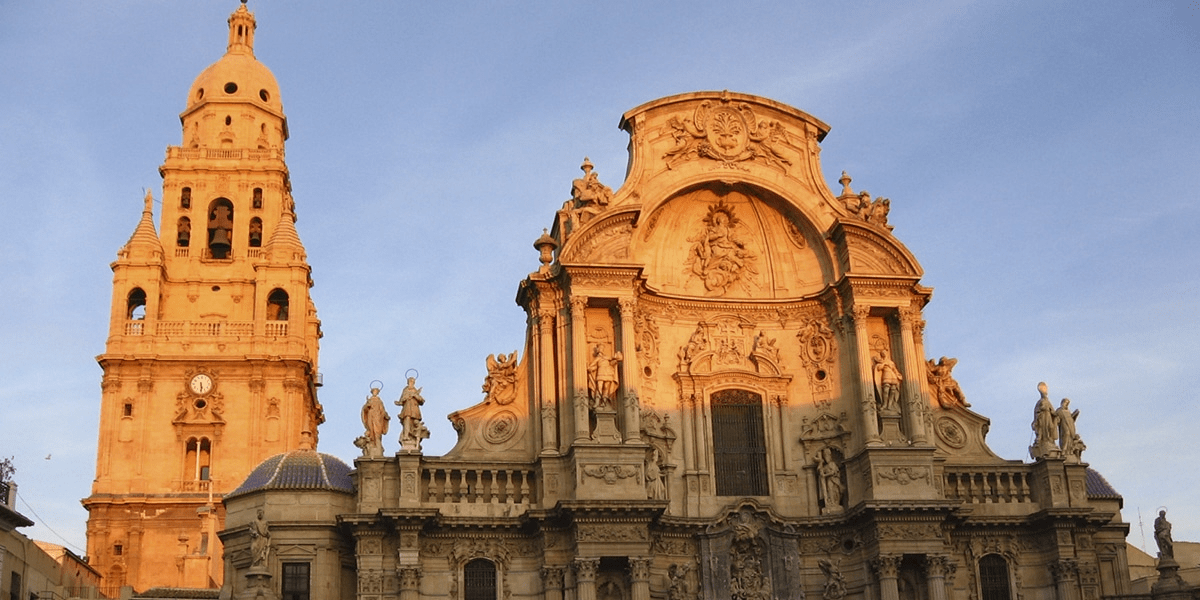
The facade of the cathedral

Cathedral de Santa Maria Murcia – Multi-styled Masterpiece

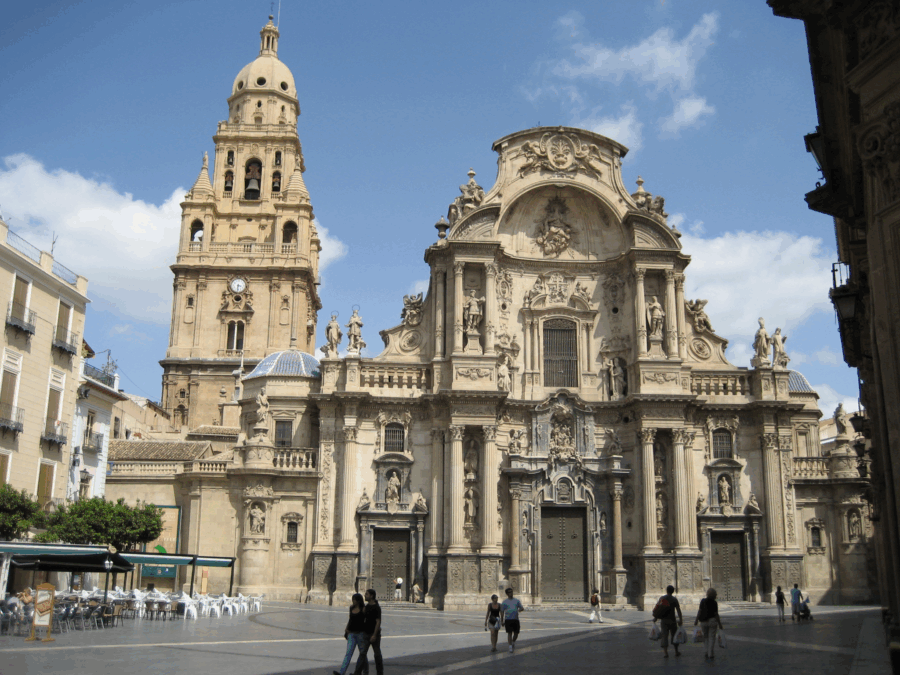
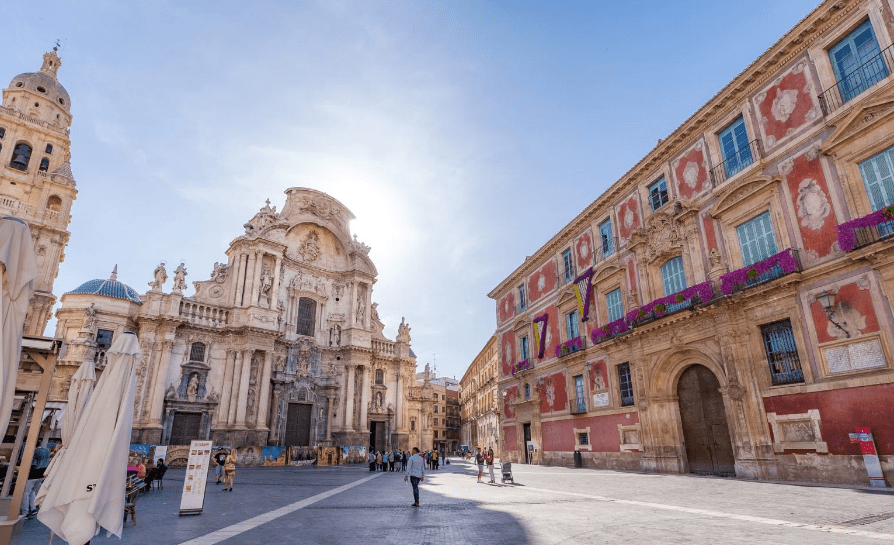
Welcome to the beautiful Cathedral Church of Saint Mary in Murcia (Spanish: Iglesia Catedral de Santa María en Murcia), or, as it is commonly referred to, the Cathedral of Murcia. It’s a Catholic Church in the city of Murcia and a breathtaking cathedral of the Roman Catholic Diocese of Cartagena. It’s the pearl of the baroque architecture, but a gothic cloister in heart. If you are a history buff, or if you just have an eye for architectural masterpieces – this is definitely a sight to see!

Table of Contents

History

The interior of the cathedral

As with all architectural masterpieces in our lifetime, it comes with a little bit of history. The conception of this cathedral starts with the Christian king Jaime I the Conqueror. And so he did just that to the city of Murcia during the Mudéjar revolt of 1264–66. This was during a great war when Christianity fought against the Muslim world in Spain; he took the Great Mosque that was built there, or Aljamía as the Muslims referred to it, and consecrated it to the Virgin Mary.

Although he wanted to do it right away, it took until the 14th century that the construction of the cathedral in this place took off. In 1385, the work on foundations started, but the work itself had to be delayed until 1388, when the first stone was laid.

Plaza Del Cardenal Belluga, where the cathedral stands, had to wait a while for development to begin. Actually, it took much longer than expected, as the work wasn’t completed until October 1467. Even after the initial construction finished, the cathedral continued to evolve, incorporating various architectural styles and subtly reflecting the influence of the former Muslim city that once occupied this site. Over the centuries, it continued to develop, ultimately becoming the awe-inspiring masterpiece we see today since the 18th century.

Architecture Style

The cathedral view

As I have mentioned before, this particular cathedral is done in exquisite detail. It has a magnificent “torre campanario,” which means the bell tower, and is a masterful combination of many different styles.

The cathedral was designed by Valencian architect and sculptor Jaume Bort i Meliá. Its interior presents a predominantly Gothic style, albeit with a refinement that sets it apart from the classic Gothic architecture like Notre Dame. It’s the facade that truly shines, presenting the finest aspects of the cathedral.

I recall my first visit, feeling like I had stepped back in time. From the intricate Gothic windows to the classic porches and the breathtakingly beautiful Baroque decorations, every detail left an indelible mark on me. The Baroque style seamlessly intertwines with a sense of humility added in later years, creating a mesmerizing architectural experience.

Interior

the altar of the cathedral

Let’s first discuss the Cathedral interior. The Murcia Cathedral is made up of three different naves with an apse and twenty-three chapels. Each is dedicated to the patron saints of labor unions and serves as the final resting place for bishops and nobles involved in the construction of the Cathedral de Santa Maria Murcia. Here are the most interesting ones:

  • The Chapel of the Apse or the Vélez Chapel – this chapel has a cupola of start with ten points and is crafted beautifully in the Flaming Gothic style;
  • The Chapel of Junterones belongs to the Spanish Renaissance. It may not be as fiery as the baroque-styled ones, but it’s pure and elegant: the Spaniards are considered one of the masters of the craft of that era, and it shows here.
  • The Chapel of the Immaculate is undoubtedly a masterpiece of Baroque architecture. If you appreciate the rich detail and lavishness of that style, it’s an absolute must-see.

Sound Equipment

We cannot, of course, overlook the “transcorum,” of course, the plateresque seating for the choir that looks incredible, especially during night ceremonies. This is when you can additionally enjoy the large Merlkin organ, one of the most interesting inventions of the time, with almost 4000 pipes and four keyboards. The sound is taking over you when you’re listening to it inside, and you really can feel a spiritual being with those pipes attacking you from every corner.

Three Levels

a look at the altair at the cathedral

There are there levels inside the cathedral. If you want to visit it, you should definitely check them all out!

  • The first one was made by Francisco and Jacobo Florentino. It’s basically a square plant in Renaissance style. The ornamentations offer a completely unique experience. Influenced by the highly prevalent plateresque style in Spain during the late 15th and early 16th centuries, these elements were frequently adopted in Spain’s American colonies. The ornamentations you’ll encounter date back to that period and showcase a distinct “Silversmith-like” approach, reflecting the rich cultural exchange and artistic influence of the time.
  • The second body, crafted by Jerónimo Quijano, bears similarities to the first, yet it exudes a distinct delicacy and conservatism. While it shares the same type of ornaments and features, the style is notably more purist compared to the ground floor. This refinement and adherence to purity lend it a unique charm and elegance.
  • The third floor is truly extraordinary, featuring a blend of various styles and accents. It incorporates elements straight from the Rococo style, coupled with a cupola designed by Ventura Rodríguez. The result is captivating, with an intriguing mix of influences that manage to be exciting without veering into flashy territory.
  • And finally, we have the fourth floor with four conservatories in each corner. This is for the special ceremonies to fight off the natural disasters that, unfortunately, came over this place as well.

The Heart of the King

Lastly, as surprising as it may sound, this place holds the heart and entrails of King Alfonso X the Wise, interred beneath the main altar. It’s a testament to his dedication and gratitude to the city, as he chose to honor it by dedicating his body to its love and acknowledging its loyalty to him as king.

Facade

the facade of the cathedral

Let’s now talk a little bit about the facade. There are a couple of things we need to address straight away. For starters, the Door of the Apostles is one of the most famous elements of the cathedral. It was constructed in 1488 by Diego Sánchez de Almazán. It’s Gothic in heart, with sculptures of four apostles and a shield to honor the honor of Queen Isabel, the Catholic.

Next, there is the Door of Chains – two bodies, one from the 16th and one from the 18th century, with reliefs of the brothers San Leandro, San Isidoro, and San Fulgencio. It’s much more defined than the Door of the Apostles, but both have their fans. The main facade is mostly Baroque, with some elements from the 1800s. This is definitely my favorite element of the whole building, as the decorations and finishes perfectly fit together.

Bell Tower

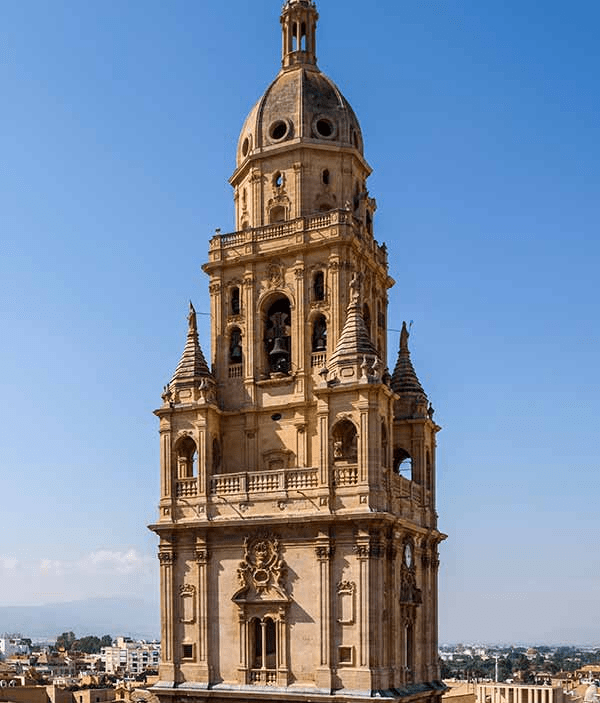
the bell tower

Another important fact about Cathedral de Murcia is the incredible bell tower that was created when it was still a mosque. It was built entirely between 1521 and 1791. It is 90 meters long with a weather vane, and it’s the tallest campanile in Spain.

Inside the tower, you’ll find twenty-five bells, each dating back to the 17th or 18th century. Each bell has its own name, reflecting its unique sound, such as “The Bell of Prayer” or “The Bell of Spells.” These bells played a significant role in society, serving as warning signals to alert the population about impending disasters—a vital function in a country that has faced numerous calamities over the last millennium. Additionally, the tower itself ranks as the second tallest in Spain, trailing only the Giralda in Seville. For me, this is one of the best-designed towers in Spain, especially considering the fact that it was a Muslim Minaret.

Cathedral de Santa Maria Murcia – Conclusion

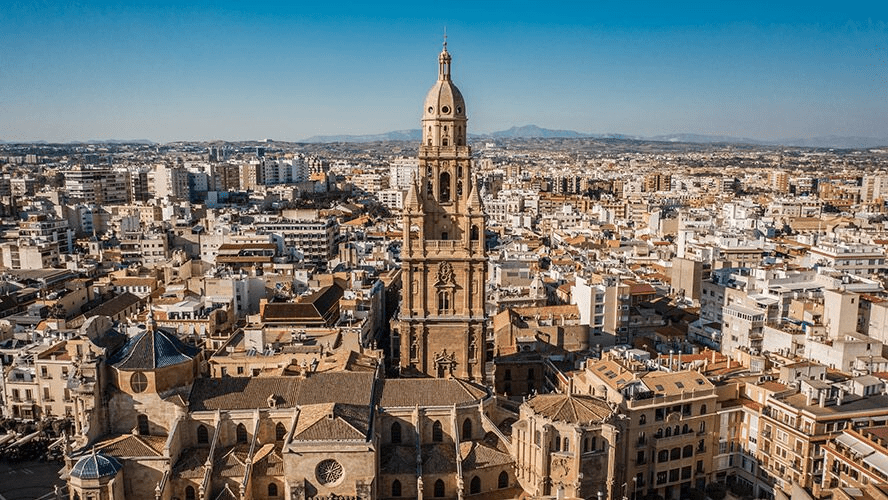
a look at the cathedral from a drone

The Cathedral de Murcia stands proudly as a top destination on every tourist’s map, impossible to overlook even if you tried. From its awe-inspiring architecture to its rich history, it’s truly a sight to behold. I especially recommend it to those of you who are interested in finding something that has changed throughout time, presenting you with different sides of it whenever you look at it. I personally enjoyed the most the intertwined styles that are present at every corner.

Don’t forget to explore the cathedral museum, which is brimming with fantastic souvenirs to commemorate your visit. I’m confident you’ll find this exceptional beauty to be your next favorite spot. I wholeheartedly recommend it!

Enjoy Your Private Paradise in Villa Murcia!

Piscina com água

O conteúdo gerado por IA pode estar incorreto.

Looking for the perfect place to stay in Murcia? We’ve got just the spot for you!

Villa Murcia – Your Private Paradise

Wake up to coffee on a sun-drenched terrace, unwind in a warm jacuzzi after a day of exploring, and end your evenings with dinners in the summer kitchen. Nestled in charming Santiago de la Ribera, Villa Murcia offers more than just a holiday—it’s your personal oasis of comfort, style, and unforgettable moments.

Highlights:
✔ Spacious living room with a large sofa and open kitchen – perfect for shared memories
✔ Three elegant, air-conditioned bedrooms with private terraces – your peaceful retreat
✔ Extra fold-out sofa in the living room – ideal for additional guests

Whether it’s a romantic escape, a family getaway, or a relaxing break with friends – Villa Murcia is your dream stay.
Book now and experience the magic of the Spanish sun!

Read More

Salt Church Mar Menor | An Evangelical Temple in San Javier!

Spain, particularly the region of Murcia, boasts a wealth of tourist attractions and cultural and natural wonders that can be enjoyed year-round. Yet, many of these places truly come alive and shine during the summer months, making it an exciting time to plan your visit. Amidst this vibrant landscape, the Sal Mar Menor Church holds a special significance for many Christians, particularly evangelical Christians seeking a place to honor their faith.

It is a simple temple that warms the hearts of the parishioners. Whether you are a believer or simply want to visit this church and the city of San Javier, you’ll learn the basics that any traveler should know.

Table of Contents:

What Is the Salt Church Mar Menor?

The Salt Church Mar Menor is an English-speaking Evangelical Church in the Mar Menor area of Murcia in southeast Spain. This temple accepts people from many different backgrounds and Christian denominations, which makes it a very demanding place for believers.

The Salt Church Mar Menor is a Bible-based temple that only opens its doors on Sunday when all the parishioners come to hear the sermon of the Father. The services of the Salt Church consider the Bible the main core of their practice while mixing it with the best contemporary and traditional worship music.

The church takes its name from the zone’s predominant economy, which has been based on salt extraction since the Roman Empire era. The most important businesses are dedicated to extracting salt from the sandbanks of San Pedro de Pinatar, located several kilometers to the north.

Salt Church Mar Menor History

The Salt Church Mar Menor was founded in January 2020. It’s part of an intentional congregational plan from Salt Church (Spain) based in the municipality of Los Montesinos, whose roots go back more than thirty years as Torrevieja Christian Fellowship. It’s a registered Association in Spain and is affiliated with the Assemblies of God—Spain, or Federación Asambleas de Dios de España.

Salt Church Spain in Los Montesinos website: www.saltchurch.es

Salt Church Mar Menor Location

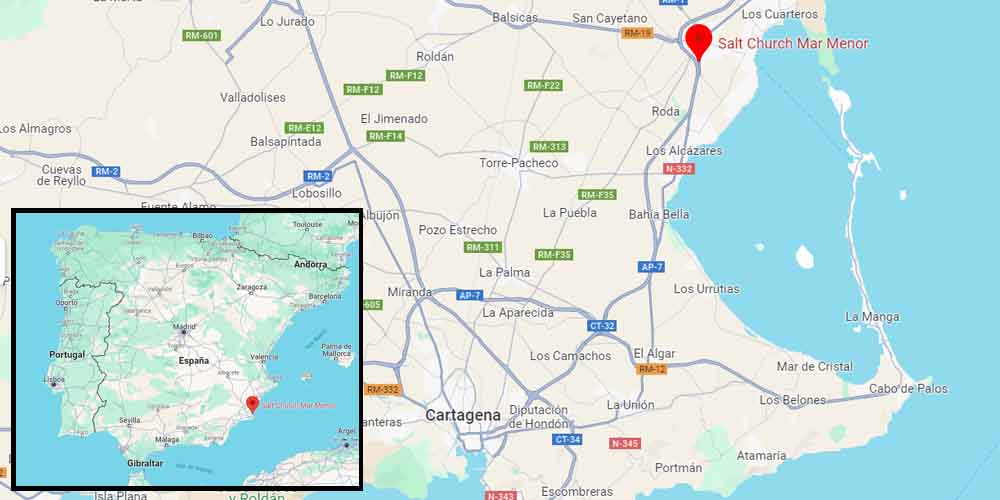
The Salt Church Mar Menor is located in San Javier, a city in the Murcia region of Spain. It’s 1 km south of the center of the city, in a zone with multiple services, such as restaurants, bars, and other businesses.

Address: The Hub, Avenida de la Unión, 100, 30730 San Javier (next to Yorkshire Linen), Murcia, Spain.

Website: www.marmenorchurch.com

Email: andy.neale@marmenorchurch.com

Telephone: +34 622 41 67 93

Google Plus Code: Q5W6+GP

Sunday Services: the church opens only Sunday from 10:45 a.m. to 12:30 p.m.

Access to Salt Church Mar Menor

Finding the Salt Church Mar Menor is pretty easy since the city is small and the temple is close to the center of the city. From downtown, you should take the route N-332 to the south. You probably will find the Salt Church a kilometer away. It’s impossible to get lost.

San Javier Features You Should Know

San Javier is a small municipality but very crowded in summer due to its magnificent climate and coastal conditions. These conditions make it perfect for enjoying a relaxing vacation. In addition, it is full of sights that attract people from all over Europe and the world.

  • Average temperature during summer: 25°C
  • Rains: scarce
  • Population: 31,905

The summer season, specifically from June to September, is sunny and hot, as is most of the Murcia region, especially on the Mediterranean coast. Still, during the day in San Javier Murcia, a refreshing breeze can blow, but the nights are warm and sticky.

July – September is the best time to swim in the Mar Menor. At this time, the average water temperature is 23°C, which is more than pleasant for people who cannot stand cold water.

The first time I set foot in the waters of San Javiers, I was surprised by the warm and clear conditions, also perfect for practicing water sports and other activities. In addition, San Javier is ideal for staying and getting to the coves and beaches near the area.

Additional Things to Do in San Javier

As I mentioned before, you can visit the municipality’s beaches, such as Playa Chica or La Cala del Barco, located to the south of the city. Still, you can sail along the Mar Menor, dive, or have a drink in the many restaurants in the city.

Restaurants and Cuisine

Spanish cuisine is renowned worldwide for its exceptional flavors and variety, and the food of the Murcia region is no exception. You’ll find an abundance of Mediterranean-inspired dishes, highlighting the freshest seafood, fish, rice, and other locally sourced ingredients. The culinary offerings are sure to delight your taste buds and leave you craving more.

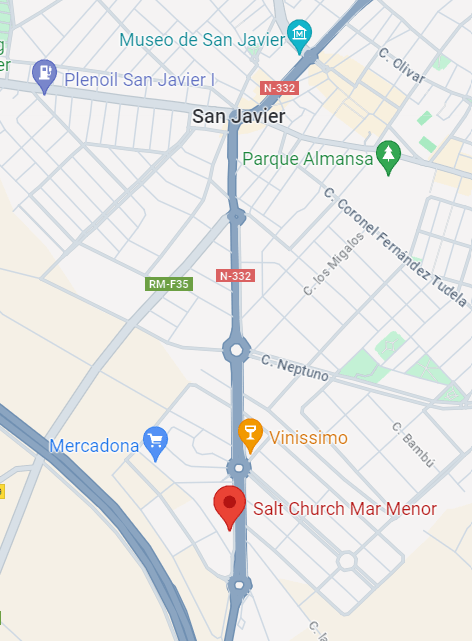
One of the restaurants that I visited two or three times during my stay in San Javier is Vinissimo. It specializes in Spanish and European cuisine and creates fusion dishes that are a true delight for the palate. It also has an incredible wine list. In addition, it is very close to the Iglesia de Sal del Mar Menor, less than 500 meters away, so you can attend the Sunday service and then head to an incredible lunch.

Location of Vinissimo and Salt Church Mar Menor

Beaches and Cultural Activities

San Javier also offers plenty of tours and activities to complete your journey in this magnificent city. For example, you can visit Playa Mistral, which is great for children and people who love calm waters. The San Javier Museum is also a site of great interest. Here you can learn a lot about the history of the city and get crucial information about settlements and near natural attractions.

The Plaza de España is also a magnificent place to visit during your journey. Most of the time—especially in summer—it’s full of interesting exhibitions with plenty of details. Besides, this square hosts the San Javier Church, a mythical Catholic building dating from 1698.

However, suppose you are looking for more attractions or eating next to the Mar Menor. In that case, you can visit the neighboring city of Santiago de la Rivera, just a few kilometers away. This city has various restaurants, hotels, and incredible beaches where you can witness the sunrise and the deep blue water of the Mar Menor. Without a doubt, this is one of the best things you can do in this part of the Mediterranean Sea.

The Salt Church Mar Menor, a Good Reason to Visit San Javier

The Salt Church of the Mar Menor is a minor temple but a good reason to visit San Javier and its surroundings. The area has a lot of interesting places to visit, including restaurants, museums, old buildings, and incredible beaches where you can relax as soon as you set foot on its sands. Also, if you are a devout Christian, this church that opens on Sundays can be an extra reason to get to know the settlement and the incredible region of Murcia.

Enjoy Your Private Paradise in Villa Murcia!

Villa in Spain

Looking for the perfect place to stay in Murcia? We’ve got just the spot for you!

Villa Murcia – Your Private Paradise

Wake up to coffee on a sun-drenched terrace, unwind in a warm jacuzzi after a day of exploring, and end your evenings with dinners in the summer kitchen. Nestled in charming Santiago de la Ribera, Villa Murcia offers more than just a holiday—it’s your personal oasis of comfort, style, and unforgettable moments.

Highlights:
✔ Spacious living room with a large sofa and open kitchen – perfect for shared memories
✔ Three elegant, air-conditioned bedrooms with private terraces – your peaceful retreat
✔ Extra fold-out sofa in the living room – ideal for additional guests

Whether it’s a romantic escape, a family getaway, or a relaxing break with friends – Villa Murcia is your dream stay.
Book now and experience the magic of the Spanish sun!

Read More
Municipal Archaeological Museum of Cartagena by Murcia

Unveiling the Municipal Archaeological Museum of Cartagena

The Municipal Archaeological Museum of Cartagena is a respected institution dedicated to the preservation, scholarly inquiry, and public exhibition of archaeological artifacts telling the rich history of Cartagena. As an integral member of the Regional Network of Museums of Murcia, its origins trace back to October 25, 1943, under the inaugural directorship of Antonio Beltrán Martínez.

We will delve into the exhibition and artifacts that chronicle the city’s captivating past. The museum offers a captivating journey through time, from its Phoenician origins to its Roman conquests.

Table of Contents

Opening Hours and Location

Museum of Cartagena location

Municipal Archaeological Museum of Cartagena

Monday

Closed

Tuesday

10:00 – 14:00

17:00 – 20:00

Wednesday

10:00 – 14:00

17:00 – 20:00

Thursday

10:00 – 14:00

17:00 – 20:00

Friday

10:00 – 14:00

17:00 – 20:00

Saturday

11:00 – 14:00

Sunday

11:00 – 14:00

Museum in a Nutshell

Rooted in various archaeological collections, especially the admirable collection of Roman epigraphs, the museum started in the late 16th century, and Cartagena has been taking care of these artifacts since then. These priceless remnants were the foundation of the museum’s collection.

The museum’s exhibits span a diverse historical spectrum from the Middle Paleolithic era to more recent periods, comprehensively portraying Cartagena’s historical evolution. Given the Roman influence on Cartagena, its most extensive collections are from this epoch.

The Latin epigraphy collection is particularly noteworthy, complemented by ceramics, architectural fragments, sculptures, structural remains, mining relics, commercial paraphernalia, and other artifacts. Together, these artifacts afford profound insights into Cartagena’s multifaceted historical trajectory.

Beyond its exhibition spaces, the museum actively engages in archaeological excavations within the urban confines, notably in the ancient Carthago Nova site. These excavations enrich the museum’s collections and yield invaluable historical insights. The museum maintains additional facilities to promote these endeavors, including workspaces, a library, and workshops, including photographic and restoration laboratories.

Museum’s History

Established on October 25, 1943, under the leadership of Antonio Beltrán Martínez, the Municipal Archaeological Museum traces its origins to a diverse array of archaeological collections, originating from the legacy of Roman epigraphs collected by the city of Cartagena since the late 16th century.

Initially housed on the ground floor of the current Royal Economic Society of Friends of the Country of Cartagena, the museum’s collections expanded over time. Especially with contributions from the Sierra Minera area of Cartagena-La Unión, gathered by the Economic Society of Friends of the Country since the late 19th century. In 1945, the museum relocated to a building on Baños del Carmen Street, now known as Plaza de Juan XXIII, to accommodate its growing collection.

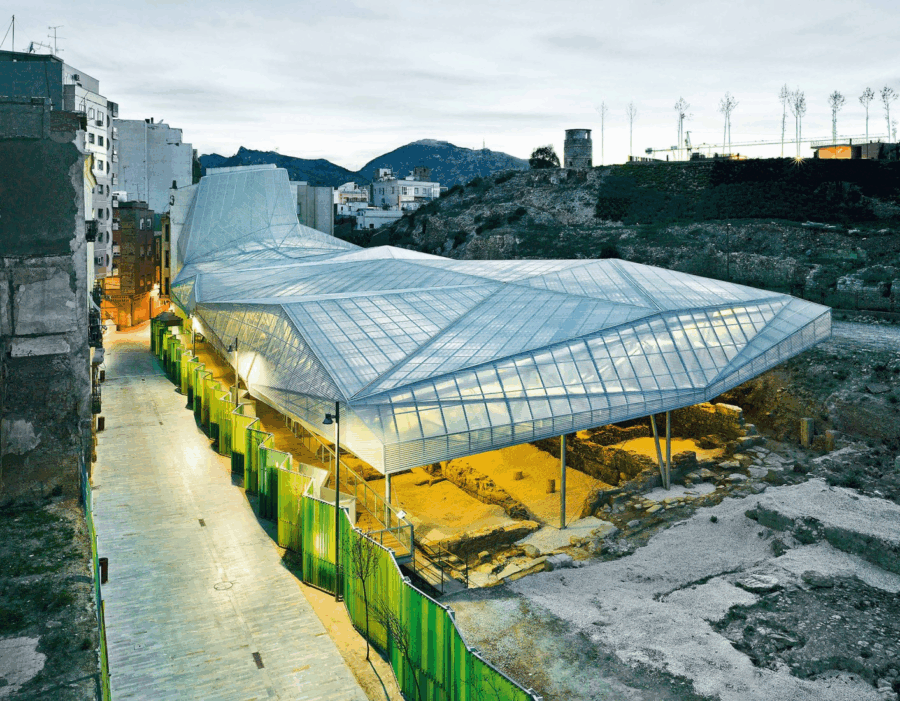
In 1967, the discovery of the San Antón necropolis prompted Pedro San Martín, the museum’s director, to propose to the city council the construction of a new museum headquarters around the site to facilitate its preservation in situ. Subsequently, the council oversaw the acquisition of the necessary land and funded the museographic refurbishment works for what would become the new Archaeological Museum. Despite delays, the museum was eventually inaugurated in 1982.

Into the Museum

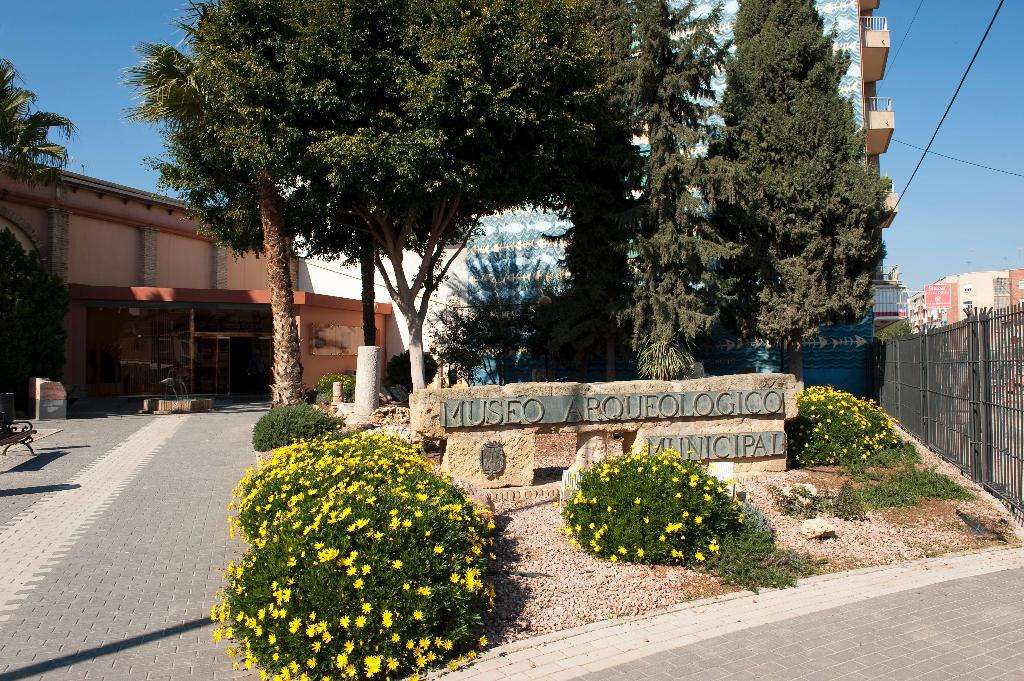
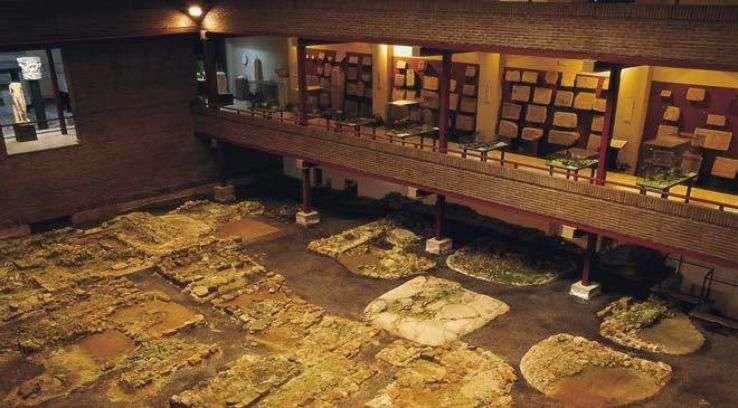
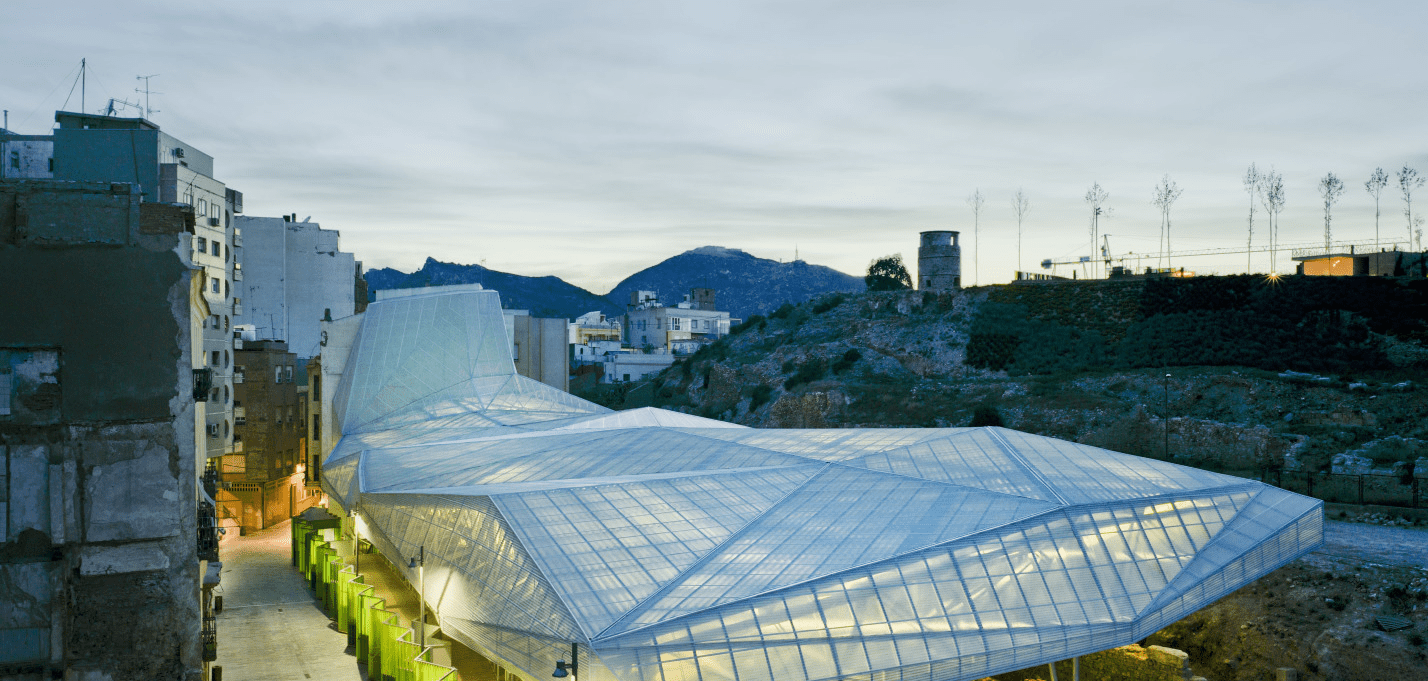
Museum's exteriors

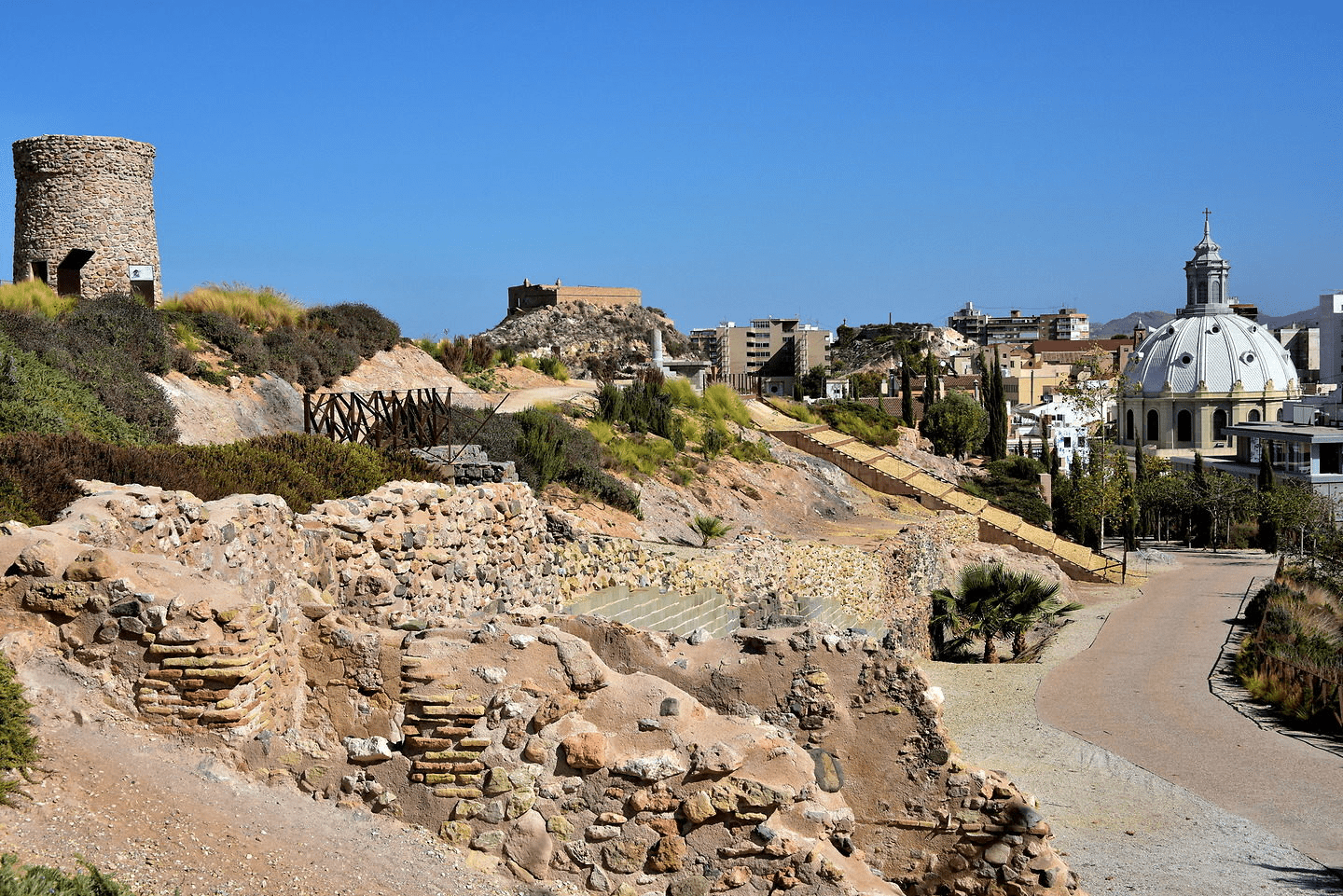
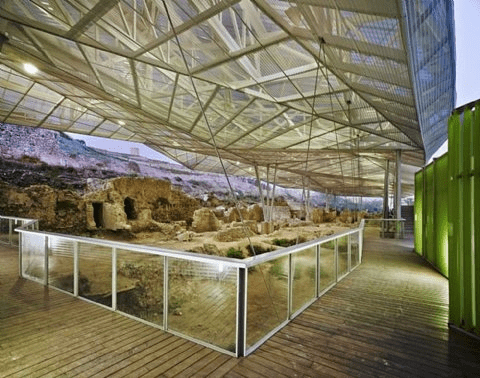
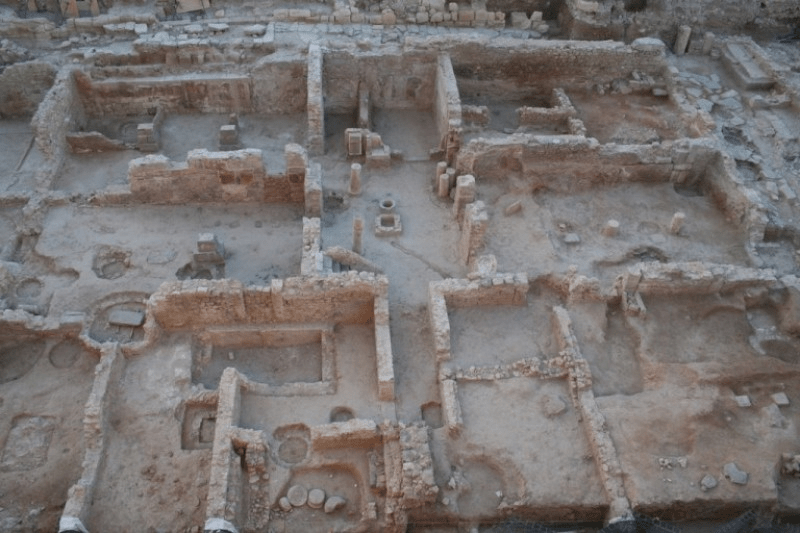
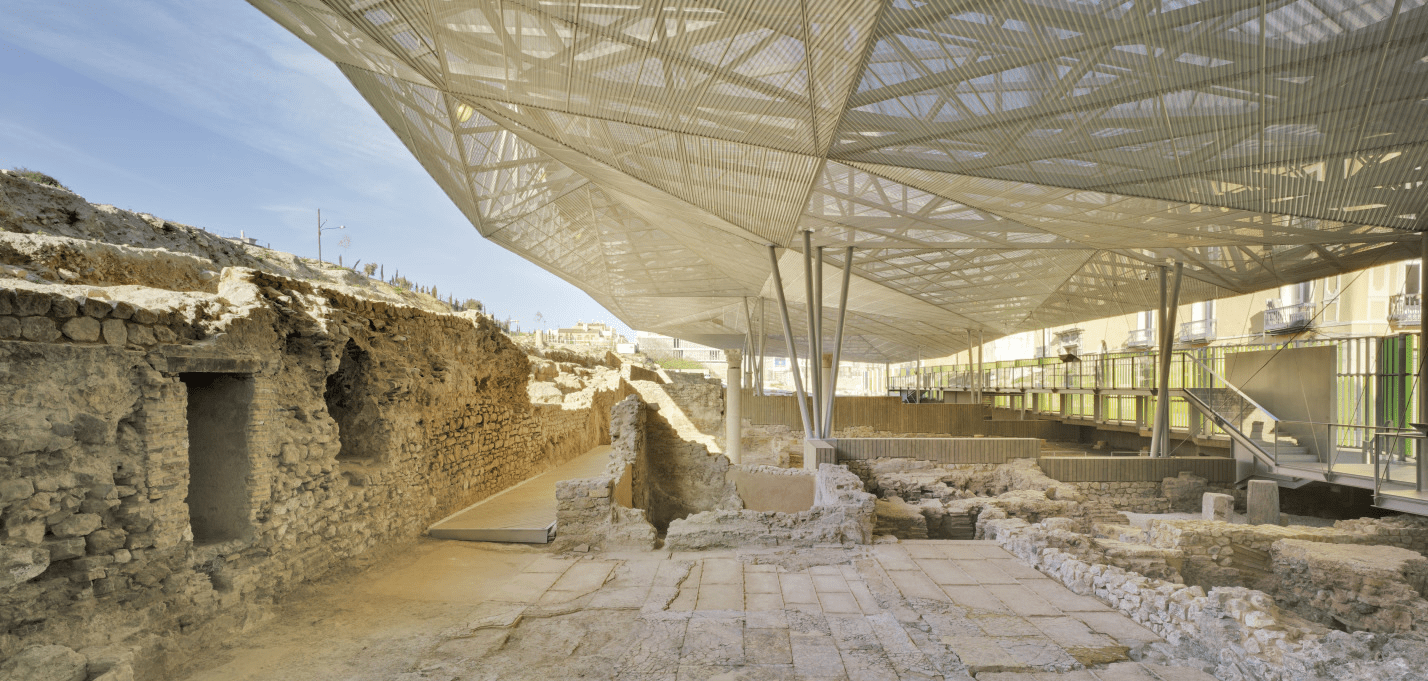
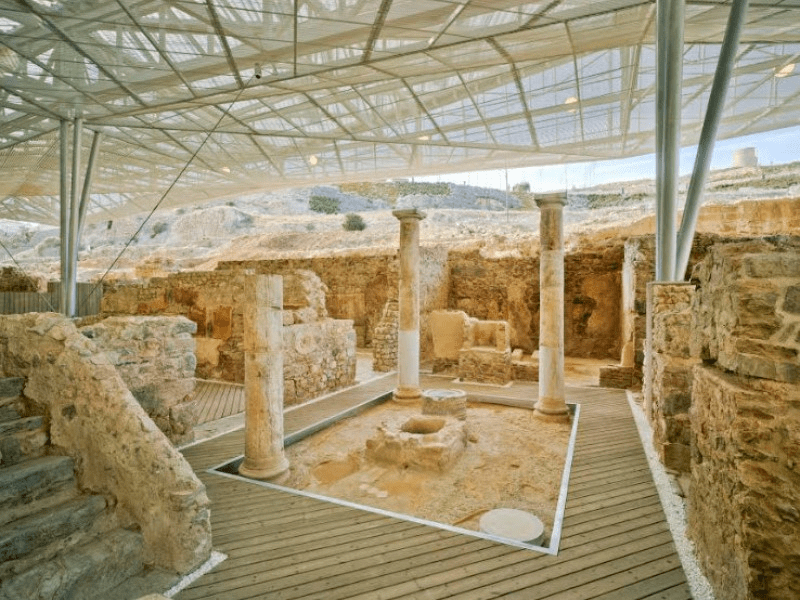
The museum offers a comprehensive journey spanning from prehistory to the 19th century. Situated on the former site of the late Roman San Antón necropolis, the tour meticulously follows a chronological sequence, beginning with the Paleolithic and Bronze Ages, progressing through the Roman era, and culminating in architectural artifacts and lower arts from the 19th century. Notably, the San Antón necropolis stands out as a focal point, seamlessly integrated into its architectural context.

Exhibition Space

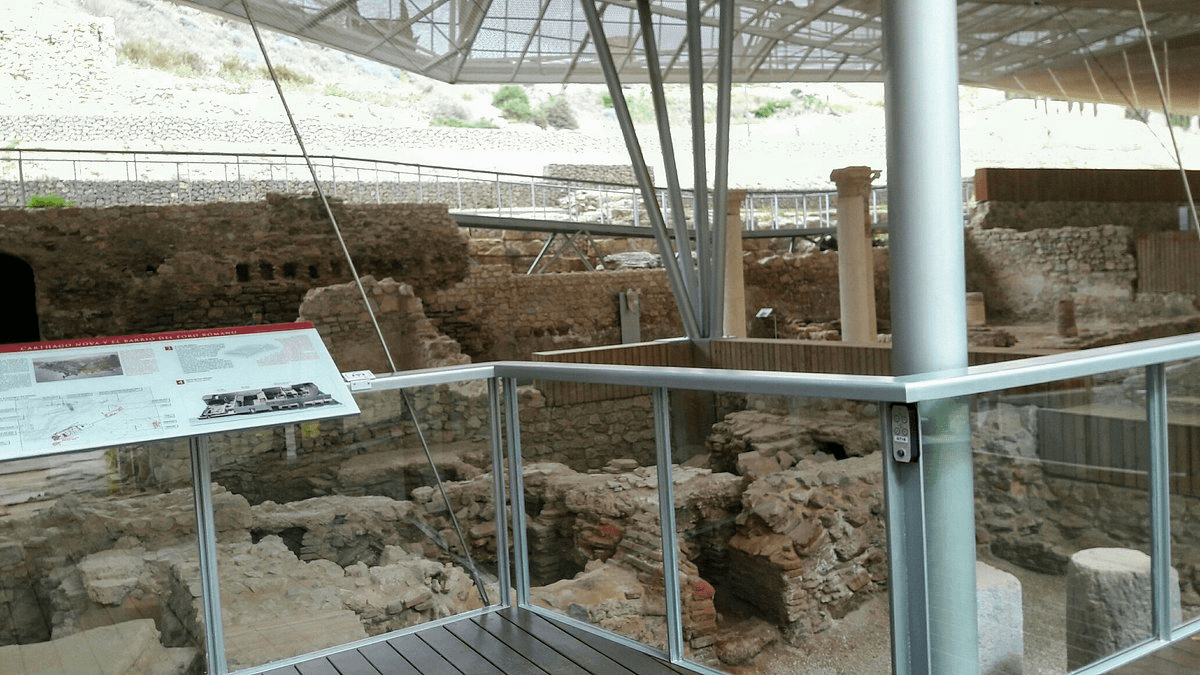
Necropolis inside the museum

In the exhibition of materials, a didactic approach has been meticulously followed, organizing the displays with a chronological orientation on the first floor and adopting a thematic focus on sites and exhibitions on the second floor. The necropolis, positioned centrally, serves as the focal point visible from all vantage points along the permanent exhibition route.

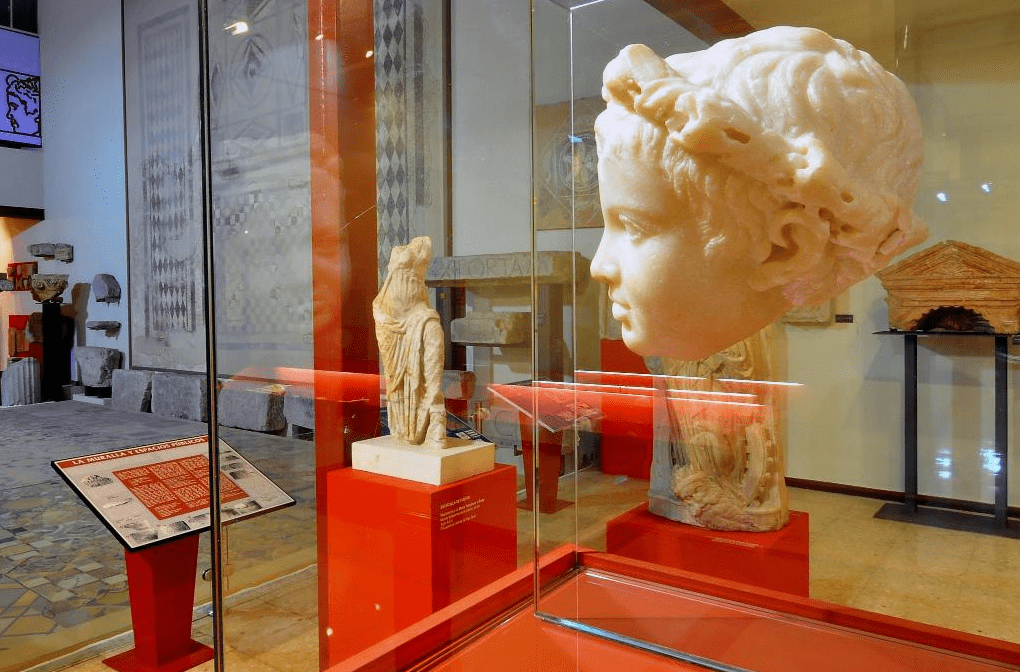
The showcased materials span from the Middle Paleolithic era to nearly the present day. However, due to Cartagena’s profound Romanization, artifacts from this period are both abundant and meticulously curated. What caught my attention was the collection of Latin epigraphy, ceramics, architectural elements, sculptures, construction remnants, mining tools, and commercial artifacts. All of them vividly depict the diverse historical epochs through which the city has evolved.

Artifacts and sculptures from the Roman era

Regular archaeological excavations within the urban area surrounding the ancient Carthago Nova often result in more artifacts for the museum and invaluable insights into Cartagena’s history, as I’ve written above. During “the night of the museums,” this museum graciously opens its doors free of charge during this event, allowing visitors to engage with its offerings without financial constraint.

Events

Beyond its archaeological treasures, the museum serves as a hub for educational outreach and cultural exchange, hosting workshops, lectures, and temporary exhibitions that engage visitors of all ages. By fostering a deeper understanding of Cartagena’s heritage, the museum plays a vital role in preserving the city’s legacy for future generations. You can track all of the upcoming events on the museum’s official website.

About Cartagena

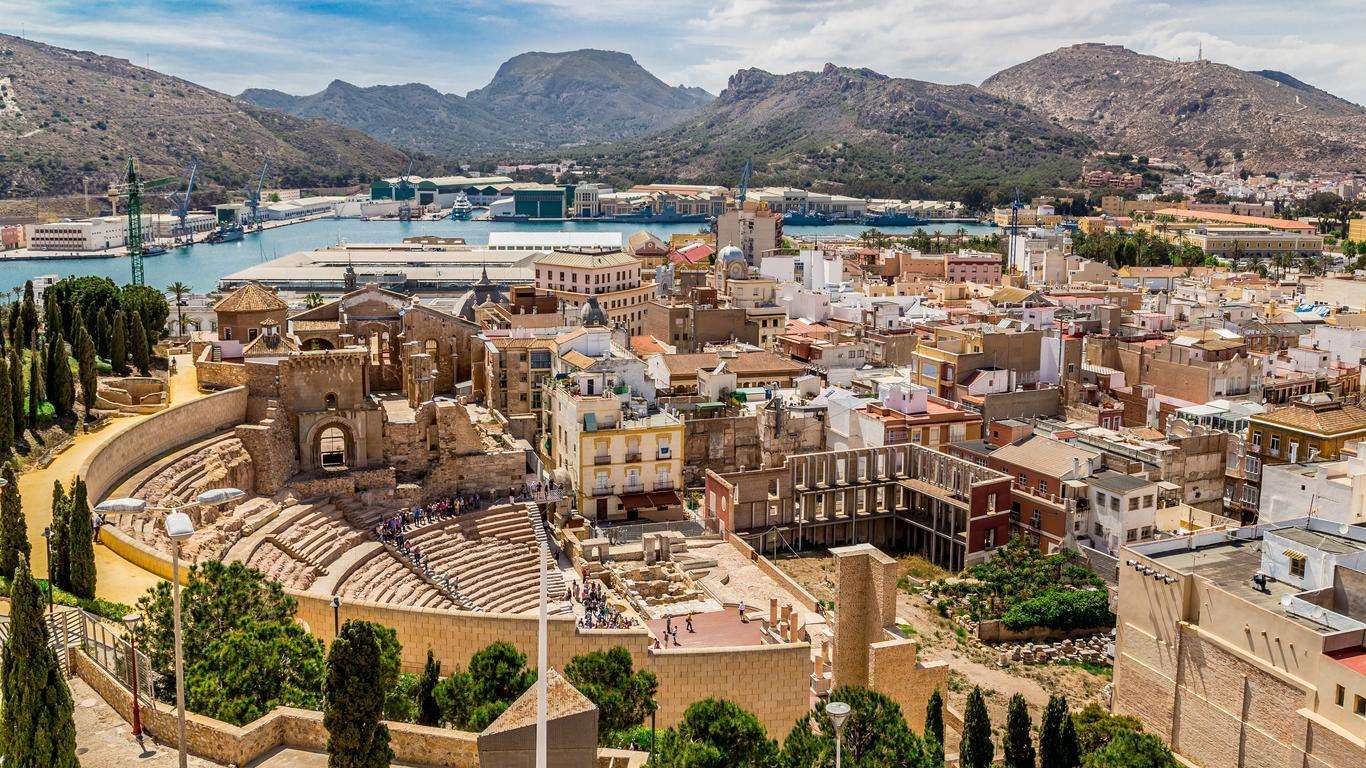
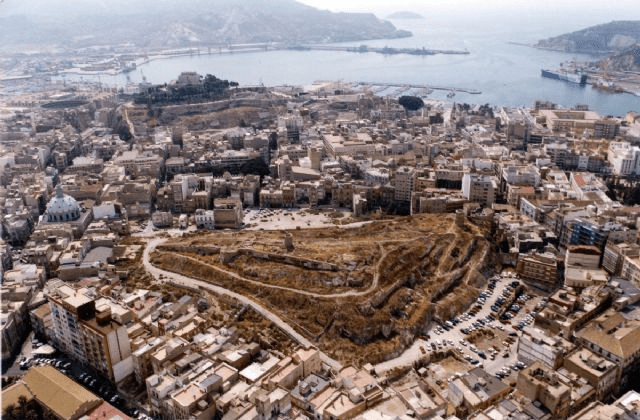
view on the Cartagena

Cartagena, where the Municipal Archeological Museum is located, is a fascinating place for sightseeing. As a matter of fact, it’s been built around the archaeological site of a burial necropolis. The city, thanks to its location on the coastline of the region of Murcia, has been inhabited by different cultures over the years, which has left its mark in the form of artistic and cultural heritage. You can admire numerous sites related to the city’s history and the sea. Here, you will find remnants of the culture and architecture of the Carthaginians, ancient Romans, and Arabs.

Places Worth Visiting

The rich cultural heritage is mainly concentrated around the old town, whose boundaries are marked by the seawall built by the order of Charles III in the 17th century. A must-see on the map for history fans is the Roman Theater. Entry costs €6, and the price includes a guided visit.

For fans of the “underwater world,” a key point on the map of Cartagena should be the Museum of Underwater Archaeology and the Museo Naval el submarino Isaac Peral. Here, you will find a lot of curiosities and historical artifacts with ties to the underwater world.

I personally recommend the Naval Museum, where you will see the world’s first prototype submarine! Another honorable mention is Casa de la Fortuna – a 2,000-year-old residence from the Roman period.

If we want to see Cartagena from above, a great place to do so is Colina de La Concepción. We can get to the hill using the elevator and then reach the mezzanine, from which there is a beautiful panoramic view of the entire city. In addition to the observation deck, on the hill is the Castillo de la Concepción, which has a beautiful amphitheater.

Enjoy Your Private Paradise in Villa Murcia!

Piscina com água

O conteúdo gerado por IA pode estar incorreto.

Looking for the perfect place to stay in Murcia? We’ve got just the spot for you!

Villa Murcia – Your Private Paradise

Wake up to coffee on a sun-drenched terrace, unwind in a warm jacuzzi after a day of exploring, and end your evenings with dinners in the summer kitchen. Nestled in charming Santiago de la Ribera, Villa Murcia offers more than just a holiday—it’s your personal oasis of comfort, style, and unforgettable moments.

Highlights:
✔ Spacious living room with a large sofa and open kitchen – perfect for shared memories
✔ Three elegant, air-conditioned bedrooms with private terraces – your peaceful retreat
✔ Extra fold-out sofa in the living room – ideal for additional guests

Whether it’s a romantic escape, a family getaway, or a relaxing break with friends – Villa Murcia is your dream stay.
Book now and experience the magic of the Spanish sun!

Conclusion

The Municipal Archaeological Museum of Cartagena is a testament to the city’s rich and diverse heritage. Through its captivating exhibits and insightful displays, the museum offers visitors a journey through time, unraveling the mysteries of Cartagena’s ancient past. Each artifact tells a story of resilience, ingenuity, and cultural exchange from the Phoenician settlers to the Roman conquerors.

Read More
Visiting and Diving La Manga | An Incursion You Can't Miss Out!

Exploring and Diving La Manga | An Unforgettable Experience

La Manga, Murcia, whether on the Mar Menor side or facing the Mediterranean Sea, offers an incredible setting for scuba diving. Its clear waters, splendid weather conditions, and abundance of excellent instructors and courses make it an ideal destination for enthusiasts of all levels.

Having said this, if you really feel a passion for subaquatic exploration and Mediterranean waters and want to know the best places for Diving La Manga and learning this practice, you’ve arrived at the right place. Let’s get straight to the subject!

Table of Contents:

What Is La Manga?

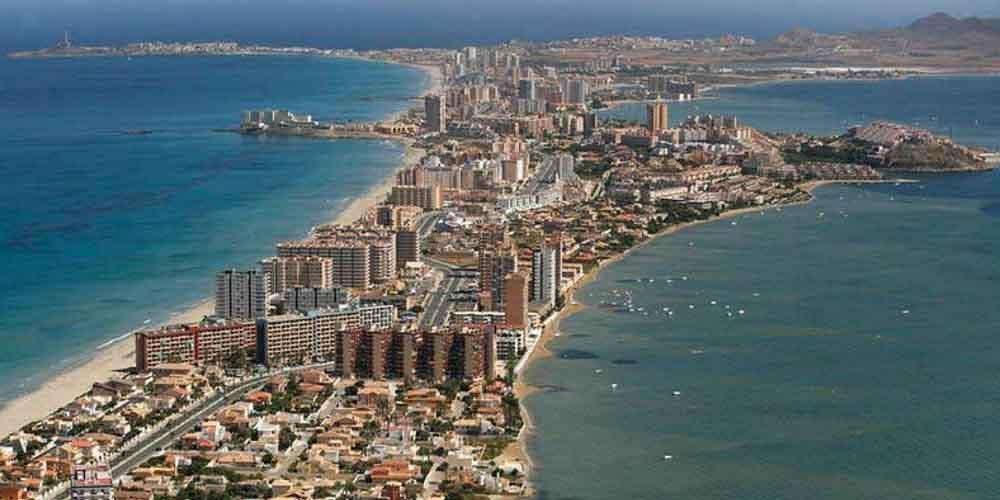
La Manga overview

La Manga is a strip of land in the Murcia region, southeast of Spain. It is a natural division between the Mediterranean Sea and the Mar Menor, the largest salty lagoons in Spain. This condition makes the lagoon’s waters—and the Mediterranean Sea’s, of course—calm, perfect for swimming and scuba diving. You can find several beaches in La Manga, all of which are safe for children, families, and amateur divers.

Diving La Manga | Diving Courses in the Area

Naturally, the Murcia region, and especially the coastline zones, have dozens of diving centers where you can learn scuba diving and snorkeling. Let’s check out two of the most important and best-located.

Scuba Murcia

Scuba Murcia main page and official website

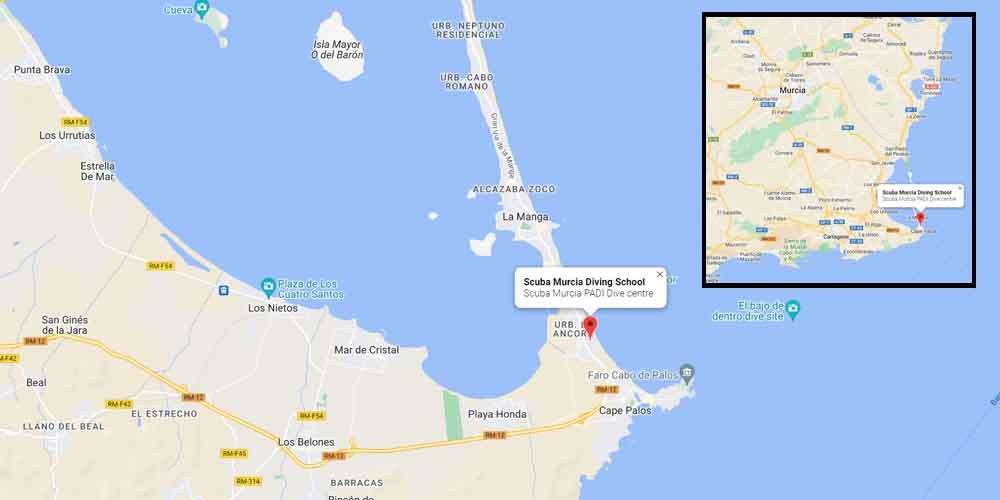
Scuba Murcia is a British-run 5-star PADI diving center located on the coast of La Manga. It is probably one of the best places to learn to dive, thanks to its PADI and TDI courses, which will allow you to enjoy the underwater wealth of La Manga and Costa Calida safely.

Together with a PADI instructor, we can take our first step into the world of diving and develop our underwater diving skills. I took a diving course when I lived in Alicante three years ago, and the instructor was so incredible that I learned a lot in just a few minutes. That said, Scuba Murcia courses are for everyone, adults and children!

Furthermore, if you want to venture into the underwater biome of La Manga, you can also dive with professionals and discover the secrets of the area. The best time of year to visit this dive centre is from July to August, during the summer in Europe.

Scuba Murcia location

La Manga Club Resort

La Maga Club Resort main page and official site

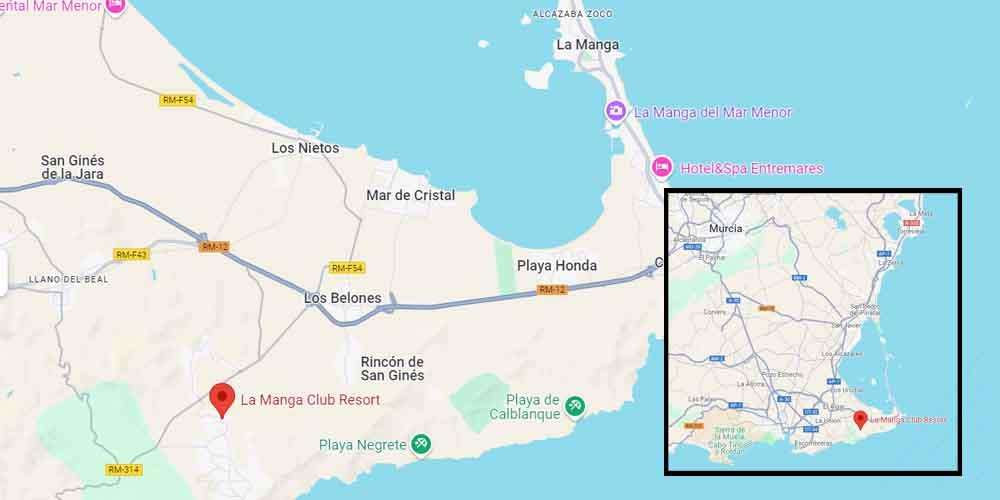
This club, located south of La Manga, offers diving and snorkeling courses for beginners and experienced divers. We can also do multiple water activities at the resort, from learning to dive in deep waters to water sports. The club also offers life-saving and first aid courses, as well as jet skiing and kitesurfing classes.

La Manga Club Resort location

As you can see in the image above, La Manga Club Resort is fifteen kilometers from the La Manga strip, but it is still a great place to stay during your vacation and reach all the beaches in the area. Thanks to La Manga Club Resort, tourists immerse themselves in the calm waters, reefs, and other underwater wonders of the Mar Menor and the Mediterranean Sea.

Best Places for Scuba Diving in La Manga

Below you’ll find a list of the most impressive natural wonders where you can practice diving and snorkeling during the summer season. All of them are close to diving centers and areas of interest in La Manga.

Cabo de Palos

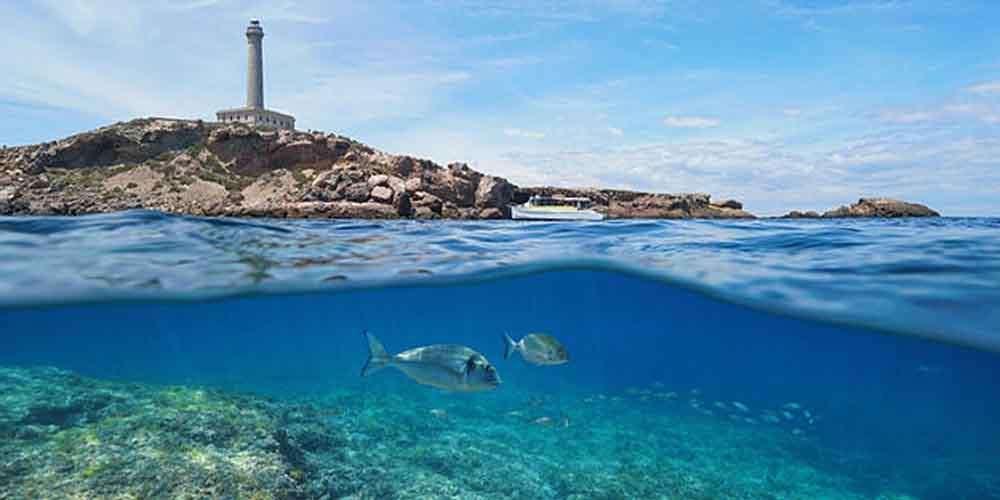
Cabos de Palos view

Cabo de Palos is likely the best place to discover scuba diving experience in La Manga and close areas. This is because the zone presents crystalline waters and a shallow depth that does not go beyond a few meters. Besides, Cabo de Palos is close to many settlements, like Los Belones and Cartagena.

Cabos de Palos location

Scuba diving near Cabo de Palos offers a rich underwater cultural heritage, thanks to numerous shipwrecks in the area. One famous wreck is the “Sirio,” a transatlantic ship sunk in 1906, now teeming with marine life. Nowadays, this ship hosts crustaceans, cephalopods, mollusks, and other fish species.

Another notable site is the “Carbonero,” a vessel sunk by a German submarine in 1917. Exploring the Carbonero’s depths, 36 meters down, presents a challenging adventure for experienced divers.

Isla Grosa

Isla Grosa view

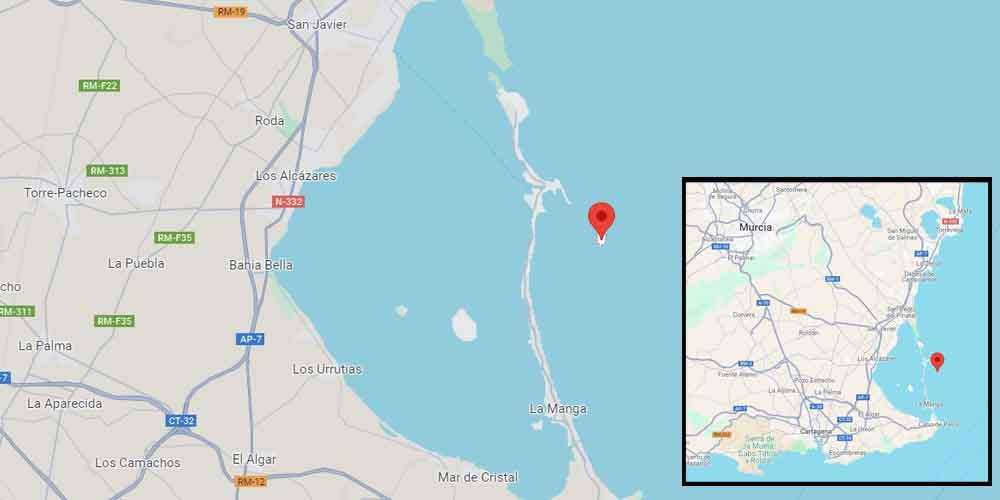
Isla Grosa is a medium-sized island directly in front of the middle part of La Manga. It’s 2.5 km away from the coast. It stands out for the orography of its funds and the numerous cavities that sea urchins build. Its depth varies between 6 and 18 meters deep.

Isla Grosa location

Like most islands in the zone, Isla Grosa has a volcanic origin, which makes it ideal for amazing diving experiences and underwater exploration. Thanks to the calm of Zephyr, this piece of land is also great for witnessing the sunset and refreshing yourself with Western Zephyr.

Some interesting places to go scuba diving for underwater adventures in Isla Grosa are El Farallón, La Laja, and La Campana.

El Farallón is located east of Isla Grosa. Its shallow waters feature a rich ecosystem, a rock-cutting view, and underwater meadows full of schooling fish and other typical species that we can’t find on the ocean floor.

La Laja, on the other hand, is located in the northeast of El Farellón. This site is perfect for the experienced diver since La Laja has several depths, which provides a sense of exploration as nowhere, turning it into one of the best places for diving in La Costa Cálida. This site has a magnificent biodiversity and submarine architecture, with a green submarine landscape.

Last but not least, La Campana is a shallow reef located 300 meters from La Laja. It is probably the richest place in the La Manga strip for finding amazing wrecks since much of the cargo of old vessels remains in the sand.

Cartagena

Cartagena beach

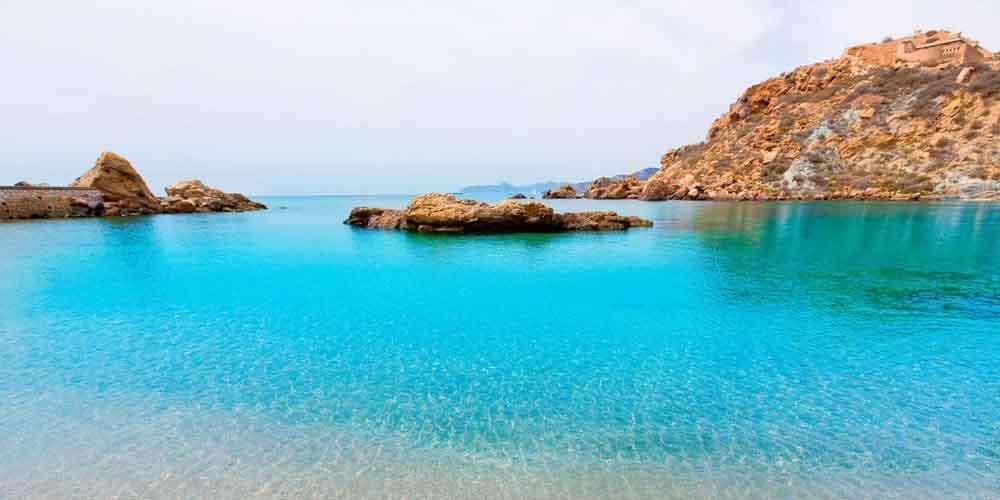
Cartagena is an important settlement where learning scuba diving is easy. Its shallow bay and coves with calm waters are the right places to practice this discipline. Although Cartagena is not in La Manga, it’s close to this strip of land and is easily accessible from most surrounding sites.

As a city with over two thousand years of history, Cartagena has been a mandatory port for most traders and marketers throughout Mediterranean history. This zone probably has the largest number of shipwrecks in the world, which is a plus and an incentive for beginners and professional divers.

Cartagena is relevant to submarine culture heritage because it hosts the National Museum of Underwater Archaeology, one of the most important museums related to underwater archaeology. This museum makes multiple efforts to explore and conserve the subwater heritage of the Mediterranean Sea and Mar Menor.

Here, snorkelers and divers can enjoy wrecks ranging from antiquity to the Spanish Civil War. It is undoubtedly an incredible site in the region of Murcia where we can do underwater excursions and gain knowledge about the city’s history at the same time.

Islas Hormigas

Islas Hormigas view

Islas Hormigas is a marine reserve and a rich archipelago in terms of biological and cultural diversity. Due to its location as a mandatory place and reference point for sea routes, Islas Hormigas has plenty of shipwrecks from several decades and centuries ago. One of the most important shipwrecks to visit in south-eastern Spain is precisely a Byzantine ship that was shipwrecked in the 5th century. The multiple dive sites that we can find in the surroundings of the Islas Hormigas will provide us with an essential gaze into antique trade routes and marine life.

Islas Hormigas location

Islas Hormigas consists of two blackish islets, shaped by the relentless forces of wind and sea erosion, which have contributed to the formation of a diverse underwater ecosystem. Diving in Islas Hormigas is suitable for divers of all levels, from amateurs to professionals, as the area offers various rocky formations including arches and submarine channels.

The submarine surface is also plagued with Posidonia and has beautiful marine life, including breams, barracudas, and small xuclas.

In the Islas Hormigas, we can also find seabeds over forty-five meters, which are great for qualified divers who want to dive into breathing underwater.

Diving in La Manga is a Dream Come True!

The Mediterranean Sea of the region of Murcia and the Mar Menor are two impressive tourist destinations in Spain and the Mediterranean coastline. In fact, this zone has incredible archaeological treasures and antique constructions. Still, the underwater wealth is unmatched in this part of Spain due to wrecks, rocky formations, and aquatic flora and fauna. This is why I invite you to explore the area and the submarine ecosystem. Take the scuba diving courses I’ve shared below and dive into these magnificent waters!

Enjoy Your Private Paradise in Villa Murcia!

Piscina com água

O conteúdo gerado por IA pode estar incorreto.

Looking for the perfect place to stay in Murcia? We’ve got just the spot for you!

Villa Murcia – Your Private Paradise

Wake up to coffee on a sun-drenched terrace, unwind in a warm jacuzzi after a day of exploring, and end your evenings with dinners in the summer kitchen. Nestled in charming Santiago de la Ribera, Villa Murcia offers more than just a holiday—it’s your personal oasis of comfort, style, and unforgettable moments.

Highlights:
✔ Spacious living room with a large sofa and open kitchen – perfect for shared memories
✔ Three elegant, air-conditioned bedrooms with private terraces – your peaceful retreat
✔ Extra fold-out sofa in the living room – ideal for additional guests

Whether it’s a romantic escape, a family getaway, or a relaxing break with friends – Villa Murcia is your dream stay.
Book now and experience the magic of the Spanish sun!

Read More
Ample Vision of Cabo de Palos

Exploring the Depths: Diving Cabo de Palos

Just 30 kilometers from the city of Cartagena, near Murcia, lies Cabo de Palos – a 400-meter wide peninsula with a coastline dotted with tranquil coves and clear waters. However, the region’s major attraction – the Formigas Islands – is located two and a half miles from the coast.

Because of their spectacular beauty and conservation efforts, the peninsula’s seabeds have earned the status of an Integral Marine Reserve and are widely recognized as one of the best diving spots in Spain.

Table of Contents

About Cabo De Palos

Ample Vision of Cabo de Palos
Image credit: TuPaisaje.com

Cabo de Palos is located between La Manga del Mar Menor and the Spanish city of Cartagena.

Cabo Palos has been inhabited by man for thousands of years, and, despite its small permanent population, it continues to attract many tourists, many of whom are attracted by the numerous diving centers in the area.

Cabo Palos’ coastal location, between the Mediterranean Sea and Marmena, makes it popular, with a variety of beaches ranging from small rocky coves to long stretches of golden sand, all lapped by the clear, warm waters of the central Mediterranean.

Hormigas Islands Marine Reserve

Hormigas Islands Marine Reserve, considered one of the best places to dive in Spain
Image credit: universomarino.com

About two nautical miles off the coast of Cartagena, in front of Cabo Palos, there is a group of small islands called Hormigas, the largest of which is 200 meters long and 13 meters high.

The seabed, sandbars, and extensive shallow areas around these islands, along with the heavy shipping traffic that has sailed near the islands for centuries, have resulted in numerous archaeological sites in the region.

Between the islands and Cabo de Palos, there is the Islas Hormigas Marine Reserve, a space with a stunning underwater landscape that covers 1.898 hectares. Recognized as the best place for diving in the Mediterranean, it is a genuine paradise for enthusiasts of this activity, offering shipwrecks, stunning landscapes, and rich biological diversity.

Diving Conditions

Cabo de Palos: diving in the Hormigas Islands Marine Reserve.
Image Credit: Adventure Divers Spain

With excellent temperatures throughout the year, ranging from 14ºC in winter to 25ºC in summer, the area is ideal for diving in all seasons. With exceptional visibility, warm waters and gentle currents, divers will enjoy a comfortable and safe experience. I was in the region at the end of July, the beginning of summer, and I can say that the experience was great!

Scuba Diving In Hormigas Islands Marine Reserve Zones

The Cabo de Palos and Islas Hormigas marine reserve is one of the most popular destinations among diving enthusiasts in Spain. There, it is possible to observe diverse marine life inhabiting the underwater volcanic rocks, in addition to exploring several shipwrecks that occurred near the rocky promontory over the centuries.

One of the most famous shipwrecks is the El Sirio, an ocean liner that ran aground in 1906, resulting in the loss of around 250 lives. Cabo de Palos’ crystal-clear waters are home to a variety of intriguing underwater attractions, from historic shipwrecks like El Sirio to colorful marine life, including schools of fish, rare fish (like sunfish and cuttlefish), sea turtles, and octopus, which make for a thrilling experience in Cabo de Palos.

You Don’t Need To Be A Professional

People being guided by experienced divers in the Hormigas Islands Marine Reserve, in Cabo de Palos
Image Credit: Adventure Divers Spain

You don’t have to be a professional or have extensive underwater experience to enjoy a good dive in Cabo de Palos. You can start with a diving baptism, just like I did.

This type of diving is offered in several of the region’s accredited diving schools. Basically, baptismal diving is an introduction to scuba diving, however, without the need for certification. The practice was completely safe, as throughout the activity, a qualified instructor monitored me, making sure I felt comfortable. Unfortunately, I didn’t have as much exploratory freedom on this first dive as I wanted, but this made me even more eager to obtain new certifications to be able to explore the place.

If you already have underwater experience, there are options suited to your level, from night dives to more technical routes recommended only for experts. You can also find different types of diving courses to improve your skills in the sport.

Different Dive Sites!

Zones of diving in Marine Reserve, located in Cabo de Palos
Image Credit: Adventure Divers Spain

There are several diving areas in the Islas Hormigas Marine Reserve of Cabo de Palos, each with its irresistible charm.

Bajo De La Testa

Picture of schools of fish in one of the zones of Hormigas Islands Marine Reserve, located in Cabo de Palos
Image Credit: Adventure Divers Spain

The Bajo de la Testa is characterized by a gently sloping plateau surrounded by deeper waters and expanses of oceanic Posidonia. This area is a meeting point for large schools of fish and is notable for the presence of three ancient Roman anchors strategically positioned around the base of the reef.

Bajo De Piles 1

The Bajo de Piles features two distinct rocky mountain ranges stretching towards the Hormigas Islands. With a main crest measuring 75 meters in length, this site is in open waters and suitable for all levels, with different routes for each level. The area is home to a rich diversity of marine life, including groupers, barracudas, and a cave. Conditions vary from light to moderate currents, with more protection on the southern side of the reef.

Bajo De Piles 2

Very close to Bajo De Piles 1, Bajo de Piles 2 is a second, smaller rock ridge that offers a vibrant underwater experience with a thriving marine community. This site is populated by a variety of species, from barracudas to octopuses, providing an enjoyable experience for divers of various skill levels.

Bajo De Dentro

Picture of a turtle in one of the zones of Hormigas Islands Marine Reserve, located in Cabo de Palos
Image Credit: Adventure Divers Spain

Bajo de Dentro is a high rock formation, home to a great diversity of marine life. With abysms ranging from 4 to 45 meters, this site is appropriate for certified divers and offers the chance to spot large groupers, rays, and even the occasional turtles.

Bajo De Fuera

shipwreck in the region of s of Hormigas Islands Marine Reserve, where people can go wreck diving
Image Credit: Resort Choice

Bajo de Fuera is known for its wreck diving in shipwrecks and for the historical and environmental richness it offers. With depths ranging from 3 to 70 meters, this site requires Advanced Open Water certification to explore its underwater treasures, which include large schools of fish and fields of shipwrecks.

Bajo De La Morra

This site offers an impressive underwater experience, with a rocky arm that functions as a shelter for moray eels and groupers. With depths between 10 and 30 meters, Bajo De La Morra is appropriate for experienced divers with a high certification level and offers the opportunity to spot a variety of marine life, like groupers, sea bream, and octopus.

Choose The Best Option For You

This site offers an impressive underwater experience, with a rocky arm that functions as a shelter for moray eels and groupers. With depths between 10 and 30 meters, Bajo De La Morra is appropriate for experienced divers with a high certification level and offers the opportunity to spot a variety of marine life, like groupers, sea bream, and octopus.

The dive sites in the area have varying difficulty levels. Some areas are ideal for beginners, with more favorable conditions and shallower depths, while other areas offer more advanced challenges, such as stronger currents or deeper dives. My advice is to choose an area that matches your skill level and experience for a safe and rewarding underwater adventure. Local dive centers often offer instruction and options for divers of all levels.

Where Can I Find Dive Centers?

Dive center that make divings in Hormigas Islands Marine Reserve
Image Credit: Google Maps

With so many options for diving centers in the area, I found it challenging to decide which one to pick, mostly because I was unfamiliar with the site.

To facilitate your decision-making process, I’ve gathered a list of the top five diving centers, as rated by Google, complete with their contact details to book your diving.

Balkysub Dive Operations | Diving School

Address: P.º del Puerto, 30370 Cabo de Palos, Murcia, Spain

Phone: +34 661 49 21 43

Appointments: bookeo.com

Diving Center Naranjito

Address: C. Magre, 26, 30370 Cabo de Palos, Murcia, Spain

Phone: +34 696 54 77 18

Appointments: https://naranjitobuceo.com/

Centro de buceo Mangamar Dive Center

Address: Paseo Puerto de Cabo de Palos, 18, P.º Dimas Ortega, 17, 30370 Cabo de Palos, Murcia, Spain

Phone: +34 968 10 08 60

Appointments: https://mangamardivecenter.com/

Islas Hormigas Diving Club

Address: C. Marín, S/N, 30370 La Manga, Murcia, Spain

Phone: +34 968 14 55 30

Appointments: https://islashormigas.com/

Divers Cabo de Palos

Address: C. Punta de la Azohía, 4, 30370 Cabo de Palos, Murcia, Spain
Phone: +34 687 80 28 91
Appointments: diverscabodepalos.com

Safety and Preservation Tips

It is important to follow all safety procedures when diving in Cabo de Palos, which includes using proper diving equipment and practicing responsibly. Divers must respect the marine environment and avoid damaging coral reefs and marine life.

You Should Go Scuba Diving!

In short, Cabo de Palos is an exceptional diving destination that offers a variety of exciting underwater experiences. With its crystal clear waters, lush marine life, and ideal diving conditions, it is a paradise for diving enthusiasts.

I had one of the best experiences of my life exploring the depths of Cabo de Palos. The feeling of seeing every marine animal, cave, or shipwreck was absolutely amazing and made my trip to the region unforgettable.

Cabo de Palos is truly a paradise for diving enthusiasts. Come explore the depths of Cabo de Palos and discover an underwater world full of wonder and adventure.

Enjoy Your Private Paradise in Villa Murcia!

Villa in Spain

Looking for the perfect place to stay in Murcia? We’ve got just the spot for you!

Villa Murcia – Your Private Paradise

Wake up to coffee on a sun-drenched terrace, unwind in a warm jacuzzi after a day of exploring, and end your evenings with dinners in the summer kitchen. Nestled in charming Santiago de la Ribera, Villa Murcia offers more than just a holiday—it’s your personal oasis of comfort, style, and unforgettable moments.

Highlights:
✔ Spacious living room with a large sofa and open kitchen – perfect for shared memories
✔ Three elegant, air-conditioned bedrooms with private terraces – your peaceful retreat
✔ Extra fold-out sofa in the living room – ideal for additional guests

Whether it’s a romantic escape, a family getaway, or a relaxing break with friends – Villa Murcia is your dream stay.
Book now and experience the magic of the Spanish sun!

Read More
picture from the MURAM showing its architecture

Cartagena Museum of Modern Art: 8 Reasons to Go Right Now

If you’re a fan of art exhibits, we have the perfect suggestion for where to go on your next vacation. Spain is full of tourist attractions of all kinds, including beaches, traditional food, and the famous Museo de Arte Moderno de Cartagena.

This is a paradise for art enthusiasts and features rare pieces from Colonial times and artistic creations from famous names like Alejandro Obregón, being a must-go if you’re passing nearby. Here, we will show you some of the main reasons why the paintings and architecture pieces of the modern art museum should be the next item on your vacation list. Make sure to take a look at all aspects of this incredible place and the main curiosities you should know before going to this unforgettable experience.

Table of Contents

What Is Cartagena Museum of Modern Art and Where It’s Located

picture from the front side of the museum of modern art of Cartagena

Known as Museo Regional de Arte Moderno (MURAM), it is an art gallery located in Murcia, Spain. The museum already housed exhibitions of all kinds, including paintings, illustrations, sculptures, and all kinds of art.

If you want to find out more about local artists, the history of Cartagena, and other curiosities, this is the perfect location in the town to do this. The place will satisfy your curiosity thanks to a variety of exhibitions thoughtfully curated to welcome visitors from all corners of the globe.

If lounging on the beach isn’t your idea of a perfect vacation, then this alternative destination is a must-visit. It’s one of the top museums in the region, offering unforgettable experiences that will make your trip truly memorable. Whether you’re a history buff, an art enthusiast, or simply curious about the culture, this place belongs on your go-to list.

What You Need to Know Before Your Visit

Now, we will show you the main aspects and curiosities about the Museum of Modern Art of Cartagena you need to know before packing your luggage for this incredible adventure.

From the types of exhibitions you can find to nearby attractions, we will cover everything you need to know to have a great time visiting it. Here are the main aspects and curiosities of the Cartagena Museum of Modern Art.

More Than Just Paintings

picture showing multiple scullptures being displayed at the museum of modern art in Murcia

Many people think that museums are restricted only to paintings and illustrations, when in fact, the art displayed goes far beyond that. Since it’s a modern art museum, the participant art pieces are usually very experimental and eye-catching, evoking curiosity in those passing through the rooms of the building.

This doesn’t mean you can’t find display galleries consisting of paintings. They’re very present, going from creations of new local artists to worldwide known industry names.

The palace is filled with different attractions that will please all kinds of tastes and teach you lots of new things about the local culture and the world’s history.

Eye-Catching Architecture

image from the MURAM showing its outside

Visiting the site and exploring the multiple corridors, you will notice that the architectural choices that mix modern and classic elements create an experimental and creative atmosphere. Everything is designed to draw attention to the art pieces and the looks of each room, highlighting the architectural design and the collections. The museum is composed of multiple rooms and sections used to separate the displayed collections and exhibitions.

When I first visited the museum, it was a magical experience, and I didn’t know what to look at, the arts, or the building’s design. Everything is stunning and carefully planned to create visuals you’ll never forget. Each room is distinct and features unique looks, making you feel like entering in a completely different world for each collection being exhibited.

By doing the complete tour guide throughout the gallery, you’ll be able to appreciate works of all kinds from artists worldwide, creating an entertaining and culture-rich experience.

Don’t Worry About Your Spanish

As we mentioned, Museo de Arte Moderno de Cartagena is ready to receive guests from all around the world. Thus, both the painting information and guided tours are available in English, so everyone can easily understand their content. Even though a large part of the population only speaks Spanish, you still won’t have problems finding what you’re looking for during your trip.

The staff at both the museum and other nearby attractions are there to assist you every step of the way. Whether you’re seeking details about a specific collection or directions to another site, they’re always ready to lend a hand. With their help, you won’t miss a single piece of the incredible history behind each item showcased in one of the country’s largest museums.

Get Ready to Discover Local Artists

picture from one of the art rooms inside the museum of modern art in Cartagena

One of the most interesting things about modern art museums is discovering new names that might become the next generation of prominent artists. When you visit Spain and this museum, you’ll encounter classic paintings by renowned artists such as Enrique Grau and Salvador Dalí. Yet, what truly sets it apart is its diverse array of collections crafted by emerging young artists, pushing the boundaries of creativity far beyond traditional painting or sculpture. It’s a vibrant showcase of both timeless masterpieces and cutting-edge contemporary art that promises to captivate and inspire.

The city constantly changes the rooms and exhibitions, so every time you visit the museum, you can find a different artist to learn about or check their work. Along with the pieces that are constantly rotating, you can also find other art pieces from renowned artists that are displayed throughout the entire year in the same spot, like some of the creations from Dali.

Lessons and Other Activities

image from the city of Cartagena in Spain

One of the best parts about the Cartagena Museum of Modern Art is that numerous activities are happening inside the facility. One of the most common examples is occasional lessons about art history and architecture.

When I visited MURAM, along with the dozens of art collections, there were also art history lessons available for kids, showing how diverse the environment can be when it comes to activities. Even though I wasn’t able to participate in the class, it was fantastic to see how they managed to perfectly mix entertainment and education to catch the attention of people of all ages and kinds.

They’re open for those who purchase a ticket to enter the museum. It is a great way to learn about the place’s culture and the stories behind famous paintings and artists. The museum also participates in an initiative called Museums Regional System, which unites the main museums of the region to exchange visitors and provide people with a complete experience when visiting Murcia. You can do a tour by going through the main art galleries of the region and seeing all kinds of art, from modern creations to surreal and futuristic pieces.

It’s a Renovated Building

One of the reasons why this museum’s contrast between modern and classic elements is so unique is because it was built in a renovated building centuries ago. The famous designer Martín Lejárraga idealized and signed the entire project.

With your MURAM ticket, you’ll gain entry to the museum’s exhibits and a guided tour. Wander through modern and old rooms, witnessing the contrast firsthand.

Discover the history behind the building and its importance to the city while viewing antique furniture and objects. English-guided tours are available, making it a must-do activity for anyone visiting the city, whether alone or with others.

Close to Many Other Attractions

One of the nicest parts about the museum is that you don’t have to spend your entire day there. There are other attractions nearby that you can visit after finishing your tour, as Murcia is the seventh largest city in the whole country and has endless activities you can do.

During my last trip, I was able to visit the museum’s main attractions, as well as the Cathedral de Santa Maria and Museo Salzillo, all in one day. The best part is that you can do all of that without taking any special transportation since they’re fairly close to each other and easy to locate.

Along with the museum, you’ll also find the “shore excursion for cruise guests,” “Roman exploration in Cartagena,” a trike tour throughout the city, and many other fun options to make your trip to Spain unforgettable.

You have numerous options, each offering a unique experience. You can spend the day visiting multiple museums or diversify your activities between visiting monuments, eating traditional food from the region, and all the opportunities this incredible place offers.

It’s Open Throughout the Entire Year

image showing an urban art collection in the MURAM

One of the best parts of the museum is that you can visit it throughout the year. Even though the collections being exhibited are constantly changing, the place is open for visits and guided tours all twelve months of the year, with rare exceptions like Christmas, for example.

You can always visit the Museum’s official website and check the main information regarding the place and the attractions. There, you’ll find articles about the lessons being offered, the collections displayed, the hours of the day when it’s open, and which days of the week the museum is open for visitors.

This way, you can better plan your days when going to the museum and choose the best date based on the lessons and available activities. The website is also available in Spanish and English so everyone can understand the information and find what they want.

Conclusion on the Cartagena Museum of Modern Art

picture showing the MURAM

This museum is undoubtedly the perfect tourist spot if you seek something different from the traditional beaches and mountains. If you’re looking for an urban activity that is both fun and full of culture, this is the one to go with. The Museo Regional de Arte Moderno de Cartagena is one of the best you can find in the entire city, and its variety can please people of all tastes in art.

Whether because of its bold and outstanding mix of architecture or the creative and beautiful collections displayed throughout the rooms, the museum will deliver an unforgettable experience that will stay with you forever.

Visiting this spot was one of the best vacations of my life and positively surprised me in every aspect. You can spend an entire day inside the building without even noticing.

Now that you know everything, it is time to add MURAM to your go-to list the next time you visit Spain. Whether you want to spend time alone or with others, this is the perfect pick.

Enjoy Your Private Paradise in Villa Murcia!

Piscina com água

O conteúdo gerado por IA pode estar incorreto.

Looking for the perfect place to stay in Murcia? We’ve got just the spot for you!

Villa Murcia – Your Private Paradise

Wake up to coffee on a sun-drenched terrace, unwind in a warm jacuzzi after a day of exploring, and end your evenings with dinners in the summer kitchen. Nestled in charming Santiago de la Ribera, Villa Murcia offers more than just a holiday—it’s your personal oasis of comfort, style, and unforgettable moments.

Highlights:
✔ Spacious living room with a large sofa and open kitchen – perfect for shared memories
✔ Three elegant, air-conditioned bedrooms with private terraces – your peaceful retreat
✔ Extra fold-out sofa in the living room – ideal for additional guests

Whether it’s a romantic escape, a family getaway, or a relaxing break with friends – Villa Murcia is your dream stay.
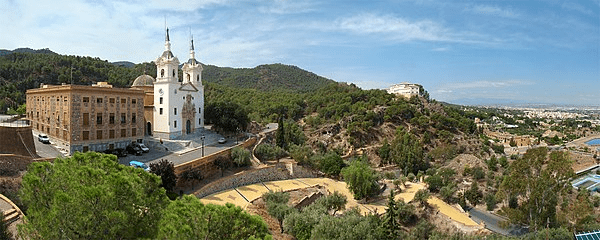
Book now and experience the magic of the Spanish sun!

Read More

Exploring the Arqueológico Cerro del Molinete Park in Cartagena

Nestled in the vibrant urban environment of Cartagena, Murcia, the Molinete Archaeological Park (Parque Arqueológico del Molinete) offers a fascinating glimpse into Spain’s rich Roman heritage. Positioned on the historic Cerro del Molinete, this park beautifully integrates the ancient ruins of a Roman forum, thermal baths, and other significant structures into the modern cityscape, creating a seamless blend of past and present. This unique site highlights the grandeur of what once was a bustling Roman city and showcases the innovative ways historic preservation can be woven into the fabric of contemporary life. Whether you are a history enthusiast, an art lover, or simply looking for a distinctive place to explore, the Molinete Archaeological Park promises a compelling visit filled with the continuous perception of history and innovation.

Table of Contents

Overview and History of Molinete Archaeological Park

The Molinete Archaeological Park, beautifully sited on Molinete Hill, one of Cartagena’s emblematic five hills, is a vivid tapestry of history layered through centuries. This park is not just a site but a chronicle of life from the Roman era to modern times, encapsulated within the bustling urban environment of Cartagena, Murcia, Spain.

Ancient Foundations and Roman Grandeur

The story of Molinete Park begins in the Roman period when the area was developed as part of a thriving urban center. The hill itself played a significant role, hosting a complex that included a forum, a commercial hub, and thermal baths, each a cornerstone of Roman daily life. These structures weren’t merely functional; they demonstrated architectural prowess and social order. The remains found at the site, from intricate mosaics to expansive colonnades, hint at a culturally rich and aesthetically magnificent past.

Over the years, archaeological excavations have uncovered extensive parts of this once-flourishing Roman town. Fundamental discoveries include the forum, the center of civic life, and luxurious domus (homes) with elaborate designs, showcasing the wealth that once permeated through this hill.

Transition through Time

As centuries passed, Molinete Hill saw various phases of occupation and abandonment. The area was transformed repeatedly, with each layer of history adding to the complex narrative of the site. The buildings and structures underwent cycles of destruction and renewal, affected by fires, conquests, and natural decay. Yet each destruction phase was followed by a reconstruction period, where new structures were built over the old, creating a palimpsest of historical layers.

Modern Rediscovery and Preservation

The modern chapter of Molinete Hill began with its rediscovery and the subsequent decision to integrate these ancient treasures into the heart of contemporary Cartagena. Led by visionaries like Pablo Sigüenza, the restoration and conservation project aimed to preserve the remains and make them a central part of the city’s cultural landscape. This project was a meticulous effort involving detailed archaeological and architectural work, ensuring that the essence of the Roman structures was maintained while making them accessible and understandable to visitors.

Today, the Molinete Archaeological Park is a testament to Roman architecture’s and urban planning’s enduring legacy. It serves as a bridge between the past and the present, offering visitors a unique opportunity to walk through history in an urban setting. The park is free and open to the public, inviting people from around the world to explore its ancient paths and learn about the dynamic history of this extraordinary place.

Through its ongoing journey from a bustling Roman hub to a serene archaeological park, Molinete Hill continues to symbolize continuity and change, embodying the spirit of Cartagena through the ages.

The Architectural Features and Restoration Efforts at Molinete Park

Molinete Archaeological Park, situated on the historically rich Molinete hill in Cartagena, Murcia, showcases ancient Roman architecture and modern restoration efforts that blend historical authenticity with contemporary accessibility. The park is celebrated for its archaeological significance and the innovative approaches taken to preserve and present its ancient structures.

Architectural Highlights of Molinete Park

The core architectural features of Molinete Park include remnants of a Roman forum, luxurious residential buildings known as Domus, and well-preserved thermal baths. These elements collectively highlight Roman engineering and urban design.

Roman Forum

This was the centerpiece of Roman public life, where commerce, administration, and justice converged. The layout of the forum at Molinete Park, with its foundational structures and columns, gives visitors a sense of the scale and grandeur typical of such a significant Roman meeting place.

Domus (Homes)

The homes unearthed in the park illustrate the domestic architecture of the Roman elite. These residences were often elaborate, with intricate floor mosaics, wall paintings, and private courtyards. Each domus tells a story of its inhabitants’ social and economic status, reflected in the luxury of their private living spaces.

Thermal Baths

Essential to Roman social life, the baths at Molinete Park display sophisticated engineering. The hypocaust system, a method of underfloor heating used in ancient Roman buildings, is a highlight, showcasing the Romans’ advanced understanding of technology and comfort.

Restoration and Conservation

The restoration efforts at Molinete Park have been guided by a philosophy of preserving the integrity of the Roman structures while making them understandable and engaging for modern visitors. These interventions have been multifaceted, involving both structural stabilization and educational enhancements:

Structural Stabilization: The park’s restoration team, led by figures like Pablo Sigüenza, has focused on reinforcing the existing ruins without altering their original appearance. Techniques include careful excavation, consolidation of weakened structures, and sometimes subtle additions to suggest partially destroyed elements’ original form and function.

Access and Education: A key part of the restoration project has been improving access to the site. Modern additions like staircases and footbridges allow visitors to explore the site without causing damage to the ruins. Informative panels and digital guides in multiple languages, including English, offer insights into the daily lives of the Romans who once inhabited these spaces.

Integrative Design

A particularly innovative aspect of the park’s design is using a protective cover over the archaeological remains. This cover protects the site from environmental damage and integrates it into the surrounding urban landscape. it acts as a physical and symbolic link between the old and the new, inviting the community and visitors to engage with the history beneath their feet.

Impact of Restoration

The careful restoration and thoughtful presentation of Molinete Park have transformed it into a cultural landmark that educates and inspires. By preserving its historical structures and making them accessible, the park serves as a model for archaeological sites worldwide, demonstrating how ancient history can be effectively woven into the fabric of modern urban life.

These efforts ensure that Molinete Park continues to be a place of learning and discovery, where the echoes of the past meet the continuous foot traffic of the present, creating a dialogue between epochs that enriches our understanding of both.

Visitor Information and the Surrounding Area of Molinete Archaeological Park

Molinete Archaeological Park offers a unique blend of ancient history and modern architecture. Understanding the opening times, access details, and the vibrant surrounding area enhances the overall experience for those planning a visit.

Visiting Molinete Archaeological Park

Opening Times: Molinete Archaeological Park welcomes visitors year-round, with gates opening at 9:00 AM daily. This early opening time allows visitors to enjoy the tranquil atmosphere and explore the ancient ruins in the refreshing morning air. However, it’s recommended to check the park’s official website or contact the municipality of Cartagena for any updates or changes to the opening hours.

Access and Price: Access to Molinete Park is facilitated by a series of modern interventions, such as well-placed staircases and footbridges, that ensure safety and accessibility while preserving the integrity of the ancient ruins. The park is accessed primarily through Calle Pólvora, a significant street near many of Cartagena’s historical sites. Admission to the park is generally free, making it an accessible option for all visitors.

Address and Contact Details: Cerro Del Molinete, C. Pólvora, s/n, 30203 Cartagena, Murcia, Spain. Phone: +34 968 50 00 93

The Surrounding Area

Molinete Park is not just a standalone historical site but part of a larger tapestry that makes up Cartagena’s urban and cultural landscape. The park is nestled in the middle of the city, surrounded by historical buildings and modern structures, creating a dynamic and visually intriguing environment.

Cultural and Architectural Influence

The influence of various periods is evident in the surrounding buildings. From the Roman architectural details visible in the ruins themselves to more modern developments, the area is a living series of historical layers. Notable is the architectural style influenced by various periods, including a touch of Italian Renaissance brought over by architects who admired Italy’s classical and baroque styles.

Nearby Attractions

Just a short walk from the park are other significant historical sites and cultural institutions, making it easy for visitors to spend a full day exploring. Valencia Street, with its vibrant eateries and shops, offers a contemporary contrast to the ancient world of the park, providing visitors with a taste of modern Spanish life.

Integration with Urban Life

The design interventions, such as the roofing over some of the archaeological structures, protect the ruins from environmental elements while integrating them into the cityscape. This blend of old and new symbolizes Cartagena’s identity, a city deeply rooted in its history but continuously evolving.

Molinete Archaeological Park and its surrounding areas offer a rich tapestry of history and modernity, where ancient structures and contemporary life meet. It serves as a single space where the past and present of Cartagena are continuously intertwined, offering visitors a comprehensive and immersive experience. Whether you are a history buff, architecture enthusiast, or simply searching for a unique place to explore, Molinete Park and its neighborhood promise a memorable visit.

Enjoy Your Private Paradise in Villa Murcia!

Villa in Spain

Looking for the perfect place to stay in Murcia? We’ve got just the spot for you!

Villa Murcia – Your Private Paradise

Wake up to coffee on a sun-drenched terrace, unwind in a warm jacuzzi after a day of exploring, and end your evenings with dinners in the summer kitchen. Nestled in charming Santiago de la Ribera, Villa Murcia offers more than just a holiday—it’s your personal oasis of comfort, style, and unforgettable moments.

Highlights:
✔ Spacious living room with a large sofa and open kitchen – perfect for shared memories
✔ Three elegant, air-conditioned bedrooms with private terraces – your peaceful retreat
✔ Extra fold-out sofa in the living room – ideal for additional guests

Whether it’s a romantic escape, a family getaway, or a relaxing break with friends – Villa Murcia is your dream stay.
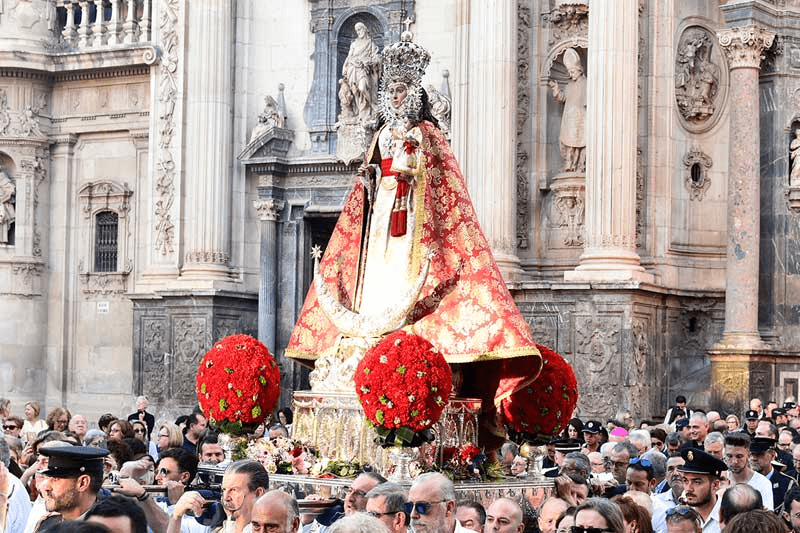
Book now and experience the magic of the Spanish sun!

Conclusion

Molinete Archaeological Park, with its carefully preserved ruins and thoughtful, modern interventions, stands as a testament to the rich historical tapestry of Cartagena. The seamless integration of ancient structures with contemporary elements like staircases, footbridges, and protective roofing exemplifies how history and modernity coexist harmoniously. Each building and structure within the park, from the remnants of Roman palaces to the expansive forum, tells a unique story. At the same time, the interventions ensure their narratives continue into the present.
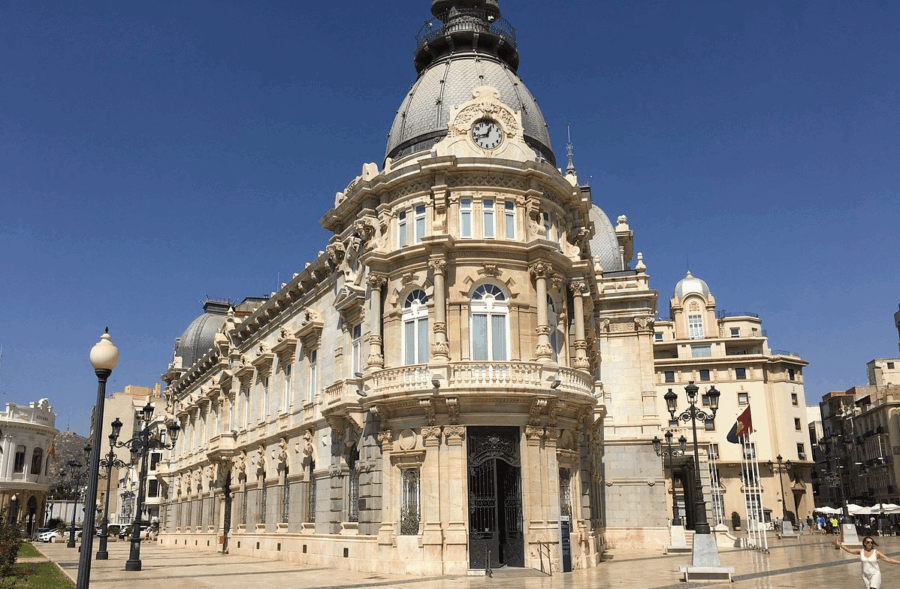
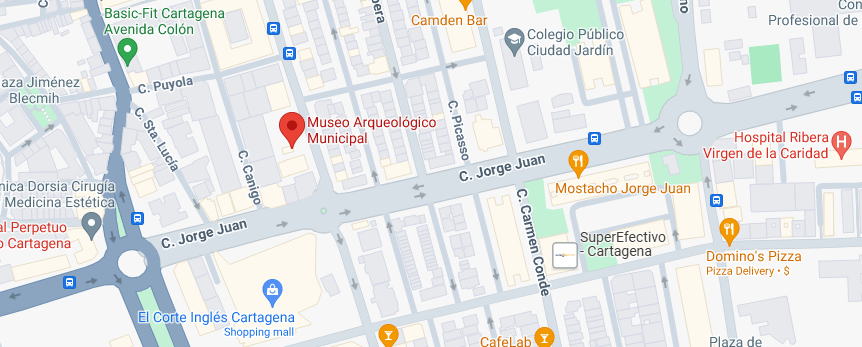
As we reach the end of our exploration of Molinete Park, it’s clear that this site is more than just an archaeological area; it is a cultural bridge connecting the past with the present. The thoughtful case of blending old with new invites visitors to step back in time while enjoying the comforts and accessibility of modern design. Molinete Park is not just a place to visit; it is an experience offering a profound connection to Cartagena’s history and ongoing story. Whether you are drawn by the allure of Roman history or the architectural marvels of today, Molinete Park provides a compelling reason to explore and appreciate the enduring legacy of this historic city.

Read More

Page 6 of 8

Powered by WordPress & Theme by Anders Norén