

Tag: history Page 3 of 4

The Punic Wall

The Punic Wall of Cartagena: A Jewel of Antiquity

Located in the Murcia region of southeastern Spain, Cartagena is a city steeped in history and archaeology, making it one of the richest in the country. The Punic Wall (Muralla Púnica in Spanish) is a significant historical artifact among its treasures—a tangible trace that depicts the Carthaginian presence in the Iberian Peninsula. This piece delves into the historical and archaeological significance of the Punic Wall in Cartagena, and today, what remains of this historic wall is available to visit.

I had the opportunity to visit this space when I was in Cartagena, and discovering this part of the history of the Carthaginian civilization was a very cool moment. Today, I share with you what I learned.

Table of Contents

Origin and Construction

This wall’s history is based on many events that occurred in the BC period. It is a very complex and long story, but without going into all the details, I will summarize it for you.

The Punic Wars were conflicts between Rome and Carthage for control of the Mediterranean Sea. The name of the war comes from the name “puni” that the Romans gave to the Phoenicians. Carthage, located in North Africa, was an ancient Phoenician colony.

Rome and carthaginian civilization fought three wars (First Punic War, Second Punic War and Third Punic War)
O Príncipe Historiador

Rome and Carthage fought three wars throughout the 3rd and 2nd centuries BC, demonstrating the two cities’ military strength. The Romans defeated the Carthaginians at the end of the Third Punic War, destroyed the Carthaginian city, and conquered North Africa, expanding their dominions over the Mediterranean Sea.

The construction of the Punic Wall of Cartagena began in the late third century BC (around 227 BC) when the city was founded by Hasdrubal the Fair, a Carthaginian general who was also the brother-in-law of Hannibal Barca. In a brief period, Qart Hadasht (New city of Carthage), or Cartagena, became one administrative and political capital of Carthaginian interests in the Iberian Peninsula during the Punic Wars against Rome. This was because the city was located on a peninsula in the middle of a bay and had five hills, two of which were at the entrance to the isthmus, thus presenting a strategic point for military defense.

In this context, during the brief Punic rule over Cartagena (227-209 BC), the Carthaginians decided to fortify the Barcid capital in the Iberian Peninsula with a wall surrounding the town. The Punic Wall protected the city from enemy attacks and invasions, a sign of Cartagena’s strategic importance. Made mainly of sandstone, the original wall was about 3 meters wide and approximately 6 meters high, with defensive towers distributed along its perimeter. This defensive structure demonstrated Carthaginian military power and engineering, making it one of the most advanced fortifications of the time.

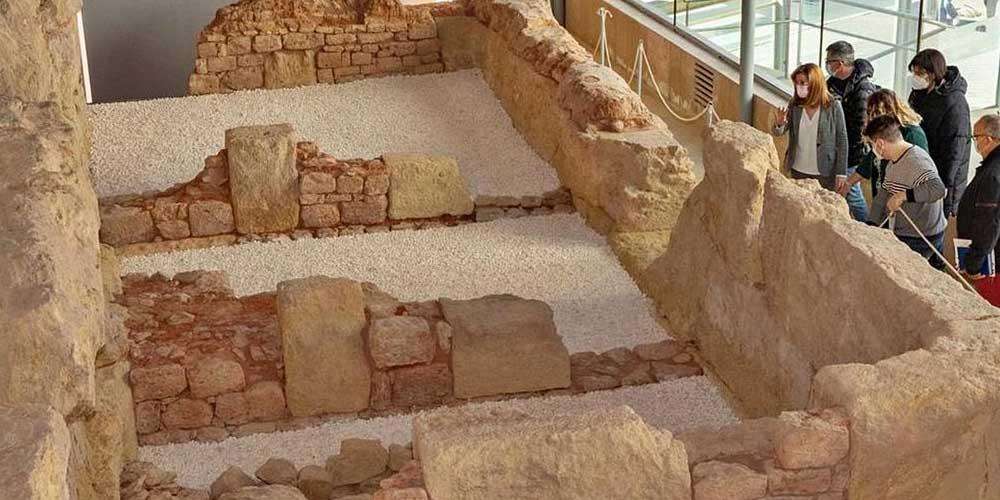
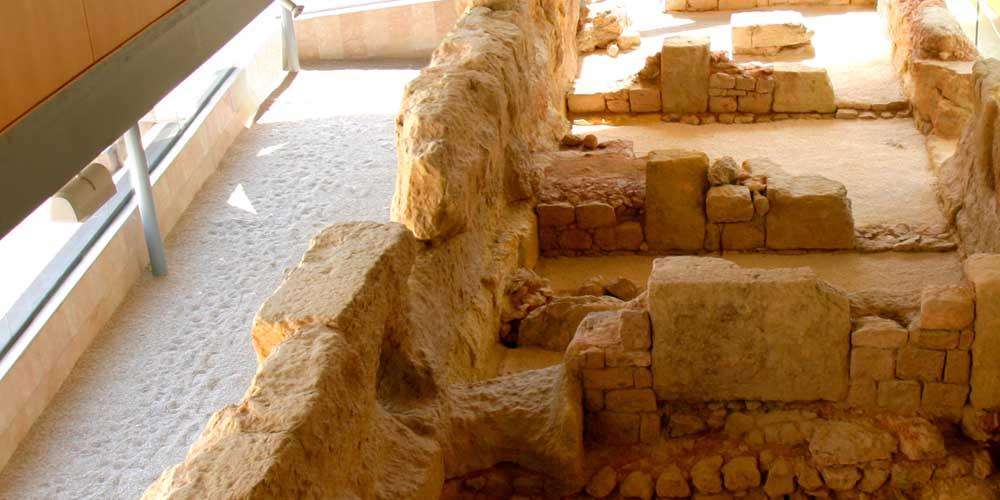
The ruins of the Punic walls that can be seen today belong to the stretch of land that extended to the entrance to the isthmus, between the hills of San José (Saint Joseph) and Monte Sacro (in ancient times called Aletes and Baal, respectively). During archaeological excavations, evidence of a fire was found, possibly during the battle or the looting that followed.

Archaeological Discoveries

The first significant excavations of the Punic Wall began in the 20th century, although some sections were already known. The archaeological effort has uncovered more than just the wall’s physical dimensions but also several relics—all contributing to a better understanding of what life in ancient Cartagena would have entailed.
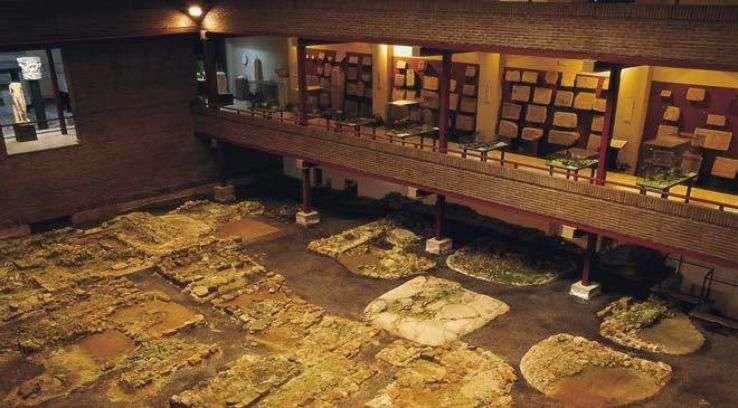
An excavation on Calle San Diego 1987 revealed a large wall section, now known as the Punic Wall Interpretation Centre, part of the touristic consortium Cartagena Puerto de Culturas. The center provides information on the wall’s structural and operational aspects through its exhibits, which include artifacts unearthed at the site, including pottery, weapons, and household utensils.

Historical and Cultural Importance
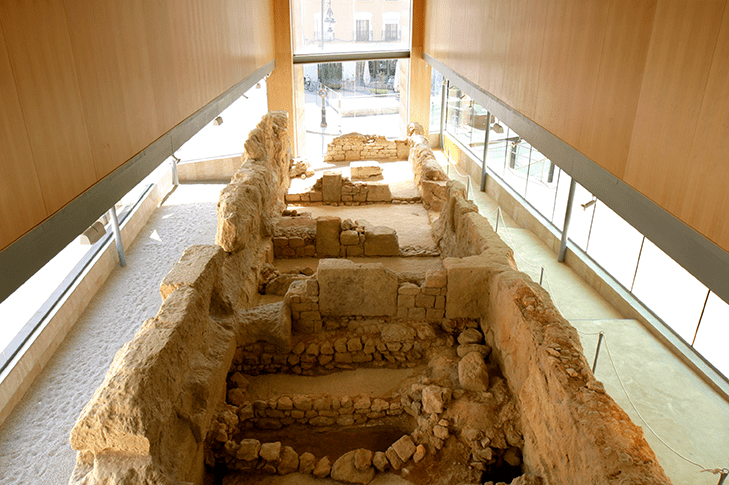
The Punic Wall
Turismo E Region De Murcia – Between the two walls were the casemates, or inner rooms, used to house troops and store supplies and weapons.

The Punic Wall in Cartagena is one of the few examples of Carthaginian military architecture that remains to this day beyond the borders of Tunisia. Its preservation provides valuable insights into the military engineering and defensive strategies adopted by an important civilization of the ancient Mediterranean world. Furthermore, this wall constitutes evidence that reflects the great conflicts that took place between Rome and Carthage, both seeking control of the Western Mediterranean during the period known as the Punic Wars, which tells the story of many other magnificent structures lost to time.

Carthaginian rule was crucial as a naval base and a staging post for military expeditions into the Iberian Peninsula. The city was an economic and military hub, essential to Hannibal’s efforts during his famous campaign against Rome, including the march across the Alps.

Punic Wall Interpretation Center
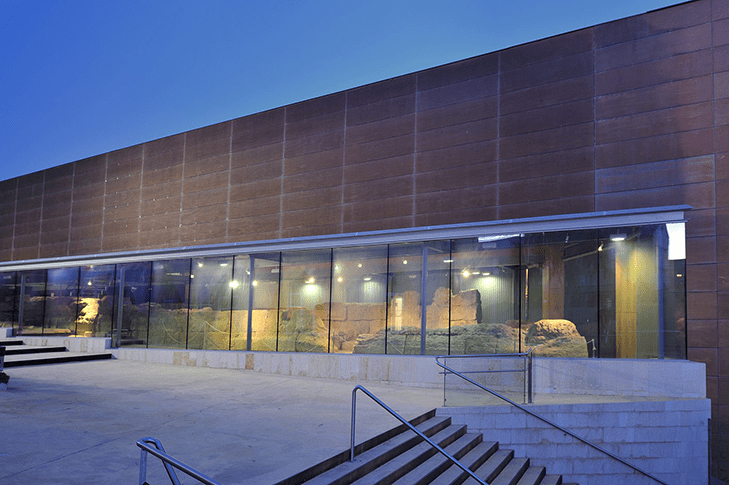
punic wall interpretation centre
Turismo E Region De Murcia

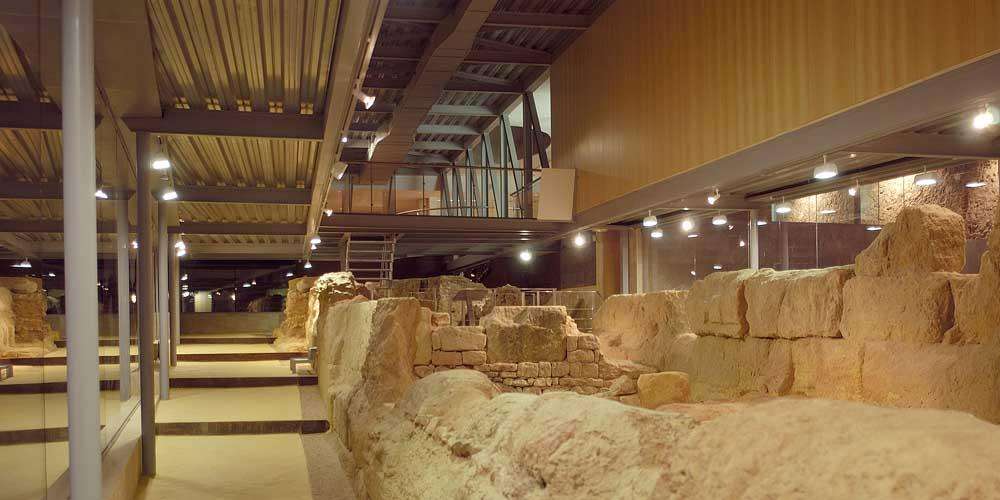
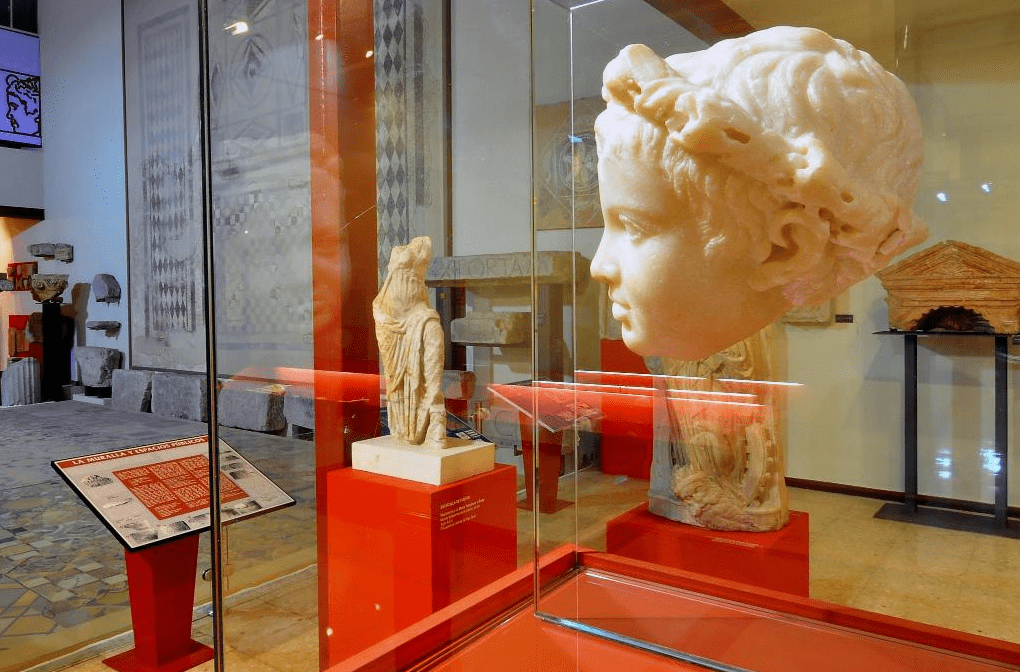
I explored a well-preserved section of the wall in the Interpretation Centre. In addition to the ruins themselves, the center offers detailed exhibits on the wall’s construction, function, and history. Exhibits include archaeological artifacts found during excavations, such as pottery, weapons, and household items.

Interactive Experience

The center enriches the visitor experience with a combination of traditional displays and modern technology. Virtual reconstructions, information panels, and interactive features bring history to life (and make the experience very fun!). I opted for a guided tour, which lasted approximately 30 minutes and provided an in-depth understanding of the Punic Wall’s historical and cultural significance.

Entry Fees

The cost of visiting the center is very affordable. I was with my family and had a discount on entering the center. Here are the prices:

  • General entry: €3.50
  • Reduced entry (for children under 12, students up to 25, Youth Card and Youth Card +, unemployed, pensioners, retired people, disabled people, large families (2 or more adults with 2 or more children under 12), large family card and groups of 20 people or more): €2.50
  • Children under 3, official tourist guides, and members of the Club Cartagena Puerto de Culturas (except activities) are admitted free of charge.

Opening Hours

You can visit the center the whole year:

  • High season (1 July to 15 September): Monday to Sunday, 10:00 am to 8:00 pm.
  • Mid season (15 March to 30 June / 16 September to 1 November): Tuesday to Sunday, 10:00 am to 7:00 pm. (Holy Week: Monday to Sunday)
  • Low season (2 November to 14 March): Tuesday to Sunday, from 10:00 am to 5:30 pm.

Accessibility

The Punic Wall Interpretation Centre is committed to accessible tourism, providing several facilities for visitors with special needs:

  • Elimination of architectural barriers: Ramps, glass floors, and balconies for a complete view of the remains from the upper floor.
  • Adapted bathrooms.
  • Audiovisual resources: With subtitles and voiceover in Spanish and English, catering to people with hearing and visual impairments.
  • Reduced rate: For people with disabilities, upon presentation of official accreditation.
  • Access permitted with guide dogs: With corresponding accreditation.

Audio Guides

For a more personalized and informative visit, the center offers audio guides in four languages: Spanish, English, French, and Russian. The cost of the audio guide is €2.

A Dive Into The History of Cartagena
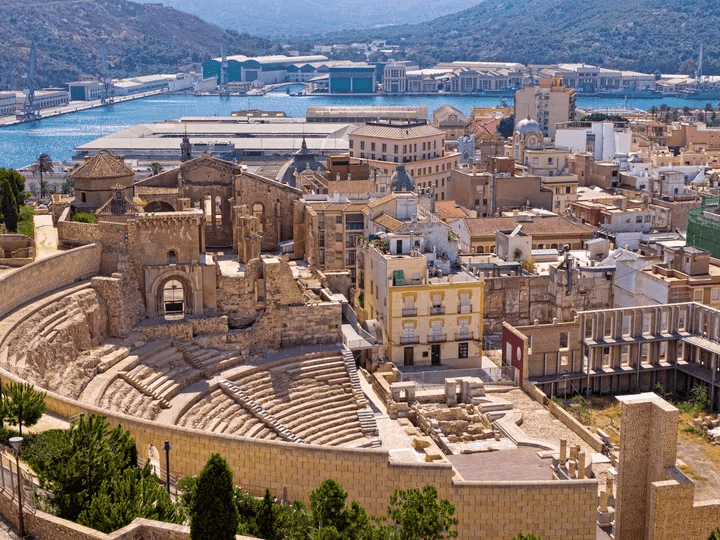
The entire region of Cartagena (the whole of Murcia, in fact) is full of history and many opportunities for rich learning. If you plan to travel through the region, visiting this historic site is worth it. Many agencies offer package tours that include the wall. In addition to taking you down to the macabre ruins, these tours typically visit the Roman Theatre of Cartagena (Teatro Romano de Cartagena) and Casa de la Fortuna, which recreates first-century Roman life.

Today, the Punic Wall is a major tourist and educational destination in Cartagena. The Punic Wall Interpretation Center offers visitors the opportunity to explore the ruins and learn about the history of Carthage and its influence on the Iberian Peninsula. The center uses a combination of traditional exhibits and modern technology to bring history to life, including virtual and interactive reconstructions.

Enjoy Your Private Paradise in Villa Murcia!

Piscina com água

O conteúdo gerado por IA pode estar incorreto.

Looking for the perfect place to stay in Murcia? We’ve got just the spot for you!

Villa Murcia – Your Private Paradise

Wake up to coffee on a sun-drenched terrace, unwind in a warm jacuzzi after a day of exploring, and end your evenings with dinners in the summer kitchen. Nestled in charming Santiago de la Ribera, Villa Murcia offers more than just a holiday—it’s your personal oasis of comfort, style, and unforgettable moments.

Highlights:
✔ Spacious living room with a large sofa and open kitchen – perfect for shared memories
✔ Three elegant, air-conditioned bedrooms with private terraces – your peaceful retreat
✔ Extra fold-out sofa in the living room – ideal for additional guests

Whether it’s a romantic escape, a family getaway, or a relaxing break with friends – Villa Murcia is your dream stay.

Book now and experience the magic of the Spanish sun!

.
Read More
Interpretation Center of the Punic Wall | The History of Cartagena

Interpretation Center of the Punic Wall | The History of Cartagena

Cartagena is likely a city with some of the most important and vast cultural heritage from all of Spain and even the Mediterranean coastline. Shipwrecks, antique settlements, and a rich history characterize this wealthy city of the Murcia shore; thus, it’s a must-visiting destination you should meet this next season.
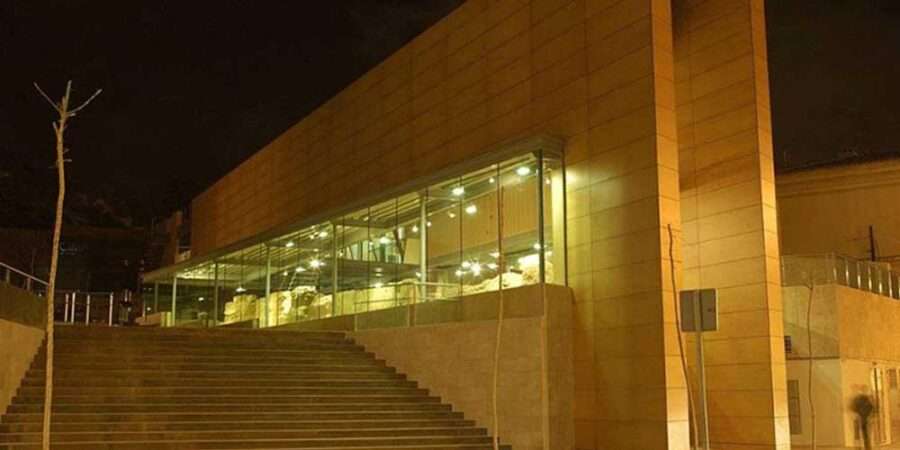
One of the buildings you can’t stop visiting is the Interpretation Center of the Punic Wall, an architectural-modern structure whose objective is to preserve a crucial part of the fortifications of the old city: the Punic Wall.

This center plays an important role in preserving the cultural heritage of the city and Spain. It is also a landmark of the ancient history of the cultures that coexisted in the territory. In the lines below, we discuss everything about this precious center.

Table of Contents:

What Is the Interpretation Center of the Punic Wall?

The ancient Punic Wall in Cartagena

The Punic Wall Interpretation Center in Cartagena, Spain, is a recovery, memory, and rehabilitation site whose main purpose is to preserve the rest of the Carthaginian wall, dating from the 3rd century BC.

The Punic Wall Interpretation Centre effectively safeguards a 30-meter section of the original wall, which extended until the entrance of the isthmus between the Monte Sacro and San José hills.

The major wall consisted of two walls separated by 3 meters. Between the two walls were the casemates, or inner rooms, where the troops rested and stored supplies and weapons.

The Interpretation Center of the Punic Wall is part of the consortium Cartagena Puerto de Culturas.

What Were the Punic Wars?

The Punic Wars were war conflicts between the two powers that ruled the Mediterranean Sea in the 3rd century BC: the Romans and the Carthaginians. Most of the battles occurred in the Iberian peninsula, where the Carthaginian civilization destroyed and built cities to ensure its control of the region.

The Punic Wall, located in Cartagena, Spain, is a relic of the Second Punic War, which lasted between 218 and 201 BC. At that time, in 229 BC, Asdrúbal Barca, a Carthaginian general, founded the city of Qart Hadast (the current Cartagena). Under the Carthaginians, the city soon became the administrative and political capital of the south of the Iberian peninsula, and the wall was a perfect place to store weapons and supplies. It also served as a base of operations and the winter barracks of the armies.

In this context, Asdrúbal built the Punic Wall in 216 BC to protect the settlement from the Roman attacks led by the brothers Cneo and Publio Cornelio Escipión. However, the Punic Wall (La Muralla Púnica, in Spanish) failed to contain the attacks of the Roman General Scipio Africanus.

This archaeological site shows the ruins of this wall after the battle and through the years.

The Wall Remains

A small section of the Punic Wall in Cartagena

The Wall Remains is likely the most important Carthaginian archaeological site in Spain and the area. It is also the gem of the Interpretation Center since it reflects and tells an important part of the city’s and peninsula’s history.

This wall has a Hellenic design. The main material is sandstone extracted from local quarries. The original wall was over 3 meters high. The ruins you can see nowadays have a length of 30 meters and show clear signs of fire, probably due to the battle carried out there in the Second Punic War.

The Saint Joseph Crypt

The Saint Joseph Crypt at side the Punic Wall

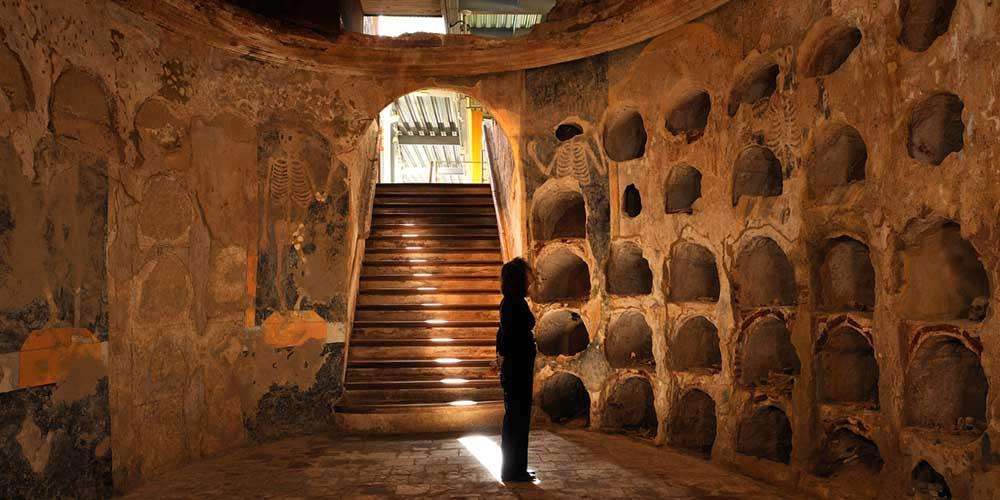
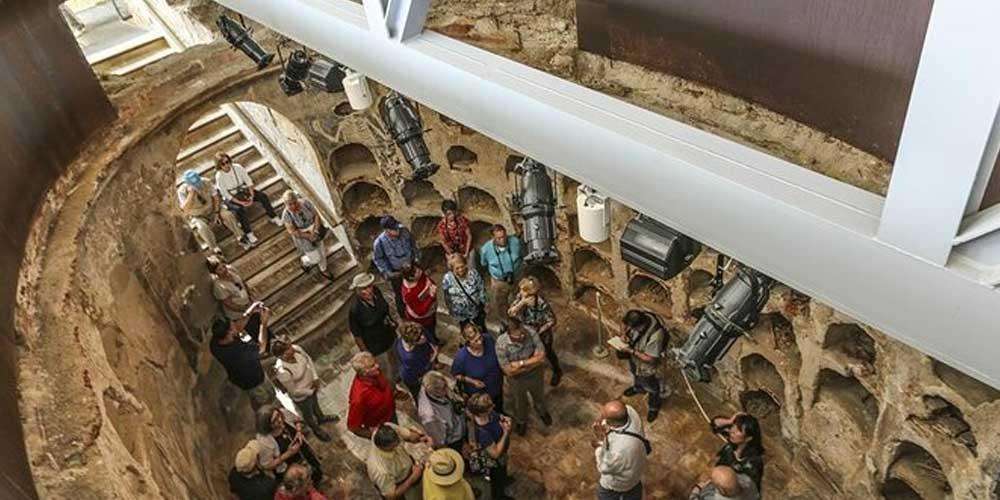
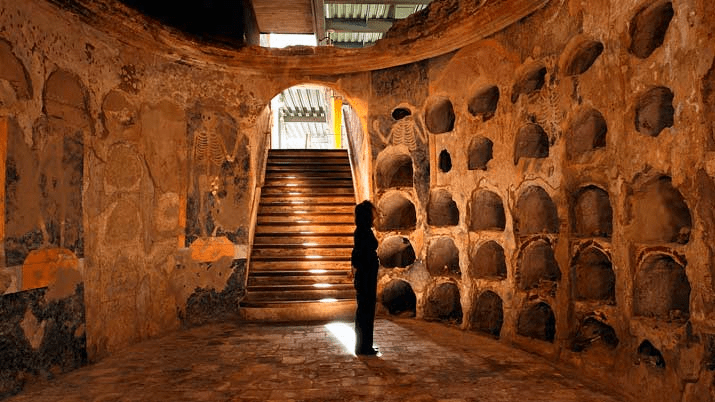
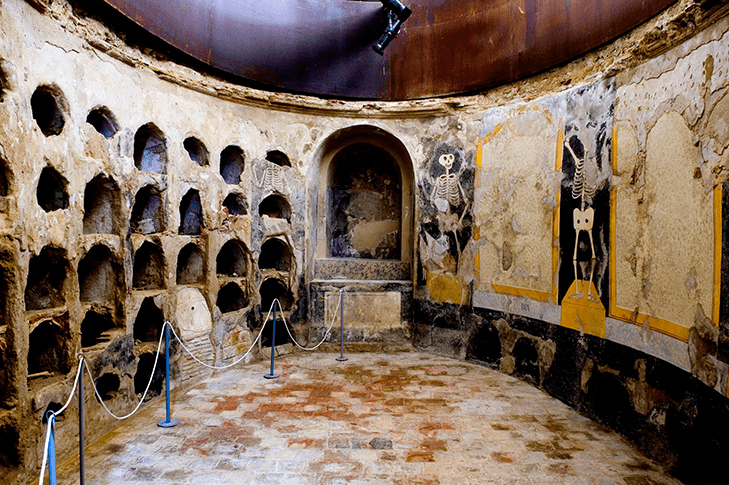
Next to the wall, and as an integral part of it, you can witness the funerary burial crypt of the hermitage of San Joseph. The Brotherhood reserved this space for its members. The wall dates from the 16th and 17th centuries. Its walls offer a dreadful representation of the Dances of Death.

This burial area was found during the excavations of the Carthaginian walls and presented a completely new scenario where ancient and Christian cultures met and nurtured each other. Let us remember that Rome was later the capital of the Christian religion.

This site has 110 burial niches spread over the two walls that built this elliptical crypt. Most of them are very narrow. The corpses were deposited within the niches inside wooden coffins and with plenty of funeral offerings, such as crosses, rings, and medals of saints.

Paintings depicting the “Dance of Death,” decorate the main walls of the niche, which was very much the fashion at that time.

The Exhibition Room

The Exhibition Room inside the Interpretation Center of the Punic Wall

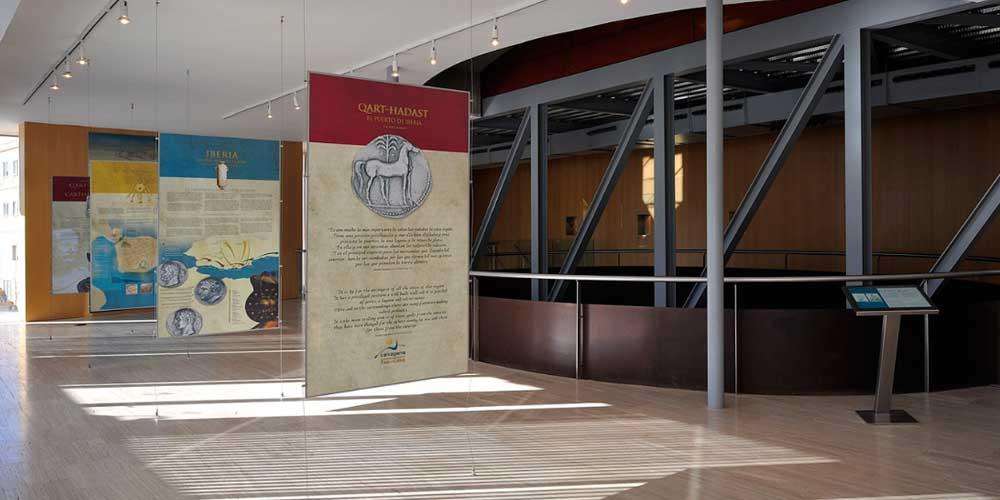
The Interpretation Center has an Exhibition Room in which visitors can witness a series of panels explaining the Punic world, the first Punic War, and the Second Punic War, which is the one to which the center is dedicated.

The Exhibition Room resumes the fact behind Hasdrubal’s foundation of the city of Qart-Hadast in 229 BC and the subsequent conquest by the Roman General Publius Cornelius Scipio in 209 BC.

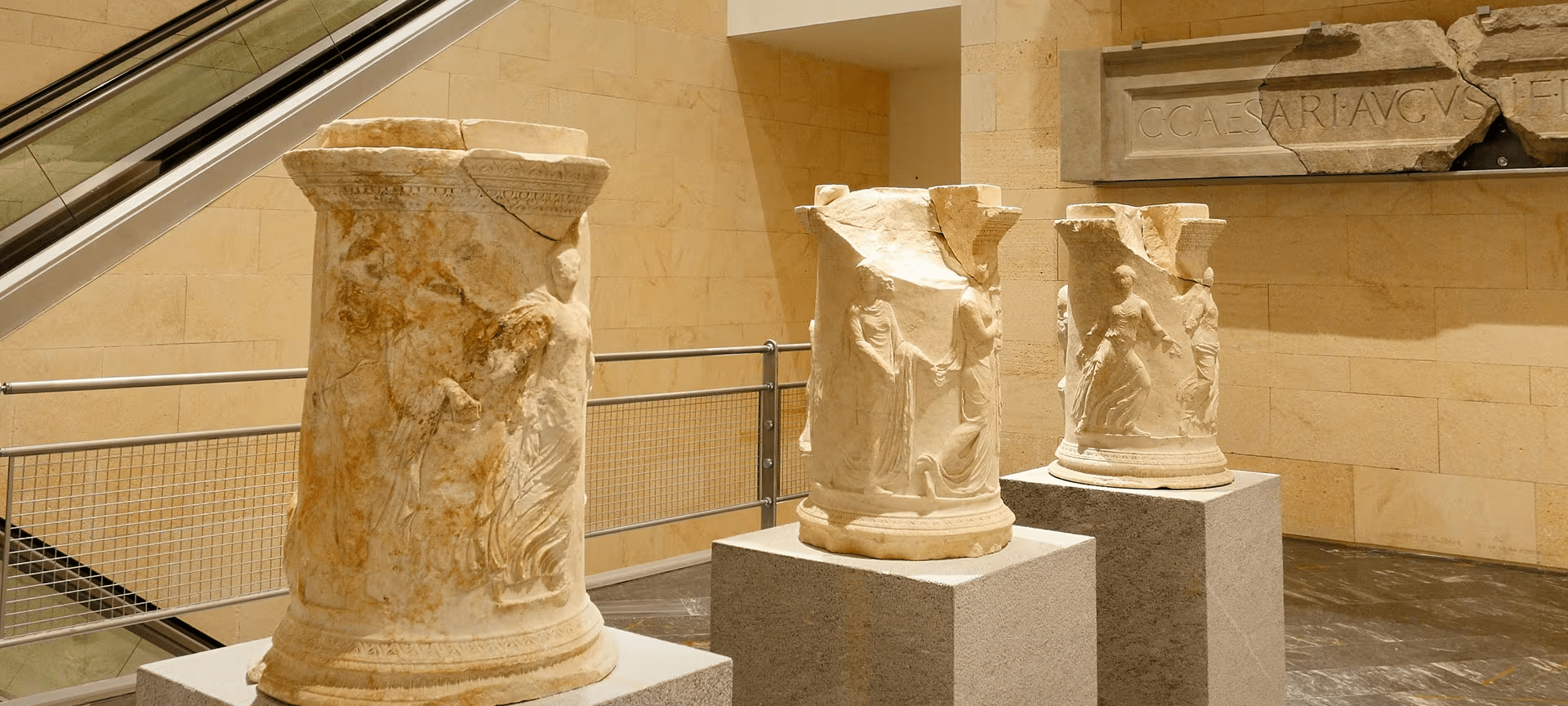
This exhibition also features Display cases—six glass cabinets displaying items found during the excavations, including Iberian fibulae (or brooches), a Carthaginian votive offering, Phoenician and Roman coins, and funerary offerings.

Location of the Interpretation Center of the Punic Wall

Location of the Interpretation Center of the Punic Wall

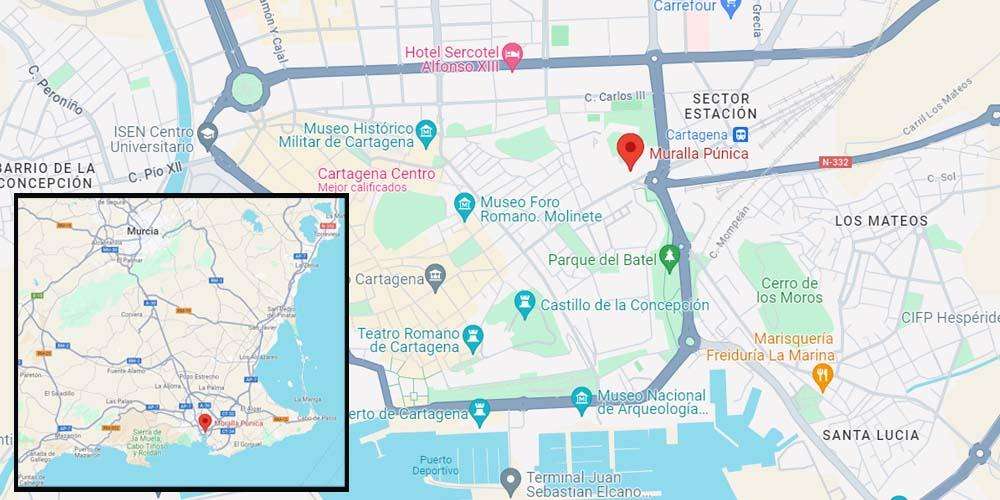
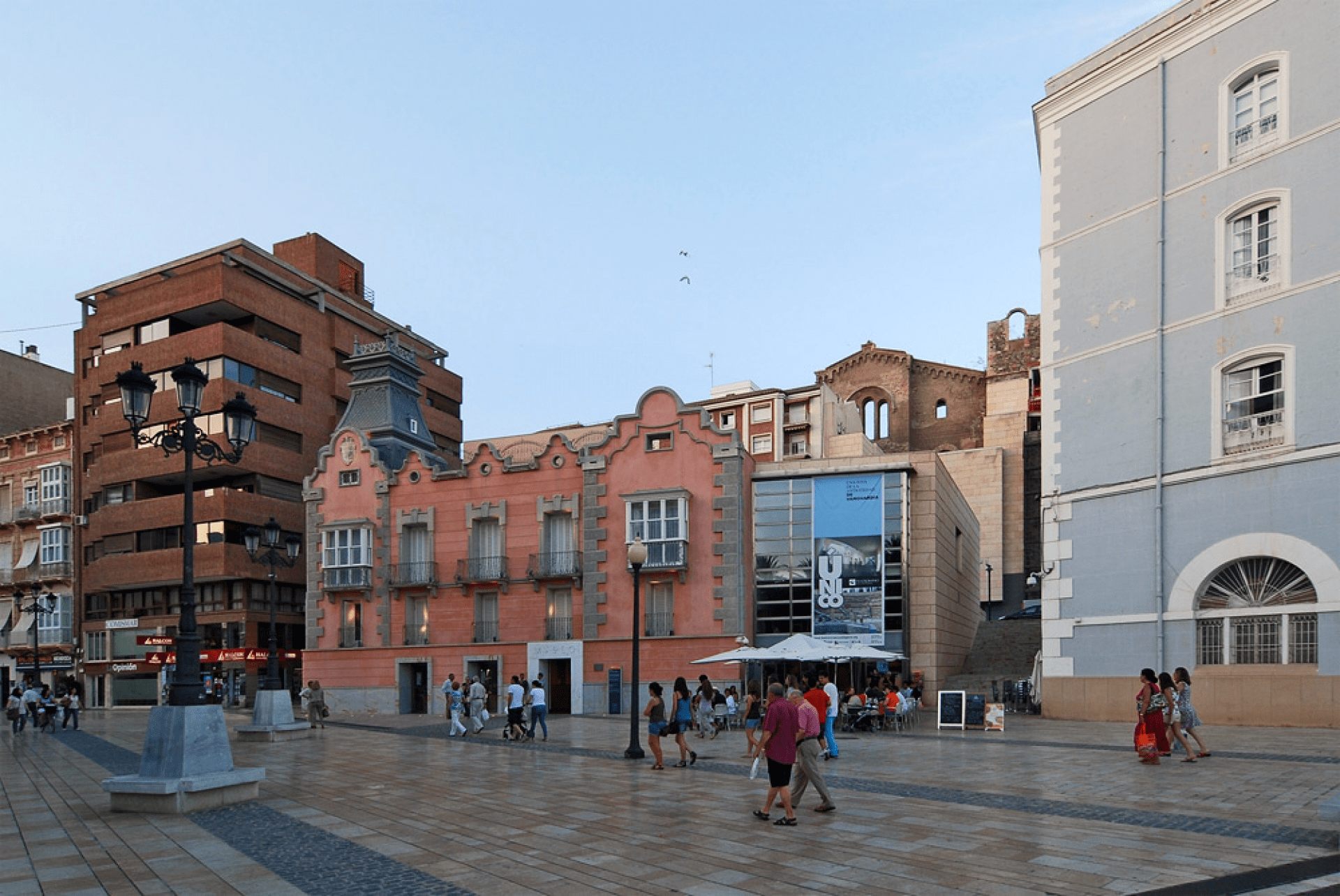
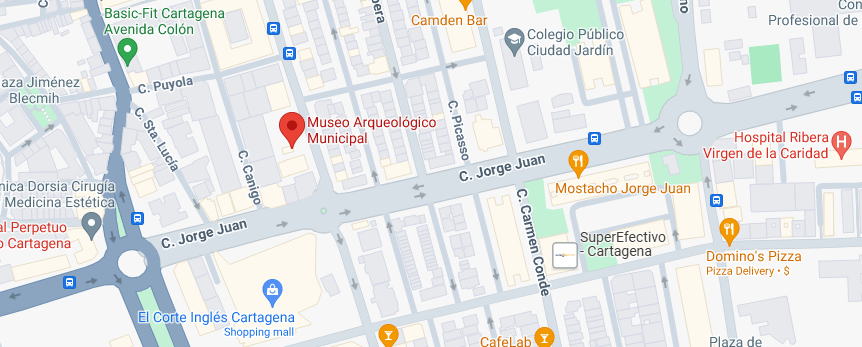
The Punic Wall Interpretation Center is located in Cartagena, Murcia, Spain, a coastal city located at the south end of the region of Murcia. Specifically, it’s in the center of the new city, built from the foundations of the antique city on what was formerly the outer edge of the Carthaginian city.

The Center is easily accessible from every part of the city.

Address: C/ San Diego, 25, 30202, Cartagena, Murcia, Spain

Phone: +34 968 500 093

Email: informacion@puertoculturas.com

Prices:

  • Individual: 3,5 euros
  • Reducida: 2,5 euros.

Discounts are available to students up to 25 years old, children under 12 years old, unemployed, Youth Card holders, retired people, people with disabilities, large families, and groups with more than 20 people. To prove your eligibility, you’ll need to bring your corresponding accreditation with you.

Opening hours:

  • High season (from July 1 to September 15) from Monday to Sunday from 10:00 a.m. to 8:00 p.m.
  • Mid-season (from March 15 to June 30 / from September 16 to November 1) from Tuesday to Sunday from 10:00 a.m. to 7:00 p.m. (Easter from Monday to Sunday)
  • Low season (from November 2 to March 14) from Tuesday to Sunday from 10:00 a.m. to 5:30 p.m.

The Punic Wall is closed on the following days:

  • January 1 and 6 and December 25.
  • January 5 and December 24 and 31 only in the afternoon.

Interpretation Center of the Punic Wall Architecture

Main hall of the Interpretation Center of the Punic Wall

The Interpretation Center of the Punic Wall, part of the tourist consortium Cartagena Puerto de Culturas, boasts contemporary architecture. It protects the antique site and recreates the original elevation of the wall.

Through the two high volumes that we can see on the facade, the building brings back the original wall and its crucial role in the defenses of the ancient city.

Inside the building, open spaces rule the distribution of halls and areas. Platforms, glass walkways, steel stairs, and other lightweight structures connect the different areas. A light ceiling covers the entire building, which has a structure of steel girders from side to side. Crystalline walls cover most of the perimeter, allowing visitors to witness the wall and the building architecture from outside.

The Muralla Púnica Center entails a particular architecture for visitors with special needs: there are no architectural obstacles, whereas ramps, glass floors, and balconies facilitate the walk through the installations. These elements also allow people to witness the remains in their entirety from the upper floor. The building also has adapted toilets and audio-visual presentations with subtitles (English and Spanish) and voiceovers for people with hearing disabilities and impaired vision.

The Tour of the Museum

Interpretation Center of the Punic Wall Tour

The Interpretation Center of the Punic Wall offers visitors a teaching tour that provides a glance at this brief period of the city’s history. This tour features the following:

  • Audiovisual recreation. This video is a 3D presentation of life in Cartagena in the 3rd century BC. The video reconstructs the city and the daily life of the inhabitants of the antique settlement.
  • The Exhibition Room. A brief resume of the legendary past of the city.
  • The Wall. One of the oldest remains in the city and Spain.
  • The Crypt. In 1987, some contractors discovered the crypt during the construction of a car park in an old residence. Here are 110 members of the Brotherhood of Saint Joseph.
  • Display cases. The exhibition showcases valuable objects of the Roman, Carthaginian, and Phoenician cultures.

Visiting the Punic Wall

Cartagena is an ancient city full of history. Thousands of years ago, crucial battles for the Iberian peninsula and the Mediterranean powers took place in this city. Nowadays, the settlement is the ideal destination for tourists eager to experience stories featuring important characters, such as Hannibal and the Roman General Scipio Africanus.

In a nutshell, these ruins are magnificent and take you back to the Era of heroes, legendary Roman generals, and crucial battles in human history. All these elements make the Interpretation Center of the Punic Wall a place you should visit in Cartagena.

Enjoy Your Private Paradise in Villa Murcia!

Piscina com água

O conteúdo gerado por IA pode estar incorreto.

Looking for the perfect place to stay in Murcia? We’ve got just the spot for you!

Villa Murcia – Your Private Paradise

Wake up to coffee on a sun-drenched terrace, unwind in a warm jacuzzi after a day of exploring, and end your evenings with dinners in the summer kitchen. Nestled in charming Santiago de la Ribera, Villa Murcia offers more than just a holiday—it’s your personal oasis of comfort, style, and unforgettable moments.

Highlights:
✔ Spacious living room with a large sofa and open kitchen – perfect for shared memories
✔ Three elegant, air-conditioned bedrooms with private terraces – your peaceful retreat
✔ Extra fold-out sofa in the living room – ideal for additional guests

Whether it’s a romantic escape, a family getaway, or a relaxing break with friends – Villa Murcia is your dream stay.

Book now and experience the magic of the Spanish sun!

Read More
image showing the roman theater of cartagena during night

Echoes of the Past: Exploring the Roman Theater of Cartagena

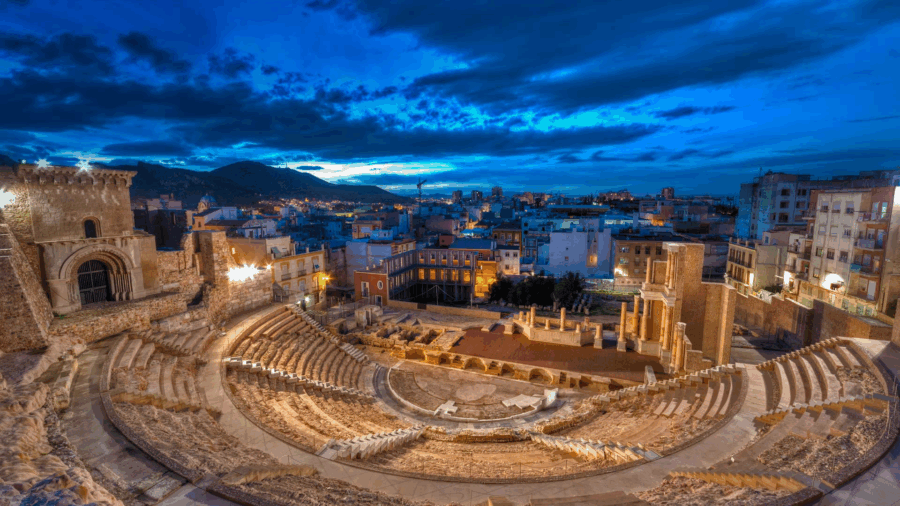
Discovered in the late 20th century, this magnificent structure dates back to the 1st century BC, offering a captivating glimpse into the grandeur of Roman civilization. Once a bustling hub of entertainment and social gatherings, the theater has been meticulously restored to reflect its former glory. It invites visitors to step back in time and experience the splendor of a bygone era. From its impressive architectural design to the stories etched into its stones, the Roman Theater of Cartagena stands as a symbol of the historical preservation and grandeur of a nation.

Here, we will unveil the main curiosities and facts about one of the most iconic buildings in Cartagena, Spain. From its history and meaning to the ancient Romans to the vital role it plays in modernity, we will discuss everything about the Roman Theater Museum, a triumph from the government of Emperor Augustus that still attracts people from all over the world.

Here’s everything you need to know about Roman Theatre:

Table of Contents

Year of Construction and Location of the Roman Theater

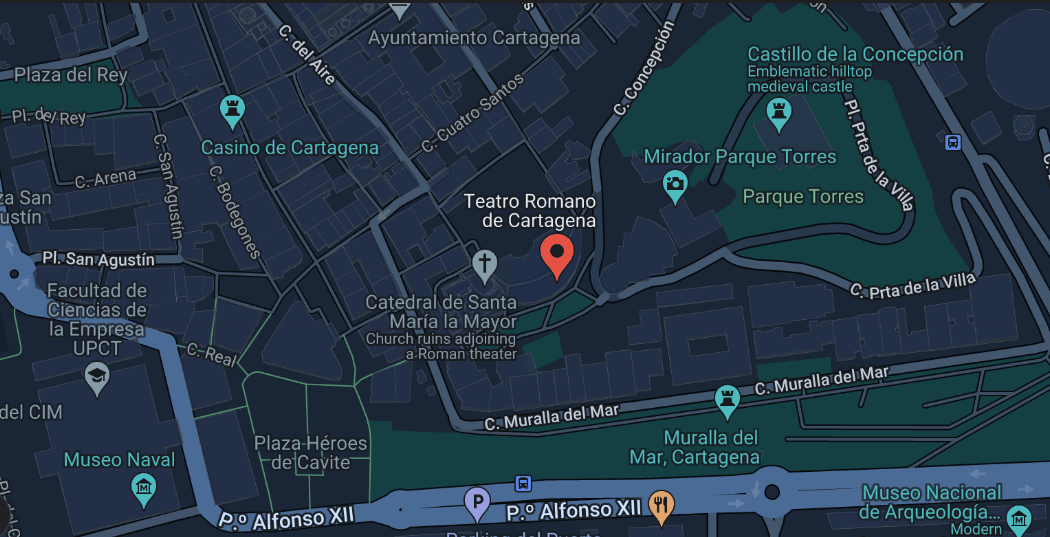
map highlighting the teatro romano de cartagena along with other attractions nearby

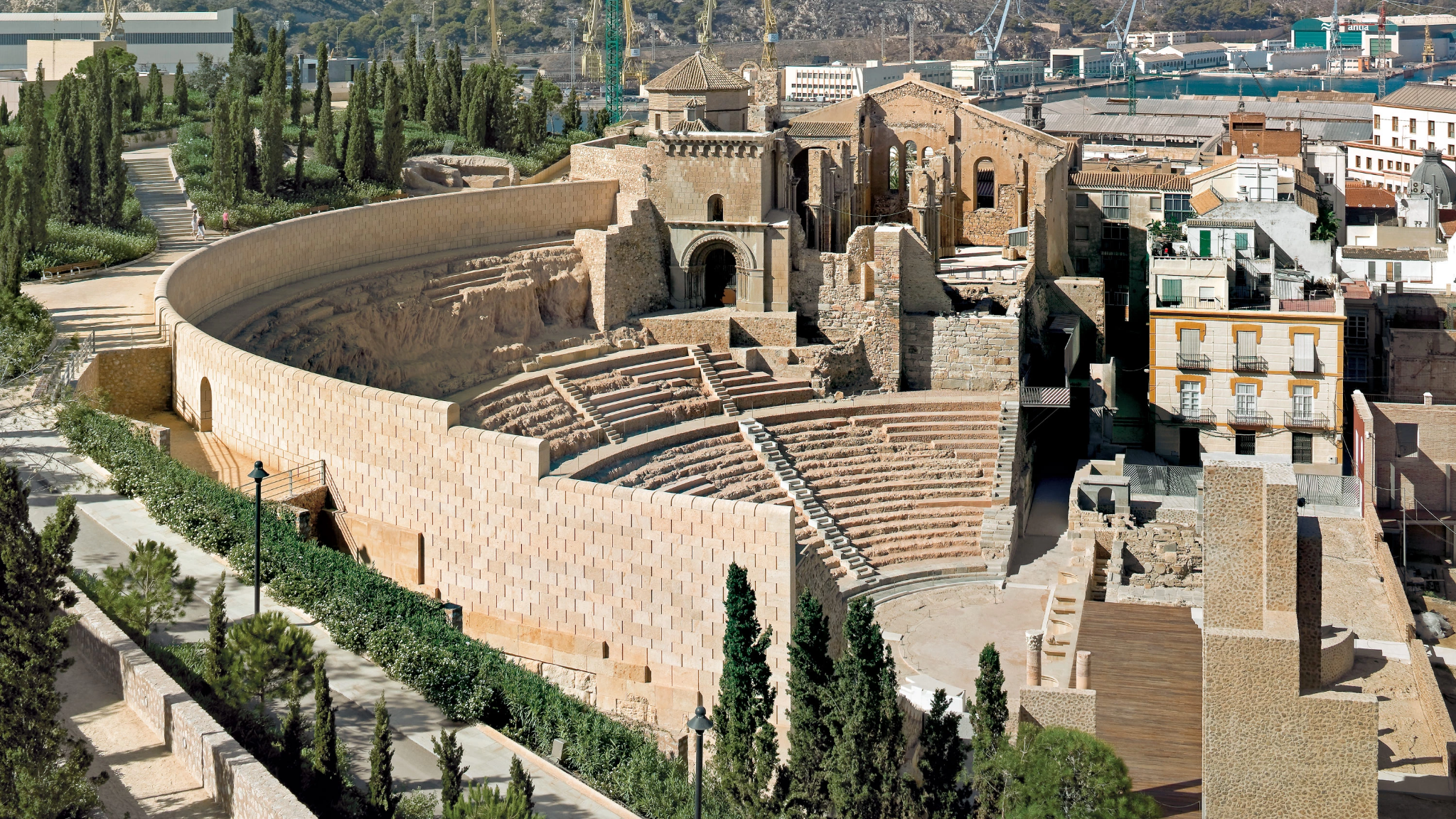
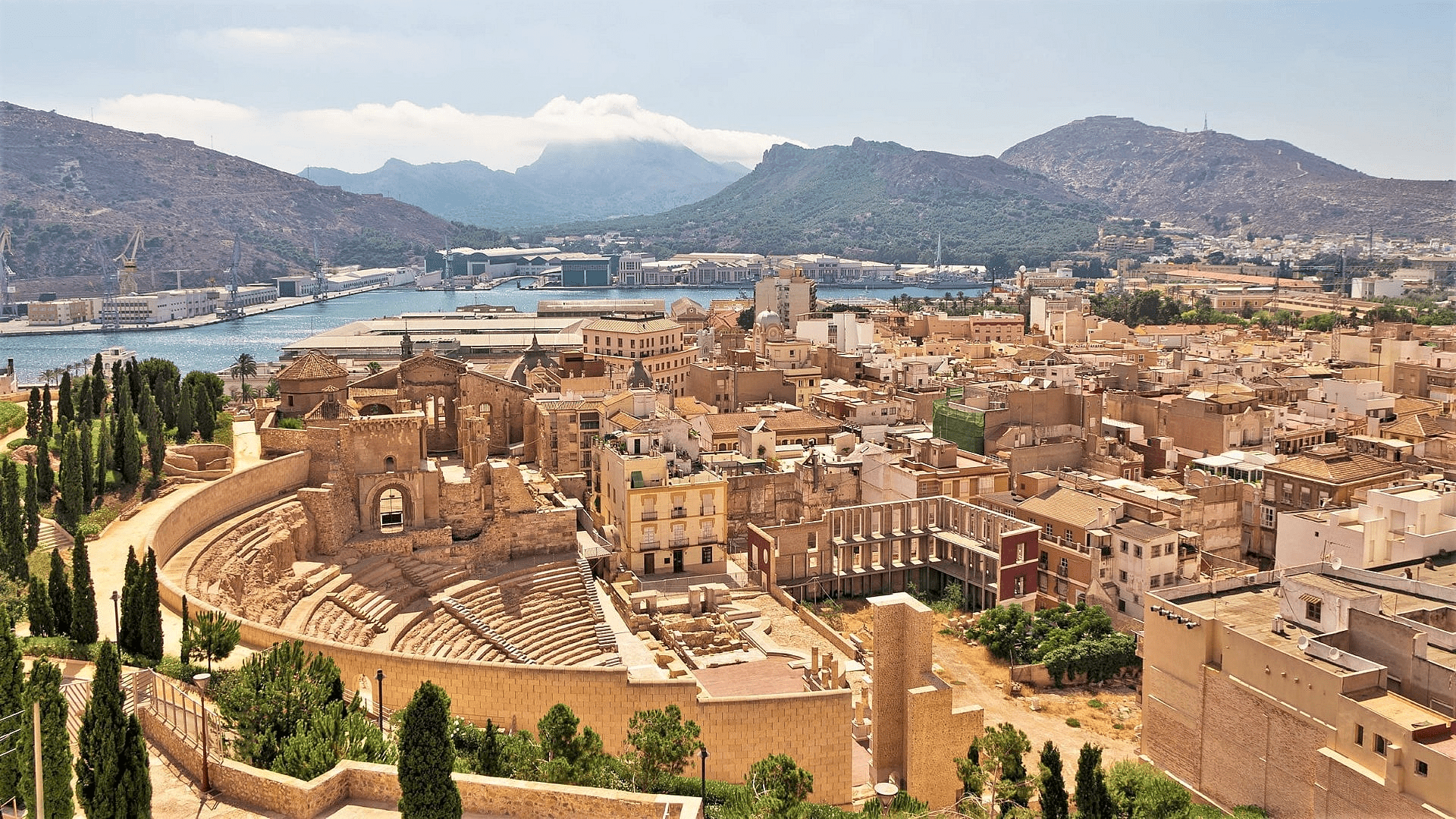
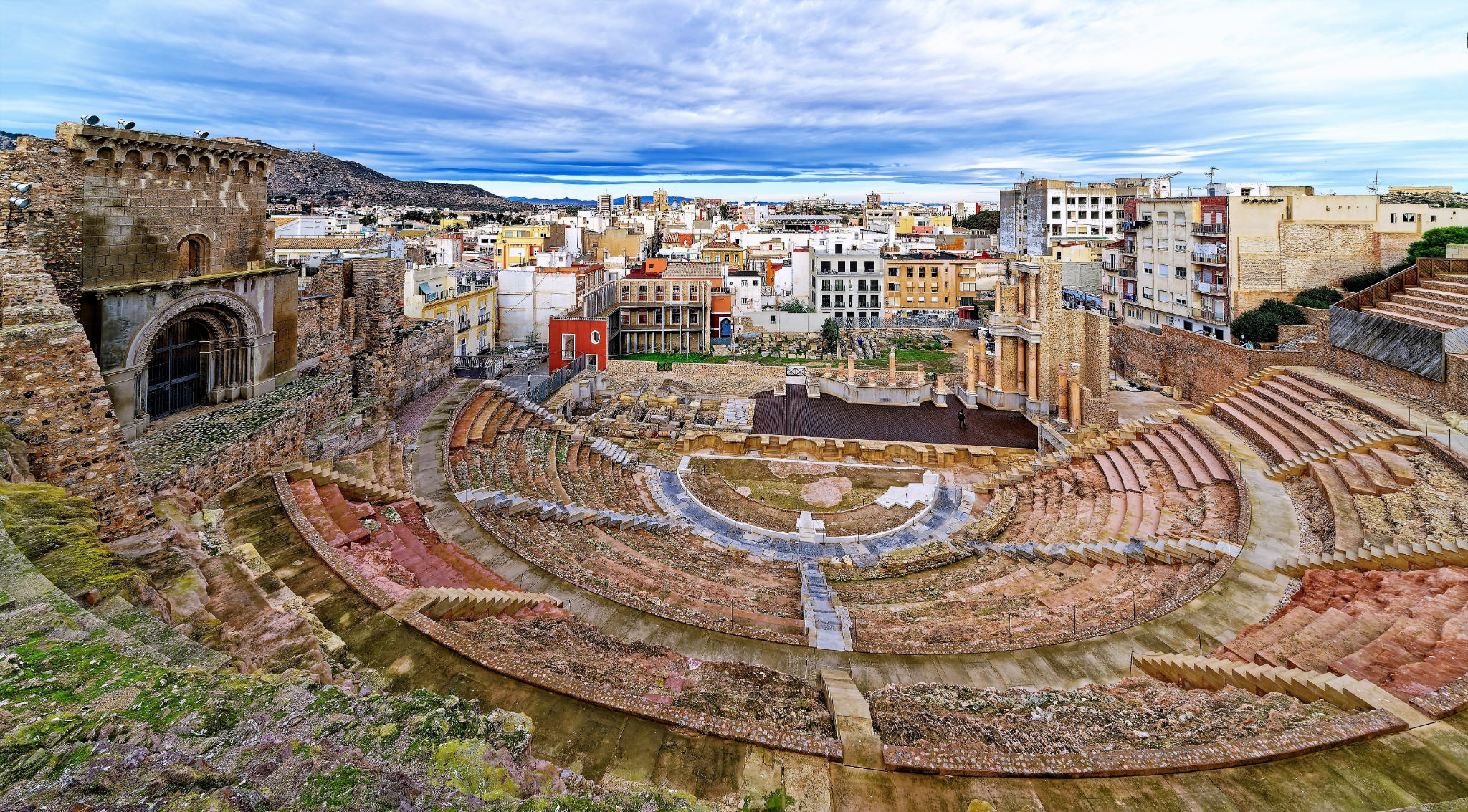
Although the remains of the original structure are still in pretty good shape in one of the town’s most important parts, its construction dates back thousands of years. The original amphitheater was built between 5 and 1 BCE.

Divided into multiple rooms and sections, it was capable of accommodating 6,000 people on the site and the people presenting themselves on the stage. It was a huge construction, especially for that period, and one of the most important of all the Spanish territories as we know it today.

Back in the days when it was built, the theater was located in a place known as Colonia of Cartago Nova, which is now Cartagena, Murcia. Nowadays, it is one of the most visited tourist spots in the region and a must-go if you’re visiting Spain. It’s in the central part of the city, making it even easier to go, regardless of where your accommodation is located.

Facts and Curiosities About Roma Theater Museum

image of the theater with the city on the background

The construction and symbology behind the museum are not the only surprising aspects of this incredible piece of architecture. There are many aspects that contribute to its importance, not only for the city of Cartagena but for the entire world, as the remains of an ancient time.

Here, we will discuss some of these aspects and unveil the hidden secrets of one of Cartagena’s most essential parts. Make sure to take a look to understand this piece of art better, whether you plan on going to Spain or are just curious about this jewelry from the old times.

Here’s everything you need to know before planning a visit to Roman Theatre Museum:

Ticket Prices

image showing the ticket prices to tour the museum and theater

If you plan to tour the museum, it is important to know that it is not free. To enter the museum or the theater itself, you need to pay for the ticket, which also gives you the right to a guided tour around the marble corridors.

There are different tours and ticket tiers you can purchase when visiting the place. Notice that these tickets don’t give you access to the temporary exhibitions or special events on the grounds of the theater. You’ll need to purchase tickets for these events separately on the official website or the official venue where they’re being offered.

When doing the tour around the place, you’ll be guided through the orchestra pit, the abandoned excavations below the stage, and many other interesting facts about the theater. The official guides will also tell you curiosities about the place and its structure, including the Corinthian columns, the excavation process, and many fun facts about this jewel raised centuries ago.

The tour prices can vary from 2 to 6 euros depending on the group you’re going with and each one’s characteristics, including age, disabilities, and other factors. You can visit the museum and theater’s official website to read each detail regarding the pricing system and which ticket type fits the experience you’re looking for.

Renovation Process

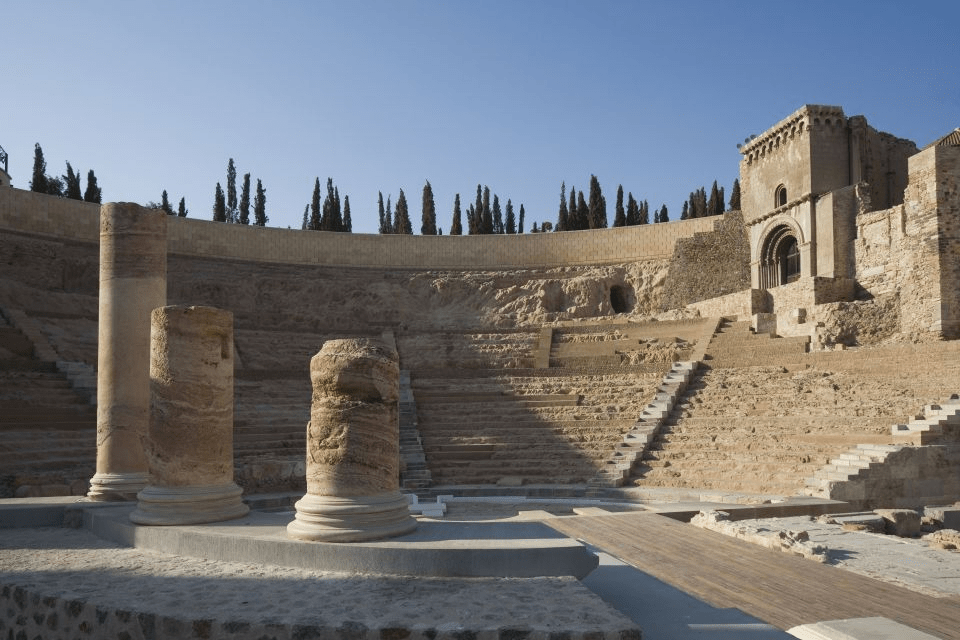
image of inside the roman theater

The theater’s materials and structures are in great shape, from the entrance to the rooms inside the construction. However, to keep such great shape, modern professionals needed a little help.

Some parts of this martyr of the city were destroyed and renovated to keep the building safe and make it last much longer instead of becoming just a ruin in the middle of the town. This process was done in different parts of the city. It involved countless hours of work from architects and archaeologists, as well as performances from many other professionals, to ensure the best result possible.

The museum and theater renovation project, led by the architect Rafael Moneo, took several years to complete. The basic renovations were finished in 2003, while the museum project, designed by the same architect, was finished in 2008.

Once both works were completed, the place started to be occupied once again by the thousands of visitors who came from all over the world to see its glory. Even though some new elements were added to the sectors and the overall building area, they were all done considering the time it was built and the architectural elements of the time. The aesthetics and architecture of the place are still well-established and will make you feel like part of the Roman Empire in every new area you enter.

Shops and Stores Inside

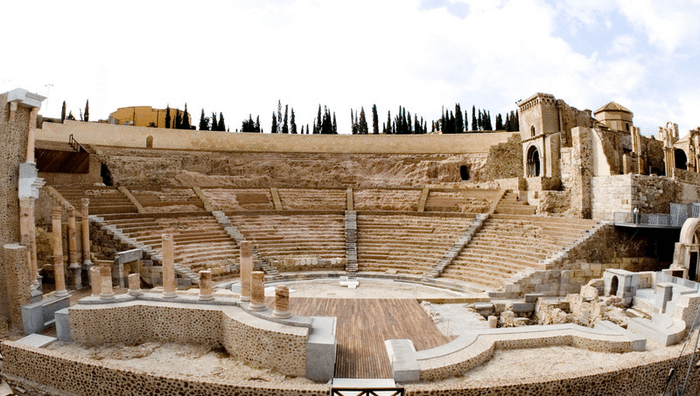
image showing the main stage of the roman theater

If you want to take a piece of this experience home with you, there’s the perfect place for that. Inside the museum, you can also find stores, including the official gift shop, which is ideal for finding souvenirs to give to your friends or purchase for yourself. From shirts to art pieces and keychains, there’s a wide variety of options to choose from and take this unforgettable experience home with you.

However, the souvenir shop is not the only store inside the museum. You can also find a coffee bar where you can rest and drink a delicious coffee while enjoying the beauties this place offers. It is truly a unique experience, and I recommend it if you have the opportunity.

It was one of my favorite parts of the entire tour, not only because of the stunning views around the place but also because of the service quality.

It is essential to highlight that you don’t need to purchase a ticket to access the cafeteria. The place is free to enter and is right next to the Roman Theater.

Near Important Historical Places

image showing the museum and coffee shop from the roman theater

The good thing about Cartagena is that there’s an infinity of possibilities and places to visit. Along with the Roman Theater of Cartagena, you have tons of historical buildings that carry a lot of history and fantastic architecture.

Some of these buildings are the Town Hall, right in front of the museum, and the amazing church Catedral de Santa María la Mayor, which are must-visits if you’re touring the region. It’s the perfect way to mix fun and culture in one of the best places in Europe.

The best part is that you can do this entire tour without using a car to move from one place to another. Everything is basically on the same square, and you can see all of the attractions on the same day, leaving the other ones available to explore the other marvels of this region, including beaches, natural reserves, and many others.

Temporary Activities and Exhibitions

image showing the city of Cartagena along with the roman theater in the middle

If you think the museum and theater are the only places where you can tour and admire the architecture, you’re completely wrong. There’s much to do in the place, including some awesome activities.

During the year, if you’re lucky enough, you’ll find tons of temporary exhibitions around the theater, including even some presentations occasionally. They constantly vary and add even more possibilities to what to do when visiting Cartagena. If you like culture and exploring different kinds of art, this is the perfect place to go. The price of these exhibitions also varies, and some can even be free, so check the website and look at these numbers.

Along with the exhibitions, the Roman Theater also promotes educational workshops throughout the months, making it one of the best alternatives if you have kids. They offer activities for all ages and tastes, so you’ll definitely find the perfect one for you and your family.

The activities have limited capacity, so check this out with the place’s administration. Like the exhibitions, the workshops can be charged, and their prices depend on the activity.

Accessibility

image of the ruins of the roman museum along with the city on the background

If you’re worried about accessibility, you’ll be happy to know that most places are adapted to welcome people with disabilities. Notice that this doesn’t apply to every region, especially when it comes to the theater, and you might find some stairs along the way. The good news is that, even in those regions, you’ll have tour guides to help you have the best experience possible.

When it comes to the museum, every room is adapted and will provide everything you need to move around the rooms without any issues or surprises. It’s the perfect place for everyone to enjoy.

Also, don’t worry about your Spanish. Every guide and worker knows how to speak English and will provide the information you want, whether it’s a question or anything else.

Enjoy Your Private Paradise in Villa Murcia!

Piscina com água

O conteúdo gerado por IA pode estar incorreto.

Looking for the perfect place to stay in Murcia? We’ve got just the spot for you!

Villa Murcia – Your Private Paradise

Wake up to coffee on a sun-drenched terrace, unwind in a warm jacuzzi after a day of exploring, and end your evenings with dinners in the summer kitchen. Nestled in charming Santiago de la Ribera, Villa Murcia offers more than just a holiday—it’s your personal oasis of comfort, style, and unforgettable moments.

Highlights:
✔ Spacious living room with a large sofa and open kitchen – perfect for shared memories
✔ Three elegant, air-conditioned bedrooms with private terraces – your peaceful retreat
✔ Extra fold-out sofa in the living room – ideal for additional guests

Whether it’s a romantic escape, a family getaway, or a relaxing break with friends – Villa Murcia is your dream stay.

Book now and experience the magic of the Spanish sun!

Time to Plan Your Visit to the Past

picture of one of the attractions inside the museum showing art pieces from the original theater

Cartagena is home to some of the most interesting historical buildings in Spain, and the Roman Theater is definitely one of the highlights of this region. Featuring the original architecture of thousands of years ago and modern elements to enhance the experience, it is the perfect tourism destination if you’re looking for a cultural experience.

The prices are meager, and there are many possibilities inside the place, including workshops, exhibitions, and many curiosities to discover. Don’t forget to also take a look at the shop and take a piece from this incredible experience home.

Now it’s time to organize your trip to Murcia and pack your luggage to visit this stunning relic from the past. It’s an experience that will surely surprise you and stay in your head forever.

Read More
Carthaginians And Romans Festival Cartagena

Carthaginians and Romans Festival: History in Cartagena

Since its foundation, the “Fiestas de Carthagineses y Romanos” has evolved from a local event into a celebration of great cultural and tourist importance.

They preserve and promote Cartagena’s history and attract thousands of visitors annually, strengthening the city’s cultural identity and promoting regional tourism.

I had the opportunity to be there during the ten days of the festival, and in this article, I will discuss its origins and main events that were the highlight of my experience.

Table of Contents

What Is The Cartagena Festival?

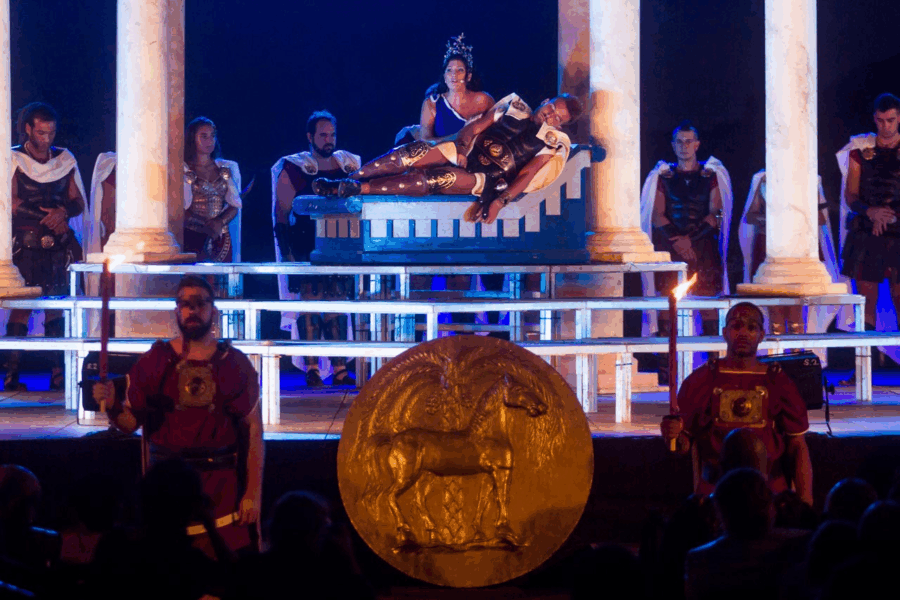
Carthaginians And Romans Festival - dramatic display and then march through town to an encampment
Cartagineses Y Romanos Oficcial website

The “Fiestas de Carthagineses y Romanos” is an annual historical celebration in Cartagena, Murcia, Spain. It typically takes place in the last ten days of September.

It celebrates the city’s ancient history, specifically the events of the Second Punic War and the founding of Qart Hadasht (Carthagena’s original name) by the Carthaginians.

History and Origins

On July 25, 1972, the tragedy of the last Maritime Night of the Carmen and Santiago festivals in Cartagena resulted in ten deaths when the “Río Tajo” float sank, leading the city to suspend some popular festivals for a long time. In 1989, a group of residents, led by the Cartagena Tourist Initiatives Center, began efforts to revive the lost tradition.

After a survey of citizens, the festivities were established for the second half of September. The theme was the confrontation between Romans and Carthaginians in the Second Punic War. The first edition of 1990 had around 600 participants.

The festival recreates historical events; during these days, participants relive the rivalry between the Carthaginians and the Romans through various activities and role-plays.

In the second year of the “Fiestas de Carthagineses y Romanos,” the event grew by adding five new troops and five new legions, forcing the camp to move to the Artillery Park in the city centre of Cartagena.

In 1992, the parties’ popularity grew, attracting nine extra troops and seven legions, leading to a similar flow to the nearby Eroski Shopping Mall.

In 1993, the event’s structure consolidated with the advent of the Federation of Troops and Legions, enhancing sports organization and coordination.

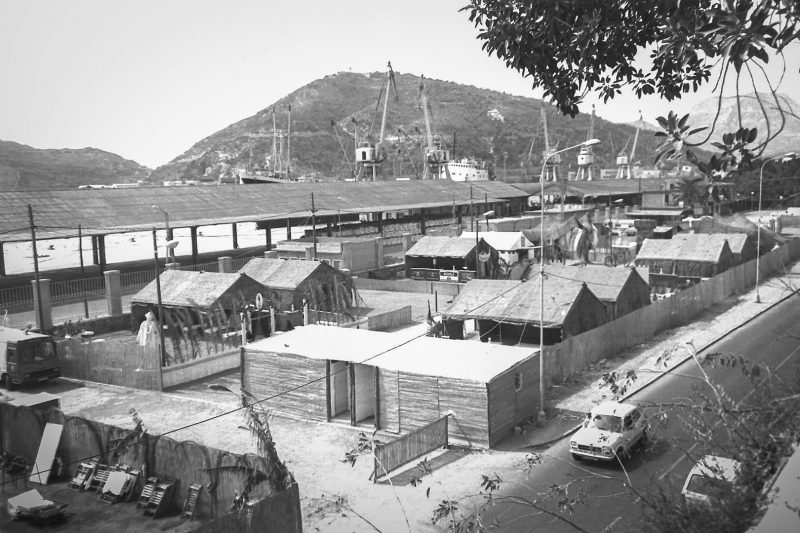
Camps are another important tradition in Carthaginians And Romans Festival
Cartagineses Y Romanos Oficcial website

In 1999, the festivals were recognized and declared Festivals of National Tourist Interest. In 2001, the “Acampamento” (Camping) fairground was established near the Cartagonova Municipal Stadium. In 2017, after years of effort from the participants and the event organization, the Carthaginians and Romans Festival was declared “Carthaginians and Romans Fiesta Festivity of International Tourist Interest.”

Activities And Events

tents at the Festival Camp
Cartagineses Y Romanos Oficcial website

In addition to historical reenactments, the festivals also offer a wide range of activities for all audiences. Most festivities occur in the Old Town’s Plaza del Ayuntamiento and Plaza de San Anton before proceeding to the Festival Camp across the river. Among the highlights are:

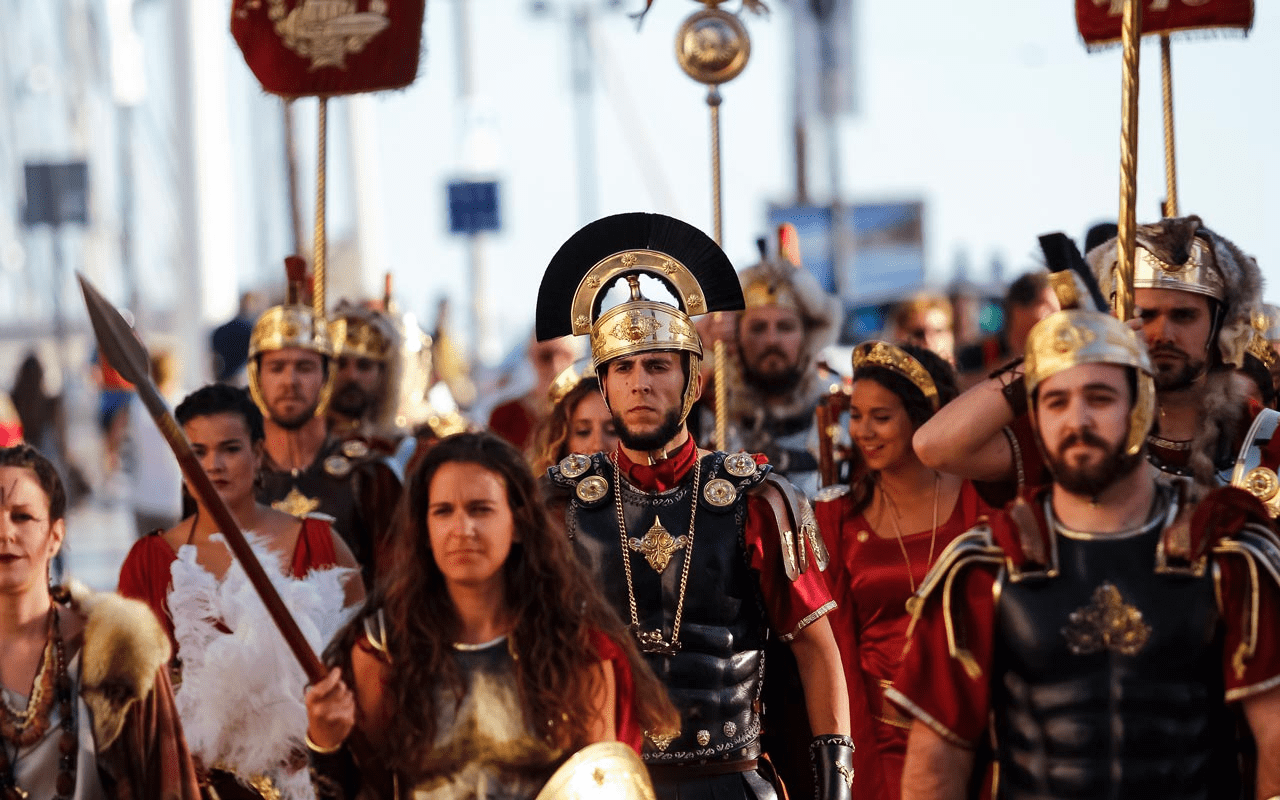
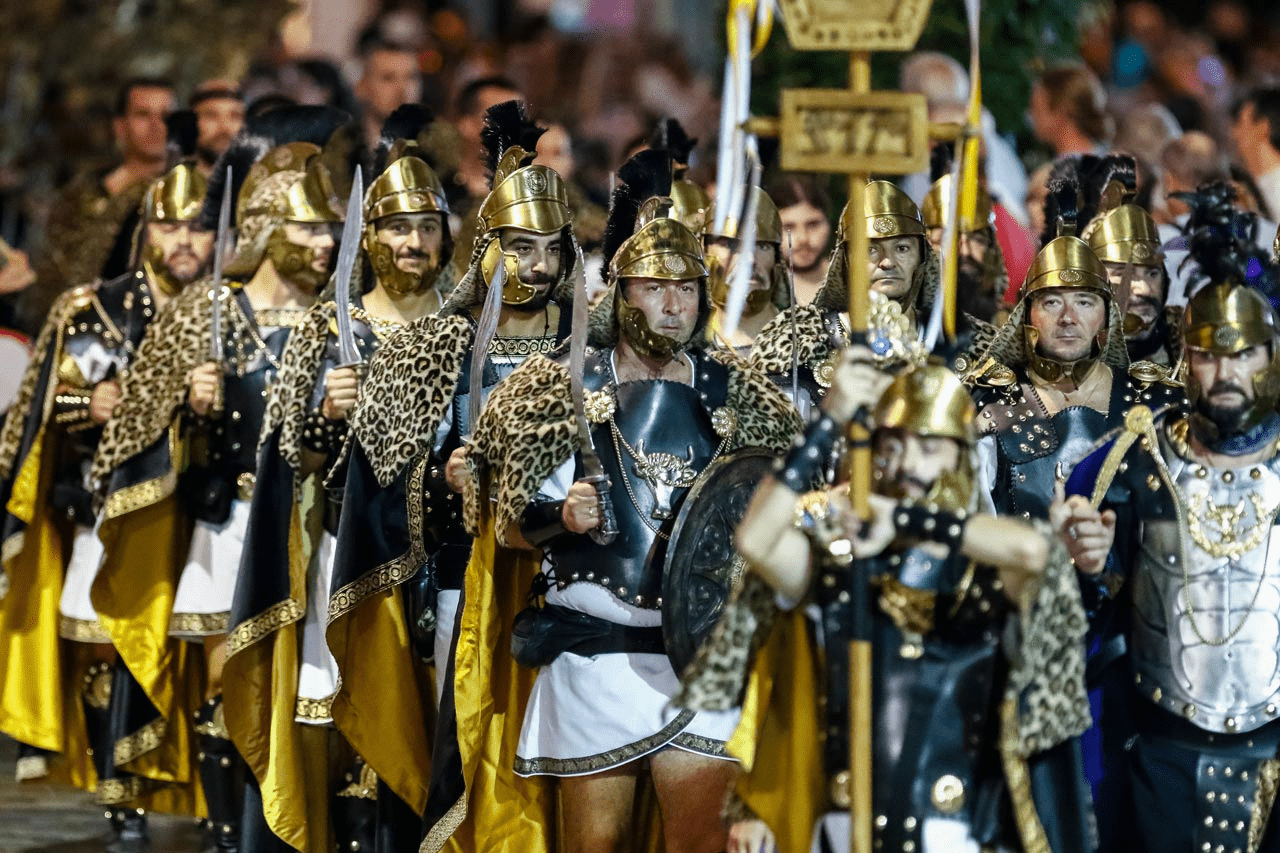
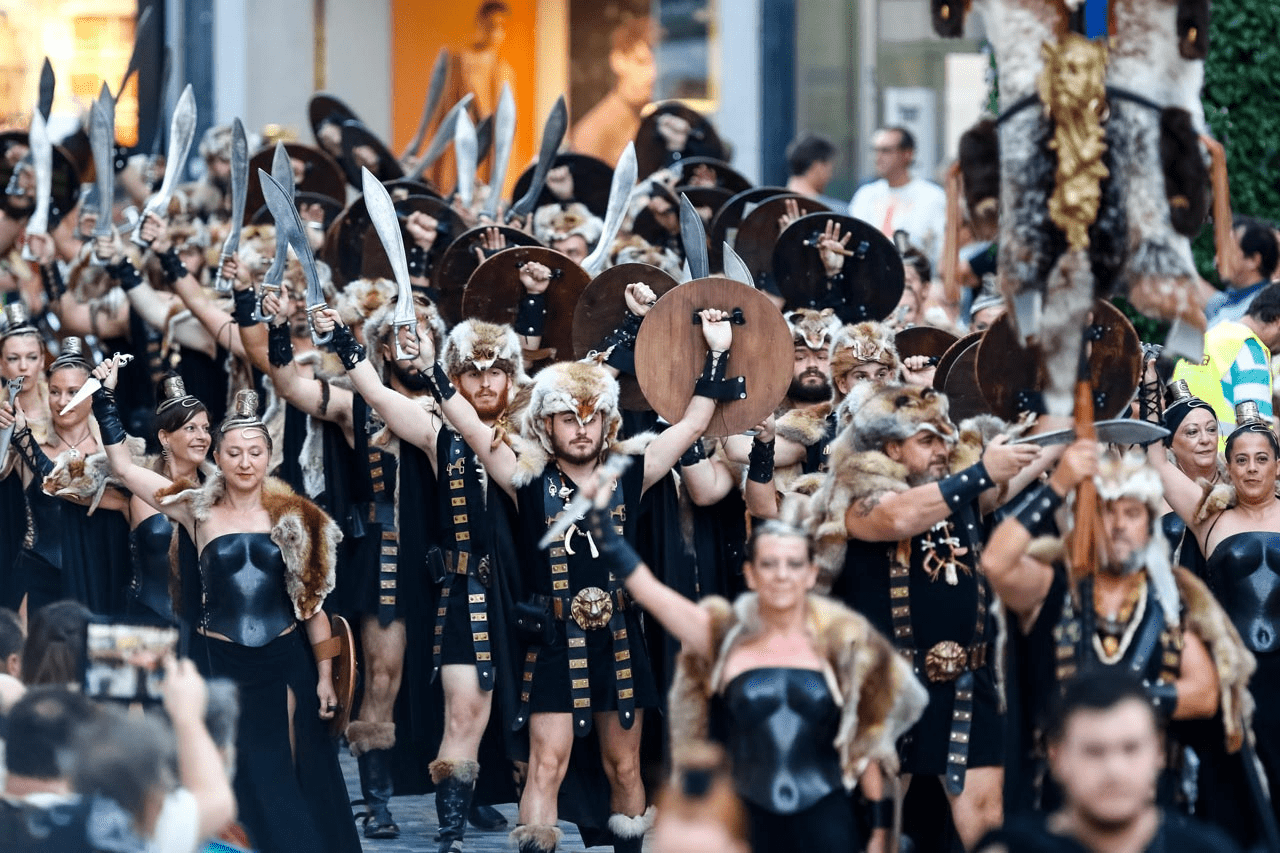
  • Historical Parades: Carthaginian and Roman troops and sides hold parades in period costumes, depicting soldiers, nobles, and common citizens.
  • Battles and Reenactments: Reenactments of historical battles and significant events from the Second Punic War.
  • Iberian Peninsula Weddings: A traditional recreation of Iberian weddings, showing ancient customs and rituals.
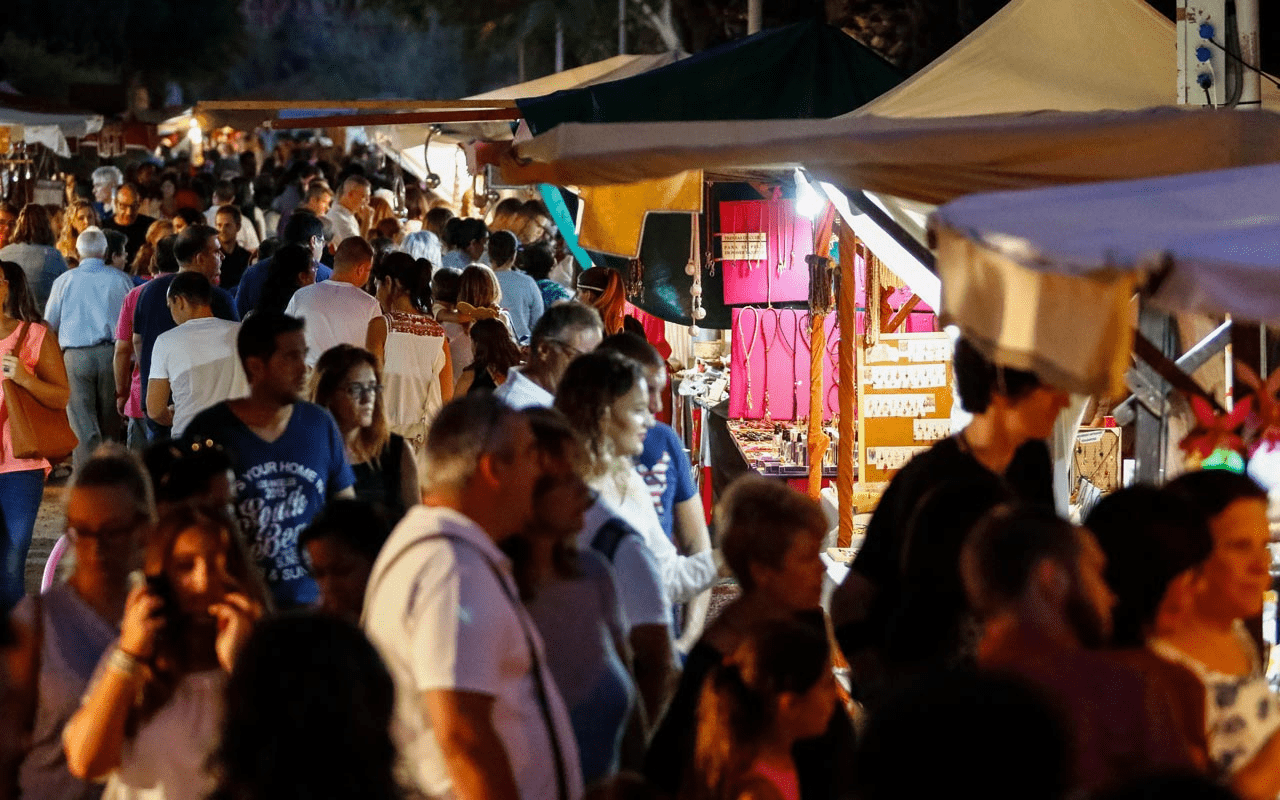
  • Market of the time: A market where you can find crafts, food, and typical period products. For full immersion, there are Roman-themed food tents at the Festival Camp where you can fill your belly with grilled meats and wine.
  • Games and Competitions: Sports games and competitions that recreate ancient armies’ military training and skills.

Ten Days Of Festival

Carthaginians And Romans Festival - Staging
Cartagineses Y Romanos Oficcial website

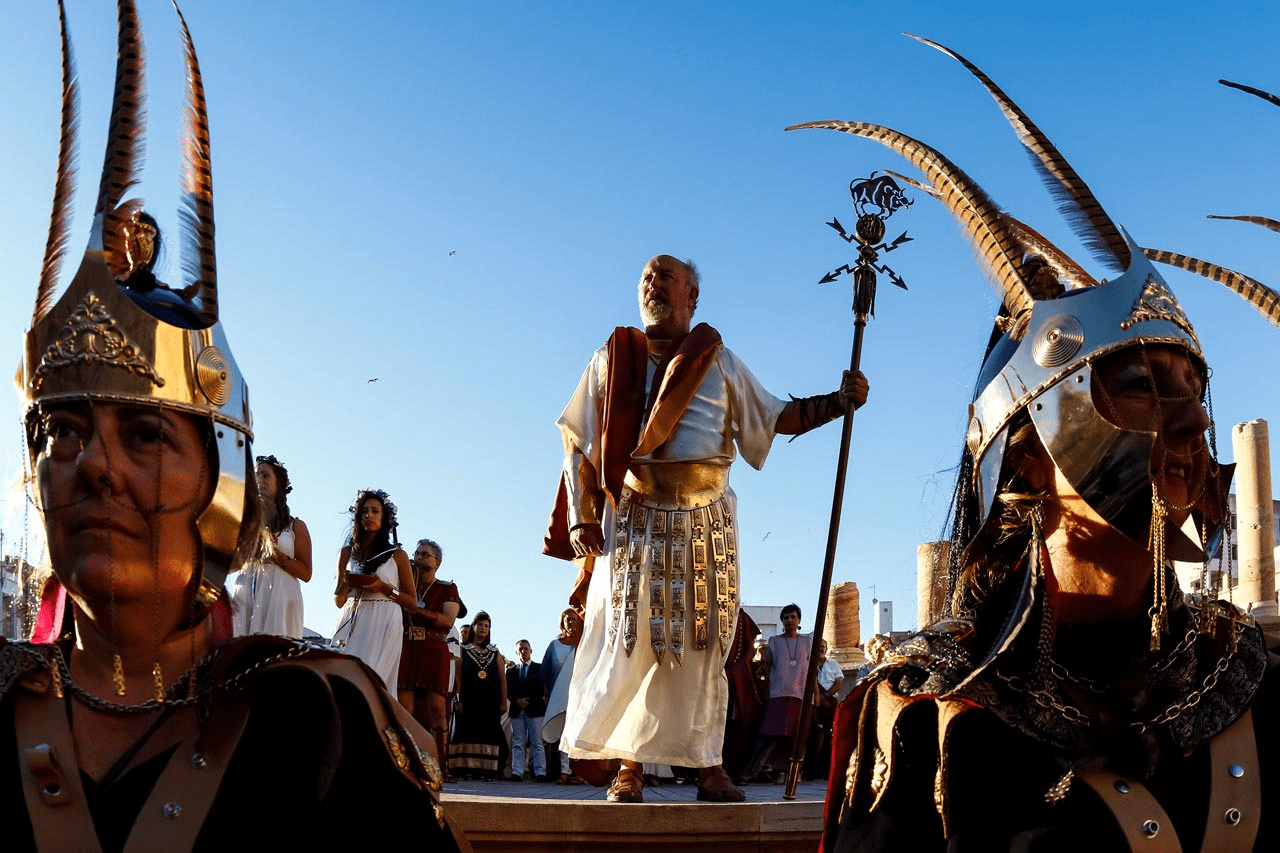
With 25 Carthaginian troops and 25 Roman legions, the most important events that took place in the city between 223 BC and 209 BC are staged for 10 days alongside the characters of Hannibal and his conqueror Publius Cornelius Scipio, nicknamed “The African.”

With rigorous staging, extraordinary costumes and sets, and surprising weapons, we witnessed one of the most exciting celebrations in Murcia. Events are often staged in the same places where they occurred in the past. The historical recreations begin with the creation of Qart-Hadasht, a city founded by the Carthaginians with Hasdrubal in command.

Main Acts

More than a hundred events were carried out during the Carthaginese and Roman Fiestas, but some stand out as the Principal Acts.

These events, supported by the Federación de Tropas y Legiones, the Roman Empire, and the Carthaginés Council, bring to life the history of Cartagena during the Second Punic War. Below, I will highlight my five favorite acts.

Pregonillo, Encendido del Fuego Sagrado y Pregón de Fiestas

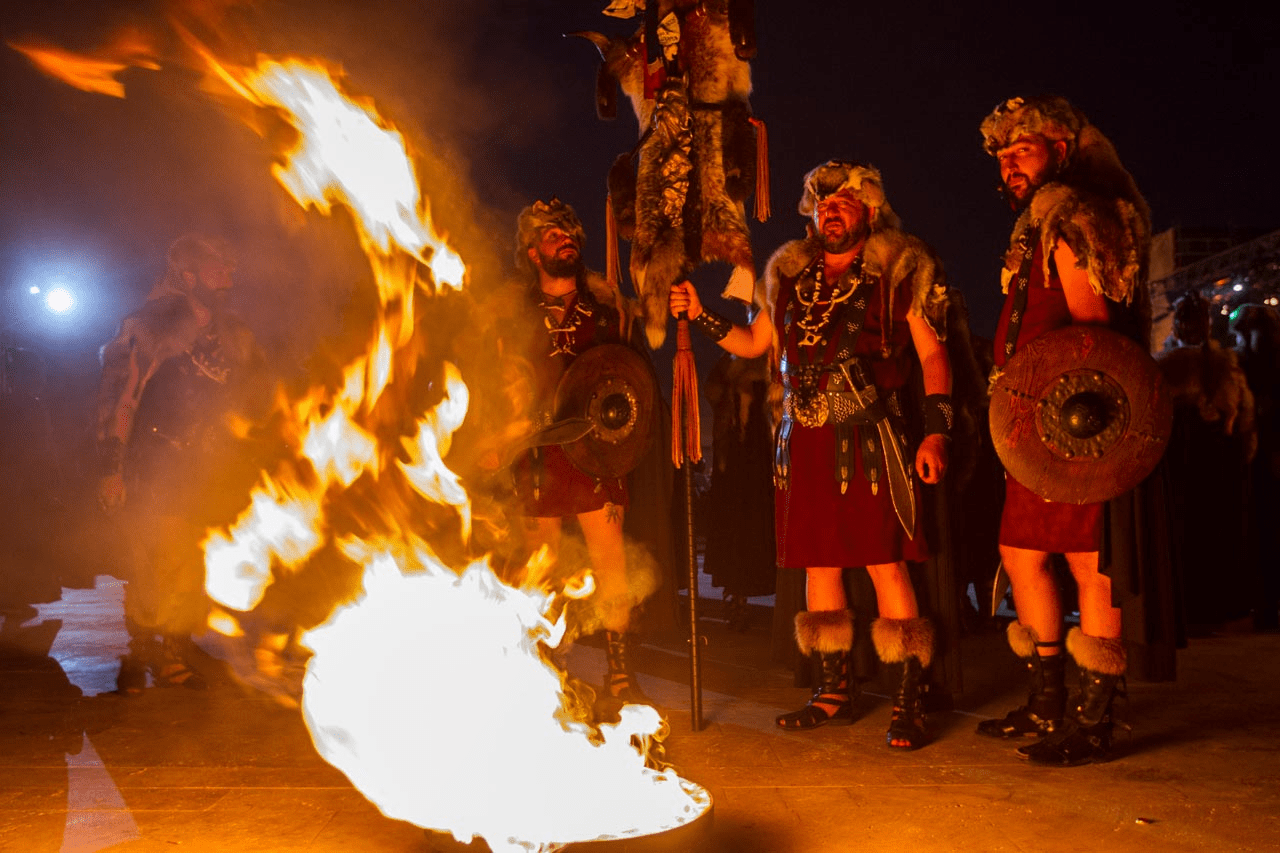
It all begins on the first Friday. Pregonillo begins the celebrations with a Pregonero dressed in character announcing the event on the city streets. Then, the Traslado del Fuego Sagrado (Transfer of the Sacred Fire) visits historical sites, bringing the Fuego Sagrado from different places in the Region of Murcia.

The Encendido del Fuego Sagrado officially begins the festivities, with ritual dances and prayers thrown into the wind to protect the festive days.

Pregonero dressed in character announcing the event
Cartagineses Y Romanos Oficcial website

El Traslado del Fuego Sagrado travels through the most emblematic places in Cartagena’s history: El Teatro Romano, El Templo de Isis, and El Foro until arriving at Mons Arx Asdrubalis.

This act changes yearly, telling new stories, adding new locations, or realizing the Iter Ignis race, with which the Sacred Fire is traced from other places in the Region of Murcia.

event's official opening.
Cartagineses Y Romanos Oficcial website

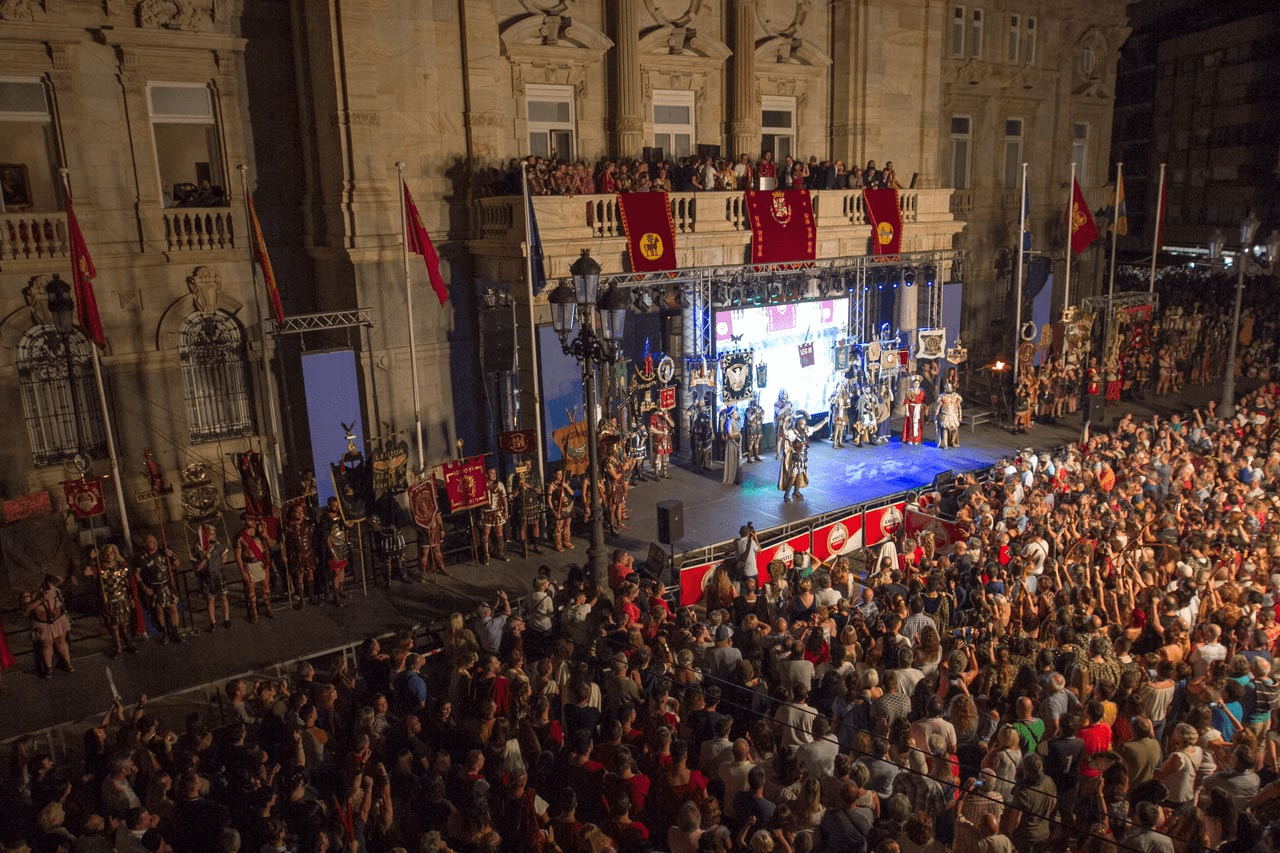
Finally, they give speeches and awards at the Pregón de las Fiestas, which takes place at the Palacio Consistorial. Then, people march towards the festive camp, with the Fuego Sagrado, marking the event’s official opening.

Fundación de Qart Hadasht y Fundación Infantil

Fundação Infantil (Children’s Foundation)
Cartagineses Y Romanos Oficcial website

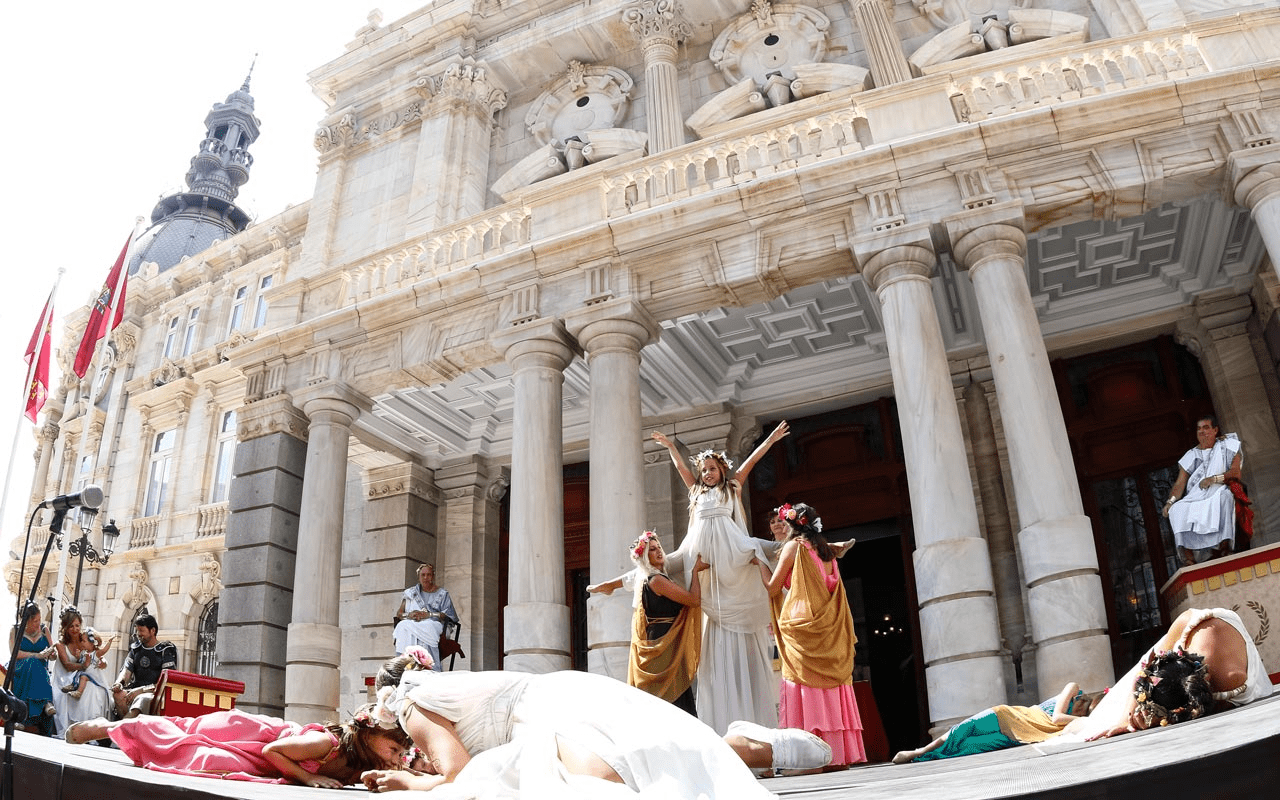
On the first Saturday of the festivities, there is a representation of the Fundação Infantil (Children’s Foundation) of the city, a preamble to the historical event of the Foundation Qart-Hadast (which happens at night). This report tells the history of Mastia.

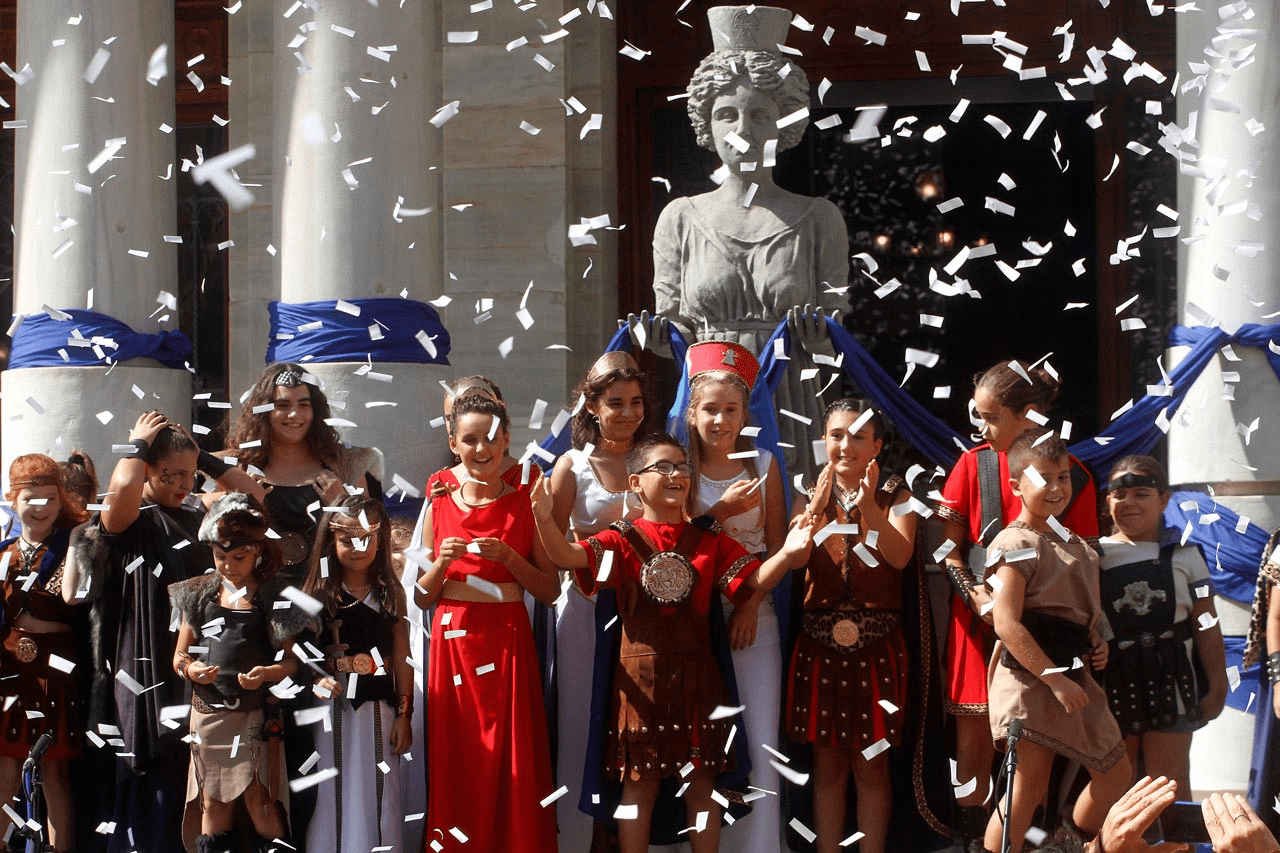
The Qart-Hadast Foundation is the initial start of the events and tells the story of the Barca family from the death of patriarch Amílcar to the Qart-Hadast foundation by the Carthaginian general Hasdrúbal Xanthus in 227 BC. The story is very well told by all the participants, and everything ends up becoming very cute when you see the children acting it out.


It reflects family interests, the means of conquest, death, and the struggle for freedom, thus marking the beginning of the festivities with a relevant historical context.

Desembarco de la Armada Romana, La Batalla por la Conquista de Qart Hadasht, Desfile de la Victoria

Carthaginians And Romans Festival - Desfile de la Victoria
Cartagineses Y Romanos Oficcial website

On the second Friday of the festivities, an exciting Maritime Sports Regatta takes place, with Carthaginian and Roman ships competing in the Port of Cartagena. Next, the Landing of the Roman Armada brings together the Roman naval forces led by Admiral Gaius Laelius, who will join the land legions led by General Publius Cornelius Scipio to attack Qart-Hadast.

Fuego Sacrado in Carthaginians And Romans Festival
Cartagineses Y Romanos Oficcial website

The Great Battle at Qart-Hadast is the culmination of the day, representing the clashes between the Carthaginian and Roman armies. It ends with the city’s capture by Publius Cornelius Scipio in 209 BC. A Great Roman Military March celebrates the triumphant entry of the Roman legions into what is now called New Carthage, marking the conquest of Cartagena.

Homenaje a los Caídos, Liberación de Rehenes, Entrega de la Doble Corona Mural y Desfile General

The Homage to the Fallen is on the second Saturday of the festivities. Legio IV Quinto Trebelio pays tribute to the Roman soldiers killed in battle, placing a laurel wreath at the Torre Ciega funerary monument. After the surrender of the Carthaginian general Magón, the Victory of Rome is staged with the Liberation of the Hostages of Carthage, the delivery of the Double Mural Crown, and the proclamation of the Law of Rome.

Carthaginians And Romans Festival - Parade
Cartagineses Y Romanos Oficcial website

In the General Parade of Troops and Legions, all participants walk through the city streets, whether on the Carthaginian or Roman side, in a spectacle that involves music, drums, carts, and war machines. The parade ends in the festive area, providing a unique opportunity to see all the festive groups together.

Circo Romano Y Apagado Del Fuego Sagrado

 chariot races and gladiatorial fights
Cartagineses Y Romanos Oficcial website

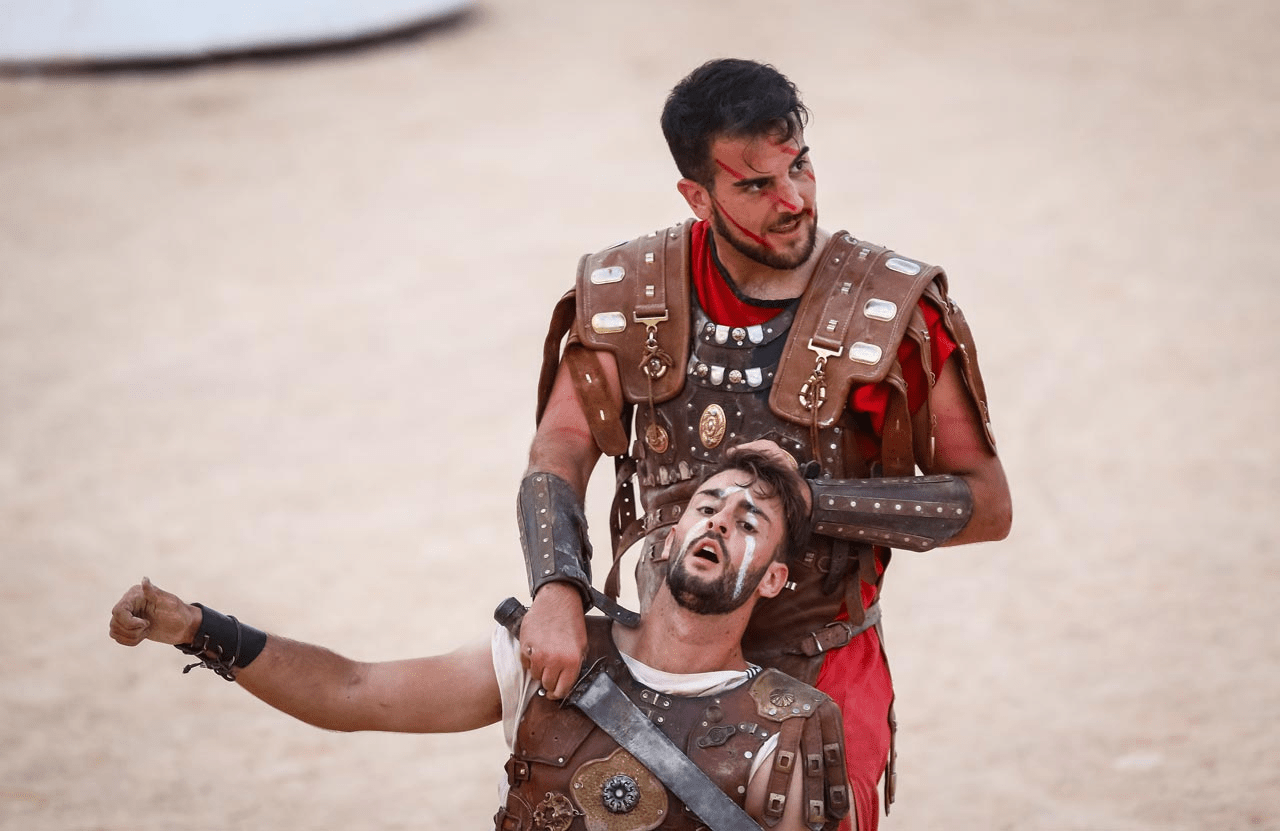
The festivities conclude on the second Sunday with the great Roman Circus, featuring gladiators and acrobatics. The Apagado del Fuego Sagrado involves extinguishing the sacred fire, symbolizing the Roman victory and the end of the festivities.

There are also other main events, such as:

  • The Wedding of Hannibal and Himilce: This day represents the nuptials of Carthaginian general Hannibal and the Iberian princess Himilce. Revelers can also choose to “get married” in a Carthaginian or Celtic wedding.
  • Oracle of the Diosa Tanit: A ritual that invokes the deity Tanit to seek divine guidance and protection.
  • Pruebas de Aspar, Ludi Romano, Feriae Latino y Comicios Centuriados: These were various competitions and rituals that reflected the culture and customs of the time. The Carthaginian and Roman streets of the Festival Camp host competitions and games for children. You Can also find Roman games, Latin festivals, and centuriated assemblies,
  • Disembarkation of the Carthaginian Armada fleet, Hiring of Mercenaries, and Hannibal’s March. On this day, all the troops and legions march through the city.
  • Dies Lustricus, Destruction of Sagunto, and Sesión Plenaria del Senado de Rome trigger significant historical events. On this day, one of the things I liked the most was that the youngest and newest members of the fiestas groups were welcomed into their festival families in a symbolic act in front of the Town Hall.

From the Pregón to the Erasure, each day is full of activities involving tourists and partygoers, who immerse themselves in the city’s history. A spectacular Castillo de Fuegos Artificiales marks the end of the festivities, as the work of thousands of festival-goers begins to make next year even greater.

All these events are fascinating to witness and help you understand the rich history of the festivities. The best part is that most events are free (while there are charges for seats at some events, you can always stand for free).

Enjoy Your Private Paradise in Villa Murcia!

Piscina com água

O conteúdo gerado por IA pode estar incorreto.

Looking for the perfect place to stay in Murcia? We’ve got just the spot for you!

Villa Murcia – Your Private Paradise

Wake up to coffee on a sun-drenched terrace, unwind in a warm jacuzzi after a day of exploring, and end your evenings with dinners in the summer kitchen. Nestled in charming Santiago de la Ribera, Villa Murcia offers more than just a holiday—it’s your personal oasis of comfort, style, and unforgettable moments.

Highlights:
✔ Spacious living room with a large sofa and open kitchen – perfect for shared memories
✔ Three elegant, air-conditioned bedrooms with private terraces – your peaceful retreat
✔ Extra fold-out sofa in the living room – ideal for additional guests

Whether it’s a romantic escape, a family getaway, or a relaxing break with friends – Villa Murcia is your dream stay.

Book now and experience the magic of the Spanish sun!

The Remarkable City Of Cartagena

Cartagena is a city well worth visiting. Its historic port is full of boats and ships that testify to its rich maritime history. Additionally, museums offer a fascinating insight into the city’s past, including the Roman Theatre and exhibit dedicated to the goddess Tanit.

During your visit, you can witness exciting historical places celebrating and marking past triumphs. The surrounding hills provide stunning views of the coast and city, completing the unique experience.

If you ever decide to visit Cartagena, it is well worth exploring the city. Some points I visited that were worth it were the Roman Theater, the Roman Forum, and the Muralla Púnica (Punic Wall). Once there, you can take tour buses to see the city’s many historic sites.

Carthaginians And Romans Festival: A Unique Experience

Carthaginians And Romans FestivalTurismo E Region de Murcia

For ten days, Cartagena and its inhabitants dress up in history and relive it, remembering the exploits of the heroes of Carthage and Rome with this unforgettable experience, in which the city’s history is taken to the streets. It is worth visiting the town during this period to experience this unique celebration, which is full of history, spectacle, and the eternal spirit of camaraderie. If you plan to go to Cartagena someday, be sure to consider it at this time of year. I’m sure you won’t regret it!

Read More
Caballos del Vino | An Event You Should Visit in the Murcia Region

Caballos del Vino | An Event You Should Visit in the Murcia Region

Spain, especially the region of Murcia, features numerous annual celebrations that reflect the heart of the country’s different places and attract thousands of visitors each year. The Sanfermines of Pamplona and the Fallas of Valencia are two great examples of this.

Yet another great celebration is Caballos del Vino, an event that combines an ancient and iconic religious chapter with the area’s cultural heritage. This celebration involves a competition in which horses run down a slope to emulate what happened a thousand years ago, together with other events and activities that fill the city with joy and jubilee.

Below, we reveal the most important aspects of this majestic festival, which is covered in mysticism, colors, beautiful clothing, good food, and golden pieces of art. So, let’s discover the secrets of this traditional festivity.

Table of Contents:

What Is Caballos del Vino?

Cabalos del Vino festivity

Caballos del Vino – Wine Horses, in English — is a Spanish festival celebrated from May 1 to 2. This unique celebration is part of the festivities in honour of Las Fiestas en Honor a la Santísima y Vera Cruz, a crucial relic reflecting the town’s and its locals’ Christian spirit. This event, in particular, celebrates an ancient religious conflict between the Templars and the Moors of Granada. The Templars used horses to break the siege of Caravaca castle carried out by the Moors.

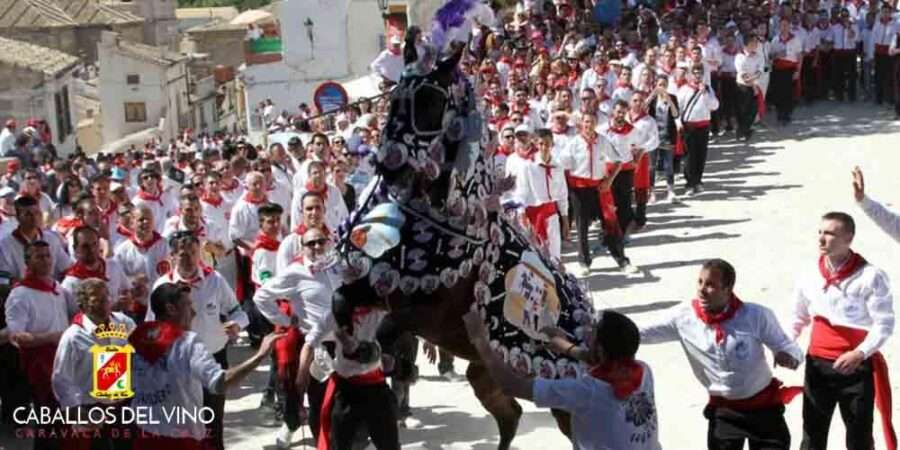
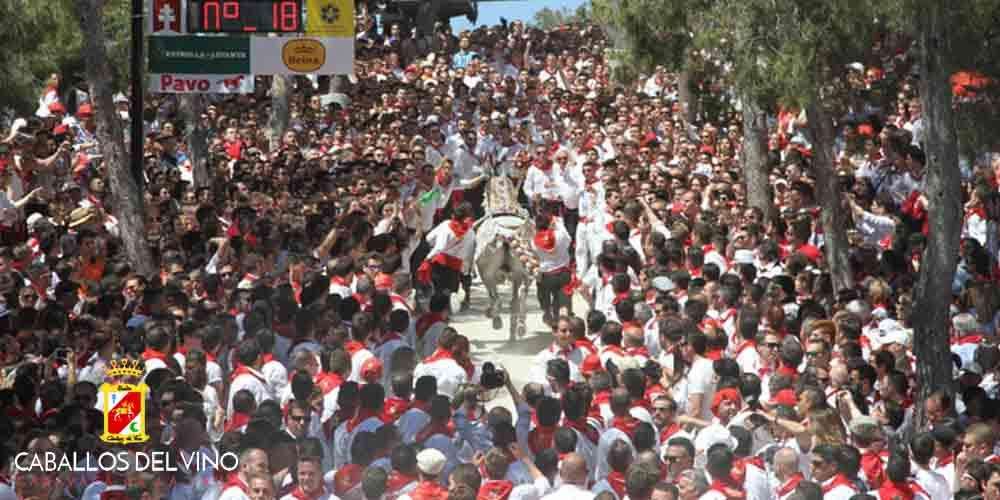
This festival is organized by the Bando de los Caballos del Vino, a federation made up of several groups of horse lovers called Peñas. Still, all the celebrations that take place over the three days attract thousands of people around the world. All people who attend the events participate vigorously in the celebrations. Crowds dressed in white shirts and red scarves watch exquisitely dressed horses and their handlers racing down the steep streets.

The vast majority of visitors arrive for only one day, May 2, to see the famous wine horse race, which takes place on the morning of the 2nd.

The festival has been part of the UNESCO Intangible Cultural Heritage of Humanity since 2020.

Where Does Caballos del Vino Take Place?

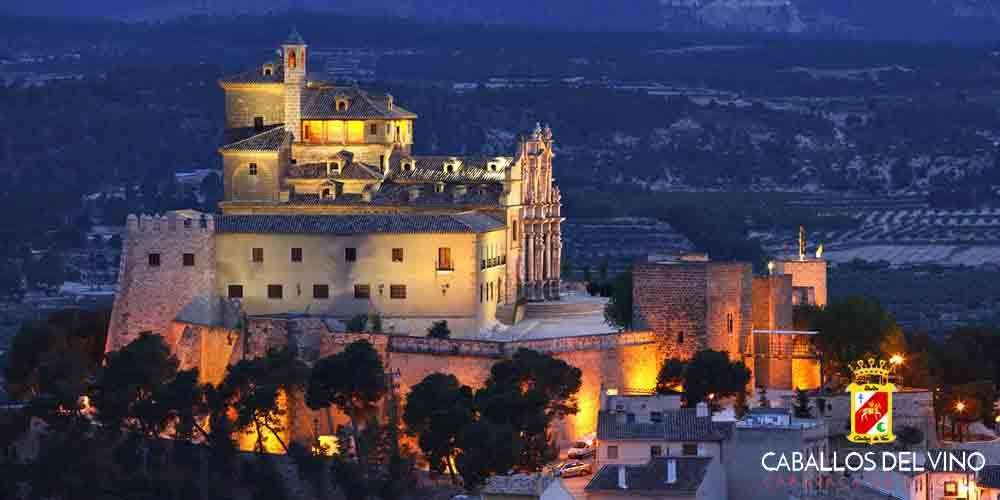
The castle of Caravaca de la Cruz

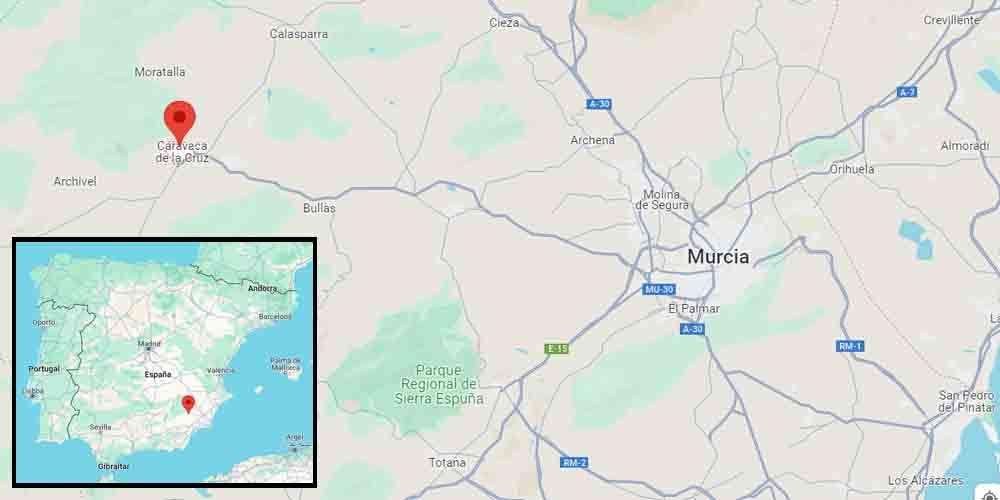
The Caballos del Vino celebration takes place in Caravaca de la Cruz, a small town in the region of Murcia, Spain. It is 60 kilometers west of Murcia, and you can easily get there by car, taking the first-class RM-15 road.

The location of Caravaca de la Cruz

By car or taxi, you can reach Caravaca de la Cruz in forty minutes from Murcia International Airport. The city has everything you need for a magnificent stay alone or in company.

What Is the History Behind the Caballos de Vino Celebration?

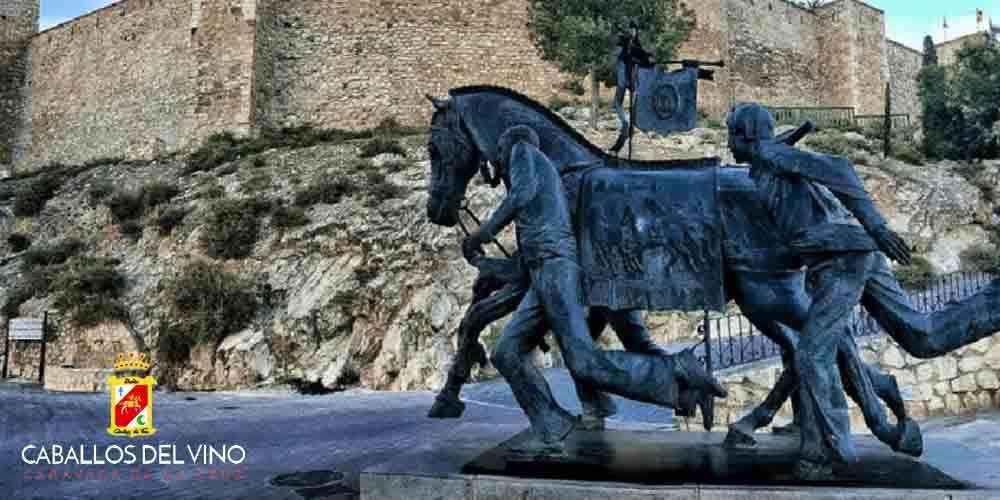
A statue of the horse race in the Caballos de Vino

This event gained a lot of popularity during the Middle Ages. At that time, the inhabitants of Caravaca de la Cruz began to celebrate that important date timidly. Over time, the event became held annually. At that time, locals made their way up to the church and castle atop the hill at 2:00 p.m., overlooking the town.

However, the celebration became what it is today in the 18th century. At that time, all events took place in the two days of celebration. At first, women made cloaks with quilts and trousseaus and then gave away the gold and silk cloaks, which may have cost thousands of euros.

Los Caballos del Vino Itinerary

Although this special occasion widely celebrates the horse race and most of the crowd comes to the city to see this event, other spectacles are worth seeing.

May 1

  • Caballos a pelo (bareback horses). A jury assesses the bearing, coat, mane, movements, etc., of horses that participate in the festivities and races.
  • Cloaks and harnesses. People can visit and witness special collections of cloaks and harnesses trainers use to cover their horses.

May 2

  • Grooming and harnesses. Horses wander more than forty places in the city from day to night, allowing visitors to see every composition and art piece in detail.
  • Fiesta Mayor a la Santísima y Vera Cruz de Caravaca. In this celebration, horses wander through the streets of the city in cloaks embroidered with gold and silk.
  • Horse race. This famous horse race of the Caballos del Vino takes place in La Cuesta de la Simona and then in La Cuesta del Castillo (the castle entrance, which has a steep slope). In this race, horses run 80 meters with four trainers attached to their backs.

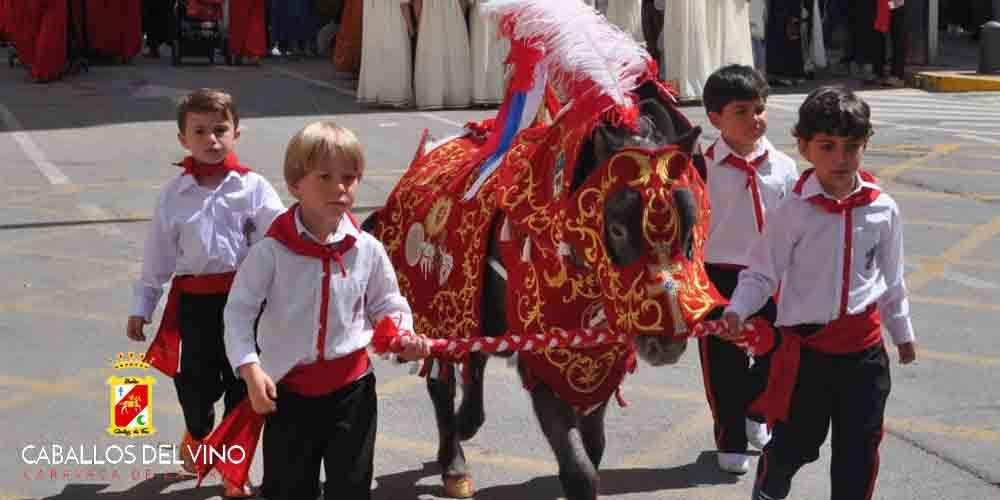
Children and Ponies

Chidren with a pony in los Caballos del Vino

To the present day, children also play an important role during the holidays. Its inclusion is very important to maintain the tradition that has more than two hundred years of history. The children, accompanied by a pony, fulfill a role similar to that of parents and adults, participating in parades and walking with the animals through the town. However, children do not participate in the famous horse races and are not members of the Peñas.

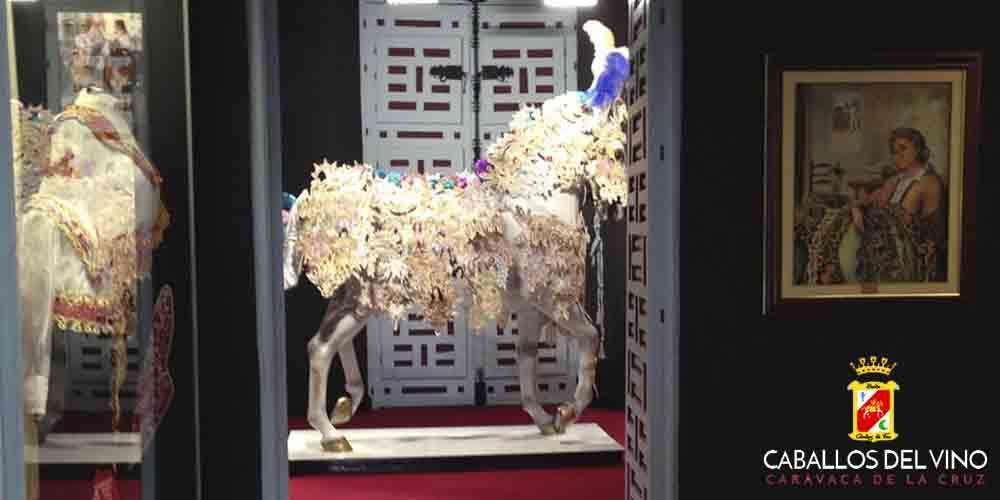
What Is the Casa de los Caballos del Vino?

La Casa de los Caballos del Vino

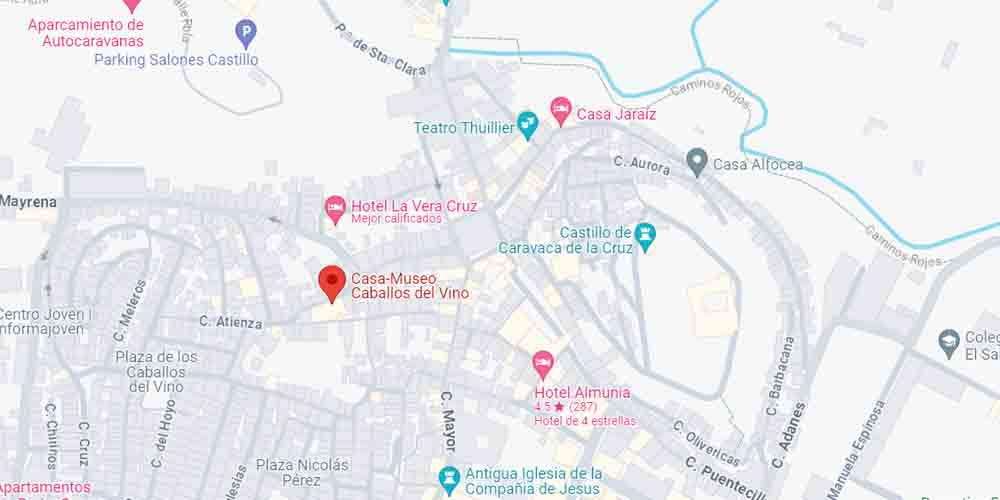
Caravaca de la Cruz boasts an important museum called Casa: Museo Caballos del Vino. This museum summarizes the festival’s history through different historical objects, such as harnesses and cloaks, and images, such as paintings and photographs. It is 300 meters west of the Castle of Caravaca de la Cruz.

The museum has two rooms for permanent and temporary exhibitions. The latter changes permanently to offer a unique perspective on the history of the city and the modifications in the celebration over the years.

The Casa de los Caballos del Vino also has a Tradition Room, which exhibits pieces dedicated to the Christian tradition.

Location of La Casa de los Caballos del Vino

Address: C.Gregorio Javier 21, 30400 Caravaca de la Cruz, Murcia, Spain

Telephone: +34 868 18 50 96

Google Plus Code: 445 Q+43 Caravaca de la Cruz, Spain

Enjoy Your Private Paradise in Villa Murcia!

Piscina com água

O conteúdo gerado por IA pode estar incorreto.

Looking for the perfect place to stay in Murcia? We’ve got just the spot for you!

Villa Murcia – Your Private Paradise

Wake up to coffee on a sun-drenched terrace, unwind in a warm jacuzzi after a day of exploring, and end your evenings with dinners in the summer kitchen. Nestled in charming Santiago de la Ribera, Villa Murcia offers more than just a holiday—it’s your personal oasis of comfort, style, and unforgettable moments.

Highlights:
✔ Spacious living room with a large sofa and open kitchen – perfect for shared memories
✔ Three elegant, air-conditioned bedrooms with private terraces – your peaceful retreat
✔ Extra fold-out sofa in the living room – ideal for additional guests

Whether it’s a romantic escape, a family getaway, or a relaxing break with friends – Villa Murcia is your dream stay.

Book now and experience the magic of the Spanish sun!

The Bottom Line

Suppose you are enjoying a relaxing and cultural holiday in the Murcia region. In that case, you should visit Caravaca de la Cruz and the Caballos del Vino celebration in the first days of May. Get ready for a majestic event where tradition, Christian beliefs, wonderful horses, and magnificent pieces of cloaks, finery, and trimmings adorn the streets of the city. Come to one of the oldest celebrations in the region, where colors, joy, and cheers of joy flood the streets of Caravaca de la Cruz.

Read More

Bando De La Huerta: An Incredible Party In The Murcia Region

The Bando de la Huerta, which takes place in the heart of Murcia, is one of the most important days for most Murcians. It transforms the city center into a vibrant celebration box. In this article, I will tell you everything you need to know about this beautiful event!

Table of Contents

The Most Important Day Of The Fiestas De Primavera

Bando de la Huerta view of streets
La Verdad

The Bando de la Huerta is one of Murcia’s most important and traditional festivities. It is part of the Fiestas de Primavera (Spring Festival) and takes place the week following Holy Week, marking the beginning of spring.

Bando da Horta (In Spanish) is celebrated on the first Tuesday after Holy Week, the first Tuesday after Easter. It is a day of celebration of Pomeranian traditions, closely connected with the city’s history. At this time of the year, the city buzzes and takes all its cultural roots and festive eccentricities to the streets.

Bando de la Huerta view of streets
La Verdad

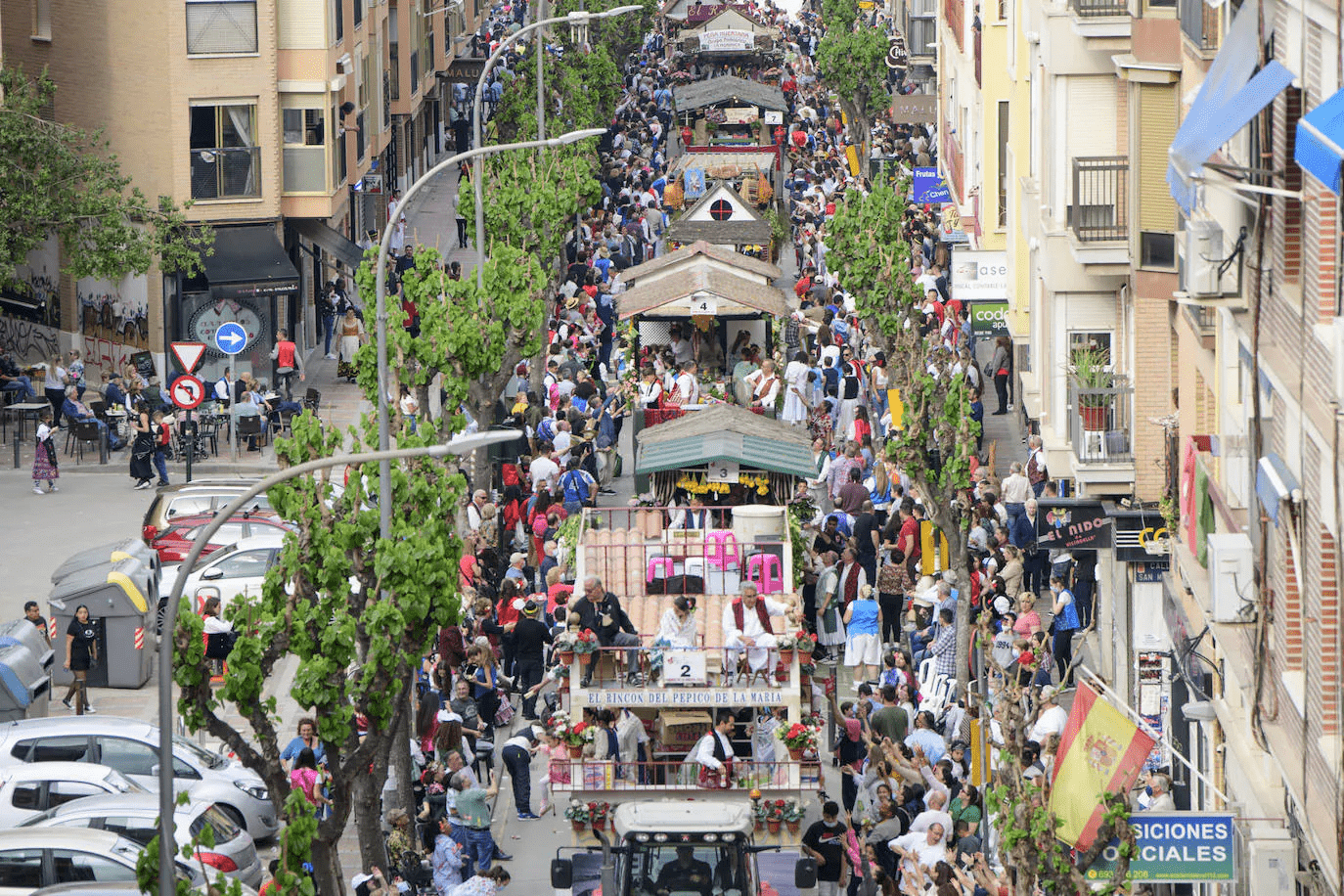
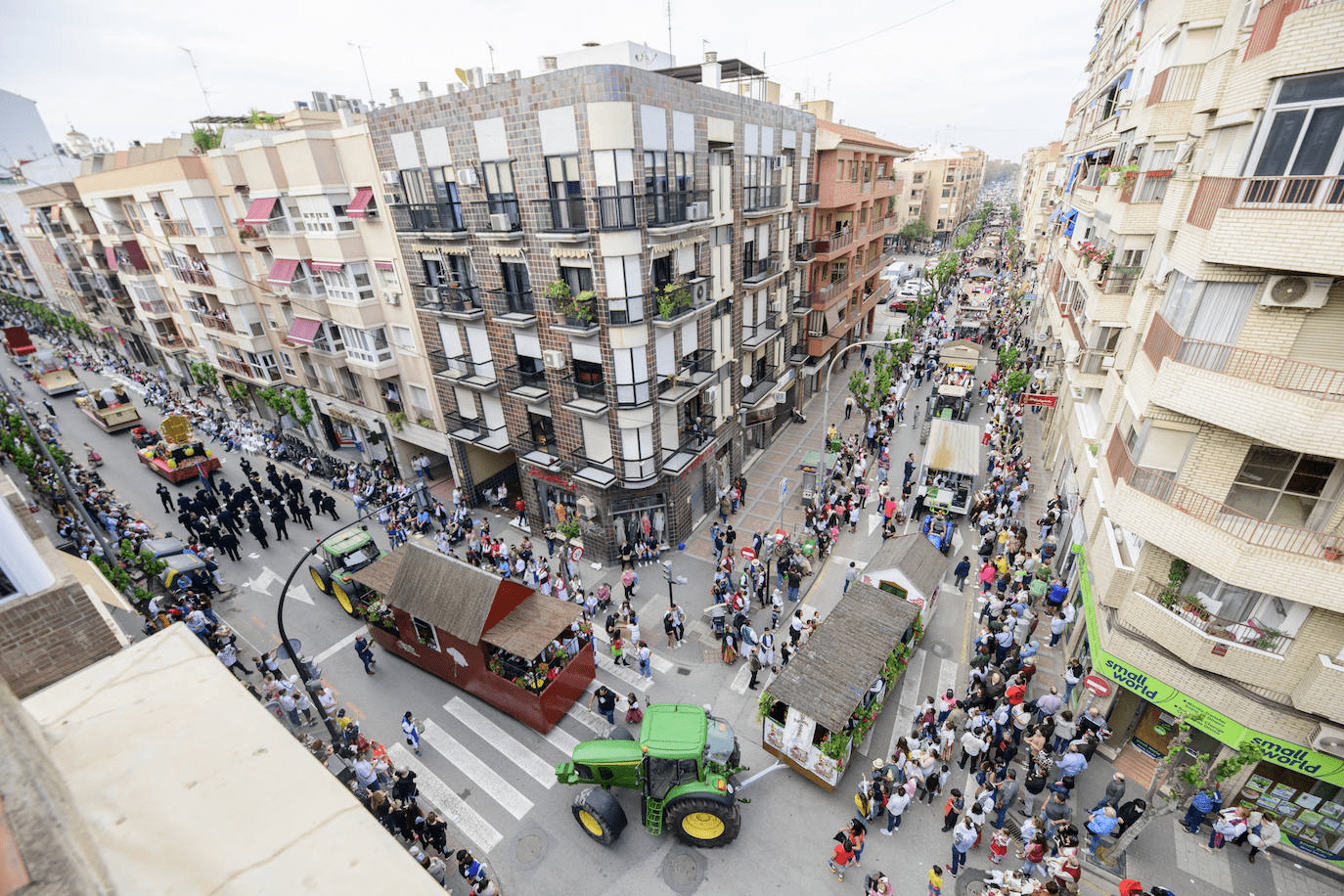
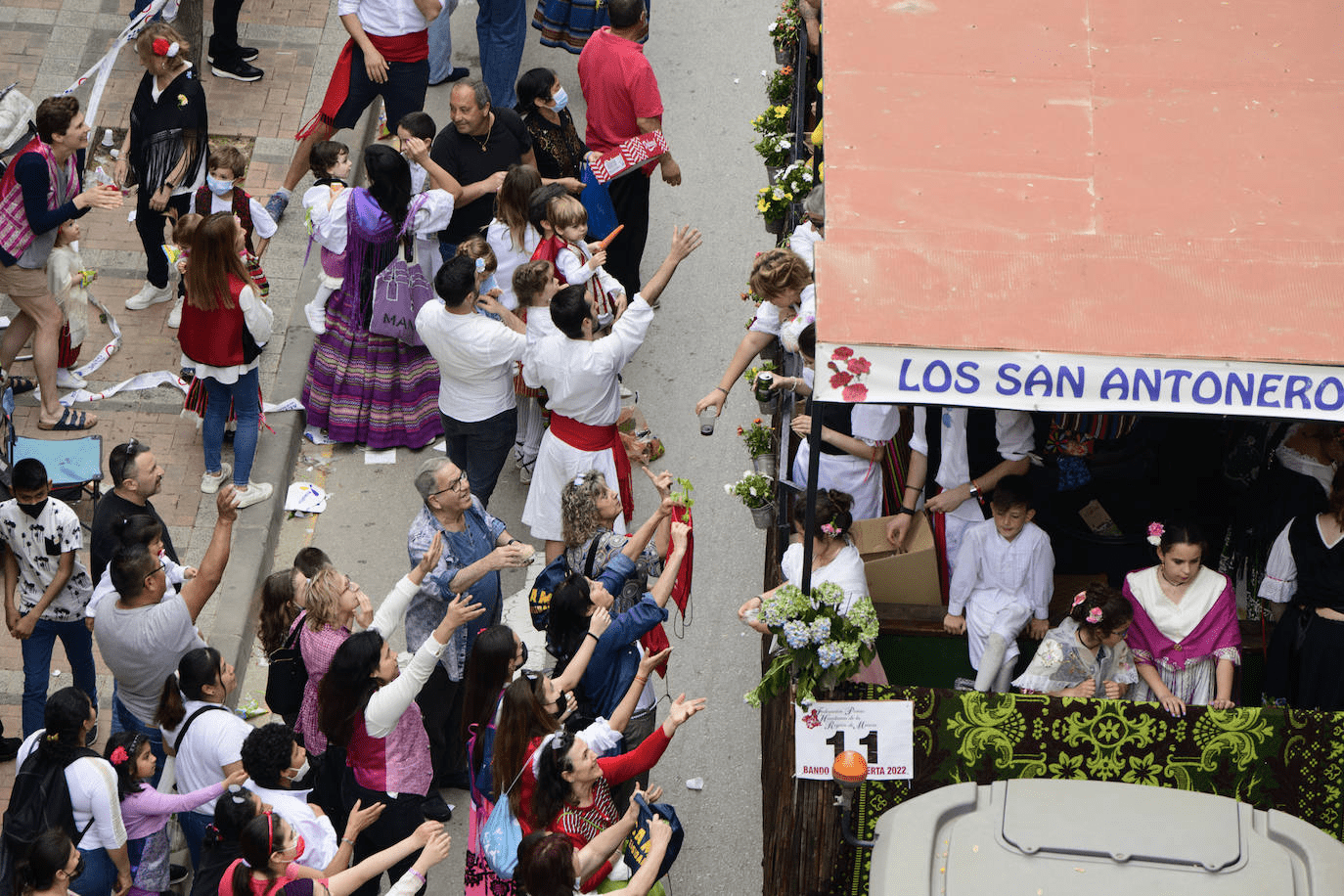
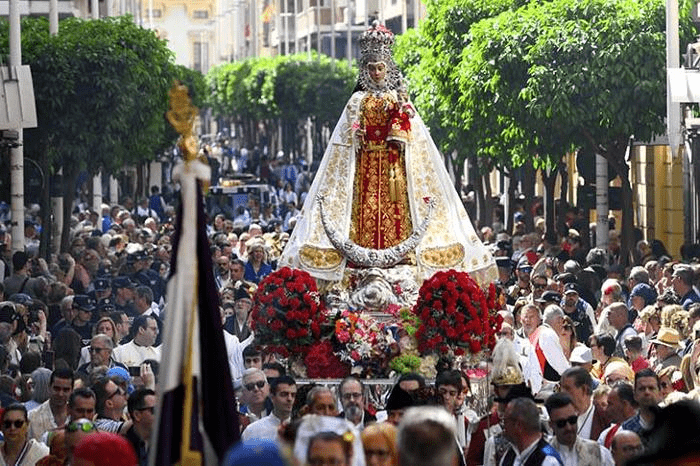
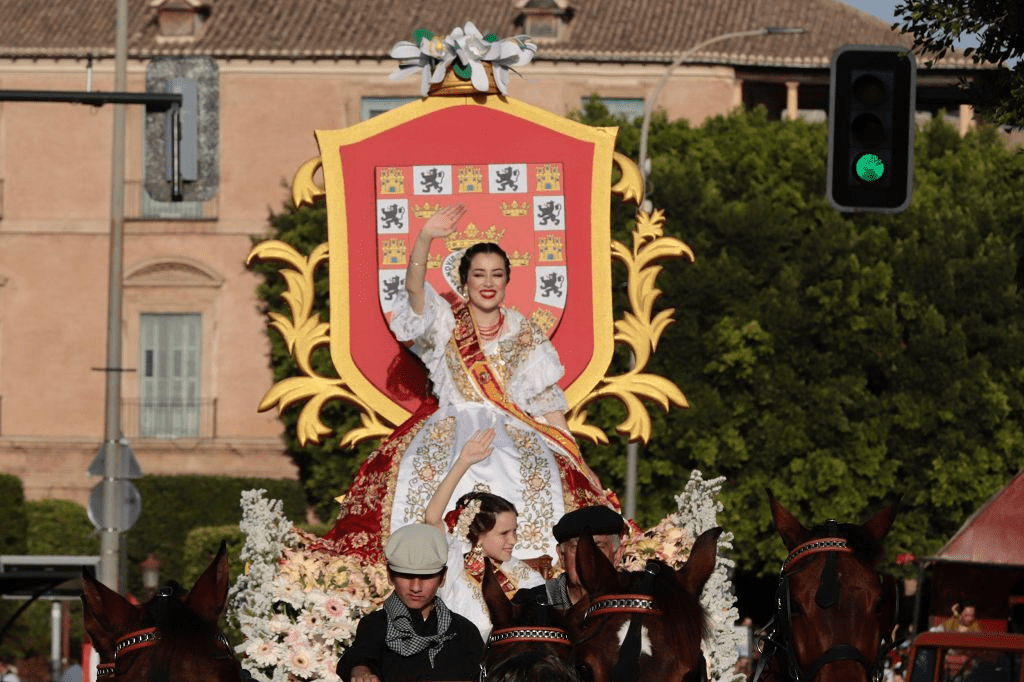
It consists of a parade of oxen-drawn carts and stalls from where participants, known as “huertanos,” hand out flowers to spectators. After a floral offering to the Virgin of Fuensanta, this cavalcade begins with folk groups through the city’s streets. The entire city and the orchard participate in this festival, either by parading or as an audience.

Origins and Meaning

The Bando De La Huerta originated in the nineteenth century, more precisely in 1851, when it emerged as an initiative of young people from Murcian high society. Initially, it was conceived to satirize the peasants of the Huerta place, during the last day of the Murcia carnival. At that point, the parade commenced at the Plaza de Toros de San Agustín, with majos riding horses at the front. They were accompanied by a horse embellished with hands, vegetation, veggies, and many people dressed in conventional costumes.

Bando de la Huerta, frutis and vegetables
Turismo Region De Murcia

As time passed, the initial intention of mockery disappeared, remodeling the Bando de la Huerta. It turned into a party that honors the traditions and agricultural subculture of the place. Since then, the event has gone through numerous stages and interruptions, precisely because of historical problems, including the Santa Teresa flood in 1879 and the Spanish Civil War.

Bando de la Huerta, Dance in the street
Turismo Region De Murcia

From 1967 onwards, the Bando de La Huerta embraced new traditions, incorporating a chain of cultural initiatives and periodical courses. It turned into one of the most popular fiestas in Murcia, celebrated with enthusiasm and annual innovation.

Bando de la Huerta has been a Festival of International Tourist Interest since 2012.

Activities and Attractions

During Bando de la Huerta, the streets of Murcia transform into a large stage for various activities and events that attract both locals and tourists.

Traditional Parade

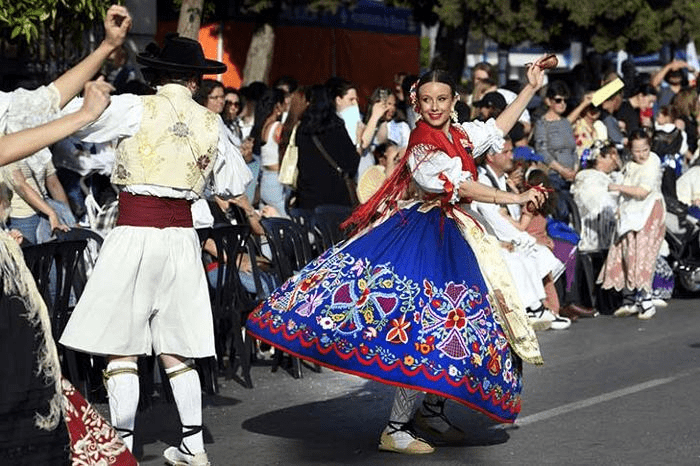
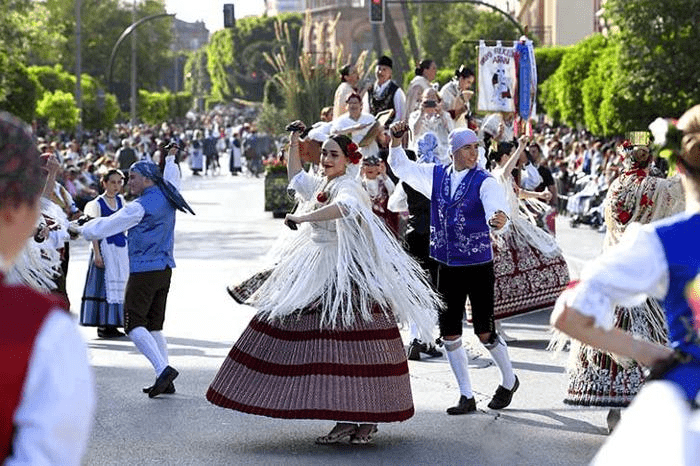
One of Bando de la Huerta’s highlights is the traditional parade, which fills the streets of Múrcia with colors and joy. Richly decorated floats parade through the city, often adorned with flowers, palms, and agricultural products. Participants wear traditional orchard costumes, including a rounded skirt and embroidered blouse for women and socks, poncho, and skirt for men. The parade celebrates agricultural heritage and promotes a sense of community and cultural pride.

The Bando de la Huerta parade has its children’s version, which is usually celebrated on the afternoon of Ressurreição Sunday and in which the little ones recreate the older people parade, also counting with several floats and giving a nice moment to spectators.

Musical Culture

Bando de la Huerta, Dance in the street
Turismo Region De Murcia

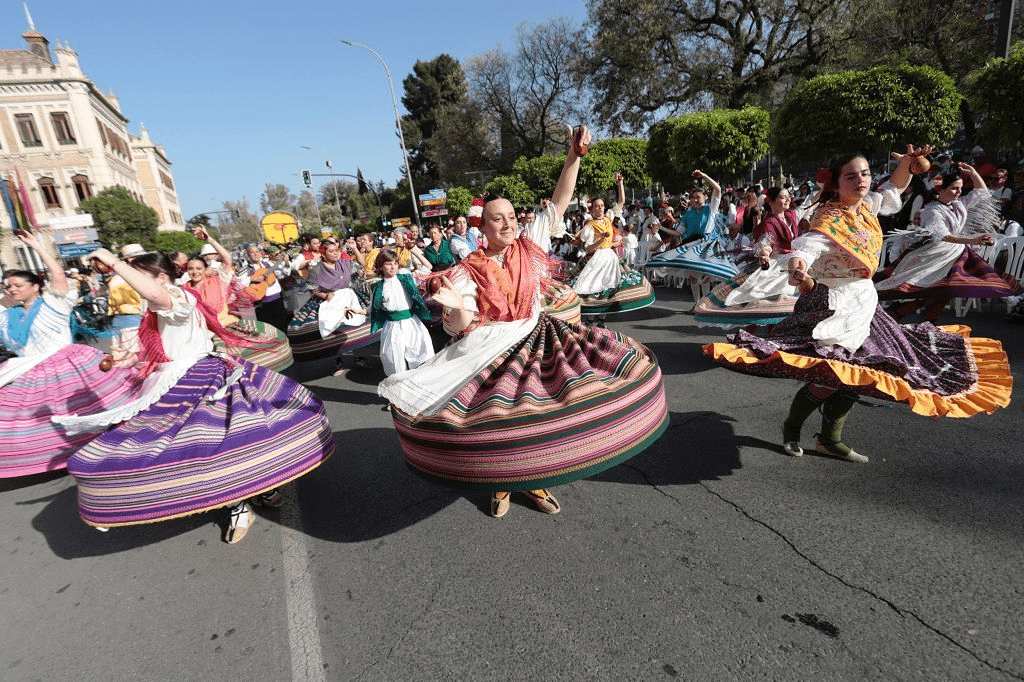
Folk music and dance play a central role in Bando de la Huerta. Throughout the event, folk groups animate the streets of Múrcia with vibrant presentations of jotas, malagueñas, and other traditional rhythms. These groups preserve traditional music and dance and adapt to maintain interest and cultural relevance. Live music creates a festive atmosphere, inviting everyone to participate and celebrate the cultural roots of the region​ It’s for all ages. Everyone is so kind and receptive!

It Is For All Ages!

Bando de la Huerta its for all ages!
La Verdad

The Bando de la Huerta is an inclusive festival for all groups of ages. For children, there is an area with activities designed for them, such as traditional games, craft workshops, and interactive shows. These activities are not just entertaining but also educating the children about the cultural traditions of Murcia, making sure that the more youthful generations keep a bond with their history. Offering a varied program, the occasion ensures that the whole family can revel in and participate in the celebrations​.

Traditional Food

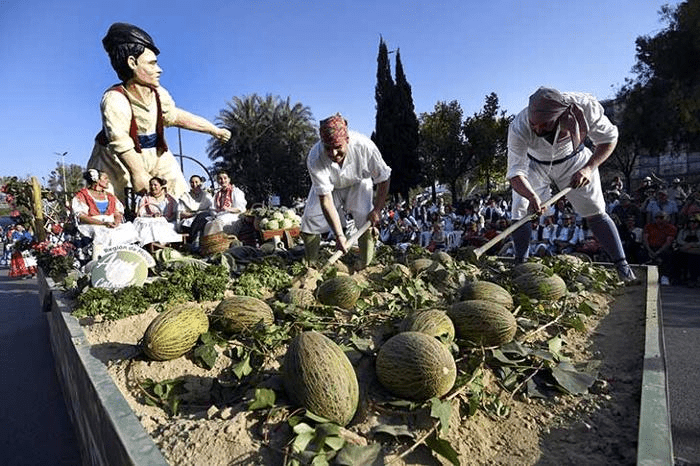
Legumes, fruits, and vegetables are distributed on the floats
La Verdad

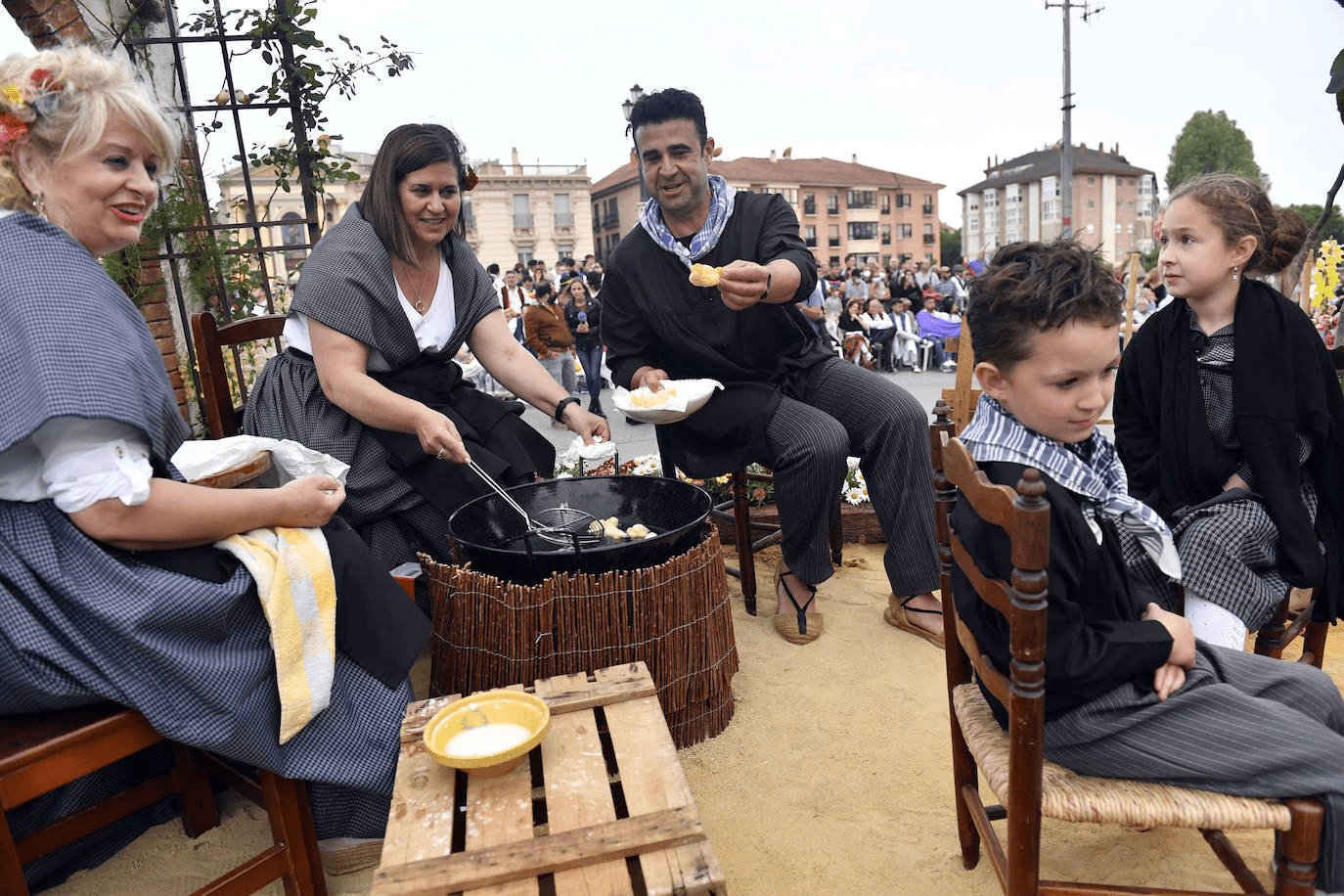
The Bando de la Huerta parade is a perfect opportunity to present visitors to these lands’ proud harvests. Legumes, fruits, and vegetables are distributed on the floats, while stalls across the city offer local cuisine, including traditional foods such as Zarangollo, Ensalada Murciana, meat pastry, and tapas.

Tradition And Political

Since the origins of this celebration, it has the tradition of imitating the way countryside people speak. This is done by reading the official announcement in verse to describe the program of the festivities.

The moment is usually used to criticize some political issues in a humorous way, making it an entertaining start to the party. Knowing the peculiar twists of the Murcian dialect will help you better understand the essence of these celebrations.

Bando de la Huerta parade
Turismo Region De Murcia

Furthermore, exhibitions and fairs of crafts, agricultural products, and animals reflect the diversity and cultural richness of the Huerta Murciana.

Bando De La Huerta 2023

In 2023, I was in Murcia and witnessed the spring fiestas and the Bando de la Huerta.

The Bando de la Huerta itself was celebrated with great enthusiasm on April 11th. It’s incredible how many people the event attracts. Everyone stops to take part in the festivities wearing typical regional costumes, such as the Huertano and Huertana costumes.

  Virgen de la Fuensanta, being hold by people
Turismo Region De Murcia

The celebrations started early, with the traditional “Misa Huertana” held in front of the baroque façade of Murcia’s Cathedral. This was followed by a procession in honor of the Virgen de la Fuensanta, the city’s patron saint. Thousands of Murcian people and visitors, dressed in traditional Murcian clothes, escorted the Virgin on a short walk around the city centre. After the religious acts, the party spread to the city’s squares and gardens, where the streets were filled with music, typical food, and a wonderful, very welcoming festive atmosphere.

Bando de la Huerta parade in 2023
Bando de La huerta 2023 – By Juan Carlos Caval – La Opinion de Murcia

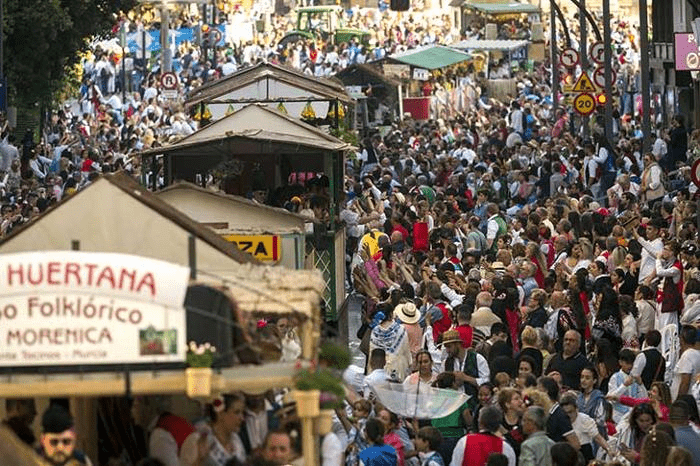
The parade, which is the festival’s highlight, began at 5:00 pm on Avenida San Juan de la Cruz and passed through several central streets, including Calle Mozart, Alameda de los Capuchinos, and Gran Vía Salzillo, ending at Plaza Juan XXIII. Around 1,500 people participated in the parade, distributed in 60 carts that displayed various cultural representations and traditions of the region.

Tronaera
La ‘tronaera’ huertana – Laverdade.es

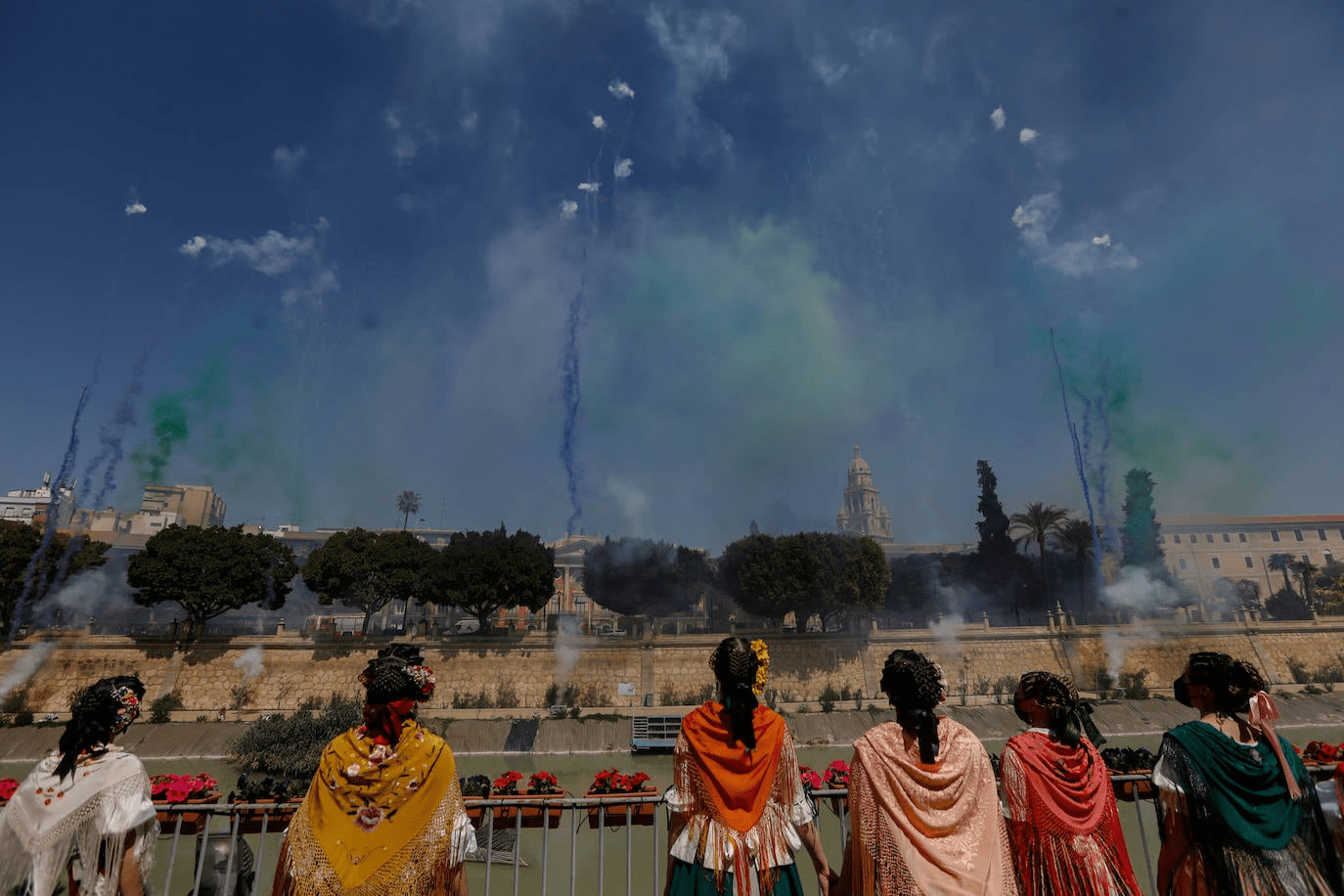
In addition to the parade, the program included a series of parallel activities, such as traditional dances and the “Tronaera,” an artificial firework show that leaves the sky all colorful. This was a wonderful event in front of the Ayuntamiento. The city was busy all day, and as I was with my family and children in the group, we had a great experience finding a wide range of entertainment for all ages.

Bando de la Huerta Dances In Street
Bando de La huerta 2023 – By Juan Carlos Caval – La Opinion de Murcia

Bando de La Huerta: An Unmissable Celebration!

The festivities occur around the city, where colorful parades pass by an enthusiastic audience, all dressed in traditional costumes. It was fantastic to enjoy with friends and family and to take advantage of the hours of festivities, enjoying typical foods such as broad beans and a variety of fruits. If you ever think about spending your holidays in Spain, be sure to consider Murcia during this festival — you won’t regret it!

Enjoy Your Private Paradise in Villa Murcia!

Piscina com água

O conteúdo gerado por IA pode estar incorreto.

Looking for the perfect place to stay in Murcia? We’ve got just the spot for you!

Villa Murcia – Your Private Paradise

Wake up to coffee on a sun-drenched terrace, unwind in a warm jacuzzi after a day of exploring, and end your evenings with dinners in the summer kitchen. Nestled in charming Santiago de la Ribera, Villa Murcia offers more than just a holiday—it’s your personal oasis of comfort, style, and unforgettable moments.

Highlights:
✔ Spacious living room with a large sofa and open kitchen – perfect for shared memories
✔ Three elegant, air-conditioned bedrooms with private terraces – your peaceful retreat
✔ Extra fold-out sofa in the living room – ideal for additional guests

Whether it’s a romantic escape, a family getaway, or a relaxing break with friends – Villa Murcia is your dream stay.

Book now and experience the magic of the Spanish sun!

Read More
Parade of Holy Week In one street of Spain

Holy Week In Murcia: A Celebration of Faith, Tradition and Devotion

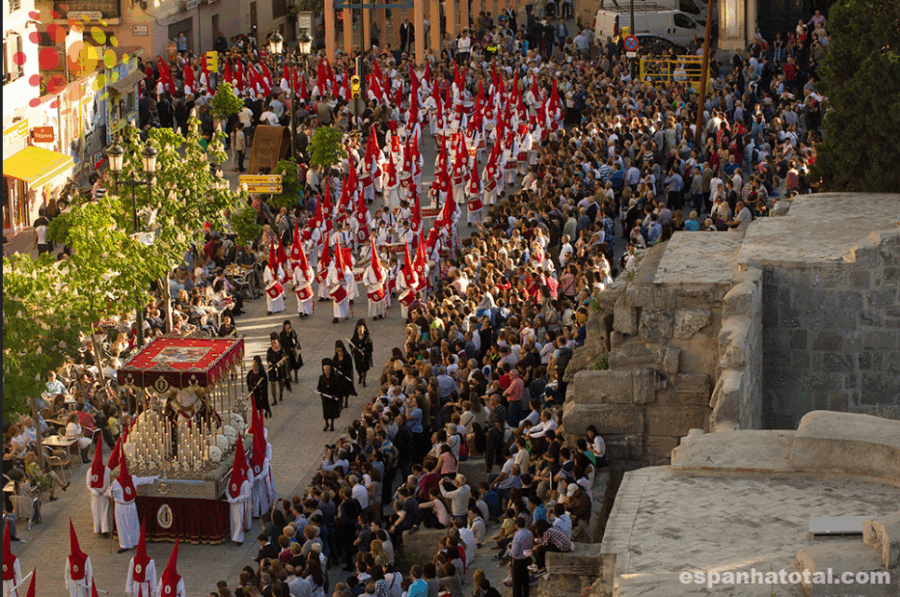
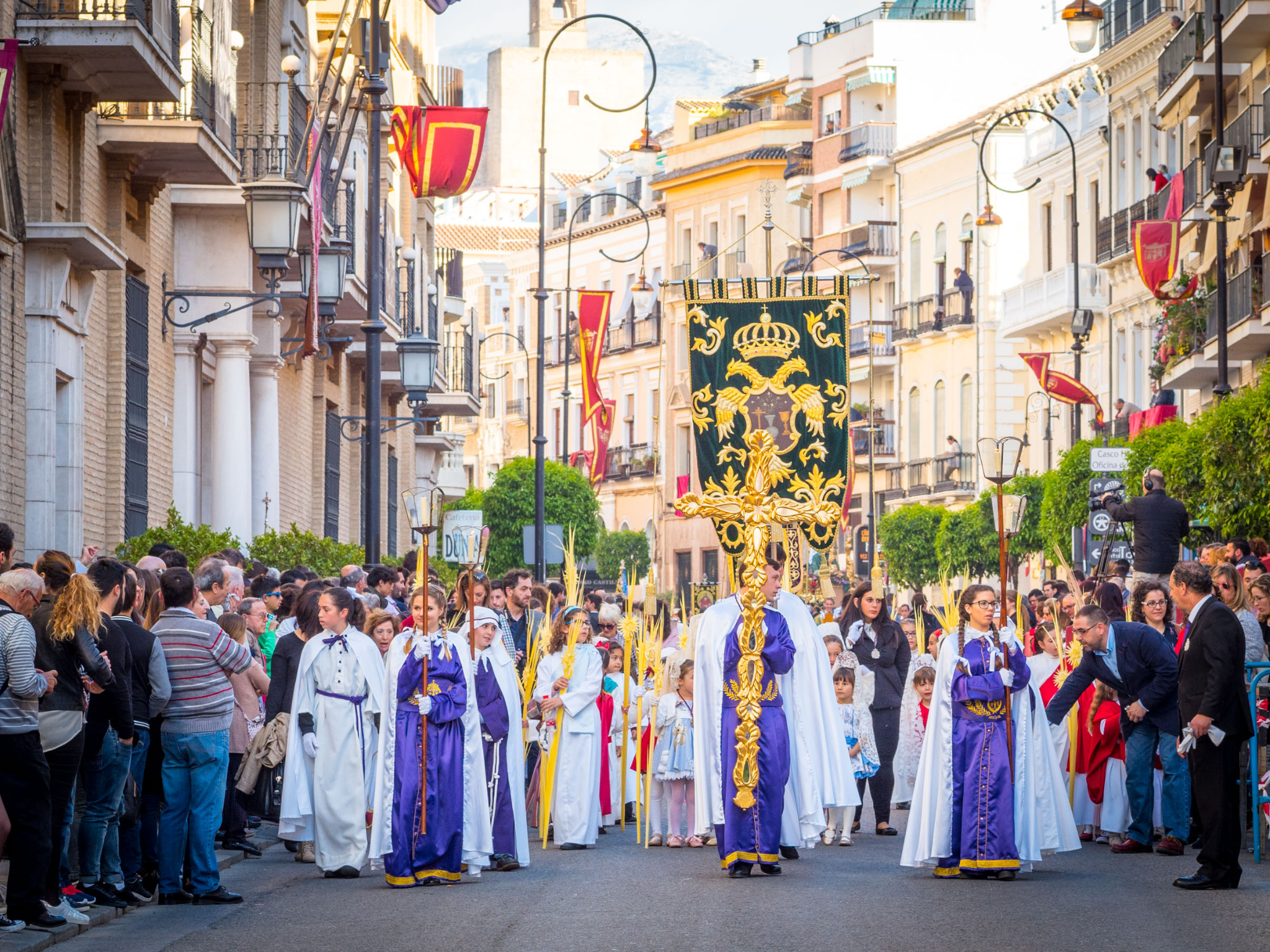
Between March and April, Spain undergoes a remarkable transformation. People across the country immerse themselves in the vibrant and deeply traditional celebrations of Holy Week (Semana Santa). This extraordinary time of year is known around the world for its intensity and cultural significance.

We will present what you need to know to understand how Holy Week is celebrated in Spain, especially in Murcia, and help you plan your trip better. Keep reading to find out more!

Table of Contents

About The Holy Week

Holy Week is a Christian holiday commemorating Christ’s last days on Earth, a time dedicated to celebrating his passion and resurrection. This period is marked by several traditions and ceremonies, including Maundy Thursday, commemorating the Last Supper, Good Friday, observing Jesus’s crucifixion, and Easter Sunday, celebrating his resurrection. It is a time of reflection, prayer, and celebration for Christians worldwide.

I spent a few days in this saint week in Murcia, a city in Spain, and I must say the experience was unbelievable. Below, I will share some of the most interesting facts about this annual event.

Spain during Holy Week

Parade of Holy Week In Spain
© LookOutPro

As one of the most traditional festivals in Spain, Holy Week is full of meanings and legacies that date back centuries. One of the main traditions is the cofradías and brotherhoods responsible for processions in all Spanish cities and towns.

The Dates Of Holy Week

Most Spanish Holy Week celebrations occur between Palm Sunday and Resurrection Sunday, emphasizing the Jueves Santo (Holy Thursday) and Viernes Santo (Good Friday) processions.

Sculptures in one processsion, in the holy week in Spain
© Costa Calida Region de Murcia

Holy Week is an event that lasts a week (Easter week) and culminates in Easter day. Here are some of the key dates and celebrations:

  • Palm Sunday: Marks Jesus’ entry into Jerusalem.
  • Holy Monday commemorates the day Jesus expelled the merchants from the temple and the anointing of the Virgin Mary (Lazarus’s sister) on Jesus.
  • Holy Tuesday: When Jesus anticipates the betrayal of Judas.
  • Holy Wednesday: The day that Judas met with the assembly of wise men to plan Jesus’s betrayal in exchange for 30 silver coins.
  • Holy Thursday: Represents the Last Supper of Jesus with his disciples. On this day, the church bells in all the churches in Spain are silenced until Easter Sunday
  • Good Friday procession (Viernes de Dolores): Christ’s passion, crucifixion, and death are remembered.
  • Holy Saturday (Easter Vigil): It is the day of waiting for the resurrection of Jesus.
  • Easter Sunday (Domingo de Resurrección): Celebrates the resurrection of Jesus.

What Is The Best Place For Holy Week In Spain

Although Holy Week is more associated with cities in Andalusia, Castile, or Aragon, the festival is, in fact, celebrated in all corners of the country, from Galicia to Murcia, from Extremadura to Catalonia. Religious processions and celebrations occur in large cities and small villages with equal fervor. Each region adds its own traditions and characteristics to the celebrations, making Holy Week a diverse celebration rich in culture and spirituality.

Holy Week Celebration Spaces

Parade of Holy Week In Spain
© TheSlowRoad

In most cities in Spain, Holy Week is celebrated in two spaces. The first is the interior of churches and temples, where masses and other liturgical acts typical of Easter are celebrated. The second and most important space is the streets of cities and villages in Spain, where processions occur. These streets are the central axis of Holy Week.

Researching the most important processions is convenient, as there are so many that it is only possible to attend a few. When I was there, I had to choose some to participate in, so I researched the most essential ones regarding the city’s history which allowed me to see more saints.

What Does Spain Do During Holy Week?

During Holy Week, Spain celebrates several traditions. Processions via the streets, unique meals, and the silencing of church bells from Maundy Thursday to Easter Sunday are some practices that happen in the week. These often involve confraternities carrying elaborate steps accompanied by silent crowds or the sound of drums and sacred music. The unique Holy Week delicacies include traditional dishes, including torrijas and bacalao.

Are Things Closed During the Holy Week in Spain?

You must be aware that many things may be closed during the Semana Santa in Spain, especially on important days like Holy Thursday and Good Friday, which are holy days for the country. This includes banks, offices, and some stores. However, most restaurants, bars, and tourist sites generally remain open, albeit with possibly reduced opening hours. When I was there, I felt that there were limitations on commerce, but the experience with the local culture was worth it.

Murcia In The Holy Week

Parade of Holy Week In Spain
©SpainInfo

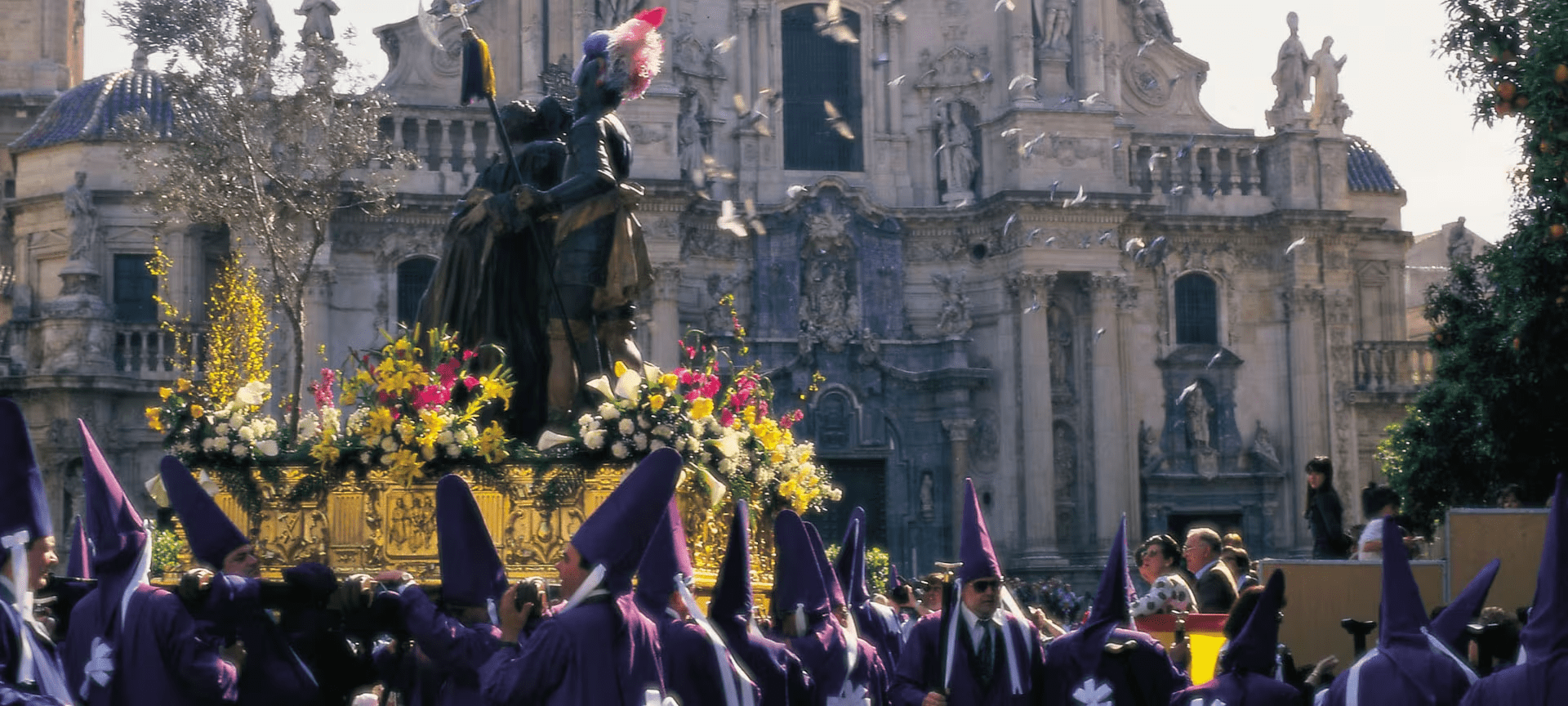
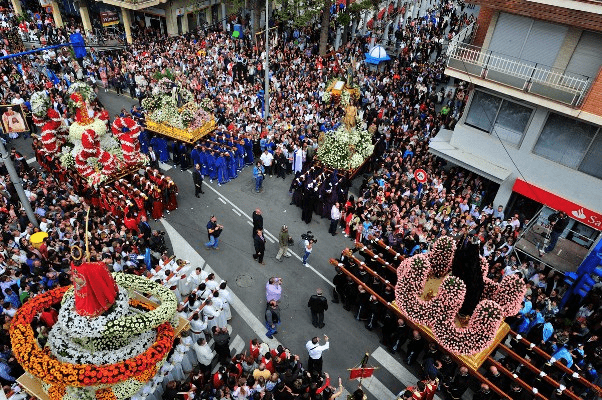
The Semana Santa de Murcia is a religious festival declared of International Tourist Interest. It is one of the most important in Spain, both for its excellent sculptural heritage and style, which originated in the 18th century. It’s a unique way in Spain to celebrate passion!

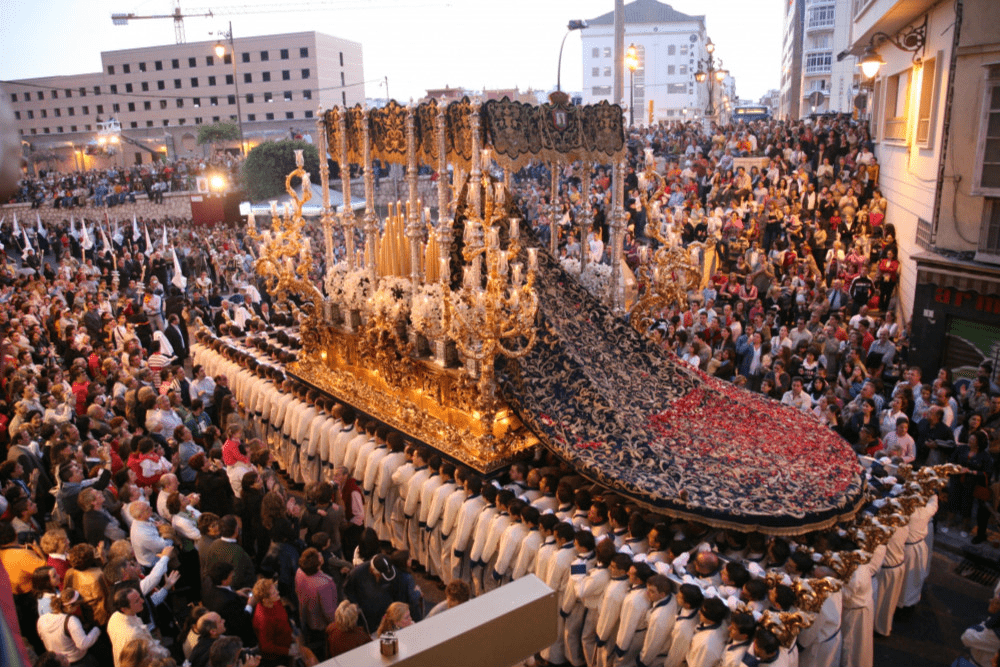
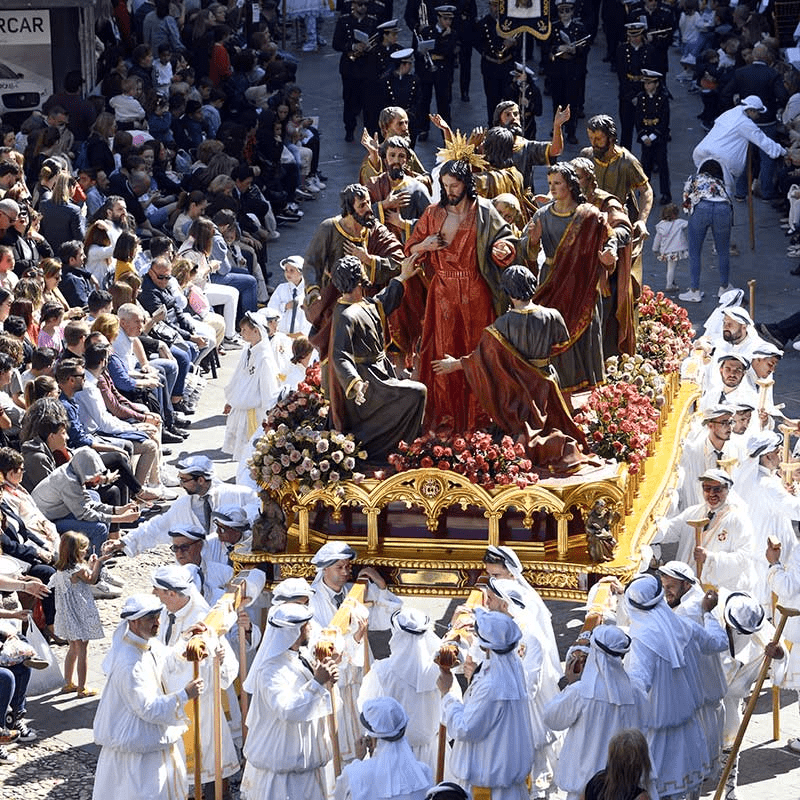
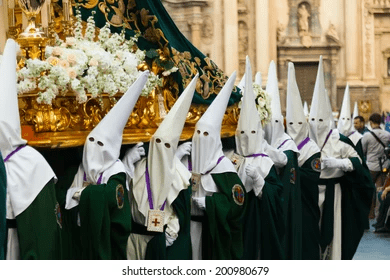
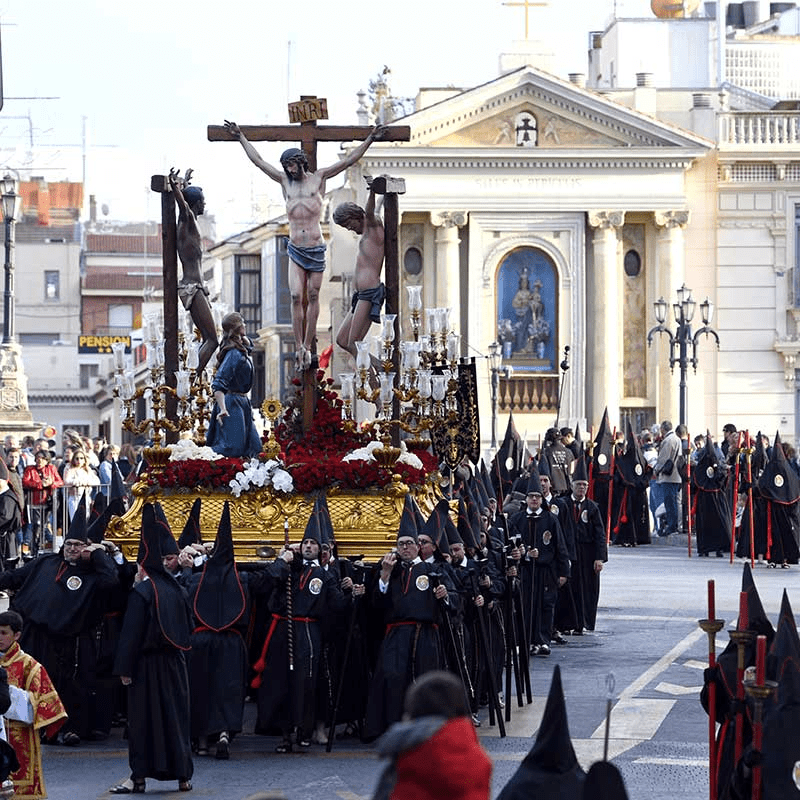
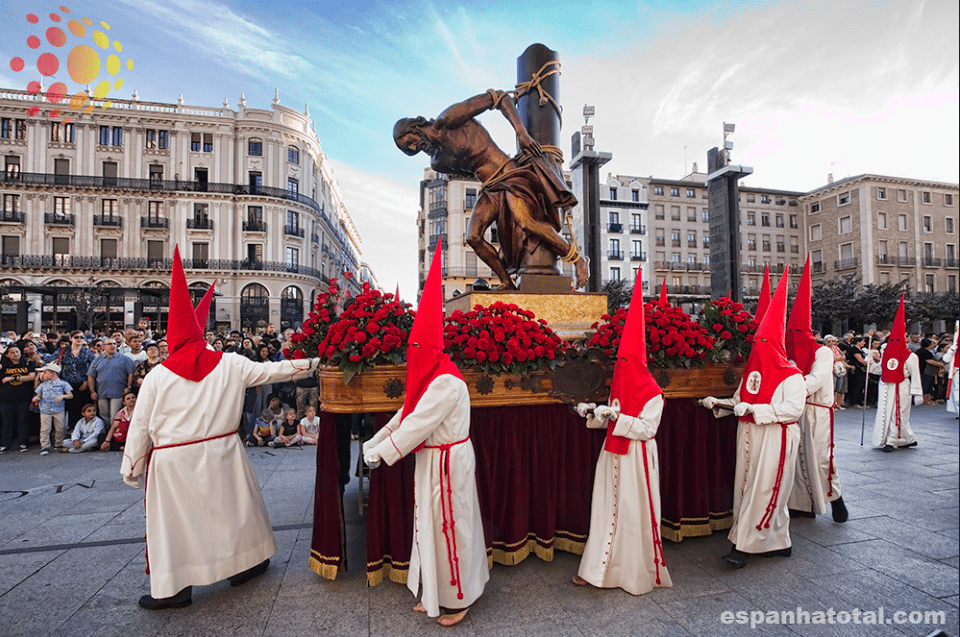
It is a week of colorful processions. Rows of penitents in full costume accompany the “pasos” (sculpted tableaux), representing the last days of Jesus’s life through each town’s streets. These pasos are carried on enormous “tronos” adorned with flowers, their bearers swaying to the beat of throbbing drums as the parades pass between the crowds.

What are the Processions In Murcia For Easter?

Parade of Holy Week In Murcia
©MurciaToday

During Holy Week in Murcia, processions vary in style and environment, from the most sober to the most festive. Some more severe processions, including those of Refugio, Rescate, Cristo de la Fe, Cristo de la Sangre, Salud, Retorno, and Cristo Yacente, no longer distribute chocolates to the general public. One of the most stunning is the Procession of Silence, which takes place on Thursday.

Religious associations organize processions, which can be brotherhoods or fraternities. Brotherhoods bring together people of different origins, social status, or professions, while brotherhoods unite people of a particular profession (for example, a fisherman’s brotherhood).

These brotherhoods and confraternities carry on their shoulders, or on a platform with wheels, a step with sculptures representing the Passion of Christ with images of virgins or saints belonging to the churches. Each brotherhood or fraternity has its own route. Some walk for more than 10 kilometers, while others take shorter routes and, along them, carry the symbols and colors that reflect their stories.

The most vital procession is the “Los Salzillos,” which begins on Good Friday at 7 am. Then, the primary ray of sunlight, called the “kiss,” touches the banner of the lay brotherhood, Cofradía de Nuestro Padre Jesús Nazareno, or the face of the Virgin of Sorrows. Other amazing processions encompass La Cena, La Oración en el Huerto, El Prendimiento, Los Azotes, La Mujer Verónica, La Caída, Nuestro Padre Jesús Nazareno (now not the one in Salzillo), San Juan, and La Dolorosa.

Brotherhood carrying sculptures in procession of Holy Week
© Shutterstock

On Friday night, the processions of the Cristo de los Angeles Misericordia, the Church of San Esteban, the Santo Sepulcro, and San Bartolomé take place, which may be visible parading collectively around the Trapería. On Saturday, the Christ Yacente procession leaves Santo Domingo and stands out as one of the most remarkable moments of Holy Week in Murcia, especially when it passes underneath the Santo Domingo Arch.

Open-Air Museums

Brotherhood carrying sculptures in procession of Holy Week
© Costa Calida Region de Murcia

Visiting Murcia during Holy Week means contemplating the artistic treasures of the impressive floats that flood the streets, transforming them into open-air museums. Furthermore, it is an opportunity to see images that remain inside churches, the historic centre, and convents during the rest of the year.

Annual Chance To Watch The Brotherhoods


Brotherhood distributing candy to public
© Turismo De Murcia

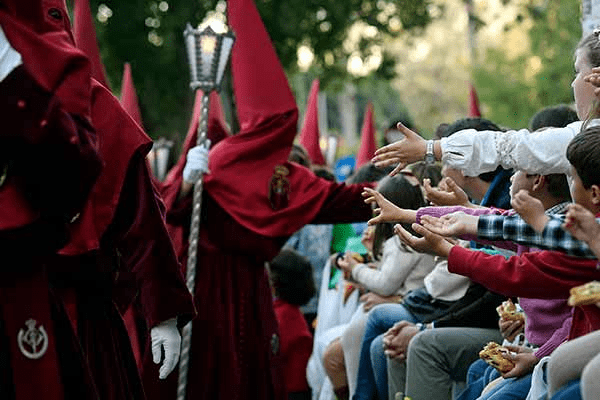
The generosity of the inhabitants of Murcia is evident in the processions, where sweets are distributed to the public. Several processions take place, with each brotherhood parading only once a year.

The Beauty And Realism Of Sculptures

Brotherhood carrying sculptures in procession of Holy Week
Flickr

The sculptures of renowned Baroque sculptor Francisco Salzillo, along with those of his father Nicolás, his disciple Roque López, and Nicolás de Bussy, are highlights of Holy Week in Murcia.

Experiencing Holy Week in Murcia

Murcia during the “Semana Santa” is incredible, and I’m sure that if you go, you will love it. The traditions reflect Spain’s deep devotion and rich cultural heritage during this sacred period. The city transforms into a place marked by faith, tradition, joy, and great devotion, creating scenes that captivate and inspire everyone.

Enjoy Your Private Paradise in Villa Murcia!

Piscina com água

O conteúdo gerado por IA pode estar incorreto.

Looking for the perfect place to stay in Murcia? We’ve got just the spot for you!

Villa Murcia – Your Private Paradise

Wake up to coffee on a sun-drenched terrace, unwind in a warm jacuzzi after a day of exploring, and end your evenings with dinners in the summer kitchen. Nestled in charming Santiago de la Ribera, Villa Murcia offers more than just a holiday—it’s your personal oasis of comfort, style, and unforgettable moments.

Highlights:
✔ Spacious living room with a large sofa and open kitchen – perfect for shared memories
✔ Three elegant, air-conditioned bedrooms with private terraces – your peaceful retreat
✔ Extra fold-out sofa in the living room – ideal for additional guests

Whether it’s a romantic escape, a family getaway, or a relaxing break with friends – Villa Murcia is your dream stay.

Book now and experience the magic of the Spanish sun!

Read More
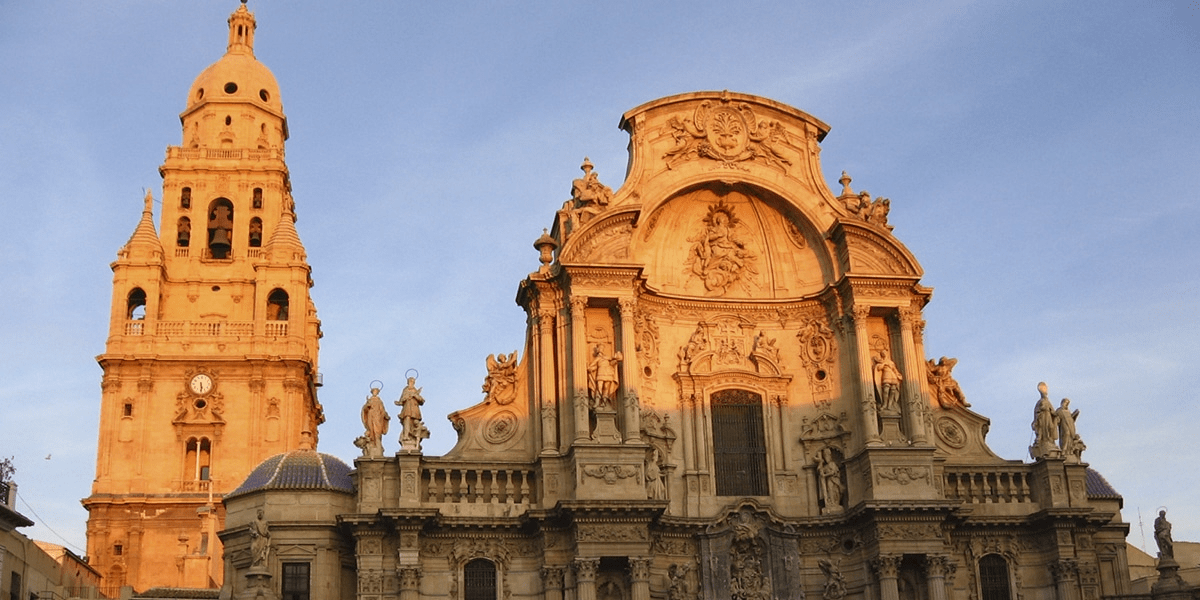
The facade of the cathedral

Cathedral de Santa Maria Murcia – Multi-styled Masterpiece

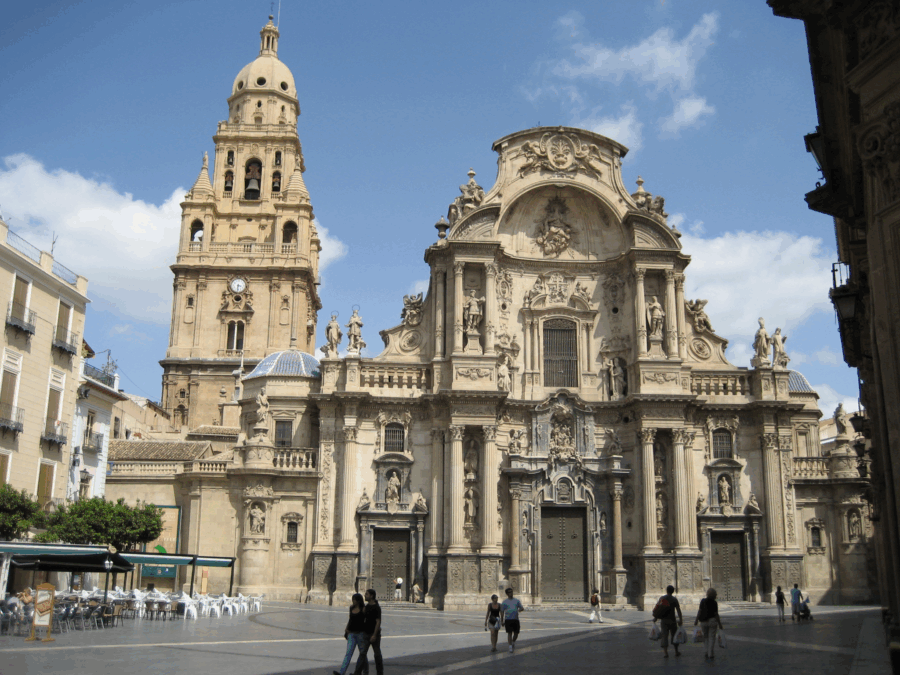
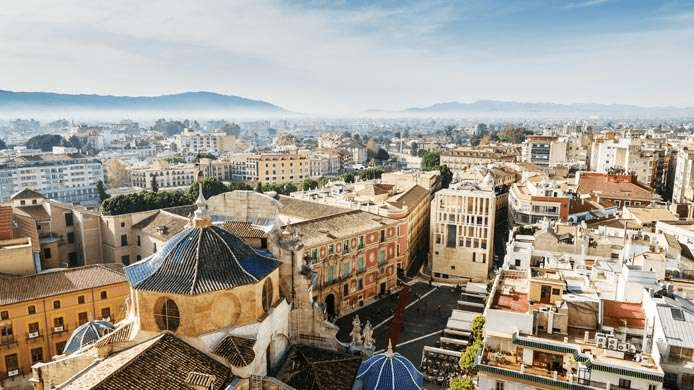
Welcome to the beautiful Cathedral Church of Saint Mary in Murcia (Spanish: Iglesia Catedral de Santa María en Murcia), or, as it is commonly referred to, the Cathedral of Murcia. It’s a Catholic Church in the city of Murcia and a breathtaking cathedral of the Roman Catholic Diocese of Cartagena. It’s the pearl of the baroque architecture, but a gothic cloister in heart. If you are a history buff, or if you just have an eye for architectural masterpieces – this is definitely a sight to see!

Table of Contents

History

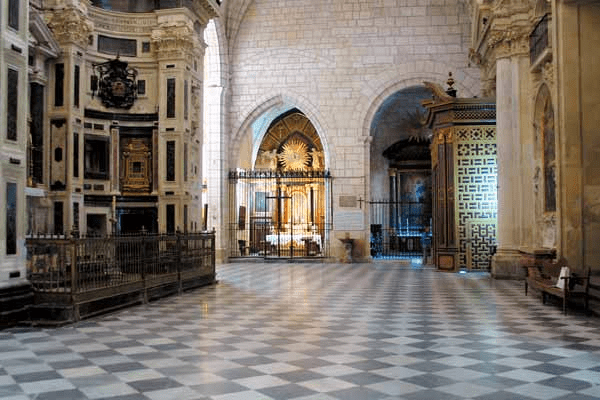
The interior of the cathedral

As with all architectural masterpieces in our lifetime, it comes with a little bit of history. The conception of this cathedral starts with the Christian king Jaime I the Conqueror. And so he did just that to the city of Murcia during the Mudéjar revolt of 1264–66. This was during a great war when Christianity fought against the Muslim world in Spain; he took the Great Mosque that was built there, or Aljamía as the Muslims referred to it, and consecrated it to the Virgin Mary.

Although he wanted to do it right away, it took until the 14th century that the construction of the cathedral in this place took off. In 1385, the work on foundations started, but the work itself had to be delayed until 1388, when the first stone was laid.

Plaza Del Cardenal Belluga, where the cathedral stands, had to wait a while for development to begin. Actually, it took much longer than expected, as the work wasn’t completed until October 1467. Even after the initial construction finished, the cathedral continued to evolve, incorporating various architectural styles and subtly reflecting the influence of the former Muslim city that once occupied this site. Over the centuries, it continued to develop, ultimately becoming the awe-inspiring masterpiece we see today since the 18th century.

Architecture Style

The cathedral view

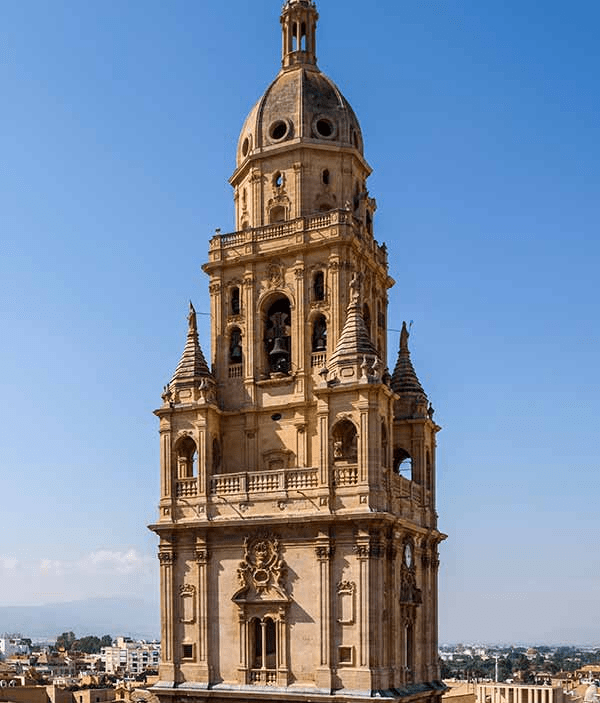
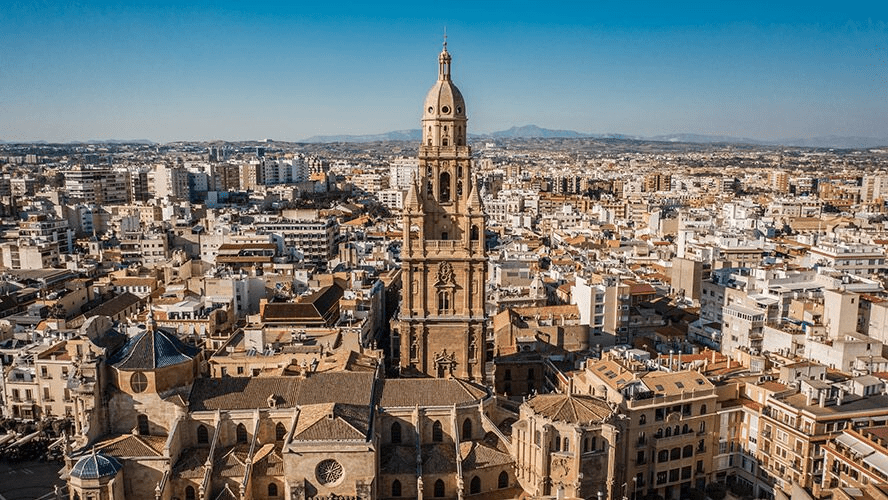
As I have mentioned before, this particular cathedral is done in exquisite detail. It has a magnificent “torre campanario,” which means the bell tower, and is a masterful combination of many different styles.

The cathedral was designed by Valencian architect and sculptor Jaume Bort i Meliá. Its interior presents a predominantly Gothic style, albeit with a refinement that sets it apart from the classic Gothic architecture like Notre Dame. It’s the facade that truly shines, presenting the finest aspects of the cathedral.

I recall my first visit, feeling like I had stepped back in time. From the intricate Gothic windows to the classic porches and the breathtakingly beautiful Baroque decorations, every detail left an indelible mark on me. The Baroque style seamlessly intertwines with a sense of humility added in later years, creating a mesmerizing architectural experience.

Interior

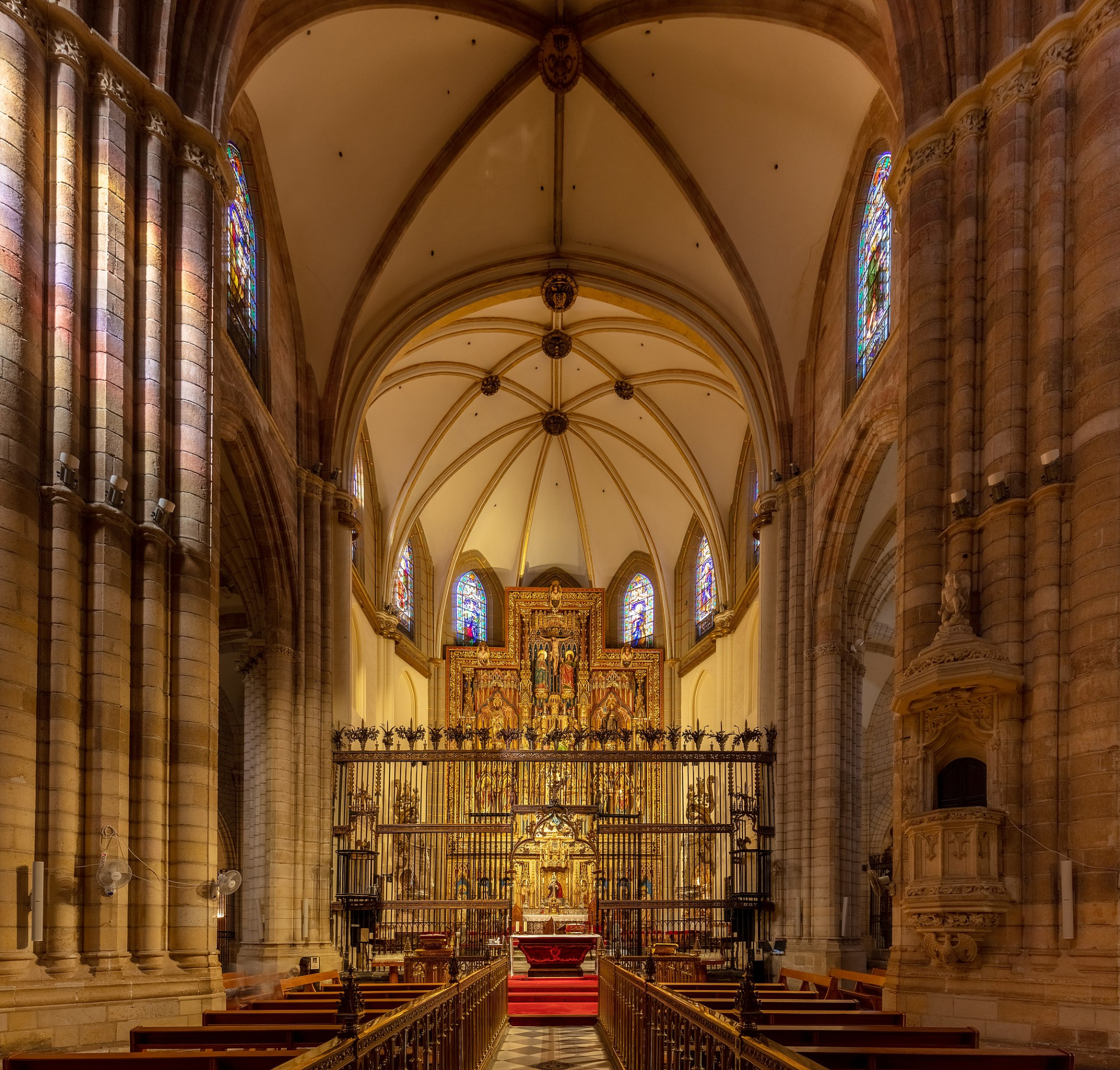
the altar of the cathedral

Let’s first discuss the Cathedral interior. The Murcia Cathedral is made up of three different naves with an apse and twenty-three chapels. Each is dedicated to the patron saints of labor unions and serves as the final resting place for bishops and nobles involved in the construction of the Cathedral de Santa Maria Murcia. Here are the most interesting ones:

  • The Chapel of the Apse or the Vélez Chapel – this chapel has a cupola of start with ten points and is crafted beautifully in the Flaming Gothic style;
  • The Chapel of Junterones belongs to the Spanish Renaissance. It may not be as fiery as the baroque-styled ones, but it’s pure and elegant: the Spaniards are considered one of the masters of the craft of that era, and it shows here.
  • The Chapel of the Immaculate is undoubtedly a masterpiece of Baroque architecture. If you appreciate the rich detail and lavishness of that style, it’s an absolute must-see.

Sound Equipment

We cannot, of course, overlook the “transcorum,” of course, the plateresque seating for the choir that looks incredible, especially during night ceremonies. This is when you can additionally enjoy the large Merlkin organ, one of the most interesting inventions of the time, with almost 4000 pipes and four keyboards. The sound is taking over you when you’re listening to it inside, and you really can feel a spiritual being with those pipes attacking you from every corner.

Three Levels

a look at the altair at the cathedral

There are there levels inside the cathedral. If you want to visit it, you should definitely check them all out!

  • The first one was made by Francisco and Jacobo Florentino. It’s basically a square plant in Renaissance style. The ornamentations offer a completely unique experience. Influenced by the highly prevalent plateresque style in Spain during the late 15th and early 16th centuries, these elements were frequently adopted in Spain’s American colonies. The ornamentations you’ll encounter date back to that period and showcase a distinct “Silversmith-like” approach, reflecting the rich cultural exchange and artistic influence of the time.
  • The second body, crafted by Jerónimo Quijano, bears similarities to the first, yet it exudes a distinct delicacy and conservatism. While it shares the same type of ornaments and features, the style is notably more purist compared to the ground floor. This refinement and adherence to purity lend it a unique charm and elegance.
  • The third floor is truly extraordinary, featuring a blend of various styles and accents. It incorporates elements straight from the Rococo style, coupled with a cupola designed by Ventura Rodríguez. The result is captivating, with an intriguing mix of influences that manage to be exciting without veering into flashy territory.
  • And finally, we have the fourth floor with four conservatories in each corner. This is for the special ceremonies to fight off the natural disasters that, unfortunately, came over this place as well.

The Heart of the King

Lastly, as surprising as it may sound, this place holds the heart and entrails of King Alfonso X the Wise, interred beneath the main altar. It’s a testament to his dedication and gratitude to the city, as he chose to honor it by dedicating his body to its love and acknowledging its loyalty to him as king.

Facade

the facade of the cathedral

Let’s now talk a little bit about the facade. There are a couple of things we need to address straight away. For starters, the Door of the Apostles is one of the most famous elements of the cathedral. It was constructed in 1488 by Diego Sánchez de Almazán. It’s Gothic in heart, with sculptures of four apostles and a shield to honor the honor of Queen Isabel, the Catholic.

Next, there is the Door of Chains – two bodies, one from the 16th and one from the 18th century, with reliefs of the brothers San Leandro, San Isidoro, and San Fulgencio. It’s much more defined than the Door of the Apostles, but both have their fans. The main facade is mostly Baroque, with some elements from the 1800s. This is definitely my favorite element of the whole building, as the decorations and finishes perfectly fit together.

Bell Tower

the bell tower

Another important fact about Cathedral de Murcia is the incredible bell tower that was created when it was still a mosque. It was built entirely between 1521 and 1791. It is 90 meters long with a weather vane, and it’s the tallest campanile in Spain.

Inside the tower, you’ll find twenty-five bells, each dating back to the 17th or 18th century. Each bell has its own name, reflecting its unique sound, such as “The Bell of Prayer” or “The Bell of Spells.” These bells played a significant role in society, serving as warning signals to alert the population about impending disasters—a vital function in a country that has faced numerous calamities over the last millennium. Additionally, the tower itself ranks as the second tallest in Spain, trailing only the Giralda in Seville. For me, this is one of the best-designed towers in Spain, especially considering the fact that it was a Muslim Minaret.

Cathedral de Santa Maria Murcia – Conclusion

a look at the cathedral from a drone

The Cathedral de Murcia stands proudly as a top destination on every tourist’s map, impossible to overlook even if you tried. From its awe-inspiring architecture to its rich history, it’s truly a sight to behold. I especially recommend it to those of you who are interested in finding something that has changed throughout time, presenting you with different sides of it whenever you look at it. I personally enjoyed the most the intertwined styles that are present at every corner.

Don’t forget to explore the cathedral museum, which is brimming with fantastic souvenirs to commemorate your visit. I’m confident you’ll find this exceptional beauty to be your next favorite spot. I wholeheartedly recommend it!

Enjoy Your Private Paradise in Villa Murcia!

Piscina com água

O conteúdo gerado por IA pode estar incorreto.

Looking for the perfect place to stay in Murcia? We’ve got just the spot for you!

Villa Murcia – Your Private Paradise

Wake up to coffee on a sun-drenched terrace, unwind in a warm jacuzzi after a day of exploring, and end your evenings with dinners in the summer kitchen. Nestled in charming Santiago de la Ribera, Villa Murcia offers more than just a holiday—it’s your personal oasis of comfort, style, and unforgettable moments.

Highlights:
✔ Spacious living room with a large sofa and open kitchen – perfect for shared memories
✔ Three elegant, air-conditioned bedrooms with private terraces – your peaceful retreat
✔ Extra fold-out sofa in the living room – ideal for additional guests

Whether it’s a romantic escape, a family getaway, or a relaxing break with friends – Villa Murcia is your dream stay.

Book now and experience the magic of the Spanish sun!

Read More
Municipal Archaeological Museum of Cartagena by Murcia

Unveiling the Municipal Archaeological Museum of Cartagena

The Municipal Archaeological Museum of Cartagena is a respected institution dedicated to the preservation, scholarly inquiry, and public exhibition of archaeological artifacts telling the rich history of Cartagena. As an integral member of the Regional Network of Museums of Murcia, its origins trace back to October 25, 1943, under the inaugural directorship of Antonio Beltrán Martínez.

We will delve into the exhibition and artifacts that chronicle the city’s captivating past. The museum offers a captivating journey through time, from its Phoenician origins to its Roman conquests.

Table of Contents

Opening Hours and Location

Museum of Cartagena location

Municipal Archaeological Museum of Cartagena

Monday

Closed

Tuesday

10:00 – 14:00

17:00 – 20:00

Wednesday

10:00 – 14:00

17:00 – 20:00

Thursday

10:00 – 14:00

17:00 – 20:00

Friday

10:00 – 14:00

17:00 – 20:00

Saturday

11:00 – 14:00

Sunday

11:00 – 14:00

Museum in a Nutshell

Rooted in various archaeological collections, especially the admirable collection of Roman epigraphs, the museum started in the late 16th century, and Cartagena has been taking care of these artifacts since then. These priceless remnants were the foundation of the museum’s collection.

The museum’s exhibits span a diverse historical spectrum from the Middle Paleolithic era to more recent periods, comprehensively portraying Cartagena’s historical evolution. Given the Roman influence on Cartagena, its most extensive collections are from this epoch.

The Latin epigraphy collection is particularly noteworthy, complemented by ceramics, architectural fragments, sculptures, structural remains, mining relics, commercial paraphernalia, and other artifacts. Together, these artifacts afford profound insights into Cartagena’s multifaceted historical trajectory.

Beyond its exhibition spaces, the museum actively engages in archaeological excavations within the urban confines, notably in the ancient Carthago Nova site. These excavations enrich the museum’s collections and yield invaluable historical insights. The museum maintains additional facilities to promote these endeavors, including workspaces, a library, and workshops, including photographic and restoration laboratories.

Museum’s History

Established on October 25, 1943, under the leadership of Antonio Beltrán Martínez, the Municipal Archaeological Museum traces its origins to a diverse array of archaeological collections, originating from the legacy of Roman epigraphs collected by the city of Cartagena since the late 16th century.

Initially housed on the ground floor of the current Royal Economic Society of Friends of the Country of Cartagena, the museum’s collections expanded over time. Especially with contributions from the Sierra Minera area of Cartagena-La Unión, gathered by the Economic Society of Friends of the Country since the late 19th century. In 1945, the museum relocated to a building on Baños del Carmen Street, now known as Plaza de Juan XXIII, to accommodate its growing collection.

In 1967, the discovery of the San Antón necropolis prompted Pedro San Martín, the museum’s director, to propose to the city council the construction of a new museum headquarters around the site to facilitate its preservation in situ. Subsequently, the council oversaw the acquisition of the necessary land and funded the museographic refurbishment works for what would become the new Archaeological Museum. Despite delays, the museum was eventually inaugurated in 1982.

Into the Museum

Museum's exteriors

The museum offers a comprehensive journey spanning from prehistory to the 19th century. Situated on the former site of the late Roman San Antón necropolis, the tour meticulously follows a chronological sequence, beginning with the Paleolithic and Bronze Ages, progressing through the Roman era, and culminating in architectural artifacts and lower arts from the 19th century. Notably, the San Antón necropolis stands out as a focal point, seamlessly integrated into its architectural context.

Exhibition Space

Necropolis inside the museum

In the exhibition of materials, a didactic approach has been meticulously followed, organizing the displays with a chronological orientation on the first floor and adopting a thematic focus on sites and exhibitions on the second floor. The necropolis, positioned centrally, serves as the focal point visible from all vantage points along the permanent exhibition route.

The showcased materials span from the Middle Paleolithic era to nearly the present day. However, due to Cartagena’s profound Romanization, artifacts from this period are both abundant and meticulously curated. What caught my attention was the collection of Latin epigraphy, ceramics, architectural elements, sculptures, construction remnants, mining tools, and commercial artifacts. All of them vividly depict the diverse historical epochs through which the city has evolved.

Artifacts and sculptures from the Roman era

Regular archaeological excavations within the urban area surrounding the ancient Carthago Nova often result in more artifacts for the museum and invaluable insights into Cartagena’s history, as I’ve written above. During “the night of the museums,” this museum graciously opens its doors free of charge during this event, allowing visitors to engage with its offerings without financial constraint.

Events

Beyond its archaeological treasures, the museum serves as a hub for educational outreach and cultural exchange, hosting workshops, lectures, and temporary exhibitions that engage visitors of all ages. By fostering a deeper understanding of Cartagena’s heritage, the museum plays a vital role in preserving the city’s legacy for future generations. You can track all of the upcoming events on the museum’s official website.

About Cartagena

view on the Cartagena

Cartagena, where the Municipal Archeological Museum is located, is a fascinating place for sightseeing. As a matter of fact, it’s been built around the archaeological site of a burial necropolis. The city, thanks to its location on the coastline of the region of Murcia, has been inhabited by different cultures over the years, which has left its mark in the form of artistic and cultural heritage. You can admire numerous sites related to the city’s history and the sea. Here, you will find remnants of the culture and architecture of the Carthaginians, ancient Romans, and Arabs.

Places Worth Visiting

The rich cultural heritage is mainly concentrated around the old town, whose boundaries are marked by the seawall built by the order of Charles III in the 17th century. A must-see on the map for history fans is the Roman Theater. Entry costs €6, and the price includes a guided visit.

For fans of the “underwater world,” a key point on the map of Cartagena should be the Museum of Underwater Archaeology and the Museo Naval el submarino Isaac Peral. Here, you will find a lot of curiosities and historical artifacts with ties to the underwater world.

I personally recommend the Naval Museum, where you will see the world’s first prototype submarine! Another honorable mention is Casa de la Fortuna – a 2,000-year-old residence from the Roman period.

If we want to see Cartagena from above, a great place to do so is Colina de La Concepción. We can get to the hill using the elevator and then reach the mezzanine, from which there is a beautiful panoramic view of the entire city. In addition to the observation deck, on the hill is the Castillo de la Concepción, which has a beautiful amphitheater.

Enjoy Your Private Paradise in Villa Murcia!

Piscina com água

O conteúdo gerado por IA pode estar incorreto.

Looking for the perfect place to stay in Murcia? We’ve got just the spot for you!

Villa Murcia – Your Private Paradise

Wake up to coffee on a sun-drenched terrace, unwind in a warm jacuzzi after a day of exploring, and end your evenings with dinners in the summer kitchen. Nestled in charming Santiago de la Ribera, Villa Murcia offers more than just a holiday—it’s your personal oasis of comfort, style, and unforgettable moments.

Highlights:
✔ Spacious living room with a large sofa and open kitchen – perfect for shared memories
✔ Three elegant, air-conditioned bedrooms with private terraces – your peaceful retreat
✔ Extra fold-out sofa in the living room – ideal for additional guests

Whether it’s a romantic escape, a family getaway, or a relaxing break with friends – Villa Murcia is your dream stay.

Book now and experience the magic of the Spanish sun!

Conclusion

The Municipal Archaeological Museum of Cartagena is a testament to the city’s rich and diverse heritage. Through its captivating exhibits and insightful displays, the museum offers visitors a journey through time, unraveling the mysteries of Cartagena’s ancient past. Each artifact tells a story of resilience, ingenuity, and cultural exchange from the Phoenician settlers to the Roman conquerors.

Read More
image from the military museum of Cratagena showing numerou tanks and artillery weapons

Historical Military Museum of Cartagena: Complete Travel Guide

A museum always represents the history of a particular place, but the Historical Military Museum of Cartagena carries a more profound significance. Military museums are not typical due to the immense effort required to preserve them, which is why this particular military museum is so unique. The Historical Military Museum of Cartagena exemplifies Spain’s commitment to safeguarding its military heritage.

The Historical Military Museum of Cartagena in Spain, also proudly dubbed the “Museo Histórico Militar de Cartagena,” serves as a historical repository, housing many of the weaponry and artillery known to history. A journey through this historically revered place provides an experience that will immerse you in some of the most famous conflicts in the country’s history, such as the War of the Spanish Independence and the Spanish Civil War. Tourists keen on military history will immerse themselves in the museum’s vast display of weaponry, ranging from cannons, knives, swords, anti-aircrafts, and more.

Here we will show you why the museum is the perfect destination for the next time you visit the city of Cartagena. From why it is such an important monument to what you need to know before going, here’s your complete guide:

Table of Contents

History

image showing the entrance for the Military Museum

The Historical Military Museum of Cartagena is strategically situated to relish the city’s military history. Cartagena has always had a strong military history, being documented as a “fortified city” since 250 B.C. Whether through its modern artillery pieces or the strategic places where the defenses were located. The city and its entire country have always played an important role in the world’s history when it comes to conflict and military decisions.

Located in Calle Lopez Pinto, the vast museum is easily accessible and featured in an area with numerous tourist attractions that gather people from all over the world to appreciate these fragments of history. This legacy renders it a pivotal locale for unraveling the genesis and progression of military architecture across the continent.

Establishment and Founding Principles

The Historical Military Museum of Cartagena was built to showcase the history of artillery and military units that have been stationed in the city of Cartagena from the 15th century to the present day. The museum is further dedicated to showcasing the unique cultural heritage of the city, its contributions to the conflicts around the world, and how resilient Spain has been throughout the centuries.

More than just a mere exhibition of weapons and other kinds of equipment, the military museum dedicated to the Spanish army history is the best lesson you could have on the events that happened during that time. The museum’s two floors are full of objects and documents that will immerse you in this world and deliver a great experience you’ll never forget.

Why the Historical Military Museum Is a Must-Go

picture of an artillery exhibition at the military museum in the city of Cartagena

Undoubtedly, the Military Museum of Cartagena is one of the most popular tourist spots in the city. But why is it so popular among local citizens and people from all over the world?

Here, we will show you some of the reasons that make this the perfect attraction for visiting Spain, whether alone, with your family, or anyone else. Make sure to look at the museum’s main aspects so you can plan the perfect trip that will give you a fun time and unforgettable memories.

Real Tanks and Vehicles

picture of an anti-aircraft weapon being displayed in a museum

Some of the most famous exhibits available in the multiple rooms of the museum are the actual models of vehicles and tanks; you can not only see them but also touch their structure. Looking at these giant metal creations through photos is one thing, but seeing them in person and being able to touch them makes it much more memorable.

It’s essential to note that certain vehicles may be off-limits for touching or entering due to their fragile nature. Always be sure to read the rules and heed the recommendations to avoid any potential problems during your visit.

Most of the military equipment and vehicles are located on the ground floor, especially around the central courtyard, but there are several rooms on the second floor that also feature that kind of machinery.

From cars to anti-aircraft guns, all the models featured were real and produced during that time. These vestiges of the old wars tell a lot about the country’s culture and history, being not only a symbol of that time but something that makes us reflect on multiple aspects of the world’s formation and organization.

You Can Spend Hours in the Building

image of the street where the "parque de artilleria" is located

The centuries of history reunited in this museum make it one of the largest in the entire region, so prepare to spend a lot of time exploring each room and collection you’ll find along the way. Each floor and part of this historical place holds a surprising and vital piece of history, whether a document or the soldier uniforms used during the conflicts. The place features numerous corridors and areas that can easily lead to getting lost. To navigate smoothly and ensure you don’t miss out on anything, it’s best to stick close to your guide. They’ll help you stay on track, ensuring you make the most of your visit without any confusion.

There are many helpful signs and maps to help you find the way to go in case you get lost. They’re all available in English, so you can find your way back, even if you don’t speak Spanish.

It Still Has the Original Structure

image showing one of the builings of the military museum

Another reason the historical military museum of Cartagena is so interesting is that even after over two centuries, its structure is still the same. The original building was created in 1777 and signed by the architect Mateo Vodopich.

Even though its construction started in 1777, the final steps of its construction were only finished almost a decade later, in 1786, due to internal conflicts in the country and other structural problems along the way. The building symbolizes strength and perseverance for the citizens of Cartagena and reflects the spirit of fighting for what is right and protecting others.

This strength and perseverance perfectly describe the building, especially when considering it survived two of the most tense conflicts in the country: the War of Independence between 1808 and 1814 and the Spanish Civil War between 1936 and 1939. This is also part of the reason why the museum is so full of culture and history, with so many exciting attractions that will take you centuries back in time.

Every corner I looked at was unique and told a story about the place. It felt almost magical to see the contrast between renovated parts and original constructions.

It’s Completely Free

picture of the museum showing a weapon used druing the war

Another compelling reason to add this attraction to your list when visiting Spain is that it’s completely free of charge. Many people are unaware of this, but Cartagena boasts a range of museums offering free admission to all visitors. This includes the Historical Military Museum of Cartagena Pl, Puerta de la Serreta, and many others, each offering unique characteristics and attractions that will captivate your attention and provide valuable insights into the country’s history.

I was so surprised when visiting the place for the first time to know that not only the Historical Military Museum but most of the surrounding museums didn’t require any kind of ticket or reservation to get into the building. This allowed me to spend the day going from one place to another without having to worry about how much I’d have to spend or which museums to go to.

You can spend the whole day visiting different museums and all the exhibitions they have to offer without spending a single coin. I highly recommend visiting Plaza de la Aduana when going to the country. It is the oldest square in the region and has endless attractions and museums that will catch your interest.

From art museums to military structures, there’s so much to see and plenty of fun activities that will make you want to stay in the area forever. Murcia is the best place to go in Spain if you’re looking for entertainment and a diversity of possibilities.

What You Need to Know Before Going

Got interested in the historical military museum of Cartagena and want to see the numerous attractions and surprises it holds? There are some things you should know about to ensure the best experience when visiting the facility.

The Facility Is Divided Into Sections

image of a room with multiple kinds of ammunition

One of the main aspects you should know about the museum when visiting is that there are different buildings dedicated to a specific type of attraction or equipment. For example, one of the most famous ones is the artillery building. As the name suggests, it is a building dedicated to ammo, weapons, and other objects used during the country’s multiple wars. The advantage of going on the guided tour is that you ensure you see all the buildings and don’t miss anything.

Due to the size of the Historical Military Museum, it is pretty easy to get lost or forget to go to a specific building. Consider this when planning how you’ll spend your time there. Once you cross the enormous entrance and get into the facility, you can explore the museum however you want. That’s why tracing your route is always recommended. The division into different buildings allowed me to easily explore the entire facility without missing anything or feeling lost inside the numerous rooms.

Guided Tour Available in English

image from one of the rooms in the museum showing different military supplies and machines

Both the signs and guides offer translated options for visitors around the world. You can do the complete tour without understanding a single word in Spanish and still enjoy the entire experience.

Both the hosts and volunteers at the museum are trained to receive guests from all countries and cultures, so as long as you speak English, there’s nothing to worry about. The rules and signs talking about the objects also have translated versions along with the originals.

Other Attractions Nearby

picture from the city of Cartagena

Another good side of the museum’s location is that it is near many other attractions, so you don’t have to spend the entire day there. You can visit numerous restaurants, museums, and parks, and the best part is that you can do all of that on foot.

You can explore numerous attractions in Cartagena without taking the road or using a car to go between places. Along with the museum, you also have Santuario de Nuestra Senora de la Soledad del Monte Calvario, Cerro del Molinete Archeological Park, and many other places you can visit on a short walk from there.

The city has numerous adventures and possibilities, making it an unforgettable trip. Whether you want to learn more about the history of the country and its culture or just have some fun, there’s always the perfect pick for everyone.

Conclusion on the Historical Military Museum of Cartagena

image showing the entrance of the "Museo Militar"

Military museums are always both entertaining and culture-rich experiences, helping us understand more about the old times and the conflicts. Cartagena is home to one of the biggest ones, with multiple buildings and floors that tell countless stories of resistance, fight, and glory, being the perfect venue to add to your next trip.

Prepare for a breathtaking experience where you can enter real tanks to see their inside and operations along with real documents retrieved from real wars not only in the country but also around the world. If you want to learn more about history in the most practical way possible, this is the place for you.

Now that you know everything about the Military Museum, it is time to start packing your luggage for this unforgettable experience. Whether you’re traveling alone, with your family, or anyone else, this is an experience you can’t miss.

Enjoy Your Private Paradise in Villa Murcia!

Piscina com água

O conteúdo gerado por IA pode estar incorreto.

Looking for the perfect place to stay in Murcia? We’ve got just the spot for you!

Villa Murcia – Your Private Paradise

Wake up to coffee on a sun-drenched terrace, unwind in a warm jacuzzi after a day of exploring, and end your evenings with dinners in the summer kitchen. Nestled in charming Santiago de la Ribera, Villa Murcia offers more than just a holiday—it’s your personal oasis of comfort, style, and unforgettable moments.

Highlights:
✔ Spacious living room with a large sofa and open kitchen – perfect for shared memories
✔ Three elegant, air-conditioned bedrooms with private terraces – your peaceful retreat
✔ Extra fold-out sofa in the living room – ideal for additional guests

Whether it’s a romantic escape, a family getaway, or a relaxing break with friends – Villa Murcia is your dream stay.

Book now and experience the magic of the Spanish sun!

Read More

Page 3 of 4

Powered by WordPress & Theme by Anders Norén