



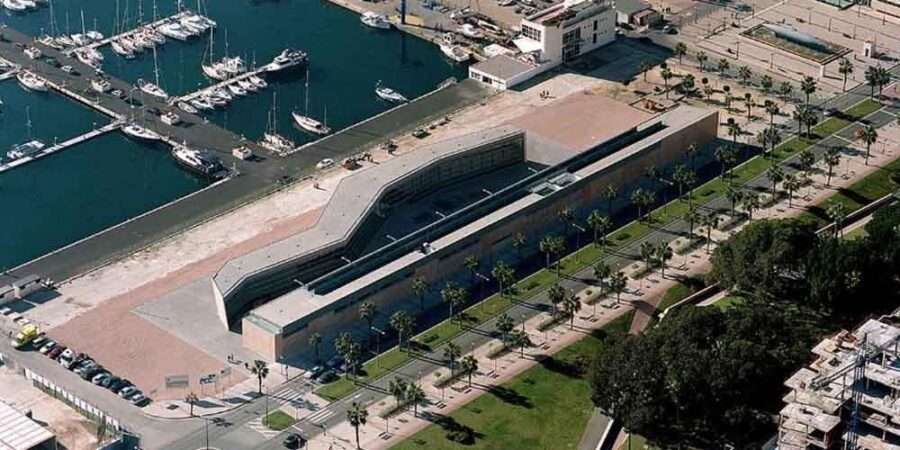
Spain has some of the most incredible museums in the world, with magnificent modern architecture, such as the City of Arts and Sciences in Valencia, the Museum of Contemporary Art of Barcelona (MACBA) in the Catalan capital, and the Reina Sofía in Madrid. Still, an unrivaled museum dedicated to underwater exploration and archeology is the National Museum of Underwater Archeology in Cartagena, Murcia.
This museum receives hundreds of visitors every day. It has all the essential services and elements that make it one of the most important museums in terms of underwater research and the preservation of cultural heritage.
Let’s explore this magnificent museum from various perspectives, from its architectural design to the relevance of its exhibitions.
Table of Contents:
- The National Museum of Underwater Archaeology in Cartagena
- What Is the National Museum of Underwater Archaeology?
- Location of the National Museum of Underwater Archaeology
- Story and Architecture
- Cartagena Curiosities
- What Can We Find in this Spain National Museum?
- What Other Museums Can We Visit in the Zone?
- Visit the ARQUA in Cartagena, Murcia, Spain
- Enjoy Your Private Paradise in Villa Murcia!
What Is the National Museum of Underwater Archaeology?
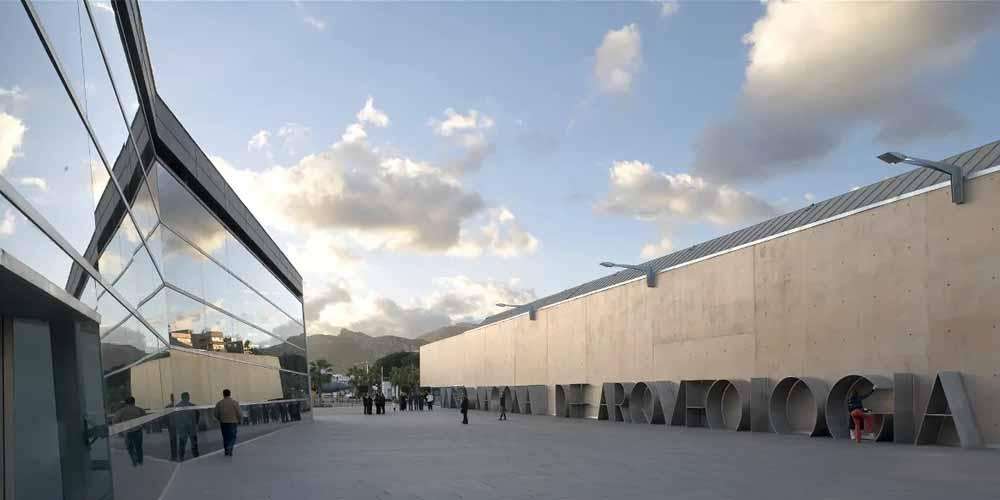
The National Museum of Underwater Archaeology, or ARQUA—a mix of the Latin words Archaeolgia and Aqua—is an international institution whose mission is to discover, collect, and preserve the rich underwater archaeological heritage of the Mediterranean and surrounding bodies of water. This museum is also known as Museo Nacional de Arqueología Subacuática, or “ARQVA,” in Spanish.
The National Museum of Maritime Archaeology and the National Centre for Submarine Archaeological Research were created in 1980 and officially opened in 1982. The museum’s opening marked the first step in deep research into the coast and a professional program of diving and subaquatic archaeology courses. With the opening of this marine archaeology museum, the Laboratory for Water-Saturated Archaeological Wood was created.
Currently, The National Museum of Underwater Archaeology has several projects whose main goal is to promote the subwater cultural heritage of the Region of Murcia. These include the Maritime Archaeological Heritage Route in Spain and Portugal and Archeomed, which studies and restores the maritime cultural heritage of the Mediterranean.
The ARQUA also boasts some important archaeological interventions, especially in collaboration with other institutions. Three of the most important are the archaeogeophysical prospecting in the bay of Cartagena, which was carried out with the Aurora Trust Foundation; project Bajo de La Campana, in collaboration with INA; and conservation and protection in situ on the site of the Phoenician boat Mazarron 2.
Location of the National Museum of Underwater Archaeology
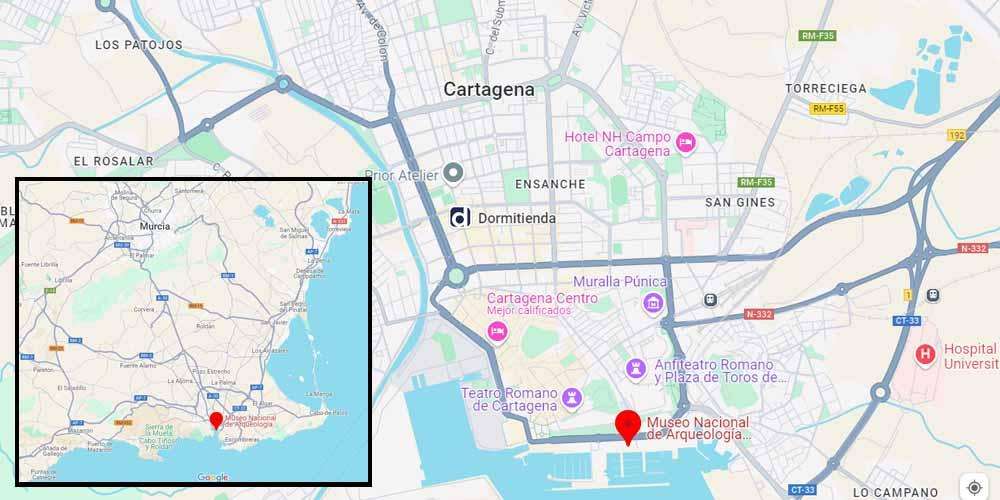
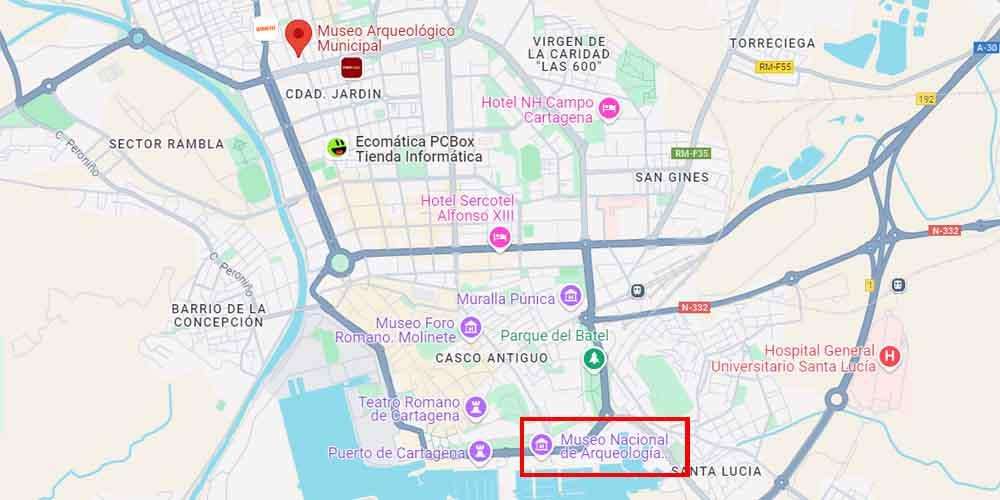
The National Museum of Underwater Archaeology is located in the Paseo del Muelle Alfonso XII, Cartagena, a Spanish town on the Mediterranean Sea’s border in the region of Murcia, in the southeast part of Spain. The city was founded by The Carthaginian Hasdrubal in 227 B.C.
This two-building museum and all its facilities are easily accessible since they are located in a highly crowded area near the center of the city.
The ARQUA is housed right on the harbor in Cartagena, in front of where the cruise ships dock. This way, the building is directly related to the ocean—the Mediterranean Sea and the neighboring sites—and integrates a crucial part of the city’s history.
Address: P.° Alfonso XII, 30202 Cartagena, Murcia, Spain.
Schedule: Tuesday through Saturday, 9:30 a.m. to 8 p.m.; Sunday, 10 a.m. to 3 p.m.; Monday close.
Telephone: +34 968 12 11 66
Google Plus Code: H2X9+3V Cartagena, Spain
Sunday: Free Entrance
Story and Architecture
In 1992, the Cartagena Port Works Board—the city’s Port Authority—decided to donate a piece of land to the city. This site would be the new museum space, so a new architectural project with a total area of 2,800 m2 came to light. The architect who developed this project was Guillermo Vázquez Consuegra, who designed a preliminary project contemplating 6,000 m2 of construction.
Construction began in January 2001 following a bidding period. Finally, on January 23, 2003, the cornerstone was placed. The new headquarters of this Museum of Underwater Archeology was inaugurated in 2008.
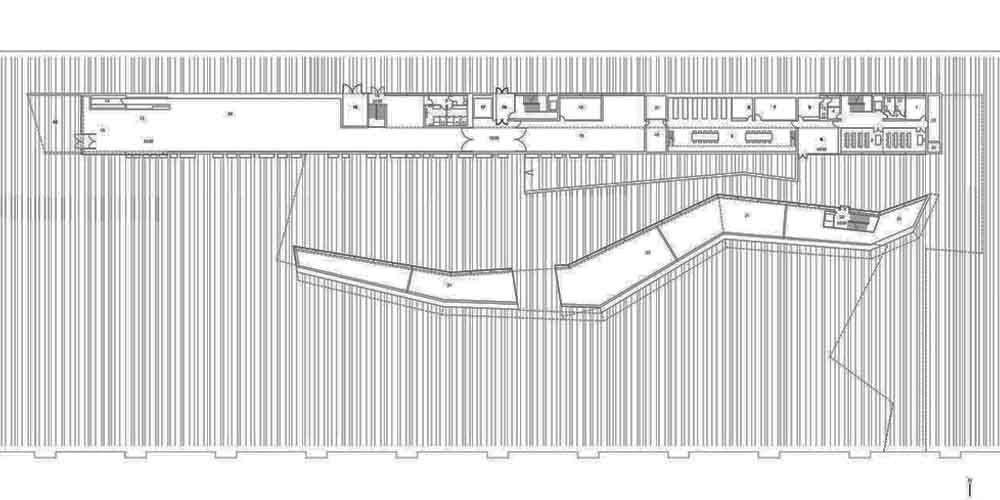
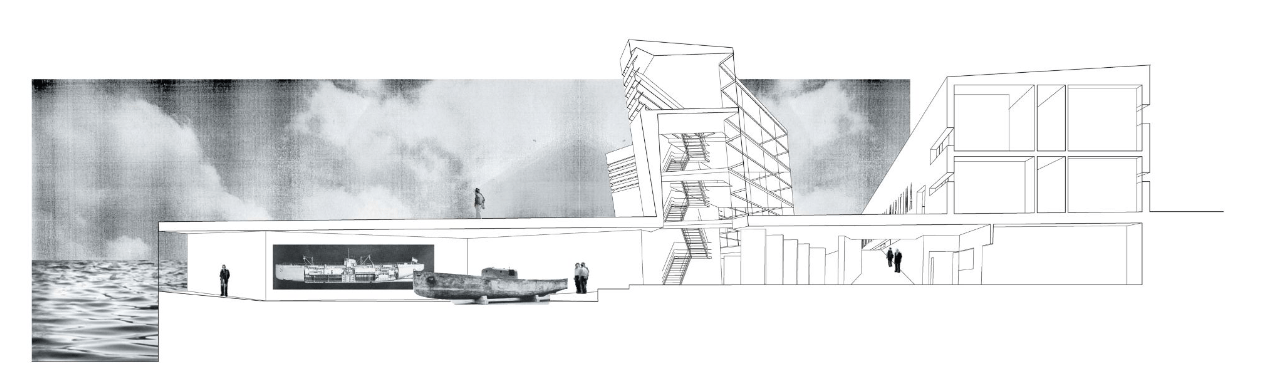
The museum’s architecture includes two volumes that emerge at the low level but are linked to the underground level, as you can see in the draft at the beginning of this section. This lower level is occupied by several connected galleries that form a route. This section also has a viewpoint at the edge of the sea from which you can see the promenade and the port.
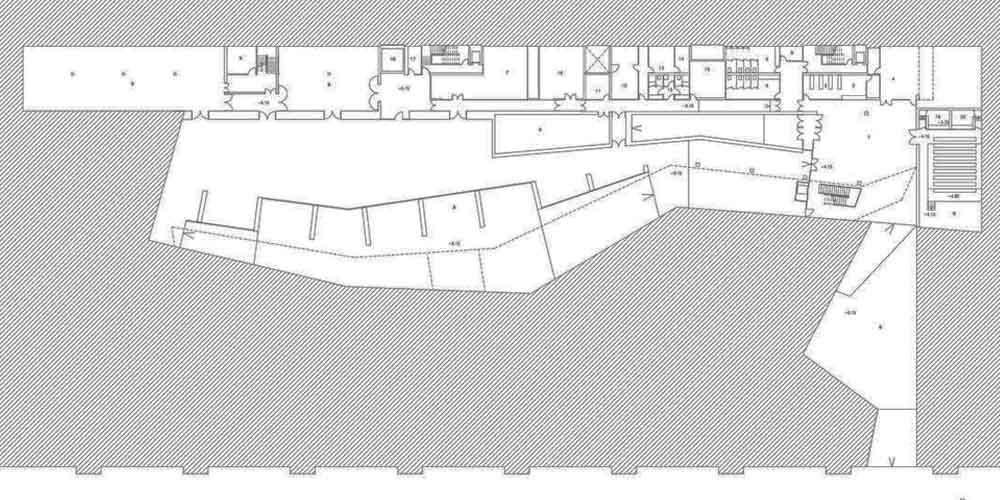
The museum’s architecture has an open space without significant walls—rather panels—and transparent glass that builds the rooms and sections. In this way, we can move freely through the two levels that make up the museum using the connections, stairs, and elevators. The two buildings form an impressive modern structure, joined below ground level and designed to create an underwater effect.
The museum is mainly made of reinforced concrete, which creates large exhibition spaces. Wood is also used inside, giving it a marine feeling and adding color to the building.
Cartagena Curiosities
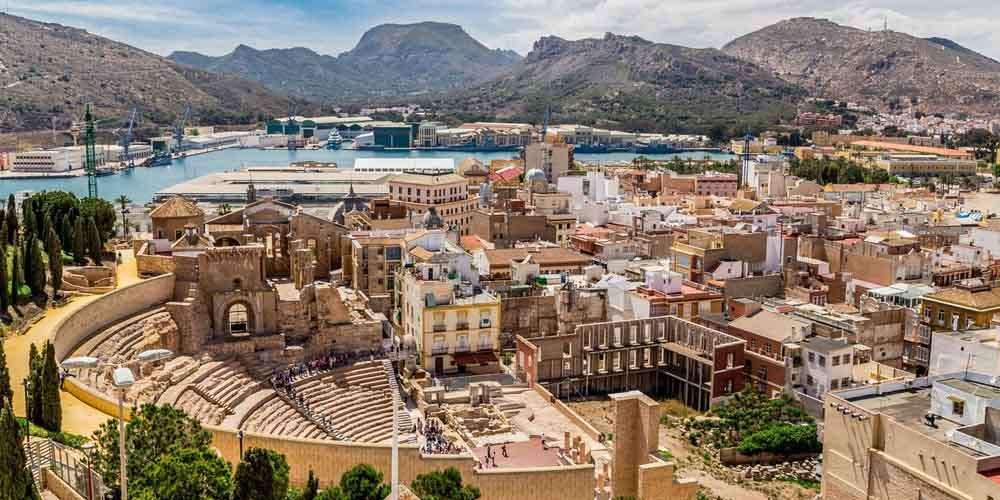
For most of its history, Cartagena’s economy was based on the extraction of silver, lead, and zinc from the Sierra Minera, located 15 kilometers away, and on the chemical industry (sulfur, explosives, and phosphate fertilizers).
Today, Cartagena’s economy is based mainly on the export of olive oil, citrus fruits, vegetables, wine, and alfalfa, as well as shipbuilding. However, Cartagena is world famous for its tourist attractions. It is due to its enormous cultural and artistic heritage that spans more than two thousand years of history.
Among other exhibitions and areas that we can see during our visit to the city are the Peral submarine exposed in the port, the numerous archaeological remains from the Carthaginian era, fortresses, military buildings, and numerous modern and neoclassical buildings. The Carthaginian and Roman festivities also stand out among the panoramas of the citadel, including their Holy Week processions.
What Can We Find in this Spain National Museum?
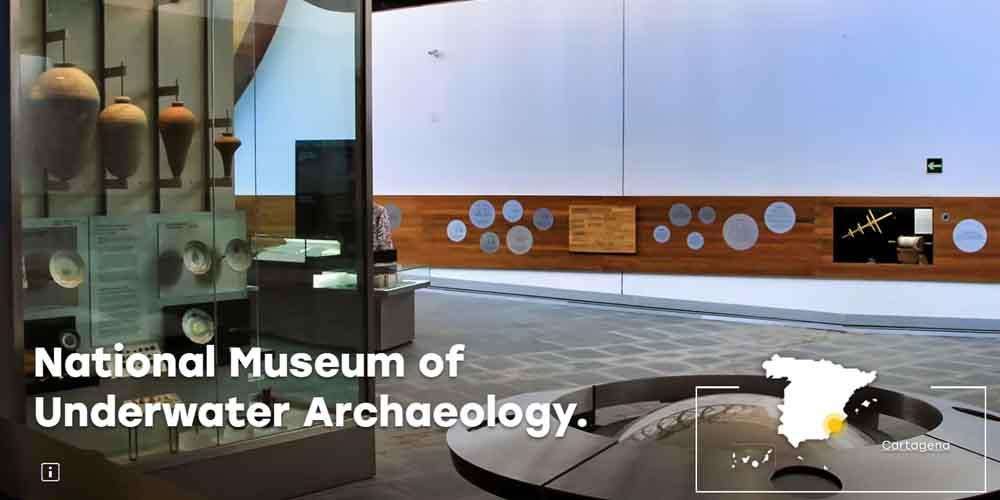
The permanent exhibition “La Navegación Oceánica.” is an exposition that hosts a significant part of the cargo of the frigate Nuestra Señora de las Mercedes.
The second floor of the museum is dedicated to explaining subaquatic archeology, with particular emphasis on the reality of the Murcia coastline and recent findings. The second floor also explains the scientific methodology and technology that the museum’s experts use when investigating. Consequently, we can find several models, dioramas, reproductions, interactives, and texts that show the wealth of the Mediterranean Sea and archeology.
The permanent exhibition also highlights the importance of the Convención sobre la Protección del Patrimonio Cultural Subacuático de la Unesco, or the National Plan for the Protection of Underwater Cultural Heritage, which has a single goal: the adoption of measures for the protection, conservation, restoration, and diffusion of the rich heritage that exists in the waters of Cartagena and surrounding. This permanent exhibition also emphasizes the disastrous consequences of looting on cultural patrimony.
Mare-Hibericum
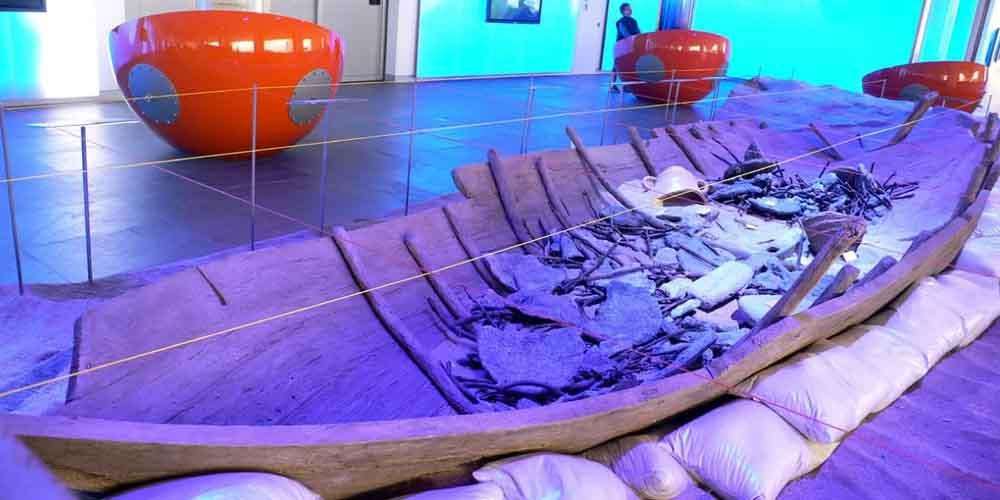
The museum’s lower level—at the ocean’s level—exposes cultural goods in chronological order. It allows us to review the history of underwater archaeology from prehistory to the 20th century.
Particular highlights in this exhibition include Phoenician inscriptions, a unique collection of elephant tusks, lead ingots, anchors, gold and silver coins of the Epoque, and a real-size model of a Roman merchant ship. All these objects correspond to a small part of the collection in this museum dedicated to the exhibition of valuable pieces of cultural heritage found in underwater archaeological excavations.
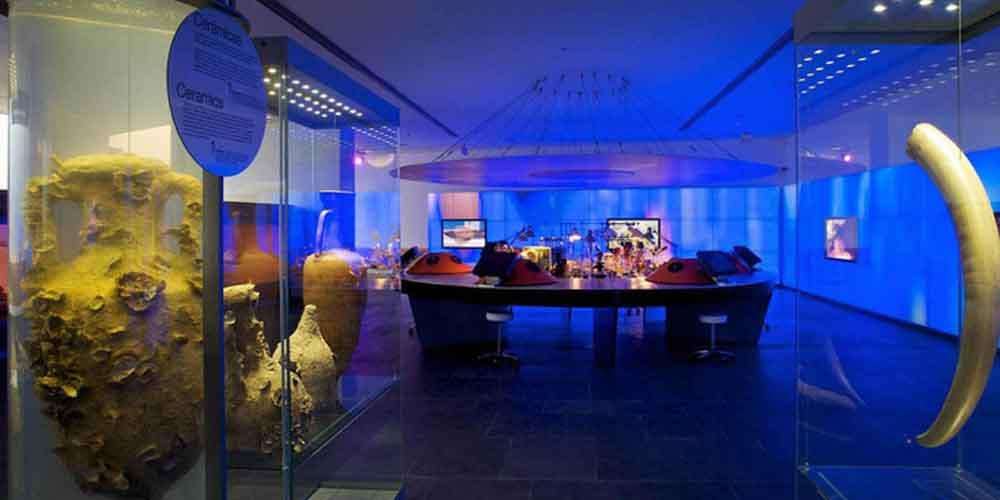
The museum also features intricate miniature dioramas depicting port activity and models of ships from different periods in the Mediterranean Sea. One notable exhibition is that of the Spanish frigate Nuestra Señora de las Mercedes, which sank off the coast of Portugal in 1804.
This exhibition gained significant attention due to the conflict between the Spanish government and Odyssey Marine Exploration, a treasure-hunting company. Ultimately, artifacts valued at around $500 million, including a considerable collection of traditional Spanish coins, were returned to Spain from Portugal and are now on display at the museum.
Extra Facilities
The museum has a stylish cafeteria located on the waterfront, from which we can see the sea and the surroundings of the port. It is the right place to enjoy a café and eat a sweet piece of pie. This space works as a basic restaurant where we can have food and drinks. There is also a parking space below the Paseo del Muelle Alfonso XII.
Children Activities
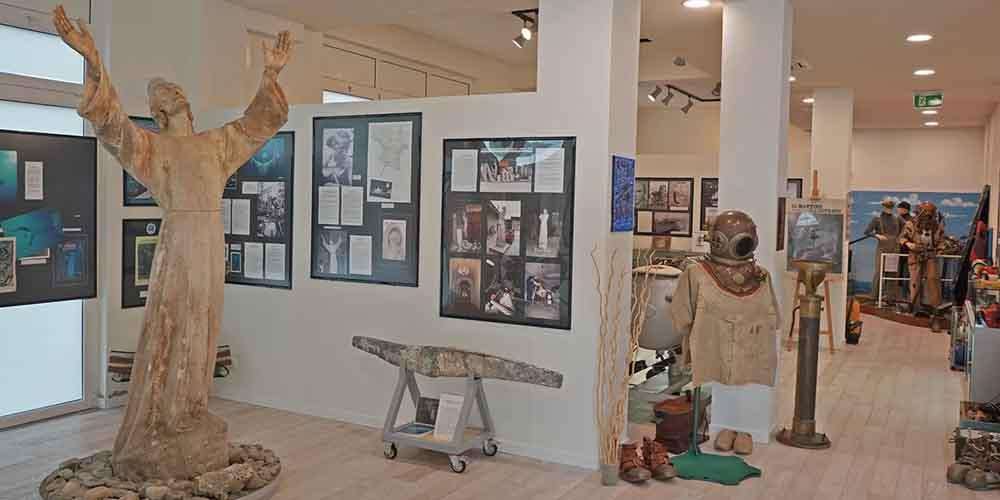
The lower level offers numerous hands-on interactive games and visual-tactile activities designed for children to learn from. These activities blend scientific and archaeological knowledge to provide children with easily digestible facts. ARQUA is undoubtedly a great place to spend an hour or two with children, especially during hot summer days.
What Other Museums Can We Visit in the Zone?
As you can see at this point in the article, the region of Murcia, especially Cartagena, is full of ancient culture and areas of interest. Consequently, we can visit other museums and cultural destinations, such as those mentioned below.
Cartagena Roman Theatre Museum
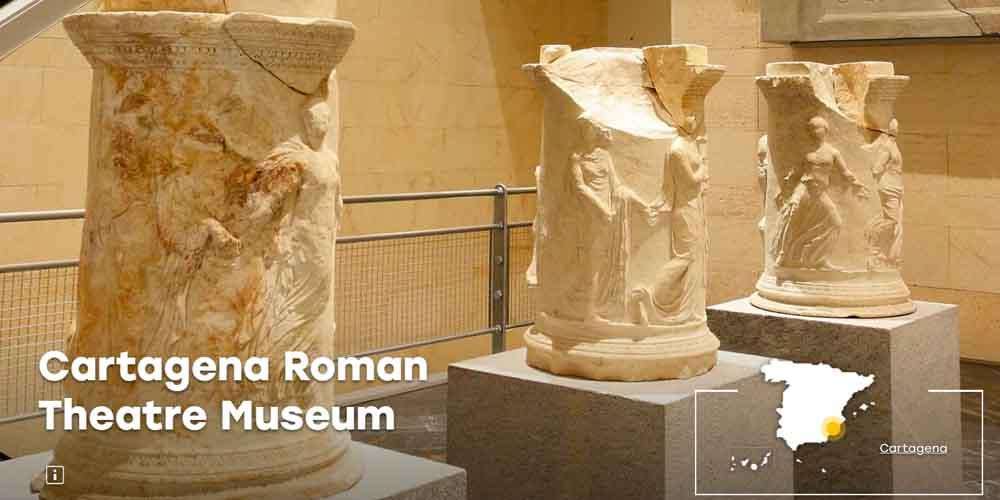
The Roman Theater Museum of Cartagena is 0.4 km away from the National Museum of Underwater Archaeology. This museum has a huge volume of pieces discovered in an excavation in the area of the Roman Theater of Cartagena, built between the 5th and 1st centuries BC. This museum seeks the restoration of a large part of the ancient city of Cartagena and its ancient theater. It contains multiple archaeological objects, some broken and others restored, and shows them through a clear exhibition of panels and dioramas.
fundacion@teatroromanocartagena.org
Tel.:+34 968504802
Website: http://www.teatroromanocartagena.org/index.asp?idioma=2
Municipal Archaeological Museum
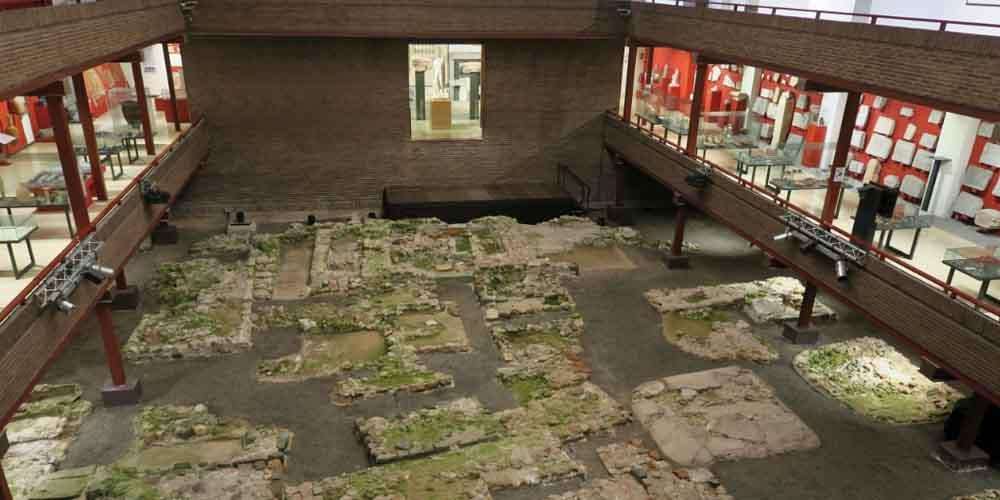
This museum is located 3 km from ARQUA, in the center of the city. It’s a good option for complementing knowledge about the story of antique Cartagena through archaeological science. It was built in 1982 over the Roman necropolis of San Antón. This museum stands out for containing the largest collection of Roman inscriptions in Spanish history. If you are a recurrent visitor to museums, the Municipal Archaeological Museum can’t be missed on your journey.
informacionmuseo@ayto-cartagena.es
Tel.:+34 968 12 89 68
Website: https://museoarqueologico.cartagena.es/
Visit the ARQUA in Cartagena, Murcia, Spain
The National Museum of Underwater Archeology is a good reason to take a trip to Cartagena and enjoy all its cultural heritage, restaurants, beaches, and sunny days. If you feel attracted by this type of panorama, we invite you to get to know the city and ARQUA and explore everything it exhibits. However, don’t forget to visit the beaches and coves in the area, such as Playa Chica La Manga and La Cala del Barco.
Enjoy Your Private Paradise in Villa Murcia!
Looking for the perfect place to stay in Murcia? We’ve got just the spot for you!
Villa Murcia – Your Private Paradise
Wake up to coffee on a sun-drenched terrace, unwind in a warm jacuzzi after a day of exploring, and end your evenings with dinners in the summer kitchen. Nestled in charming Santiago de la Ribera, Villa Murcia offers more than just a holiday—it’s your personal oasis of comfort, style, and unforgettable moments.
Highlights:
✔ Spacious living room with a large sofa and open kitchen – perfect for shared memories
✔ Three elegant, air-conditioned bedrooms with private terraces – your peaceful retreat
✔ Extra fold-out sofa in the living room – ideal for additional guests
Whether it’s a romantic escape, a family getaway, or a relaxing break with friends – Villa Murcia is your dream stay.