

Author: Villa Murcia Page 2 of 10

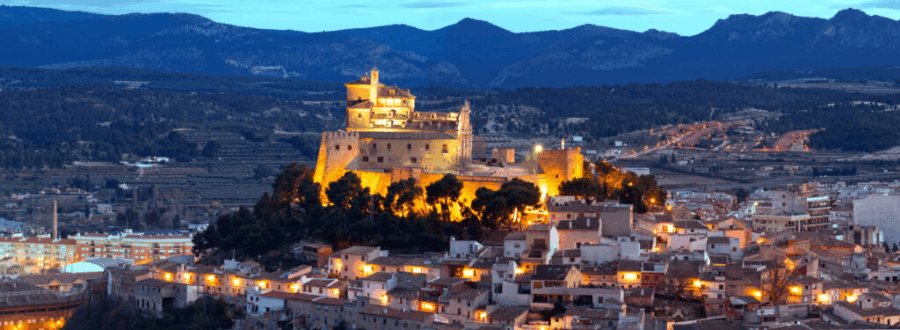
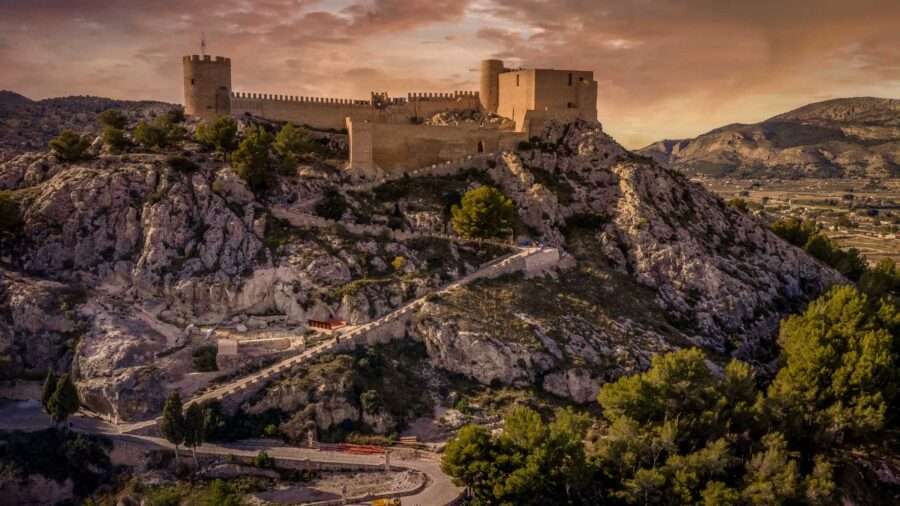
Castle of Castalla by Murcia

Castle of Castalla – Picturesque Sight in Alicante

Alicante and Costa Blanca Provinces are widely known for their crystal clear sea, sandy beaches, and remarkable culture. Within the province of Alicante, you’ll find many places of interest that reveal the secrets of ancient times. The first thing that comes to mind is, of course, ancient castles. Each of Alicante’s castles has witnessed many historical events.

For those who want to spice up their holiday on the Costa Blanca, we suggest taking a trip to the castles scattered throughout the province. Of course, the most famous is the castle of Santa Barbara in Alicante, but there are more than 100 ancient castles, fortresses, and watchtowers of great historical value in the province. However, we’re going to focus on one caste in particular – the castle of Castalla.

Table of Contents

About the Castle

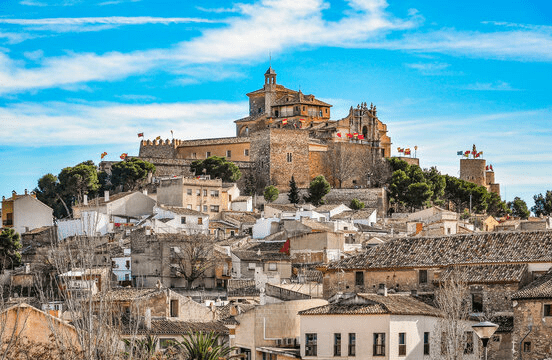
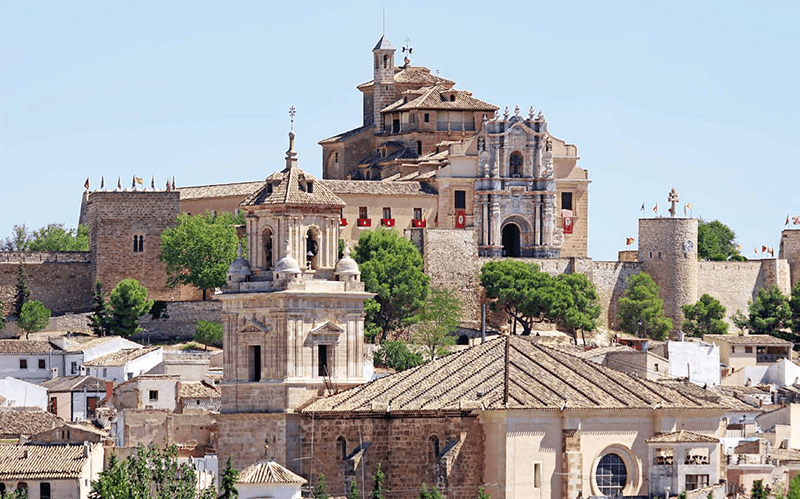
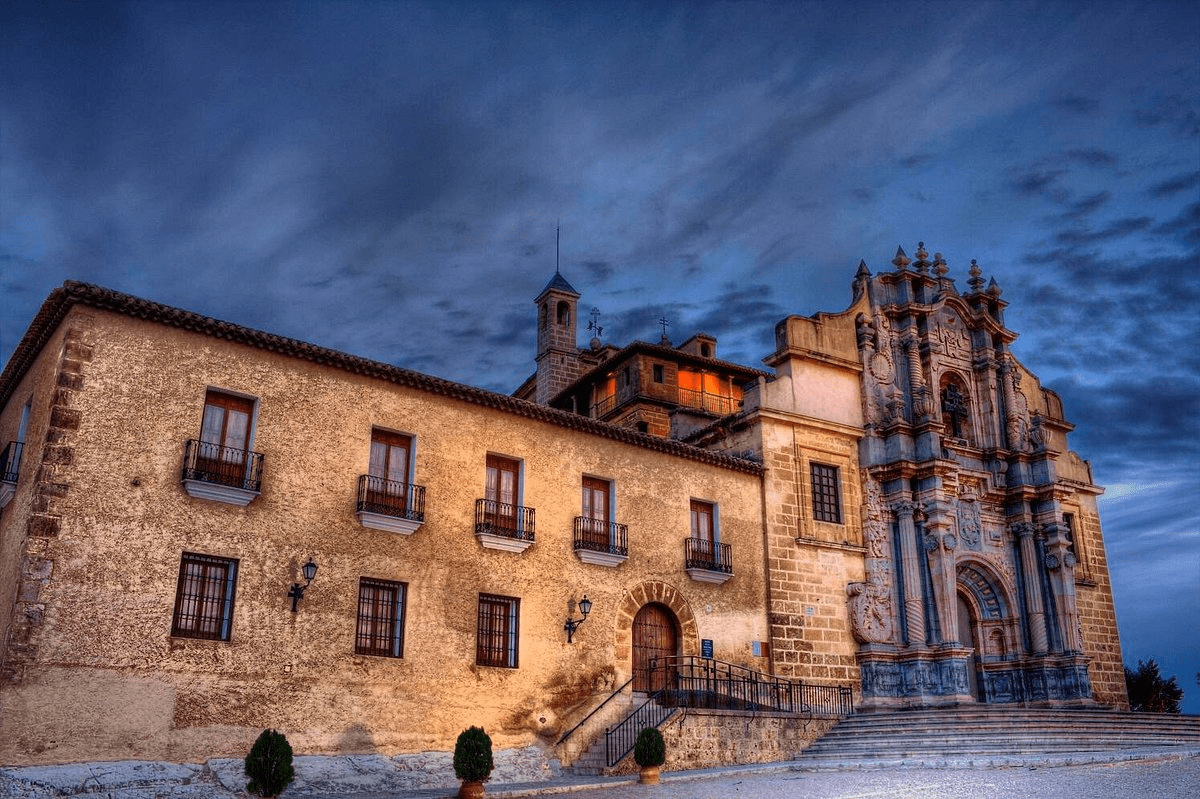
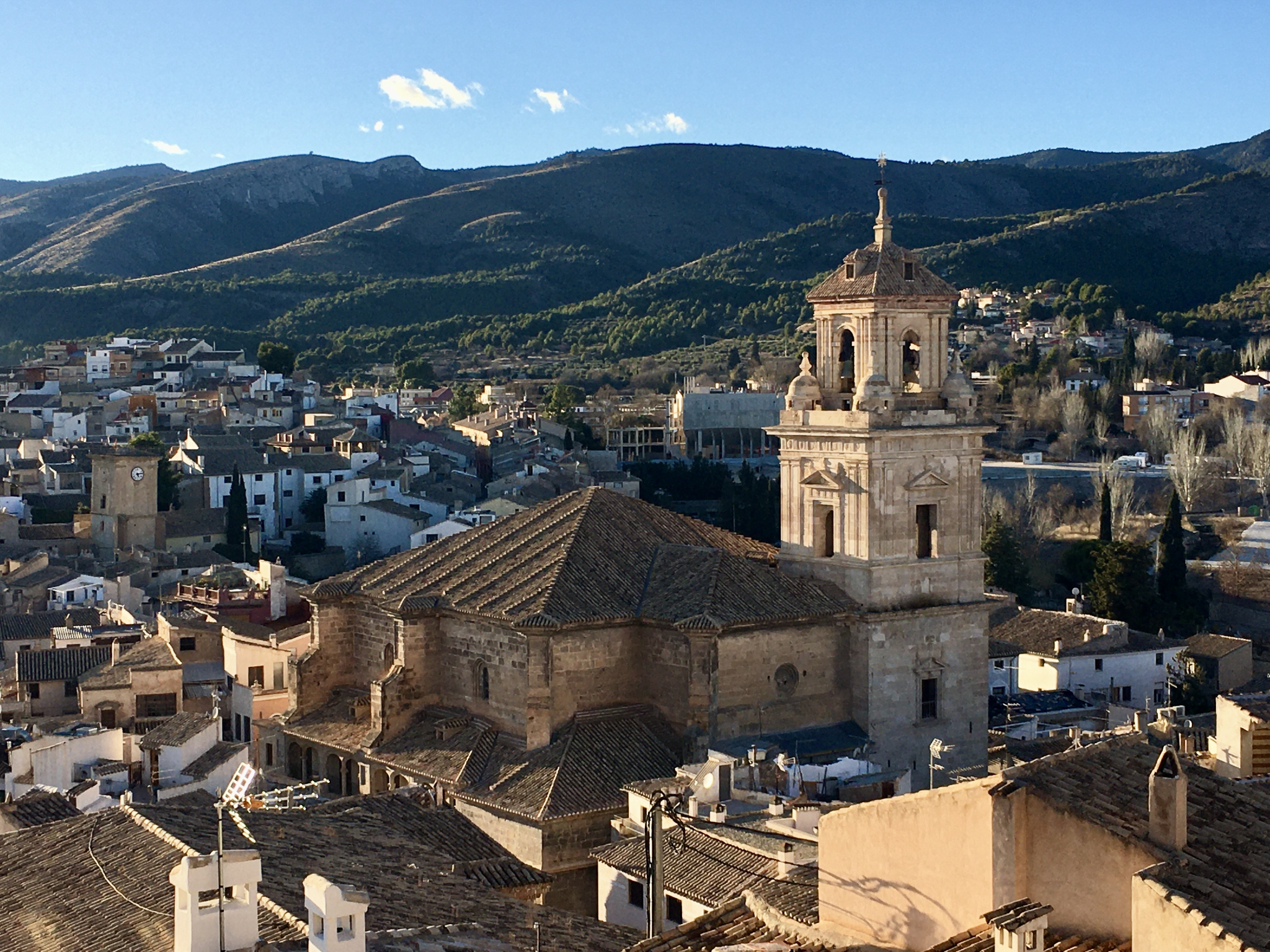
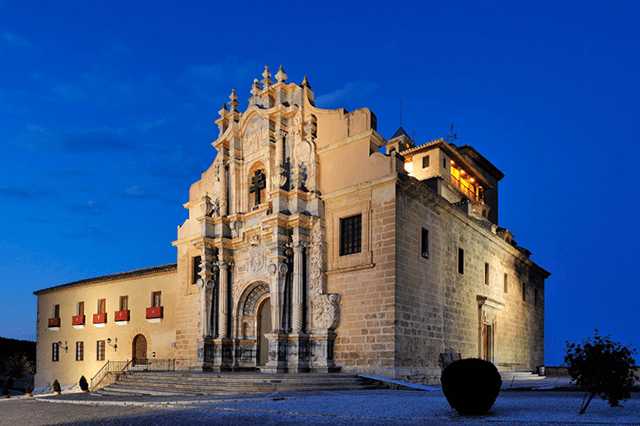
Castalla Castle is one of the main and best-preserved castles in Alicante, and it is recognized as a cultural heritage site. It was first built by Muslims in the 11th century and later rebuilt by Christians in the 14th and 15th centuries. The castle sits on a hill where people have lived since the 2nd millennium BC. One of its towers, Torre Grossa, offers amazing views of the Oia de Castalla region and the nearby mountains.

Location
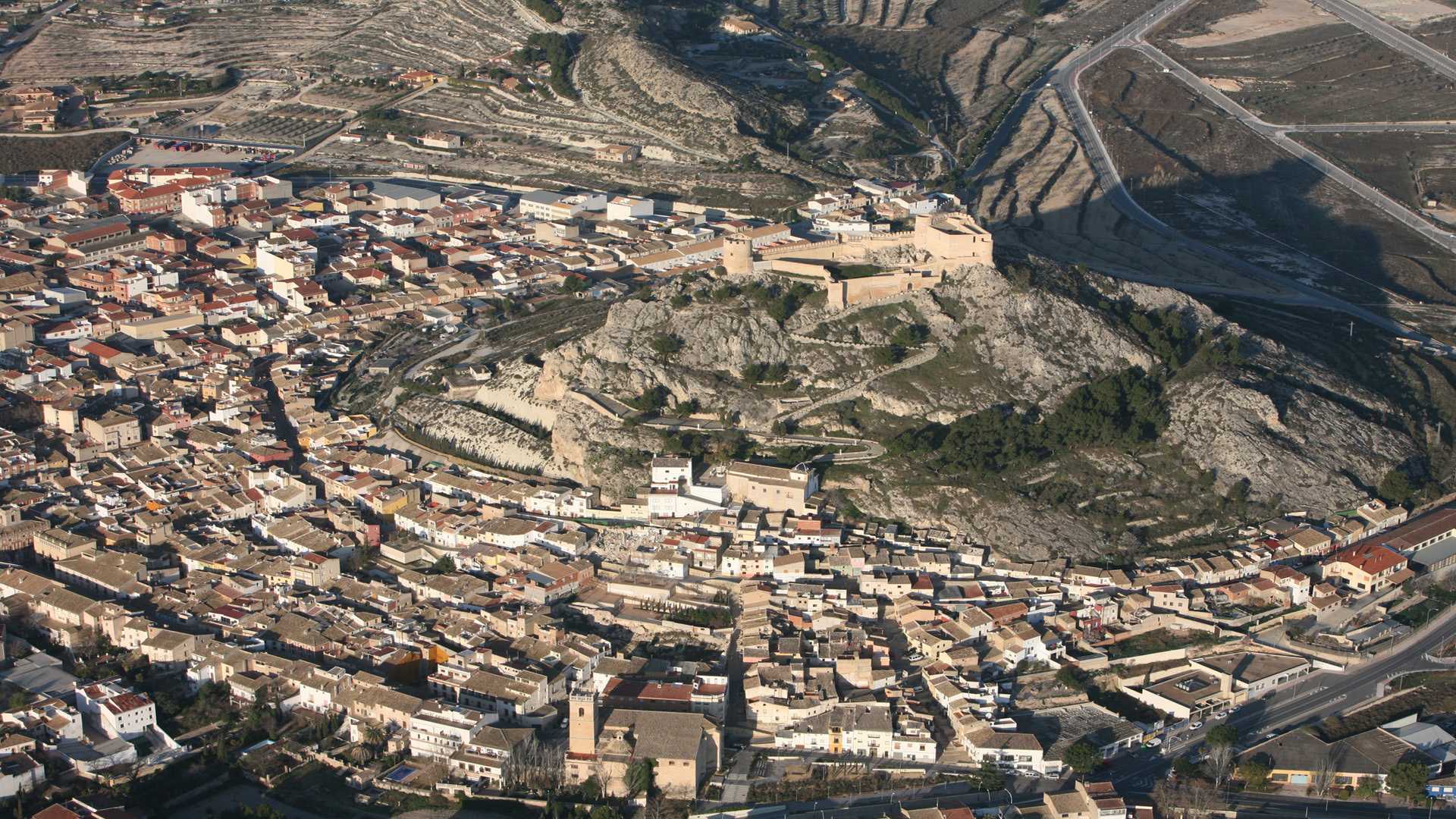
Mountainous area of Alicante

Castalla Castle sits on a hill overlooking the valley, with the town located around its base at an elevation of 680 meters above sea level. Castalla La Hoya, the region with Castalla as its capital, is a broad, T-shaped valley oriented to the southeast and surrounded by various mountain formations. Castalla is located in the west and southwest of La Hoya, nestled among the Maigmó Mountains (1,296 meters), Cati (1,260 meters), and Argenya (1,230 meters).

The climate of the area is characterized as a mid-mountain Mediterranean climate, with an average annual temperature of around 17 degrees Celsius. The region experiences relatively low rainfall, about 400 millimeters per year, but the surrounding mountain ranges promote cloud formation and localized precipitation, increasing with altitude. Snowfall is common during the winter months of January and February. The area is well-connected to Alicante and Valencia via the A-7 highway.

Historically, the castle has been a central point around which the town developed, with evidence of Neolithic, Bronze Age, Iberian, Roman (who named it “Castra Alta,” meaning high fortress), and Arab settlements. The castle has served as the core around which the fortified town emerged over time.

History

Due to its strategic location, the castle and the hill upon which it sits have been occupied by various civilizations, each leaving their mark over time. Prehistoric people, Iberians, Romans, Muslims, and Christians have all contributed to the rich history of this site. Now, you can become a part of this historical continuum as you embark on your journey through time.

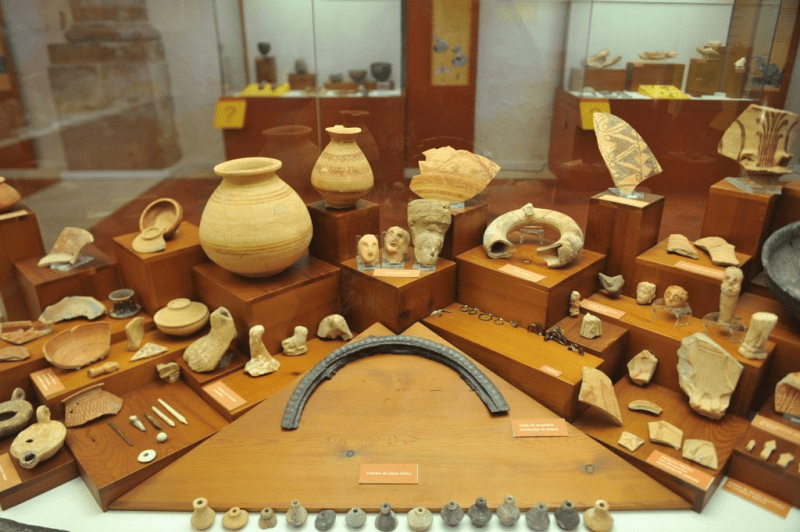
The area has been occupied since the Bronze Age (2nd millennium BC) and continued to be inhabited during the Iberian and Roman periods (2nd century BC – 5th century AD). Although successive occupations and transformations of the hill have led to the destruction of structures from these eras, some ceramic fragments have been preserved. Notably, one piece depicts the legs of what may be an Iberian warrior, adorned with boots and holding a falcata or sword (2nd century BC).
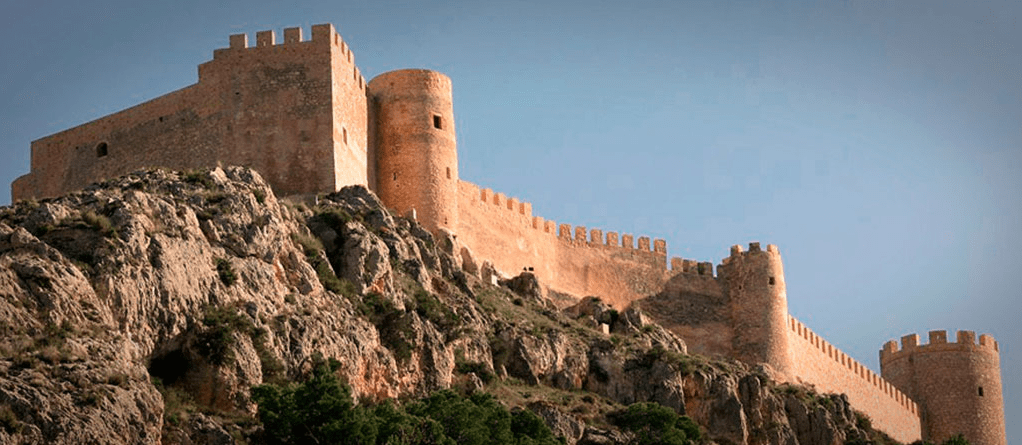
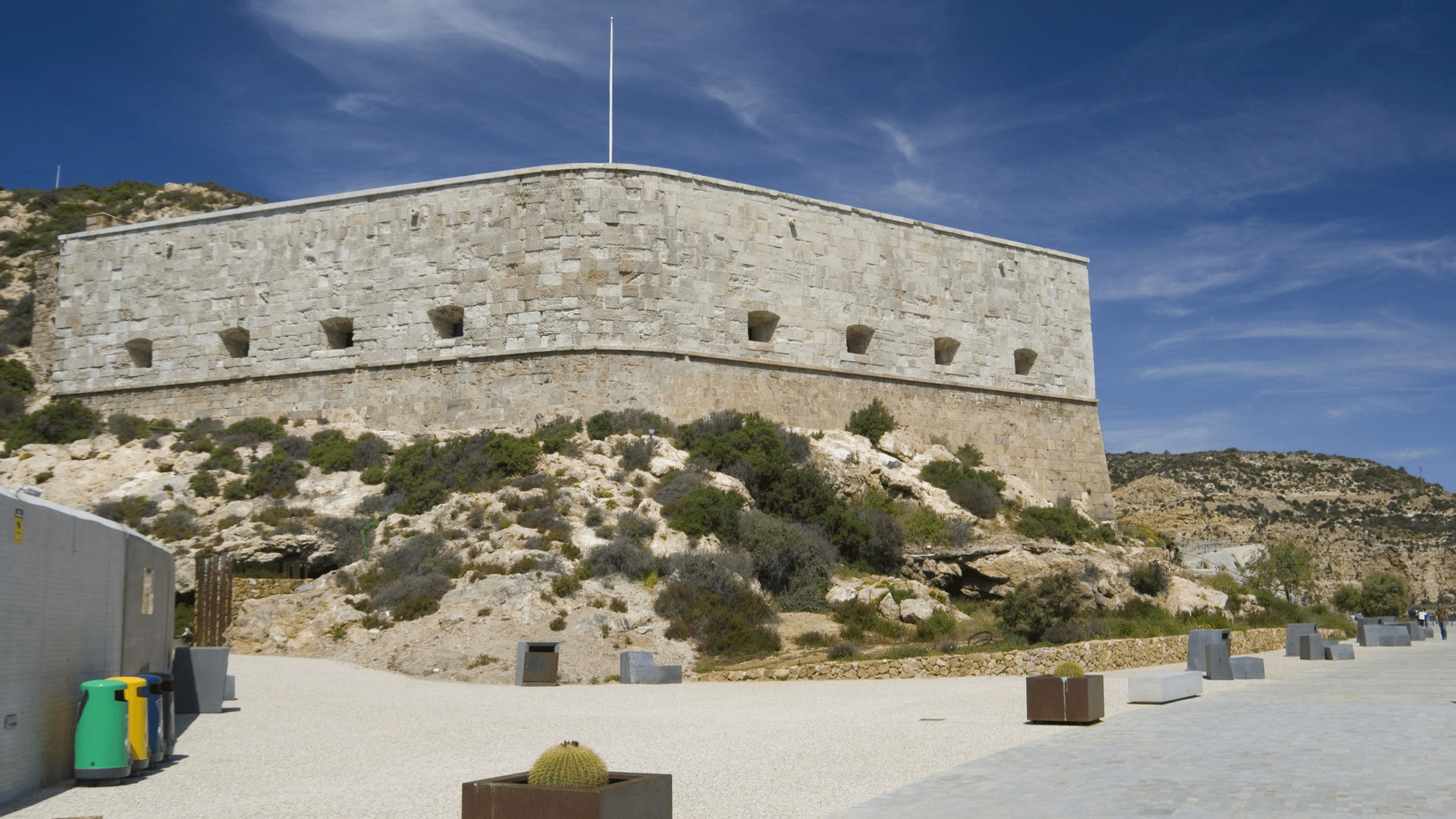
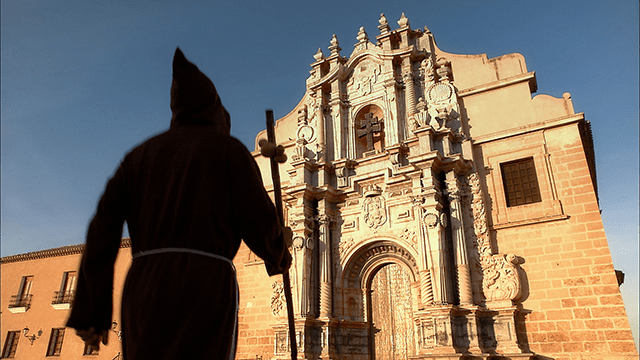
Castle of Castalla from below

In the 10th century, a Muslim settlement was established here, which evolved into a fortification (ḥiṣn) in the 11th century. This fortification was renovated in the 13th century and served as the administrative center for the Foia de Castalla district, under the jurisdiction of the taifa of Dénia. In 1244, the castle was peacefully incorporated into the Crown of Aragon and subsequently played a crucial role in defending the southern border of Aragon against the Crown of Castille.

The castle gradually deteriorated, and in 1362, King Pere IV decided to donate it to Ramon de Vilanova i Lladró, Baron of Castalla. The barony included the towns of Castalla, Onil, and Tibi. King Pere IV entrusted the baron with the task of restoring the castle to defend the area against potential attacks from Castille. From that moment onward, and throughout the 15th and 16th centuries, the castle underwent significant modifications, particularly in the planning and construction of the Palace and the Lower Ward. The Large Tower, completed in 1529, was the last major construction within the castle grounds.

In the 17th century, as the castle ceased to be used for military purposes, the tower fell into disrepair and became a silent witness to visits by the people of Castalla and the surrounding region. In the 1930s, the castle was looted by local residents in search of treasures. The social recovery effort, initiated by the council in 1984, has been crucial in ensuring the castle’s preservation. The results of this restoration are now evident for all to see.

Inside the Castle

Welcome to Castalla Castle, one of the most significant historical heritage sites. You’ll begin your journey by entering the Palace through its intricate defense system. Then, you’ll explore the Lower Ward and discover notable locations such as the “escola dels moros” (Moors’ school). From the heights of the Large Tower, you can appreciate panoramic views of the Foia de Castalla district. Imagine the early settlers of the hill and trace the origins and evolution of the castle through the centuries.

Ground Floor
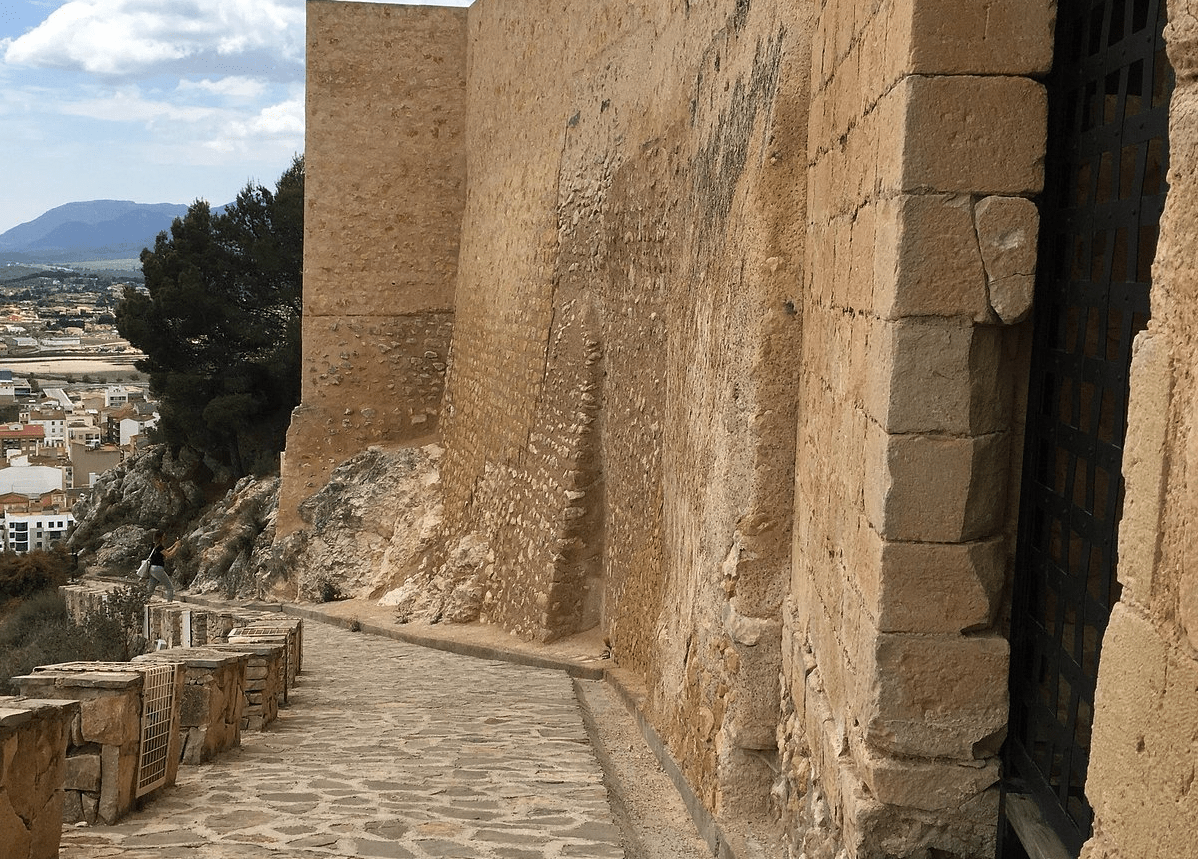
Near the entrance

You may have visited other castles, but what’s fascinating is that this three-story building was constructed in the 14th and 15th centuries as the residence of a feudal lord. Its defense system is notably effective, as access can only be gained through narrow passages. Additionally, the layout is designed so that each floor has its own independent and compartmentalized defense.

This, of course, made the castle extremely difficult to conquer. These rooms are all arranged around a courtyard featuring a cistern, locally known as the “comú de la reina” or “Queen’s commode.” The people of Castalla believed that the “Queen of the Castle” used this cistern as a toilet, hence its name.

First Floor

This floor would have accommodated the castle’s noble rooms, which were likely connected to the kitchen via a staircase that no longer exists. In the rectangular tower, the remains of the brick vault are in a state of consolidated ruin. This preservation method prevents further deterioration of the original remains while allowing the new structure to be observed and compared with the original.

Second Floor
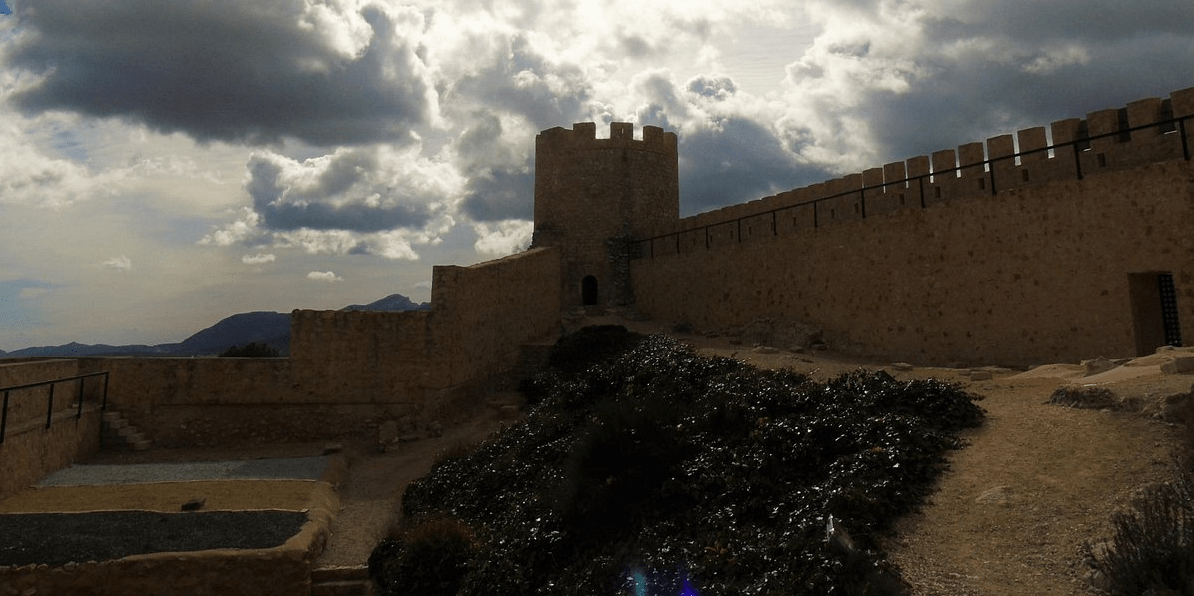
Second floor, near the large tower

As one ascends to the second floor, elements of the Palace’s defensive architecture become visible within the circular tower. Notable features include cross and orb-shaped loopholes, designed for the use of portable firearms, as well as traditional arrow slits. Upon reaching the second floor, historically used as the servants’ quarters, one can observe remnants of the original pine wooden beams. Additionally, this floor provides access to the Palace roof, offering splendid views over the entire region.

Semicircular Tower
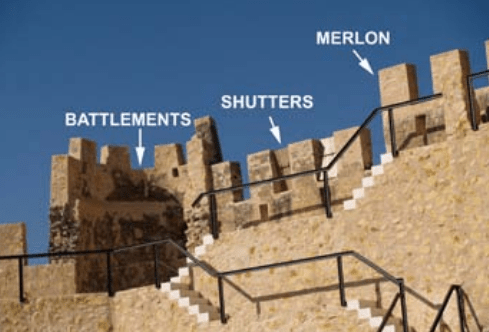
Semicircular tower

This expansive area, connecting the Palace to the Large Tower, is flanked by two straight walls. When the tower was constructed in 1529, the original appearance of the Lower Ward was significantly altered. This area, however, suffered extensive damage during the pillaging of the 1930s, though it still retains remnants of the various domestic quarters that once existed here.

While both are new, the east and west walls present distinct appearances. The west wall features merlons and battlements, while the east wall lacks these features. The reason for this discrepancy lies in the preservation of the original merlons and battlements on the west wall, which allowed for their reconstruction. Unfortunately, the east wall’s merlons and battlements were entirely lost, making their reconstruction impossible.

Large Tower
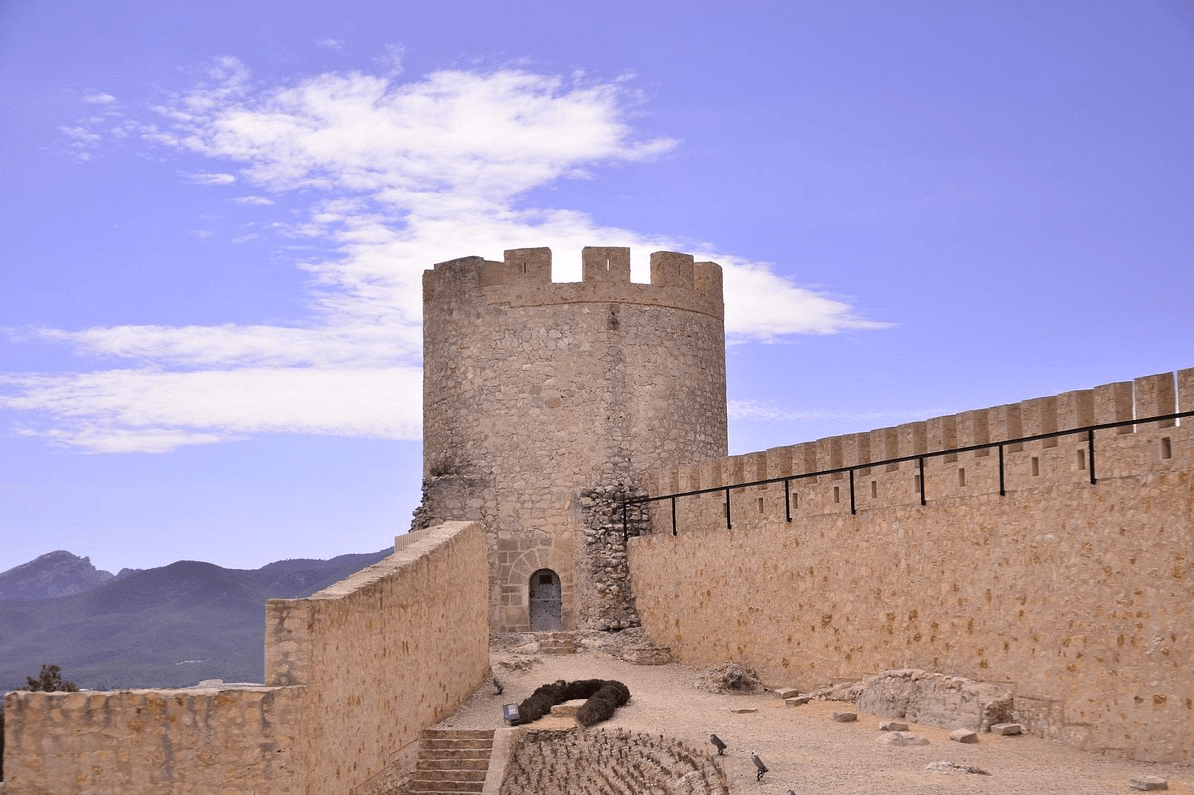
Large tower at the top

This tower holds significant importance for the people of Castalla, who have named it the Large Tower. Constructed in 1529, it features two floors and represents the most modern structure of its time. It is believed to have been part of a more ambitious project, which, for unknown reasons, was never completed. Evidence of this includes the ruins adjacent to the tower, which indicate the planned addition of new walls.

The tower boasts several notable artistic elements. Among these is the remnant of a headless gargoyle, likely representing a winged creature, which originally served to divert rainwater from the terrace. Additionally, there is a noteworthy inscription: the IHS monogram, a reference to Jesus of Nazareth. This monogram can be found on the west window of the outer wall on the first floor of the tower.

Entrance

To uncover the deepest secrets of this historic castle, you must proceed through this gateway. During its construction in the 14th and 15th centuries, ashlars were utilized. If you observe closely, you will notice certain engravings. Do you recognize them? These are the marks left by the stonemasons who carved the ashlars for this gateway, serving as their signatures. On the exterior, two structures project above the entrance. These are machicolations, which were employed to defend the entrance against attacks.

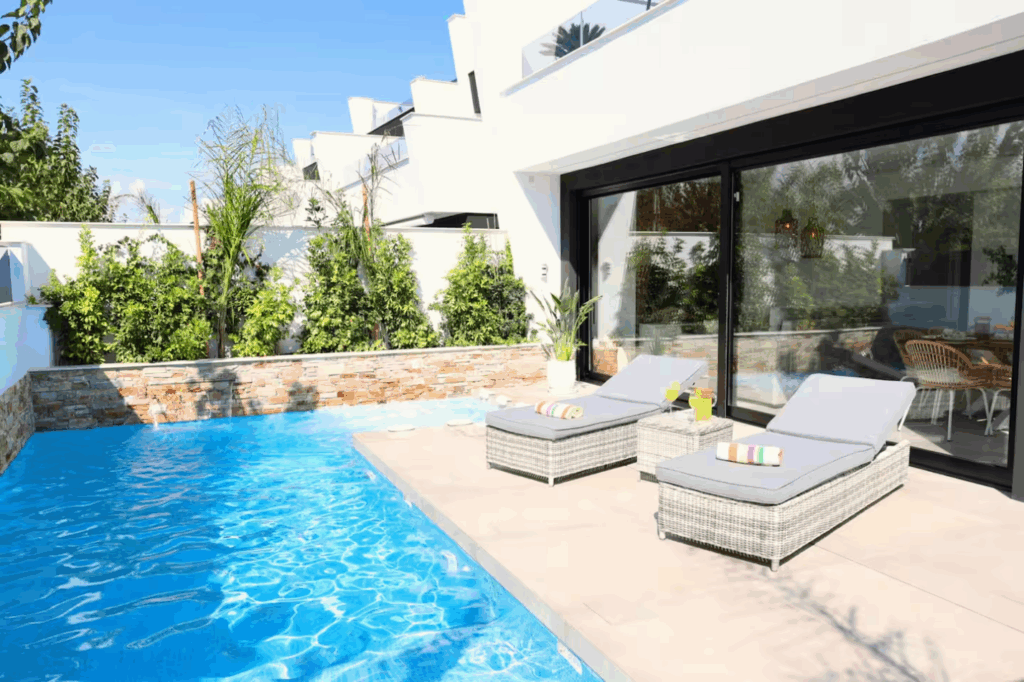
Enjoy Your Private Paradise in Villa Murcia!
Piscina com água

O conteúdo gerado por IA pode estar incorreto.

Looking for the perfect place to stay in Murcia? We’ve got just the spot for you!

Villa Murcia – Your Private Paradise

Wake up to coffee on a sun-drenched terrace, unwind in a warm jacuzzi after a day of exploring, and end your evenings with dinners in the summer kitchen. Nestled in charming Santiago de la Ribera, Villa Murcia offers more than just a holiday—it’s your personal oasis of comfort, style, and unforgettable moments.

Highlights:
✔ Spacious living room with a large sofa and open kitchen – perfect for shared memories
✔ Three elegant, air-conditioned bedrooms with private terraces – your peaceful retreat
✔ Extra fold-out sofa in the living room – ideal for additional guests

Whether it’s a romantic escape, a family getaway, or a relaxing break with friends – Villa Murcia is your dream stay.

Book now and experience the magic of the Spanish sun!

Summary

Visiting the Castle of Castalla offers a unique opportunity to immerse yourself in centuries of history and architectural splendor. This medieval fortress, perched on a strategic hilltop, provides breathtaking panoramic views of the surrounding landscape. The castle’s well-preserved structures, including its impressive ashlars and defensive machicolations, showcase the craftsmanship of the 14th and 15th centuries, offering a tangible connection to the past.

Exploring the castle grounds allows you to discover the marks left by stonemasons, adding a personal touch to the historical narrative. Additionally, the Castle of Castalla has been a silent witness to significant historical events and cultural transformations, making it a vital piece of Spain’s heritage. Whether you are a history enthusiast, an architecture lover, or simply seeking a picturesque destination, the Castle of Castalla promises a rich and rewarding experience.
Read More
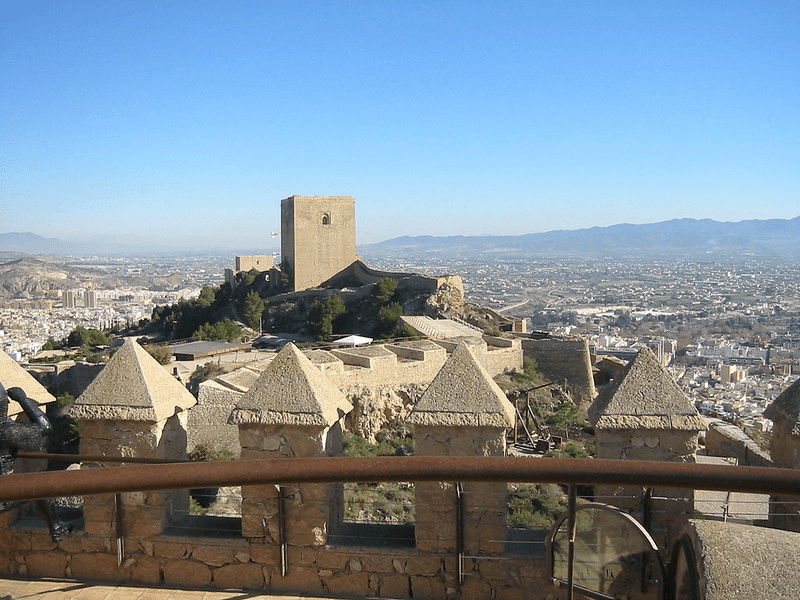
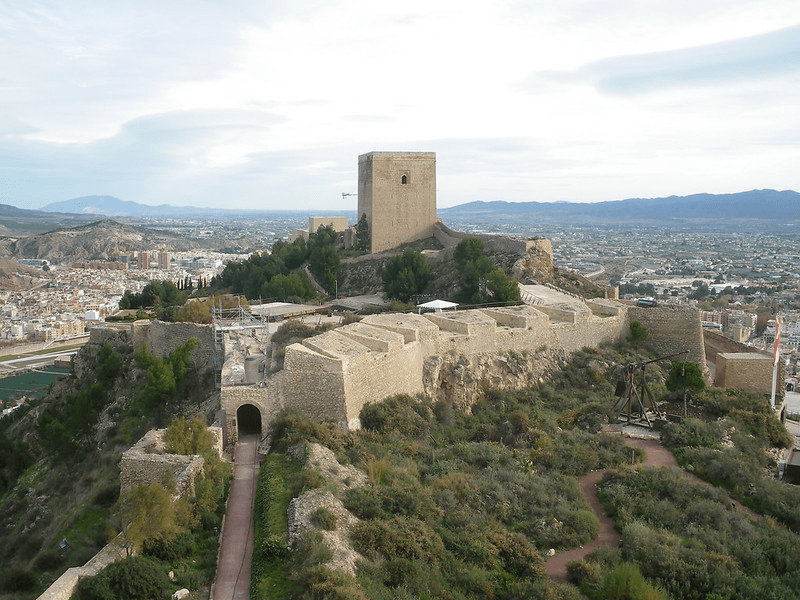
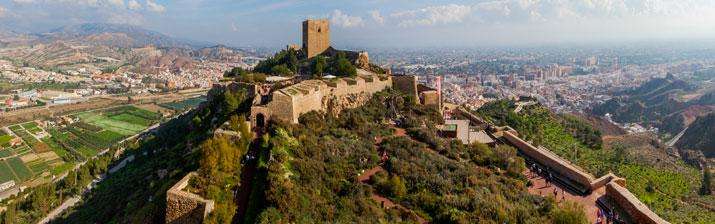
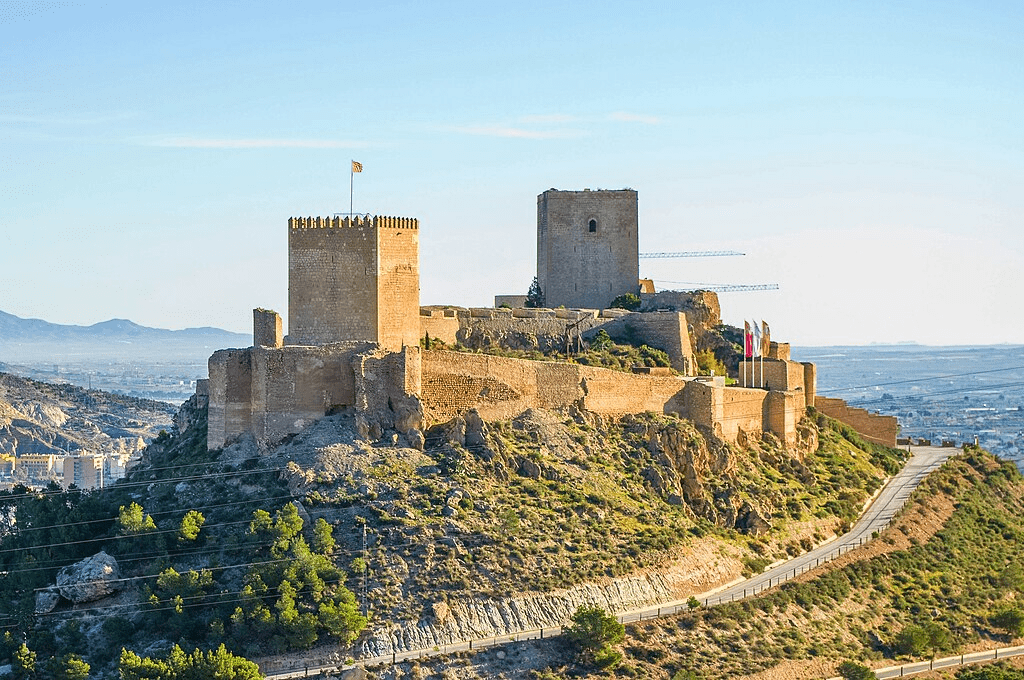
Castle of Lorca panoramic view

Castle of Lorca: A Medieval Marvel in the Heart of Murcia

If you’re planning a trip to Spain, the Murcia region has probably come up in your searches for “What to do in Spain.” This autonomous community offers a variety of charming destinations full of history, vibrant culture, and natural beauty. While some places are better known than others, there are hidden gems that deserve to be highlighted.

One of these lovely, less well-known cities is Lorca. The city, lying southwest of the provincial capital, surprises with its historical wealth and beauty. One of the region’s highlights and one of the largest castles in Spain is the majestic Castillo de Lorca, a medieval fortress that stands as a guardian of the past.

Table of Contents

History of the Castle

View of the Castle of Lorca
Wikimedia Commons

The castle’s history dates back to very ancient times, as evidenced by archaeological excavations that have revealed the presence of inhabitants since the Bronze Age. Therefore, it is difficult to determine the exact date when the first defensive bulwark was erected on the hill where Lorca Castle now stands. However, the first written reference to a castle on the site comes from Muslim sources from the 9th century AD, which mention the city of Lurqa as one of the most important in the Cora de Tudmir.

During the Islamic period, the castle became an impregnable fortress due to its strategic location on the hill of Lorca. The Espaldón wall (muro del espaldón) divided the castle’s interior into two parts. In the western part was the citadel, while in the eastern part was the neighborhood of Alcalá, which housed the Muslim medina. The fortress of Lorca, known at the time as Lurqa, was one of the most important cities in the Tudmir region.

After the Reconquista in 1244, the castle was taken by the infante Alfonso de Castela, who would later be established as King Alfonso X of the Kingdom of Granada. For more than 250 years, this fortress was fundamental in protecting two Christian territories. The Alfonsina and Espolón towers (King Alfonso actually started the building of the three towers, but one of them no longer exists), as well as the walls, were built or reinforced during this period, eliminating almost all the vestiges of the ancient Muslim fortress.

View of the Castle and defensive structures of it
Flickr /LindaH

Inside the castle’s citadel was the Jewish Quarter of Lorca, which was active until the Jews were expelled from Spain in 1492. The Jewish Quarter, physically separated from the rest of the city by walls, occupied an area of ​​approximately 5,700 square meters.

Excavations have revealed twelve houses and a synagogue from the 14th and 15th centuries, the latter being the only one found in the Murcia region. The neighborhood’s streets were narrow and irregular, following the slope of the terrain, with the synagogue located in the center.

After the fall of Granada in 1492, the strategic importance of the Castillo de Lorca diminished significantly. The expulsion of the Jews also led to the depopulation of the neighborhood of Alcalá. The castle fell into a period of abandonment, reaching a state of ruin in the 18th century. In the early 19th century, during the Spanish War of Independence, the castle was revitalized; walls and structures were repaired or modified, and a battery of cannons was installed. In 1931, Castillo de Lorca was declared a National Historic Monument, marking the beginning of its preservation as an important historical heritage site.

A Sun’s Fortress

Entrance of the Castle
Turismo E Region de Murcia

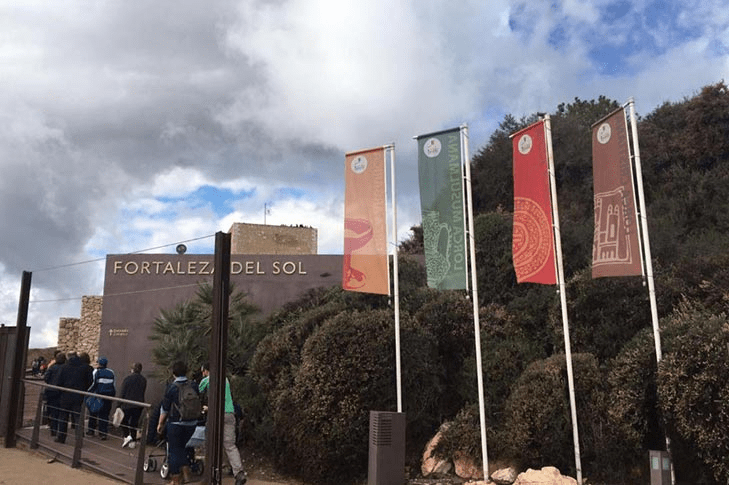
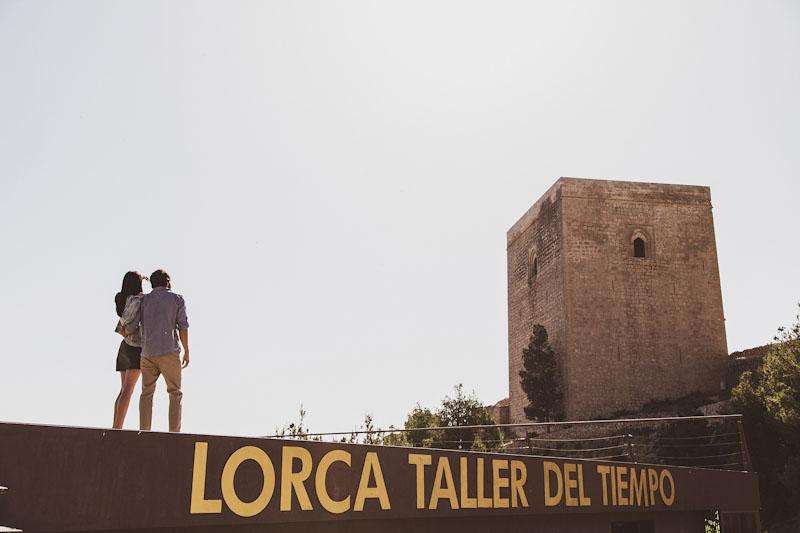
In 2003, the Lorca Taller del Tiempo, a project involving the local administration and business organizations of the municipality of Lorca, rehabilitated the Moorish fortification as a themed space dedicated to tourist visits and heritage interpretation under the name Fortaleza del Sol (Sun’s Fortress). The project combines learning with entertainment and leisure.

The castle’s current structural features include two main towers, the Alfonsina Tower and the Espolón Tower. These towers are prominent features designed to strengthen the castle’s defenses against external attacks. It is possible to climb to the top of the towers and admire a breathtaking panorama.

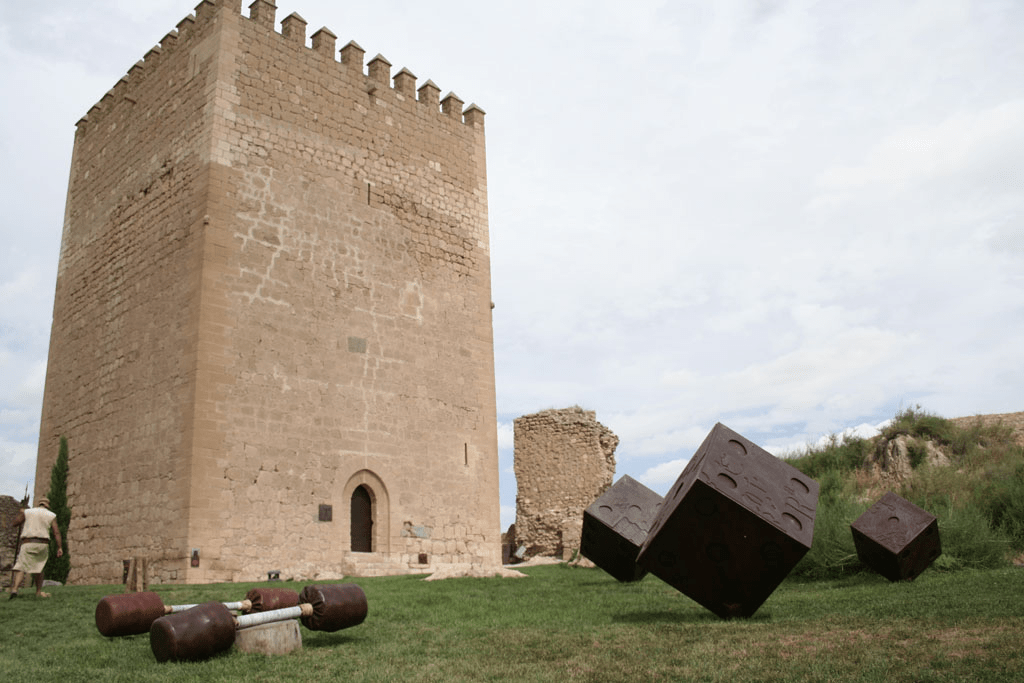
Torre Alfonsina
Lorca Taller Del Tiempo

The Torre Alfonsina is located in the central and highest part of the hill of the Castillo de Lorca. It is named after the former king and replaced an earlier smaller Muslim tower. The structure consists of three floors, all covered with brick vaults supported by a large central pillar. The top floor is illuminated by four windows, which, although simple, are functional and have no mullions. On the tower’s east side, there is an entrance gate and a cavity that possibly housed a foundation stone.

Torre del Espolón
Wikimedia Commons

The Torre del Espolón has a square plan and a high façade, characterized by masonry walls pierced by arrow slits and stars, as well as a door facing east. The structure includes a cistern, currently used as a dungeon, and two floors covered with ribbed vaults.

Within the castle grounds, visitors can also explore the ruins of the Jewish quarter, including a 14th-century synagogue. The remains of the Islamic wall, Muro del Espaldón, can still be seen.

Inside the Castle
Murcia Today

The whole tour was excellent. There was the option to tour the castle independently using the multilingual brochures and audio guides they provide. However, my group purchased a guided tour, and I must say it was well worth it. The guides were highly polite and well-informed. Throughout the journey, they told incredible stories that left me amazed at how important this castle was during the Middle Ages. Not to mention, the extensive and beautiful gardens of the castle allow you to explore and take stunning photos.

Part of the garden of the castle
Flickr / Luiyo

The place was very empty during my visit, which made it very pleasant. However, you must pay attention to the opening times; different parts of the castle cannot be visited throughout the day. The person at the reception was very friendly and clearly provided information about the different visiting slots (with an explanatory plan of the castle).

If you want to see all the parts, I recommend contacting the castle and coordinating your visit according to these slots.

Attractions and Services

Las Caballerizas del Castillo
Revista Gastronomo

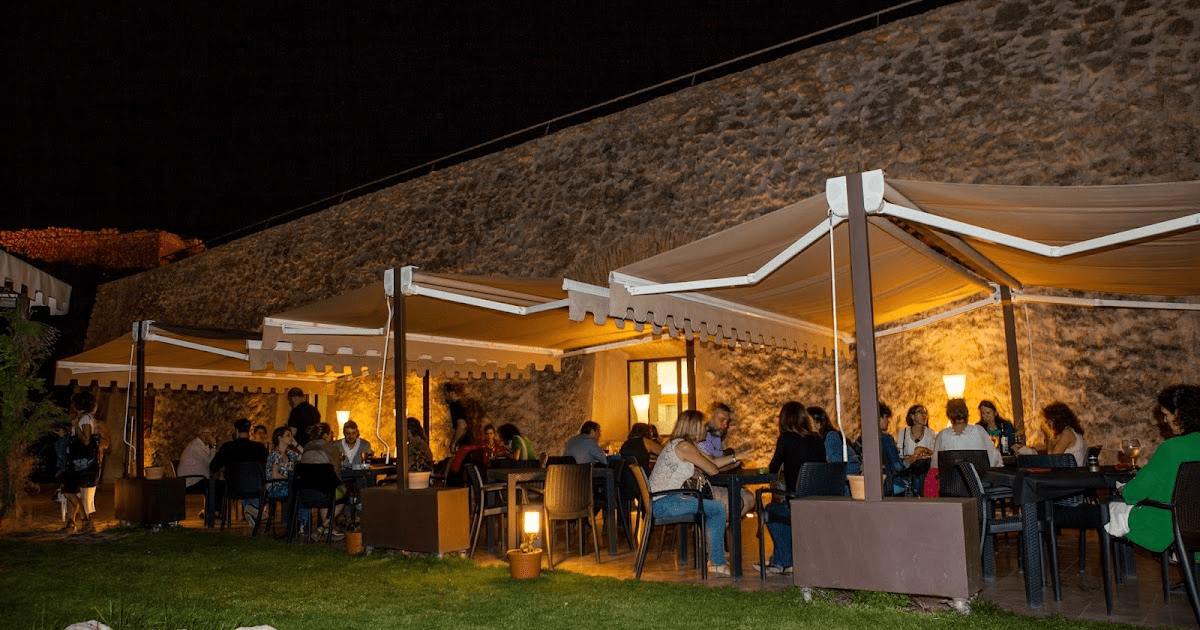
The fortress offers a wide range of attractions and services for visitors. Covering an area of ​​52,000 square meters, the gardens and various areas (including a children’s play area) of the castle are open to visitors. One of the highlights of the space is the opportunity to sample the delights of the restaurant “Las Caballerizas del Castillo,” which is located within the castle grounds and serves the most delicious food (not to mention the breathtaking views).

Parador De Lorca
Parador De Lorca

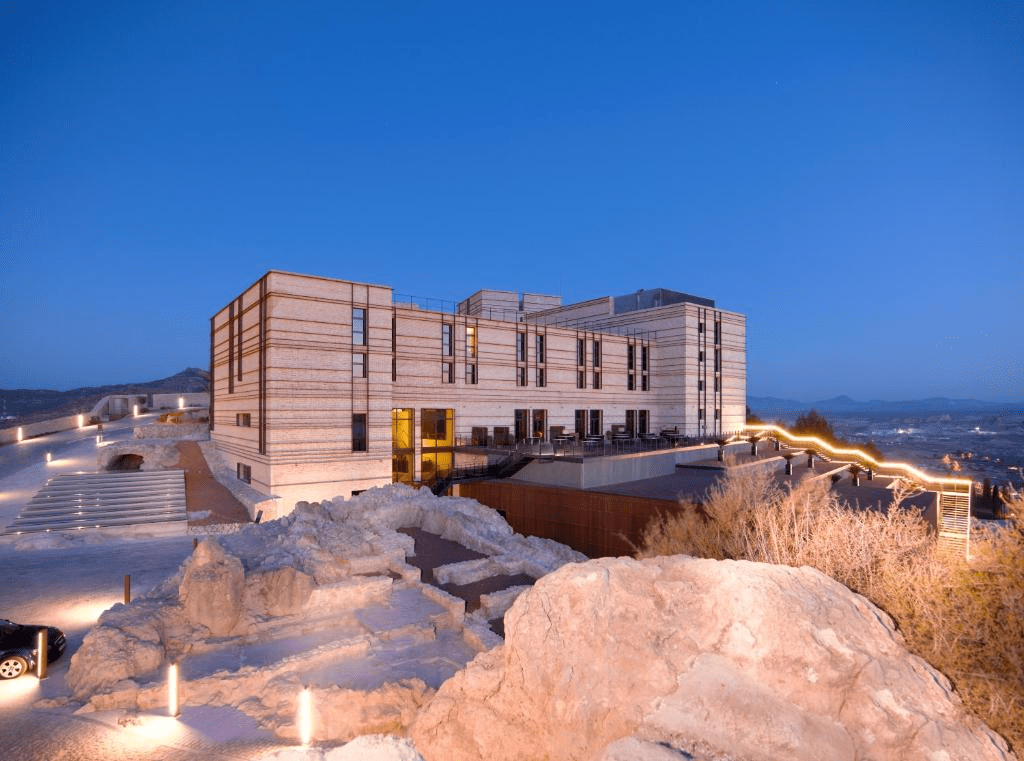
Also within the grounds is the Parador de Lorca. This modern hotel comfortably integrates the historic environment with contemporary amenities, such as a spa and heated pool, providing a unique experience of luxury accommodation and medieval tourism. I did not stay there, but I met a couple who did, and they really enjoyed the experience.
Another cool feature of the space is that it is entirely dog-friendly. On my visit, my pet accompanied me on the tour, and I even got a bandana and treats for him at the entrance! It is one of the few historical sites that allows pets. Furthermore, the place is certified by SICTED and is a member of the “Club de Producto Grandes Castillos y Palacios Turísticos de España,” standing out as a TripAdvisor recommendation.

Location and Opening Hours

The castle is located on a hill overlooking the town of Lorca. You can reach the castle on foot (about 30 minutes from the town center) or by taxi (less than 5 minutes). Cars are not allowed to park on the hill… but parking is available in the foot of the hill, in front of the visitor centre at the castle entrance.

Lorca is well served by intercity buses. The bus station, located in the town center, has regular services from various towns in the Murcia region. From there, you can take a taxi or walk to the castle.

Lorca’s train station, Lorca-Sutullena, receives regional Renfe trains. Once at the station, the castle is a short taxi ride or walk approximately 30 minutes away.

If you want to visit the castle, you need to be aware of the time of year, as it has different opening times throughout the year:

  • January, February, March, November, and December: Sunday to Friday, 10:30 am to 4:00 pm; Saturdays and national holidays, 10:30 am to 6:00 pm.
  • April, May, and October: Sunday to Friday, 10:30 am to 4:00 pm; Saturdays and national holidays, 10:30 am to 6:30 pm.
  • June: Sunday to Friday, 10:30 am to 4:00 pm; Saturdays and national holidays, 10:30 am to 7:00 pm.
  • July: Sunday to Wednesday, 10:00 am to 4:00 pm; Thursday to Saturday, 10:00 am to 4:00 pm and 6:00 pm to 10:00 pm.
  • August: Sunday to Tuesday, from 10:00 am to 4:00 pm. Wednesday to Saturday, from 10:00 am to 10:00 pm. August 10th, from 10:30 am to 8:30 pm. September: Sunday to Friday, from 10:00 am to 4:00 pm. Saturdays and national/bank holidays, from 10:00 am to 7:00 pm.

Last entry is allowed up to 30 minutes before closing time, and the castle is closed on December 25, January 1, and 6. On December 24, December 31, and January 5, the opening hours are special, closing at 2:30 p.m.

Lorca Castle: A Journey Through the Middle Ages

Lorca Castle
Flickr / Luiyo

Overall, it is an enchanting experience that offers a unique glimpse into the medieval past. This impressive fortress, once a crucial defensive stronghold on the border between the kingdoms of Murcia and Granada, allows history enthusiasts to immerse themselves in the region’s rich heritage. With its strategic importance and historical significance, the castle is a must-visit destination for those planning a trip to Spain. Including Lorca on your itinerary promises a vibrant and rewarding experience, bringing the fascinating world of the Middle Ages to life.

Enjoy Your Private Paradise in Villa Murcia!

Looking for the perfect place to stay in Murcia? We’ve got just the spot for you!

Villa Murcia – Your Private Paradise

Wake up to coffee on a sun-drenched terrace, unwind in a warm jacuzzi after a day of exploring, and end your evenings with dinners in the summer kitchen. Nestled in charming Santiago de la Ribera, Villa Murcia offers more than just a holiday—it’s your personal oasis of comfort, style, and unforgettable moments.

Highlights:
✔ Spacious living room with a large sofa and open kitchen – perfect for shared memories
✔ Three elegant, air-conditioned bedrooms with private terraces – your peaceful retreat
✔ Extra fold-out sofa in the living room – ideal for additional guests

Whether it’s a romantic escape, a family getaway, or a relaxing break with friends – Villa Murcia is your dream stay.

Book now and experience the magic of the Spanish sun!

Read More
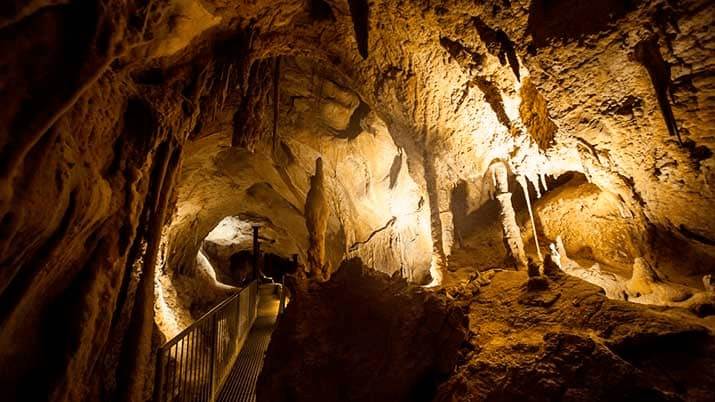
picture showing a bridge crossing one part of Cueva del Puerto

Discovering Cueva del Puerto: Murcia’s Famous Cave

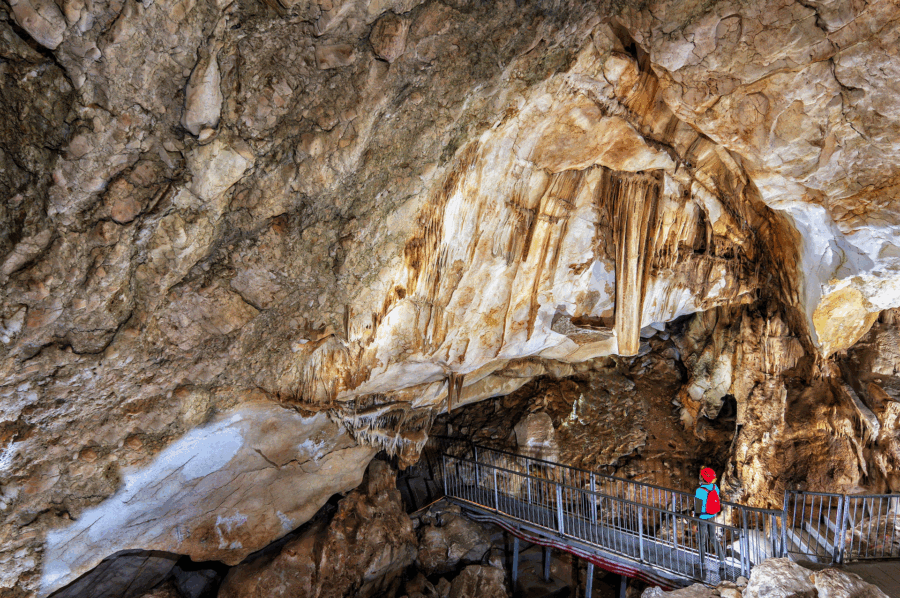
Cueva del Puerto is a natural wonder that captivates explorers and history enthusiasts alike. This remarkable cave, known for its striking geological formations and rich historical significance, offers a glimpse into the ancient forces that shaped the region. With its labyrinthine passages and stunning stalactites, Cueva del Puerto showcases nature’s raw beauty and holds secrets from the past that have intrigued researchers and adventurers for decades. Whether you’re a seasoned spelunker or a curious traveler, this hidden gem promises an unforgettable journey into the depths of Spain’s geological mysteries.

Here, we will show you everything you need to know about this amazing activity, which is waiting for you to explore. From what to expect to safety protocols, here’s everything you need to know about one of the most unique activities available in Murcia:

Table of Contents

Location of Cueva del Puerto

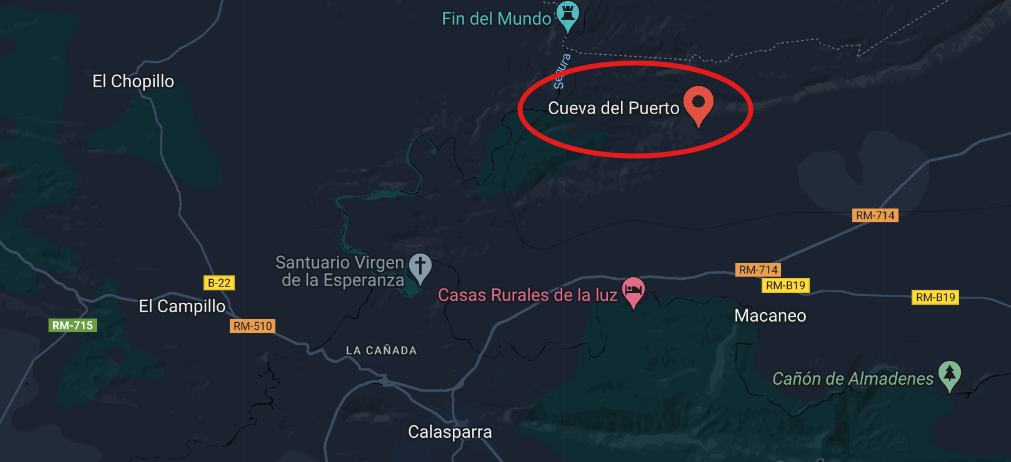
map of Calasparra in Spain showing Cueva del Puerto highlighted

This natural formation is ready to be discovered and lies in the region of Calasparra in Murcia. Spain offers some of the most unique experiences in Europe, and Murcia has many natural formations and landscapes that will make you feel like you’re in a totally different world compared to the urban chaos.

The route to the caves is a little far from the city centre, so we recommend planning how to get there before going to the destination. Thankfully, there are many ways to visit the caves, from buses to car ride apps.

The trip is fairly quick, and every KM you ride is filled with natural landscapes and amazing views, making it even quicker. If you’re going with a group of people to visit the caves, you can rent private transportation companies to take everyone. Depending on the size and the area where your hotel is located, the price can be really friendly.

What You Need to Know Before Visiting the Caves

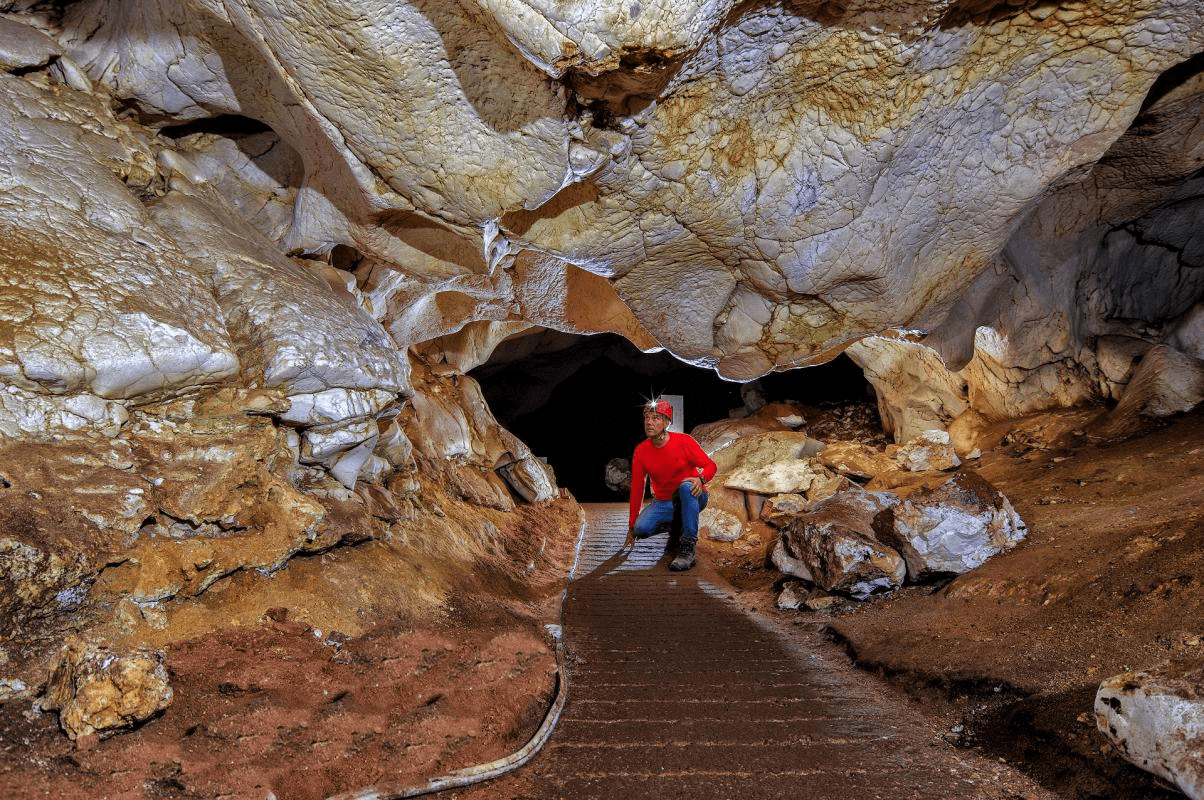
picture from the cave showing some of the paths created for tourists

Now, we will show you some information regarding the caves and what you must consider before packing your things for this unforgettable experience. Make sure to check all the details regarding the items below to ensure a good and safe experience.
We will cover everything you need to know, from the equipment to the guided tour details. Here’s everything about Cueva del Puerto and its magical experience:

When to Visit the Attraction

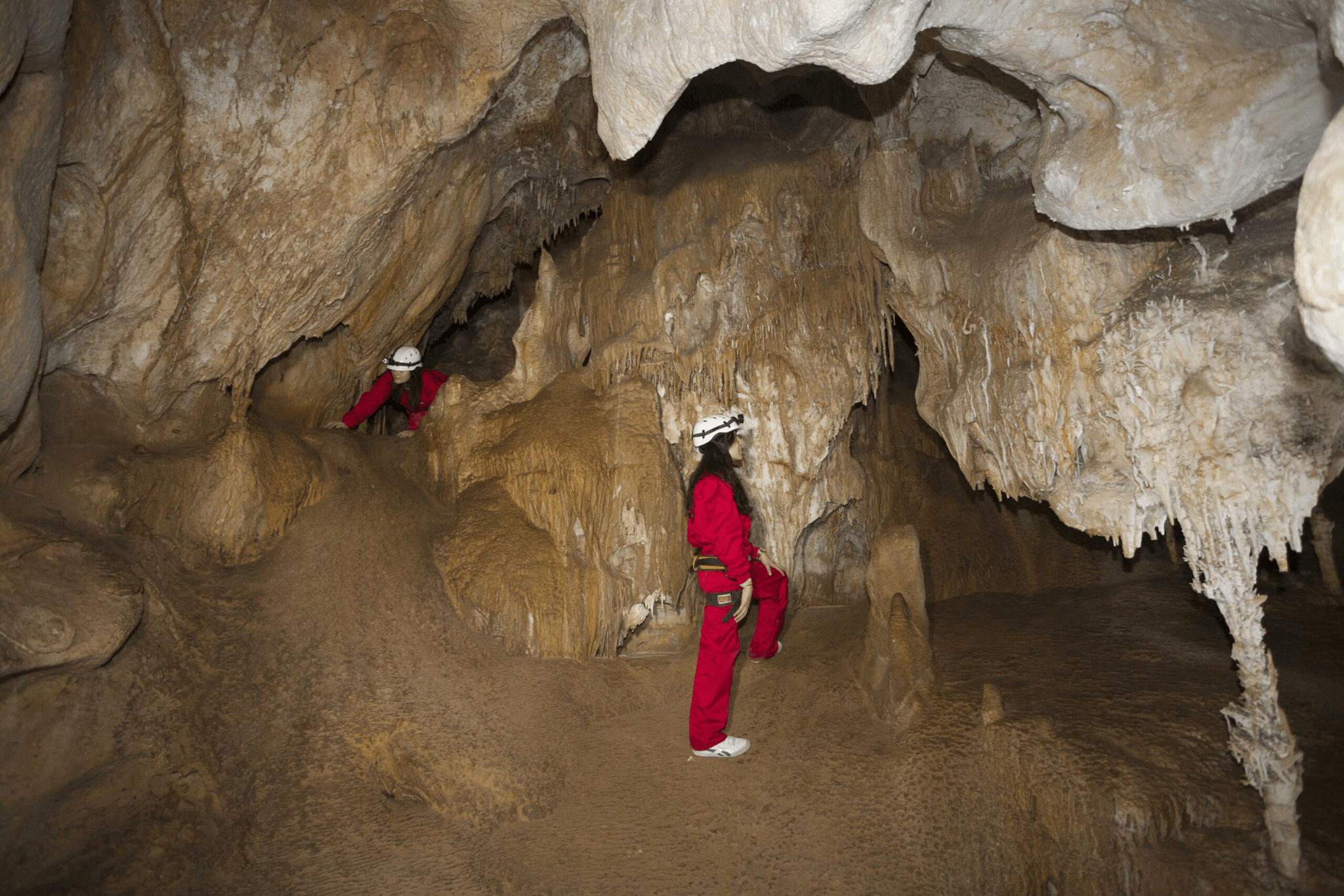
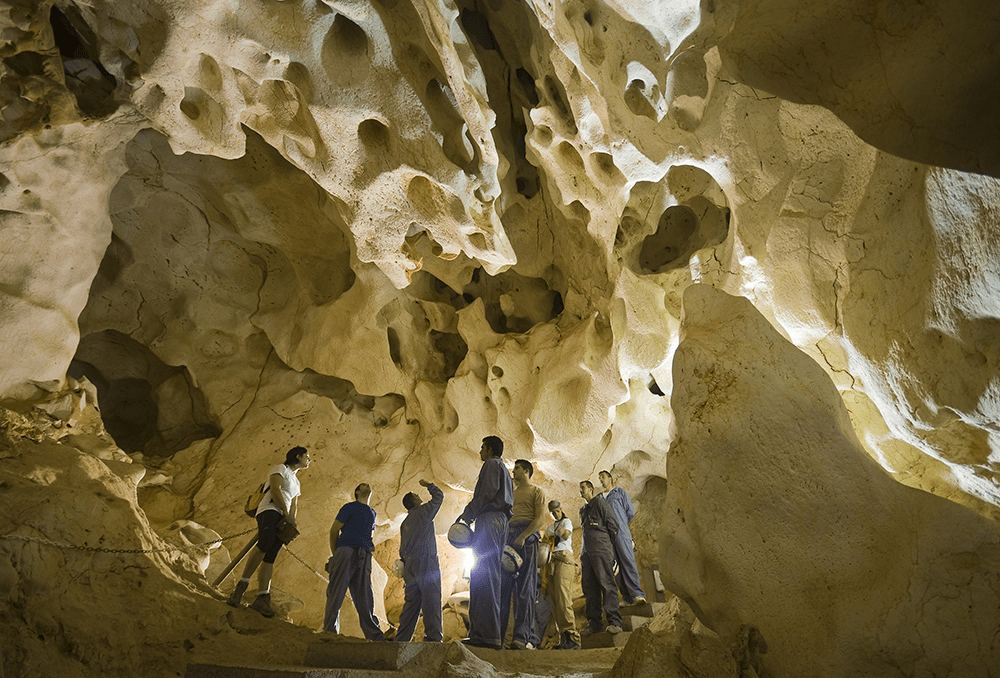
picture of people exploring the cave using special gear

If you want to plan your vacation better, it is essential to understand when the activity is available and the best period of the year to go to Murcia. Here’s all the information regarding when the cave is open:

  • Days: From Tuesday to Sunday
  • Mondays: Not Open
  • Time: 10 A.M. to 6 P.M.

Notice that it is also recommended that you book the activity before going as they might get fully scheduled, and you might lose your trip. You can do that by visiting their official website. There, you’ll also find tons of details regarding the expedition and what you need to know before entering the caves.

Murcia is more sought-after during summer, especially due to the numerous attractions it offers in the regions of Cartagena and San Javier. We also recommend going to Calasparra during this time of the year because of the low temperatures inside the caves and because you’ll find tons of options, like the crystal water of La Manga or the amazing Museo Romano de Cartagena.

Safety and Recommendations

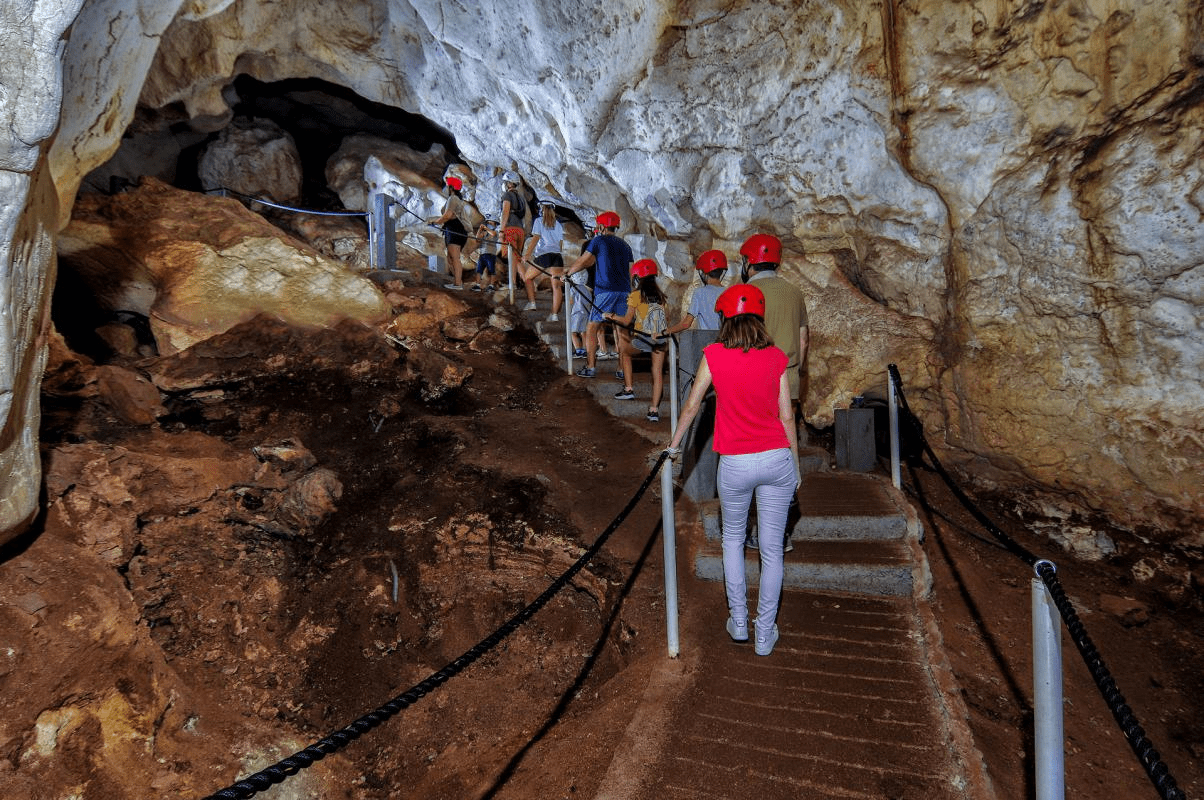
picture of a group exploring the caves together

As we mentioned, cave exploring can be dangerous if you don’t respect the rules and recommendations provided by the professionals walking with you. Once you arrive at the side, you’ll be provided with proper equipment for exploring. It is vital that you use the helmet given by the staff and don’t remove it until the end of the activity.

Whether you’re an adult or a kid, this helmet can protect you from eventual injuries, like small rocks falling from the ceiling. The instructors will also monitor to ensure everyone respects the rules and gets home safely after visiting the site.

Along with using the helmet, you’ll also need to follow other recommendations and rules. Some will be presented by the staff, and others will be provided through signs with instructions.

If you plan on taking kids with you, it is vital that you keep an eye on them to avoid any problems or surprises along the way. Getting lost in these natural tunnels is easy, and ensuring your kids are close to you is indispensable for the best experience possible.

Price

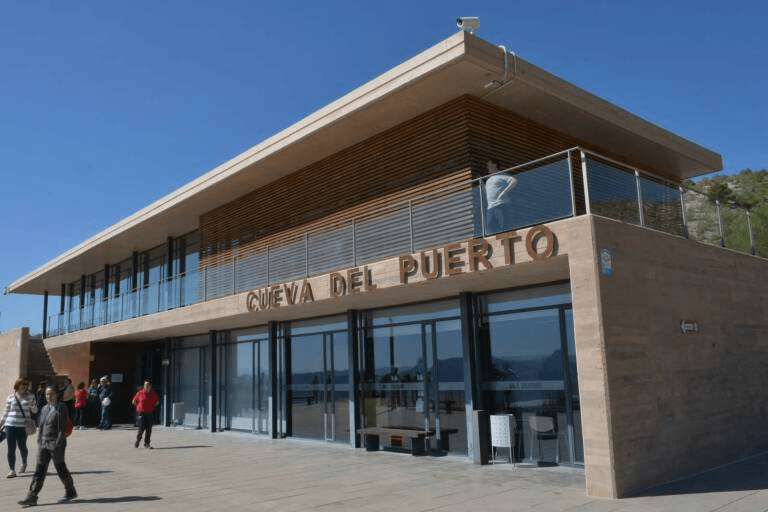
picture from the entrance of the site with numerous tourists waiting

As expected, this Murcia attraction is not free, and the company charges for entering the site because of the guides that will walk you through the entire process. This price can vary depending on your age, and there are basically three tiers to choose from:

  • Standard Pass (12-64yo): 16 euros
  • Children Pass (5 to 11yo): 14 euros
  • Up to 4 years old: Free entrance

Notice there’s no minimum age restriction when it comes to who can participate in the exploration of the cave and its routes, but there’s an age restriction when it comes to the elder group. Cueva del Puerto allows people from up to 64 years old to participate in the visit and discover the tourist route. Sadly, if you’re 65 or older, the company doesn’t allow you to participate for safety reasons.

Need to Bring Something to the Cave?

picture of a person inside the cave analyzing the walls

If you’re wondering what you need to bring to the site to explore the caves, you don’t have to worry about that. The company provides all the equipment necessary to safely visit the caves and observe every inch of the natural formations. They have different helmet sizes and equipment, so you don’t need to bring anything else for the tour.

It is also not recommended to bring your own gear as they have items previously tested for safety assurance. They use top-tier gear, and you don’t need to worry about that at all.

The same applies to water and other items. Even though you can bring your own water, it is not recommended to take any items to the cave. However, you can take your phone with you to take amazing pictures of the place and even record a video of this natural formation to keep the memory fresh forever.

More Attractions Nearby

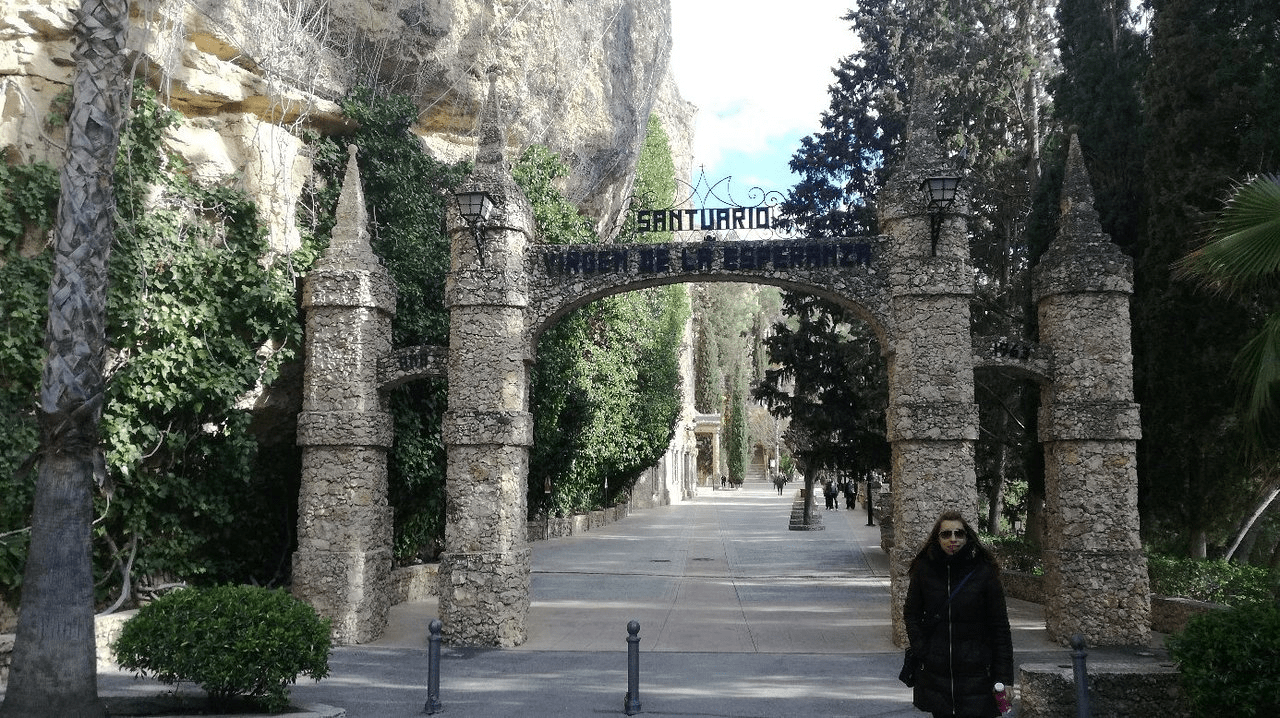
image of a person entering the sanctuary in the center of Calasparra

Spain is the best destination for travelers looking for variety. From local food to extreme sports, there are many options to try, and Calasparra is the perfect place to go if that’s what you want. Along with the caves, you’ll find multiple options to make your vacation even better.

For example, if you like adrenaline and extreme experiences, you can go rafting on the Almadenes canyons or visit Salto del Ciervo in Via Ferrata. Both experiences will make your heart beat faster than ever before.

If you want something to chill, there’s also a ton of options to pick in this Spanish paradise. You can visit Santuario Virgen de la Esperanza or go to Mirador de las Lomas for some incredible views of the fields.

Regardless of which option you choose, they’ll surely surprise you and make you want to come back again as soon as possible. During my time in the country, I also visited Castillo de San Juan, and I recommend the experience if you’re looking for something that mixes culture and fun.

Is Cueva del Puerto Worth Your Time and Money?

picture of people analyzing the walls of the cave

Exploring caves is one of the best ways to spend your vacation in the Calasparra region. Discovering these natural formations and seeing vestiges from the past is just the beginning of this adventure. You’ll also find out a lot about how these formations happen and what impacts they have on the surface.

Even though it is a little far from the center of the city and you’ll need transportation to Cueva del Puerto, it is still fairly close to numerous other attractions, making it easier for you to enjoy countless activities without spending too much with Uber or anything like that.

It is the perfect attraction for all kinds of people, and I highly recommend it. During my time in the caves, I took amazing pictures and will surely remember this vacation forever.

If you’re looking for suggestions of where to go, Spain and its beauties await you. Pack your luggage and prepare for one of the most unique experiences you’ll find.

Enjoy Your Private Paradise in Villa Murcia!

Piscina com água O conteúdo gerado por IA pode estar incorreto.

Looking for the perfect place to stay in Murcia? We’ve got just the spot for you!

Villa Murcia – Your Private Paradise

Wake up to coffee on a sun-drenched terrace, unwind in a warm jacuzzi after a day of exploring, and end your evenings with dinners in the summer kitchen. Nestled in charming Santiago de la Ribera, Villa Murcia offers more than just a holiday—it’s your personal oasis of comfort, style, and unforgettable moments.

Highlights:
✔ Spacious living room with a large sofa and open kitchen – perfect for shared memories
✔ Three elegant, air-conditioned bedrooms with private terraces – your peaceful retreat
✔ Extra fold-out sofa in the living room – ideal for additional guests

Whether it’s a romantic escape, a family getaway, or a relaxing break with friends – Villa Murcia is your dream stay.

Book now and experience the magic of the Spanish sun!

Read More
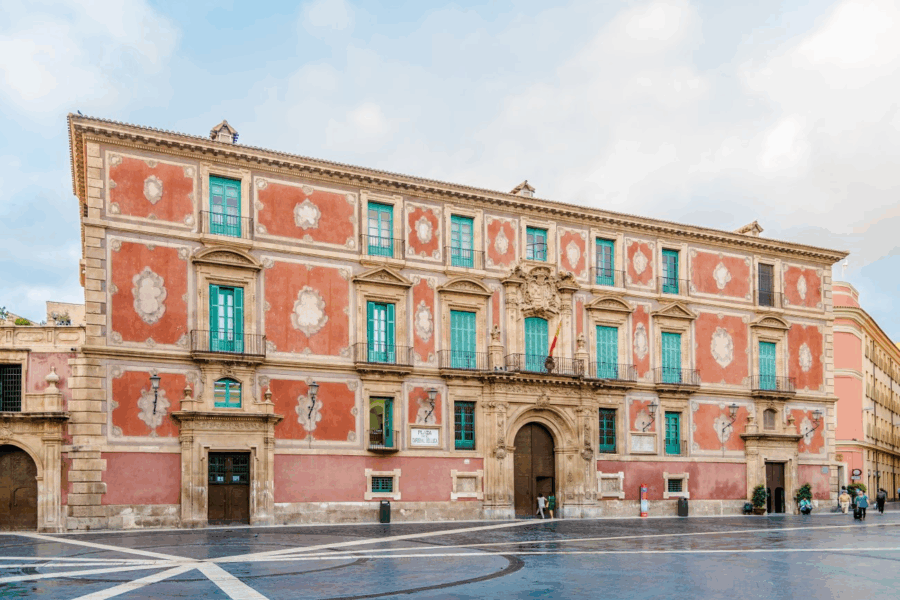
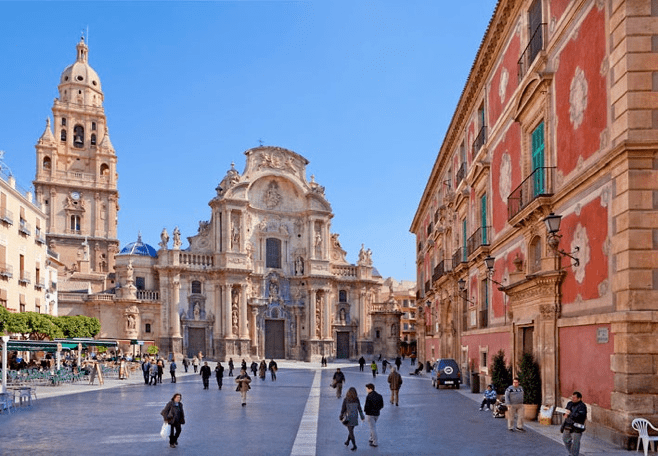
Episcopal Palace Of Murcia

Episcopal Palace Of Murcia: History and Art in One Place. 

History, culture, architectural beauty, cuisine (incredible and delicious), and a beach that will leave anyone breathless… all in one place. When you put it this way, this utopian paradise seems made up, but it isn’t. The region of Murcia, in Spain, is one of the favorite destinations for tourists looking for a place with all these characteristics. The city really has a lot of history and beauty to tell in every corner you go.

One of the places that tells the story of the city is the Episcopal Palace. This historic building, located in the heart of the town, was declared a Property of Cultural Interest in 1992. It is a landmark of great historical and religious architectural importance in the region. The building, a magnificent example of a Rococo style, not only symbolizes ecclesiastical power in the area but also reflects Murcia’s rich cultural monumental heritage. Today, we will learn a little more about it.

The Diocese of Cartagena

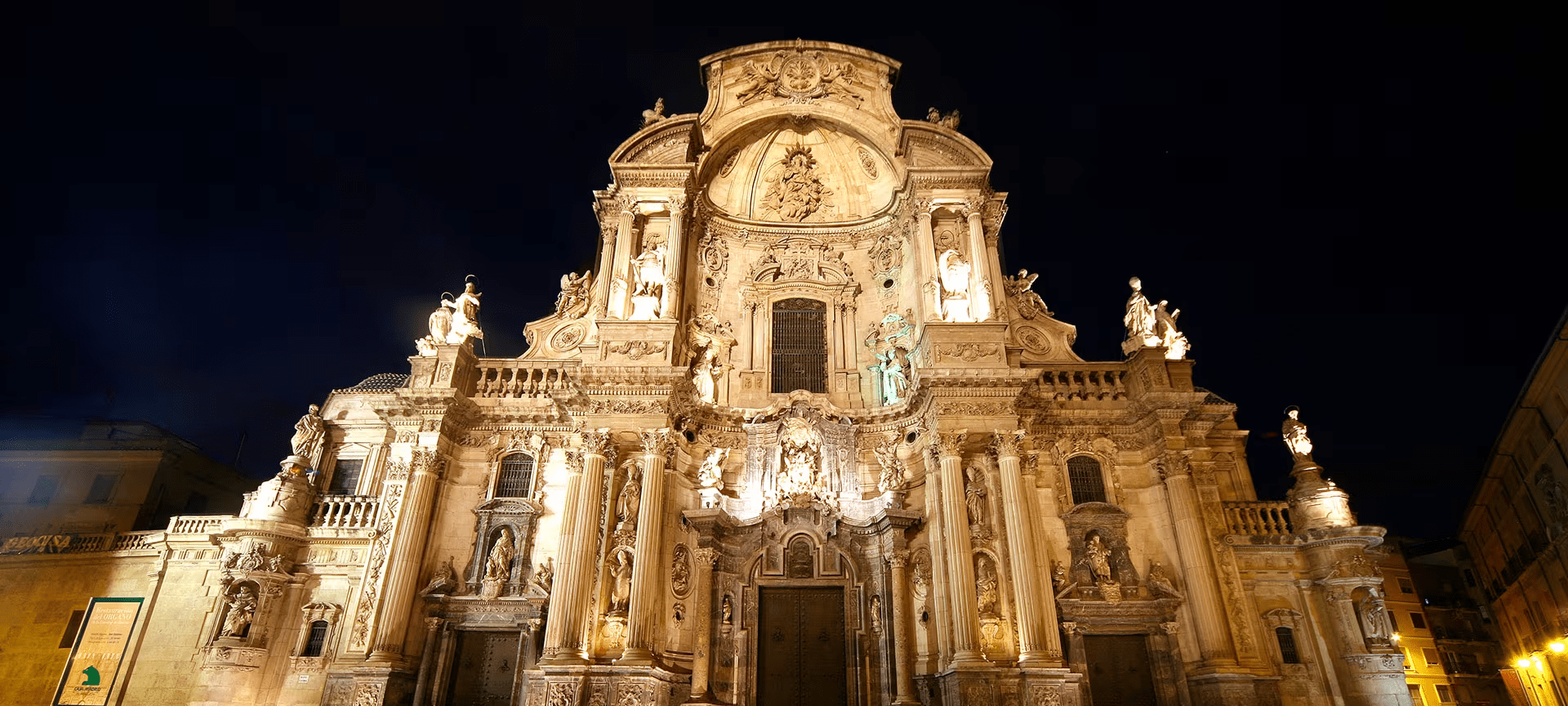
Murcia’s Cathedral
Murcia’s Cathedral – Next to the Episcopal Palace.

The Episcopal Palace is the seat of the Diocese of Cartagena, one of the oldest in Spain, with a history rooted in the Roman era. For those who don’t know what it is, it is basically an ecclesiastical constituency of the Catholic Church in Spain, which has played a crucial role in spreading Christianity in the region and preserving religious traditions over the centuries.

José Manuel Lorca Planes has been Murcia’s current bishop since July 18, 2009. As the episcopal seat, the palace is an administrative and spiritual center, reflecting the church’s continued importance in the city’s cultural and social life.

Construction Of The Palacio Episcopal

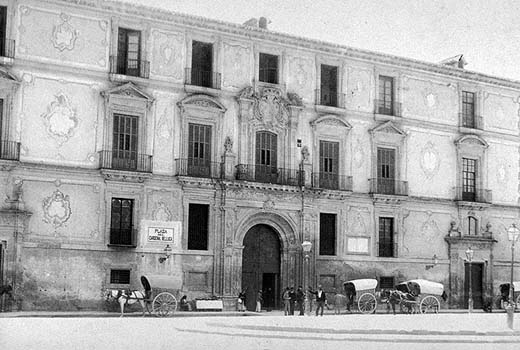
Old Picture of the Palace
La Opinion De Murcia

In the past, the old Episcopal Palace was also located in Plaza del Cardenal Belluga. It was located in the same place where the current building stands today but on the opposite side of the square.

Due to the construction of other buildings in the square and the deterioration of the palace at the time, it was decided to build a new building. The then-new location was where the Manor House of the Marquis of Los Vélez had previously been located. The real driving force behind this historic building was Bishop Juan Mateo López. After his death, his successor, Diego de Rojas y Contreras, continued the construction.

Construction began in June 1748. The work was carried out by local masters associated with Jaime Bort (a famous Spanish architect whose most important work is the facade of the Cathedral of Murcia), such as Pedro Pagán, José Alcani, and Martín Solera, who also worked on the cathedral’s façade.

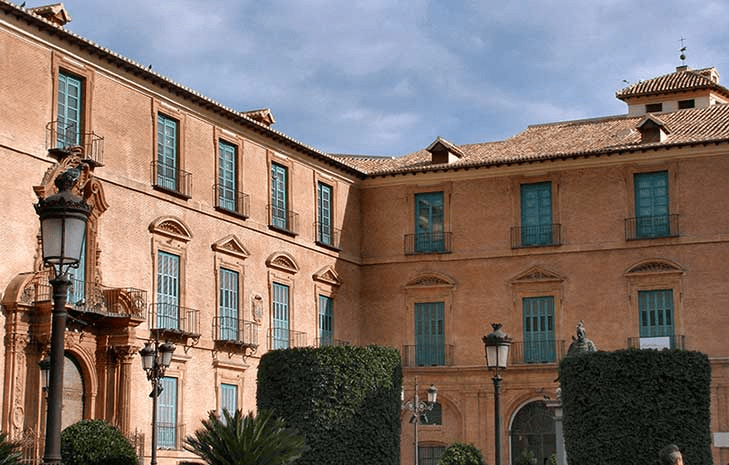
Inside of the patio of Episcopal Palace
Turismo E Region De Murcia

By 1757, the work was progressing very slowly, which led the Cathedral Chapter to ask Bishop Diego de Rojas y Contreras to find a new director in Madrid. He requested a new project, revised by José López, a disciple of Bort, who took over the supervision of the works. After another interruption in 1761, Baltasar Canestro, an Italian architect, took over the project in 1765 and completed it in 1768.

Architecture Of The Palace

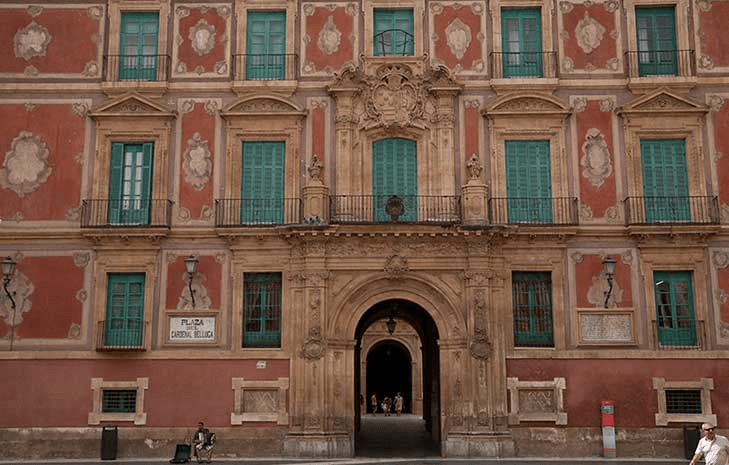
Plaza del Cardinal Belluga

The range of styles around the Palace, in the Plaza del Cardinal Belluga (Cardenal Belluga Square), is vast. There, we find the presence of both civil and religious power in the form of the Episcopal Palace, the City Hall, and the Cathedral of Murcia. In the space, you will find buildings of all types, from Baroque to eclectic buildings with modernist touches.

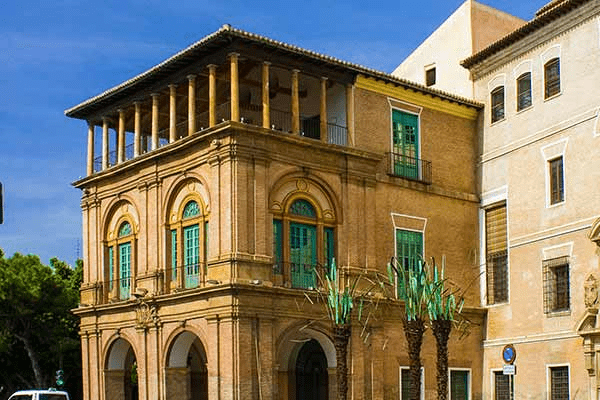
Main facade of Episcopal Palace Of Murcia, with sober volumes and delicate colours.
Turismo E Region De Murcia

The Episcopal Palace of Murcia is a remarkable example of Baroque architecture, with a derivative style marked by Italian and French Rococo trends. The building has a square floor plan decorated almost entirely with shields of different shapes and colors and features delicate decorative grace, evident in its beautiful facades.

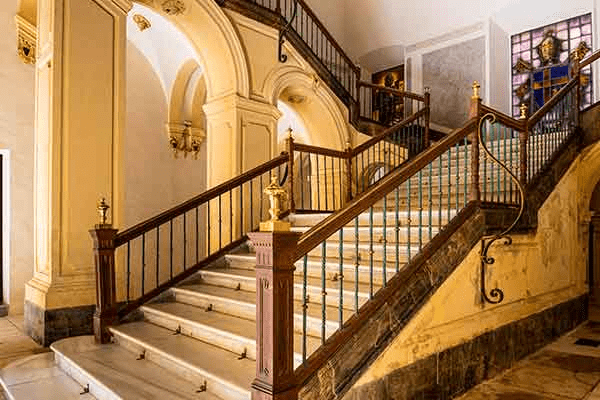
Main Staircase of Episcopal Palace
Turismo de Murcia

The main entrance to the Palace, known as Puerta del Perdón, is a masterpiece itself, with its arched door and ornate ironwork. The palace’s interior features a grand staircase that rises from the entrance hall. The staircase is decorated with intricate balustrades and decorative elements, making it an actual work of art and perfect for taking a photo and keeping the place in your memory.

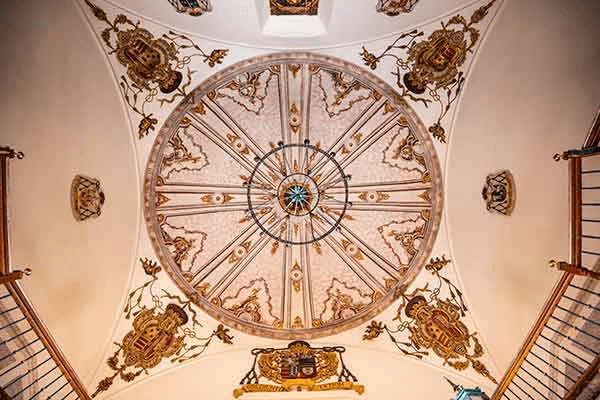
Palace ceilings
Turismo de Murcia

Be careful with your neck and possible pain! Looking at the palace ceilings, decorated with beautiful frescoes and paintings depicting religious scenes and historical events, is addictive and very difficult to stop.

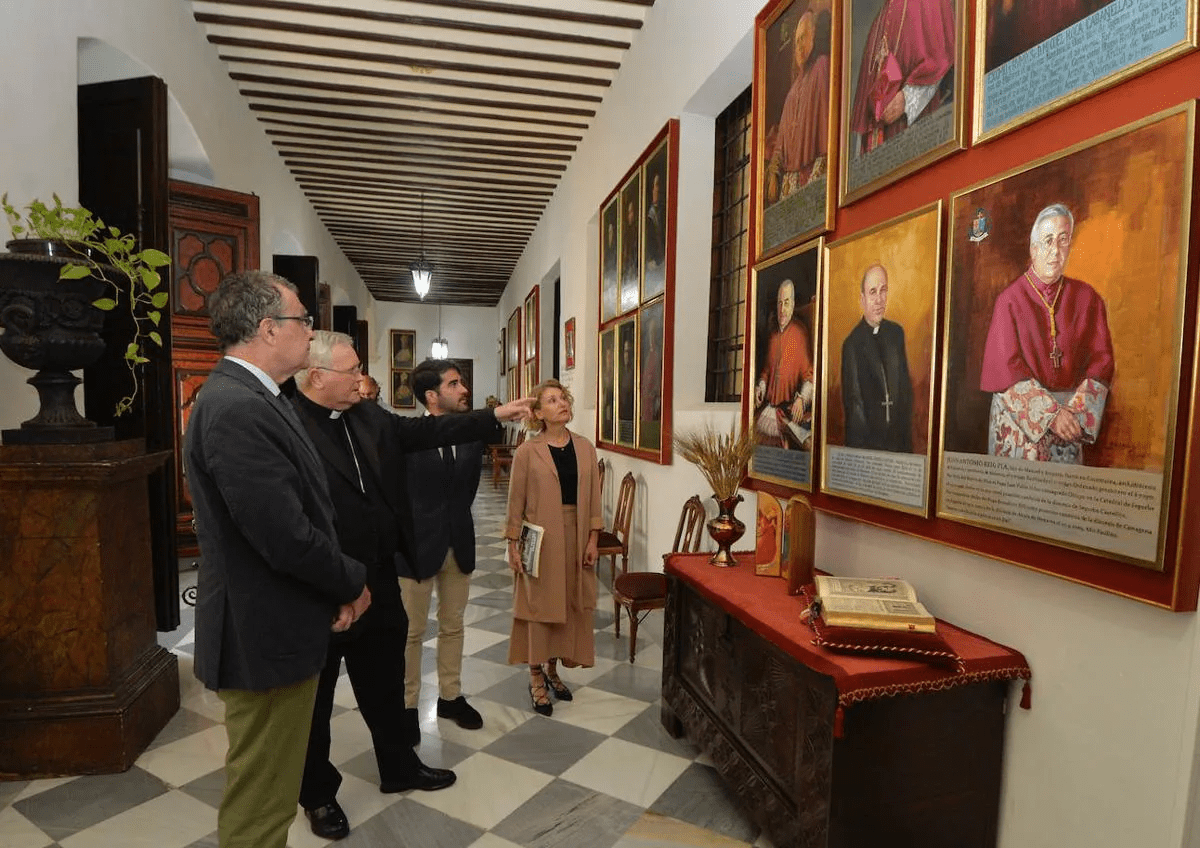
Palace's first floor, and the portraits of all the bishops of the Diocese
Vicente Vicéns / AGM – La Verdad

On the palace’s first floor, you can see the portraits of all the bishops of the Diocese of Cartagena since its foundation.

The Salón del Trono, or Throne Room, is one of the most impressive rooms in the Palace. It features a coffered ceiling, intricately carved woodwork, and a large throne that was once used by the bishops of Murcia.

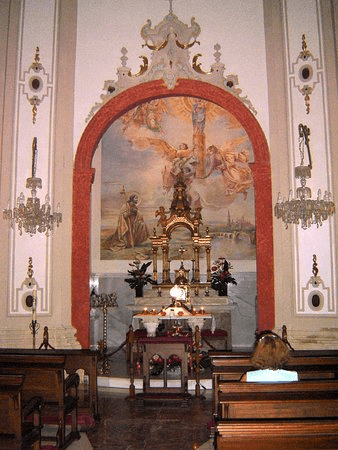
chapel in the Palace
TripAdvisor © Robert Bovington

Two other parts of the building worth mentioning are the courtyard, which is arranged in three Doric arcades and a more compact upper section, and a small circular chapel in the Rococo style that is open 24 hours a day.

Stage Of Important Historical Events

The palace has played significant roles throughout its history. During the Spanish War of Independence, it was used as a headquarters for French troops. It later served as a temporary residence for members of the Spanish royal family during official visits, such as those of Queen Elizabeth II in 1862 and King Alfonso XII in 1879.

The Bishop’s Viewpoint

The Bishop's Viewpoint
Turismo de Murcia

The “Hammer of the Palace” (Martillo del Palacio) is one of the Episcopal Palace’s distinctive architectural features. This belvedere-like structure, or large balcony, projects from the main building and offers a privileged view over the Segura River and the Paseo del Arenal.

This part of the palace is known as the “Bishop’s Viewpoint” and was built before the main body of the building. In addition to serving as a vantage point, the Hammer also includes an exhibition room, the Sala San Isidoro.

Important Information for Visitors

The Palace is open to the public from Monday to Friday from 9 a.m. to 2 p.m. and from 5 p.m. to 8 p.m. The opening hours in August are different, and the space is open from Monday to Friday from 9 a.m. to 2 p.m.

It is advisable to check the opening hours on the official website or contact the palace directly for the most up-to-date information, especially during peak tourist seasons.

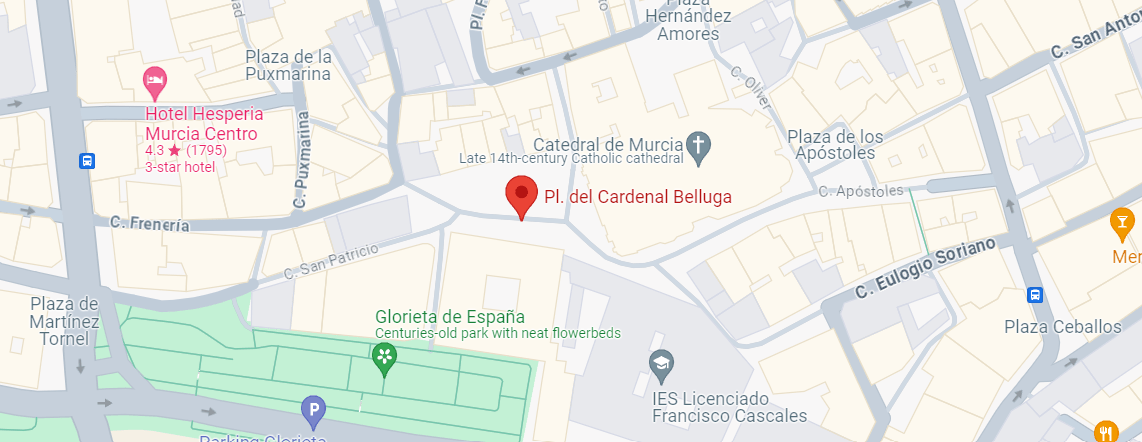
Location of the Palace in the map

Since it is located in Plaza del Cardenal Belluga, one of the most central and accessible squares in the city, it is very easy to reach and find the building. Visitors can reach the site in several ways:

  • Public Transport: Several bus lines stop near the palace, providing easy access from different parts of the city. Murcia train station is also a short walk away, connecting the city to other regions.
  • Car: For those who prefer to drive, there are several parking options nearby, including the Plaza Belluga underground car park. However, street parking may be limited and may incur charges.
  • On Foot: Due to the palace’s central location, many visitors choose to walk through Murcia’s charming neighborhoods to reach their destination, exploring other attractions and points of interest along the way.

Enjoy Your Private Paradise in Villa Murcia!

Piscina com água

O conteúdo gerado por IA pode estar incorreto.

Looking for the perfect place to stay in Murcia? We’ve got just the spot for you!

Villa Murcia – Your Private Paradise

Wake up to coffee on a sun-drenched terrace, unwind in a warm jacuzzi after a day of exploring, and end your evenings with dinners in the summer kitchen. Nestled in charming Santiago de la Ribera, Villa Murcia offers more than just a holiday—it’s your personal oasis of comfort, style, and unforgettable moments.

Highlights:
✔ Spacious living room with a large sofa and open kitchen – perfect for shared memories
✔ Three elegant, air-conditioned bedrooms with private terraces – your peaceful retreat
✔ Extra fold-out sofa in the living room – ideal for additional guests

Whether it’s a romantic escape, a family getaway, or a relaxing break with friends – Villa Murcia is your dream stay.

Book now and experience the magic of the Spanish sun!

Palacio Episcopal: A Must-See In Murcia!

Episcopal Palace Of Murcia
Turismo E Region De Murcia

Murcia is a city with many tourist attractions. With every step you take in the city, you find yourself in a new place with a rich history and beauty. The Episcopal Palace is one of the most important buildings in Murcia, but it often gets forgotten from the list of places to visit. The building is a must-see for anyone who wants to understand more about the history, architecture, and cultural importance of the city.

Read More
image showing one part of Fuerte de Navidad along with the sea on the background

From Defense to Tourism: Discover Fuerte de Navidad in Murcia

Built in the 18th century, this historic fortress was part of a strategic defense network designed to protect the region from potential invasions. Its robust walls and strategic location reflect the ingenuity of military engineering of the time. Today, Fuerte de Navidad offers visitors a fascinating glimpse into the past, combining historical significance with stunning views of the surrounding countryside. Whether you’re a history enthusiast, an architecture lover, or simply looking for an off-the-beaten-path destination, this hidden gem of Murcia promises an enriching and memorable experience.
Here, we will show you everything about El Fuerte de Navidad and what you need to know about this fantastic landmark that represents Spanish history and makes us reflect on our past. From the meaning of this building throughout the centuries to other attractions in Cartagena, we will cover different aspects so you can plan your trip to this Spanish paradise better. Here’s everything you need to know:

Table of Contents

Location of Fuerte de la Navidad

Map of Cartagena showing Fuerte de Navidad highlighted

As we mentioned, Fuerte de Navidad is located in Spain’s most sought-after region of Murcia. Cartagena is known for its variety in tourism, offering options for all kinds of people and tastes. This region attracts thousands of tourists every year, whether because of the local cuisine, historical buildings, or the stunning views you can find from Cala Reona to Castillo de Galeras.

The fort is located south of the city centre, right next to the sea, and is one of the most beautiful landmarks in the region. Thanks to its privileged location, you can easily access El Fuerte de Navidad through many different routes and methods, including cars, buses, and many others, so don’t worry about that part. Whether traveling alone or with your family, this is a must-go.

What You Need to Know Before Visiting Fuerte de Navidad

image showing one of the buildings from the fort

Now, we will show you some of the main details about this fort that you should know before packing your luggage. Make sure to look at each of these items to better understand the attraction and what to expect from the entire experience.
We will cover multiple aspects to ensure you don’t get any surprises along the way and have the perfect experience when visiting the region. Here are some of the main elements of the port and the fortification you should consider before preparing for your trip:

Meaning of Fuerte de Navidad

picture of the fort showing one of the paths to the construction

If you didn’t know, Fuerte the Navidad means Christmas Fort in Spanish, referring to Columbus and his efforts in navigation. There’s no confirmation of why the fort was named that way, but there are two tales behind its name.

One says it’s a direct reference to when it was finished. The fort was officially inaugurated on Christmas Day. It is the most common legend behind this name and what many people believe to be the right reason.

On the other hand, some historians and locals say that the name is inspired by the Fortress of la Navidad in the Caribbean. It was an important port in the region and a vital stronghold for the military.

On Christmas Eve of 1492, Columbus sailed around the region currently known as Haiti and the Dominican Republic. However, during this expedition, one of the Ships, called Santa María, ended up stranding on a piece of land.

Columbus ordered the crew to stay on the land, build a fortification, and start a new colony. The colony was called Puerto de la Navidad, or Christmas Port in English.

Best Time to Visit the Building

picture of the fort along with a spot for tourists to rest

Fuerte de Navidad can be visited throughout the year, but the best time is during summer. There are many reasons and advantages to choosing this time of year for your trip.

Although the city, particularly the center of Cartagena, is at its busiest during this time, it’s also when you’ll have the most options for activities. From water sports to attractions and exhibitions in the small museum near the fort, summer offers a full range of possibilities, many of which are unavailable during the winter months.

Moreover, if you want to fully appreciate the breathtaking views of this region, a sunny day is your greatest ally. There’s a reason it’s the high season in Murcia—the weather plays a crucial role in enhancing every location you explore and visit.

What You’ll Find in Christmas Fort

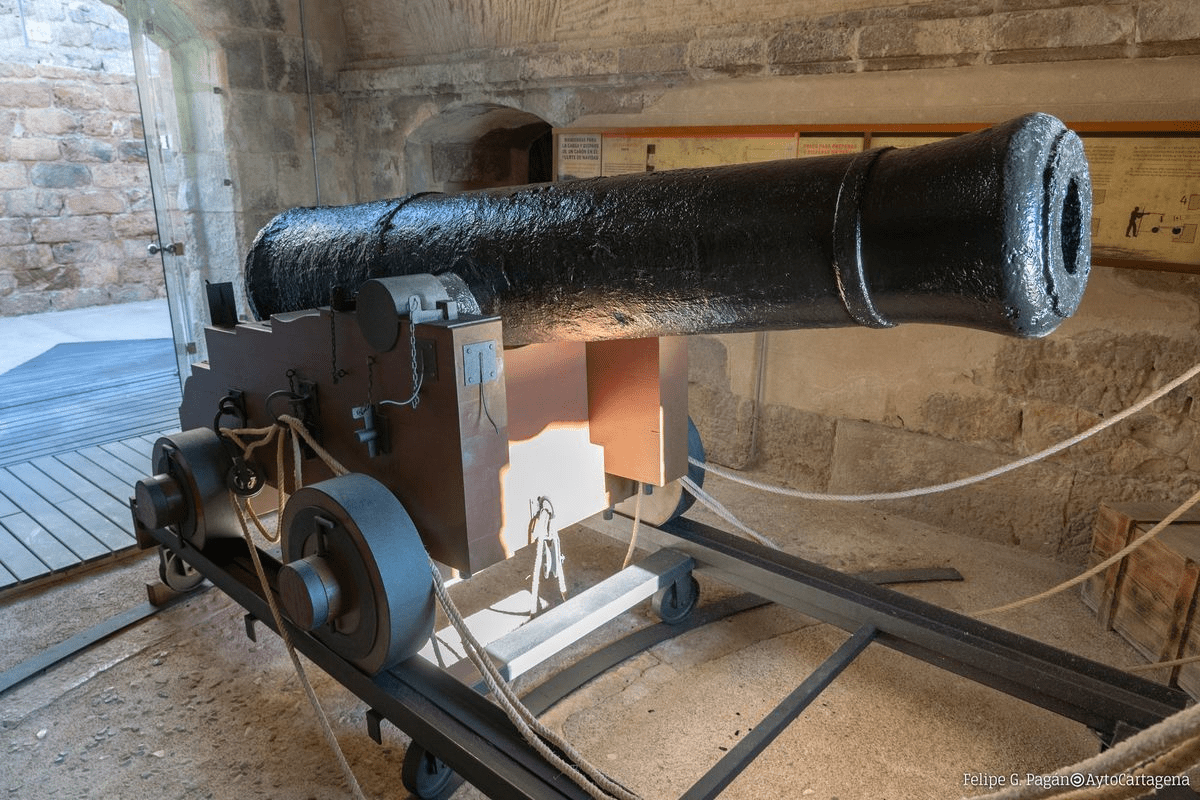
picture of one of the cannons inside the castle

The building has some stunning views, but this is just the beginning of this experience. There’s a lot to unveil when exploring the houses of this important building.
Expect to find artillery pieces, original architecture from centuries ago, and tons of stunning places to take pictures from and keep these memories forever. You can explore the place’s interiors, but some rooms are locked for safety reasons.

You’ll also see abandoned chambers used by soldiers to protect themselves from attacks and plan a route to escape from any kind of attack. This happened because, even though the construction was finished centuries ago, the fortress was used during the civil conflict and other occasions thanks to its structure.

Always ask the staff responsible for the place before entering a closed room. This will ensure a safe and unforgettable time for yourself and those around you.

Price and Cartagena Puerto de Culturas

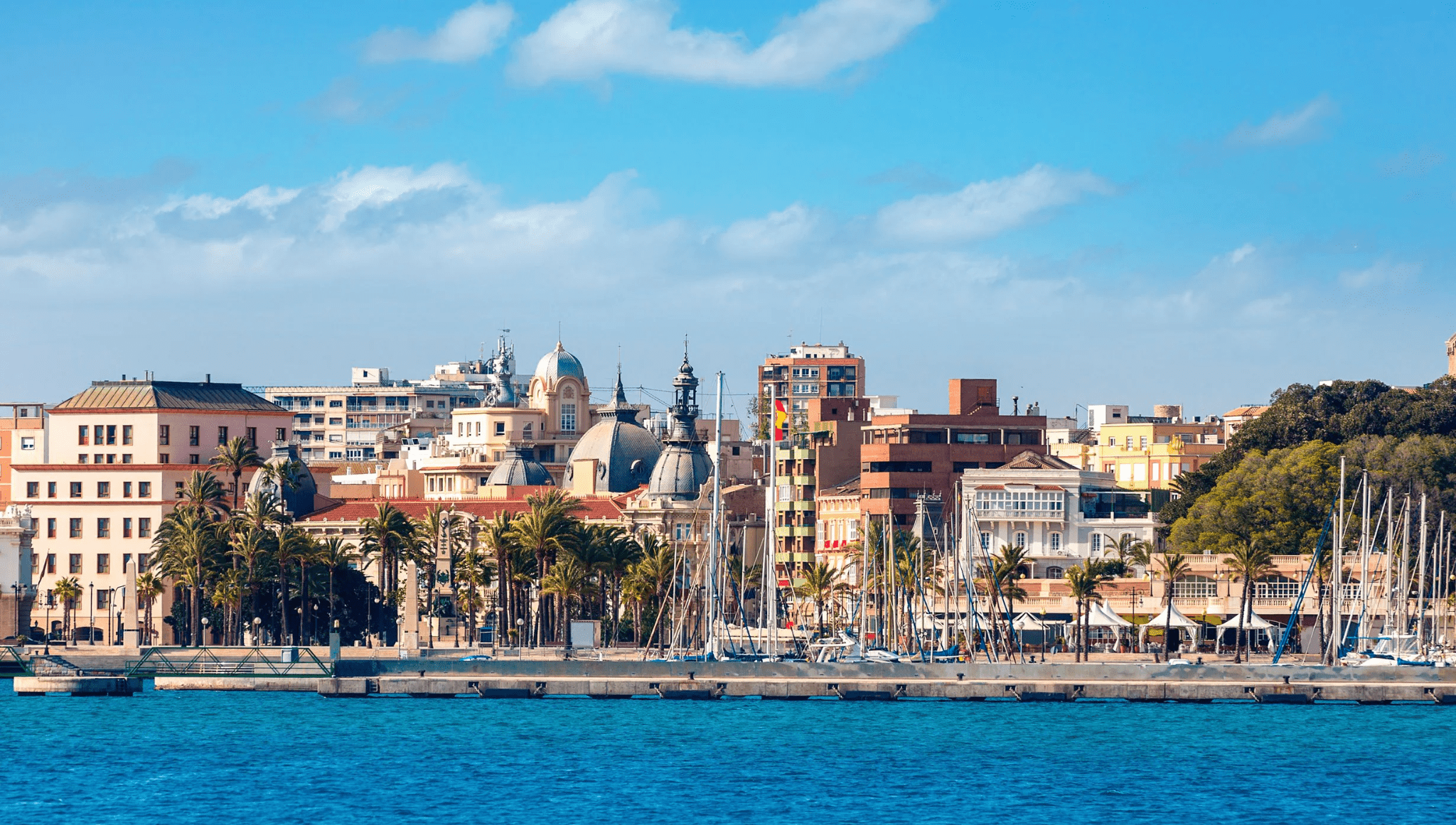
image of the center of Cartagena showing buildings and the sea

There are two main options for the price structure of the fort and exploring the island. The first is a simple admission that lets you explore the entire place, from the entrance to the hidden rooms throughout the building.

The second option is slightly more expensive because it includes a boat ride around the Port of Navidad. However, it’s a highly enjoyable experience, and I definitely recommend it despite the higher cost. You’ll get to witness some of the region’s most stunning views and discover hidden details of Fuerte de Navidad that are usually missed.

The first option includes only the entrance to El Fuerte de Navidad. The price is 3,50 euros for the standard ticket and 2,50 euros for the special ticket. On the other hand, the premium tier, including the boat ride, goes for 8 euros for the standard ticket and 6 euros for the special one.

The special ticket applies to:

  • Kids under 12 years old
  • Pensioners
  • Unemployed
  • Students
  • Disabled
  • Large Groups and Families

It is important to highlight that El Fuerte de Navidad is part of Cartagena Puerto de Culturas, the municipality’s official government office that reunites the region’s best and most important tourist spots, from La Manga to San Julián. Depending on the time of year, you can find special bundles for enjoying the city’s main attractions at a special price, including the Roman Theater of Cartagena and many others.

Cartagena Beyond Christmas Fort

image of the port next to La Manga

Cartagena is one of the most visited destinations in Spain and the busiest in the Murcia region. Its global popularity among tourists is well-deserved, thanks to the wide variety of activities, food, and drink options it offers.

The place is filled with different attractions and activities that will please all kinds of people. From the beautiful beaches around La Manga to the historical buildings in the city centre, there is always something new to discover when exploring it. Not only that, but you’ll see some of the most charming views in Europe, with historical buildings and options that will make you want to stay there forever.

The city also boasts excellent hotels to suit all tastes and budgets. With everything located conveniently nearby, you can book a comfortable room and easily walk to the main attractions at your leisure.

If you’re looking for the best vacation possible, we recommend checking out Grand Hyatt. It’s a hotel with a spa and golf fields that will make you feel like a real king. It might not be the cheapest option in the region, but the Mediterranean views and options there will give you the best life possible. If you want to spend a Sunday or a week there, the prices can vary from 250 to 500 dollars for the most common rooms.

Enjoy Your Private Paradise in Villa Murcia!

Piscina com água

O conteúdo gerado por IA pode estar incorreto.

Looking for the perfect place to stay in Murcia? We’ve got just the spot for you!

Villa Murcia – Your Private Paradise

Wake up to coffee on a sun-drenched terrace, unwind in a warm jacuzzi after a day of exploring, and end your evenings with dinners in the summer kitchen. Nestled in charming Santiago de la Ribera, Villa Murcia offers more than just a holiday—it’s your personal oasis of comfort, style, and unforgettable moments.

Highlights:
✔ Spacious living room with a large sofa and open kitchen – perfect for shared memories
✔ Three elegant, air-conditioned bedrooms with private terraces – your peaceful retreat
✔ Extra fold-out sofa in the living room – ideal for additional guests

Whether it’s a romantic escape, a family getaway, or a relaxing break with friends – Villa Murcia is your dream stay.

Book now and experience the magic of the Spanish sun!

Conclusion: Is Fuerte de Navidad Worth Your Time and Money?

picture of christmas fort during night

Murcia offers some of the most unique experiences in Spain, and if you have never visited the region, Cartagena is definitely your go-to region to get the most out of your trip. Most attractions are available throughout the entire year, but going in the summer will grant you unique views and options you won’t regret, especially if you plan on exploring the region’s national parks and beaches.

The fort has numerous interesting rooms and artifacts to explore, and its historical impact will teach you a lot about this country’s heritage and culture. Whether you choose the standard ticket or the optional boat ride, fun is guaranteed for the entire family.

I highly recommend this attraction to everyone looking for something different to do during their trip. I had a ton of fun in this tourist venue and will go back when visiting Murcia for the next time.

Read More
picture from bateria de castillitos showing the sea on the background

The Amazing World of Bateria de Castillitos: Strength and Strategy

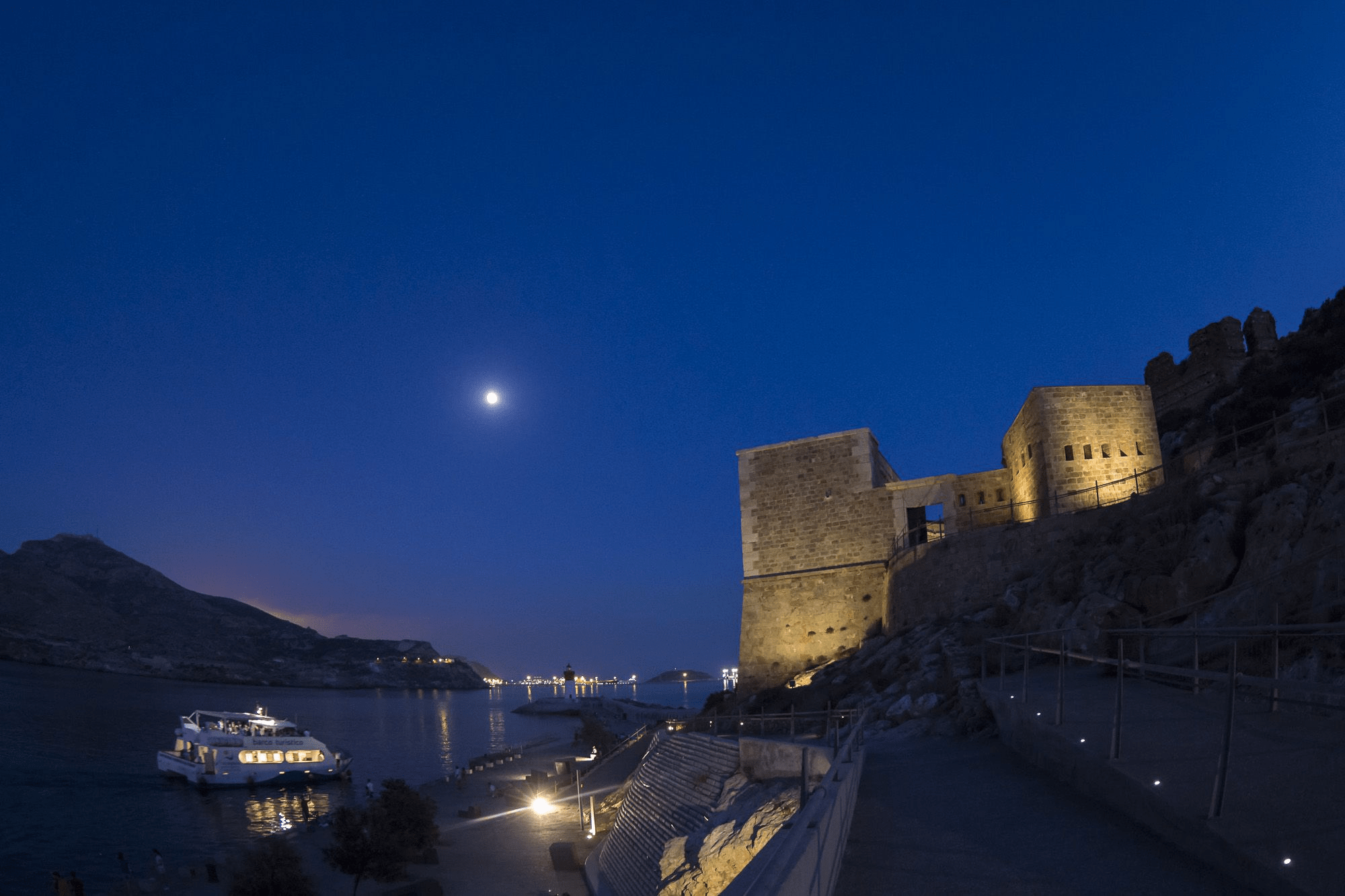
Hidden in one of the most beautiful spots of Cartagena Bay lies Bateria de Castillos, a relic from the Spanish Civil War, representing the strength and power of the military division of Murcia Region. This important port and defense acted as one of the most important military buildings during numerous conflicts and caused a devastating efficiency in repelling enemy forces.

Now, Castillitos Battery serves as a memory from these massive conflicts and a must-visit for history fans or tourists looking for a cultural attraction and spectacular views. Join us as we see what this fantastic medieval castle offers and why Murcia should be your next destination when planning your trip.

From the public transport you can take to get there to the history behind the two massive guns mounted on this fortress, we will cover every aspect. Here’s your definitive guide on Castillitos Battery and its marvelous construction:

Table of Contents

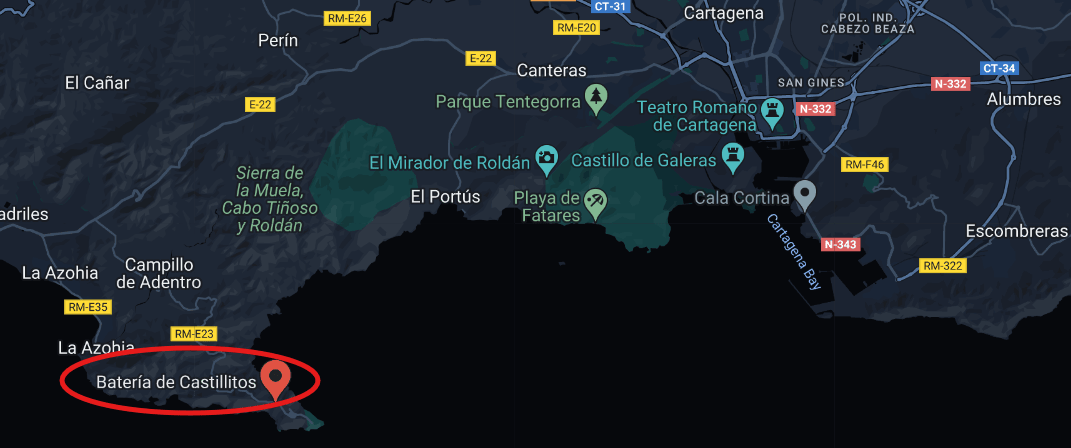
Location of Bateria de Castillitos

map from cartagena, in Murcia, with Castillitos battery highlighted

As we mentioned, the castle is located in one of the most sought-after tourist spots in Spain, Murcia, specifically in Cartagena. The municipality holds some of the most exciting attractions in the entire country. It is also the perfect destination for everyone, whether you’re looking for something more cultural or a great beach to practice extreme sports.

The battery lies minutes away from the city centre and is accessed through a region known as Campillo de Adentro. As soon as you enter the region, you’ll start to notice numerous historical buildings and vestiges from the old times of this mysterious site.

Campillo de Adentrum is easy to find, and there are several ways to access the road, including cab services, tour transportation, and many others, which dismiss the need to rent a car just for this task. It is a great attraction for the entire family and has numerous secrets waiting to be unveiled.

What You Need to Know Before Visiting Castillitos Battery

image showing one of the stone paths inside the fortress

Going to Batería de Castillitos is a ton of fun and holds numerous surprises that will stay in your head forever, but there are some things you should know to get the best out of this experience. Here, we will show you the main details and curiosities to help you better plan your trip and get the best out of this tourist attraction that gathers thousands of people annually. From the history behind its gun control bunkers to the structure of the castle and what you’ll find there, here’s everything you need to know about this marvelous jewel from the past:
Price and Guided Tour

picture from one of the rooms inside the castle

You’d be surprised to know that this tourist venue is free, so you don’t have to pay anything to enjoy its stunning views. Still, some companies offer customized tours and experiences, like jeep rides throughout the region, with prices ranging all the way to 400 euros.

But if you don’t want to spend that kind of money, don’t worry. Visiting the outside of Sierra de la Muela and other parts next to the castle is free and will not disappoint you. The castle and its structure are available for all visitors and are open throughout the entire day for visiting and viewing the gun battery, military arsenal, and many other exciting attractions available at the site.

Notice that some rooms are closed and inaccessible for visitors to enter. If you’re in doubt, look for someone responsible for maintaining the area and ask them if it is accessible.

Respect the rules and regulations of the place. This way, you’ll have the best experience possible and ensure the best experience for you and those around you.

Road to the Castle and Parking Lot

picture from the road leading to the area of the castle

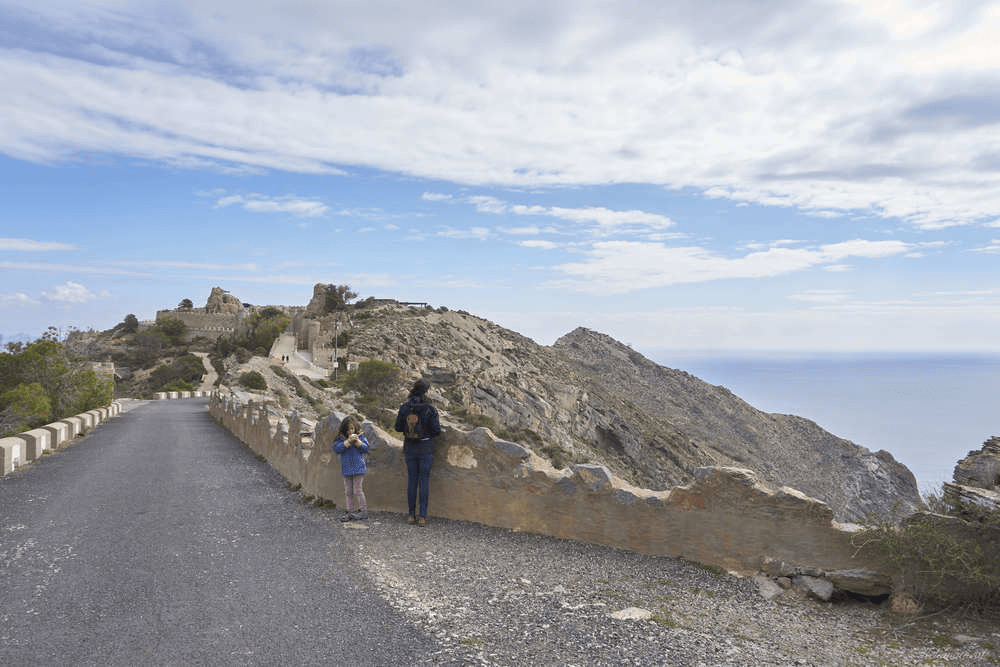
The biggest flaw in Bateria de Castillitos is the terrible road you have to cross to get to the site. Some paths are hard to navigate, and the signs don’t help. The road is definitely not recommended for inexperienced drivers. In this case, make sure to take alternative transportation to the location, like a bus, car ride app, or something else.

On the other hand, if you’re an experienced driver looking for a challenge, this road will surely test your skills. Arriving at the location, you’ll find tons of other cars trying to find a parking spot. Even though the place has dozens of parking spots, it is almost impossible to find a free spot to park your car as soon as you arrive.

This can cause enormous stress, so we recommend choosing another transportation method instead of driving through the road leading to the attraction. There are options for all budgets, and you avoid all kinds of problems.

Purpose of the Gun Battery

picture from the gun battery inside the fortress

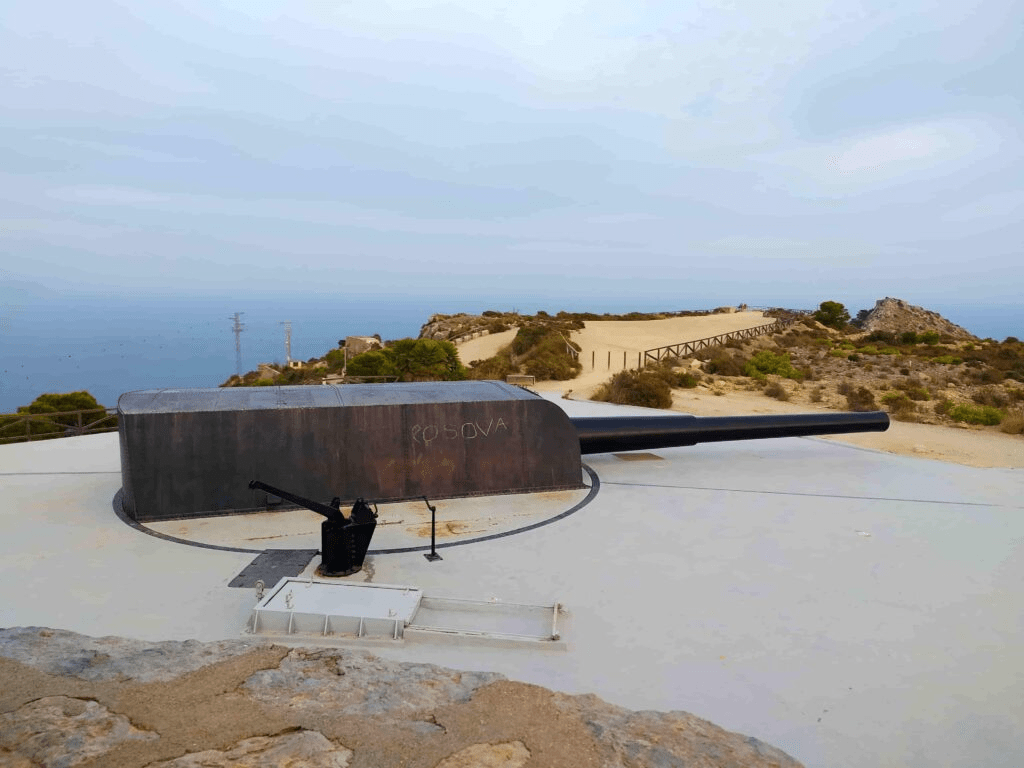
When it comes to Batería de Castillitos, the part that most catches tourists’ attention is the fortification’s gun battery. It has two main big guns that point at sea level, each one in an opposite direction to cover the entire area.

The main objective was to spot and prevent enemy ships entering the region from causing any damage to the structures or soldiers. Even though the war wasn’t fought only on the sea, this was the main area of occupation of this fortress and its efforts.

Everything was built to fight against naval forces, and even the actual altitude of the castle was carefully projected, considering the advantage in combat against enemy ships and other naval structures. It is a relic that reflects how war strategy was back then and how much effort was put into each action to ensure the best results possible and a victory for their soldiers.

The two cannons were the Spanish artillery’s most powerful weapon. They were prepared and used during the Spanish Civil War in 1937, specifically against Franco’s Nationalist fleet.

Other Spots to Visit

image showing the towers inside bateria de castillitos

One of the great things about Bateria de Castillitos and almost any tourist attraction of Cartagena is that you’ll always have tons of other options nearby. You don’t need to worry about what you’ll do during the rest of your day, and every spot in the region has multiple options for how to do it.

For example, a few meters away from the fort, you’ll also find Roldán Nature Reserve, Cabo Tiñoso Cape, and many other notable spots that will give you unforgettable memories, whether you’re traveling alone or with your family. They are all nearby, and if you like to go for a good walk, you can go to them on foot without needing any kind of transportation.

These two locations hold some of the best views in the entire region of Murcia and we highly recommend visiting them if you’re looking for an experience to connect with nature and enjoy some good views.

The Structure

image from the entrance of the place

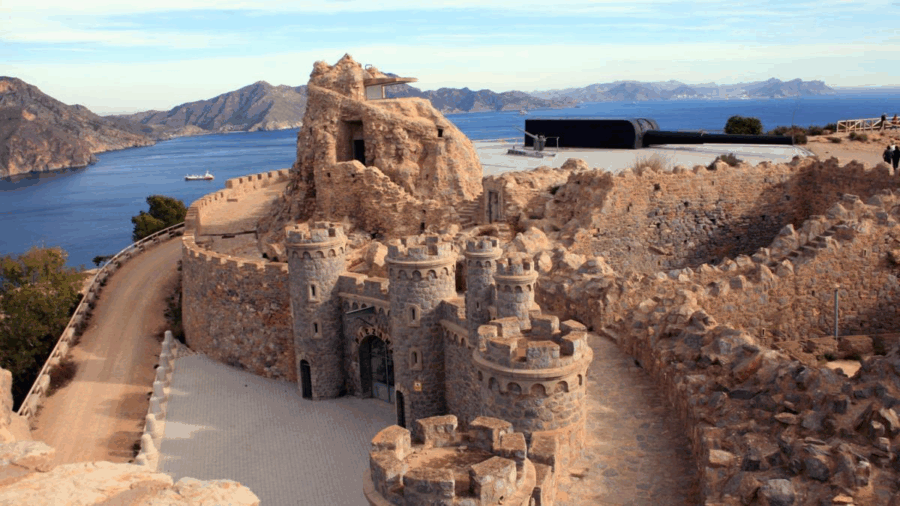
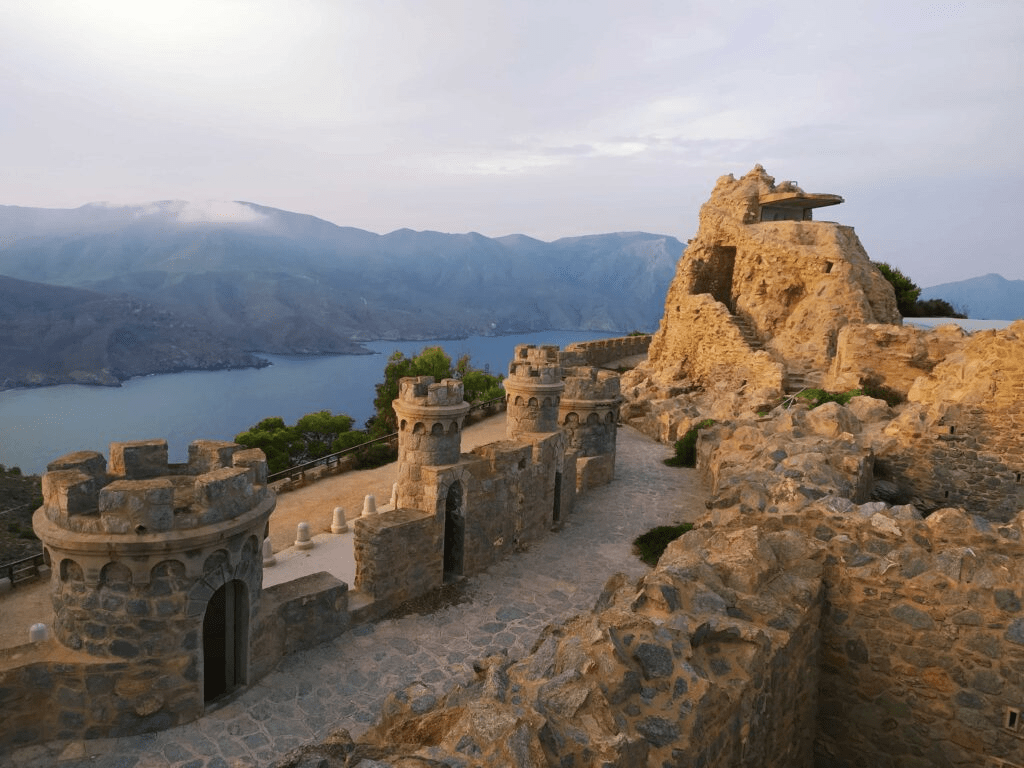
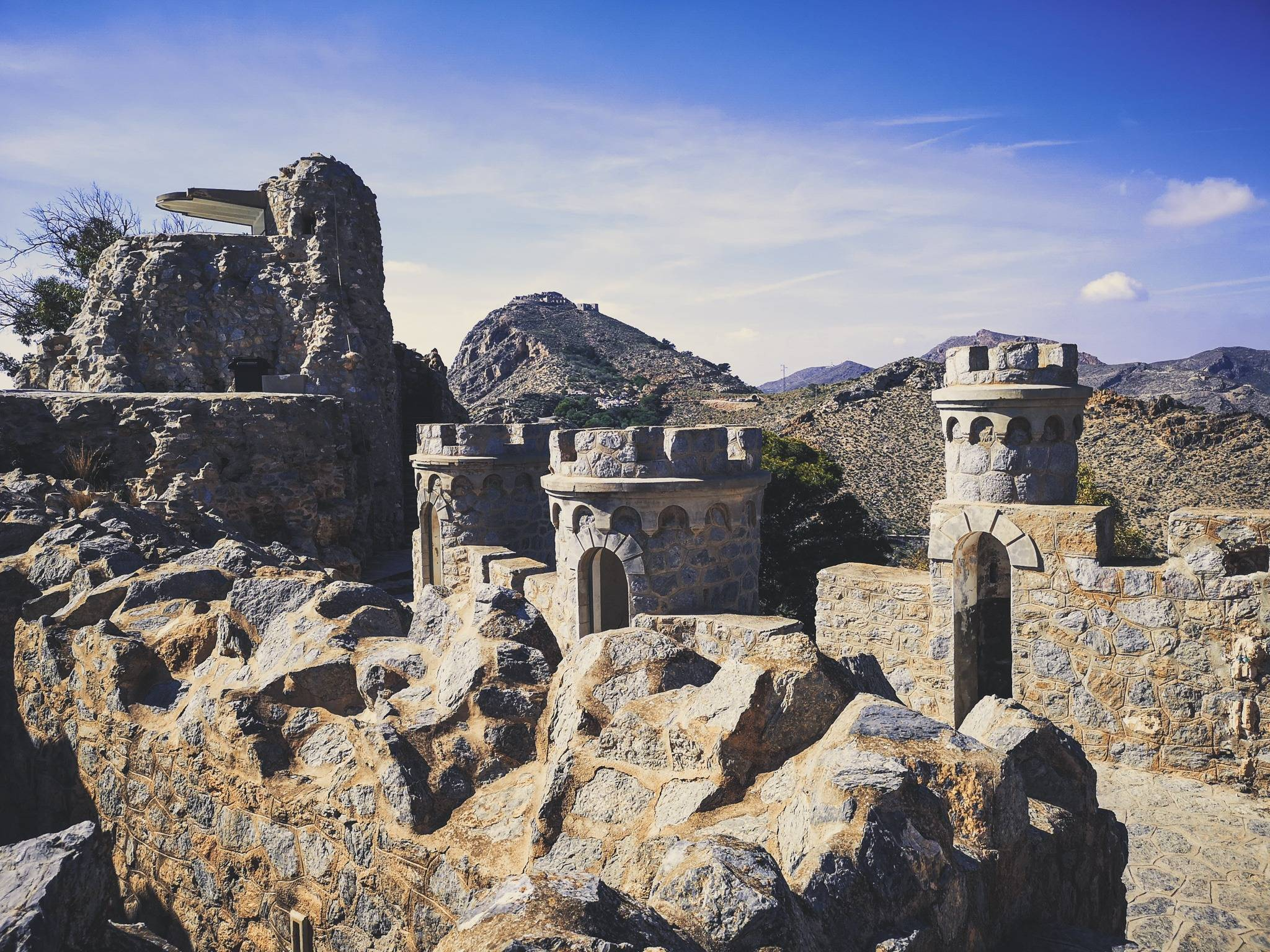
If you’re wondering what you’ll find in this marvelous building, you’ll be glad to know that there are many rooms and parts to explore. From the four towers at the entrance of the castle to the corridors surrounded by stones and memories from the past, everything here will catch your attention.

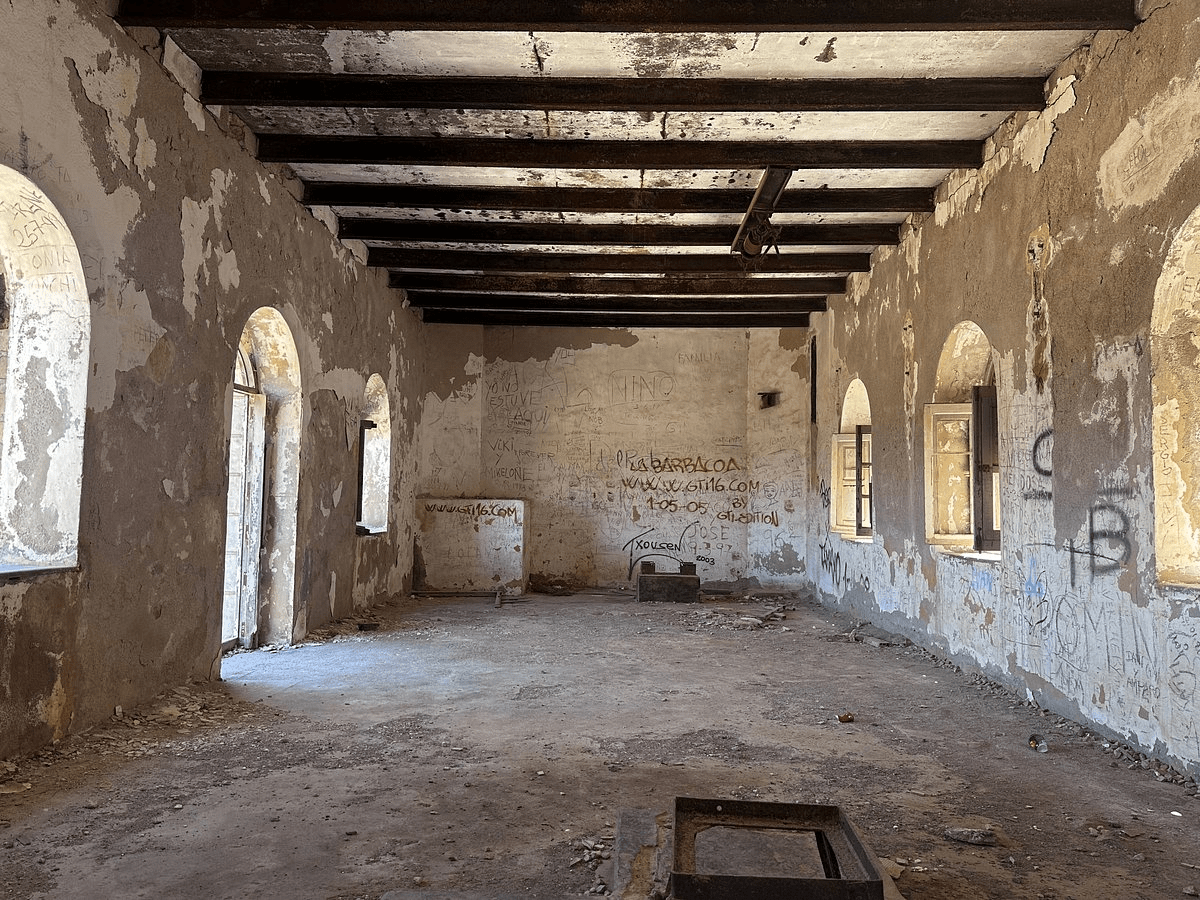
Most of the interesting things are located in the outside of the fortifications. This includes the weapons and watchtowers used to spot enemies and ships. Be careful with the corridors and rooms since some can be narrow.

Notice that part of the structure is built at the edge of a cliff, so it is always recommended to be careful where you walk and what you do. If you’re taking your kids with you, make sure to always keep an eye on them since some places can be really dangerous.

Abandoned Tunnels

picture of tourists walking through the area of the fortress

Along with the standard structure on the surface, the fort also has underground tunnels used by soldiers to quickly move between places or escape from an attack on the castle. Some of these tunnels are accessible, and you can walk through them while exploring the castle. Be careful not to get lost when exploring them. It is always recommended to go with someone else to avoid problems trying to find your way back to the main structure.

Some of these tunnels are inaccessible for safety reasons, and you should not trespass on them. Respecting this will ensure a safe experience for yourself and those around you.

Enjoy Your Private Paradise in Villa Murcia!

Piscina com água

O conteúdo gerado por IA pode estar incorreto.

Looking for the perfect place to stay in Murcia? We’ve got just the spot for you!

Villa Murcia – Your Private Paradise

Wake up to coffee on a sun-drenched terrace, unwind in a warm jacuzzi after a day of exploring, and end your evenings with dinners in the summer kitchen. Nestled in charming Santiago de la Ribera, Villa Murcia offers more than just a holiday—it’s your personal oasis of comfort, style, and unforgettable moments.

Highlights:
✔ Spacious living room with a large sofa and open kitchen – perfect for shared memories
✔ Three elegant, air-conditioned bedrooms with private terraces – your peaceful retreat
✔ Extra fold-out sofa in the living room – ideal for additional guests

Whether it’s a romantic escape, a family getaway, or a relaxing break with friends – Villa Murcia is your dream stay.

Book now and experience the magic of the Spanish sun!

Conclusion: Is Visiting Bateria de Castillitos Worth It?

image of the fortress showing the sea

Castillitos Battery offers an amazing experience that includes fun activities and some of the best views in Spain. But is it worth booking a flight to visit this spot?

In my opinion yes. During my time at Bateria de Castillitos, I had tons of fun, and there were endless possibilities of what to do and where to go.

Not only that, but Cartagena is one of the best places in Spain if you’re looking for variety. Everything is nearby, and you can spend weeks without repeating the same activity or eating at the same place.

In my opinion, the biggest flaw when it comes to this activity is the road that leads to the fortress. The path is scary to drive through, and if you’re not an experienced driver with good handling, don’t even think of renting a car and getting behind the wheel to go to the attraction.

Aside from that, it is a great experience and a must-go if you’re planning a trip to Murcia and its beautiful region. Now that you know everything, it is time to start packing your luggage and prepare to discover one of the best tourist spots in the entire area. Respect the place’s rules and recommendations, and you’ll have the best time possible.

Read More
Caracava De La Cruz

Caravaca De La Cruz: Historical Treasure in the Heart of Murcia

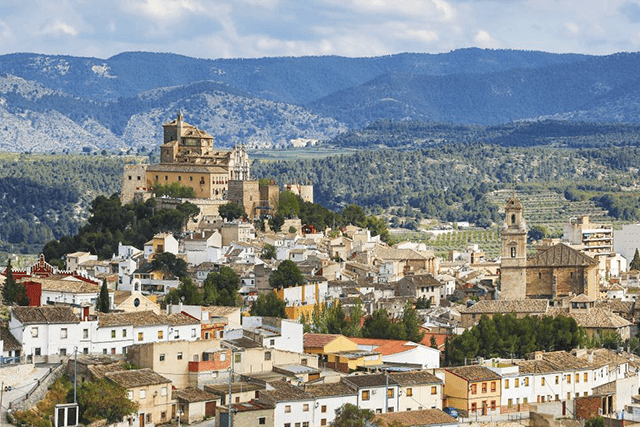
In a mountainous area northwest of the Autonomous Community of Murcia, Spain, lies Caravaca de la Cruz, an important municipality for the region due to its Catholic cult, culture, famous festivals, medieval layout, and imposing walled enclosure. The town located on the border of Murcia, is guarded by castles, churches, myths, and a lot of religion. Today, we will tell you more about this incredible and historic city.

Table of Contents

A Historic City

Caracava De La Cruz

The city has a rich history linked to Christianity and Christian Recovery. It is famous for the Cross of Caravaca, a sacred relic that, according to tradition, appeared miraculously in the fortress of Caravaca in 1232. This event is central to the city’s religious identity, and the “Holy Cross” is venerated as a symbol of protection and miracles. This legend led to the construction of the city’s main monument in the northeast of Murcia, the “Chapel of La Vera Cruz.”

During the Middle Ages, Caravaca was an important fortress on the border between the Christian and Muslim kingdoms. The city passed into the hands of the Order of the Temple and, after its dissolution, became part of the territories administered by the Order of Santiago. The city’s fortress, which initially had Islamic origins, was adapted by Christians over the centuries.

During the Spanish Civil War in 1934, the original relic of the Cross of Caravaca was stolen, an event that is still shrouded in mystery and conspiracy theories. Later, in 1942, Pope Pius XII sent two fragments of the True Cross to replace the lost relic, which is now housed in the Basilica of the True Cross in Caravaca.

The city has been a place of reference for the Catholic Church since 1998, during the papacy of Pope John Paul II. Caravaca is considered one of the five holy cities of this religious denomination, as it celebrates the Perpetual Jubilee Year (Holy Year) every seven years around the Holy and True Cross (the four other cities are Santiago de Compostela, Santo Toribio de Liébana, Rome, and Jerusalem). The first of these took place in 2003 and was visited by Cardinal Ratzinger, who was later elected Pope by Benedict XVI. Due to this circumstance and the municipality’s name, it is also known as the “City of the Cross” (the holy town).

Understand the Myth of The Holy Cross

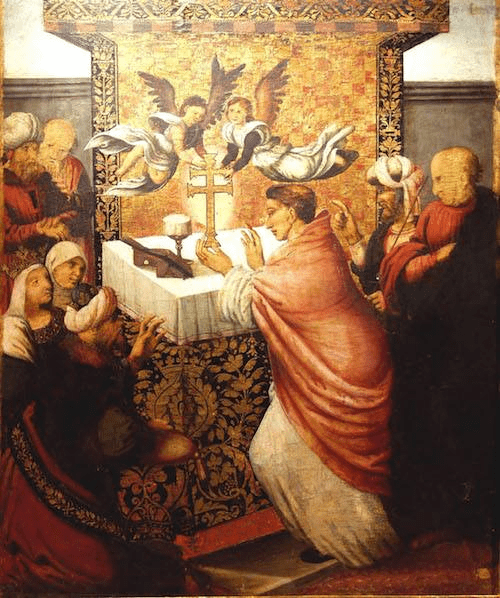
The whole tale says that in 1231, some prisoners arrived in the city, with a priest named Ginés Pérez Chirinos among them. Then, Moorish King Abu Zeid ordered this priest to celebrate a mass.

The myth says a Muslim King Abu Zeid ordered a prisioner priest to celebrate a massand two angels appeared on the altar carrying a two-armed cross.

The mass was interrupted because there was no crucifix on the altar. At that moment, two angels appeared on the altar carrying a two-armed cross to the priest held prisoner. Faced with this miraculous apparition, the Arabs who were there ended up converting to Christianity. Nowadays, replicas of this Caravaca Cross are used as amulets, providing protection against all types of evil, protecting the home and its inhabitants, warding off negative energies, and bringing prosperity.

Famous Fiestas In The City

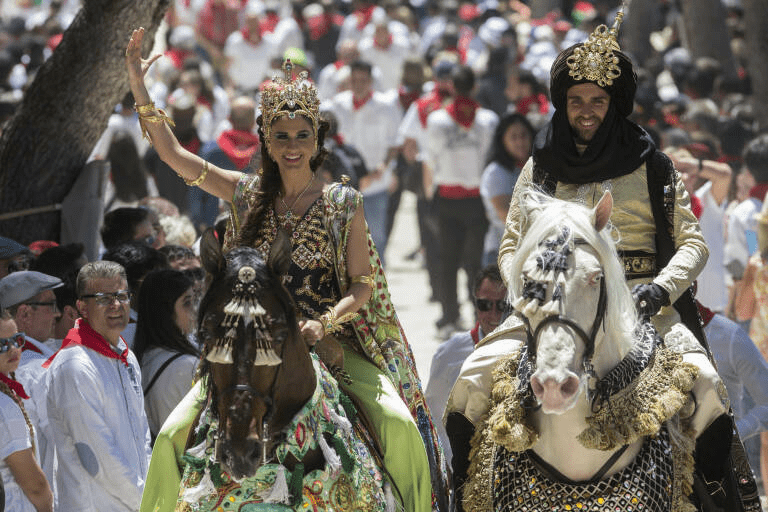
The city is particularly popular in May (normally the first week) when it celebrates the Patron Saint Festival of the Holy and True Cross. This festival recreates the city’s medieval and religious past with events, processions, and parades of Moors and Christians.

These festivities, recognized as being of International Tourist Interest, consist of events celebrating the city’s medieval and religious past. I was in the town at this time, and here are some of the most notable events:

Flower and Wine Horse Parade

 The commemoration consists in 
 decoratively harnessed horses galloping to the Castle.
The commemoration consists of decoratively harnessed horses galloping to the Castle – EUCC

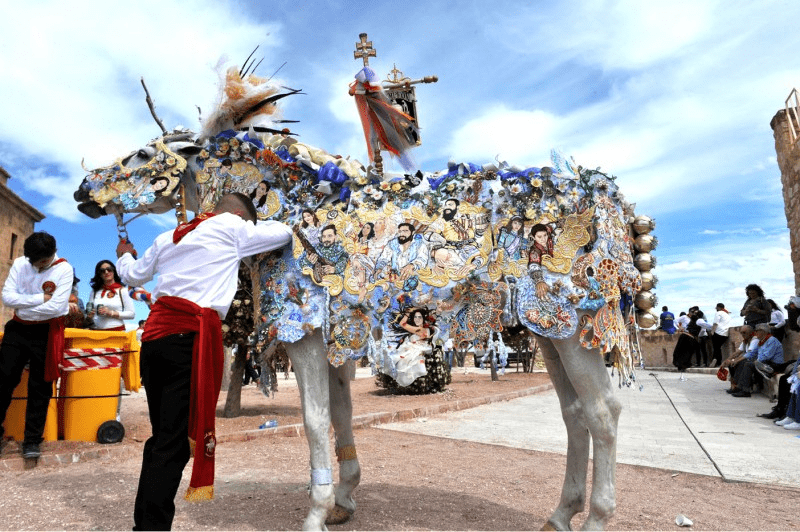
The festival begins with a floral offering to the Holy Cross in the Basilica of the True Cross. On the 2nd day, the highlight is the “Wine Horses,” where horses are adorned with richly embroidered cloaks and participate in an exciting race to the castle. This race is an impressive visual spectacle and celebrates a tradition from the medieval period. The tradition is linked to a legend that tells the Christians who were besieged in the fortress by the Arabs and managed to break the siege and search for water. When they failed to find any water, they returned to the fortress with the wineskins on their horses filled with wine.

Moros y Cristianos

This event recreates the historical battles between the Moors and Christians, with parades that include elaborate costumes and dramatic representations of combat. It was one of my favorite days; it was exciting to see the homage to the historical battles throughout the city, representing both cultures meeting and confronting each other.

Visits and Christian Processions

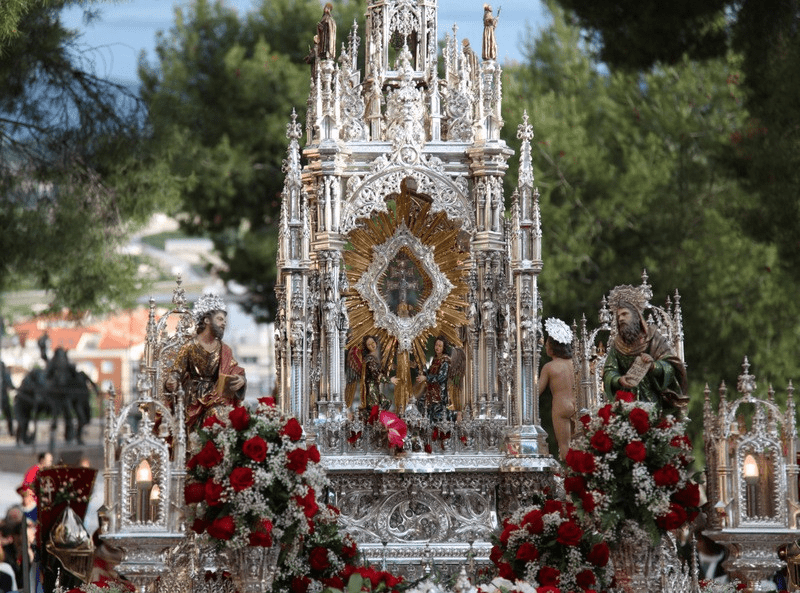
During these days, the Cross of Caravaca visits different locations in the city, including the procession along Gran Vía, where locals and Christians parade in traditional costumes. On the last day, a solemn procession returns the Cross to its church, ending the festivities with a fireworks display.

Tourist Attractions Not To Be Missed!

There are countless tourist options in the city. Here I will mention some of the most famous and the ones I enjoyed visiting the most.

City Centre

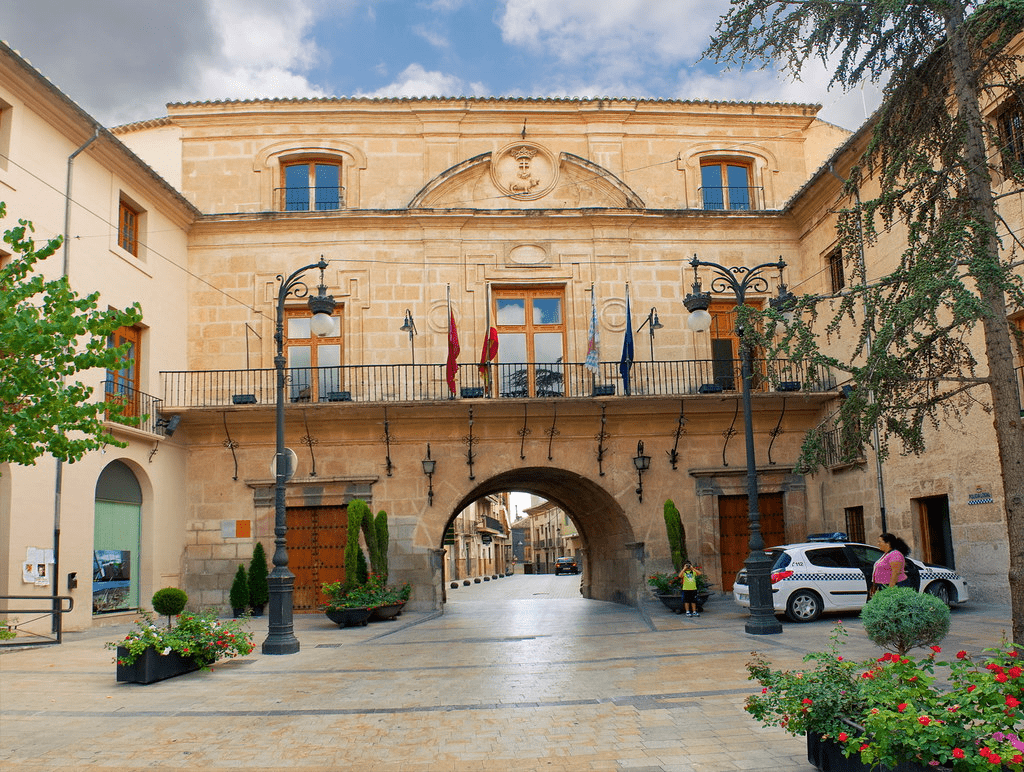
In the historic center of Caravaca de la Cruz, there is a beautiful square that is the city’s true heart. This is where the most important events in Caravaca are held, always with a great atmosphere and several terraces that invite us to sit and enjoy its beauty and atmosphere. This is the Plaza del Arco, the vital center of Caravaca and home to the Town Hall building, which dates back to the 18th century.

Declared an Asset of cultural interest, this square is next to the oldest part of Caravaca and is the epicenter of urban administration, civil government, and commercial activity. The center is also ideal for finding the best places to try local cuisine and go shopping. Within the gastronomy of Caravaca, some exquisite orange delicacies called Yemas de Caravaca stand out. If you want a gastronomic tip, my one is to try this delicious sweet!

Castle of Caravaca de la Cruz

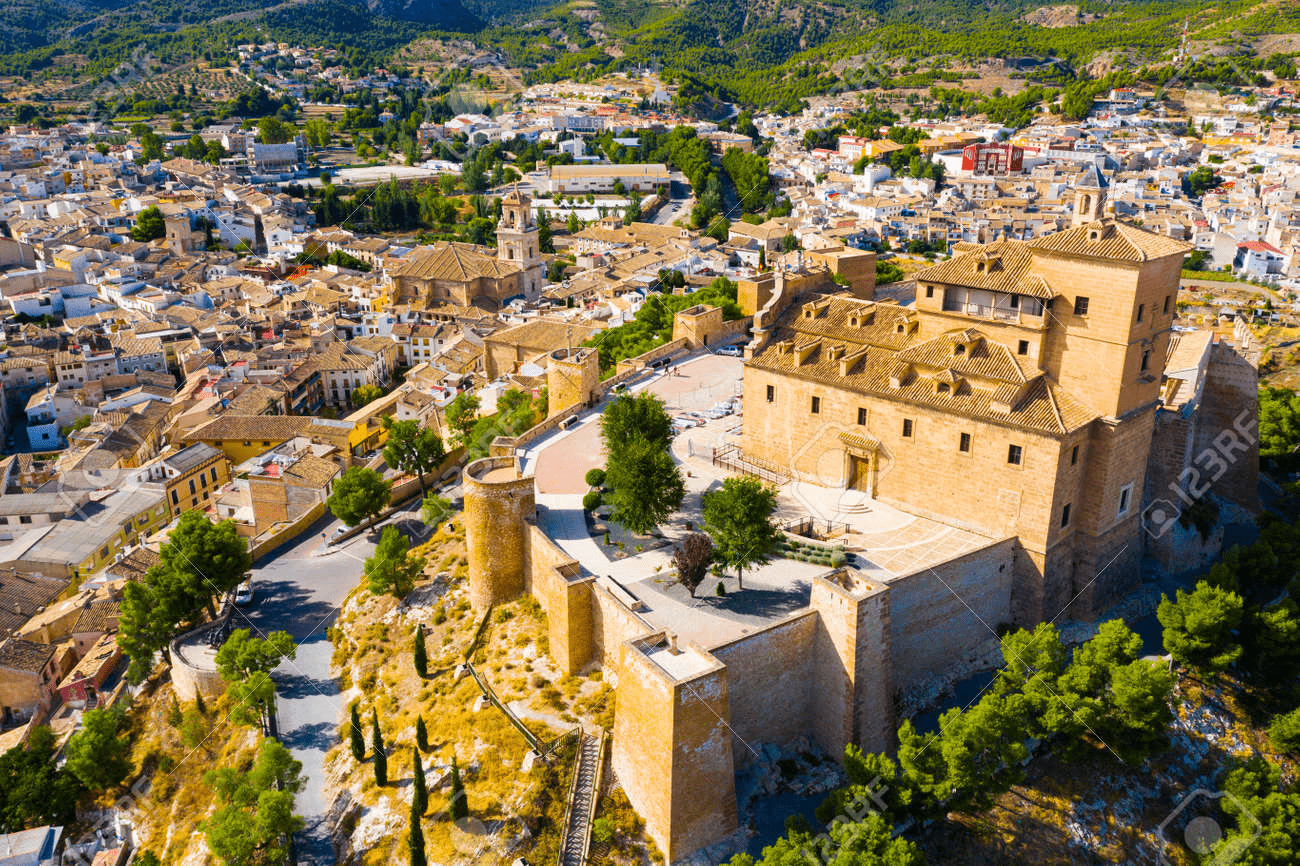
The Castle of Caravaca de la Cruz offers one of the most spectacular views I have ever seen. The fortress has a rich and varied history, with origins dating back to the Islamic era. During the 12th and 13th centuries, the area was controlled by the Muslims, who built the original fortification.

After the Christian reconquest, the fortress passed to the Knights Templar and, later, to the Order of Santiago. The Castle has undergone several changes over the centuries, but despite this, it still maintains elements of its defensive function, such as the “parade ground” and the cisterns. The fortress is surrounded by an elliptical wall with fourteen towers of different sizes and shapes, some square and others circular, which offer panoramic views of the city of Caravaca, the orchards of the Argos River Valley, and the pine and holm oak forests.

Basílica-Santuario de la Vera Cruz

This is the spiritual heart of Caravaca de la Cruz, where the famous relic of the “True Cross” is located. It is a fragment of the cross on which, according to tradition, Jesus Christ was crucified.

The space has an interesting Holy Art and History Museum. Since the relic is permanently supervised, and you are not allowed to take photos of the cross, you will carry this image in your memory only.

The sanctuary, with a luxurious façade made of red marble excavated from the region, is located next to the Castle of Caravaca de la Cruz, inside the Real Alcázar. This ancient historic fortress has 14 towers of different shapes and sizes. The Knights Templar once controlled it and was later administered by the Order of Santiago. The place is splendid, simply wonderful.

The magnificent interior of the basilica is richly decorated with religious works of art. The sanctuary has free entry, but the Museo de la Vera Cruz, which is located inside it, has a charge. It is the most famous tourist spot in the city but not the only religious monument in Caravaca. Below, I will mention the ones I liked the most.

Iglesia de El Salvador

Another church worth visiting for religious people is the Cathedral of Caravaca. A fine example of Renaissance architecture, this original parish church was built between the 16th and 17th centuries. The church is notable for its plateresque façade and impressive interiors, including a magnificent main altarpiece. It is considered a very important monument in Caravaca.

The Convent Of Santa Clara

It is a place very little visited by tourists in the region, but which I loved. A small convent in the city center, in Calle de las Monjas, was founded in 1609 by Catalina de Robles and Ginés de Perea. Construction of the convent began in 1608 on the remains of an old chapel dedicated to Saint Bartholomew. The Order of the Poor Clares runs this convent, which stands out for its simple and elegant architecture, typical of the Baroque style.

The most incredible thing is being in such a discreet space full of centuries in history. Its atmosphere is serenity, providing a space for contemplation and prayer for the religious.

La Soledad Archaeological Museum

Located in a former convent, the museum displays a vast collection of archaeological artifacts from the region, from prehistoric times to the medieval era. It offers a detailed insight into the rich history of Caravaca and its surrounding area.

Cavallos del Vino Museum

This museum is dedicated to the famous “Los Caballos del Vino” festival, a traditional celebration unique to Caravaca.

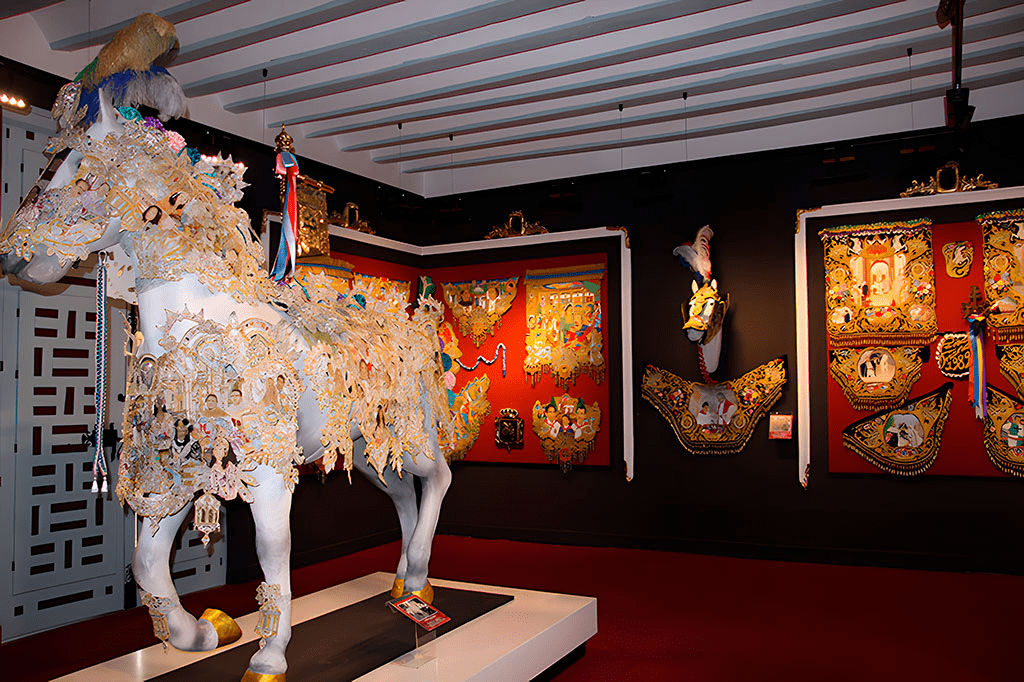
At the museum, visitors can explore a collection of historical objects, costumes, embroidered cloaks, and other items related to the Cavallos del Vino celebration. The collection includes everything from old photographs and documents to the luxurious cloaks worn by the horses during the festival, highlighting the skill and dedication of local artisans.

Las Cuevas del Marqués (Fuentes Del Marqués)

Located just over two kilometers from the inner city of Caravaca de La Cruz, you will find natural springs of crystal clear water and a wealthy area with wildlife that has an undeniable charm for those looking to relax. In addition, there is an old Templar Tower (Torreón de los Templarios), which, according to legend, functioned as an outpost of defense against the Muslims in the Middle Ages. Today, this historic site is home to the Nature Interpretation Center.

Enjoy Your Private Paradise in Villa Murcia!

Piscina com água

O conteúdo gerado por IA pode estar incorreto.

Looking for the perfect place to stay in Murcia? We’ve got just the spot for you!

Villa Murcia – Your Private Paradise

Wake up to coffee on a sun-drenched terrace, unwind in a warm jacuzzi after a day of exploring, and end your evenings with dinners in the summer kitchen. Nestled in charming Santiago de la Ribera, Villa Murcia offers more than just a holiday—it’s your personal oasis of comfort, style, and unforgettable moments.

Highlights:
✔ Spacious living room with a large sofa and open kitchen – perfect for shared memories
✔ Three elegant, air-conditioned bedrooms with private terraces – your peaceful retreat
✔ Extra fold-out sofa in the living room – ideal for additional guests

Whether it’s a romantic escape, a family getaway, or a relaxing break with friends – Villa Murcia is your dream stay.

Book now and experience the magic of the Spanish sun!

A Beautiful Place To Visit

The truth is that Caravaca de La Cruz is a place rich in history. Wherever you go, you will find new insights and beautiful buildings. I could spend hours here and mention many other places I visited, such as the Church of La Encarnación, the medieval chapel of La Purísima, and the oriental-style relic of the Holy See, symbols of worship and faith in the city.

I also loved seeing the species of trees, such as Canary Island pines and holm oaks, that adorn the steep slopes around the city.

Another highlight was walking through the narrow streets, where I discovered the carved red marble and Arabic tiles that decorate the houses and churches. Still, the truth is, words can’t describe the beauty of this place –you just have to see it yourself. If you ever visit Spain, be sure to put this cultural center on your list!

Read More
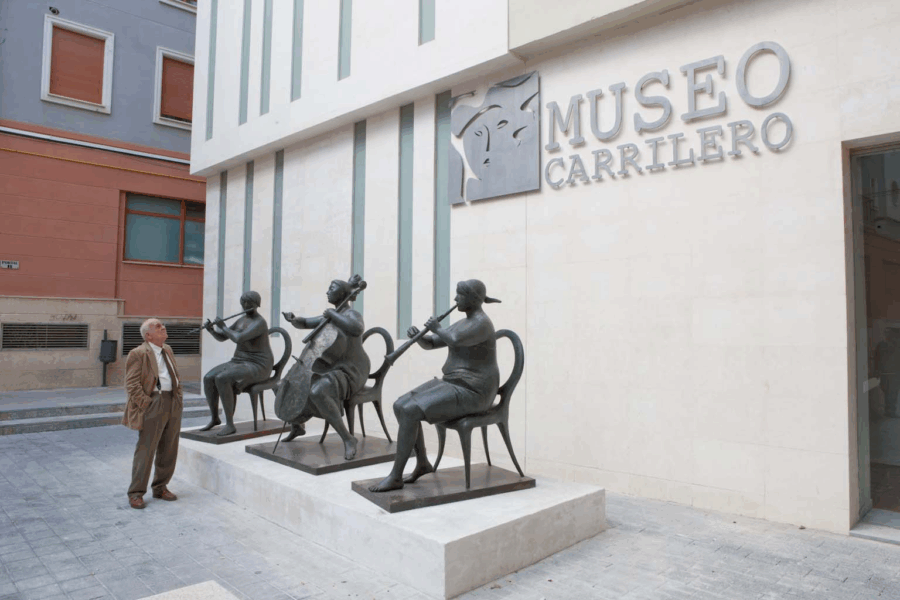
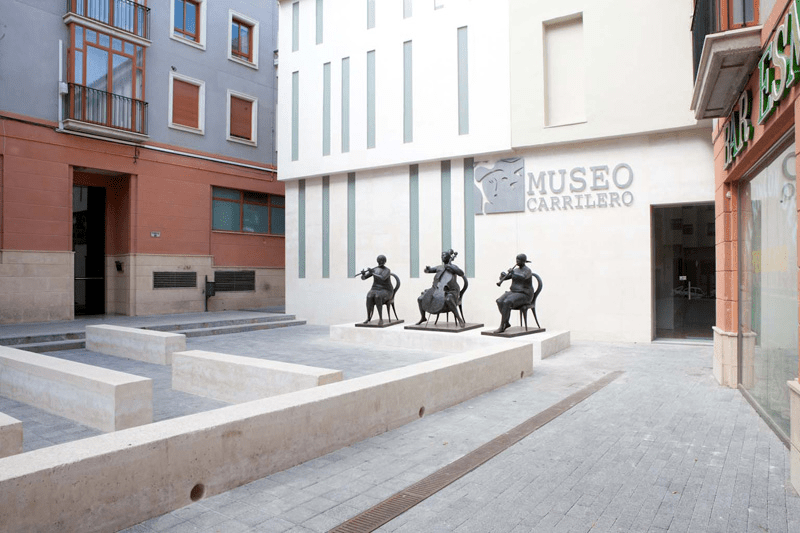
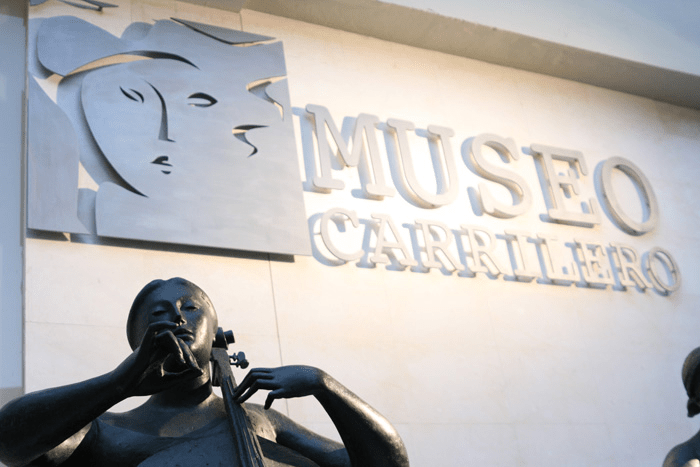
Museo Carrilero building with life-size sculptural group at the entrance, representing a trio of instrumentalists

Museo Carrilero: The Art of Jose Carrilero in Caravaca de la Cruz 

Caravaca de la Cruz is a mountainous municipality in the northwest of the autonomous community of Murcia, Spain. The city is very important to the region due to its Catholic cult, culture, famous festivals, medieval layout, and imposing walled enclosure. However, few people know that it is also home to extraordinary museums, including the Carrilero Museum.

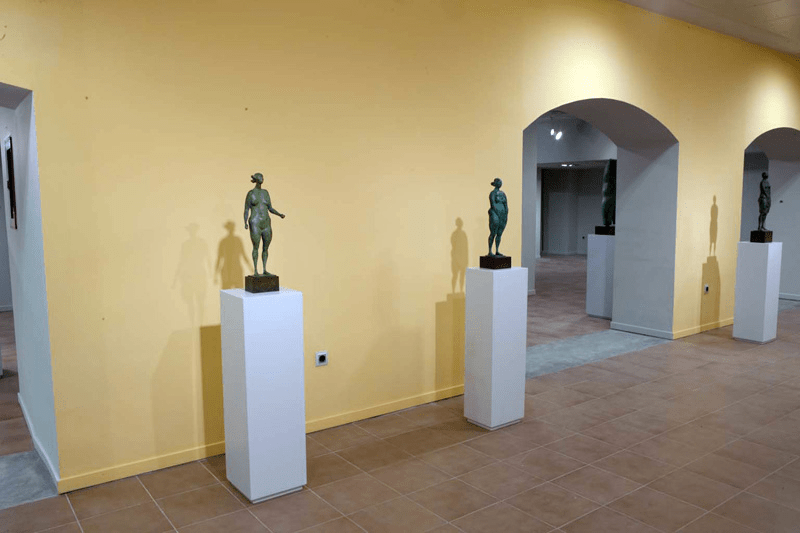
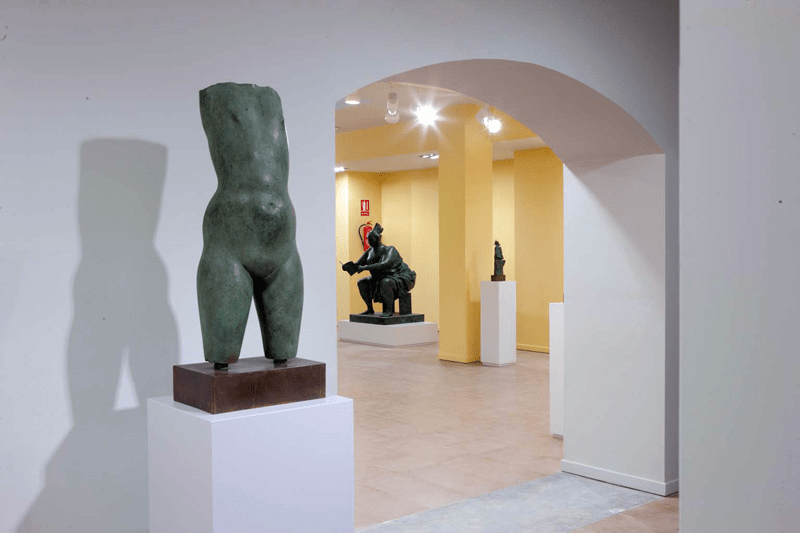
This museum is a unique destination for art lovers, especially those fascinated by sculptures. It is dedicated to the life and work of the renowned sculptor José Carrilero for the permanent exhibition of 90 works of this author: sculptures, paintings, and medals. Today, we are going to learn a little more about this place.

Table of Contents

The Career and Style of Jose Carrilero

It’s only fitting to start by understanding who José Carrilero was in order to appreciate why this man, so passionate about art, has a museum dedicated in his honor.

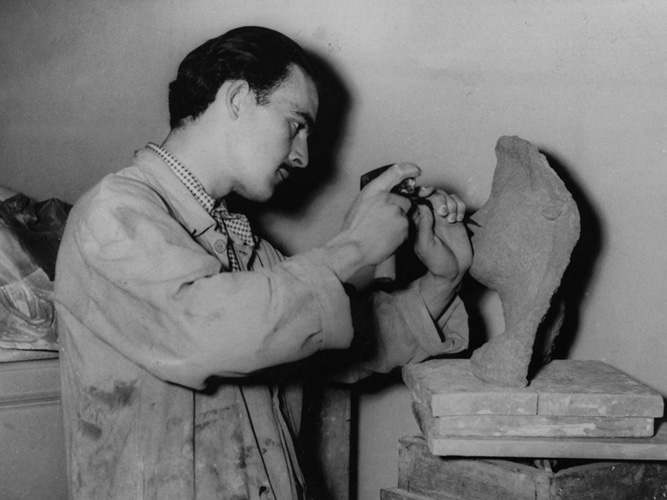
Jose Carrilero, the men wich the Museo Carrilero is dedicated

Jose was born in Caravaca de La Cruz in 1928, but his family moved to Murcia when he was three years old. Ten years later (at the age of 13), he began his artistic journey and started studying at the School of Arts and Crafts of Murcia, where he was influenced by masters such as Luis Garay and Clemente Cantos.

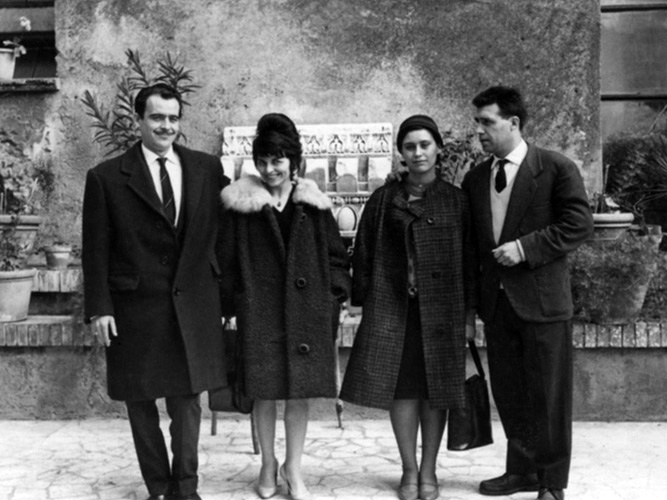
Jose at the Spanish Academy of Fine Arts in Rome

Jose Carrilero at the Spanish Academy of Fine Arts in Rome

In 1952, Carrilero moved to Madrid to study at the Real Academia de Bellas Artes de San Fernando, where he completed his training and later received a scholarship to study at the Spanish Academy in Rome. His stay in Rome was transformative, exposing him to new artistic influences. During this time, Carrilero formed the group “Los Seis Escultores”.

The group consisted of Jose Carrilero Gil, Joaquín García Donaire, César Montaña, Benjamín Mustieles, and Jesús Valverde. They never intended to create their school; instead, they were simply a union based on shared affinities and a passion for art. The group held its first exhibition in 1964 at the General Directorate of Fine Arts in Madrid and was part of the New Figuration movement.

Jose Carrilero, the men wich the Museo Carrilero is dedicated

Carrilero’s style focuses on human figuration, often characterized by robust and expressive forms. He works with various materials, including bronze, and his works capture the essence and emotion of human figures in different postures and situations.

Carrilero Museum

Sculptures exhibition inside the Museo Carrilero bulding

The Museo Carrilero is housed in a former 17th-century palatial house originally built by Don Luis de Gadea Sahajosa. The building, which covers an area of ​​approximately 650 square meters, has been restored to house Carrilero’s collection but was once a noble residence that served various purposes over the centuries, including as a Civil Guard barracks.

The building comprises four exhibition rooms, a multipurpose room, and other service facilities. Pictorial works and more miniature sculptures are exhibited on the upper floors, while the basement is mainly dedicated to large-scale bronze sculptures.

Entrance to Museo Carrilero with  life-size sculptural group at the entrance, representing a trio of instrumentalists

The Museo Carrilero houses a selection of 90 works donated by the famous sculptor. One of the most impressive attractions is the life-size sculptural group at the entrance, representing a trio of instrumentalists—a flutist, a cellist, and a trumpeter—a recurring theme in Carrilero’s work.

The entire collection in Museo Carrilero is very interesting. Art lovers will undoubtedly be captivated by everything from the commemorative bronze medallions to the naturalistic depictions of trees and other elements of nature.

Sculptures exhibition inside the Museo Carrilero bulding

Carrilero is known for capturing his subjects’ volume, essence, and movement, often ignoring facial details, and that is precisely what we see in this collection. In these works, beauty and facial expression are secondary, and it is clear that the artist preferred to emphasize form and volume to convey a clear and impactful message.

Museo Carrilero Opening Hours

The Museo Carrilero has different opening hours throughout the year:

  • From May 1st to September 30th: Monday to Sunday: 10:00 to 14:00 and 16:00 to 20:00
  • From October 1st to December 31st: Monday to Sunday: 10:00 to 14:00 and 16:00 to 19:00

I suggest checking the updated opening hours before visiting, especially during holidays or special events, to ensure a smooth and well-planned experience.
How To Get To The Museo Carrilero

Location of the Museo Carrilero

The Museo Carrilero is at Plaza Jose Carrilero, s/n, 30400, in Caravaca de la Cruz. You can follow these directions:

By Car

  • From Murcia: Take the RM-15 towards Caravaca de la Cruz. Depending on the traffic, it will take you approximately one hour. Once in Caravaca de la Cruz, follow the indication to Centro Urbano, where you will find the Museo Carrilero.
  • From Albacete: Take the A-30 in the direction of Murcia, then at the junction, take the turning off for the RM-15 in the direction of Caravaca de la Cruz. The journey takes approximately two hours.

By Bus

If you prefer public transport, there are regular bus services from Murcia and surrounding towns to Caravaca de la Cruz. The most famous companies operating these routes are LATBUS and ALSA. I recommend you check the companies’ websites for the latest timetables and departure points before your trip.

On Foot or by Taxi

If you are already in Caravaca de la Cruz, you could conveniently walk to the museum, especially if your accommodation is centrally located in the city. However, if you wish so, you can get a local taxi to drive you there.

You can quickly get to the Museo Carrilero since it is well-indicated. The city is one of the most popular historical cities and therefore offers a great time to be between art lovers and holidaymakers, all alike.

Museo Carrilero In Caravaca De La Cruz

Besides the Museo Carrilero, Caravaca de la Cruz has much more to offer in terms of tourism. It has a diverse range of monuments that tell and express the town’s historic and ancient past. It has become an important city for tourists and pilgrims because it is a city rich in different cultures.

Image of Basilica-Sanctuary of the True Cross, located in  Caravaca deLa Cruz, where Museo Carrilero is located.
Basilica-Sanctuary of the True Cross – DMC Spanien

The region has a rich ancient history and has been inhabited by the Argaric, Iberian, and Roman cultures. Each of these civilizations left its mark on the cultural and architectural landscape of the city. However, the origins of its urban structure are predominantly attributed to the period of Arab domination, which significantly shaped the city’s identity.

Image of Basilica-Sanctuary of the True Cross, located in  Caravaca deLa Cruz, where Museo Carrilero is located.
Basilica-Sanctuary of the True Cross – DMC Spanien

One of the most famous things about Caravaca is its designation as one of the five holy places in Christianity to which the privilege of the Perpetual Jubilee Year was granted. This fact is connected to the Basilica-Sanctuary of the True Cross, which accommodates an important reliquary of the True Cross. Thus, it is a very popular place for pilgrimages and other religious manifestations that attract thousands of visitors worldwide.

I know the place sometimes sounds “too religious,” and yes, it is religious, but the city itself is so nice, with narrow streets and old houses at the sides that make you feel like you are going back in time. I speak for myself: I have my beliefs, but I am not very religiously focused. However, there was not a minute when I was not amazed in Caravaca.

Area Inside the building of Archeological Museum
Archeological Museum – Murcia Today

Other points I really enjoyed include the Caravaca Castle, a historic fortress with panoramic views of the city (perfect for taking photos), and the Municipal Archaeological Museum, which displays artifacts from the different civilizations that occupied the region. The city is also famous for its Fiestas de la Vera Cruz, celebratedin May, which includes religious events and an impressive horse parade known as “Caballos del Vino.”

In general, there is no shortage of places to visit. Every step is a new story and an incredible area to take photographs. If you are ever considering visiting Murcia, do not leave this city off your list because it will undoubtedly be worth it!

Enjoy Your Private Paradise in Villa Murcia!

Piscina com água

O conteúdo gerado por IA pode estar incorreto.

Looking for the perfect place to stay in Murcia? We’ve got just the spot for you!

Villa Murcia – Your Private Paradise

Wake up to coffee on a sun-drenched terrace, unwind in a warm jacuzzi after a day of exploring, and end your evenings with dinners in the summer kitchen. Nestled in charming Santiago de la Ribera, Villa Murcia offers more than just a holiday—it’s your personal oasis of comfort, style, and unforgettable moments.

Highlights:
✔ Spacious living room with a large sofa and open kitchen – perfect for shared memories
✔ Three elegant, air-conditioned bedrooms with private terraces – your peaceful retreat
✔ Extra fold-out sofa in the living room – ideal for additional guests

Whether it’s a romantic escape, a family getaway, or a relaxing break with friends – Villa Murcia is your dream stay.

Book now and experience the magic of the Spanish sun!

A Museum For Art Lovers

Entrance to Museo Carrilero building

In short, the Museo Carrilero not only preserves and celebrates the work of one of the most important contemporary Spanish sculptors, Jose Carrilero, but also serves as a vital cultural link in Caravaca. With a diverse collection of sculptures, medals, and sketches, the museum offers an in-depth look at Carrilero’s talent and artistic evolution.

Caravaca is a popular tourist destination, but the museum is often overlooked. If you’re planning a city tour, visiting the Carrilero Museum is a unique opportunity to appreciate art and explore the rich history of the person who originated the city!

Read More
The Castillo de Santa Bárbara | A Fortress at the top of Alicante!

The Castillo de Santa Bárbara | A Fortress at the Top of Alicante!

Southern Spain is home to many incredible medieval structures dating back to the times when Moors and Christians fought for the creed and control of the Iberian Peninsula. In this context, the castles played an important role in the territorial surveillance of the territory and the control of the Mediterranean Sea on the coast of modern-day Spain.

Among all the castles in southern Spain, the Castle of Santa Bárbara stands out for its magnificence, size, and grandeur. For over a thousand years, this castle has witnessed many brutal battles in the Alicante region from this historical centre.

In the following lines, we delve into all the details of this wonderful piece of history located in the historic center of Alacant, or Alicante.

Table of Contents:

What Is Castillo de Santa Barbara?

Santa Bárbara castle in the night

The Castillo de Santa Bárbara, or Santa Bárbara Castle, is a medieval fortress located at the top of Mount Benacantil in the heart of Alicante, the capital of the municipality of the same name.

It is one of the largest medieval structures in Spain, with a total area of ​​400,000 square meters. From the castle, you can easily see the city, the port, the entire bay, and even some distant beaches, such as those of San Juan and Campello.

Castillo de Santa Bárbara Location

Castillo de Santa Bárbara Location

The Castle of Santa Bárbara is on the highest esplanade of Monte Benacantil, in the center of the city of Alicante, Spain. As such, you will be able to see the castle from anywhere in the settlement and enjoy its spectacular views if you are at the top of this magnificent fortress.

Alicante has an International Airport at a distance of five kilometers south of the city center. This way, if you visit Alicante by plane, you can easily get to the city and take a guided tour of the castle.

It is worth mentioning that Alicante has some of the best beaches in the area. Therefore, if you are visiting the city for summer events and activities, visiting the castle could be a great sight, especially on the Alicante summer night.

Address: Monte Benacantil, Castillo Santa Bárbara, S/N, 03013, Spain

Phone: +34 965 177 201

Email: turismo@alicanteturismo.com

Website: https://alicanteturismo.com/en/castle-of-santa-barbara/

How to Get the Castillo de Santa Barbara

Castillo de Santa Bárbara signal

There are four ways to get the Castillo de Santa Bárbara when you‘re inside the city of Alicante:

  • By foot. You can reach the castle by crossing the Ereta Park (Parque de la Ereta), the old town of the city, the walls, or the Tuna Park (Parque de la Tuna)
  • By elevator. You can take the elevator, which is inside the rock of the mountain. The elevator is in front of the Postiguet beach.
  • By car. You can drive through a road that begins in the Calle de Vázquez de Mella (Vázquez de Mella Street). There are parking places at the base of the Santa Barbara castle.
  • By bus. You can take the Turibús, a tourist bus that crosses the most important places in Alicante. This bus has a stop in the parking of the Santa Bárbara castle.

Opening hours:

  • From October 1 to March 31: from 10 am to 8 pm from Monday to Sunday.
  • From April to September: from 10 am to 10 pm from Monday to Sunday.

The Architecture of the Castillo de Santa Bárbara

Santa Bárbara castle architectural plan

The Castillo de Santa Bárbara is divided into three different enclosures built in three distinct periods.

The upper one is called “La Torreta” (the tower in English). This is the oldest part of the castle and houses “The Tower of Homenaje,” the Engineers Park, the Governor’s House, and the Noble Room, where the local nobility gathered to pay their respects to the crown.

The middle area houses the large spaces built in the 16th century: the Felipe II Hall (the Philip II Hall, where King Alfonso of the Queen). This second enclosure entails the Guard Corps (El Cuerpo de la Guardia), the Parade Ground (Patio de Armas), and the Queen’s Bastion (El Bastión de la Reina). There is also a large marble shield above the entrance to this enclosure, which belonged to the disappeared Royal Consulate of the Sea.

Finally, in the 18th century, builders built the lower area. It is the location of the Revellín del Bon Repós, which is currently used as a parking lot. It also contains the monument to Félix Berenguer de Marquina, a famous soldier who was the Captain General of the Philippines and Viceroy of New Mexico.

The History of the Castillo de Santa Bárbara

An old photo of the Santa Bárbara castle

The origin of the Santa Bárbara Castle is a bit nebulous and dates back to the deepest past, beyond the 9th century, with the exact date of construction of the fortress not being clear. Even so, everything seems to indicate that the Arabs began building the fortress in the 8th or 9th century.

However, the place was taken by the Christians in the year of our Lord 1248 at the hands of the future king Alfonso X the Wise.

The conquistadors baptized the fortress Castillo de Santa Bárbara since the final battle to take the fortress occurred on the feast day of Santa Bárbara. They saw this as a sign from God!

Another old photo of Santa Bárbara castle in Alicante

Over the years, the castle underwent many extensions and reconstructions, expanding its power and relevance to this region. In this way, for centuries, the castle kept the area safe and free from enemies and Moors.

Still, in the 18th century, the fortress became a prison for the most ruthless murderers and criminals. This prison was very famous throughout the last century until the castle opened to the public after a period of disuse and abandonment.

Activities in the Castillo de Santa Bárbara

A celebration in the parade ground of the Santa Bárbara castle in Alicante

The Santa Bárbara Castle is the epicenter of numerous cultural panoramas that attract hundreds of visitors to enter its walls. Visitors will be able to enjoy theatrical performances, gastronomic experiences, guided tours, and themed weekends.

The castle also occasionally hosts exhibitions, concerts, children’s workshops, and multiple activities that you can enjoy throughout the year.

A jester in the celebration in the Santa Bárbara castle

In general terms, the castle’s grand parade becomes the perfect place for celebrations, conferences, presentations, gala dinners, and other crucial events.

Guided tours take visitors to several inaccessible rooms and halls of the old castle, such as the Renaissance cistern located beneath the parade, the old dungeons that house replicas of torture machines, and the Philip II Hall, which is a symbolic room for special events and displays a unique side of the castle.

Visiting One of the Crucial Enclaves of the History of Alicante and the Spanish Culture

An overview of the Castillo de Santa Bárbara

Alicante is one of the favorite places on the Spanish Mediterranean coast, where visitors from all European countries come, especially in summer. Here, tourists enjoy the different areas of the city, including the impressive Santa Bárbara castle at the top of Mount Benacantil.

The three distinct areas of the castle will leave you speechless and give you a quick insight into the crucial events of the Middle Ages in the settlement.

Access and tour this castle and discover the past of this magical city on the Mediterranean Sea. This way, you won’t miss a crucial part of Spanish history!

Enjoy Your Private Paradise in Villa Murcia!

Piscina com água

O conteúdo gerado por IA pode estar incorreto.

Looking for the perfect place to stay in Murcia? We’ve got just the spot for you!

Villa Murcia – Your Private Paradise

Wake up to coffee on a sun-drenched terrace, unwind in a warm jacuzzi after a day of exploring, and end your evenings with dinners in the summer kitchen. Nestled in charming Santiago de la Ribera, Villa Murcia offers more than just a holiday—it’s your personal oasis of comfort, style, and unforgettable moments.

Highlights:
✔ Spacious living room with a large sofa and open kitchen – perfect for shared memories
✔ Three elegant, air-conditioned bedrooms with private terraces – your peaceful retreat
✔ Extra fold-out sofa in the living room – ideal for additional guests

Whether it’s a romantic escape, a family getaway, or a relaxing break with friends – Villa Murcia is your dream stay.

Book now and experience the magic of the Spanish sun!

Read More
Casa Consistorial Cartagena , one of cartagenas main tourist attraction

Palacio Consistorial de Cartagena: History in the Heart of the City

Cartagena is a port city and naval base in the Murcia region of southeastern Spain. It is one of the most important places in Spain’s past. Built in the 3rd century AD and colonized by different people, Spanish Cartagena was an important port during territorial disputes, so much so that a wall protected the entire city. Today, its structure has impressive historical monuments. One of these is the Cartagena Consistorial Palace, which houses the Town Hall of Cartagena.

The Cartagena Consistorial Palace, also known as Cartagena City Hall, is one of the city’s main modernist buildings, built between 1900 and 1907. The Palace is among the 20 most spectacular in Spain, according to the Niumba blog of the travel portal TripAdvisor, being the only one in the Region to be included in this list compiled by the leading tourism site.

During my numerous stays in the city, I had the opportunity to learn more about the history of this incredible space, and today, I will share what I learned with you.

Table of Contents

History of The Palace Consistorial

The municipal architect Tomás Rico Valarino, together with Francisco de Paula Oliver, drew up the plans for which, between 1900 and 1907, the Palace of the Municipal Chamber of Cartagena (Palacio Consistorial Cartagena) was built. It is a building with a triangular floor plan in which the three facades differ. The Cartagena Municipal Chamber was inaugurated in 1907 and was built in an old building from the 18th century.

The building was designed to house the city hall and the bureaucratic center, including more straightforward desks.

Due to its construction on land reclaimed from the sea and a poor foundation system, the building began to suffer significant structural damage, leading to a progressive ruin process. The biggest problem of the time was that the building’s land was subject to flooding on more than one occasion.

In 1995, the building was closed, and costly restoration work was carried out under the command of the architect Juan Antonio Molina. Due to various legal problems with the contract at the time, the works were delayed, which resulted in their completion only eleven years later.

The primary phases consisted of stabilizing the structure, which required raising all the surrounding floors and pouring concrete beneath the structure of the whole building to reinforce foundations built on the reclaimed land. They also had to construct water control systems fortified.

Structure Before Its Reform

Old project of La Casa Consistorial
The original plan of the first floor / Municipal Archive – RegMurcia Integra

On the original floor, the basement housed the offices of the Municipal Court and the Court of First Instance, as well as offices such as the Government Secretariat, the Courtroom, and the Examining Magistrate’s Office. In the back area were spaces for the detained, including a cell, a youth storage room, standard rooms for men and women, and an area for Justice Officers.
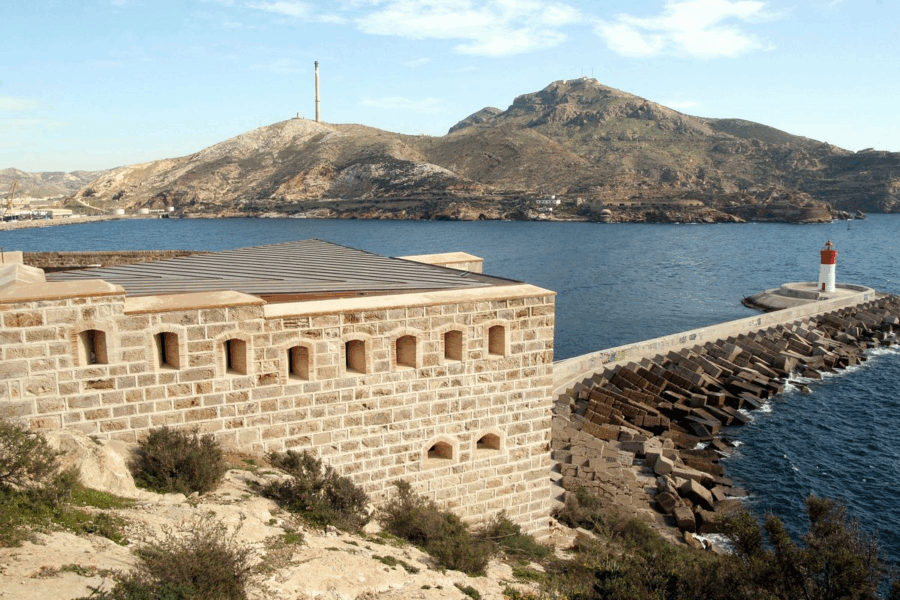
The Prefecture of Cartagena was the center of administration. They operated the hygiene and health departments on the ground floor, with the chief’s office, vaccination room, recognition service, and the expansion and sanitation departments. There was also a Night Watch area, a clothing and equipment storage room, and the Municipal Guard, which included the guards’ meeting room, the Armory Office, and the Chief’s Office.
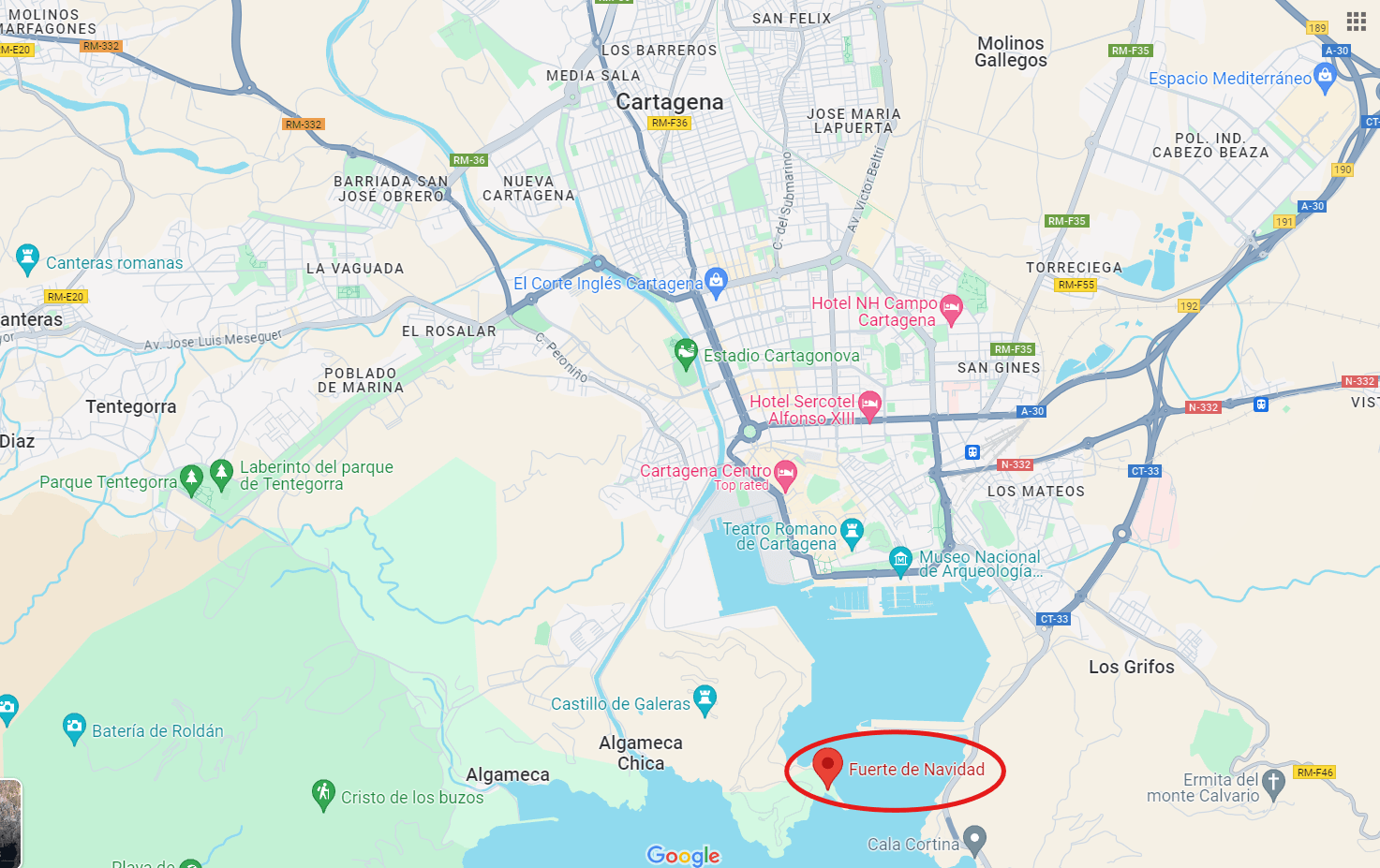
The first step was to the Mayor’s Room, surrounded by the Mayor’s House, Waiting Room, Ante-Lounge, Session Room, and committee meeting rooms. There was also the Secretary’s Office, the General Secretary’s Office, and other departments such as the Accounting Office, Finance Department, Property Office, Tax Collection Office, Depository, Bank, Loans, and Real Estate Room. On this floor, there was the Municipal Works Section and the Study Room.
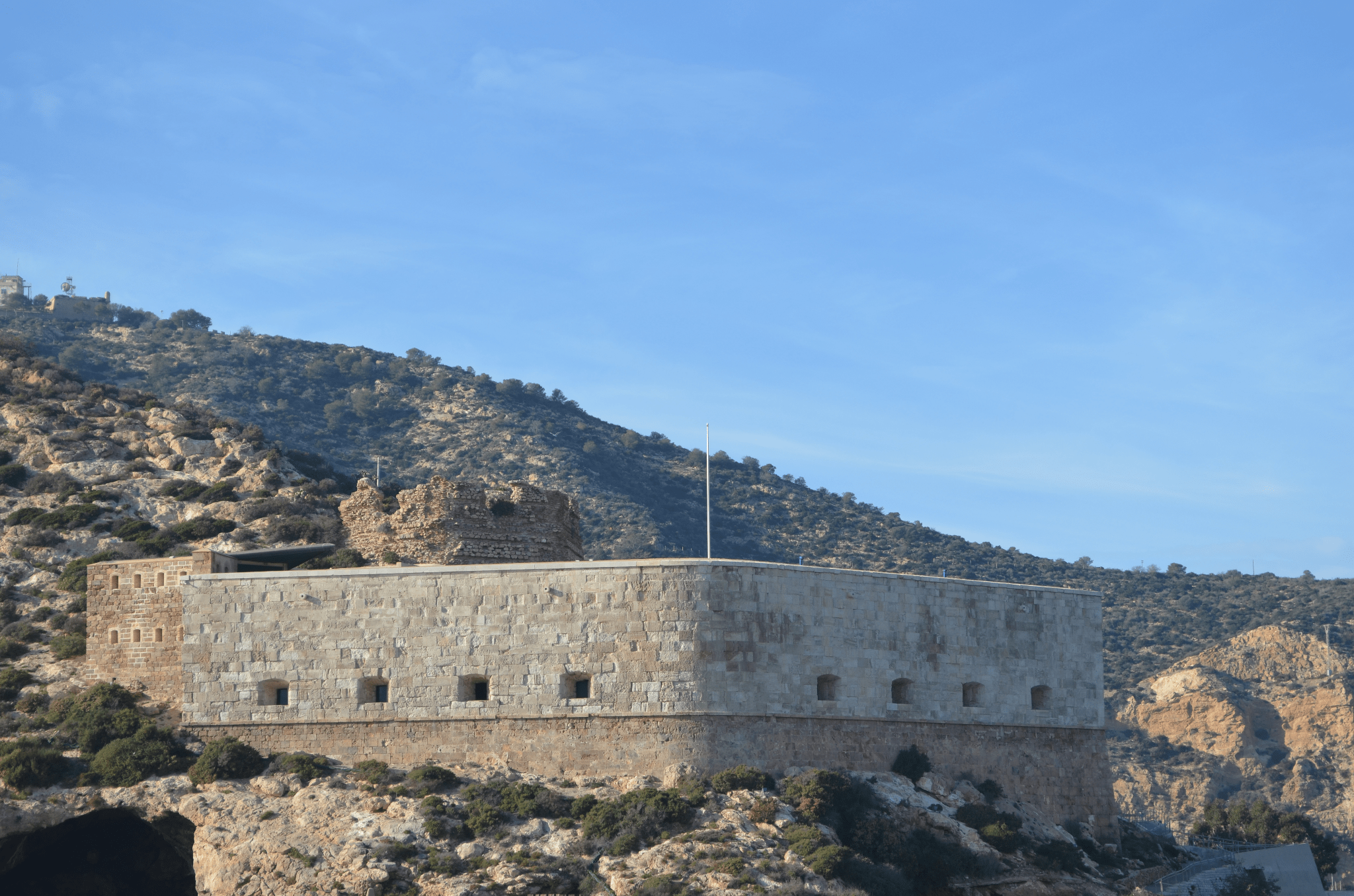
In the basement were the rooms of the Court’s archive, the Civil Registry, the Municipal Archive, and rooms for the judge and other high officials. There was also a room used as a museum and library. The plants mention an annex building for police, firefighters, and cleaning cabinets, although it is unknown if it was built.

Currently

Currently, the Municipal Chamber maintains the representative function of Cartagena, as well as the bureaucratic and political activities of the municipal corporation. Municipal plenary sessions occur there, and there is the office of the President of the Chamber and the cabinets of the different political groups.

As I said, the building needed to undergo renovation. The primary phases consisted of stabilizing the structure, which required raising all the surrounding floors and pouring concrete beneath the structure to enforce foundations built on the reclaimed land. They also had to construct water control systems fortified.

The modernist building maintained its three distinct facades, each containing abundant decorative elements: split pediments, elliptical windows, classical moldings, female heads, shields, etc. It also has an imperial staircase that really surprised me with its beauty, and the plenary hall, which is also worth visiting.

Two exhibition rooms are on the ground floor; you must pass through the spectacular modernist lobby to access them. The most significant exhibition space, right at the entrance, is divided into different rooms that communicate the history of Cartagena and accommodate all types of art, including sculpture, painting, photography, and original contemporary installations.

The second wing is dedicated to young creators, a recent initiative to bring newer art closer together. This is the emerging art gallery “Subjectiva,” promoted by the Department of Youth. This exhibition space facilitates the development of young creators, who are usually limited by the lack of opportunities to hold solo exhibitions.

The building is also used for public functions, concerts, and protocol activities.

Important Information For Visiting The Palace

If you want to visit this historic building, here is some important information:

Location: The address of the building is Plaza del Ayuntamiento, 1, 30202 Cartagena, Murcia.

Location of the Building

The Palacio Consistorial is located within the Plaza del Ayuntamiento, directly across from the Roman Theatre Museum, a famous Cartagena building, and a 3-minute walk from the cruise ship port. The tip is to take advantage of visiting one building and the other tourist attractions on the same day. They are incredible.
The bottom corner of the building facing towards the port houses the Tourist Information Point, where visitors can pick up maps and obtain basic information about Cartagena’s tourist attractions. This strategic location makes it an ideal starting point for exploring the city’s rich historical and cultural offerings, with easy access to one of Cartagena’s most significant archaeological sites. There is a small entry fee.
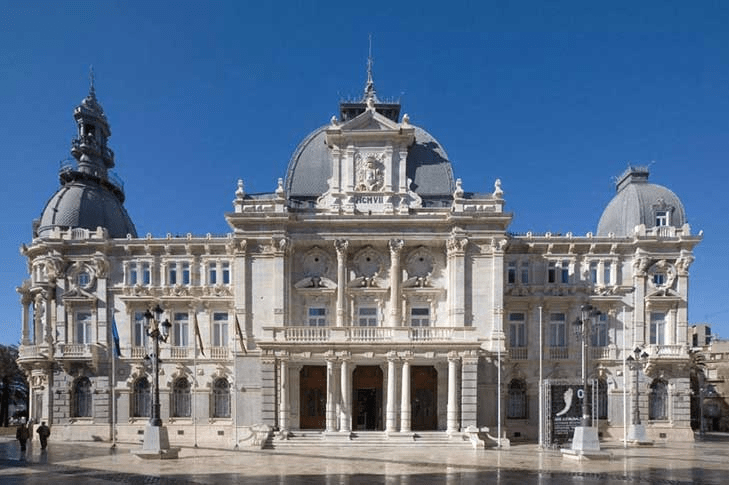
Phone: 968 12 89 50

Opening Hours:

  • Monday: Closed
  • Tuesday to Friday: Morning: 10:00 – 13:30 / Afternoon: 17:00 – 19:00
  • Saturday: Morning: 10:00 – 13:30/ Afternoon: 17:00 – 20:00
  • Sunday:Morning: 10:00 – 13:30 / Afternoon: Closed
  • Holidays: Morning: 10:00 – 13:30

The City Hall Of Cartagena

It’s really easy to understand why the Palacio is one of Cartagena’s main tourist attractions.

For those who love history, it’s an excellent option for getting to know the city of Cartagena. With its impressive modernist architecture and central location, next to important tourist attractions, the palace offers visitors an enriching and informative experience about the city’s history and culture.

Enjoy Your Private Paradise in Villa Murcia!

Piscina com água

O conteúdo gerado por IA pode estar incorreto.

Looking for the perfect place to stay in Murcia? We’ve got just the spot for you!

Villa Murcia – Your Private Paradise

Wake up to coffee on a sun-drenched terrace, unwind in a warm jacuzzi after a day of exploring, and end your evenings with dinners in the summer kitchen. Nestled in charming Santiago de la Ribera, Villa Murcia offers more than just a holiday—it’s your personal oasis of comfort, style, and unforgettable moments.

Highlights:
✔ Spacious living room with a large sofa and open kitchen – perfect for shared memories
✔ Three elegant, air-conditioned bedrooms with private terraces – your peaceful retreat
✔ Extra fold-out sofa in the living room – ideal for additional guests

Whether it’s a romantic escape, a family getaway, or a relaxing break with friends – Villa Murcia is your dream stay.

Book now and experience the magic of the Spanish sun!

Read More

Page 2 of 10

Powered by WordPress & Theme by Anders Norén