


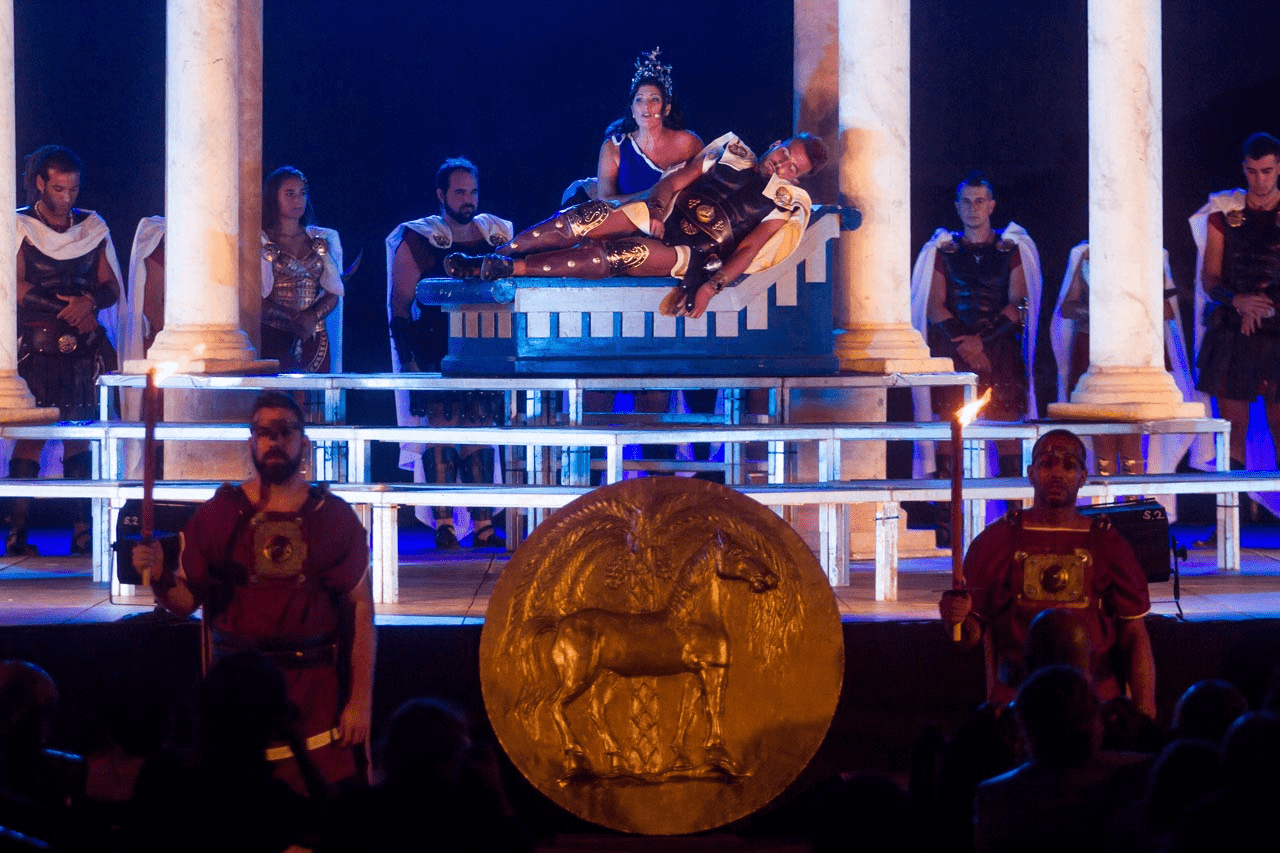
Since its foundation, the “Fiestas de Carthagineses y Romanos” has evolved from a local event into a celebration of great cultural and tourist importance.
They preserve and promote Cartagena’s history and attract thousands of visitors annually, strengthening the city’s cultural identity and promoting regional tourism.
I had the opportunity to be there during the ten days of the festival, and in this article, I will discuss its origins and main events that were the highlight of my experience.
Table of Contents
- Carthaginians and Romans Festival: History in Cartagena
- What Is The Cartagena Festival?
- History and Origins
- Activities And Events
- Ten Days Of Festival
- Main Acts
- Enjoy Your Private Paradise in Villa Murcia!
- The Remarkable City Of Cartagena
- Carthaginians And Romans Festival: A Unique Experience
What Is The Cartagena Festival?
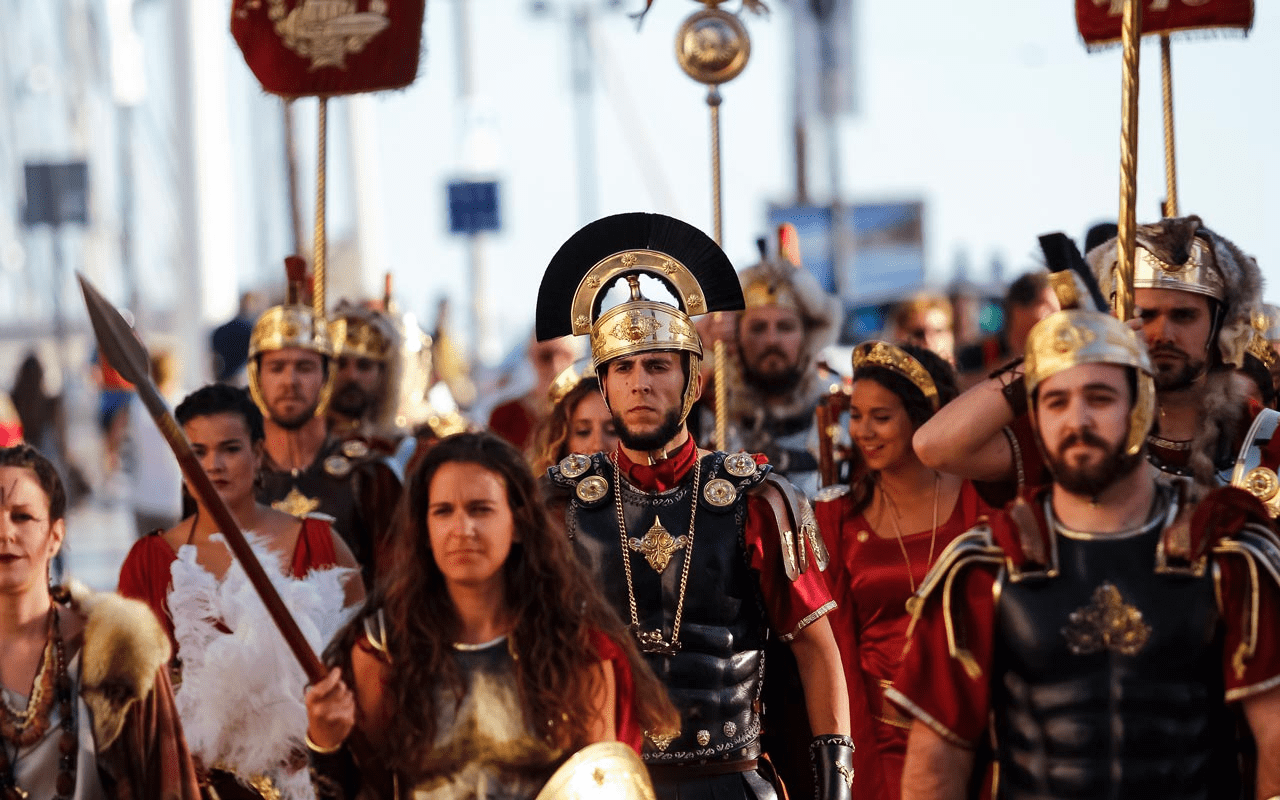
The “Fiestas de Carthagineses y Romanos” is an annual historical celebration in Cartagena, Murcia, Spain. It typically takes place in the last ten days of September.
It celebrates the city’s ancient history, specifically the events of the Second Punic War and the founding of Qart Hadasht (Carthagena’s original name) by the Carthaginians.
History and Origins
On July 25, 1972, the tragedy of the last Maritime Night of the Carmen and Santiago festivals in Cartagena resulted in ten deaths when the “Río Tajo” float sank, leading the city to suspend some popular festivals for a long time. In 1989, a group of residents, led by the Cartagena Tourist Initiatives Center, began efforts to revive the lost tradition.
After a survey of citizens, the festivities were established for the second half of September. The theme was the confrontation between Romans and Carthaginians in the Second Punic War. The first edition of 1990 had around 600 participants.
The festival recreates historical events; during these days, participants relive the rivalry between the Carthaginians and the Romans through various activities and role-plays.
In the second year of the “Fiestas de Carthagineses y Romanos,” the event grew by adding five new troops and five new legions, forcing the camp to move to the Artillery Park in the city centre of Cartagena.
In 1992, the parties’ popularity grew, attracting nine extra troops and seven legions, leading to a similar flow to the nearby Eroski Shopping Mall.
In 1993, the event’s structure consolidated with the advent of the Federation of Troops and Legions, enhancing sports organization and coordination.
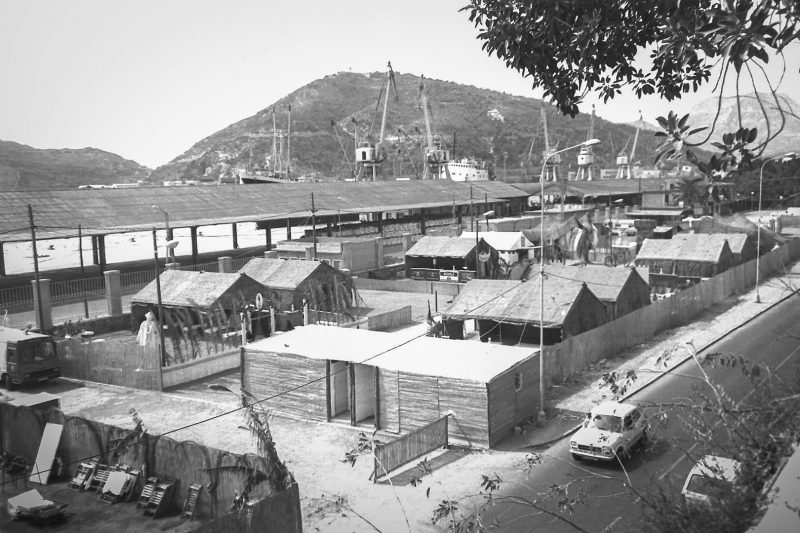
In 1999, the festivals were recognized and declared Festivals of National Tourist Interest. In 2001, the “Acampamento” (Camping) fairground was established near the Cartagonova Municipal Stadium. In 2017, after years of effort from the participants and the event organization, the Carthaginians and Romans Festival was declared “Carthaginians and Romans Fiesta Festivity of International Tourist Interest.”
Activities And Events
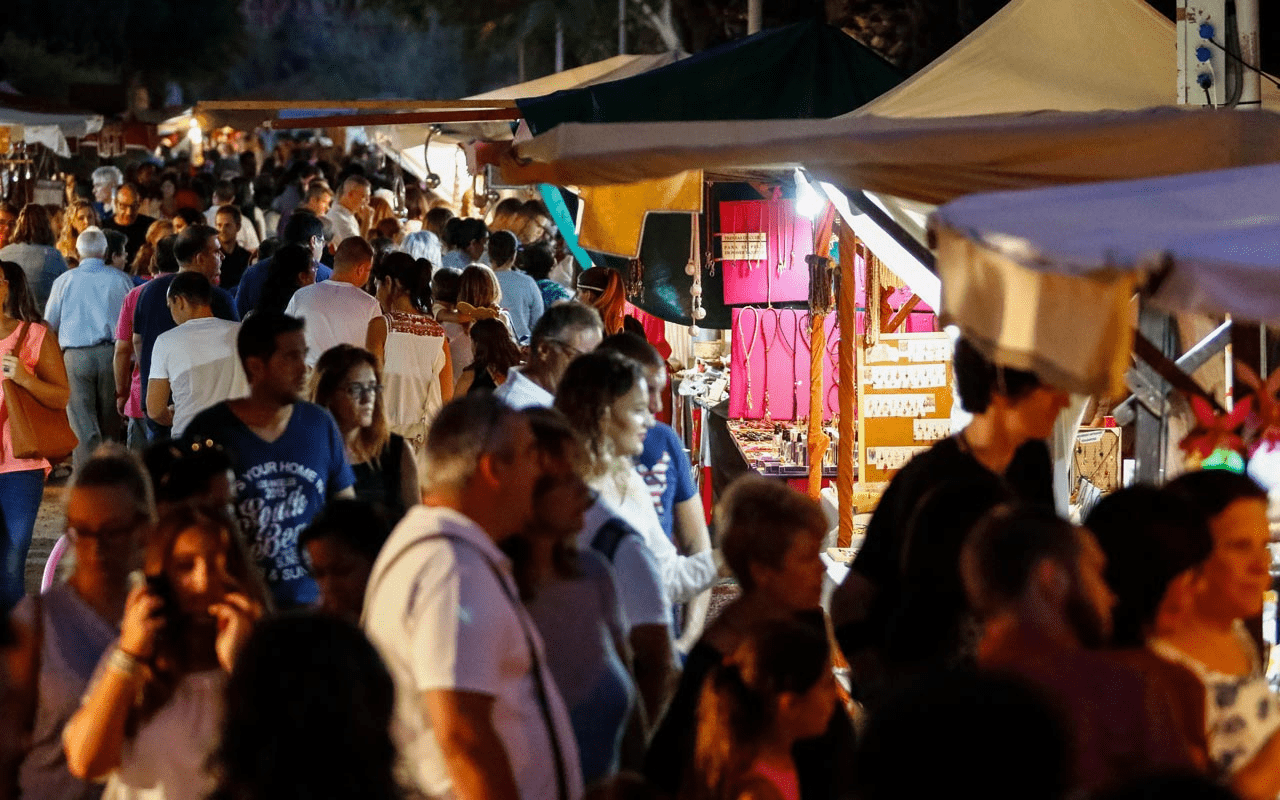
In addition to historical reenactments, the festivals also offer a wide range of activities for all audiences. Most festivities occur in the Old Town’s Plaza del Ayuntamiento and Plaza de San Anton before proceeding to the Festival Camp across the river. Among the highlights are:
- Historical Parades: Carthaginian and Roman troops and sides hold parades in period costumes, depicting soldiers, nobles, and common citizens.
- Battles and Reenactments: Reenactments of historical battles and significant events from the Second Punic War.
- Iberian Peninsula Weddings: A traditional recreation of Iberian weddings, showing ancient customs and rituals.
- Market of the time: A market where you can find crafts, food, and typical period products. For full immersion, there are Roman-themed food tents at the Festival Camp where you can fill your belly with grilled meats and wine.
- Games and Competitions: Sports games and competitions that recreate ancient armies’ military training and skills.
Ten Days Of Festival
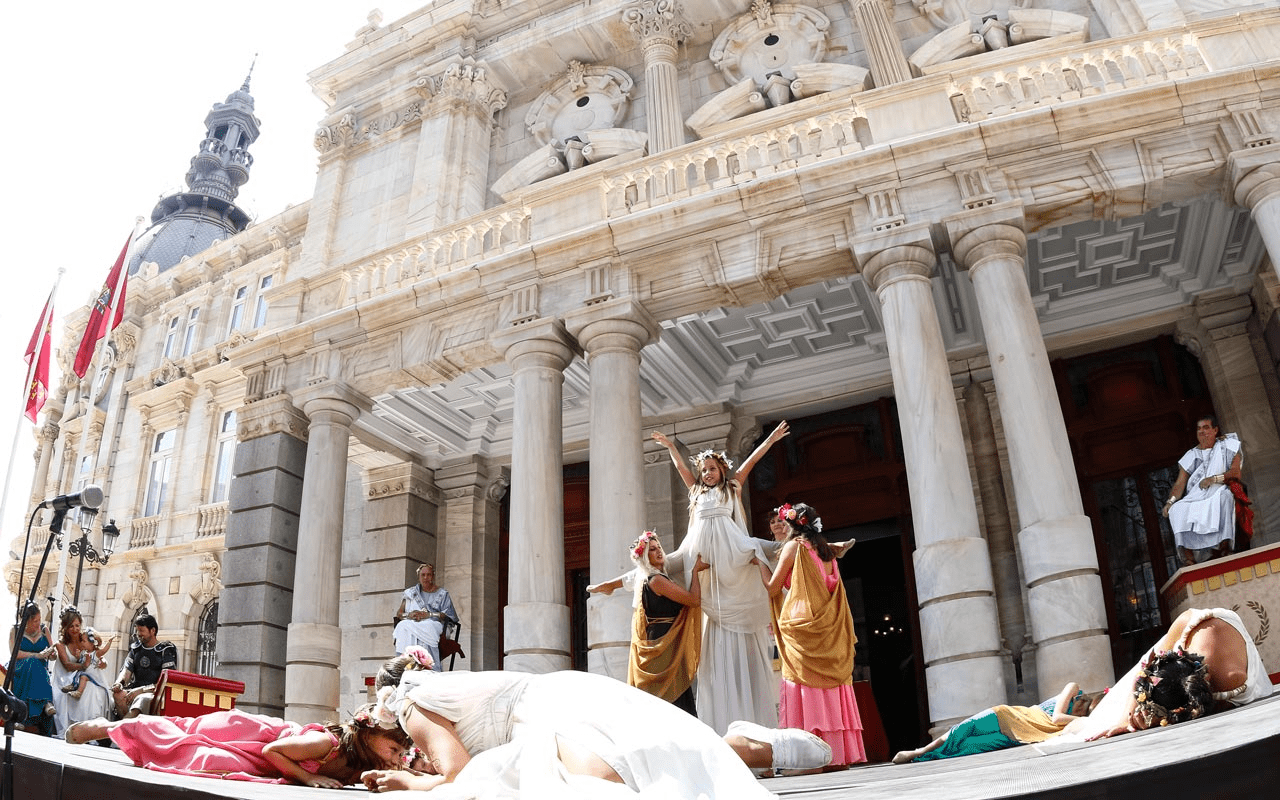
With 25 Carthaginian troops and 25 Roman legions, the most important events that took place in the city between 223 BC and 209 BC are staged for 10 days alongside the characters of Hannibal and his conqueror Publius Cornelius Scipio, nicknamed “The African.”
With rigorous staging, extraordinary costumes and sets, and surprising weapons, we witnessed one of the most exciting celebrations in Murcia. Events are often staged in the same places where they occurred in the past. The historical recreations begin with the creation of Qart-Hadasht, a city founded by the Carthaginians with Hasdrubal in command.
Main Acts
More than a hundred events were carried out during the Carthaginese and Roman Fiestas, but some stand out as the Principal Acts.
These events, supported by the Federación de Tropas y Legiones, the Roman Empire, and the Carthaginés Council, bring to life the history of Cartagena during the Second Punic War. Below, I will highlight my five favorite acts.
Pregonillo, Encendido del Fuego Sagrado y Pregón de Fiestas
It all begins on the first Friday. Pregonillo begins the celebrations with a Pregonero dressed in character announcing the event on the city streets. Then, the Traslado del Fuego Sagrado (Transfer of the Sacred Fire) visits historical sites, bringing the Fuego Sagrado from different places in the Region of Murcia.
The Encendido del Fuego Sagrado officially begins the festivities, with ritual dances and prayers thrown into the wind to protect the festive days.
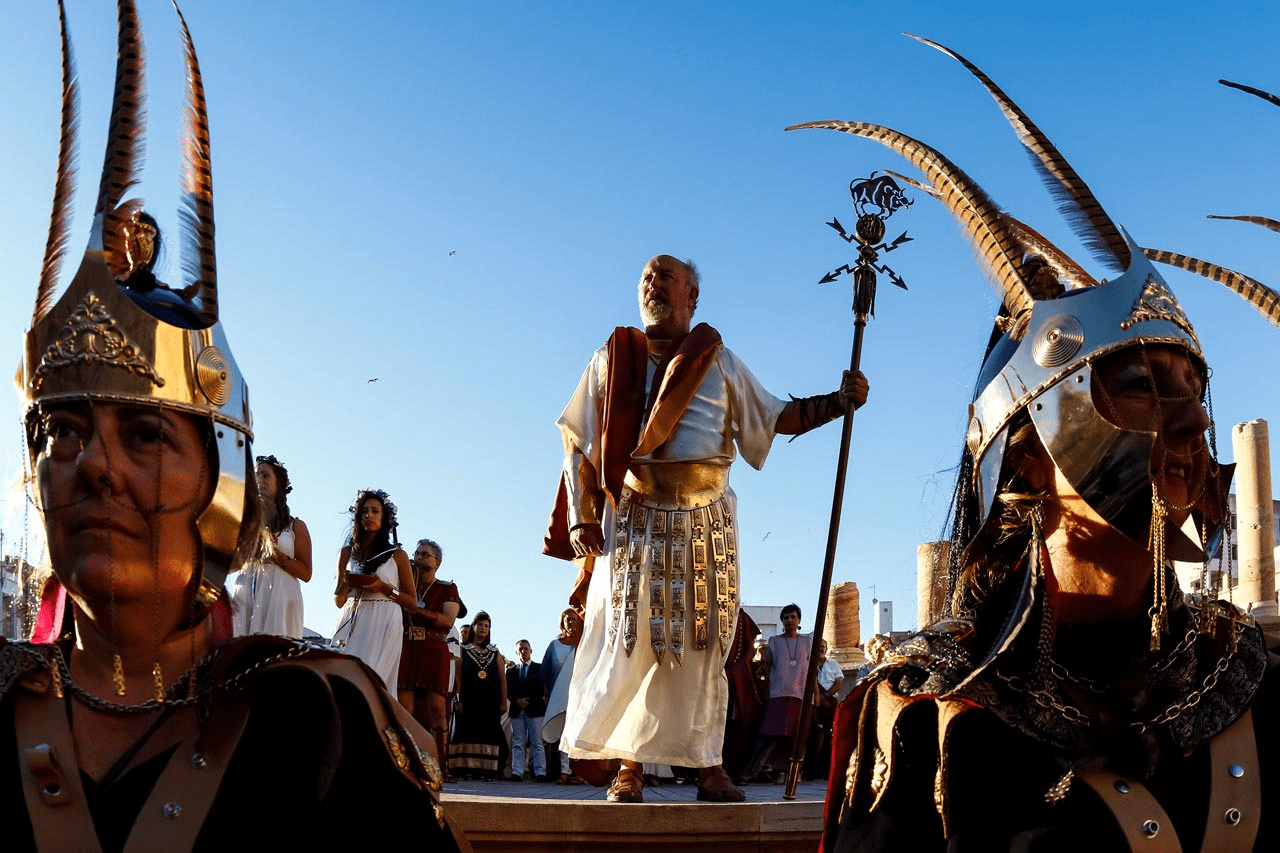
El Traslado del Fuego Sagrado travels through the most emblematic places in Cartagena’s history: El Teatro Romano, El Templo de Isis, and El Foro until arriving at Mons Arx Asdrubalis.
This act changes yearly, telling new stories, adding new locations, or realizing the Iter Ignis race, with which the Sacred Fire is traced from other places in the Region of Murcia.
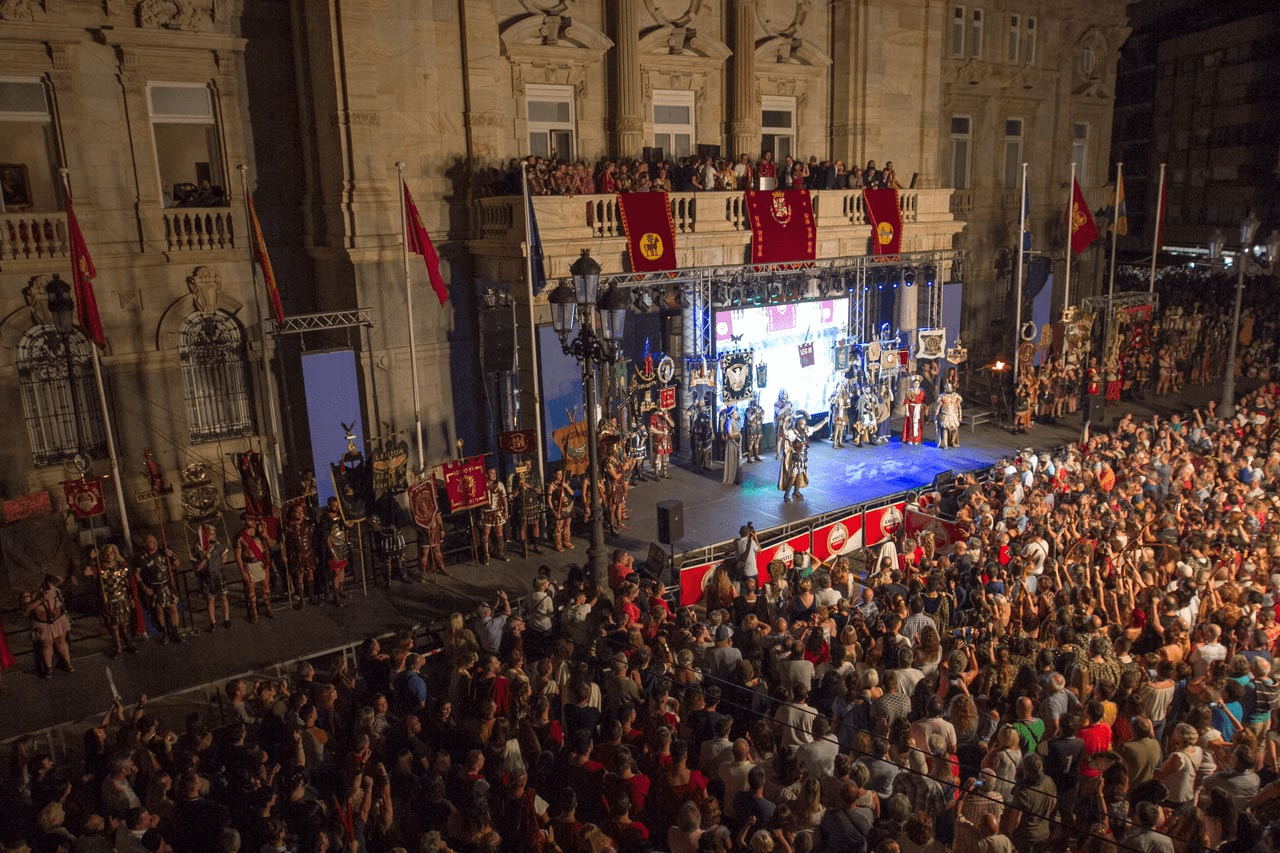
Finally, they give speeches and awards at the Pregón de las Fiestas, which takes place at the Palacio Consistorial. Then, people march towards the festive camp, with the Fuego Sagrado, marking the event’s official opening.
Fundación de Qart Hadasht y Fundación Infantil
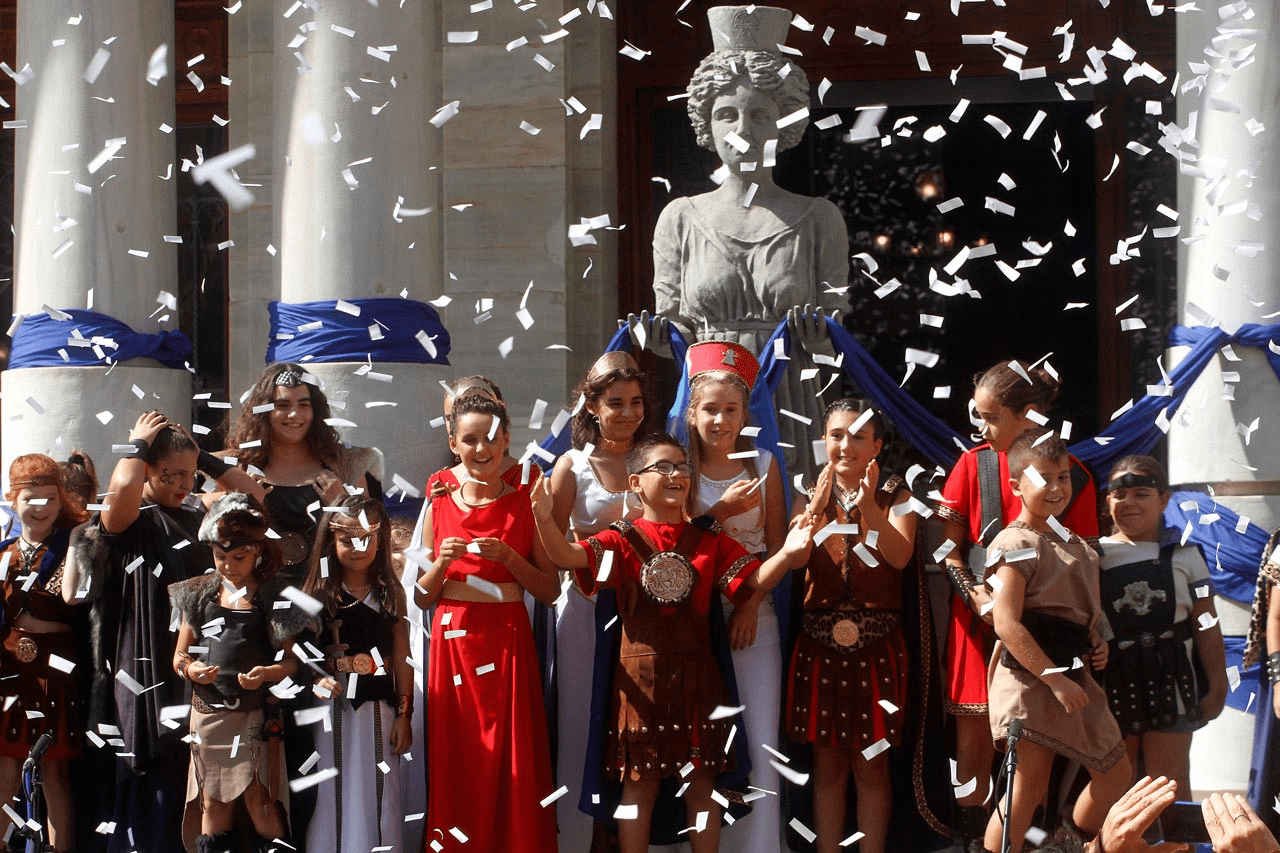
On the first Saturday of the festivities, there is a representation of the Fundação Infantil (Children’s Foundation) of the city, a preamble to the historical event of the Foundation Qart-Hadast (which happens at night). This report tells the history of Mastia.
The Qart-Hadast Foundation is the initial start of the events and tells the story of the Barca family from the death of patriarch Amílcar to the Qart-Hadast foundation by the Carthaginian general Hasdrúbal Xanthus in 227 BC. The story is very well told by all the participants, and everything ends up becoming very cute when you see the children acting it out.
It reflects family interests, the means of conquest, death, and the struggle for freedom, thus marking the beginning of the festivities with a relevant historical context.
Desembarco de la Armada Romana, La Batalla por la Conquista de Qart Hadasht, Desfile de la Victoria
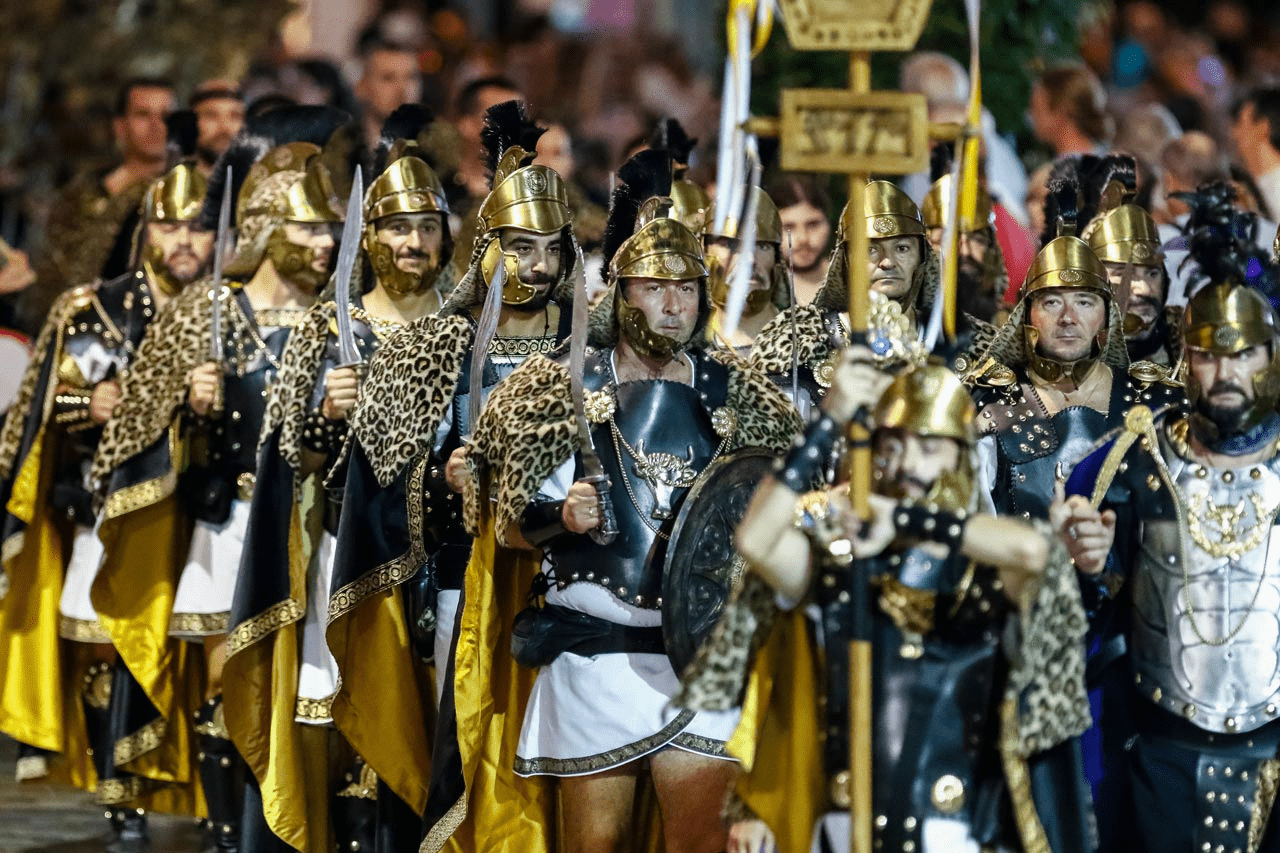
On the second Friday of the festivities, an exciting Maritime Sports Regatta takes place, with Carthaginian and Roman ships competing in the Port of Cartagena. Next, the Landing of the Roman Armada brings together the Roman naval forces led by Admiral Gaius Laelius, who will join the land legions led by General Publius Cornelius Scipio to attack Qart-Hadast.
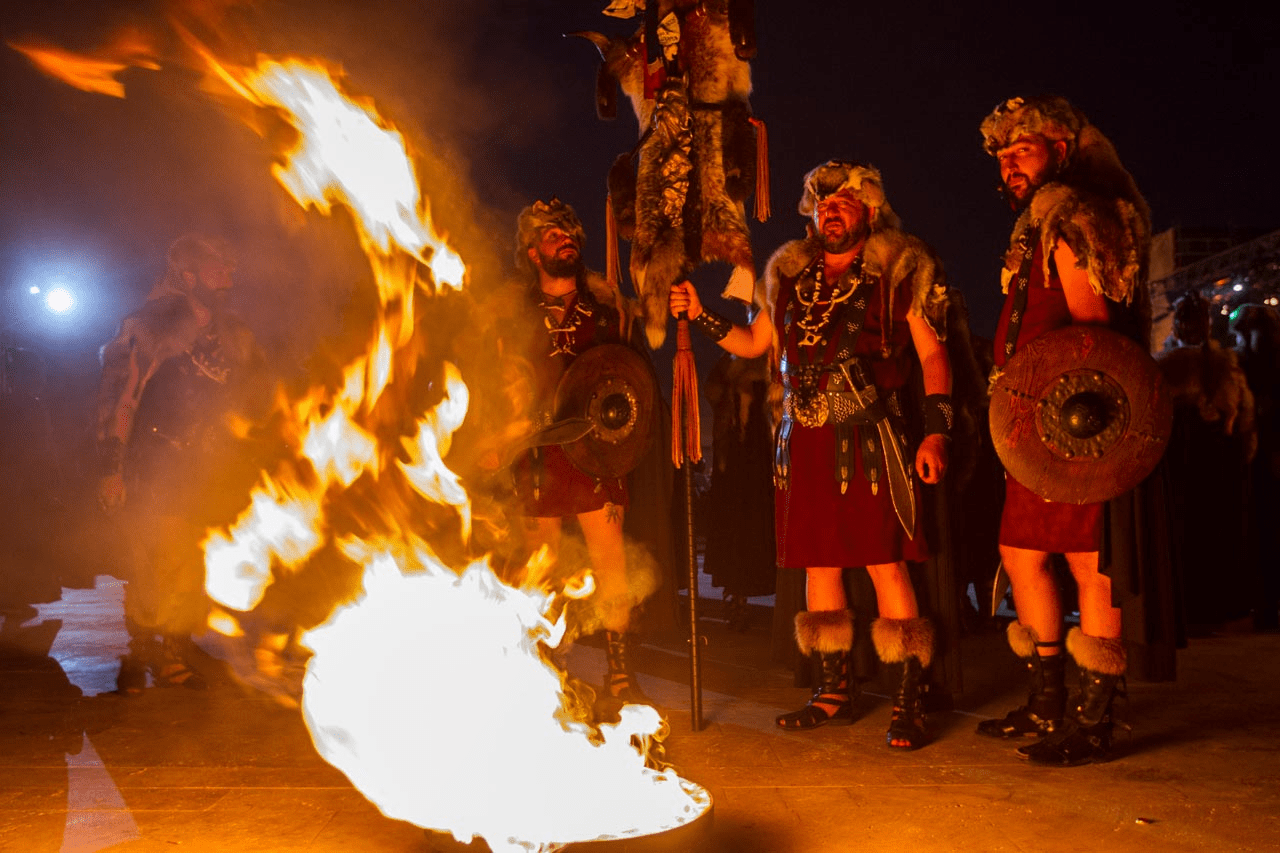
The Great Battle at Qart-Hadast is the culmination of the day, representing the clashes between the Carthaginian and Roman armies. It ends with the city’s capture by Publius Cornelius Scipio in 209 BC. A Great Roman Military March celebrates the triumphant entry of the Roman legions into what is now called New Carthage, marking the conquest of Cartagena.
Homenaje a los Caídos, Liberación de Rehenes, Entrega de la Doble Corona Mural y Desfile General
The Homage to the Fallen is on the second Saturday of the festivities. Legio IV Quinto Trebelio pays tribute to the Roman soldiers killed in battle, placing a laurel wreath at the Torre Ciega funerary monument. After the surrender of the Carthaginian general Magón, the Victory of Rome is staged with the Liberation of the Hostages of Carthage, the delivery of the Double Mural Crown, and the proclamation of the Law of Rome.
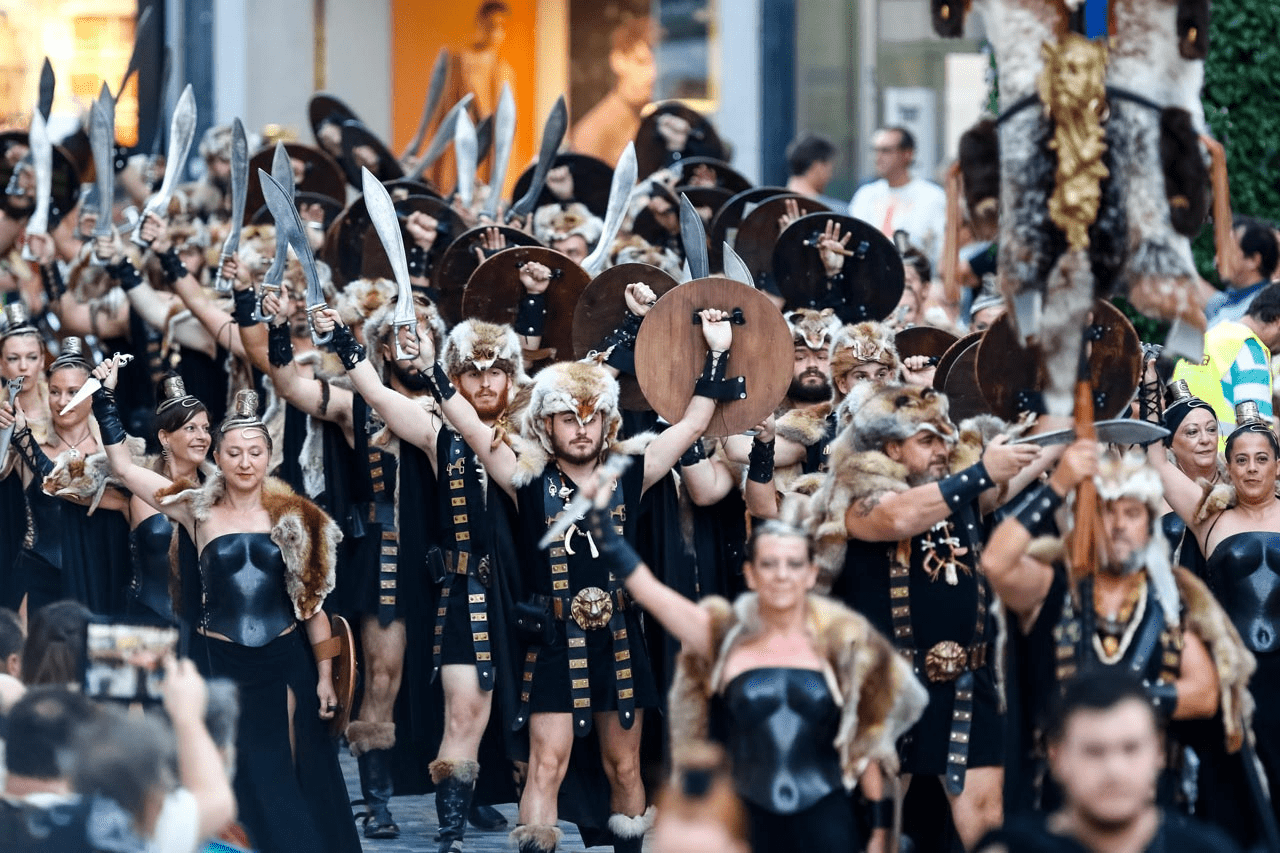
In the General Parade of Troops and Legions, all participants walk through the city streets, whether on the Carthaginian or Roman side, in a spectacle that involves music, drums, carts, and war machines. The parade ends in the festive area, providing a unique opportunity to see all the festive groups together.
Circo Romano Y Apagado Del Fuego Sagrado
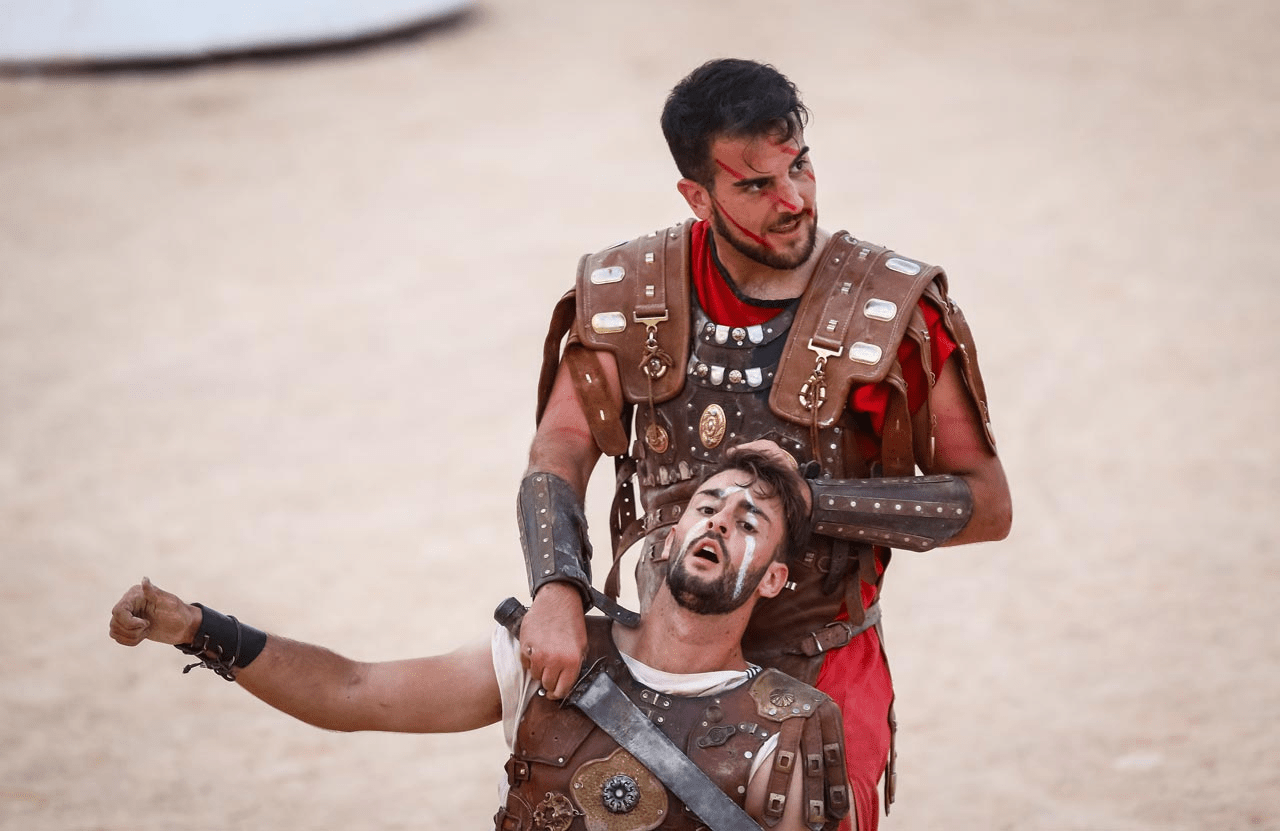
The festivities conclude on the second Sunday with the great Roman Circus, featuring gladiators and acrobatics. The Apagado del Fuego Sagrado involves extinguishing the sacred fire, symbolizing the Roman victory and the end of the festivities.
There are also other main events, such as:
- The Wedding of Hannibal and Himilce: This day represents the nuptials of Carthaginian general Hannibal and the Iberian princess Himilce. Revelers can also choose to “get married” in a Carthaginian or Celtic wedding.
- Oracle of the Diosa Tanit: A ritual that invokes the deity Tanit to seek divine guidance and protection.
- Pruebas de Aspar, Ludi Romano, Feriae Latino y Comicios Centuriados: These were various competitions and rituals that reflected the culture and customs of the time. The Carthaginian and Roman streets of the Festival Camp host competitions and games for children. You Can also find Roman games, Latin festivals, and centuriated assemblies,
- Disembarkation of the Carthaginian Armada fleet, Hiring of Mercenaries, and Hannibal’s March. On this day, all the troops and legions march through the city.
- Dies Lustricus, Destruction of Sagunto, and Sesión Plenaria del Senado de Rome trigger significant historical events. On this day, one of the things I liked the most was that the youngest and newest members of the fiestas groups were welcomed into their festival families in a symbolic act in front of the Town Hall.
From the Pregón to the Erasure, each day is full of activities involving tourists and partygoers, who immerse themselves in the city’s history. A spectacular Castillo de Fuegos Artificiales marks the end of the festivities, as the work of thousands of festival-goers begins to make next year even greater.
All these events are fascinating to witness and help you understand the rich history of the festivities. The best part is that most events are free (while there are charges for seats at some events, you can always stand for free).
Enjoy Your Private Paradise in Villa Murcia!

Looking for the perfect place to stay in Murcia? We’ve got just the spot for you!
Villa Murcia – Your Private Paradise
Wake up to coffee on a sun-drenched terrace, unwind in a warm jacuzzi after a day of exploring, and end your evenings with dinners in the summer kitchen. Nestled in charming Santiago de la Ribera, Villa Murcia offers more than just a holiday—it’s your personal oasis of comfort, style, and unforgettable moments.
Highlights:
✔ Spacious living room with a large sofa and open kitchen – perfect for shared memories
✔ Three elegant, air-conditioned bedrooms with private terraces – your peaceful retreat
✔ Extra fold-out sofa in the living room – ideal for additional guests
Whether it’s a romantic escape, a family getaway, or a relaxing break with friends – Villa Murcia is your dream stay.
Book now and experience the magic of the Spanish sun!
The Remarkable City Of Cartagena
Cartagena is a city well worth visiting. Its historic port is full of boats and ships that testify to its rich maritime history. Additionally, museums offer a fascinating insight into the city’s past, including the Roman Theatre and exhibit dedicated to the goddess Tanit.
During your visit, you can witness exciting historical places celebrating and marking past triumphs. The surrounding hills provide stunning views of the coast and city, completing the unique experience.
If you ever decide to visit Cartagena, it is well worth exploring the city. Some points I visited that were worth it were the Roman Theater, the Roman Forum, and the Muralla Púnica (Punic Wall). Once there, you can take tour buses to see the city’s many historic sites.
Carthaginians And Romans Festival: A Unique Experience
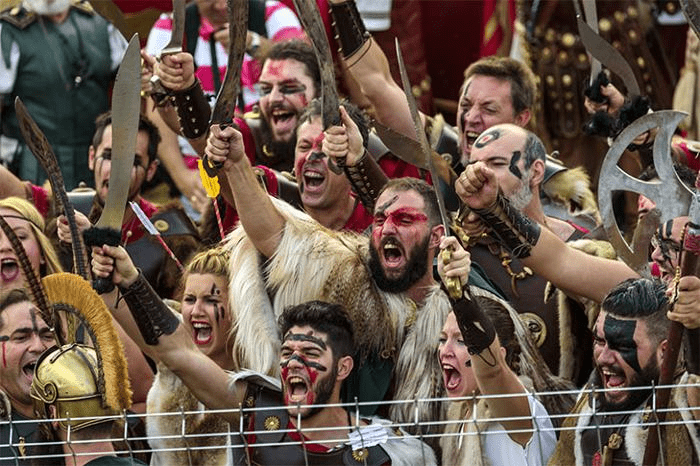
For ten days, Cartagena and its inhabitants dress up in history and relive it, remembering the exploits of the heroes of Carthage and Rome with this unforgettable experience, in which the city’s history is taken to the streets. It is worth visiting the town during this period to experience this unique celebration, which is full of history, spectacle, and the eternal spirit of camaraderie. If you plan to go to Cartagena someday, be sure to consider it at this time of year. I’m sure you won’t regret it!