


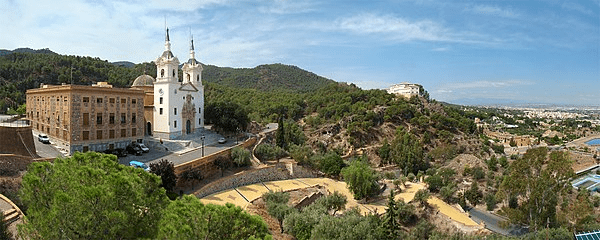
One of the most popular trips among Murcia city residents and highly recommended for visitors to the region is to head to the hills south of the city, where dense pine forests offer a refreshing change from the heat that can build up in the valley below. Just six kilometers from the city of Murcia, at the foot of the Carrascoy mountain range, is the Santuario De Nuestra Señora De La Fuensanta, located in the district of Algezares.
Situated in a welcoming place with good views and a pleasant place to visit before leaving Murcia, it was one of the destinations I most enjoyed visiting in the region. Read on to find out why!
Table of Contents
- Santuario De Nuestra Señora De La Fuensanta
- History and Origins of Santuario de Nuestra Señora de La Fuensanta
- Architecture and Design
- The Surroundings Are Also Captivating!
- Want To Visit The Sanctuary?
- Enjoy Your Private Paradise in Villa Murcia!
History and Origins of Santuario de Nuestra Señora de La Fuensanta
The Sanctuary of Nuestra Señora de la Fuensanta (In Spanish Santuario de Nuestra Señora de la Fuensanta), is located in the Algezares village, part of the city of Murcia region.
It had origins in the construction of an old medieval hermitage that began in 1694 on the remains of a previous religious building. The tradition dates back to the Middle Ages, with a hermitage built in an existing cave, which was cared for by monks, mentioned in documents since 1429. After centuries of religious occupation of the area, construction of the current sanctuary began in 1694, with several interventions over the centuries.
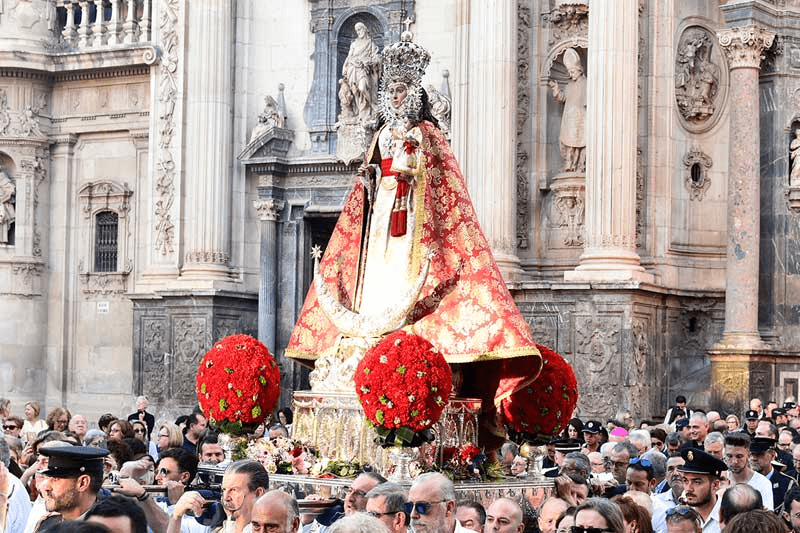
The image of the Virgen de la Fuensanta (Virgin of Fuensanta) has been venerated since the 15th century, with her cult celebrated during specific religious events in the region. In the late 17th century, a significant drought led many believers to pray at Fuensanta, and the subsequent cessation of the drought in response to prayers was interpreted as a miracle leading to the proclamation of the Virgen de la Fuensanta as the city’s patron saint in the 18th century, giving the sanctuary greater importance.
After restorations carried out over the centuries, including a restoration of the towers in 1925 by Rafael Castillo Sáiz and a complete restoration following damage caused during the Spanish Civil War, the sanctuary maintains its importance as a place of devotion and cultural heritage. Its baroque structure includes a central nave with side chapels and a dome over the crossing, as well as a central facade designed by Toribio Martínez de la Vega, highlighted by its side towers and the presence of two angels holding the cabildo’s shield over the main door. The sanctuary is administered by the Diocese of Cartagena and is classified as an Asset of Cultural Interest.
Architecture and Design
The Sanctuary of Nuestra Señora de La Fuesanta has an impressive architectural work, standing out for its imposing structure and intricate details. Combining elements of religious architecture and Baroque style, the sanctuary captured my attention with its beauty and grandeur. As a religious person, stepping inside filled me with a mix of emotions— a rush of awe and a wave of calm. It was such a unique moment, just soaking up the peaceful vibes and devotion in the Patron Saint’s home.
Interior
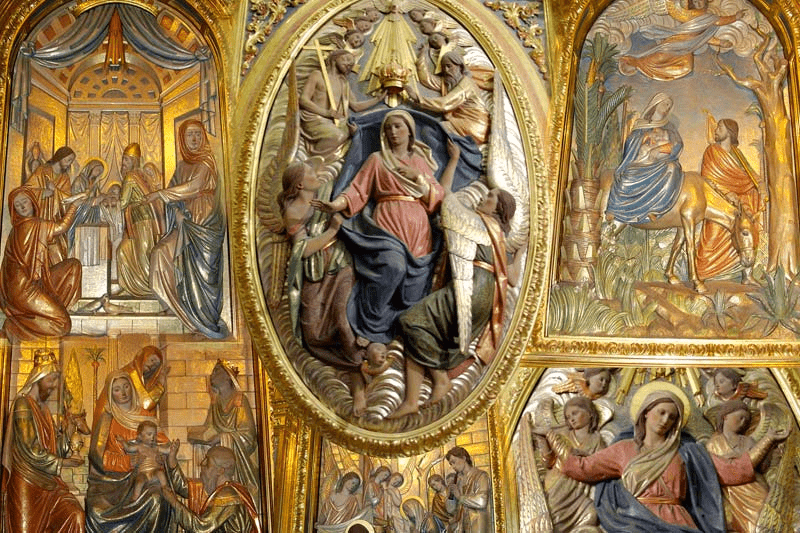
The interior of the church underwent an almost complete transformation after being destroyed during the Spanish Civil War. One of the changes made during the reconstruction was the installation of a new altarpiece and dressing room, designed by Antonio Carrión Valverde and Nicolás Prados López, that replaced the original altarpiece and the beautiful patron saint’s dressing room from 1722, which were the work of Antonio Dupar.
In the semicircular dome and the choir, there are paintings and murals created by the artist Pedro Flores, which depict pilgrimages and the Coronation of the Virgen de la Fuensanta on the old bridge of Murcia. Furthermore, we found around ten beautiful reliefs carved by Juan González Moreno, representing scenes from the life of the Virgin Mary.
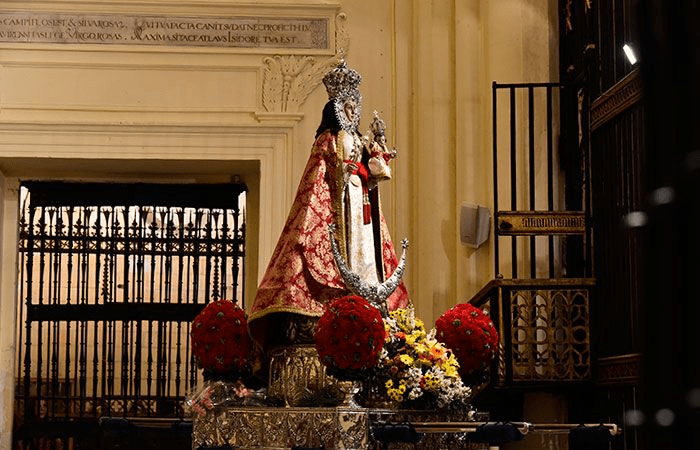
The altar showcases the image of the Patron Saint, a finely dressed sculpture dating back to the 17th century. Previously, she was revered in the Trascoro chapel of Murcia Cathedral, under the title of Our Lady of Fevers. It was Bishop Trejo who transferred her to the Serra Sanctuary, renaming her with the dedication of Fuensanta. While the painter remains unidentified, it’s documented that in 1802, Roque López, a disciple of Salzillo, undertook a restoration and touch-up of the sculpture.
Another restoration occurred around 1960, overseen by architect Fernando Garrido. He also constructed the guesthouse, now known as the Monastery of the Benedictine Religious, attached to the Santuario de Nuestra Señora de La Fuensanta. Garrido’s work included enhancing the overall exterior appearance of the church.
Exterior
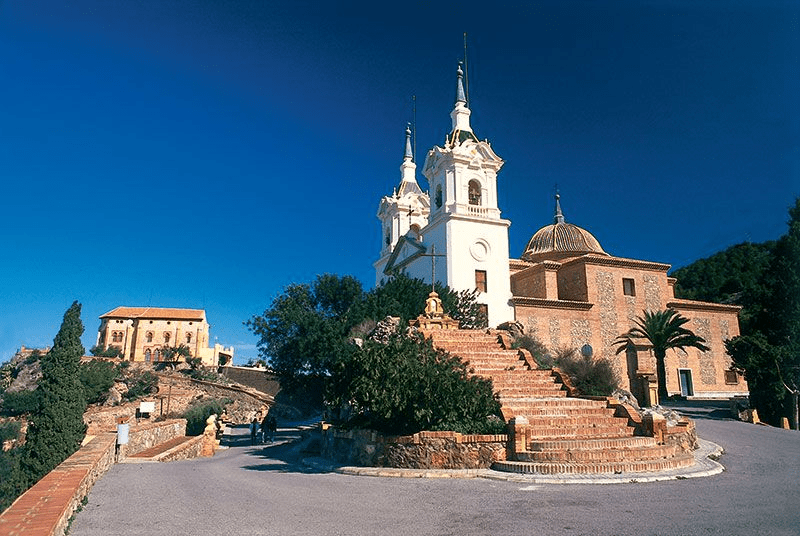
The Santuario de Nuestra Señora de La Fuensanta has a classic baroque-style temple, made up of three naves: a larger central nave and two side naves with chapels. Its facade, a work by Toribio Martínez de la Vega, has two towers and a semicircular arched door. Above the door, two angels are holding the coat of arms of the Chapter of the Cathedral, responsible for building the temple, and a central niche with the sculpture of the Patron Saint, Virgen de la Fuensanta, sculpted by Jaime Bort, flanked by Saint Patrick and Saint Fulgencio. What pleases me most is that from the sanctuary, you can see the entire city of Murcia. It is a wonderful and peaceful view.
The Surroundings Are Also Captivating!
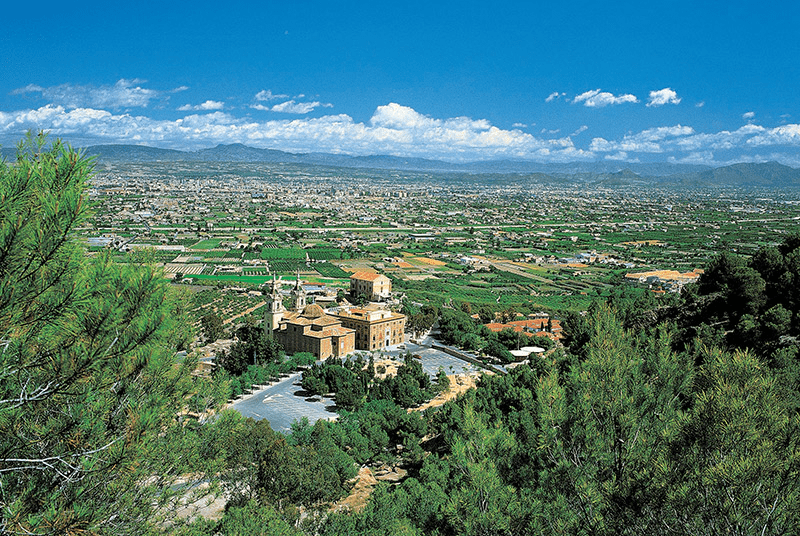
The sanctuary stands in the heart of the Cordillera Sul, in the town of Algezares, in a mountainous area that extends along the Segura valley on its southern slope. It enjoys a privileged landscaped environment, offering a panoramic view of the Murcia plain and bordering the protected natural space known as Carrascoy and El Valle Regional Park.
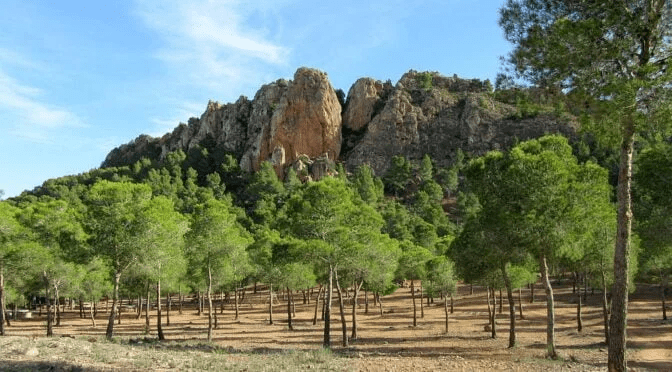
The El Valle y Carrascoy Regional Park is a protected natural area that dominates the landscape of the Murcian Plain. Furthermore, around the Santuario de Nuestra Señora de La Fuensanta, there are other points of interest, such as the Holy Fountain, in Renaissance style, the Casa del Cabildo or Sacristán, in neo-Arabic style, and the monastery of the Benedictine nuns, connected to the Sanctuary by an arch.
There is ample parking available near the sanctuary, and visitors can enjoy the magnificent views of the valley while enjoying a drink at the on-site café. This place also serves as a popular starting point for hiking, with trails that start from the back of the sanctuary and follow the course of the road, passing by the hermitage of La Luz, where it is still possible to buy chocolate from the monks who reside there, until reaching to the La Luz visitor center.
Also, close to the sanctuary, you will find the Hermitage and Visitor Center of San Antonio el Pobre and the Franciscan Convent of Santa Catalina del Monte, which in my opinion, both places are very stunning and are worship to be visited
Want To Visit The Sanctuary?
Want to visit the Santuario De Nuestra Señora de La Fuensanta? Below are some important information:
How to Get There
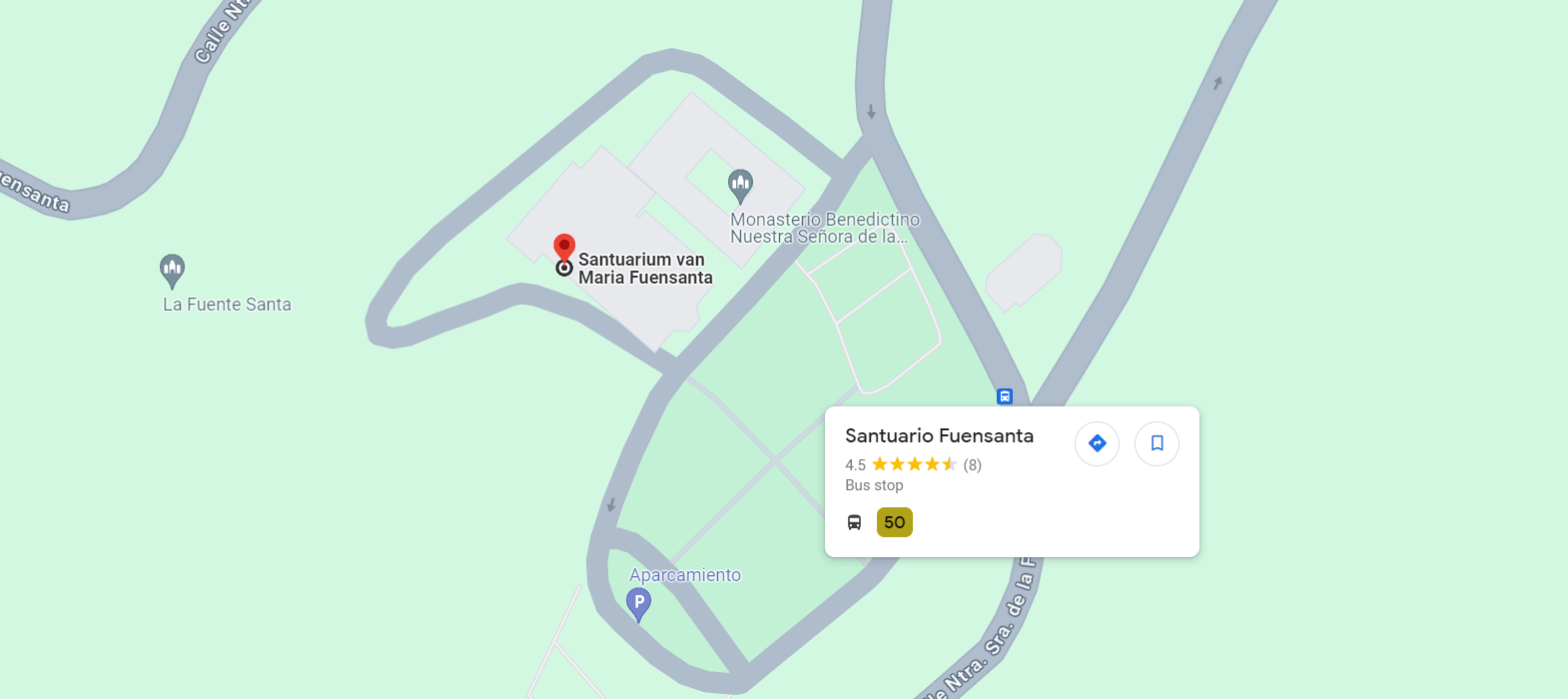
By bus: there is a bus stop 100 meters from the sanctuary. If you want to get there by bus, take line 50 TMP – Monbus
By car: The Sanctuary stands at Calle Ntra. Sra. de la Fuensanta, 30157. To reach it by car, you can follow signs for La Alberca on the main highway. To reach the sanctuary, take a sharp right turn at the entrance to Algezares. Please be aware that the signage for this turn may not be well-marked.
Hours And Fees
Entry to Santuario De Nuestra Señora De La Fuensanta is free. Opening hours are Monday to Sunday, from 9 am to 1 pm and from 4 pm to 6:30 pm.
Masses take place from Monday to Friday at 6 pm and on Saturdays at 5 pm. On Sundays and holidays, masses take place at 10 am, 12:30 pm, and 5 pm.
During the summer (June to September), mass times change. From Monday to Friday, they take place at 9 am, on Saturdays at 7 pm, and on Sundays and holidays at 11 am and 7 pm.
A Final Recommendation
Remember to wear comfortable shoes because there’s quite a bit of walking involved to reach both the place and the Valley. However, I assure you, the journey is well worth it.
Do not hesitate to visit the sanctuary. The experience of being there, immersed in the natural beauty and unique spirituality, is truly unforgettable. Come and explore this special place and let yourself be enveloped by its magic and serenity
Enjoy Your Private Paradise in Villa Murcia!
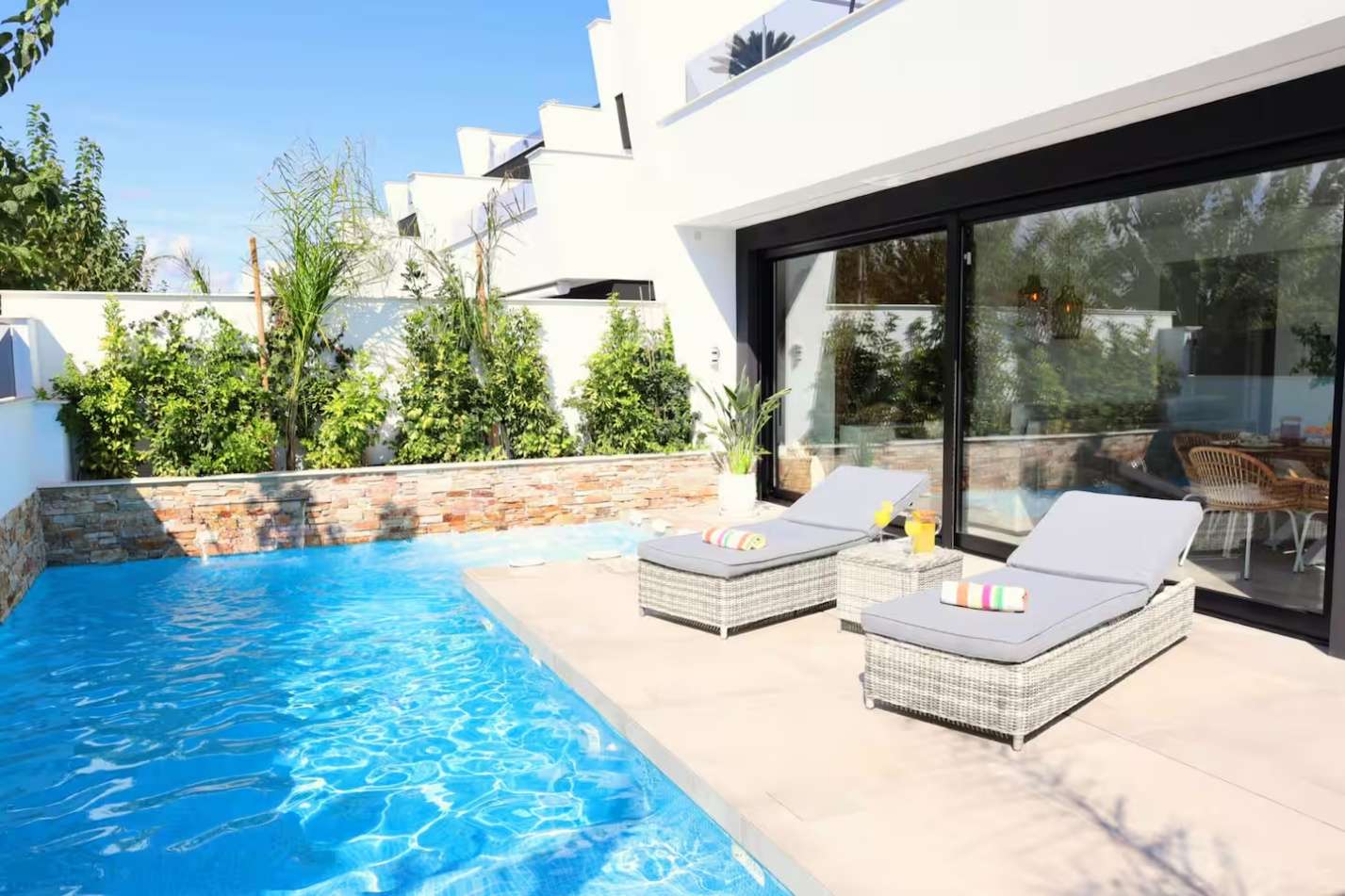
Looking for the perfect place to stay in Murcia? We’ve got just the spot for you!
Villa Murcia – Your Private Paradise
Wake up to coffee on a sun-drenched terrace, unwind in a warm jacuzzi after a day of exploring, and end your evenings with dinners in the summer kitchen. Nestled in charming Santiago de la Ribera, Villa Murcia offers more than just a holiday—it’s your personal oasis of comfort, style, and unforgettable moments.
Highlights:
✔ Spacious living room with a large sofa and open kitchen – perfect for shared memories
✔ Three elegant, air-conditioned bedrooms with private terraces – your peaceful retreat
✔ Extra fold-out sofa in the living room – ideal for additional guests
Whether it’s a romantic escape, a family getaway, or a relaxing break with friends – Villa Murcia is your dream stay.