


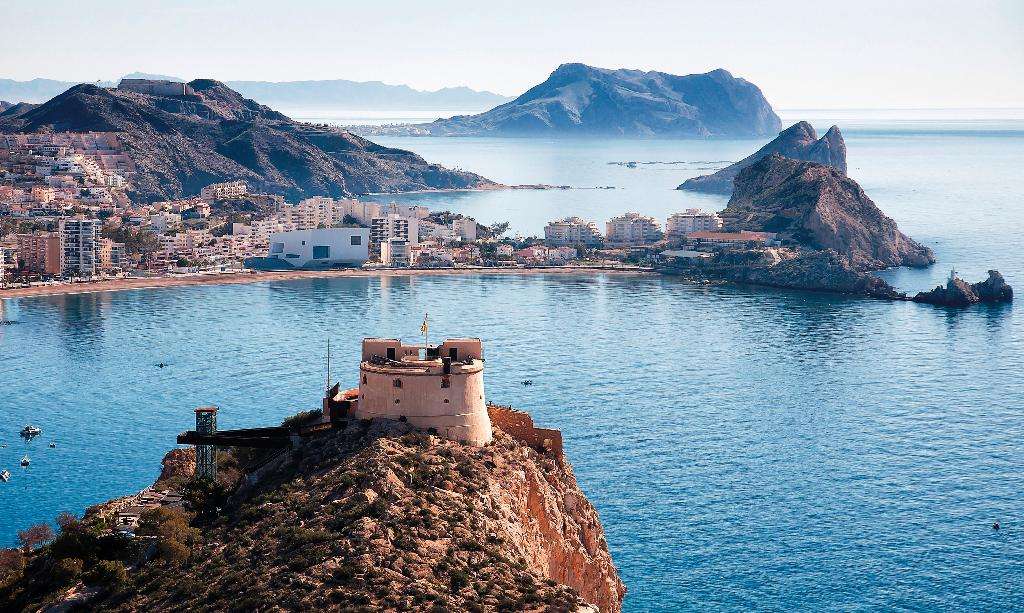
Perched on a hill in the coastal town of Aguilas, by the beautiful coast of Murcia, Spain, Castillo San Juan de Las Águilas is a remarkable fortress with a long and fascinating history. Built in the 16th century to defend the town of Águilas from pirate attacks, this castle offers breathtaking views of the Mediterranean Sea and the surrounding area.
Over the centuries, it has stood strong through many events and changes, becoming an important cultural landmark. Today, Castillo San Juan de Las Águilas is a popular spot for visitors who want to learn about its past and admire its impressive structure. Join us as we explore the history and beauty of this amazing Águilas castle, and discover why it remains a proud symbol of the region’s heritage.
Table of Contents
- Castillo San Juan de Las Aguilas – A Coastline Castle
- About the Place
- History
- How It’s Built
- Enjoy Your Private Paradise in Villa Murcia!
- Conclusion
About the Place
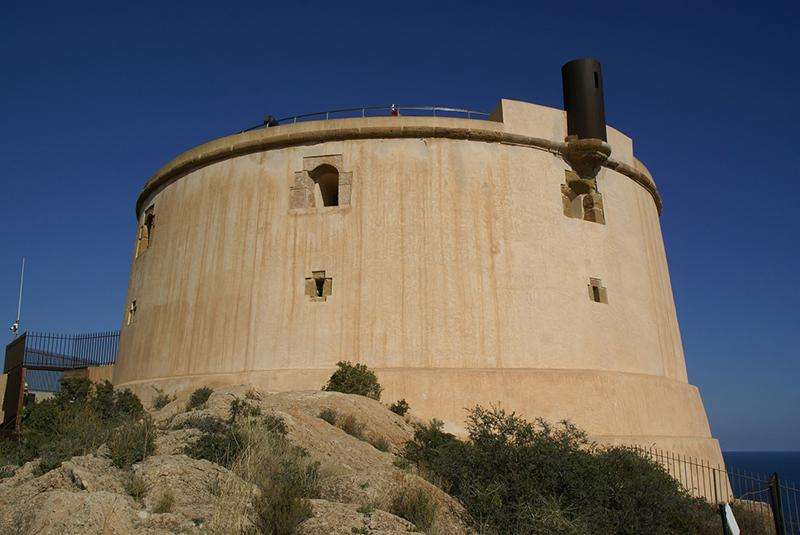
Situated on the edge of the Mediterranean, the Castillo de San Juan is an 18th-century military complex with a rich history, constructed upon successive defense towers from the 15th and 16th centuries. This complex comprises two distinct sections: the San Pedro battery and the Fort of San Juan. These are connected by a long open-air passage or path, built with two parallel retaining walls in a straight layout, which runs along the ridge of the mountain on which the complex is situated.
The highest points of the complex create an unmistakable silhouette, characteristic of watchtowers designed for observation and defense against enemy attacks. The city is located at the foot of the great rock on the side not bordered by the sea. Any attempt to approach the fortress from the city is soon thwarted by the steepness of the terrain.
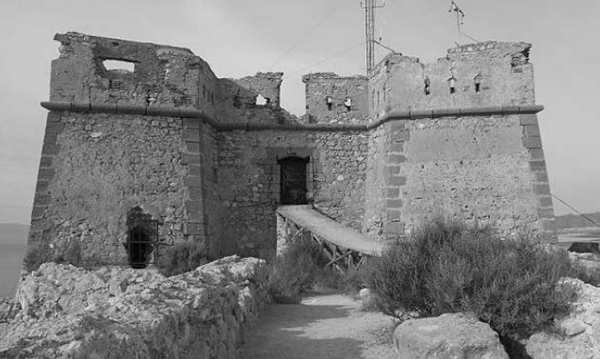
The Fort of San Juan has preserved its architectural volume, though the roof and façade have deteriorated, reduced to mere masonry and further damaged by erosion. The fort is developed on two floors: a basement level, which includes the entrance and the area occupied by the water tank, and the entrance level, which is organized around a courtyard. Access to the roof was originally provided by a spiral staircase, now missing, where defensive activities were carried out. Only remnants of the protective parapets remain.
History
Between 1252 and 1284, Alfonso X stationed a garrison in front of the castle under the command of D. Fernández Pérez de Piña. The purpose was to establish a bridgehead and warn the large troops from the city of Lorca of any incursions.
The first recorded plans to construct a tower on the Cerro del Águilas emerged in 1521. Around 1579, Philip II commissioned Lorenzo Goenaga to rebuild the Torre de Águilas, describing it as “one of the safest and most renowned fortresses that our seas possess.” He dedicated the tower to Saint John the Baptist, whose image was venerated in a niche within the castle. However, in 1596, the castle was significantly damaged by a strong earthquake.
In 1643, a letter was sent to the king informing him that the Moors had destroyed the Tower of the Eagles. Consequently, in 1652, Philip IV ordered the Council of Lorca to rebuild the tower.
Despite some improvements to its elements, the Torre de Águilas remained in a state of semi-ruin during the first half of the 18th century. Around 1751, the engineer Sebastián Feringán reported the castle’s condition to the Marquis of Ensenada. Due to the serious danger posed by the ruined tower, the new castle was not constructed until 1756.
Ferdinand VI ordered the reconstruction of the castle from its ruins to defend the coast, as evidenced by a white marble plaque at the fortress entrance. Juan Francisco Chardenoux was responsible for carrying out the reconstruction. Subsequently, Carlos III also ordered the rebuilding of the ancient ruin to serve as a defense for the increasing population against continuous Berber attacks and to secure its ports. From then on, it became one of the best-fortified castles, rebuilt in a circular shape, with a gorge and terraced sibellin arranged to mount artillery.
How It’s Built
The bastioned castle comprises two distinct elements connected by a covered path approximately 80 meters in length. These elements are the Fort of San Juan to the southwest and the battery of San Pedro on the opposite side.
The Fort
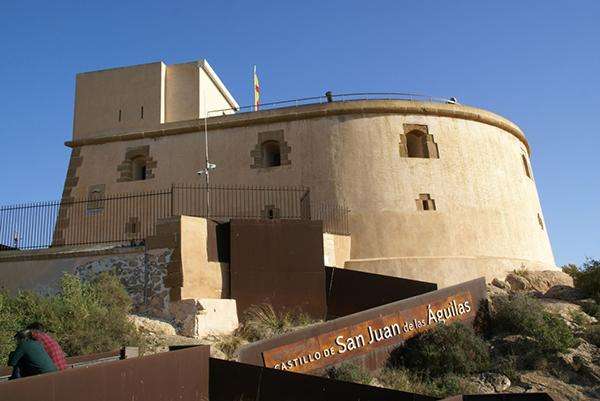
The Fort of San Juan features a distinctive layout, commonly referred to as the “ox hoof” design. This includes a semicircular battery facing southwest, joined to two semi-bastions on the opposite side. The fort’s north-south axis measures approximately 17 meters. Its walls rest directly on the living rock, adapting to its irregularities with the use of claws. Constructed with masonry joined by lime mortar, which was produced on the mountainside, the fort also incorporates sandstone ashlars in its corners.
The sandstone was quarried at the foot of the mountain, to the northwest. Remains of two lime kilns built with bricks have been discovered on-site. The walls are sloped, a common feature in this type of fortification. The entire outer perimeter is encircled by a stone impost, marking the terrace level. The fort consists of three floors: the basements, the rooms surrounding the patio, and the artillery terrace.
Interior
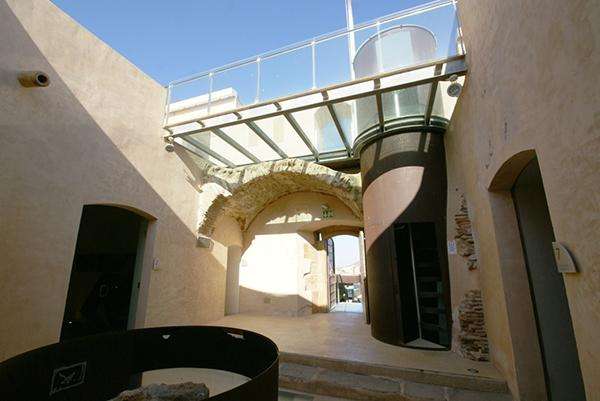
The fort is accessible via a door on the east side, positioned 2 meters above the exterior pavement, and defended by two semi-bastions with ten loopholes. Originally, this entrance featured a drawbridge, which has since been replaced by a stone staircase. The door is covered by a segmental arch.
Inside, there is a courtyard with an ultra-semicircular floor plan, paved with grey sandstone slabs. Surrounding the courtyard are eight rooms with various floor plans and vaults. These vaults include groin vaults, barrel vaults, and truncated cone vaults, showcasing a diverse range of architectural styles.
In the center of the courtyard, there is a large cistern carved into the rock. The interior is lined with a robust hydraulic mortar, over which a layer of lime, sand, and red ochre mortar is applied, giving it a reddish hue. Rainwater from the terrace was channeled through various conduits to gargoyles that directed it into the cistern. Once the cistern was full, an overflow channel diverted the excess water outside.
On the terrace, there was a barbette battery, with cannons supported by gun carriages. Above the entrance, a machicolation was constructed, and to the west, there is a sentry box, now rebuilt in metal. Communication between the three levels was facilitated by a spiral staircase with sandstone steps embedded in the structure itself.
Enjoy Your Private Paradise in Villa Murcia!
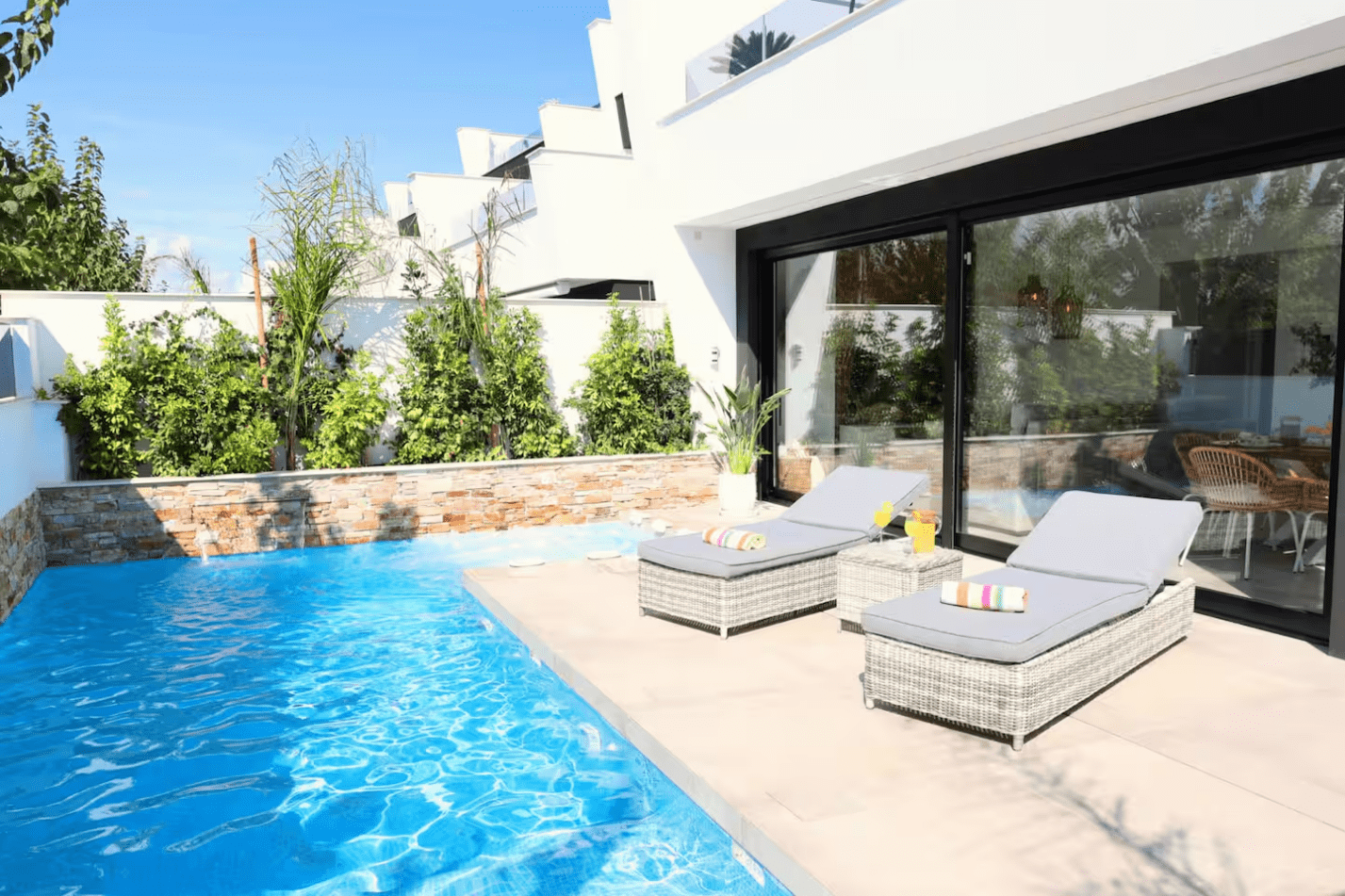
Looking for the perfect place to stay in Murcia? We’ve got just the spot for you!
Villa Murcia – Your Private Paradise
Wake up to coffee on a sun-drenched terrace, unwind in a warm jacuzzi after a day of exploring, and end your evenings with dinners in the summer kitchen. Nestled in charming Santiago de la Ribera, Villa Murcia offers more than just a holiday—it’s your personal oasis of comfort, style, and unforgettable moments.
Highlights:
✔ Spacious living room with a large sofa and open kitchen – perfect for shared memories
✔ Three elegant, air-conditioned bedrooms with private terraces – your peaceful retreat
✔ Extra fold-out sofa in the living room – ideal for additional guests
Whether it’s a romantic escape, a family getaway, or a relaxing break with friends – Villa Murcia is your dream stay.
Book now and experience the magic of the Spanish sun!
Conclusion
In conclusion, the Castillo de San Juan de las Águilas stands as a remarkable testament to the region’s historical and architectural legacy. This 18th-century military complex, built upon earlier fortifications, showcases ingenious design and construction techniques, reflecting the strategic importance of coastal defense in its era.
The distinctive “ox hoof” layout of the Fort of San Juan, the innovative water collection system, and the robust defensive features illustrate the castle’s role in protecting the region from incursions. Today, the Castillo de San Juan de las Águilas not only serves as a valuable historical monument but also as a symbol of the enduring resilience and ingenuity of the people who built and defended it.