



Alicante and Costa Blanca Provinces are widely known for their crystal clear sea, sandy beaches, and remarkable culture. Within the province of Alicante, you’ll find many places of interest that reveal the secrets of ancient times. The first thing that comes to mind is, of course, ancient castles. Each of Alicante’s castles has witnessed many historical events.
For those who want to spice up their holiday on the Costa Blanca, we suggest taking a trip to the castles scattered throughout the province. Of course, the most famous is the castle of Santa Barbara in Alicante, but there are more than 100 ancient castles, fortresses, and watchtowers of great historical value in the province. However, we’re going to focus on one caste in particular – the castle of Castalla.
Table of Contents
- Castle of Castalla – Picturesque Sight in Alicante
- About the Castle
- History
- Inside the Castle
- Enjoy Your Private Paradise in Villa Murcia!
- Summary
About the Castle
Castalla Castle is one of the main and best-preserved castles in Alicante, and it is recognized as a cultural heritage site. It was first built by Muslims in the 11th century and later rebuilt by Christians in the 14th and 15th centuries. The castle sits on a hill where people have lived since the 2nd millennium BC. One of its towers, Torre Grossa, offers amazing views of the Oia de Castalla region and the nearby mountains.
Location
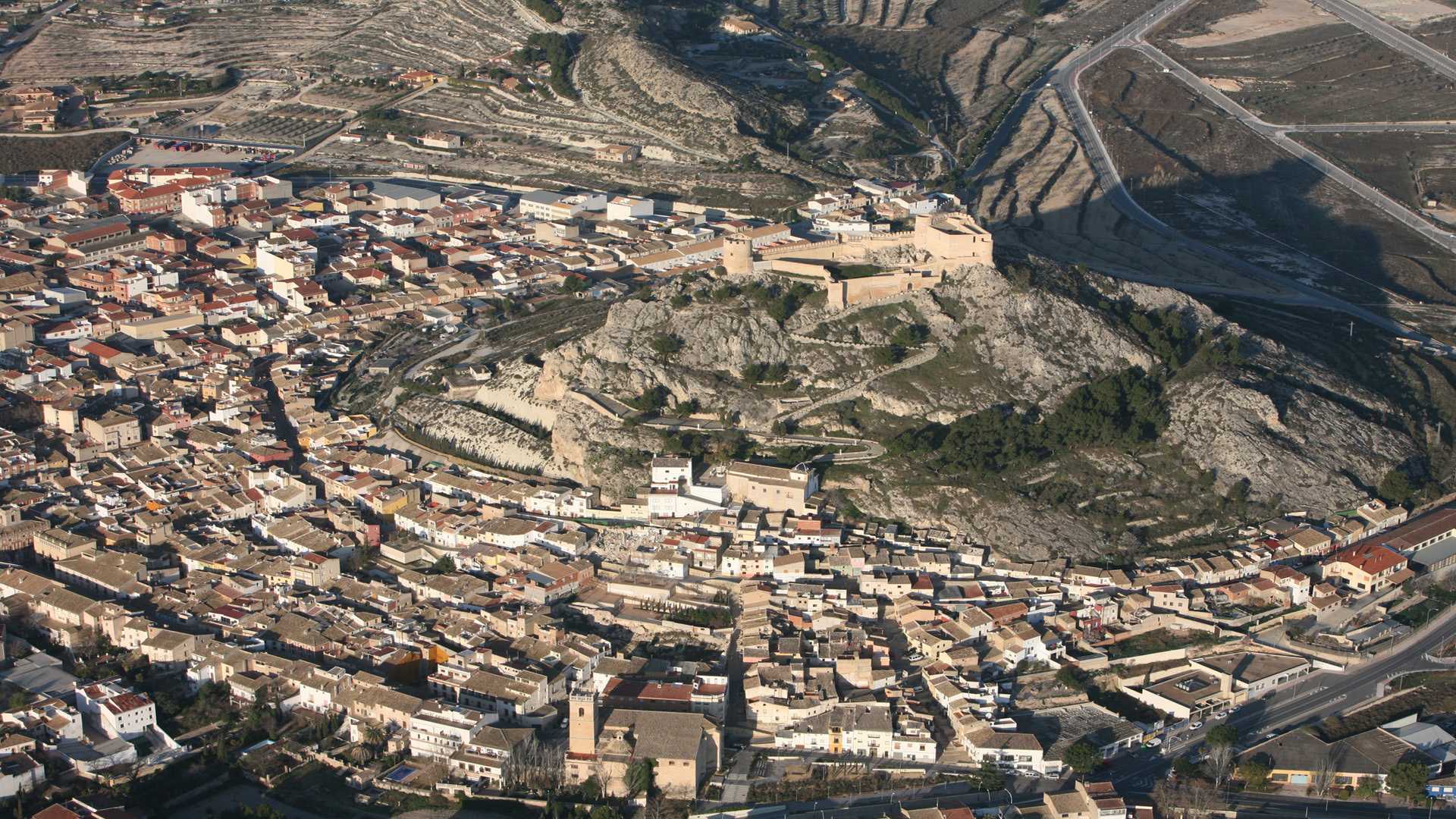
Castalla Castle sits on a hill overlooking the valley, with the town located around its base at an elevation of 680 meters above sea level. Castalla La Hoya, the region with Castalla as its capital, is a broad, T-shaped valley oriented to the southeast and surrounded by various mountain formations. Castalla is located in the west and southwest of La Hoya, nestled among the Maigmó Mountains (1,296 meters), Cati (1,260 meters), and Argenya (1,230 meters).
The climate of the area is characterized as a mid-mountain Mediterranean climate, with an average annual temperature of around 17 degrees Celsius. The region experiences relatively low rainfall, about 400 millimeters per year, but the surrounding mountain ranges promote cloud formation and localized precipitation, increasing with altitude. Snowfall is common during the winter months of January and February. The area is well-connected to Alicante and Valencia via the A-7 highway.
Historically, the castle has been a central point around which the town developed, with evidence of Neolithic, Bronze Age, Iberian, Roman (who named it “Castra Alta,” meaning high fortress), and Arab settlements. The castle has served as the core around which the fortified town emerged over time.
History
Due to its strategic location, the castle and the hill upon which it sits have been occupied by various civilizations, each leaving their mark over time. Prehistoric people, Iberians, Romans, Muslims, and Christians have all contributed to the rich history of this site. Now, you can become a part of this historical continuum as you embark on your journey through time.
The area has been occupied since the Bronze Age (2nd millennium BC) and continued to be inhabited during the Iberian and Roman periods (2nd century BC – 5th century AD). Although successive occupations and transformations of the hill have led to the destruction of structures from these eras, some ceramic fragments have been preserved. Notably, one piece depicts the legs of what may be an Iberian warrior, adorned with boots and holding a falcata or sword (2nd century BC).
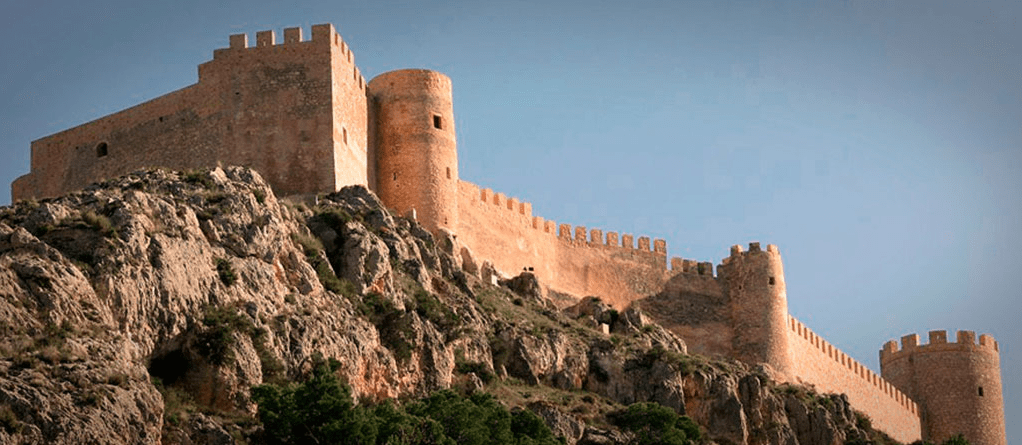
In the 10th century, a Muslim settlement was established here, which evolved into a fortification (ḥiṣn) in the 11th century. This fortification was renovated in the 13th century and served as the administrative center for the Foia de Castalla district, under the jurisdiction of the taifa of Dénia. In 1244, the castle was peacefully incorporated into the Crown of Aragon and subsequently played a crucial role in defending the southern border of Aragon against the Crown of Castille.
The castle gradually deteriorated, and in 1362, King Pere IV decided to donate it to Ramon de Vilanova i Lladró, Baron of Castalla. The barony included the towns of Castalla, Onil, and Tibi. King Pere IV entrusted the baron with the task of restoring the castle to defend the area against potential attacks from Castille. From that moment onward, and throughout the 15th and 16th centuries, the castle underwent significant modifications, particularly in the planning and construction of the Palace and the Lower Ward. The Large Tower, completed in 1529, was the last major construction within the castle grounds.
In the 17th century, as the castle ceased to be used for military purposes, the tower fell into disrepair and became a silent witness to visits by the people of Castalla and the surrounding region. In the 1930s, the castle was looted by local residents in search of treasures. The social recovery effort, initiated by the council in 1984, has been crucial in ensuring the castle’s preservation. The results of this restoration are now evident for all to see.
Inside the Castle
Welcome to Castalla Castle, one of the most significant historical heritage sites. You’ll begin your journey by entering the Palace through its intricate defense system. Then, you’ll explore the Lower Ward and discover notable locations such as the “escola dels moros” (Moors’ school). From the heights of the Large Tower, you can appreciate panoramic views of the Foia de Castalla district. Imagine the early settlers of the hill and trace the origins and evolution of the castle through the centuries.
Ground Floor
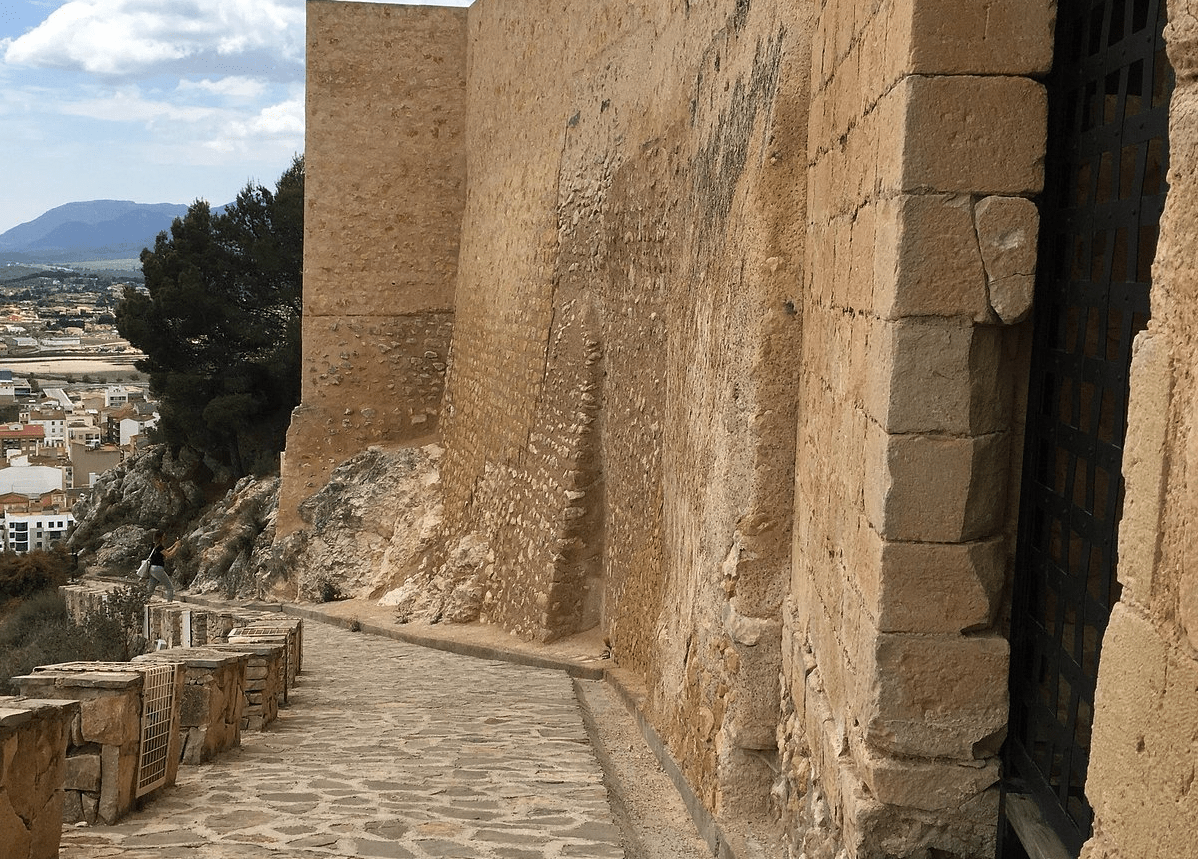
You may have visited other castles, but what’s fascinating is that this three-story building was constructed in the 14th and 15th centuries as the residence of a feudal lord. Its defense system is notably effective, as access can only be gained through narrow passages. Additionally, the layout is designed so that each floor has its own independent and compartmentalized defense.
This, of course, made the castle extremely difficult to conquer. These rooms are all arranged around a courtyard featuring a cistern, locally known as the “comú de la reina” or “Queen’s commode.” The people of Castalla believed that the “Queen of the Castle” used this cistern as a toilet, hence its name.
First Floor
This floor would have accommodated the castle’s noble rooms, which were likely connected to the kitchen via a staircase that no longer exists. In the rectangular tower, the remains of the brick vault are in a state of consolidated ruin. This preservation method prevents further deterioration of the original remains while allowing the new structure to be observed and compared with the original.
Second Floor
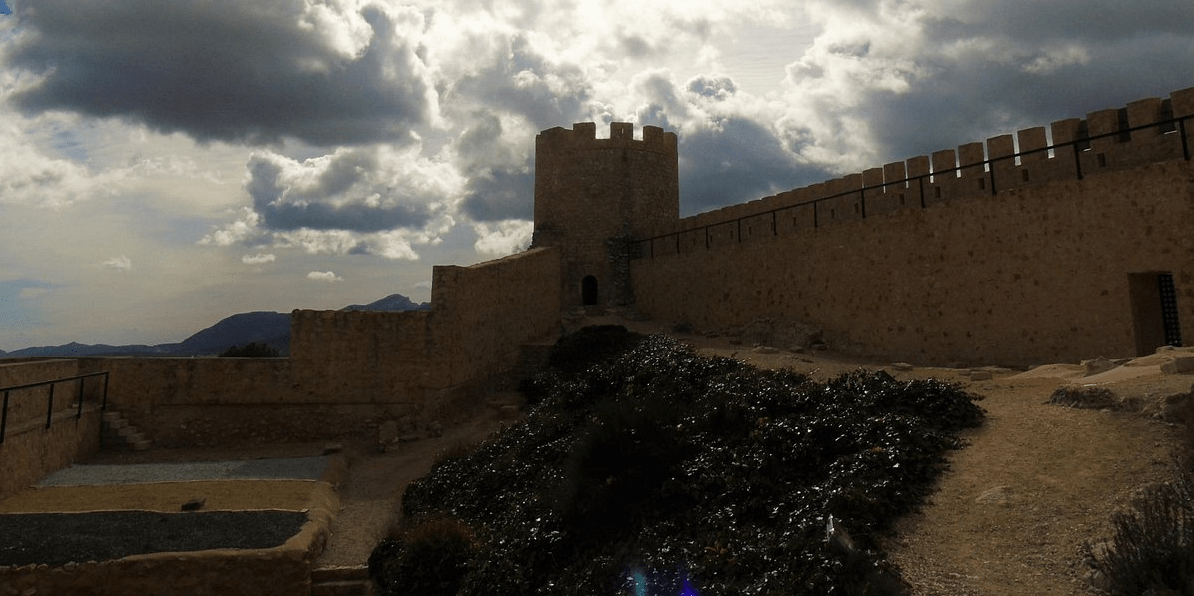
As one ascends to the second floor, elements of the Palace’s defensive architecture become visible within the circular tower. Notable features include cross and orb-shaped loopholes, designed for the use of portable firearms, as well as traditional arrow slits. Upon reaching the second floor, historically used as the servants’ quarters, one can observe remnants of the original pine wooden beams. Additionally, this floor provides access to the Palace roof, offering splendid views over the entire region.
Semicircular Tower
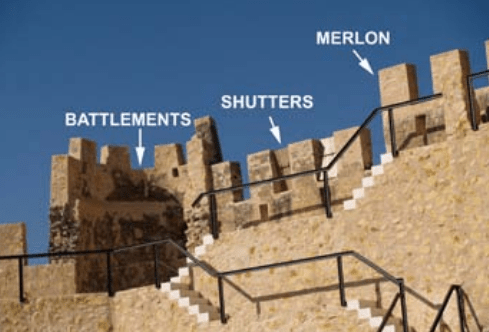
This expansive area, connecting the Palace to the Large Tower, is flanked by two straight walls. When the tower was constructed in 1529, the original appearance of the Lower Ward was significantly altered. This area, however, suffered extensive damage during the pillaging of the 1930s, though it still retains remnants of the various domestic quarters that once existed here.
While both are new, the east and west walls present distinct appearances. The west wall features merlons and battlements, while the east wall lacks these features. The reason for this discrepancy lies in the preservation of the original merlons and battlements on the west wall, which allowed for their reconstruction. Unfortunately, the east wall’s merlons and battlements were entirely lost, making their reconstruction impossible.
Large Tower
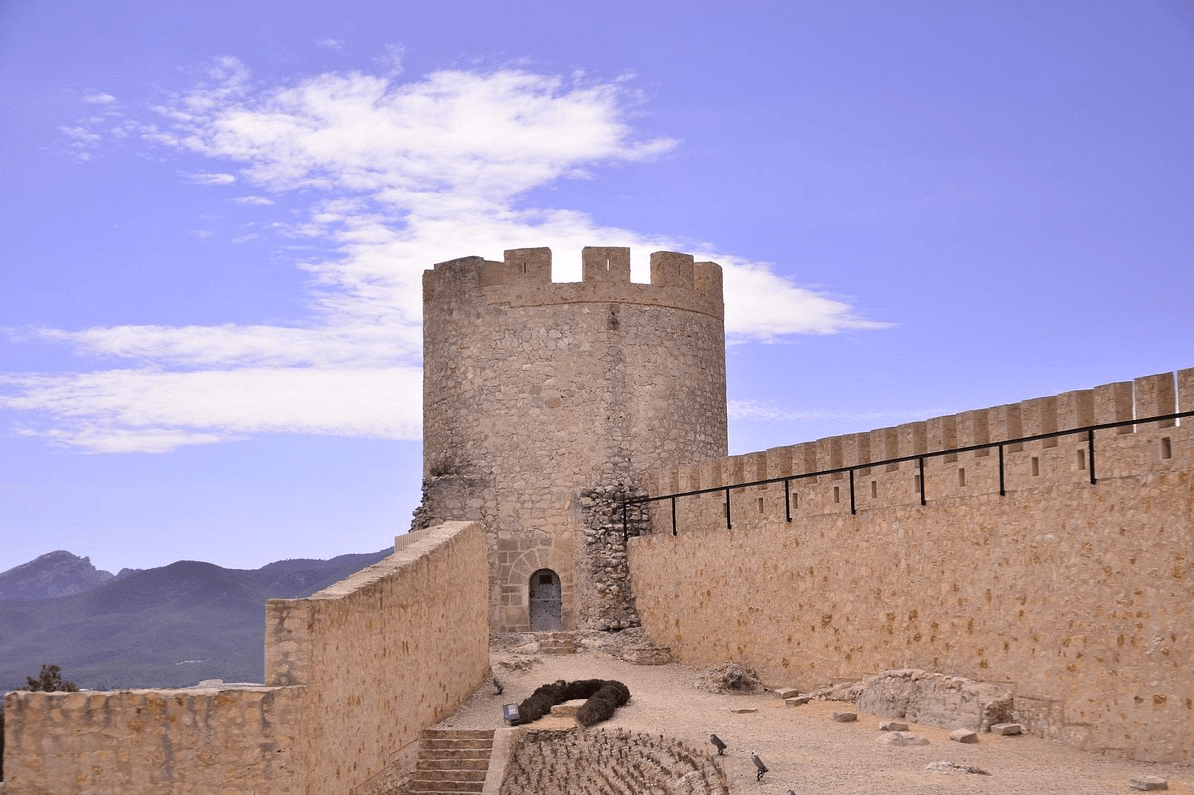
This tower holds significant importance for the people of Castalla, who have named it the Large Tower. Constructed in 1529, it features two floors and represents the most modern structure of its time. It is believed to have been part of a more ambitious project, which, for unknown reasons, was never completed. Evidence of this includes the ruins adjacent to the tower, which indicate the planned addition of new walls.
The tower boasts several notable artistic elements. Among these is the remnant of a headless gargoyle, likely representing a winged creature, which originally served to divert rainwater from the terrace. Additionally, there is a noteworthy inscription: the IHS monogram, a reference to Jesus of Nazareth. This monogram can be found on the west window of the outer wall on the first floor of the tower.
Entrance
To uncover the deepest secrets of this historic castle, you must proceed through this gateway. During its construction in the 14th and 15th centuries, ashlars were utilized. If you observe closely, you will notice certain engravings. Do you recognize them? These are the marks left by the stonemasons who carved the ashlars for this gateway, serving as their signatures. On the exterior, two structures project above the entrance. These are machicolations, which were employed to defend the entrance against attacks.
Enjoy Your Private Paradise in Villa Murcia!
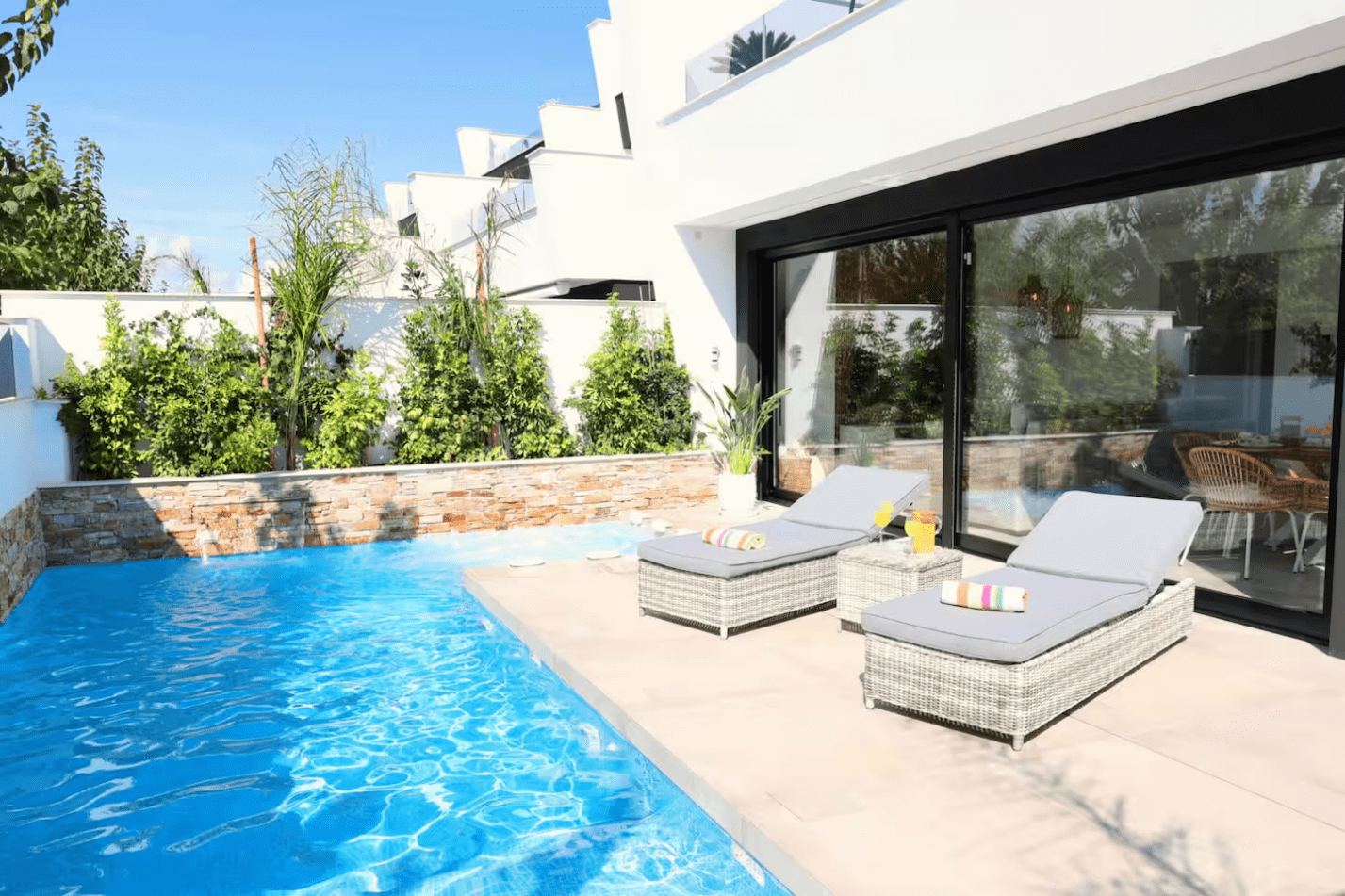
Looking for the perfect place to stay in Murcia? We’ve got just the spot for you!
Villa Murcia – Your Private Paradise
Wake up to coffee on a sun-drenched terrace, unwind in a warm jacuzzi after a day of exploring, and end your evenings with dinners in the summer kitchen. Nestled in charming Santiago de la Ribera, Villa Murcia offers more than just a holiday—it’s your personal oasis of comfort, style, and unforgettable moments.
Highlights:
✔ Spacious living room with a large sofa and open kitchen – perfect for shared memories
✔ Three elegant, air-conditioned bedrooms with private terraces – your peaceful retreat
✔ Extra fold-out sofa in the living room – ideal for additional guests
Whether it’s a romantic escape, a family getaway, or a relaxing break with friends – Villa Murcia is your dream stay.
Book now and experience the magic of the Spanish sun!
Summary
Visiting the Castle of Castalla offers a unique opportunity to immerse yourself in centuries of history and architectural splendor. This medieval fortress, perched on a strategic hilltop, provides breathtaking panoramic views of the surrounding landscape. The castle’s well-preserved structures, including its impressive ashlars and defensive machicolations, showcase the craftsmanship of the 14th and 15th centuries, offering a tangible connection to the past.
Exploring the castle grounds allows you to discover the marks left by stonemasons, adding a personal touch to the historical narrative. Additionally, the Castle of Castalla has been a silent witness to significant historical events and cultural transformations, making it a vital piece of Spain’s heritage. Whether you are a history enthusiast, an architecture lover, or simply seeking a picturesque destination, the Castle of Castalla promises a rich and rewarding experience.