


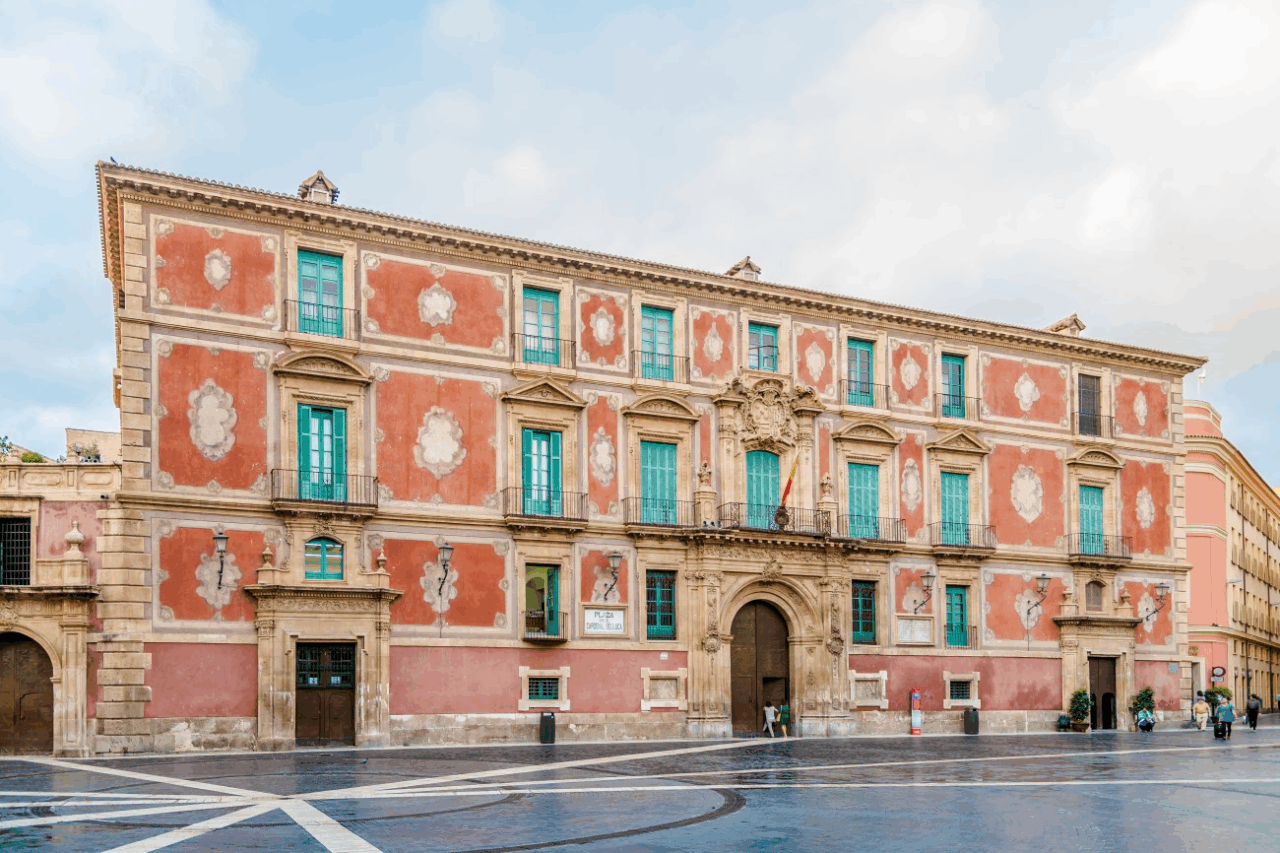
History, culture, architectural beauty, cuisine (incredible and delicious), and a beach that will leave anyone breathless… all in one place. When you put it this way, this utopian paradise seems made up, but it isn’t. The region of Murcia, in Spain, is one of the favorite destinations for tourists looking for a place with all these characteristics. The city really has a lot of history and beauty to tell in every corner you go.
One of the places that tells the story of the city is the Episcopal Palace. This historic building, located in the heart of the town, was declared a Property of Cultural Interest in 1992. It is a landmark of great historical and religious architectural importance in the region. The building, a magnificent example of a Rococo style, not only symbolizes ecclesiastical power in the area but also reflects Murcia’s rich cultural monumental heritage. Today, we will learn a little more about it.
The Diocese of Cartagena
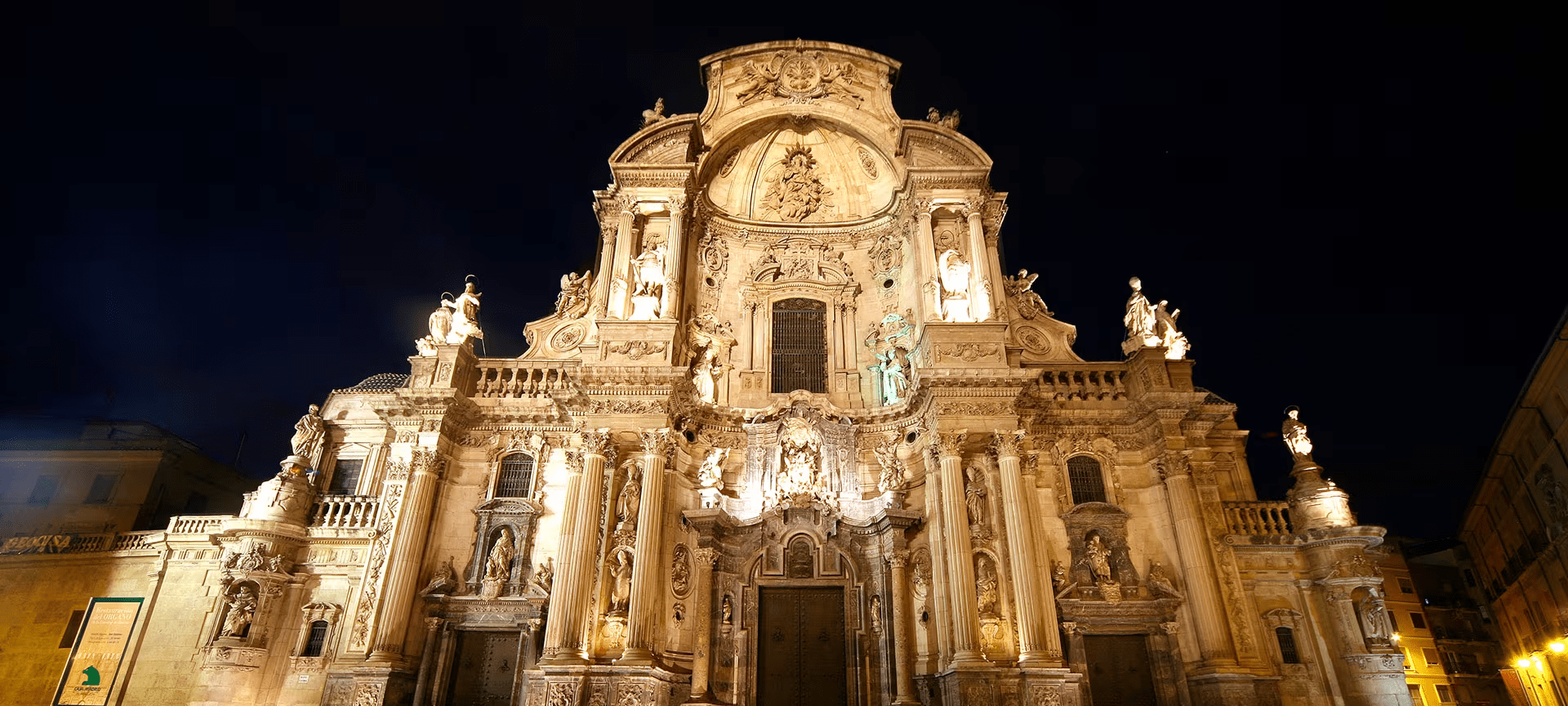
The Episcopal Palace is the seat of the Diocese of Cartagena, one of the oldest in Spain, with a history rooted in the Roman era. For those who don’t know what it is, it is basically an ecclesiastical constituency of the Catholic Church in Spain, which has played a crucial role in spreading Christianity in the region and preserving religious traditions over the centuries.
José Manuel Lorca Planes has been Murcia’s current bishop since July 18, 2009. As the episcopal seat, the palace is an administrative and spiritual center, reflecting the church’s continued importance in the city’s cultural and social life.
Construction Of The Palacio Episcopal
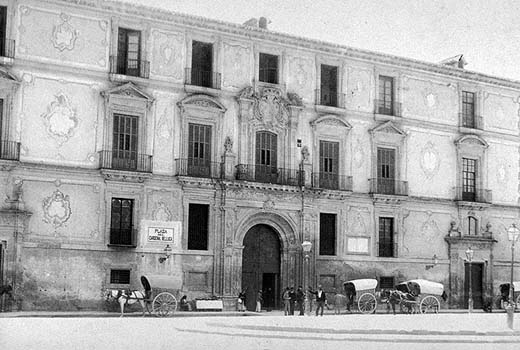
In the past, the old Episcopal Palace was also located in Plaza del Cardenal Belluga. It was located in the same place where the current building stands today but on the opposite side of the square.
Due to the construction of other buildings in the square and the deterioration of the palace at the time, it was decided to build a new building. The then-new location was where the Manor House of the Marquis of Los Vélez had previously been located. The real driving force behind this historic building was Bishop Juan Mateo López. After his death, his successor, Diego de Rojas y Contreras, continued the construction.
Construction began in June 1748. The work was carried out by local masters associated with Jaime Bort (a famous Spanish architect whose most important work is the facade of the Cathedral of Murcia), such as Pedro Pagán, José Alcani, and Martín Solera, who also worked on the cathedral’s façade.
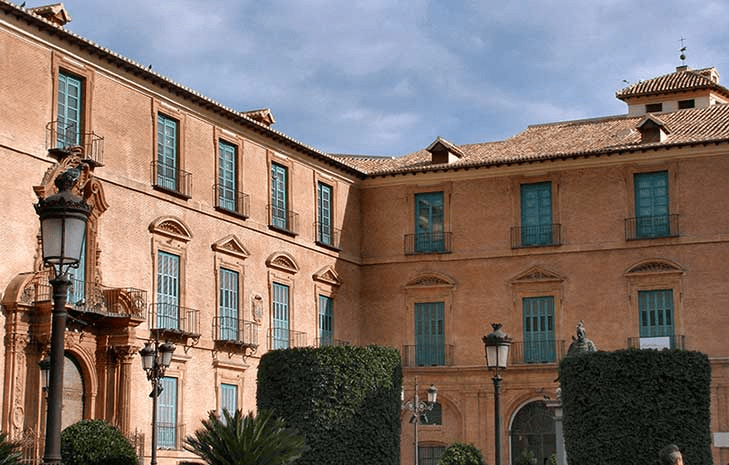
By 1757, the work was progressing very slowly, which led the Cathedral Chapter to ask Bishop Diego de Rojas y Contreras to find a new director in Madrid. He requested a new project, revised by José López, a disciple of Bort, who took over the supervision of the works. After another interruption in 1761, Baltasar Canestro, an Italian architect, took over the project in 1765 and completed it in 1768.
Architecture Of The Palace
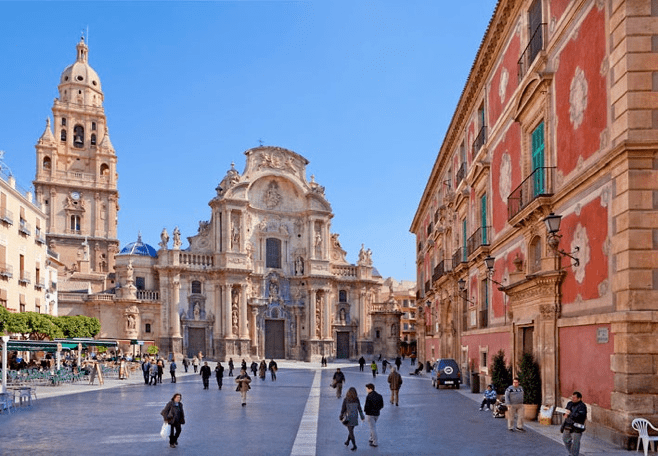
The range of styles around the Palace, in the Plaza del Cardinal Belluga (Cardenal Belluga Square), is vast. There, we find the presence of both civil and religious power in the form of the Episcopal Palace, the City Hall, and the Cathedral of Murcia. In the space, you will find buildings of all types, from Baroque to eclectic buildings with modernist touches.
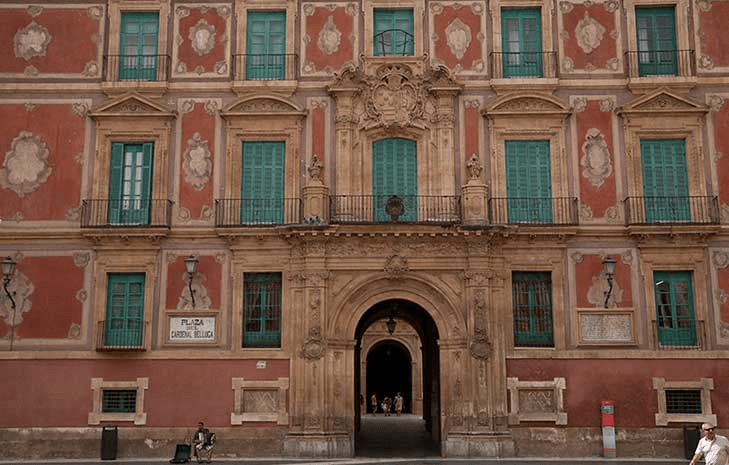
The Episcopal Palace of Murcia is a remarkable example of Baroque architecture, with a derivative style marked by Italian and French Rococo trends. The building has a square floor plan decorated almost entirely with shields of different shapes and colors and features delicate decorative grace, evident in its beautiful facades.
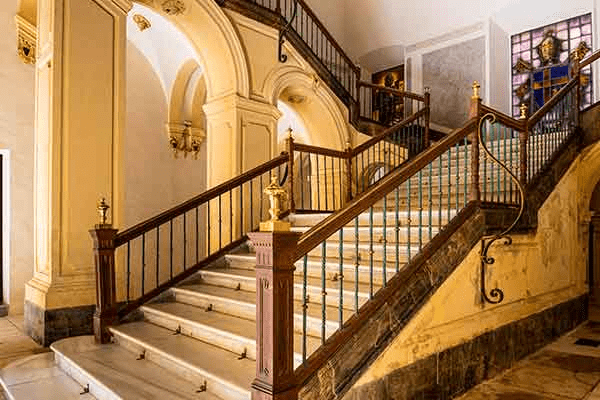
The main entrance to the Palace, known as Puerta del Perdón, is a masterpiece itself, with its arched door and ornate ironwork. The palace’s interior features a grand staircase that rises from the entrance hall. The staircase is decorated with intricate balustrades and decorative elements, making it an actual work of art and perfect for taking a photo and keeping the place in your memory.
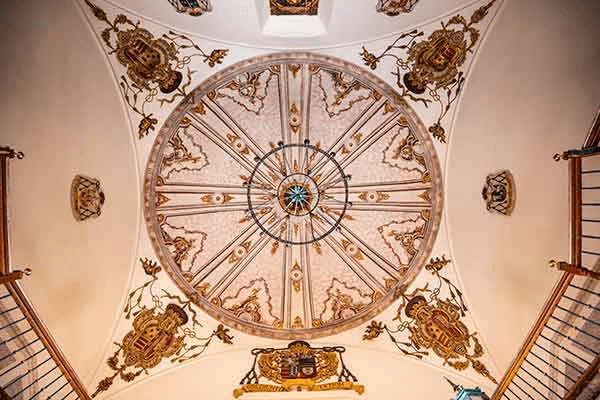
Be careful with your neck and possible pain! Looking at the palace ceilings, decorated with beautiful frescoes and paintings depicting religious scenes and historical events, is addictive and very difficult to stop.
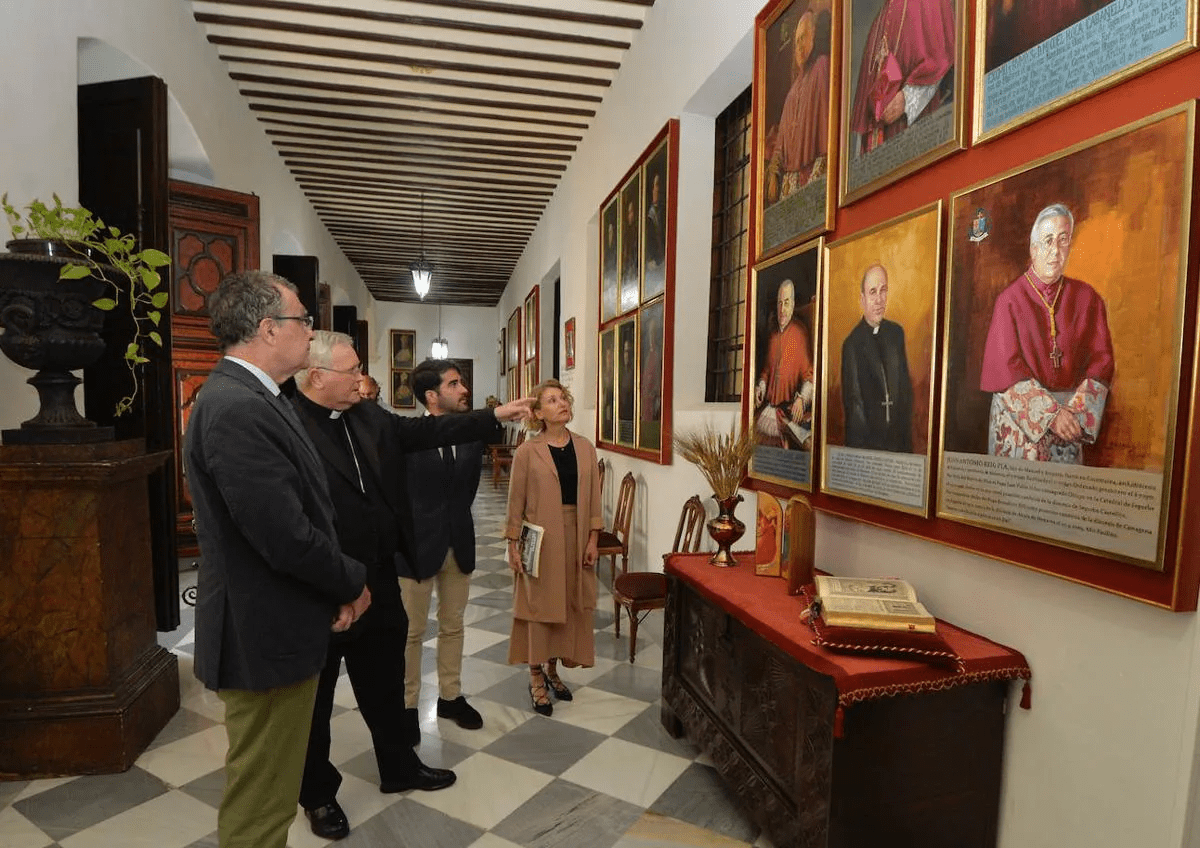
On the palace’s first floor, you can see the portraits of all the bishops of the Diocese of Cartagena since its foundation.
The Salón del Trono, or Throne Room, is one of the most impressive rooms in the Palace. It features a coffered ceiling, intricately carved woodwork, and a large throne that was once used by the bishops of Murcia.
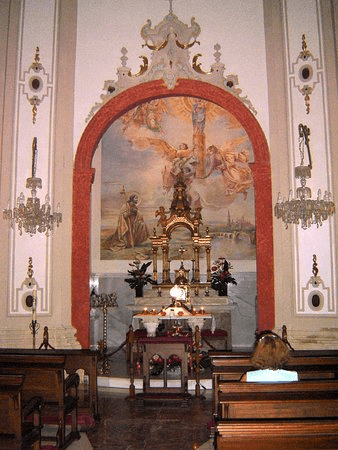
Two other parts of the building worth mentioning are the courtyard, which is arranged in three Doric arcades and a more compact upper section, and a small circular chapel in the Rococo style that is open 24 hours a day.
Stage Of Important Historical Events
The palace has played significant roles throughout its history. During the Spanish War of Independence, it was used as a headquarters for French troops. It later served as a temporary residence for members of the Spanish royal family during official visits, such as those of Queen Elizabeth II in 1862 and King Alfonso XII in 1879.
The Bishop’s Viewpoint
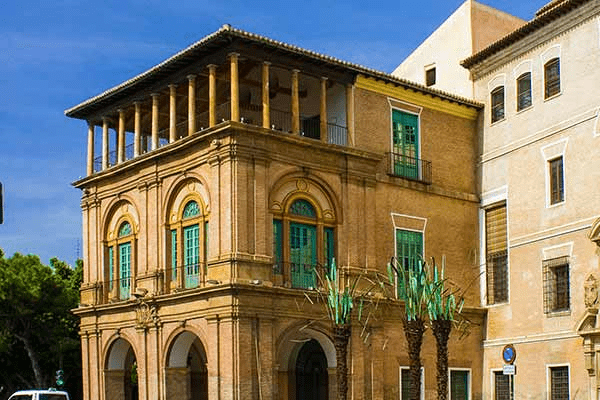
The “Hammer of the Palace” (Martillo del Palacio) is one of the Episcopal Palace’s distinctive architectural features. This belvedere-like structure, or large balcony, projects from the main building and offers a privileged view over the Segura River and the Paseo del Arenal.
This part of the palace is known as the “Bishop’s Viewpoint” and was built before the main body of the building. In addition to serving as a vantage point, the Hammer also includes an exhibition room, the Sala San Isidoro.
Important Information for Visitors
The Palace is open to the public from Monday to Friday from 9 a.m. to 2 p.m. and from 5 p.m. to 8 p.m. The opening hours in August are different, and the space is open from Monday to Friday from 9 a.m. to 2 p.m.
It is advisable to check the opening hours on the official website or contact the palace directly for the most up-to-date information, especially during peak tourist seasons.
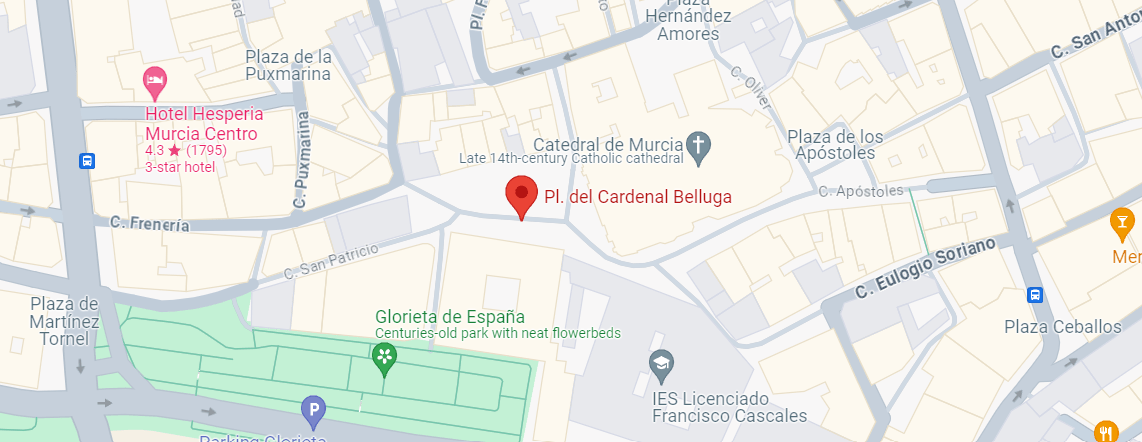
Since it is located in Plaza del Cardenal Belluga, one of the most central and accessible squares in the city, it is very easy to reach and find the building. Visitors can reach the site in several ways:
- Public Transport: Several bus lines stop near the palace, providing easy access from different parts of the city. Murcia train station is also a short walk away, connecting the city to other regions.
- Car: For those who prefer to drive, there are several parking options nearby, including the Plaza Belluga underground car park. However, street parking may be limited and may incur charges.
- On Foot: Due to the palace’s central location, many visitors choose to walk through Murcia’s charming neighborhoods to reach their destination, exploring other attractions and points of interest along the way.
Enjoy Your Private Paradise in Villa Murcia!
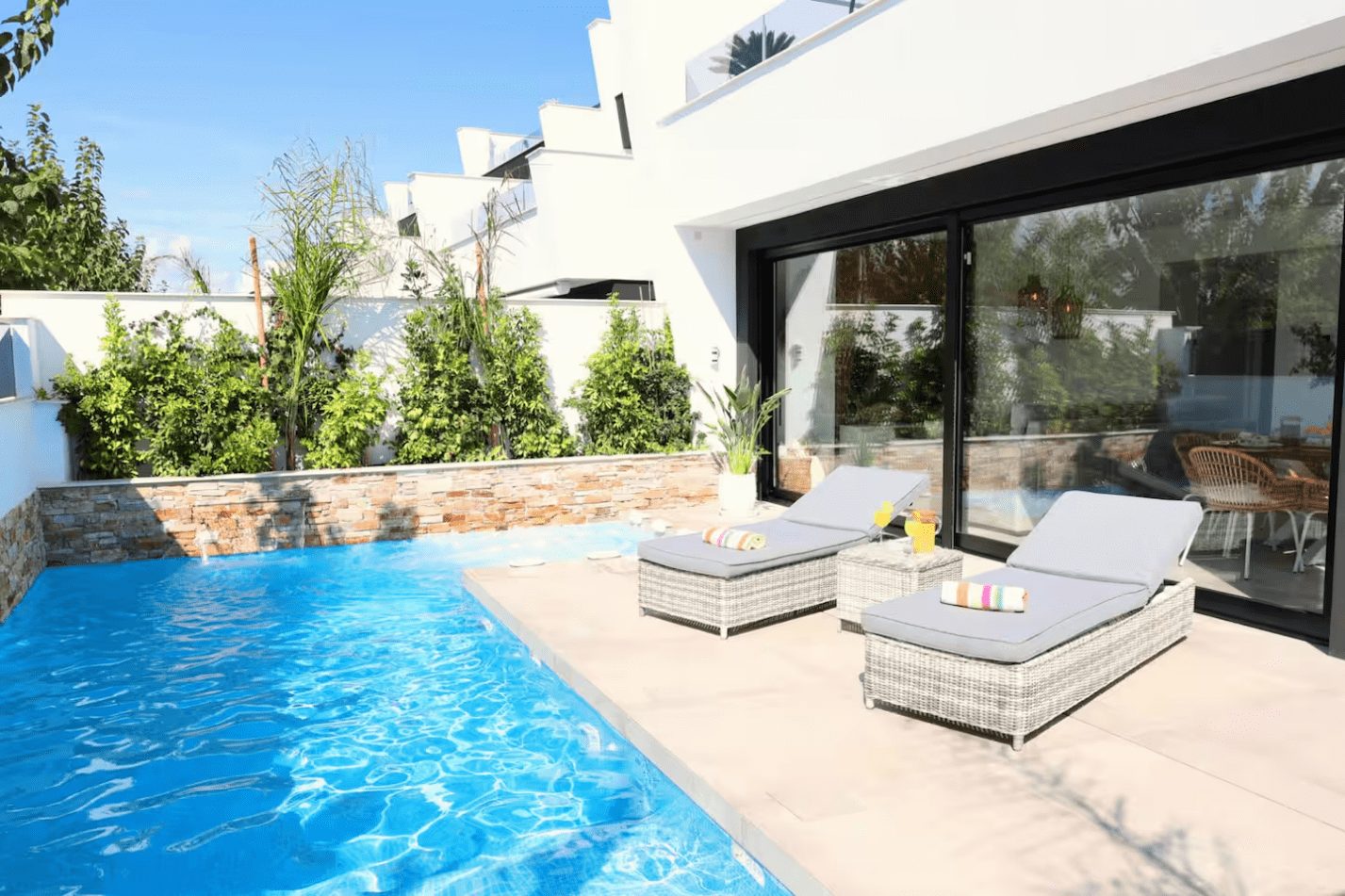
Looking for the perfect place to stay in Murcia? We’ve got just the spot for you!
Villa Murcia – Your Private Paradise
Wake up to coffee on a sun-drenched terrace, unwind in a warm jacuzzi after a day of exploring, and end your evenings with dinners in the summer kitchen. Nestled in charming Santiago de la Ribera, Villa Murcia offers more than just a holiday—it’s your personal oasis of comfort, style, and unforgettable moments.
Highlights:
✔ Spacious living room with a large sofa and open kitchen – perfect for shared memories
✔ Three elegant, air-conditioned bedrooms with private terraces – your peaceful retreat
✔ Extra fold-out sofa in the living room – ideal for additional guests
Whether it’s a romantic escape, a family getaway, or a relaxing break with friends – Villa Murcia is your dream stay.
Book now and experience the magic of the Spanish sun!
Palacio Episcopal: A Must-See In Murcia!
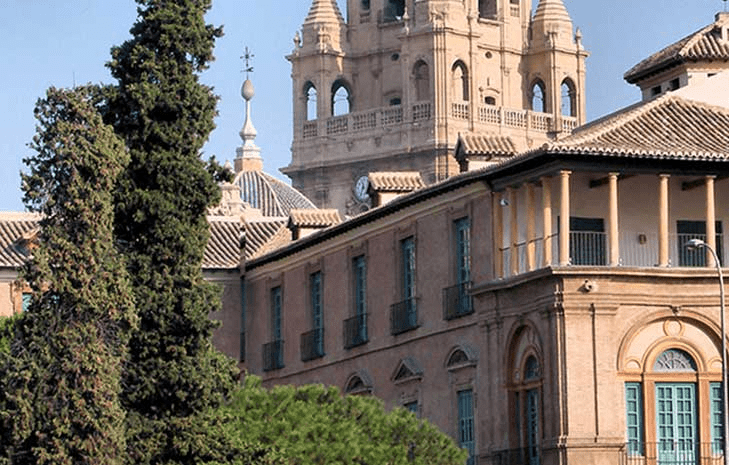
Murcia is a city with many tourist attractions. With every step you take in the city, you find yourself in a new place with a rich history and beauty. The Episcopal Palace is one of the most important buildings in Murcia, but it often gets forgotten from the list of places to visit. The building is a must-see for anyone who wants to understand more about the history, architecture, and cultural importance of the city.