


Cartagena is likely a city with some of the most important and vast cultural heritage from all of Spain and even the Mediterranean coastline. Shipwrecks, antique settlements, and a rich history characterize this wealthy city of the Murcia shore; thus, it’s a must-visiting destination you should meet this next season.
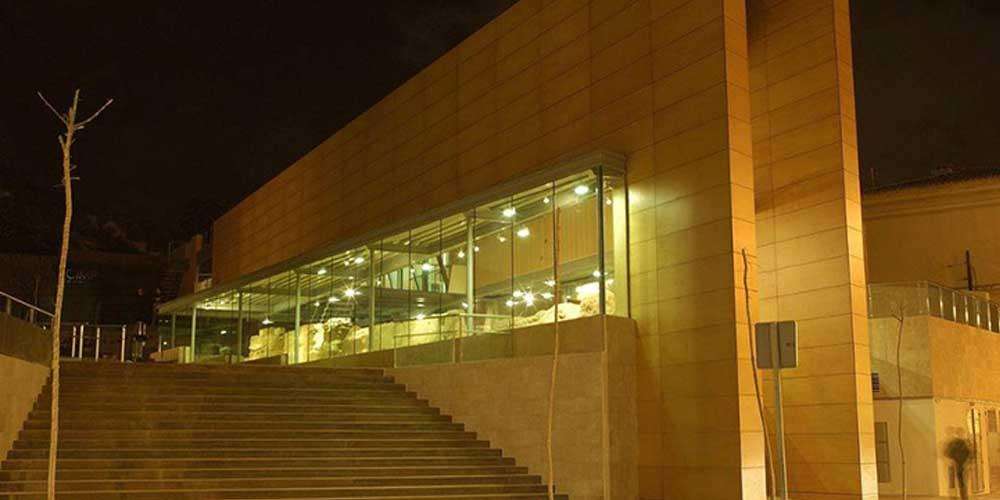
One of the buildings you can’t stop visiting is the Interpretation Center of the Punic Wall, an architectural-modern structure whose objective is to preserve a crucial part of the fortifications of the old city: the Punic Wall.
This center plays an important role in preserving the cultural heritage of the city and Spain. It is also a landmark of the ancient history of the cultures that coexisted in the territory. In the lines below, we discuss everything about this precious center.
Table of Contents:
- Interpretation Center of the Punic Wall | The History of Cartagena
- What Is the Interpretation Center of the Punic Wall?
- Location of the Interpretation Center of the Punic Wall
- The Tour of the Museum
- Visiting the Punic Wall
- Enjoy Your Private Paradise in Villa Murcia!
What Is the Interpretation Center of the Punic Wall?
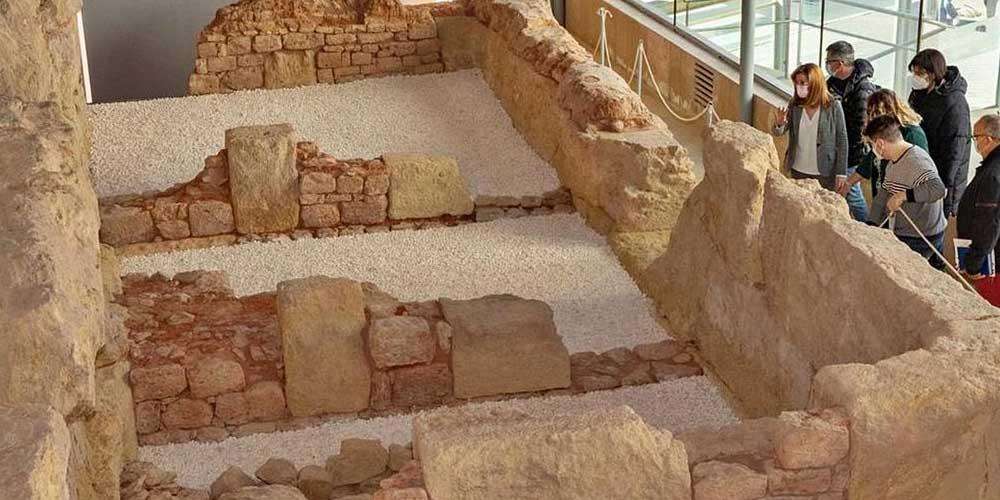
The Punic Wall Interpretation Center in Cartagena, Spain, is a recovery, memory, and rehabilitation site whose main purpose is to preserve the rest of the Carthaginian wall, dating from the 3rd century BC.
The Punic Wall Interpretation Centre effectively safeguards a 30-meter section of the original wall, which extended until the entrance of the isthmus between the Monte Sacro and San José hills.
The major wall consisted of two walls separated by 3 meters. Between the two walls were the casemates, or inner rooms, where the troops rested and stored supplies and weapons.
The Interpretation Center of the Punic Wall is part of the consortium Cartagena Puerto de Culturas.
What Were the Punic Wars?
The Punic Wars were war conflicts between the two powers that ruled the Mediterranean Sea in the 3rd century BC: the Romans and the Carthaginians. Most of the battles occurred in the Iberian peninsula, where the Carthaginian civilization destroyed and built cities to ensure its control of the region.
The Punic Wall, located in Cartagena, Spain, is a relic of the Second Punic War, which lasted between 218 and 201 BC. At that time, in 229 BC, Asdrúbal Barca, a Carthaginian general, founded the city of Qart Hadast (the current Cartagena). Under the Carthaginians, the city soon became the administrative and political capital of the south of the Iberian peninsula, and the wall was a perfect place to store weapons and supplies. It also served as a base of operations and the winter barracks of the armies.
In this context, Asdrúbal built the Punic Wall in 216 BC to protect the settlement from the Roman attacks led by the brothers Cneo and Publio Cornelio Escipión. However, the Punic Wall (La Muralla Púnica, in Spanish) failed to contain the attacks of the Roman General Scipio Africanus.
This archaeological site shows the ruins of this wall after the battle and through the years.
The Wall Remains
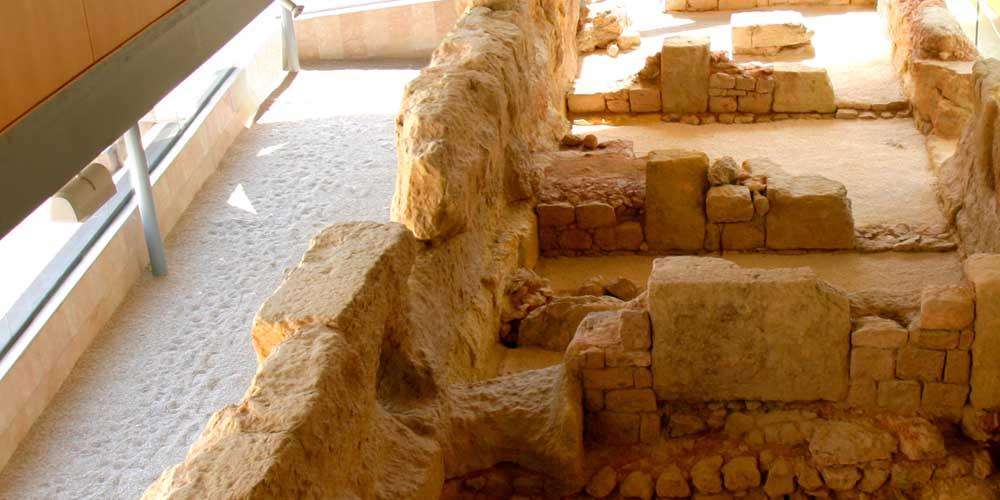
The Wall Remains is likely the most important Carthaginian archaeological site in Spain and the area. It is also the gem of the Interpretation Center since it reflects and tells an important part of the city’s and peninsula’s history.
This wall has a Hellenic design. The main material is sandstone extracted from local quarries. The original wall was over 3 meters high. The ruins you can see nowadays have a length of 30 meters and show clear signs of fire, probably due to the battle carried out there in the Second Punic War.
The Saint Joseph Crypt
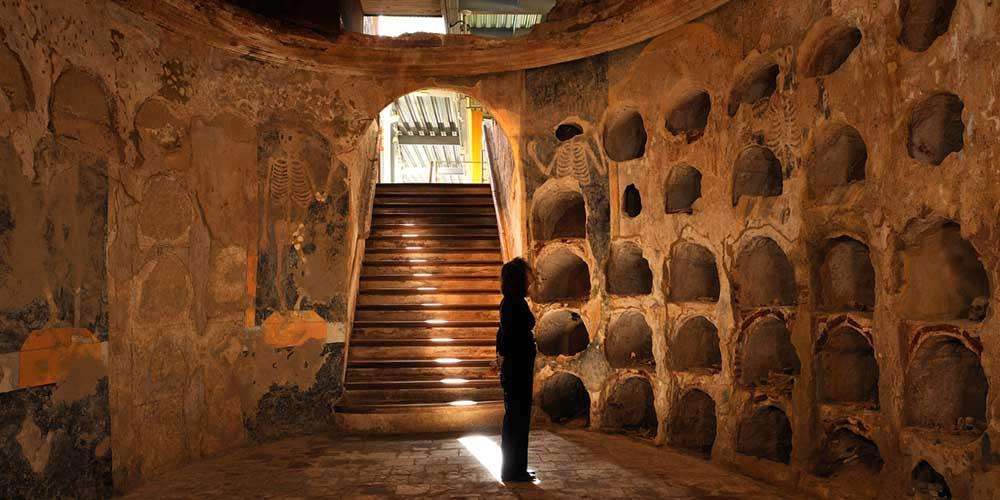
Next to the wall, and as an integral part of it, you can witness the funerary burial crypt of the hermitage of San Joseph. The Brotherhood reserved this space for its members. The wall dates from the 16th and 17th centuries. Its walls offer a dreadful representation of the Dances of Death.
This burial area was found during the excavations of the Carthaginian walls and presented a completely new scenario where ancient and Christian cultures met and nurtured each other. Let us remember that Rome was later the capital of the Christian religion.
This site has 110 burial niches spread over the two walls that built this elliptical crypt. Most of them are very narrow. The corpses were deposited within the niches inside wooden coffins and with plenty of funeral offerings, such as crosses, rings, and medals of saints.
Paintings depicting the “Dance of Death,” decorate the main walls of the niche, which was very much the fashion at that time.
The Exhibition Room
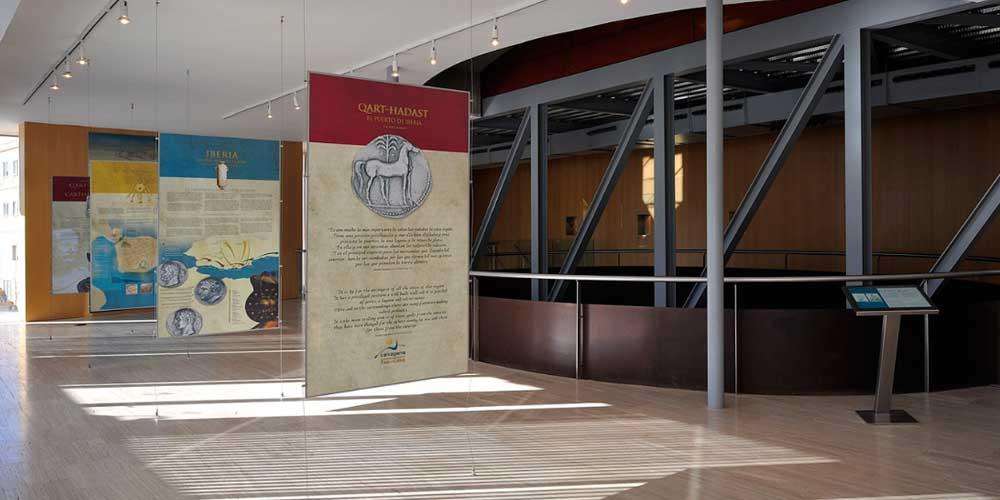
The Interpretation Center has an Exhibition Room in which visitors can witness a series of panels explaining the Punic world, the first Punic War, and the Second Punic War, which is the one to which the center is dedicated.
The Exhibition Room resumes the fact behind Hasdrubal’s foundation of the city of Qart-Hadast in 229 BC and the subsequent conquest by the Roman General Publius Cornelius Scipio in 209 BC.
This exhibition also features Display cases—six glass cabinets displaying items found during the excavations, including Iberian fibulae (or brooches), a Carthaginian votive offering, Phoenician and Roman coins, and funerary offerings.
Location of the Interpretation Center of the Punic Wall
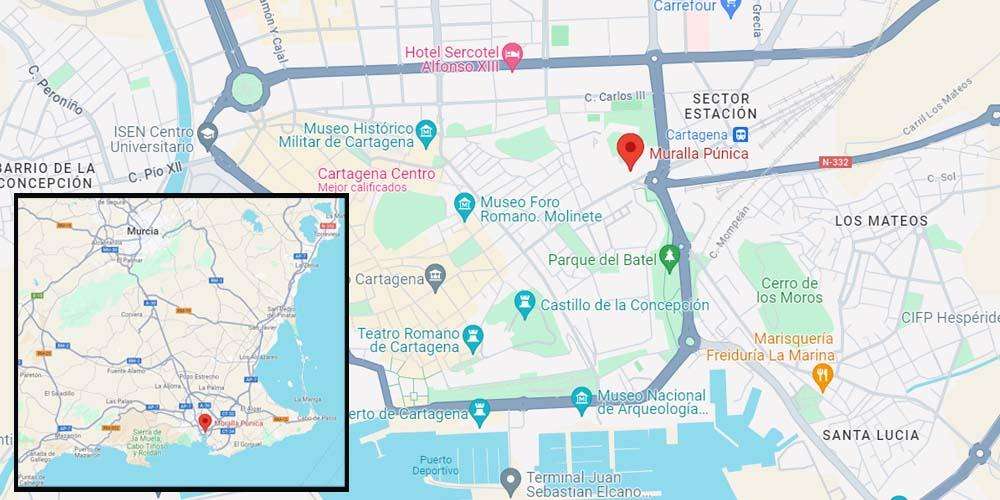
The Punic Wall Interpretation Center is located in Cartagena, Murcia, Spain, a coastal city located at the south end of the region of Murcia. Specifically, it’s in the center of the new city, built from the foundations of the antique city on what was formerly the outer edge of the Carthaginian city.
The Center is easily accessible from every part of the city.
Address: C/ San Diego, 25, 30202, Cartagena, Murcia, Spain
Phone: +34 968 500 093
Email: informacion@puertoculturas.com
Prices:
- Individual: 3,5 euros
- Reducida: 2,5 euros.
Discounts are available to students up to 25 years old, children under 12 years old, unemployed, Youth Card holders, retired people, people with disabilities, large families, and groups with more than 20 people. To prove your eligibility, you’ll need to bring your corresponding accreditation with you.
Opening hours:
- High season (from July 1 to September 15) from Monday to Sunday from 10:00 a.m. to 8:00 p.m.
- Mid-season (from March 15 to June 30 / from September 16 to November 1) from Tuesday to Sunday from 10:00 a.m. to 7:00 p.m. (Easter from Monday to Sunday)
- Low season (from November 2 to March 14) from Tuesday to Sunday from 10:00 a.m. to 5:30 p.m.
The Punic Wall is closed on the following days:
- January 1 and 6 and December 25.
- January 5 and December 24 and 31 only in the afternoon.
Interpretation Center of the Punic Wall Architecture
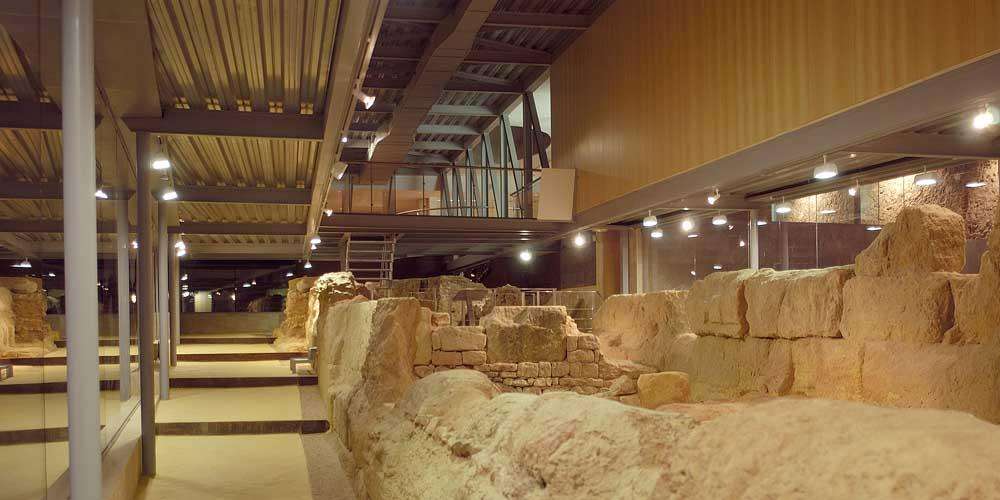
The Interpretation Center of the Punic Wall, part of the tourist consortium Cartagena Puerto de Culturas, boasts contemporary architecture. It protects the antique site and recreates the original elevation of the wall.
Through the two high volumes that we can see on the facade, the building brings back the original wall and its crucial role in the defenses of the ancient city.
Inside the building, open spaces rule the distribution of halls and areas. Platforms, glass walkways, steel stairs, and other lightweight structures connect the different areas. A light ceiling covers the entire building, which has a structure of steel girders from side to side. Crystalline walls cover most of the perimeter, allowing visitors to witness the wall and the building architecture from outside.
The Muralla Púnica Center entails a particular architecture for visitors with special needs: there are no architectural obstacles, whereas ramps, glass floors, and balconies facilitate the walk through the installations. These elements also allow people to witness the remains in their entirety from the upper floor. The building also has adapted toilets and audio-visual presentations with subtitles (English and Spanish) and voiceovers for people with hearing disabilities and impaired vision.
The Tour of the Museum
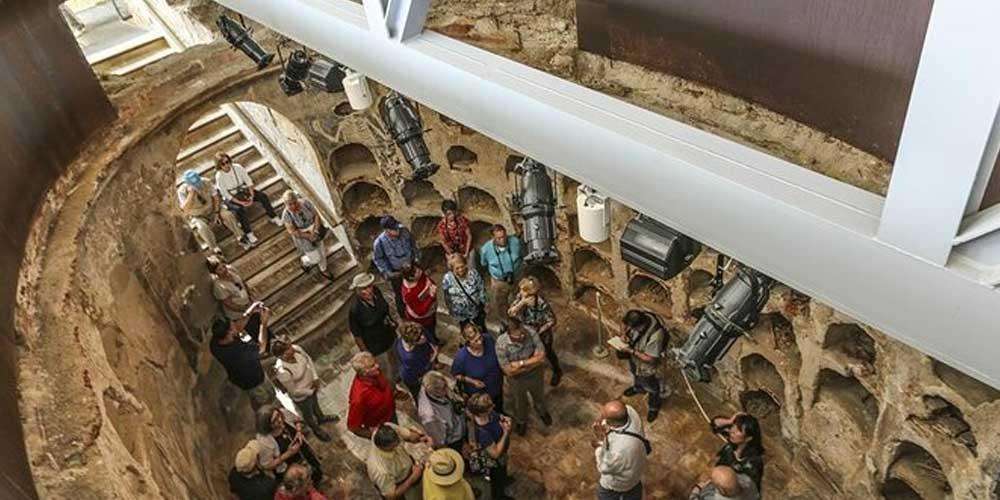
The Interpretation Center of the Punic Wall offers visitors a teaching tour that provides a glance at this brief period of the city’s history. This tour features the following:
- Audiovisual recreation. This video is a 3D presentation of life in Cartagena in the 3rd century BC. The video reconstructs the city and the daily life of the inhabitants of the antique settlement.
- The Exhibition Room. A brief resume of the legendary past of the city.
- The Wall. One of the oldest remains in the city and Spain.
- The Crypt. In 1987, some contractors discovered the crypt during the construction of a car park in an old residence. Here are 110 members of the Brotherhood of Saint Joseph.
- Display cases. The exhibition showcases valuable objects of the Roman, Carthaginian, and Phoenician cultures.
Visiting the Punic Wall
Cartagena is an ancient city full of history. Thousands of years ago, crucial battles for the Iberian peninsula and the Mediterranean powers took place in this city. Nowadays, the settlement is the ideal destination for tourists eager to experience stories featuring important characters, such as Hannibal and the Roman General Scipio Africanus.
In a nutshell, these ruins are magnificent and take you back to the Era of heroes, legendary Roman generals, and crucial battles in human history. All these elements make the Interpretation Center of the Punic Wall a place you should visit in Cartagena.
Enjoy Your Private Paradise in Villa Murcia!
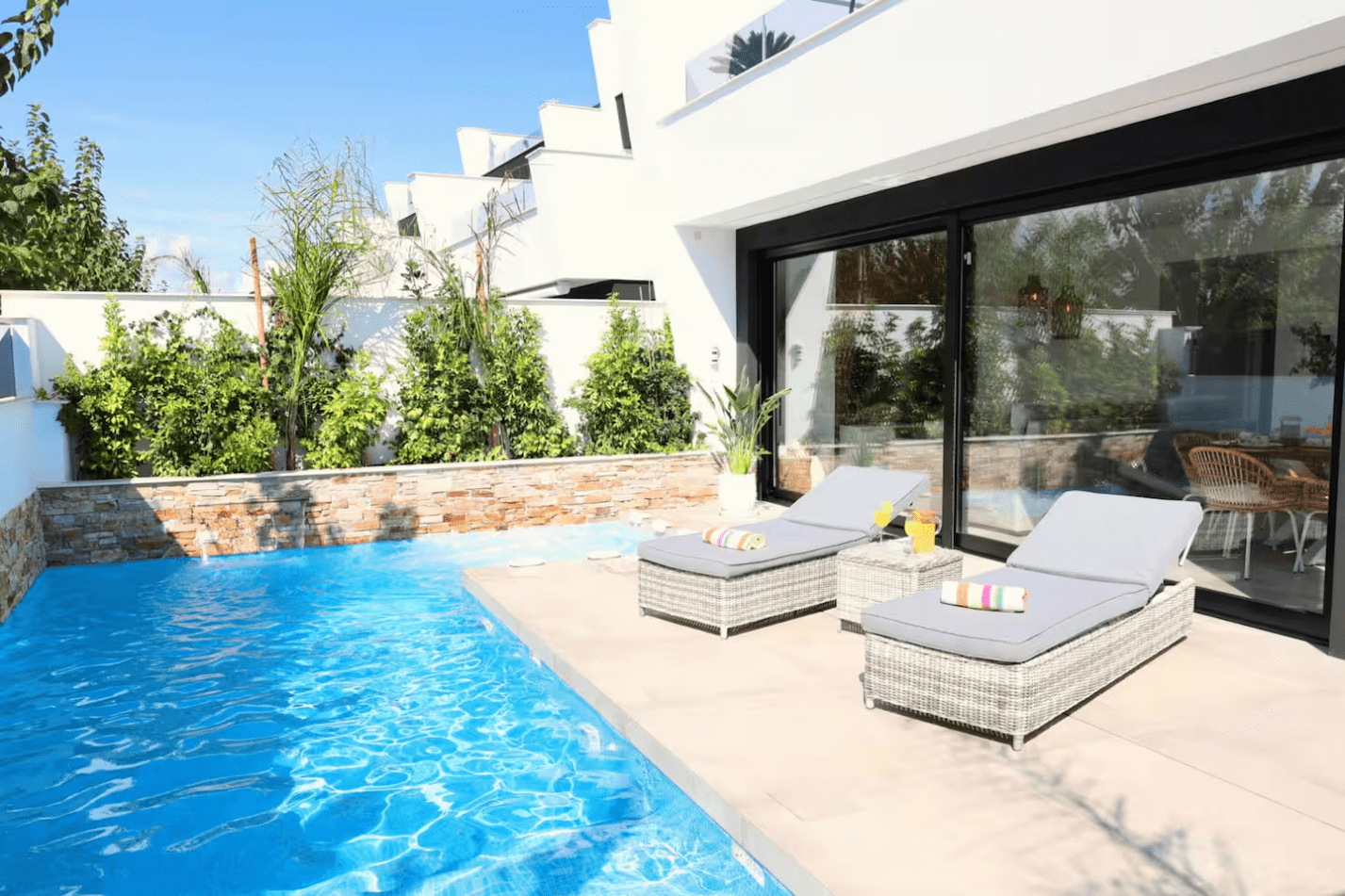
Looking for the perfect place to stay in Murcia? We’ve got just the spot for you!
Villa Murcia – Your Private Paradise
Wake up to coffee on a sun-drenched terrace, unwind in a warm jacuzzi after a day of exploring, and end your evenings with dinners in the summer kitchen. Nestled in charming Santiago de la Ribera, Villa Murcia offers more than just a holiday—it’s your personal oasis of comfort, style, and unforgettable moments.
Highlights:
✔ Spacious living room with a large sofa and open kitchen – perfect for shared memories
✔ Three elegant, air-conditioned bedrooms with private terraces – your peaceful retreat
✔ Extra fold-out sofa in the living room – ideal for additional guests
Whether it’s a romantic escape, a family getaway, or a relaxing break with friends – Villa Murcia is your dream stay.