


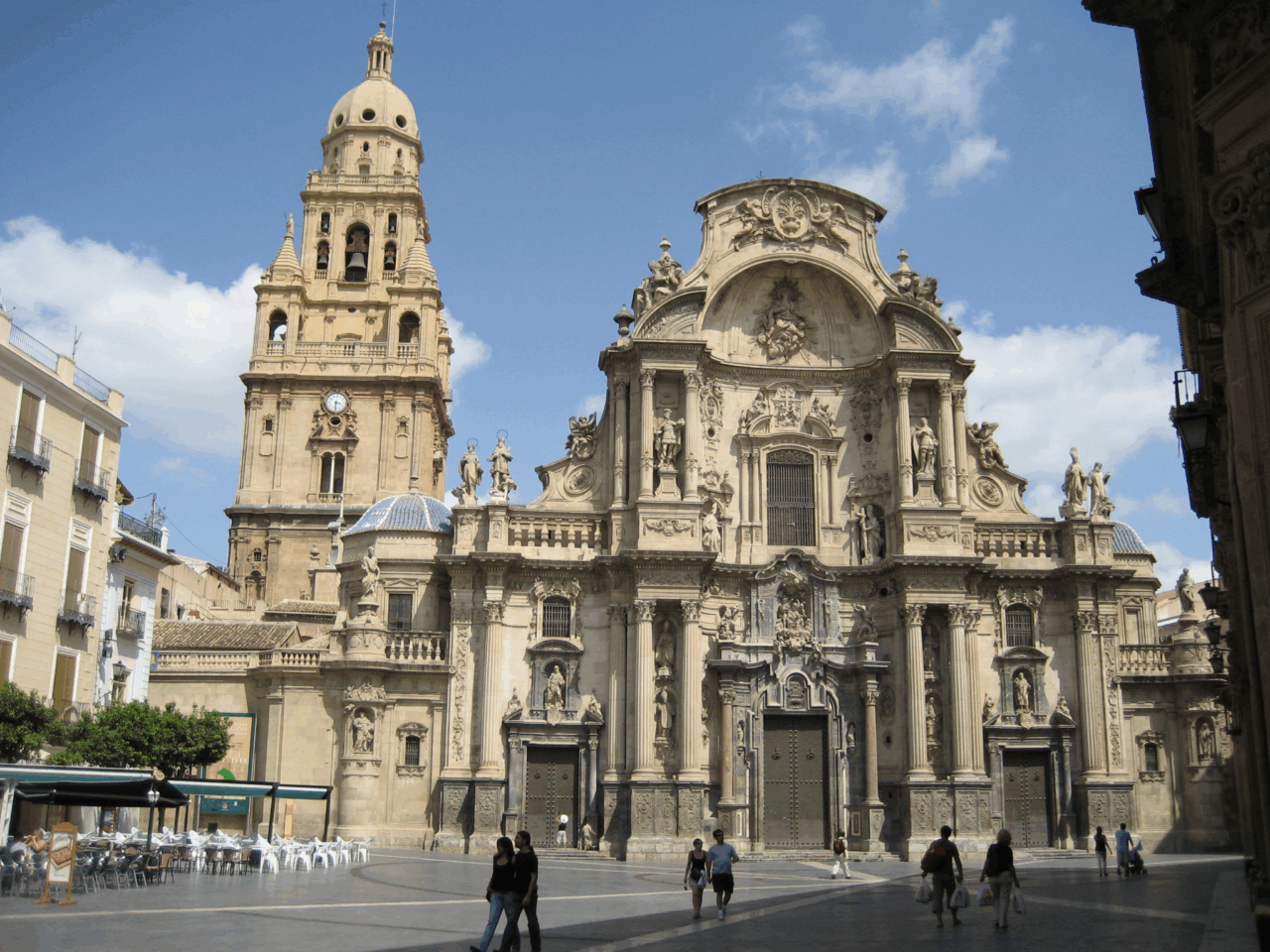
Welcome to the beautiful Cathedral Church of Saint Mary in Murcia (Spanish: Iglesia Catedral de Santa María en Murcia), or, as it is commonly referred to, the Cathedral of Murcia. It’s a Catholic Church in the city of Murcia and a breathtaking cathedral of the Roman Catholic Diocese of Cartagena. It’s the pearl of the baroque architecture, but a gothic cloister in heart. If you are a history buff, or if you just have an eye for architectural masterpieces – this is definitely a sight to see!
Table of Contents
- Cathedral de Santa Maria Murcia – Multi-styled Masterpiece
- History
- Architecture Style
- Cathedral de Santa Maria Murcia – Conclusion
- Enjoy Your Private Paradise in Villa Murcia!
History
As with all architectural masterpieces in our lifetime, it comes with a little bit of history. The conception of this cathedral starts with the Christian king Jaime I the Conqueror. And so he did just that to the city of Murcia during the Mudéjar revolt of 1264–66. This was during a great war when Christianity fought against the Muslim world in Spain; he took the Great Mosque that was built there, or Aljamía as the Muslims referred to it, and consecrated it to the Virgin Mary.
Although he wanted to do it right away, it took until the 14th century that the construction of the cathedral in this place took off. In 1385, the work on foundations started, but the work itself had to be delayed until 1388, when the first stone was laid.
Plaza Del Cardenal Belluga, where the cathedral stands, had to wait a while for development to begin. Actually, it took much longer than expected, as the work wasn’t completed until October 1467. Even after the initial construction finished, the cathedral continued to evolve, incorporating various architectural styles and subtly reflecting the influence of the former Muslim city that once occupied this site. Over the centuries, it continued to develop, ultimately becoming the awe-inspiring masterpiece we see today since the 18th century.
Architecture Style
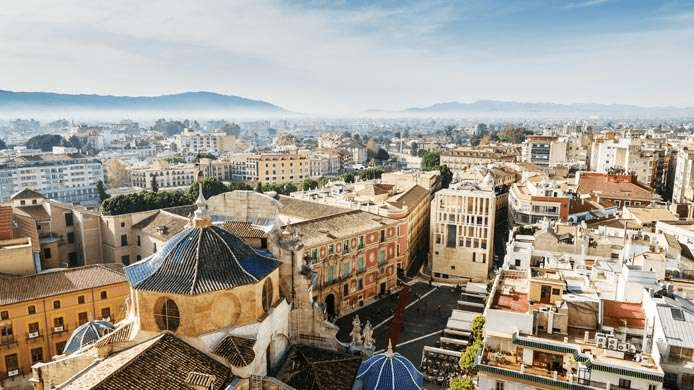
As I have mentioned before, this particular cathedral is done in exquisite detail. It has a magnificent “torre campanario,” which means the bell tower, and is a masterful combination of many different styles.
The cathedral was designed by Valencian architect and sculptor Jaume Bort i Meliá. Its interior presents a predominantly Gothic style, albeit with a refinement that sets it apart from the classic Gothic architecture like Notre Dame. It’s the facade that truly shines, presenting the finest aspects of the cathedral.
I recall my first visit, feeling like I had stepped back in time. From the intricate Gothic windows to the classic porches and the breathtakingly beautiful Baroque decorations, every detail left an indelible mark on me. The Baroque style seamlessly intertwines with a sense of humility added in later years, creating a mesmerizing architectural experience.
Interior
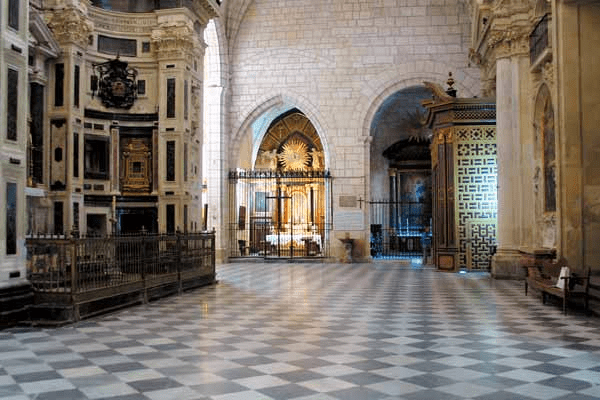
Let’s first discuss the Cathedral interior. The Murcia Cathedral is made up of three different naves with an apse and twenty-three chapels. Each is dedicated to the patron saints of labor unions and serves as the final resting place for bishops and nobles involved in the construction of the Cathedral de Santa Maria Murcia. Here are the most interesting ones:
- The Chapel of the Apse or the Vélez Chapel – this chapel has a cupola of start with ten points and is crafted beautifully in the Flaming Gothic style;
- The Chapel of Junterones belongs to the Spanish Renaissance. It may not be as fiery as the baroque-styled ones, but it’s pure and elegant: the Spaniards are considered one of the masters of the craft of that era, and it shows here.
- The Chapel of the Immaculate is undoubtedly a masterpiece of Baroque architecture. If you appreciate the rich detail and lavishness of that style, it’s an absolute must-see.
Sound Equipment
We cannot, of course, overlook the “transcorum,” of course, the plateresque seating for the choir that looks incredible, especially during night ceremonies. This is when you can additionally enjoy the large Merlkin organ, one of the most interesting inventions of the time, with almost 4000 pipes and four keyboards. The sound is taking over you when you’re listening to it inside, and you really can feel a spiritual being with those pipes attacking you from every corner.
Three Levels
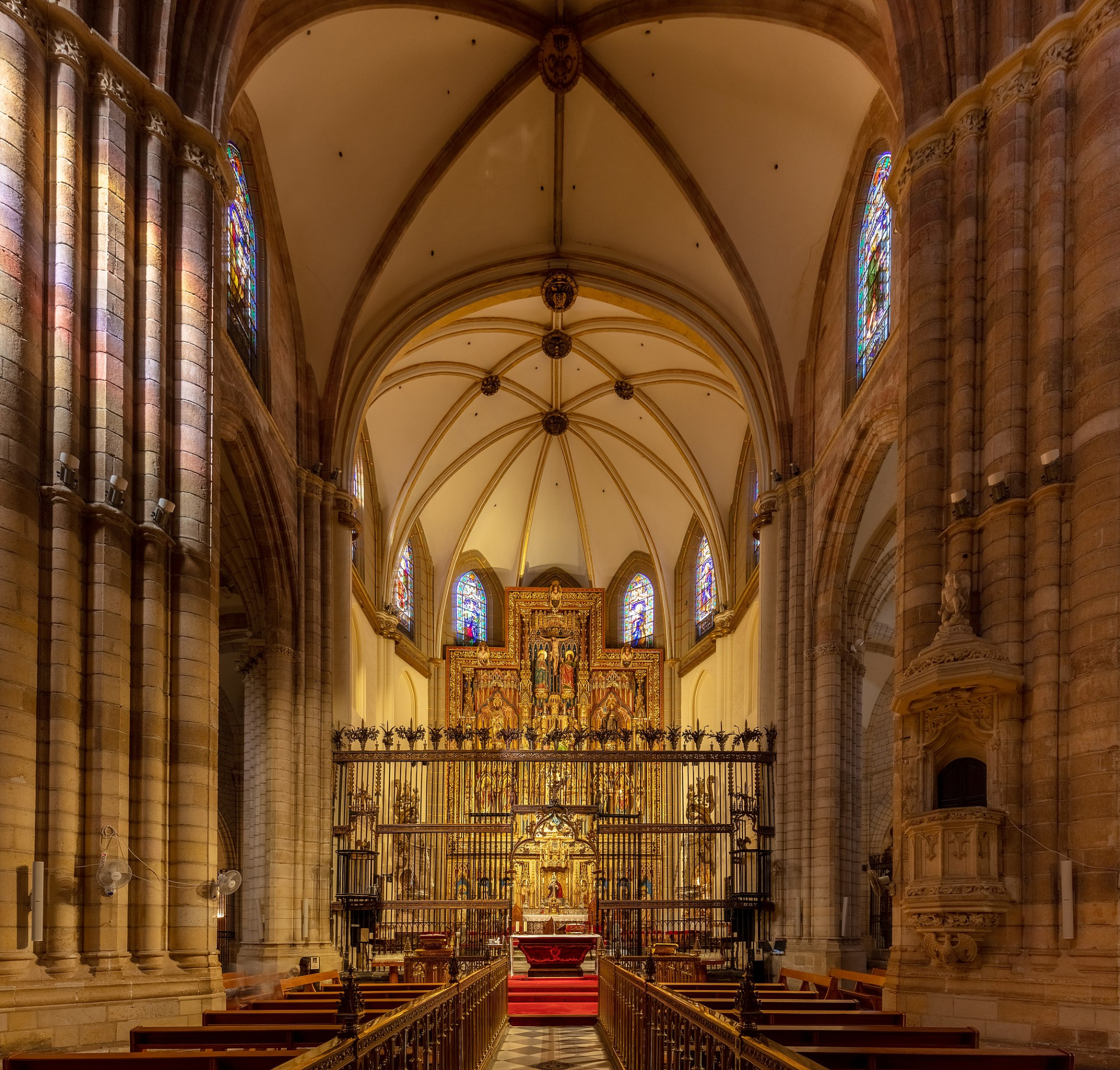
There are there levels inside the cathedral. If you want to visit it, you should definitely check them all out!
- The first one was made by Francisco and Jacobo Florentino. It’s basically a square plant in Renaissance style. The ornamentations offer a completely unique experience. Influenced by the highly prevalent plateresque style in Spain during the late 15th and early 16th centuries, these elements were frequently adopted in Spain’s American colonies. The ornamentations you’ll encounter date back to that period and showcase a distinct “Silversmith-like” approach, reflecting the rich cultural exchange and artistic influence of the time.
- The second body, crafted by Jerónimo Quijano, bears similarities to the first, yet it exudes a distinct delicacy and conservatism. While it shares the same type of ornaments and features, the style is notably more purist compared to the ground floor. This refinement and adherence to purity lend it a unique charm and elegance.
- The third floor is truly extraordinary, featuring a blend of various styles and accents. It incorporates elements straight from the Rococo style, coupled with a cupola designed by Ventura Rodríguez. The result is captivating, with an intriguing mix of influences that manage to be exciting without veering into flashy territory.
- And finally, we have the fourth floor with four conservatories in each corner. This is for the special ceremonies to fight off the natural disasters that, unfortunately, came over this place as well.
The Heart of the King
Lastly, as surprising as it may sound, this place holds the heart and entrails of King Alfonso X the Wise, interred beneath the main altar. It’s a testament to his dedication and gratitude to the city, as he chose to honor it by dedicating his body to its love and acknowledging its loyalty to him as king.
Facade
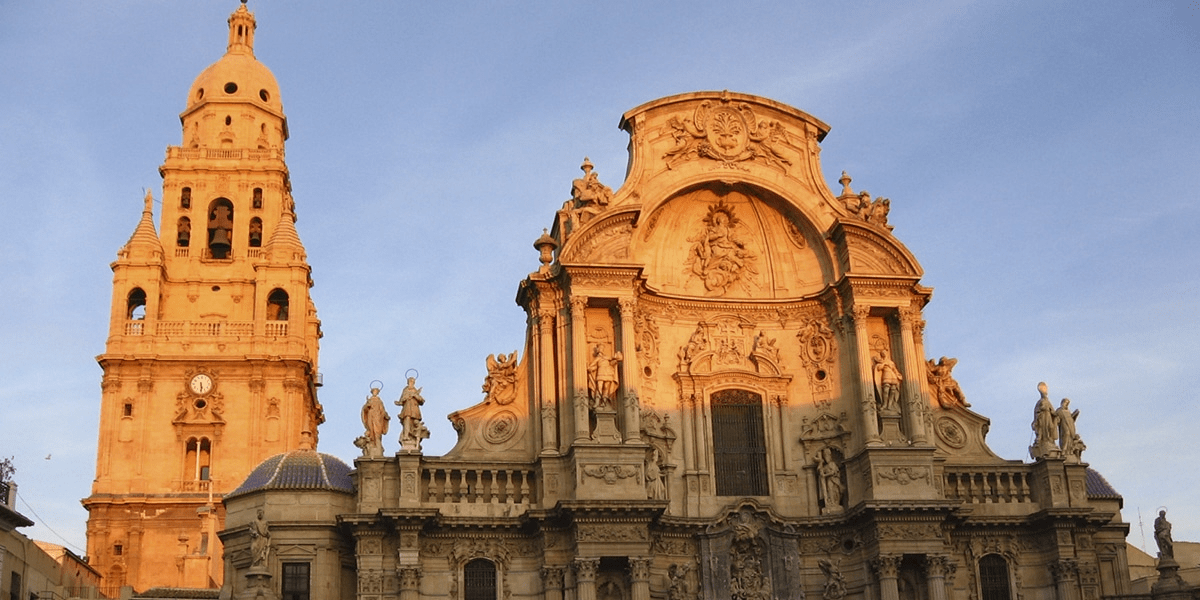
Let’s now talk a little bit about the facade. There are a couple of things we need to address straight away. For starters, the Door of the Apostles is one of the most famous elements of the cathedral. It was constructed in 1488 by Diego Sánchez de Almazán. It’s Gothic in heart, with sculptures of four apostles and a shield to honor the honor of Queen Isabel, the Catholic.
Next, there is the Door of Chains – two bodies, one from the 16th and one from the 18th century, with reliefs of the brothers San Leandro, San Isidoro, and San Fulgencio. It’s much more defined than the Door of the Apostles, but both have their fans. The main facade is mostly Baroque, with some elements from the 1800s. This is definitely my favorite element of the whole building, as the decorations and finishes perfectly fit together.
Bell Tower
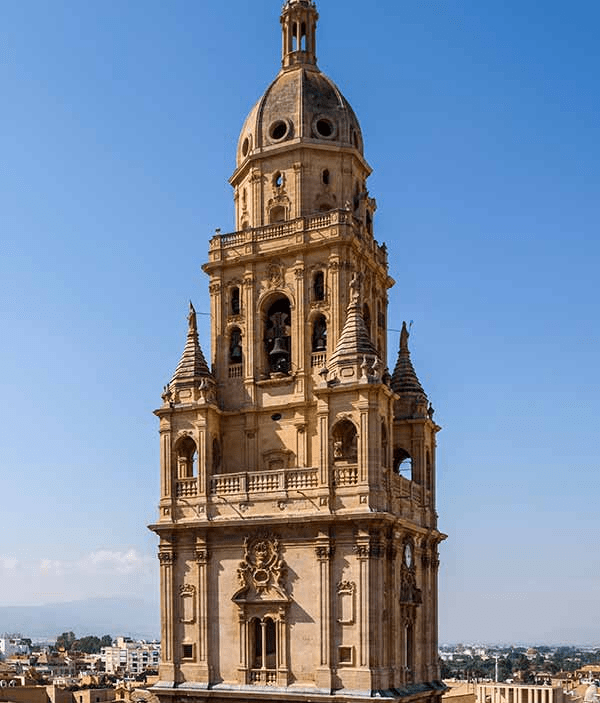
Another important fact about Cathedral de Murcia is the incredible bell tower that was created when it was still a mosque. It was built entirely between 1521 and 1791. It is 90 meters long with a weather vane, and it’s the tallest campanile in Spain.
Inside the tower, you’ll find twenty-five bells, each dating back to the 17th or 18th century. Each bell has its own name, reflecting its unique sound, such as “The Bell of Prayer” or “The Bell of Spells.” These bells played a significant role in society, serving as warning signals to alert the population about impending disasters—a vital function in a country that has faced numerous calamities over the last millennium. Additionally, the tower itself ranks as the second tallest in Spain, trailing only the Giralda in Seville. For me, this is one of the best-designed towers in Spain, especially considering the fact that it was a Muslim Minaret.
Cathedral de Santa Maria Murcia – Conclusion
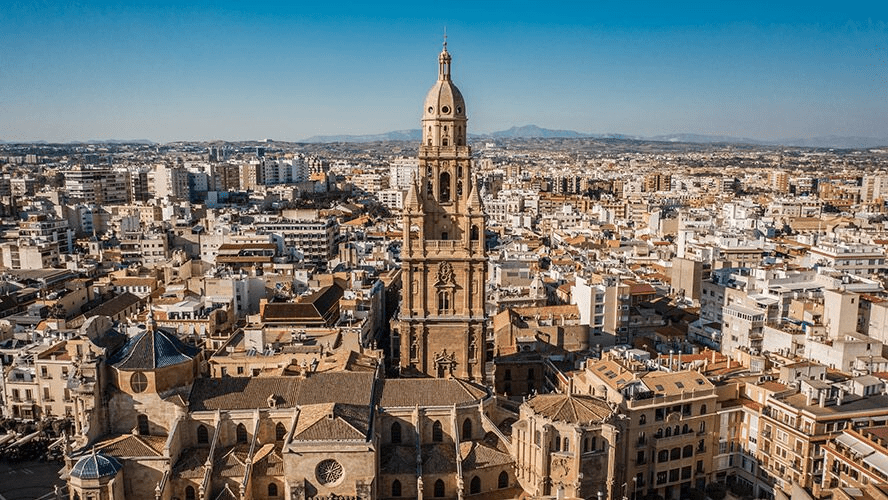
The Cathedral de Murcia stands proudly as a top destination on every tourist’s map, impossible to overlook even if you tried. From its awe-inspiring architecture to its rich history, it’s truly a sight to behold. I especially recommend it to those of you who are interested in finding something that has changed throughout time, presenting you with different sides of it whenever you look at it. I personally enjoyed the most the intertwined styles that are present at every corner.
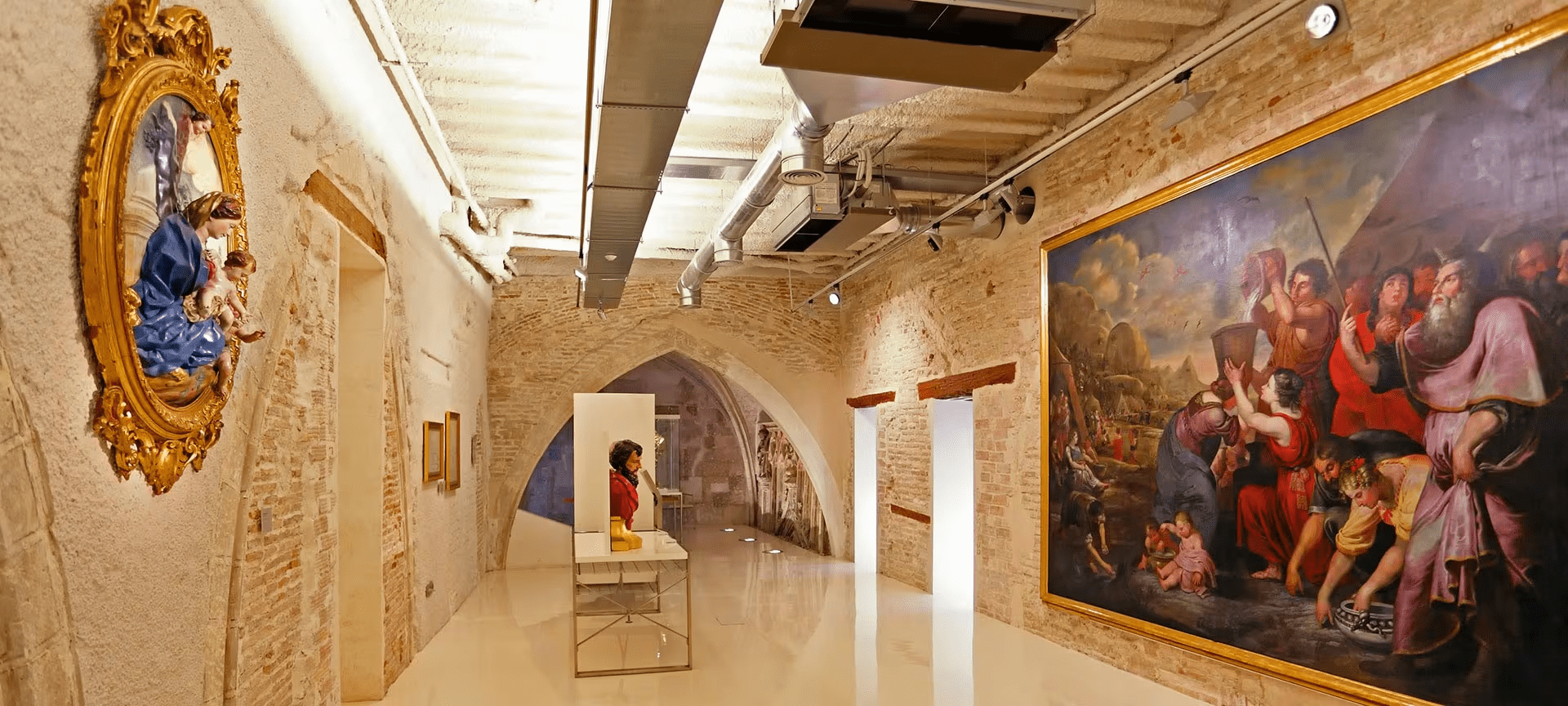
Don’t forget to explore the cathedral museum, which is brimming with fantastic souvenirs to commemorate your visit. I’m confident you’ll find this exceptional beauty to be your next favorite spot. I wholeheartedly recommend it!
Enjoy Your Private Paradise in Villa Murcia!
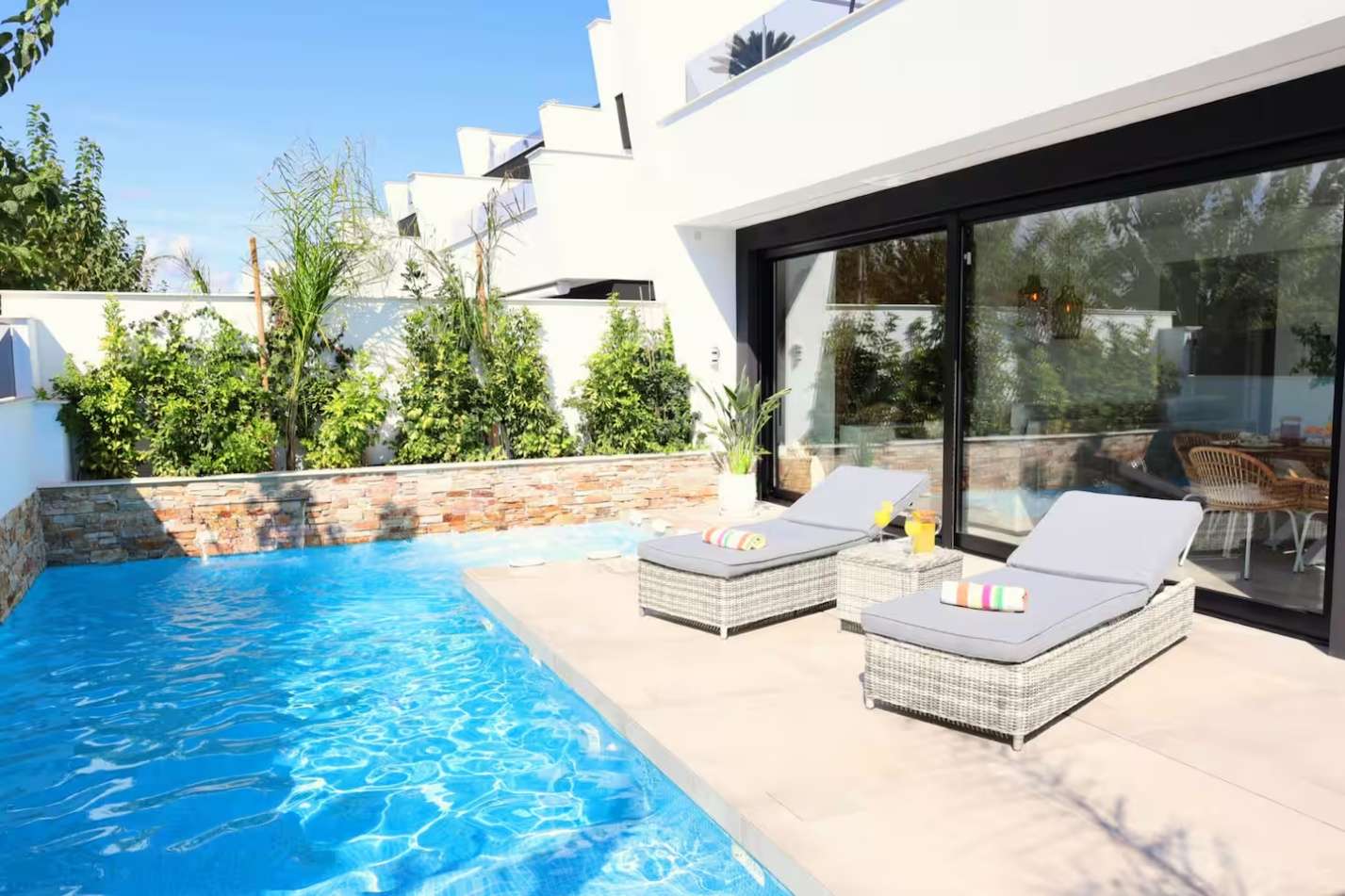
Looking for the perfect place to stay in Murcia? We’ve got just the spot for you!
Villa Murcia – Your Private Paradise
Wake up to coffee on a sun-drenched terrace, unwind in a warm jacuzzi after a day of exploring, and end your evenings with dinners in the summer kitchen. Nestled in charming Santiago de la Ribera, Villa Murcia offers more than just a holiday—it’s your personal oasis of comfort, style, and unforgettable moments.
Highlights:
✔ Spacious living room with a large sofa and open kitchen – perfect for shared memories
✔ Three elegant, air-conditioned bedrooms with private terraces – your peaceful retreat
✔ Extra fold-out sofa in the living room – ideal for additional guests
Whether it’s a romantic escape, a family getaway, or a relaxing break with friends – Villa Murcia is your dream stay.