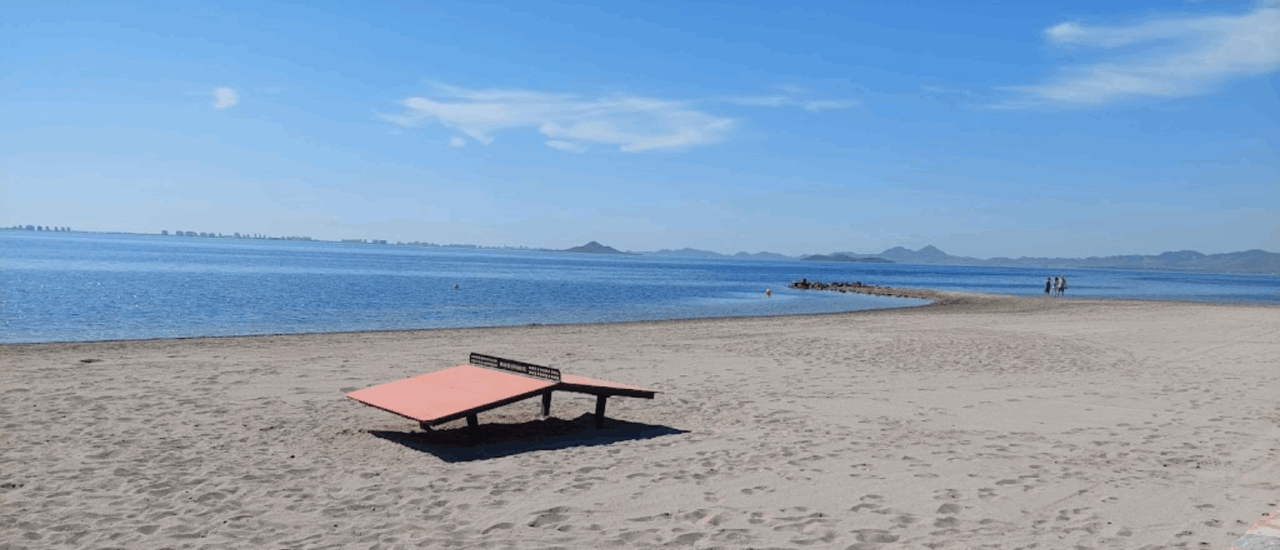
Playa de Las Salinas is a picturesque beach with a stunning view of Mar Minor and La Manga city. I was looking to spend my vacation on an almost pristine beach far away from the crowds, and I may have found the perfect spot.
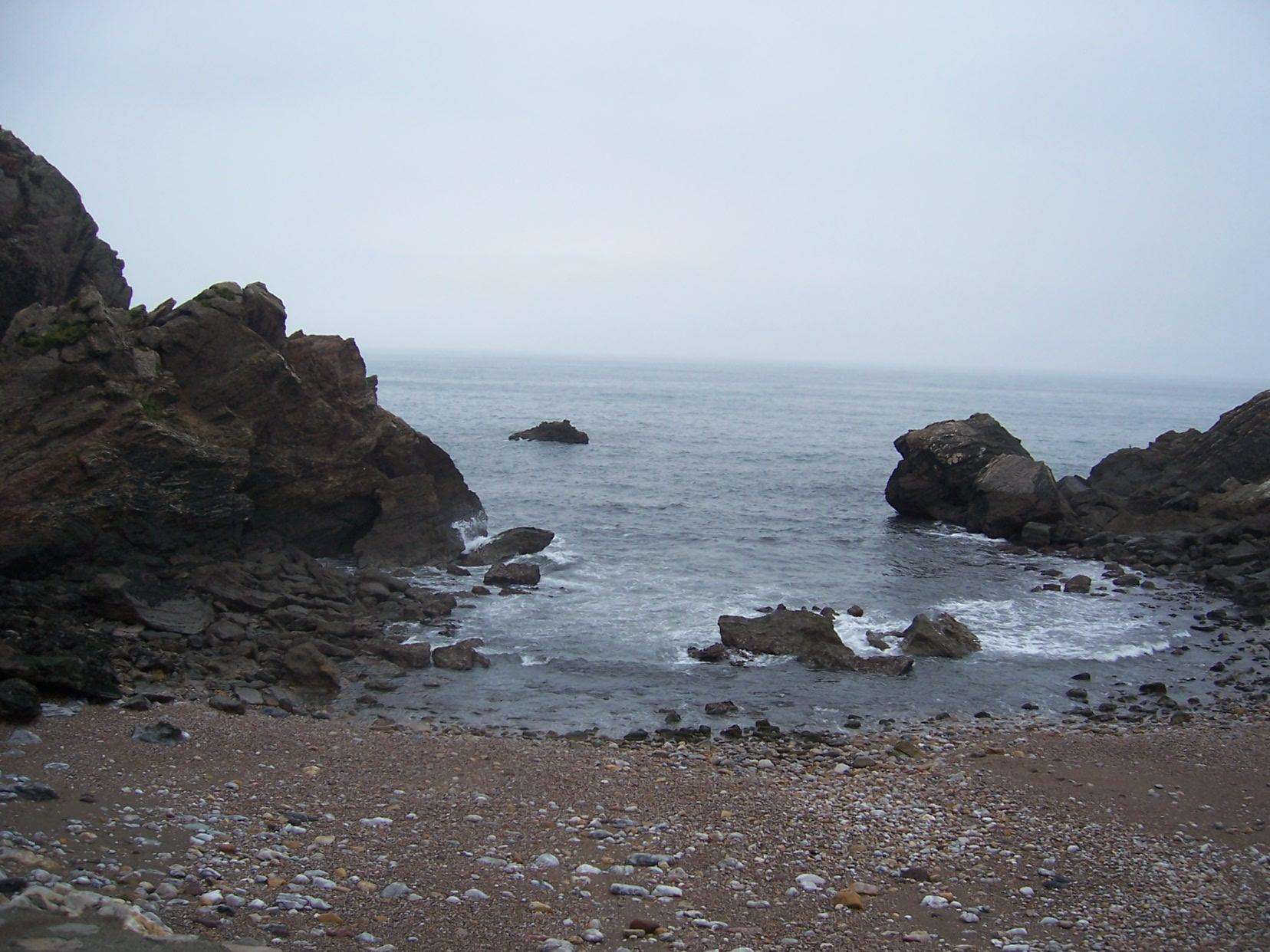
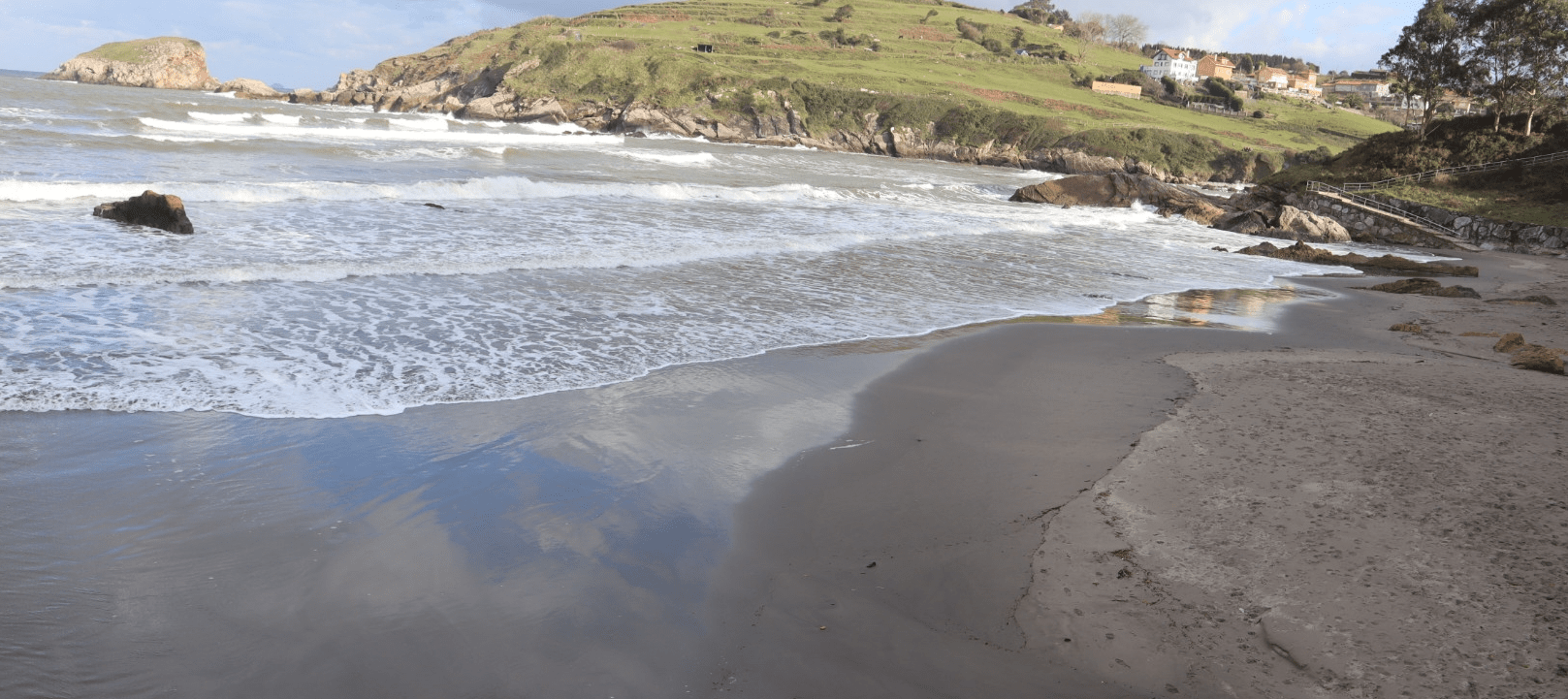
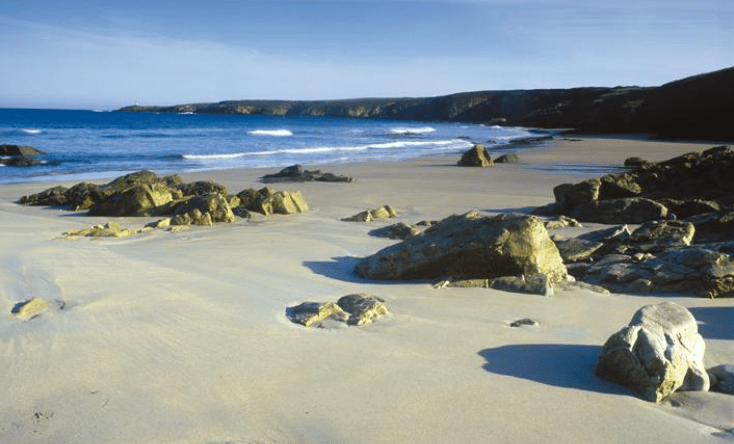
Las Salinas is covered with fine light sand and sometimes small pebbles. The area is wild, with no beach infrastructure. Nevertheless, I primarily wanted to relax in nature, so I perceived it as an advantage. The entrance to the water is flat, and the bottom is sand and pebbles. The sea is often rough, so I wouldn’t bother going deeper into the sea if you can’t swim at all. Along the coast, you can see many picturesque rock formations and rock fragments. However, the constant wind was unpleasant at times. Swimming is dangerous because a current of fences forms near the shore.
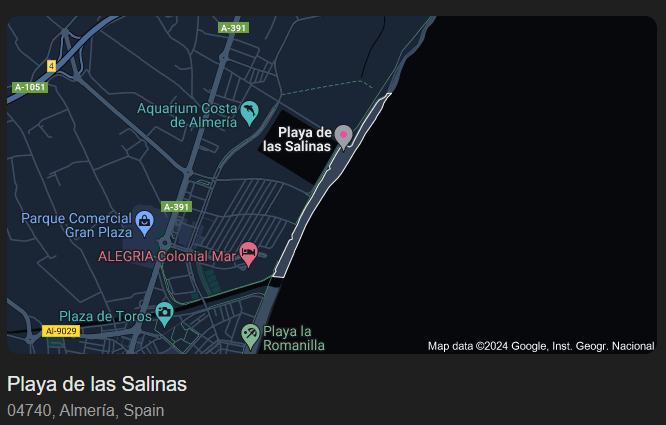
The Playa de Las Salinas is situated along the Mediterranean Sea and holds the 36th position among 141 beaches within the Murcia region. Positioned 37.3 kilometers away from the heart of Murcia, it lies within the vicinity of the Los Alcazares settlement, a mere 3.2 kilometers from its center. The beach is located in the urban area.
Transport
There’s a highway with plenty of parking spaces running along the beach line. The reserve is very popular with locals and tourists, so I advise going there on weekdays. On the weekend, the highway is overloaded with cars and trailers of citizens going on vacation to the park. Las Salinas begins behind the church of the village of San Miguel and extends for 5 km to the Cabo de Gata lighthouse. There are ramps with stairs leading from the road to the beach.
Highlights
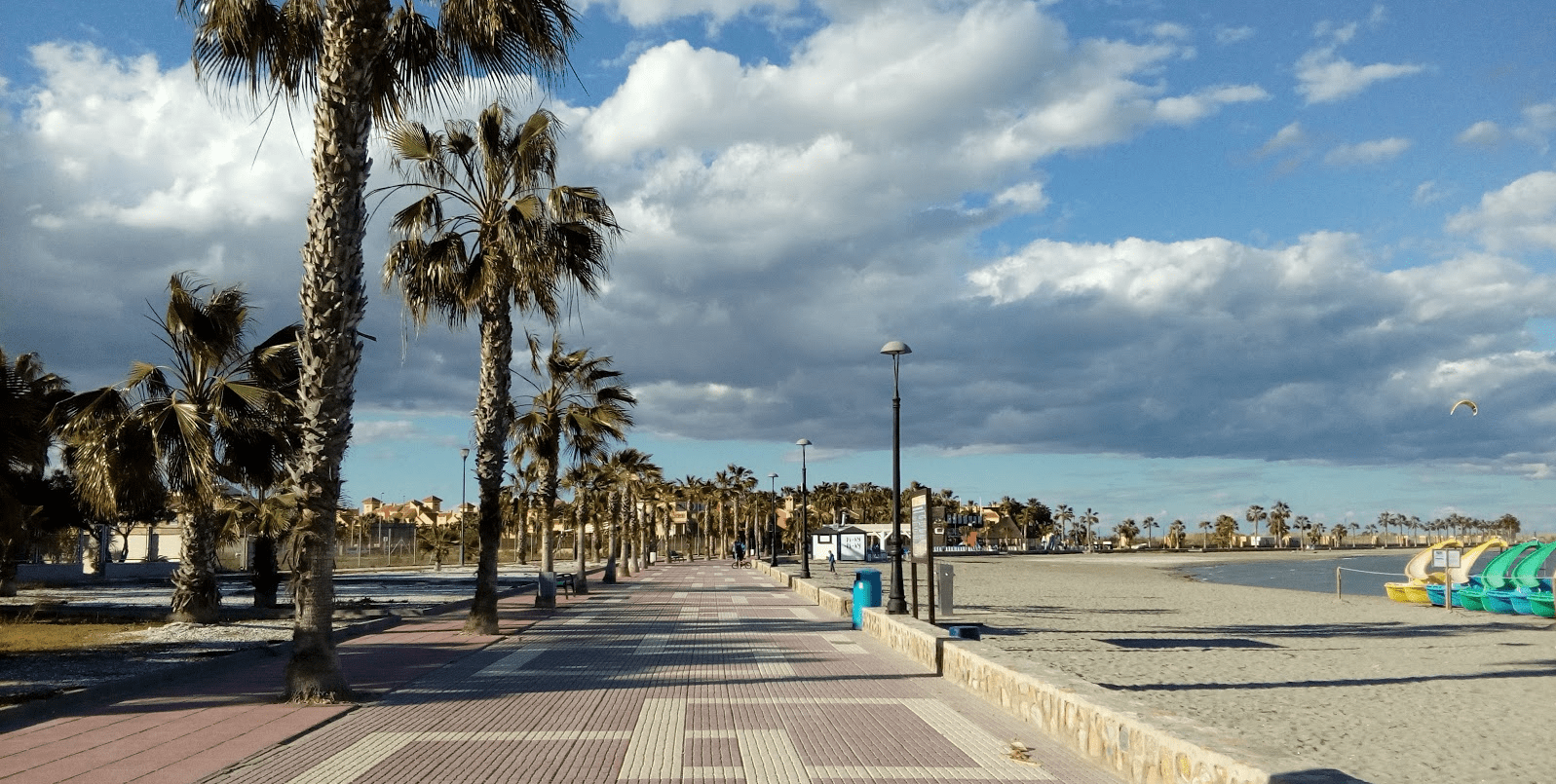
It has an impressive 2,000-meter-long promenade that runs along the entire length of the beach and directs users to the Philippe Cousteau Anchor Museum, which houses an important collection of anchors of all kinds, as well as a 360-degree vantage point located above the cliffs. I’ve also visited the nearby Pinar de Salinas, a natural area where visitors can find a recreational area with barbecues, trash cans, fountains, and various places to relax.
There are no sports clubs, restaurants, cafés or stores near the La Manga beach, so I’ve had to bring everything with me. Other inconveniences are the lack of cabins for changing clothes and only small leg showers.
There is no natural shade along the entire beach.
Las Salinas is never crowded, and you can always find deserted spots for a relaxing vacation.
The main attraction of the sandy beach is the church of the same name.
One and a half kilometers from Las Salinas is an active recreation zone where you can rent boats, kayaks, diving, and snorkeling equipment.
Festivals
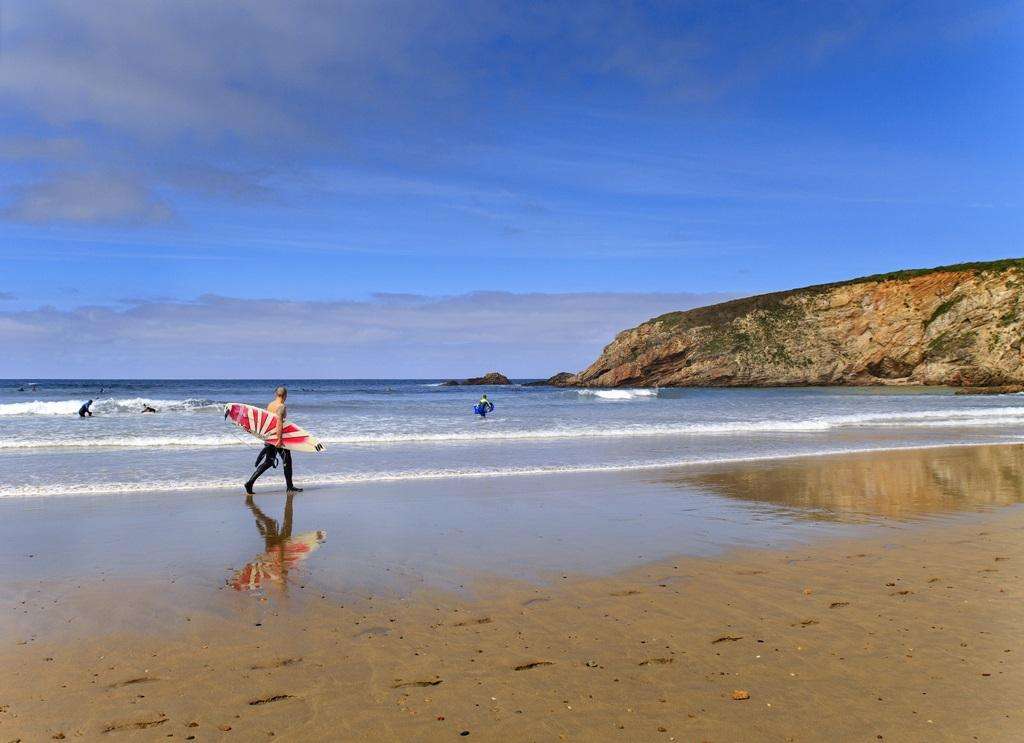
The sandy area hosts various surfing-related events every year, such as the VANS Salinas Longboard Festival, whose sixteenth edition brings together thousands of lovers of the sport to enjoy exhibitions punctuated by various performances and concerts.
In addition, every year, the Túnel Festival takes place near the beach, more specifically in the Arnao Tunnel, during which traffic on the Salinas boardwalk is shut down for two days so that everyone can enjoy the live performances and images projected on the hillside and in the tunnel itself. Another festival that takes place every year and deserves attention is the Túnel Festival, which takes place in the beach area. This festival is also held in the Arnao Tunnel area.
Another annual festival worth noting is Song’s for an Ewan Day, a festival held in the pine forest next to the beach, with live music in a paradisiacal setting.
Other Beaches in the Area
There are plenty of small and medium beaches near Las Salinas. Here are some other options to consider in the area.
It is a small shell-shaped beach, 100 meters long, whose width varies greatly due to tides, with an average width of about 25 meters, with gravel and dark sand, separating it from the nearby Salinas beach.
Not that far from Playa de El Cuerno, you’ll find a rocky promontory and cliff called La Peñona, where the collections from Philippe Cousteau’s famous anchor museum are displayed.
The beach is quite attractive, located in a residential area with attractive landscapes and recreational areas, although there are no services. At low tide, it is connected by the islet from which it takes its name. The beach is also known as “the islet.”
The beach averages 350 meters in length and 155 meters in width. With its fine, pebbled sand, visitors can relax while observing the surrounding protected natural area. Visitors can also enjoy local gastronomy at the numerous restaurants, have a drink, or simply have a barbecue in the picnic area. During high tides, the beach is very crowded. During high tides, the beach is divided into two parts. The western part is the most visited, as the La Ferrería River flows into the eastern part.
El Dalar beach is a sandy area located in the Spanish town of Arnao, in the Asturian council of Castrillón. It is characterized by a high degree of urbanization and settlement, and its environment is industrial in nature. The deposit has small areas of medium-grained dark-colored sand. Pedestrian exits are very easy. The degree of urbanization and settlement is very low.
To get to the beach, take the villages of Arnao and Salinas as a reference point. You can get there from Salinas beach by driving west or from Piedras Blancas east toward Arnao without entering the town, going around the old factory and leaving the car in a small parking lot before going through the tunnel. There are no services there, and the recommended activity is spearfishing or fishing.
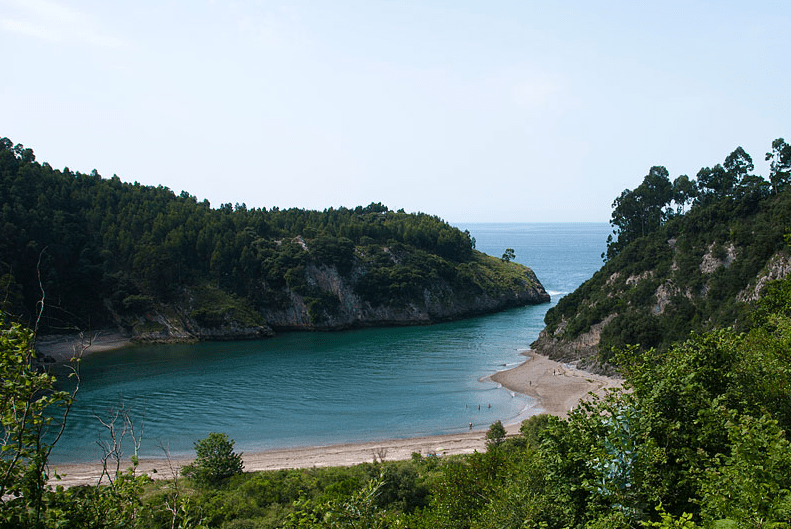
To get to the beach, you have to go to the most important population centers in the area, which, in this case, are Arnao and Piedras Blancas. It is very easy to get there due to its proximity. It is a cove often used by fishing enthusiasts, and is accessed by steps carved into the rock, which have deteriorated over time.
The beach was once a private beach when the Arnao factory was booming. The location of this bay is favorable from a wind perspective, as the surrounding cliffs protect it in such a way that it is often more sheltered from the wind than neighboring Arnao or Salinas. However, the tide is much higher, and the sea is usually more rough than at other nearby beaches.
It stretches for about 300-350 meters and is sparsely urbanized, except for a few scattered houses. It also has a 500-meter-long boardwalk that connects to a several-kilometer-long greenway. The town is shell-shaped and characterized by a small number of houses.
It is shell-shaped and characterized by being surrounded by vegetation and fine, whitish sand accompanied by a small amount of gravel. The waves are moderate to strong, making it one of the most popular beaches on the island. Therefore, it is one of the beaches chosen by surfers to practice their sport. You can also fish here or swim in the natural pool called “La Hollina.”
Enjoy Your Private Paradise in Villa Murcia!
Looking for the perfect place to stay in Murcia? We’ve got just the spot for you!
Villa Murcia – Your Private Paradise
Wake up to coffee on a sun-drenched terrace, unwind in a warm jacuzzi after a day of exploring, and end your evenings with dinners in the summer kitchen. Nestled in charming Santiago de la Ribera, Villa Murcia offers more than just a holiday—it’s your personal oasis of comfort, style, and unforgettable moments.
Highlights: ✔ Spacious living room with a large sofa and open kitchen – perfect for shared memories ✔ Three elegant, air-conditioned bedrooms with private terraces – your peaceful retreat ✔ Extra fold-out sofa in the living room – ideal for additional guests
Whether it’s a romantic escape, a family getaway, or a relaxing break with friends – Villa Murcia is your dream stay.